California Last Will and Testament for Divorced person not Remarried with Adult Children
About this form
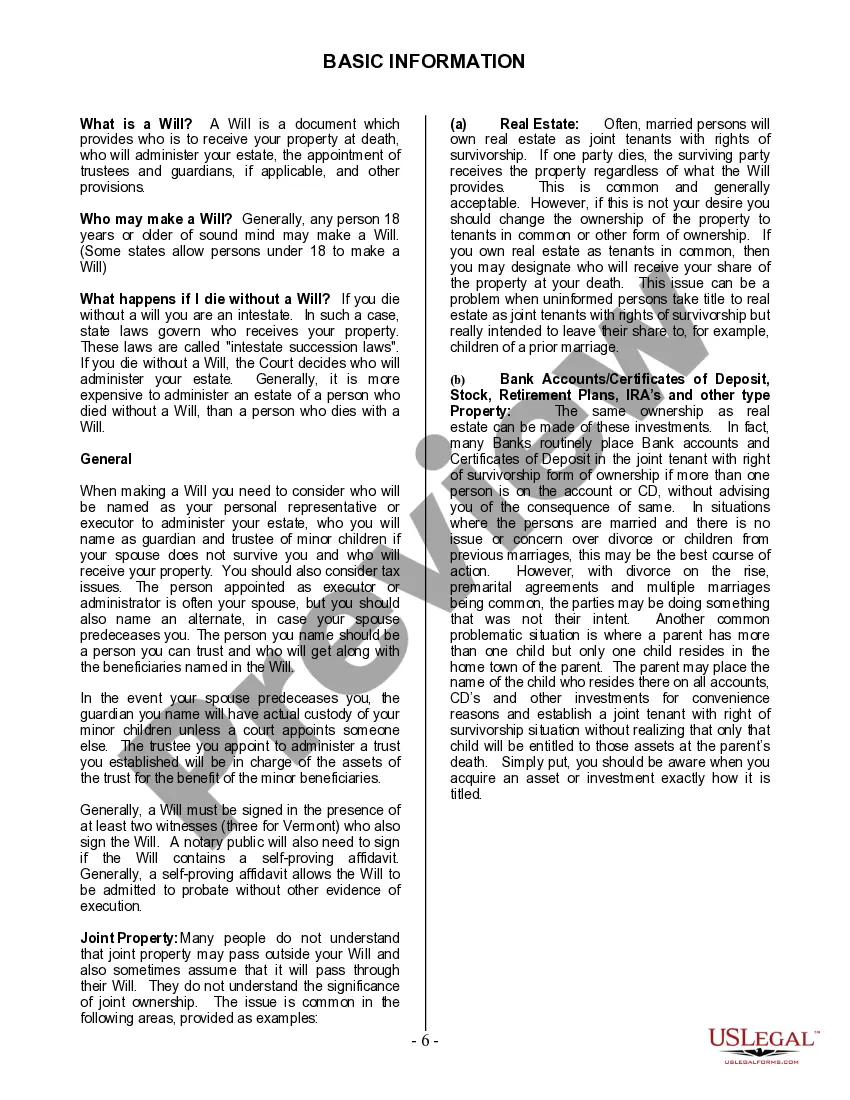
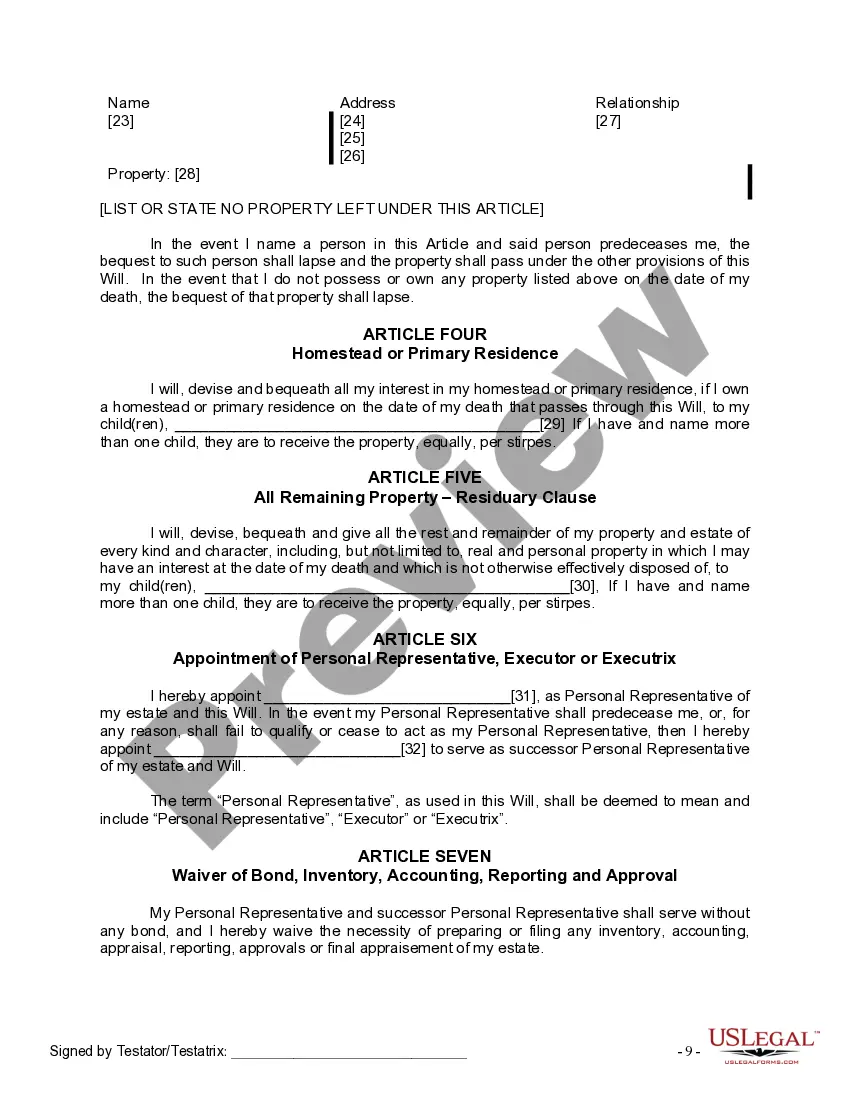
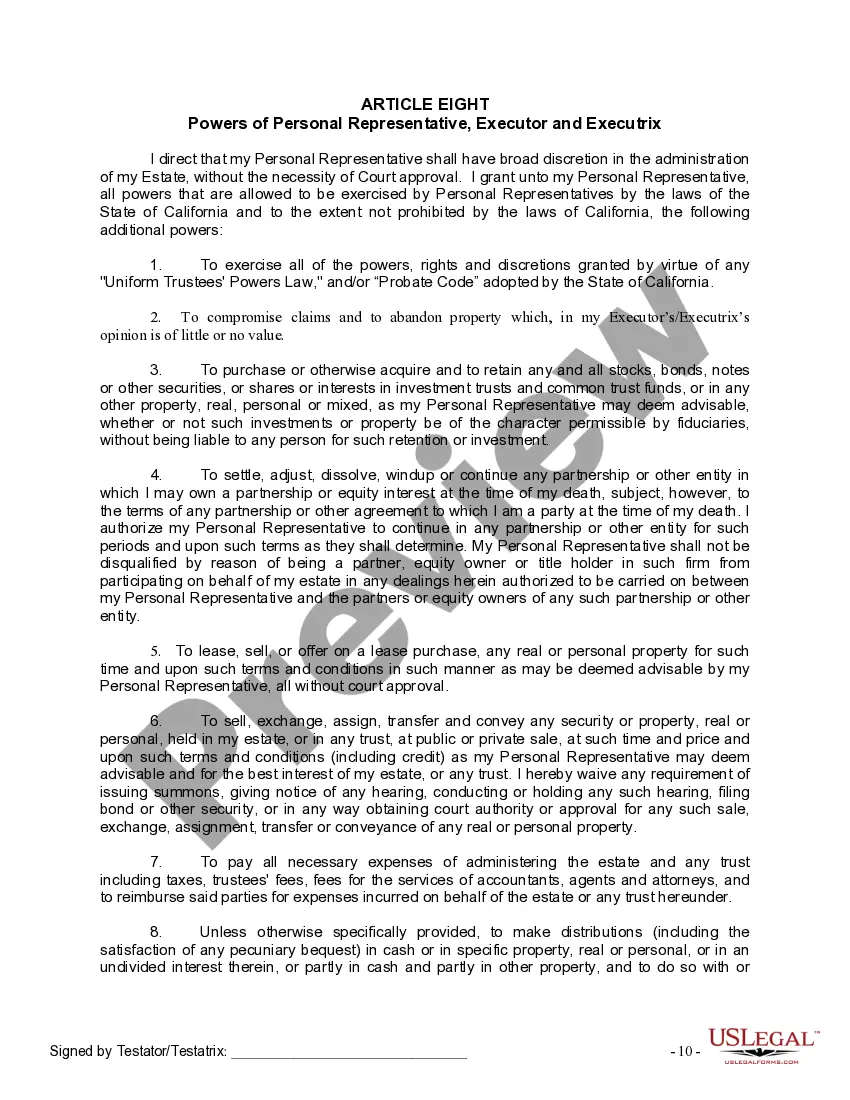
The Last Will and Testament for a divorced person not remarried with adult children is a legal document that specifies who will inherit your property and manage your estate after your death. This form is explicitly tailored for individuals who are divorced and have adult children, making it different from standard wills that may not consider specific family dynamics or relationship changes. It establishes a personal representative to oversee the distribution of assets and includes provisions for specific bequests, debts, and funeral expenses.
Main sections of this form
- Appointment of a personal representative to administer the estate.
- Details on beneficiaries, including adult children and specific bequests.
- Provisions for settling debts and funeral expenses.
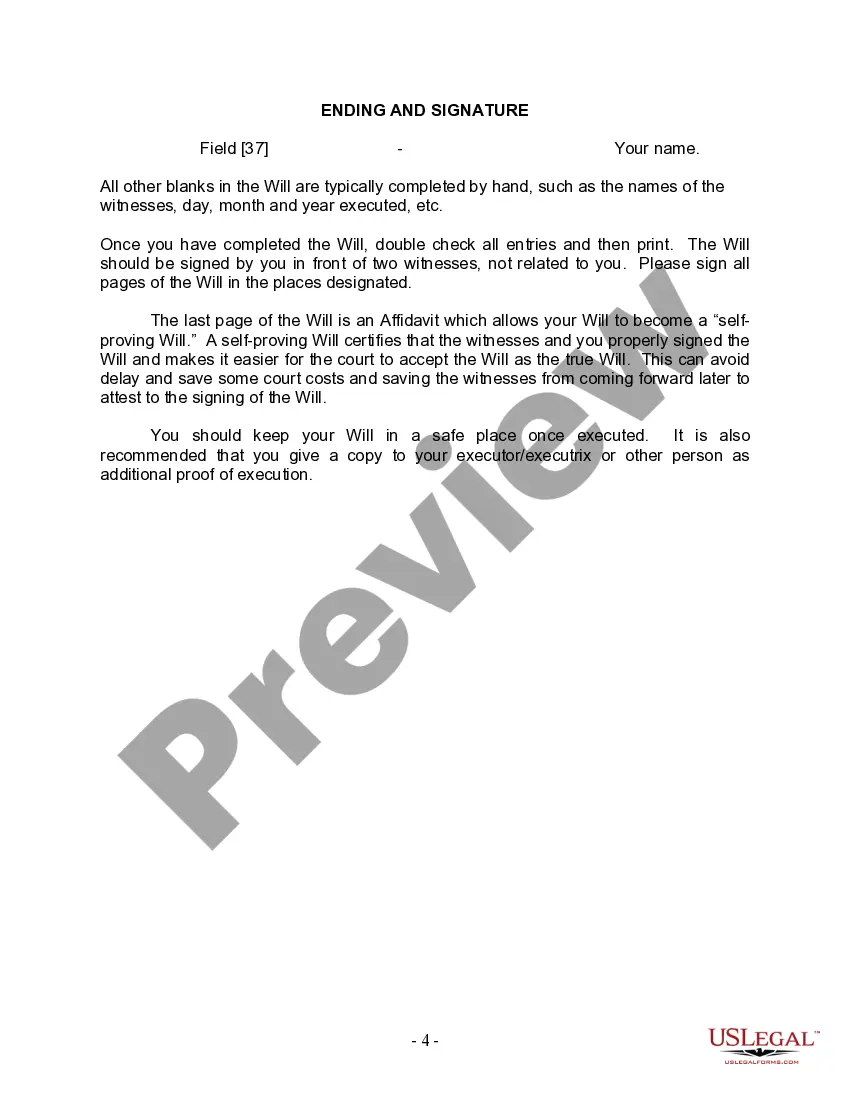
- Instructions for signing and witnessing the will.
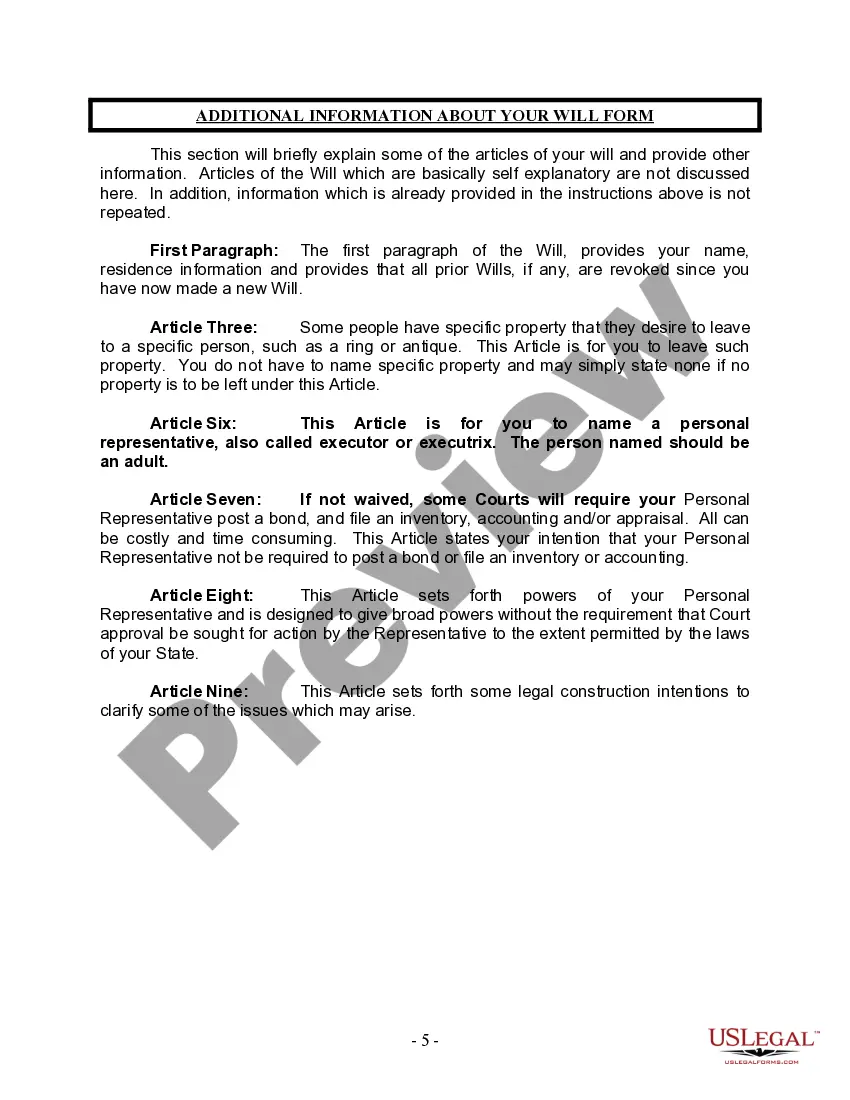
- Optional articles for additional instructions regarding funeral wishes and property management.






When this form is needed
This will should be used when a divorced individual wants to create a legally binding document that dictates how their assets will be distributed and who will manage their estate after death. It is particularly essential for those with adult children, as it clarifies their intentions and minimizes potential disputes among heirs. Use this form if you are not remarried and wish to ensure that your property is divided according to your wishes.
Who should use this form
- Individuals who are divorced and have adult children.
- Those who have previously created a will and wish to revoke it.
- People looking for a straightforward way to manage their estate planning needs.
- Individuals who want to ensure their wishes regarding property distribution are legally documented.
How to prepare this document
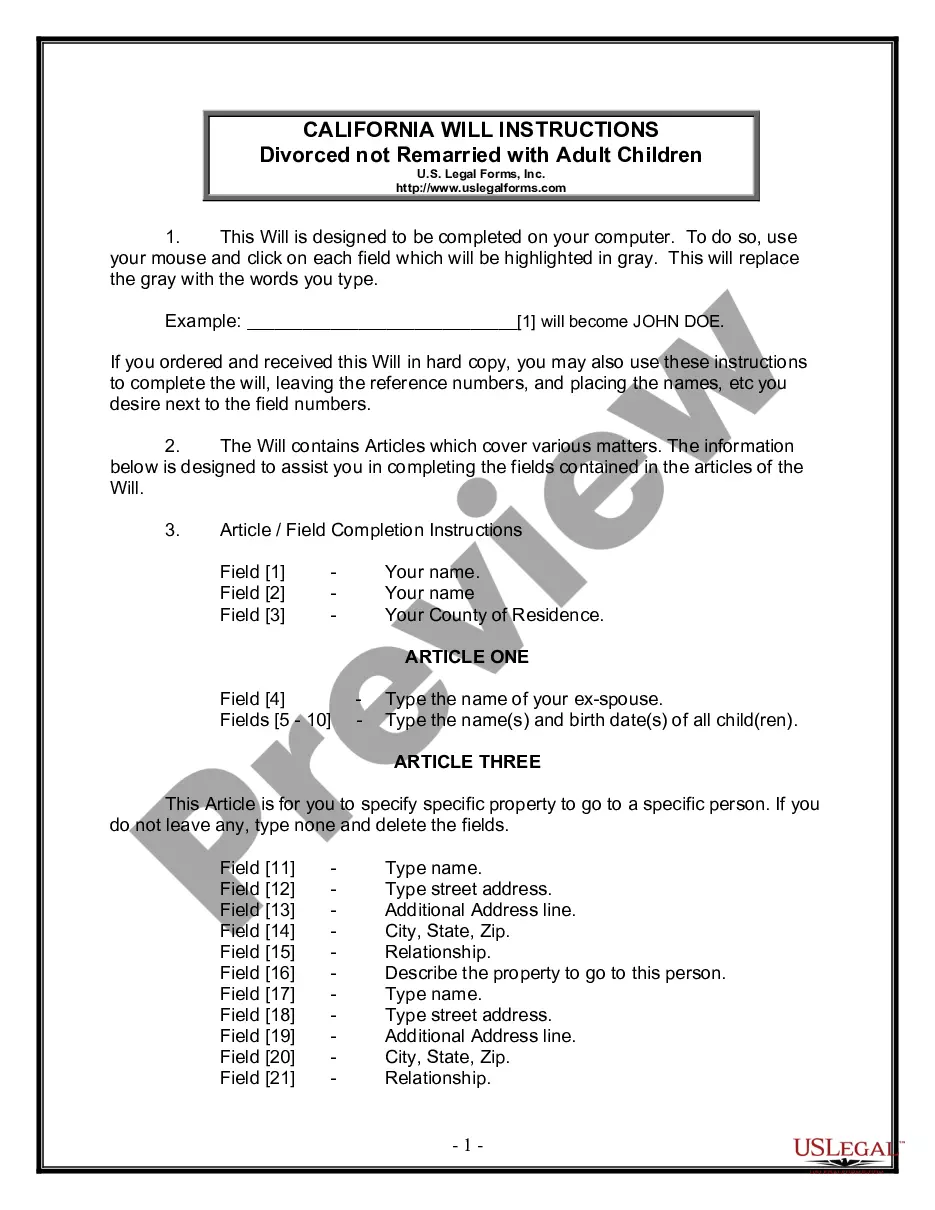
- Enter your full name and county of residence in the designated fields.
- Specify the name of your ex-spouse and list the names and birth dates of your adult children.
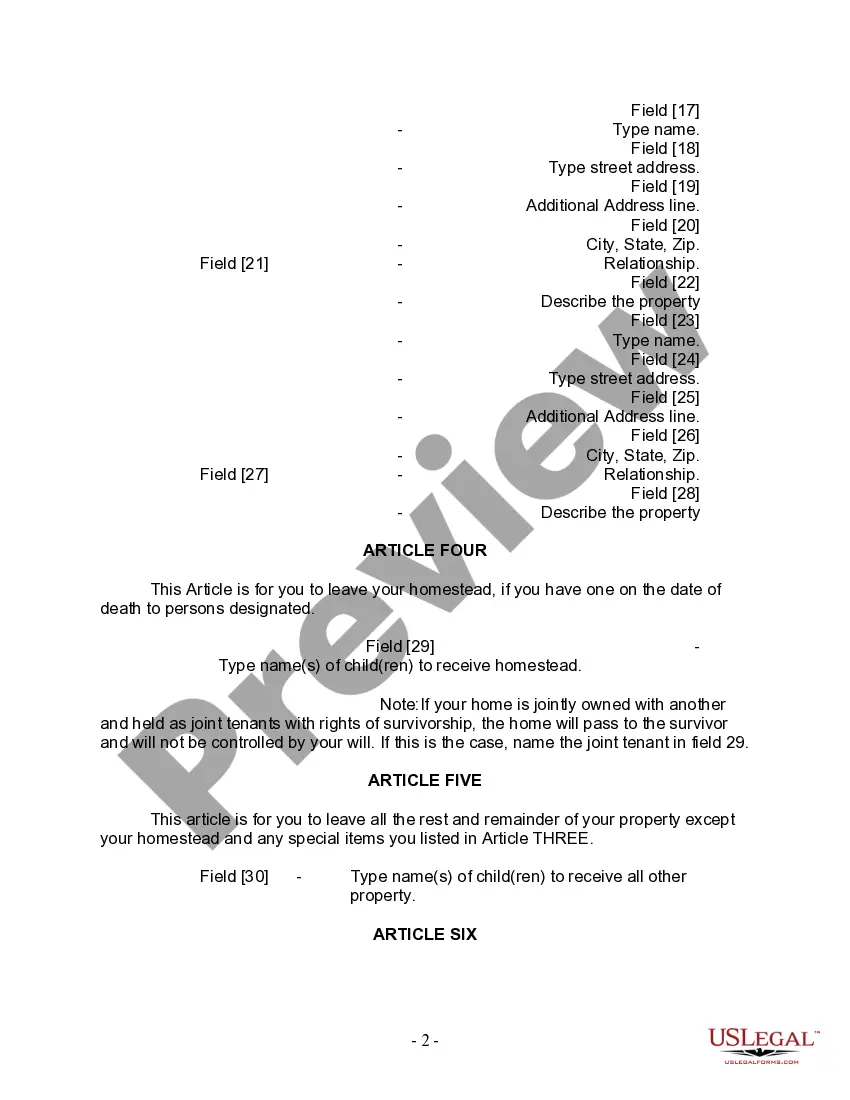
- Detail any specific property you wish to bequeath to identified individuals or indicate 'none' if there are no bequests.
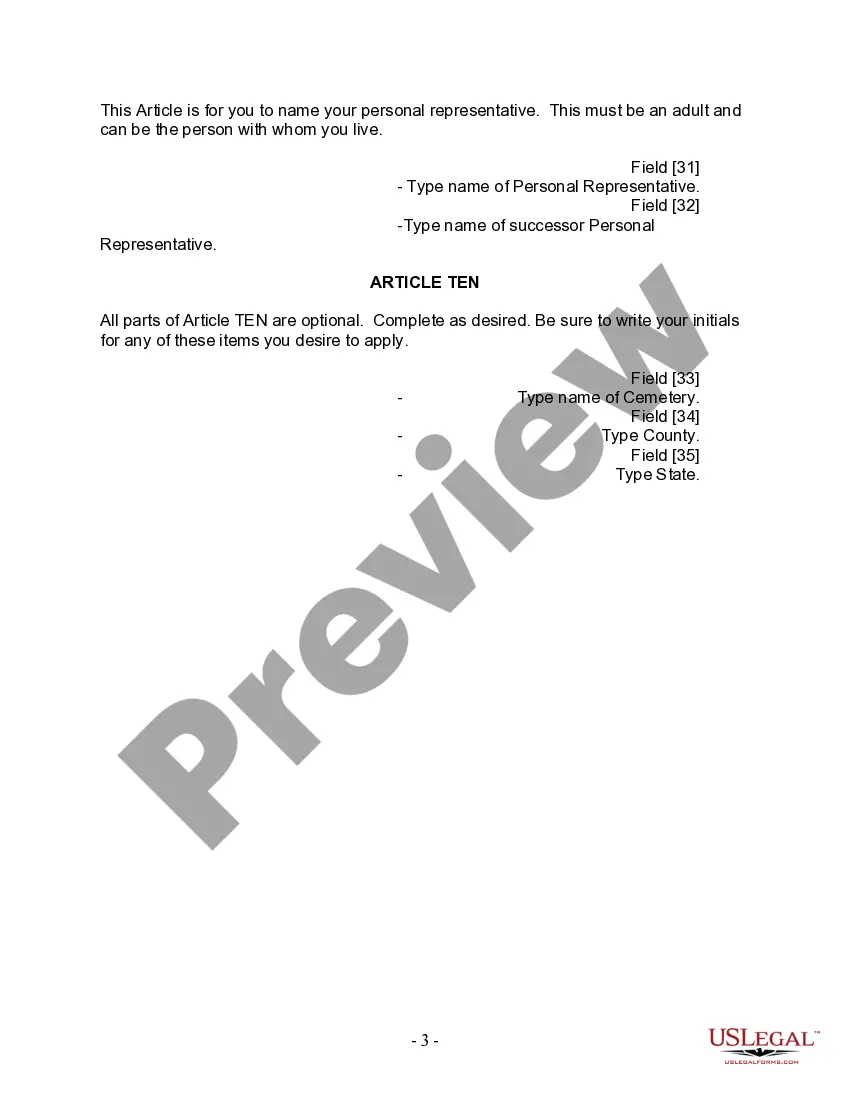
- Name your personal representative and any successors to ensure proper estate management.
- Review the completed form for accuracy, sign it in the presence of two witnesses, and ensure it is notarized if required by state law.
Does this document require notarization?
To make this form legally binding, it must be notarized. Our online notarization service, powered by Notarize, lets you verify and sign documents remotely through an encrypted video session.
Get your form ready online
Our built-in tools help you complete, sign, share, and store your documents in one place.
Make edits, fill in missing information, and update formatting in US Legal Forms—just like you would in MS Word.
Download a copy, print it, send it by email, or mail it via USPS—whatever works best for your next step.
Sign and collect signatures with our SignNow integration. Send to multiple recipients, set reminders, and more. Go Premium to unlock E-Sign.
If this form requires notarization, complete it online through a secure video call—no need to meet a notary in person or wait for an appointment.
We protect your documents and personal data by following strict security and privacy standards.

Make edits, fill in missing information, and update formatting in US Legal Forms—just like you would in MS Word.

Download a copy, print it, send it by email, or mail it via USPS—whatever works best for your next step.

Sign and collect signatures with our SignNow integration. Send to multiple recipients, set reminders, and more. Go Premium to unlock E-Sign.

If this form requires notarization, complete it online through a secure video call—no need to meet a notary in person or wait for an appointment.

We protect your documents and personal data by following strict security and privacy standards.
Common mistakes to avoid
- Failing to include all beneficiaries or property specifics.
- Not signing the will in front of two witnesses as required.
- Overlooking state-specific notarization requirements.
- Neglecting to update the will after significant life changes.
Advantages of online completion
- Easy accessibility allows you to complete it at your convenience.
- Digital editing ensures you do not miss any important fields.
- Reliable legal templates drafted by licensed attorneys.
- Peace of mind knowing your will complies with state laws.
Looking for another form?
Form popularity
FAQ
Generally, a last will and testament does not override a marriage in California. If you get married after creating a will, that marriage may automatically revoke your previous will, unless it specifically states otherwise. This makes it even more important for individuals with a California Last Will and Testament for a Divorced person not Remarried with Adult Children to keep their documents up-to-date.
A will may be deemed invalid in California if it does not comply with state laws, such as lacking signatures or witnesses. If the testator was under duress or lacked mental capacity when creating the will, it could also be invalidated. Therefore, ensuring adherence to requirements is vital for your California Last Will and Testament for a Divorced person not Remarried with Adult Children.
One of the biggest mistakes people make with their wills is failing to update them after major life changes, such as a divorce. A stale will can lead to unintended distributions that conflict with your current wishes. Regularly reviewing and updating your California Last Will and Testament for a Divorced person not Remarried with Adult Children is essential to reflect your current intentions.
Several factors can void a will in California, including fraud, undue influence, or lack of mental capacity at the time of signing. If you revoke a will with a subsequent document that does not meet legal requirements, it may also become void. Ensuring that your California Last Will and Testament for a Divorced person not Remarried with Adult Children meets all legal guidelines is crucial to avoid such issues.
Yes, a will can still be valid in California even if it is not notarized. The primary requirement is that it is signed by the testator and witnessed appropriately. However, notarization can simplify the process of proving the will after your passing, and it may be beneficial for your California Last Will and Testament for a Divorced person not Remarried with Adult Children.
To create a valid California Last Will and Testament for a Divorced person not Remarried with Adult Children, you must be at least 18 years old and mentally competent. Your will must be in writing, either typed or handwritten. Additionally, it requires your signature and it must be witnessed by two individuals who are not beneficiaries.
In California, the order of inheritance without a will follows specific intestate succession laws. Typically, the surviving spouse and children are prioritized, receiving the largest shares of the estate. If there are no children, other relatives such as parents or siblings may inherit next. Establishing a California Last Will and Testament for Divorced person not Remarried with Adult Children can clarify your wishes and streamline the inheritance process, avoiding potential conflicts among heirs.
If your husband dies without a will in California, state laws will dictate how his estate is distributed. In such cases, a surviving spouse typically receives a substantial share, especially if there are children involved. However, the absence of a will can lead to confusion and a distribution process that may not align with your husband’s intentions. It is wise to consider a California Last Will and Testament for Divorced person not Remarried with Adult Children to safeguard your family's future.
Yes, a spouse will inherit a portion of the estate if there is no will in California. Under intestate succession laws, the spouse typically receives either the entire estate or a share, depending on whether there are children or other heirs involved. This highlights the importance of having a California Last Will and Testament for Divorced person not Remarried with Adult Children, as it allows you to specify these circumstances clearly. Without a will, your estate may not be distributed according to your preferences.
In California, the distribution of assets depends largely on whether the deceased had a valid California Last Will and Testament for Divorced person not Remarried with Adult Children. If there is no will, California's intestate succession laws come into play. Generally, a surviving spouse does inherit a significant portion of the estate, but this can vary based on other surviving heirs, such as children. Therefore, having a will can provide clarity and ensure that your wishes are honored.