California Special or Limited Power of Attorney for Real Estate Purchase Transaction by Purchaser
Overview of this form
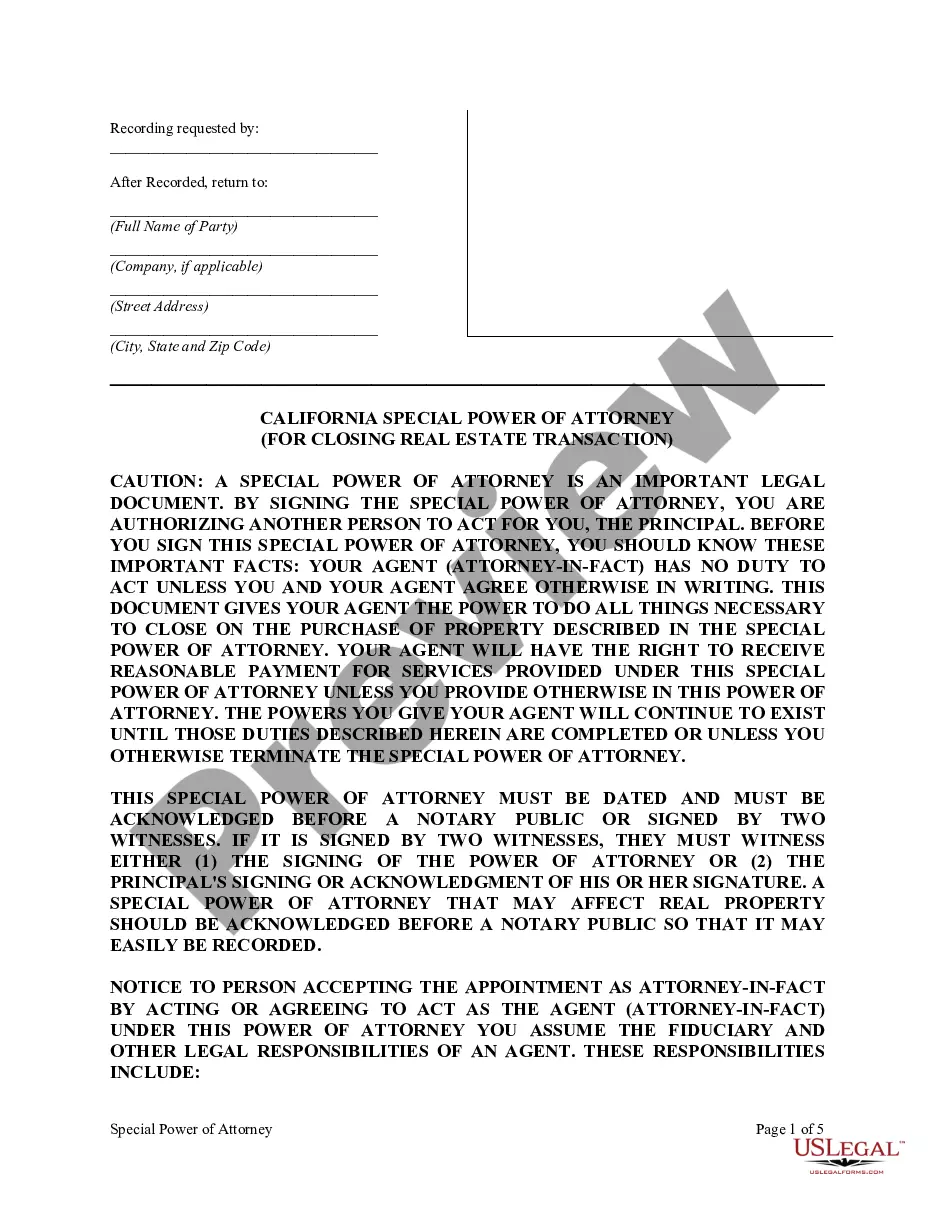
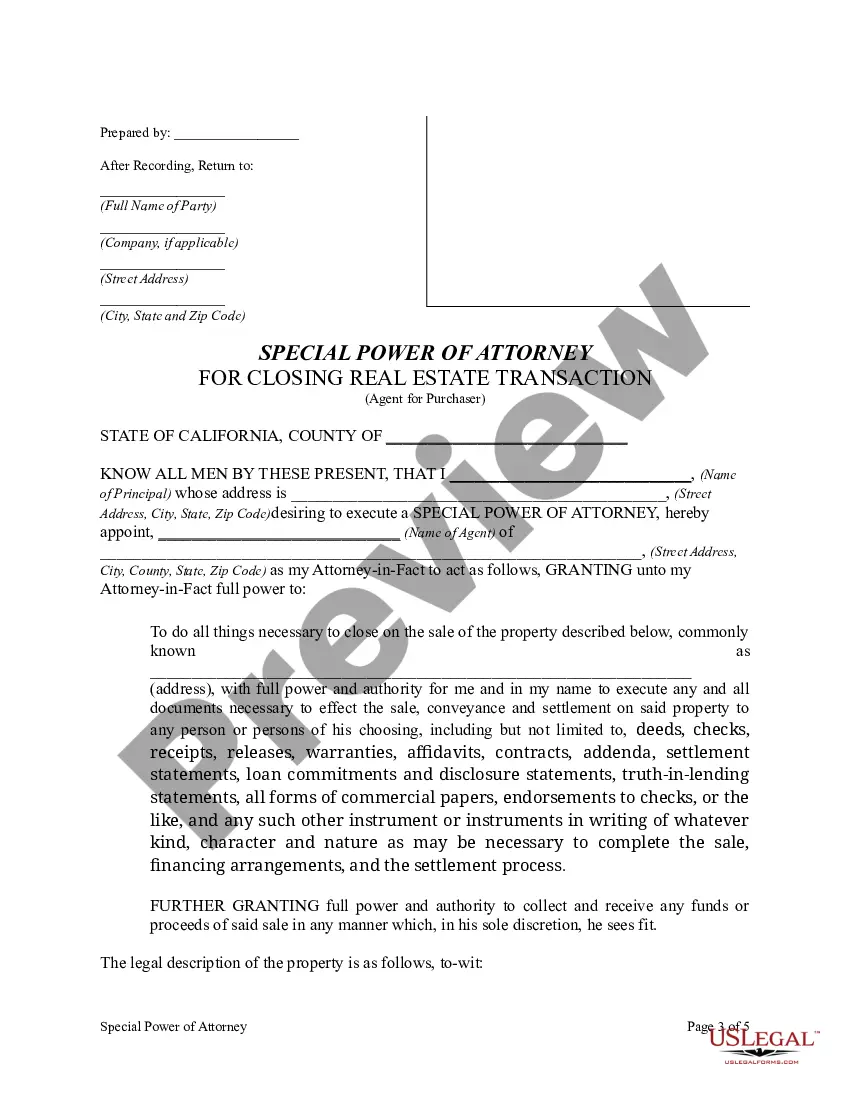
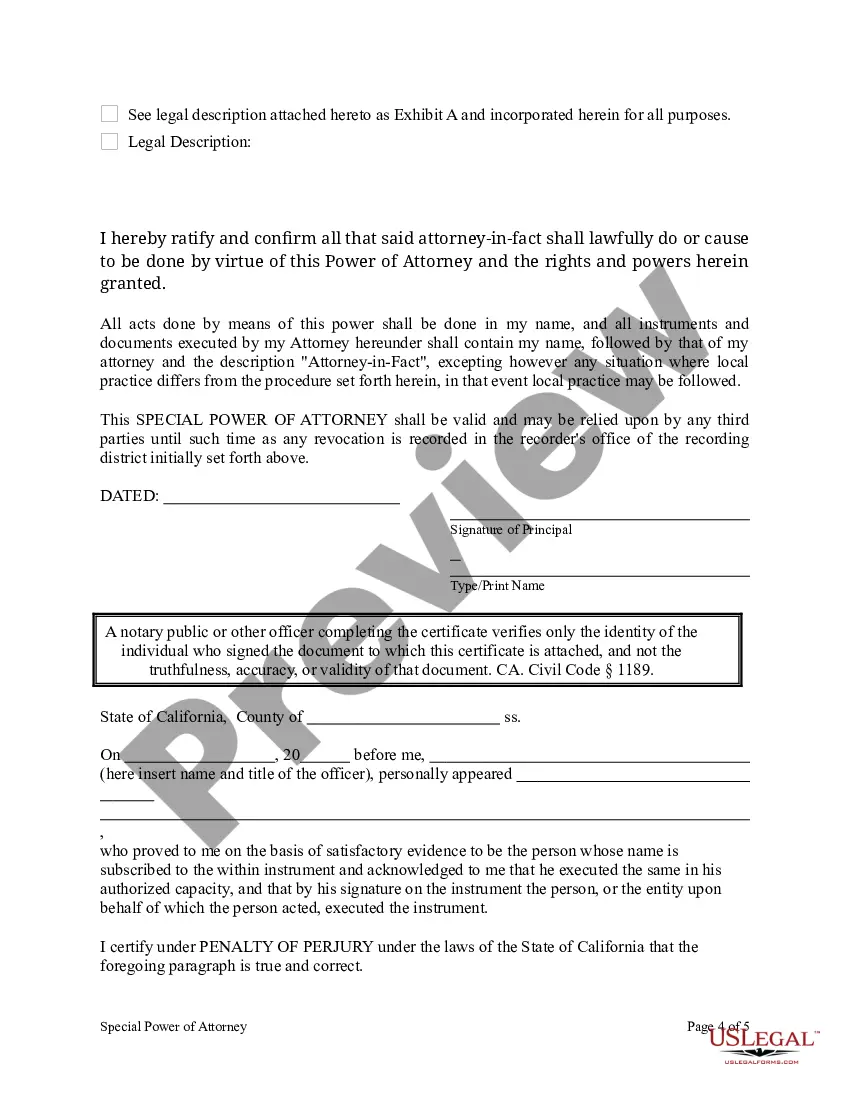
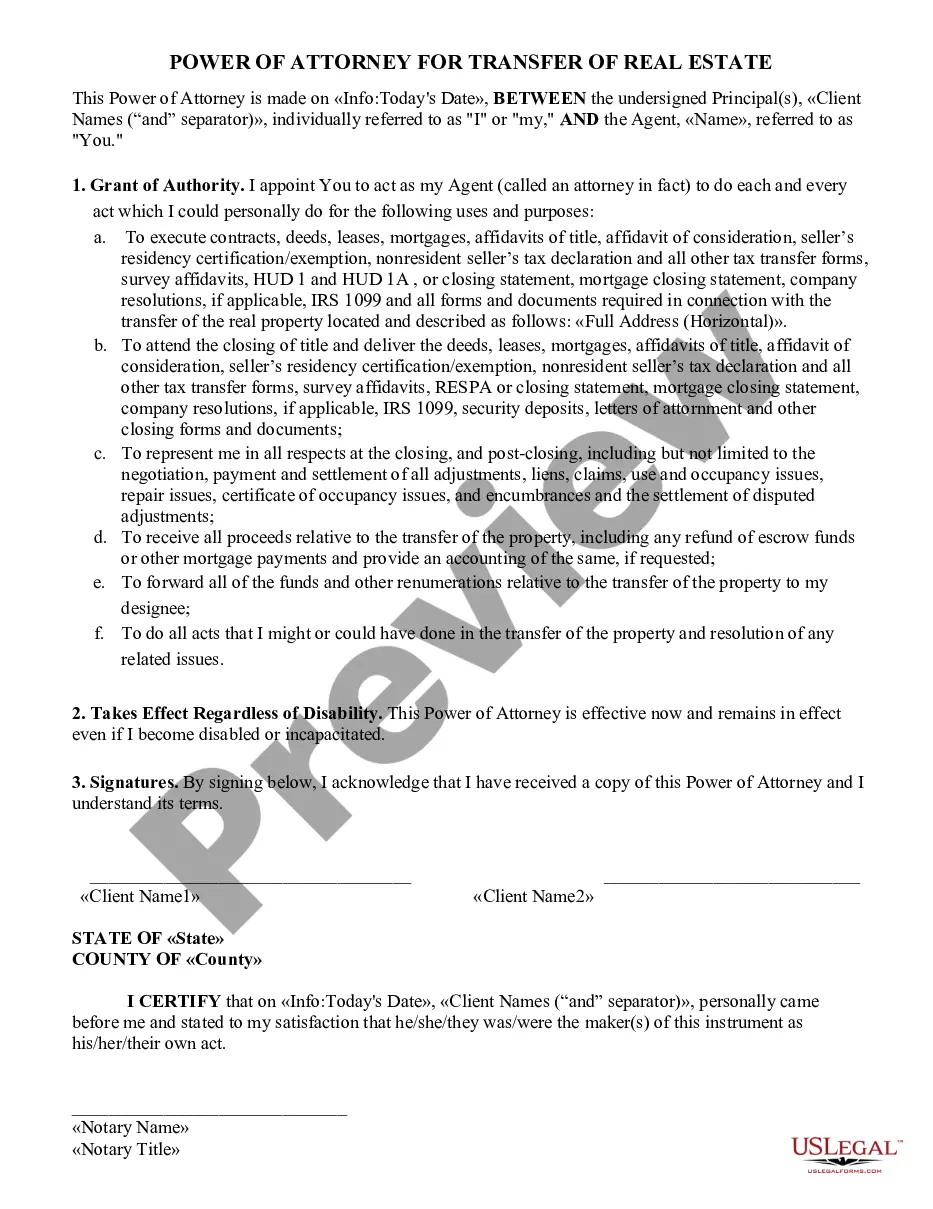
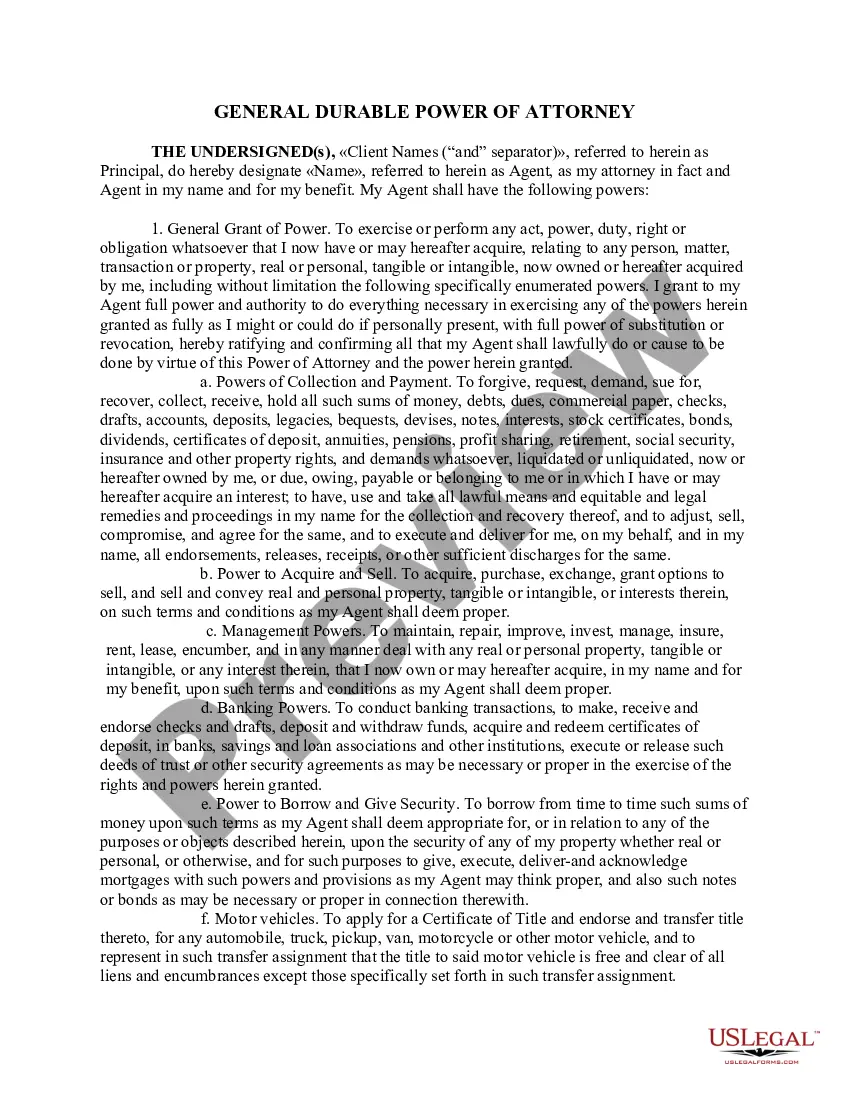
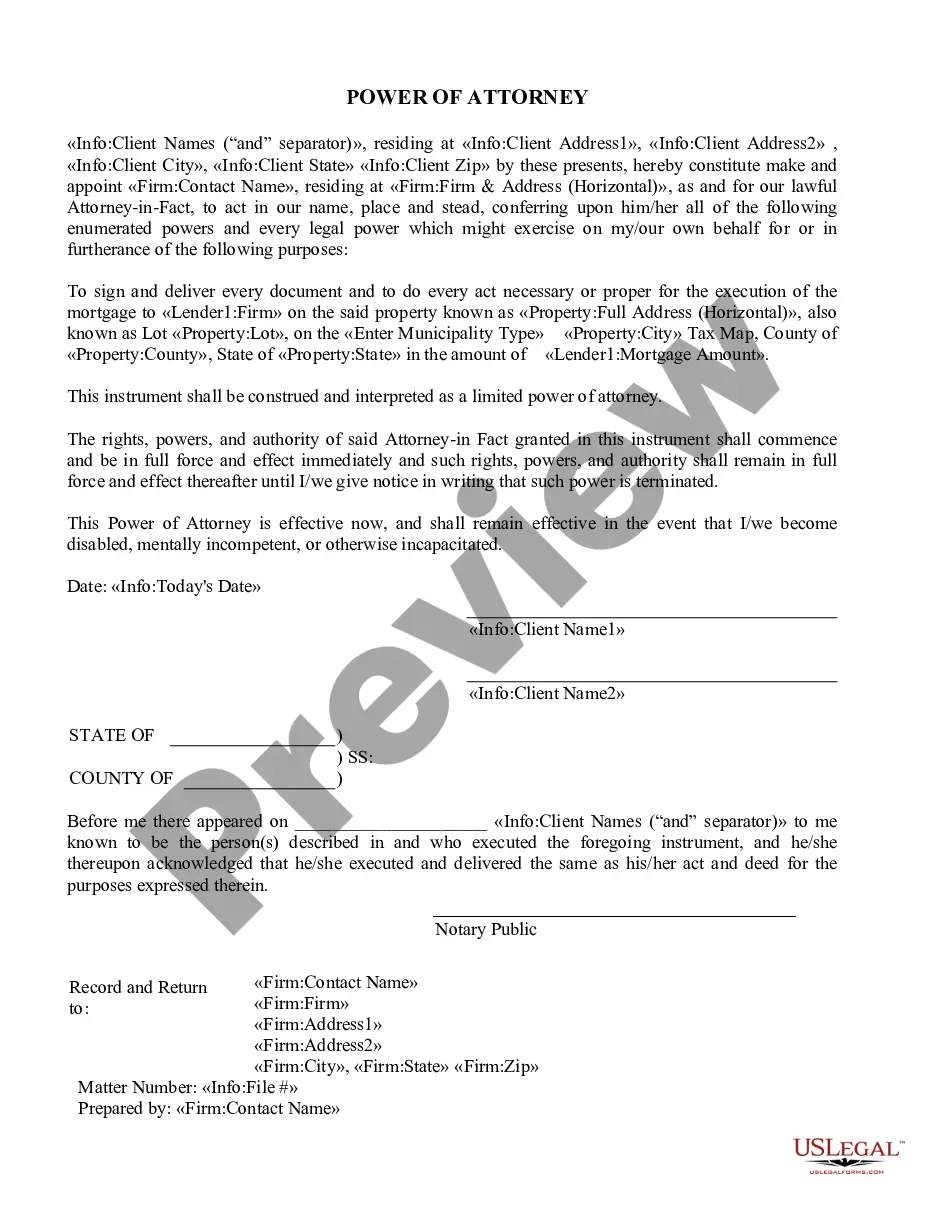
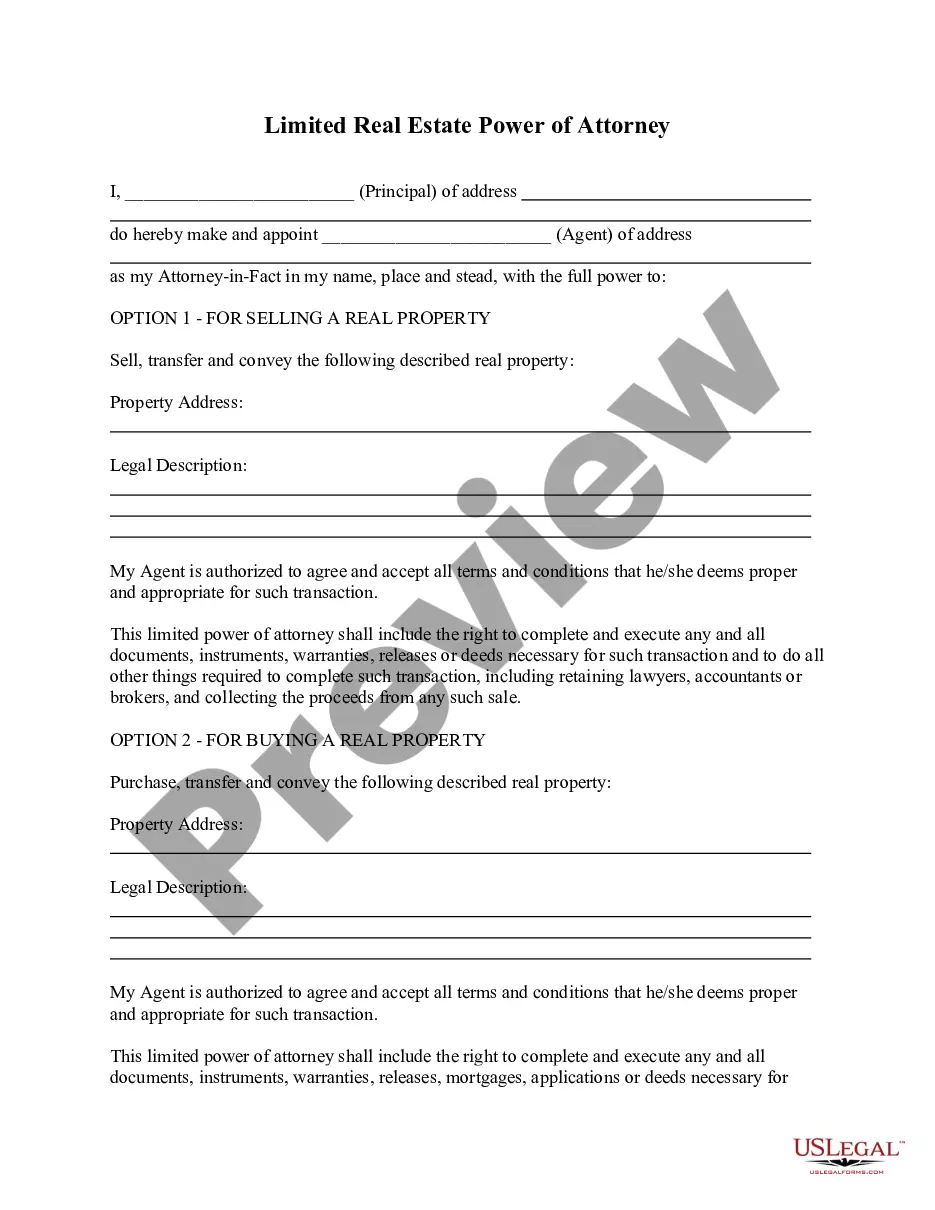
The Special or Limited Power of Attorney for Real Estate Purchase Transaction by Purchaser is a legal document that allows a buyer to appoint an agent, or attorney-in-fact, to act on their behalf during a real estate purchase. This form grants the agent the authority to execute necessary documents, including loan agreements, concerning the purchase of a specific property. Unlike general powers of attorney, this document is specifically tailored for real estate transactions, ensuring focused and limited authority relevant to the property acquisition process.
Key parts of this document
- Authorization of an attorney-in-fact to manage real estate purchase transactions.
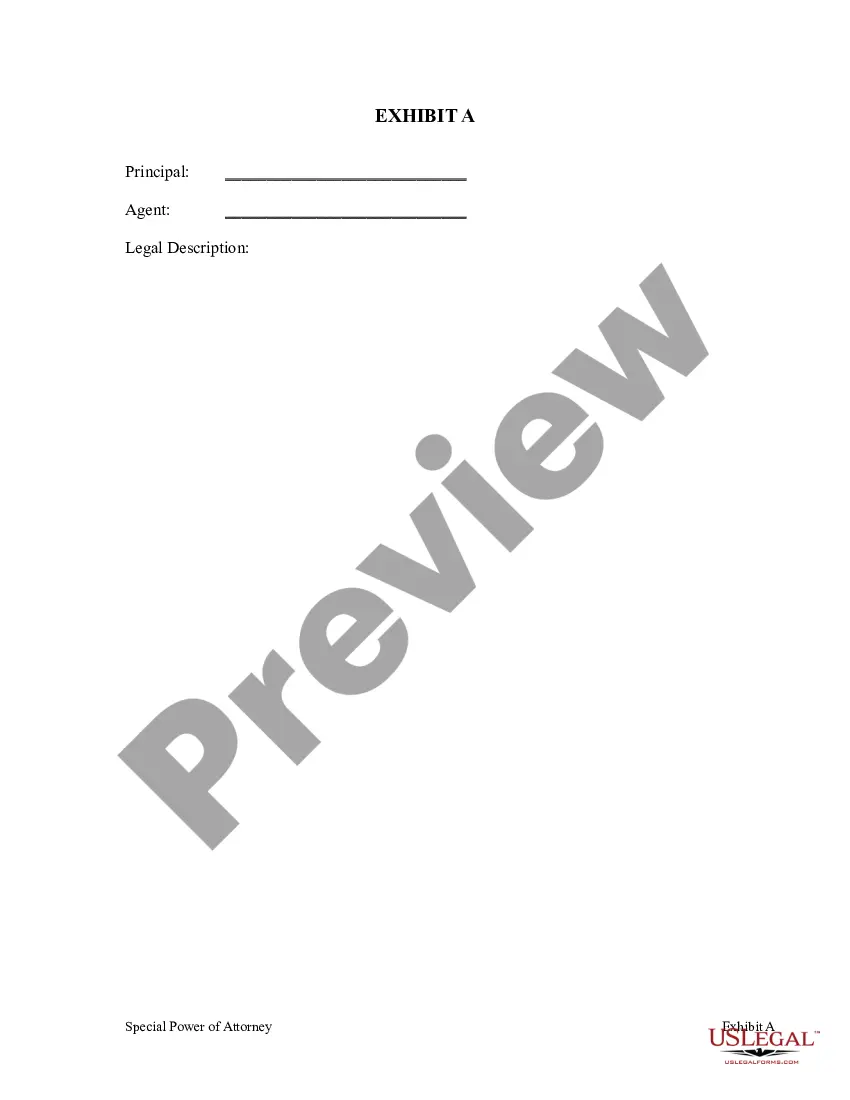
- Identification of the property to be purchased, including address and legal description.
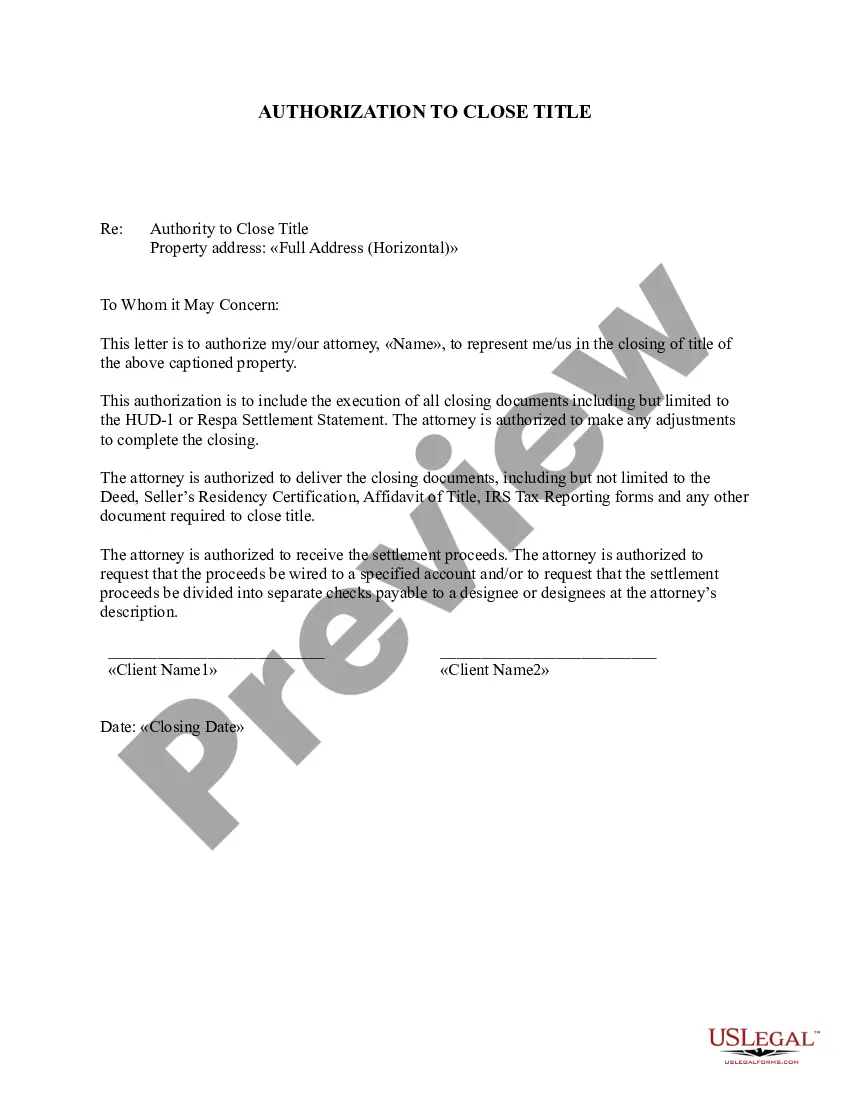
- Provision for the agent to sign necessary documents such as deeds and settlement statements.
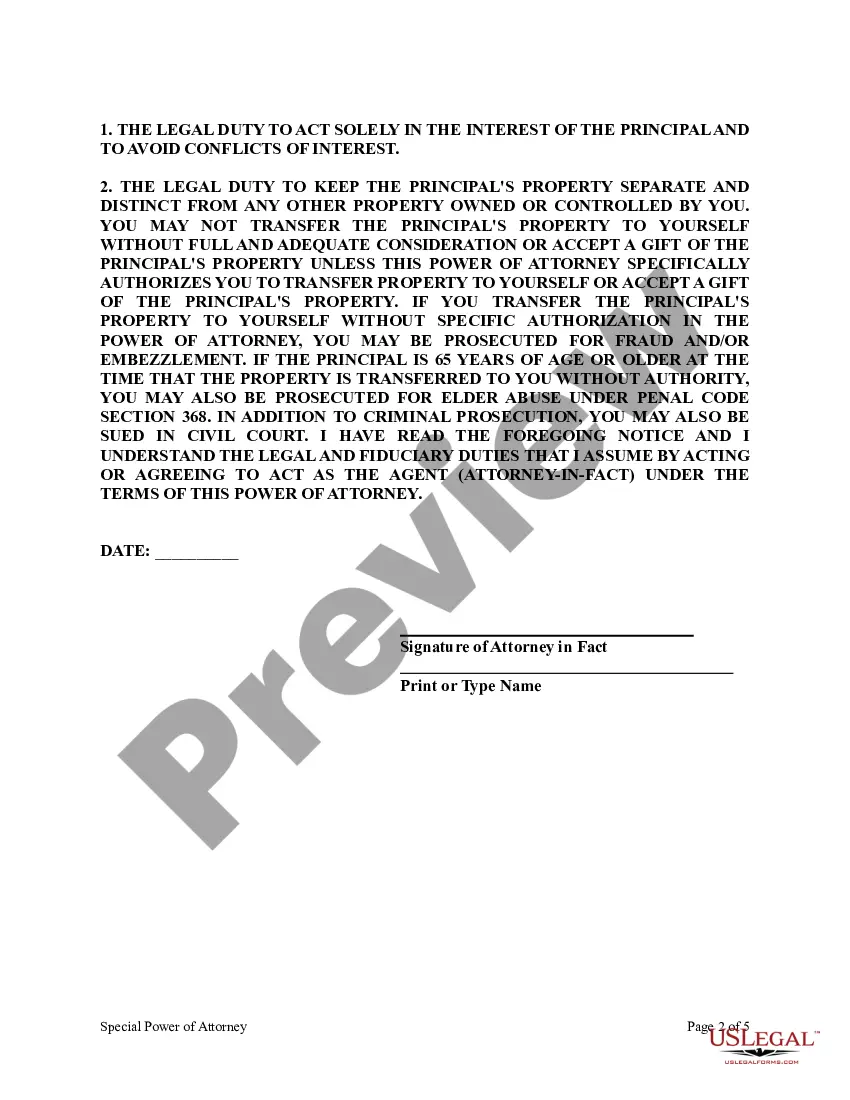
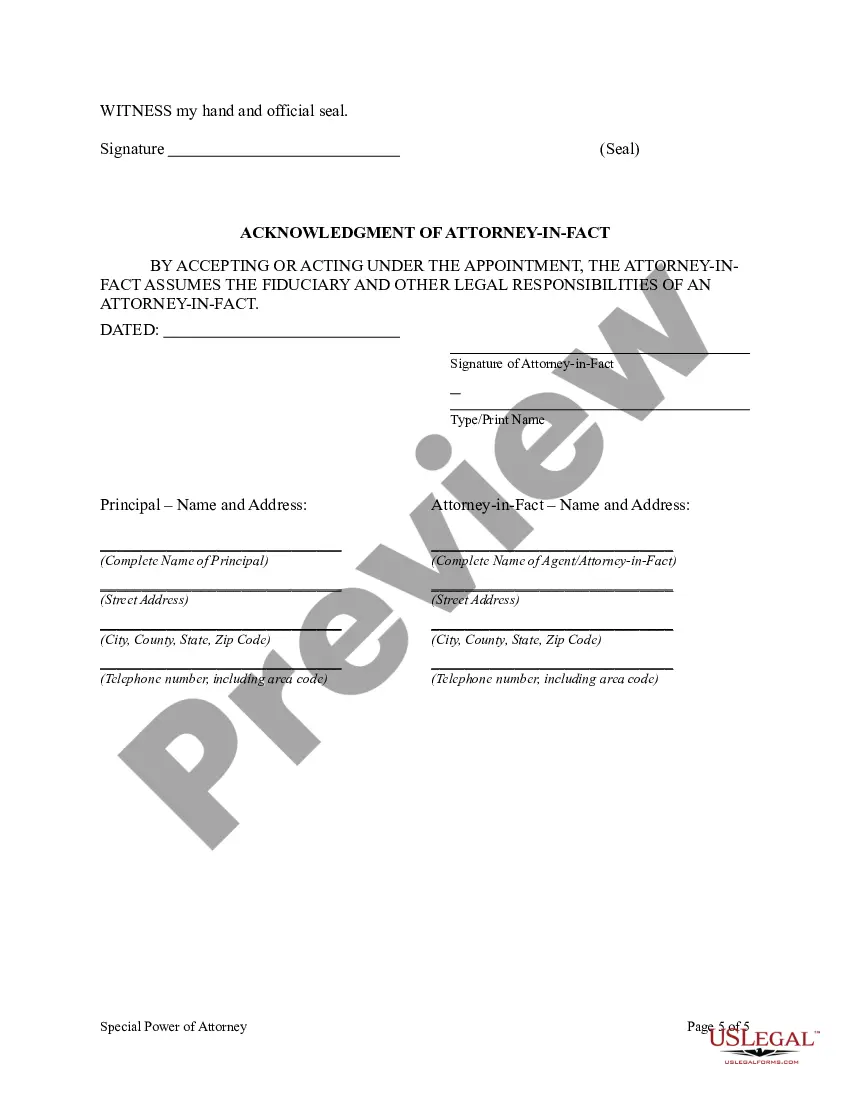
- Verification of the agent's legal duties and responsibilities.
- Requirements for notarization or witness signatures for validation.
When to use this form
This form is essential when a purchaser is unable to be present to sign documents related to a real estate transaction, such as during the closing process. It is also useful when the buyer is purchasing property from a remote location or needs assistance with the paperwork due to time constraints, health reasons, or other circumstances preventing their direct involvement.
Who can use this document
This form is intended for:
- Individuals looking to purchase real estate but unable to attend the closing in person.
- Investors or buyers who want to delegate authority to a trusted advisor or attorney.
- People who need to appoint an agent for specific real estate transactions while maintaining limited powers.
Steps to complete this form
- Identify the parties involved by entering the full name of the purchaser and the appointed attorney-in-fact.
- Specify the property by providing its legal description and address.
- Detail the specific powers granted to the attorney-in-fact regarding the real estate transaction.
- Date the document and ensure it is signed by both the principal and the attorney-in-fact.
- Arrange for notarization or obtain signatures from two witnesses as required.
Is notarization required?
This document requires notarization to meet legal standards. US Legal Forms provides secure online notarization powered by Notarize, allowing you to complete the process through a verified video call, available 24/7.
Get your form ready online
Our built-in tools help you complete, sign, share, and store your documents in one place.
Make edits, fill in missing information, and update formatting in US Legal Forms—just like you would in MS Word.
Download a copy, print it, send it by email, or mail it via USPS—whatever works best for your next step.
Sign and collect signatures with our SignNow integration. Send to multiple recipients, set reminders, and more. Go Premium to unlock E-Sign.
If this form requires notarization, complete it online through a secure video call—no need to meet a notary in person or wait for an appointment.
We protect your documents and personal data by following strict security and privacy standards.

Make edits, fill in missing information, and update formatting in US Legal Forms—just like you would in MS Word.

Download a copy, print it, send it by email, or mail it via USPS—whatever works best for your next step.

Sign and collect signatures with our SignNow integration. Send to multiple recipients, set reminders, and more. Go Premium to unlock E-Sign.

If this form requires notarization, complete it online through a secure video call—no need to meet a notary in person or wait for an appointment.

We protect your documents and personal data by following strict security and privacy standards.
Avoid these common issues
- Failing to include the complete legal description of the property being purchased.
- Not obtaining notarization or witness signatures, which can invalidate the document.
- Delegating too broad powers instead of limiting them specifically to the real estate transaction.
- Not informing the appointed attorney-in-fact of their responsibilities and duties.
Main things to remember
- This Special Power of Attorney allows for the delegation of real estate transaction tasks.
- It is crucial to properly fill out and notarize the form to ensure its validity.
- Understanding the implications of granting authority to an Attorney-in-Fact is essential for the Principal.
Looking for another form?
Form popularity
FAQ
In California, a power of attorney does not need to be filed with the court to be valid. However, the document must be notarized to ensure its enforceability, especially for real estate transactions. Recording the power of attorney may be necessary for certain transactions to provide clear evidence of authority. Utilizing a platform like UsLegalForms can help ensure proper drafting and compliance.
To obtain a limited power of attorney in California, start by drafting a document that clearly outlines the authority you wish to grant. You can customize forms through platforms like UsLegalForms to simplify this process. Ensure you include the specific powers, such as those related to real estate purchases, and have it notarized. This step confirms its legal validity.
A special power of attorney for real estate in California allows a purchaser to authorize another person to act on their behalf for a specific real estate transaction. This document is crucial when the purchaser cannot be present but needs to complete the buy. It ensures that the designated agent can sign documents, negotiate terms, and manage other tasks necessary for the transaction. In short, it streamlines the process of purchasing property.
In California, a limited power of attorney often needs to be notarized to be legally valid, especially for real estate transactions. Notarization adds an additional layer of authenticity and ensures that the document is recognized by all parties involved. You can create your document confidently using platforms such as uslegalforms, which provide guidance on notarization requirements.
A real estate transaction is the process that occurs when a seller offers their home for sale, and a buyer agrees to purchase that property.Before the closing can take place, and before the title of the property transfers to the buyer, a multitude of activities and tasks must be completed on time.
There are essentially four types of real estate contracts: purchase agreement contracts, contracts for deed, lease agreements, and power of attorney contracts. They each have different uses and stipulations.
Pre-Approval Is a Good Idea. Open an Escrow Account. Title Search and Insurance. Hire an Attorney. Negotiate Closing Costs. Complete the Home Inspection. Get a Pest Inspection. Renegotiate the Offer.
Pre-Approval Is a Good Idea. Open an Escrow Account. Title Search and Insurance. Hire an Attorney. Negotiate Closing Costs. Complete the Home Inspection. Get a Pest Inspection. Renegotiate the Offer.
Closing costs are all of the fees and expenses associated with the closing or settlement of a real estate transaction, and they can vary dramatically. The buyer typically pays the closing costs, while other costs are usually the responsibility of the seller.