California Revocation of Anatomical Gift Donation
What is this form?
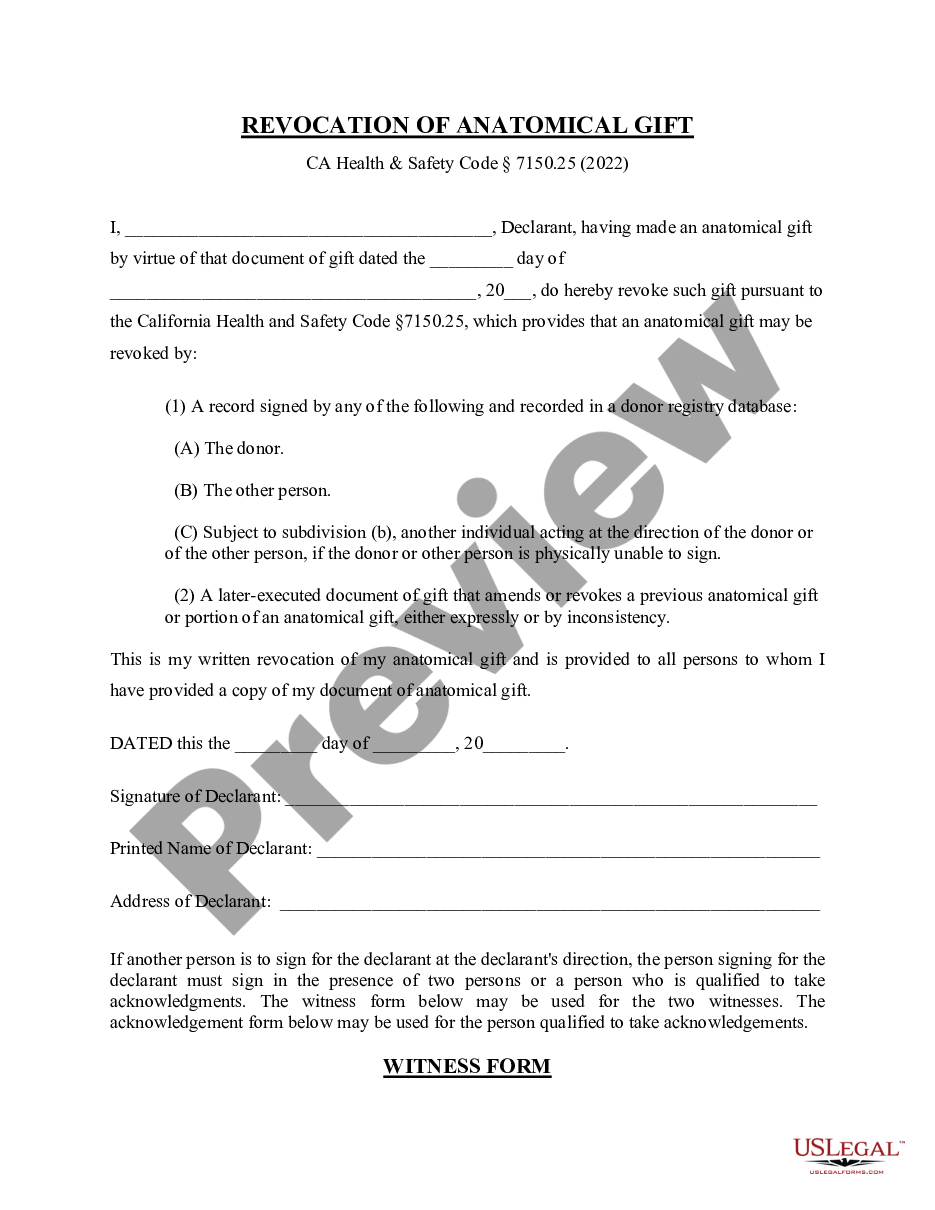
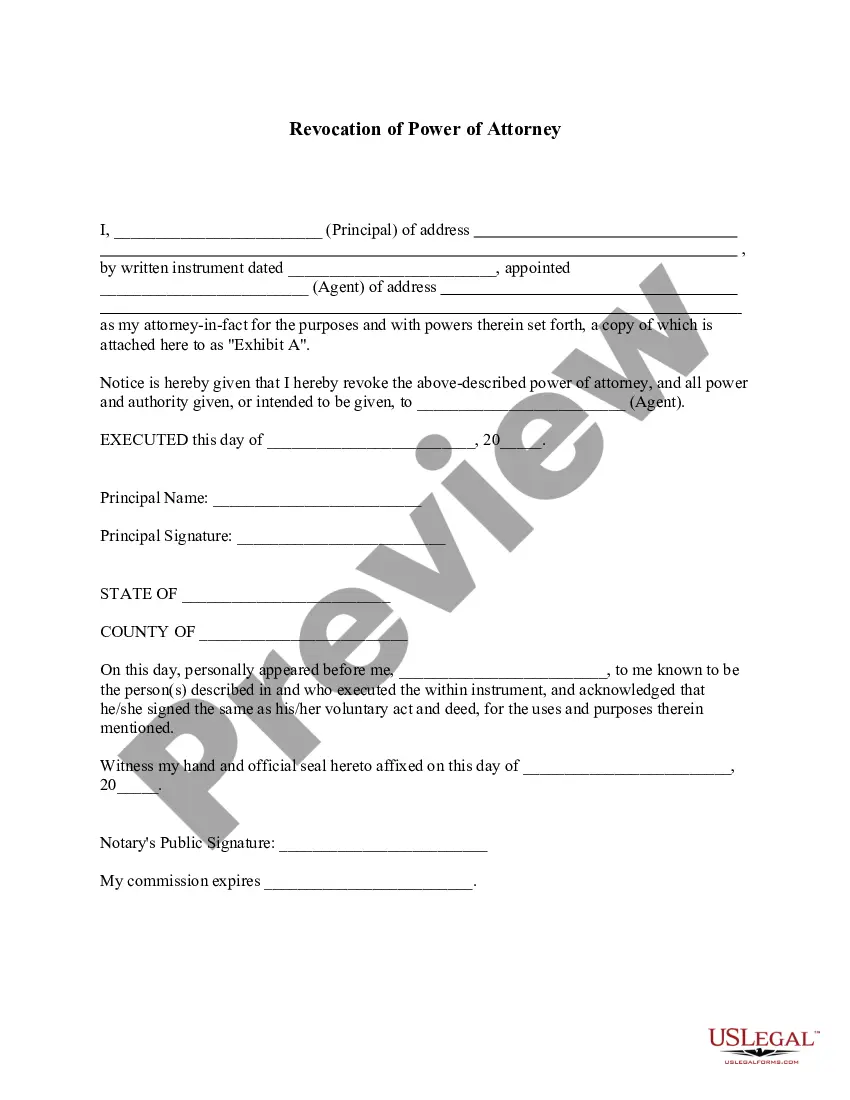
The Revocation of Anatomical Gift Donation form is a legal document allowing an individual to revoke a previously made anatomical gift, typically specifying organs or body parts intended for donation after death. This form is essential for those reconsidering their donation decisions and serves as a formal declaration that nullifies prior intent, particularly if made outside a will. Unlike an Anatomical Gift Donation, which grants permission for organ donation, this revocation specifically communicates the donor's current wishes.
What’s included in this form
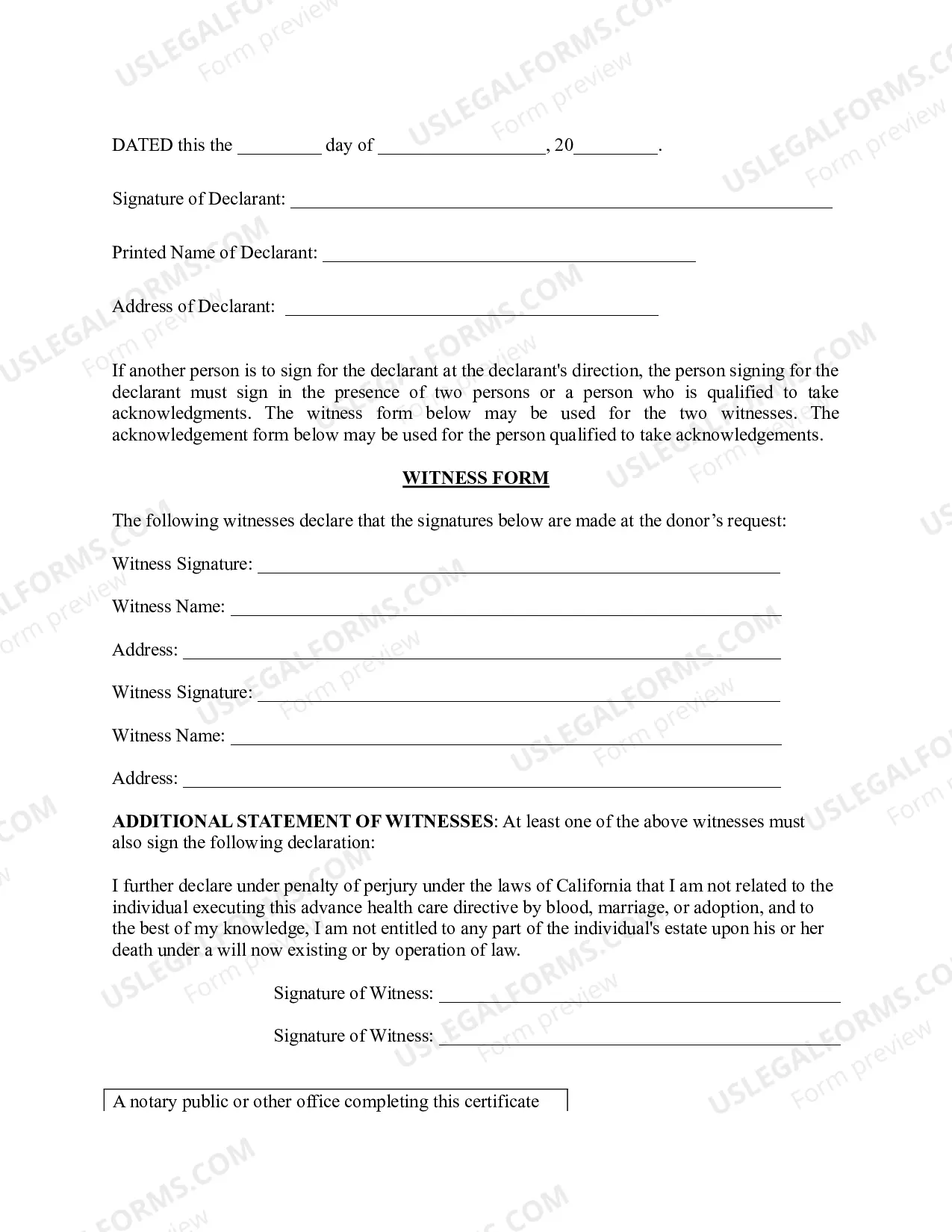
- Declarant information including name and address.
- Details of the original anatomical gift, including the date it was made.
- A statement revoking the previous anatomical gift as permitted under California law.
- Signatures from the declarant and witnesses to validate the revocation.
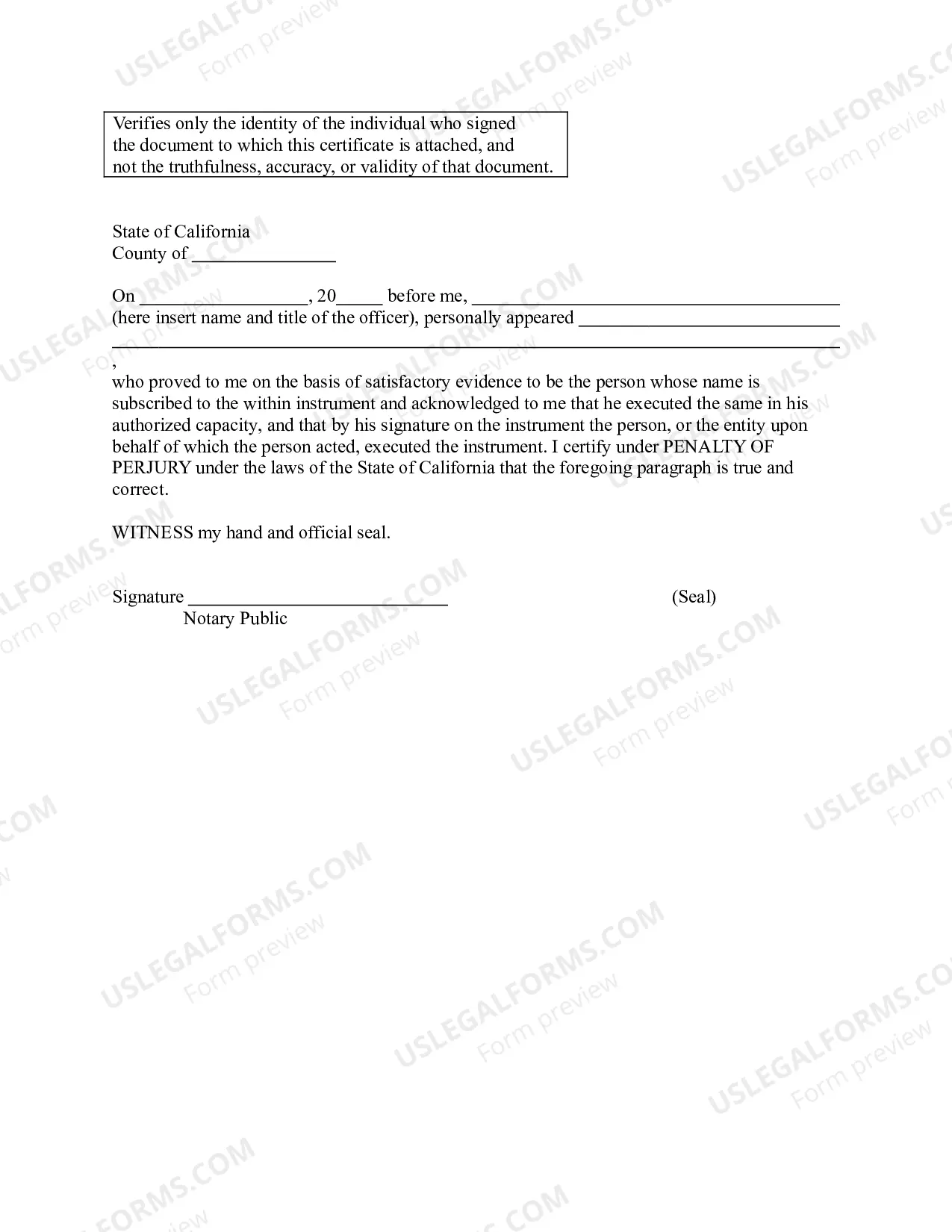
- Notary acknowledgment, if required.
Situations where this form applies
This form should be used when an individual decides to change their mind about donating their organs or body parts upon death. Situations might include a change of personal beliefs, medical conditions that alter donation eligibility, or a desire to inform family members of a new decision. It is crucial to complete this form formally to ensure that one's wishes are respected and known by relevant parties.
Who can use this document
This form is intended for:
- Individuals who have previously made an anatomical gift and wish to revoke it.
- Anyone who prefers to ensure their current wishes regarding organ donation are officially documented.
- Individuals with changing medical or personal circumstances that may affect their decision to donate.
Steps to complete this form
- Fill in your personal details, including your name and address.
- Indicate the date of the original anatomical gift you wish to revoke.
- Carefully read the revocation statement and add the current date.
- Sign the document as the declarant to confirm your decision.
- Ensure that the signature is witnessed by at least two individuals.
- Consider obtaining notarization if required by your local laws or regulations.
Does this form need to be notarized?
This form needs to be notarized to ensure legal validity. US Legal Forms provides secure online notarization powered by Notarize, allowing you to complete the process through a verified video call, available anytime.
Get your form ready online
Our built-in tools help you complete, sign, share, and store your documents in one place.
Make edits, fill in missing information, and update formatting in US Legal Forms—just like you would in MS Word.
Download a copy, print it, send it by email, or mail it via USPS—whatever works best for your next step.
Sign and collect signatures with our SignNow integration. Send to multiple recipients, set reminders, and more. Go Premium to unlock E-Sign.
If this form requires notarization, complete it online through a secure video call—no need to meet a notary in person or wait for an appointment.
We protect your documents and personal data by following strict security and privacy standards.

Make edits, fill in missing information, and update formatting in US Legal Forms—just like you would in MS Word.

Download a copy, print it, send it by email, or mail it via USPS—whatever works best for your next step.

Sign and collect signatures with our SignNow integration. Send to multiple recipients, set reminders, and more. Go Premium to unlock E-Sign.

If this form requires notarization, complete it online through a secure video call—no need to meet a notary in person or wait for an appointment.

We protect your documents and personal data by following strict security and privacy standards.
Typical mistakes to avoid
- Not signing the form or failing to provide a date.
- Neglecting to have the revocation witnessed by two individuals.
- Using unclear language that may cause confusion about the intent to revoke.
- Failing to provide the correct details of the original document of gift.
Benefits of using this form online
- Convenience of instant access and downloading from anywhere.
- Editable template that allows customization based on individual needs.
- Ensured compliance with legal standards and accuracy.
- Time-saving process as you can complete and save your form quickly.
Looking for another form?
Form popularity
FAQ
The Uniform Anatomical Gift Act facilitates and regulates the process of organ and tissue donation. It ensures that donations are made voluntarily and with proper consent from the donor. By understanding the California Revocation of Anatomical Gift Donation, individuals can take proactive steps to ensure their donation wishes are honored, even if they decide to change their mind later.
The Uniform Anatomical Gift Act is the primary law that regulates organ donation across the United States. This act provides a standardized process for individuals wishing to donate their organs posthumously. For Californians, understanding the California Revocation of Anatomical Gift Donation is vital for ensuring that one’s wishes regarding organ donation are respected and upheld.
In simple terms, the Uniform Anatomical Gift Act allows people to donate their organs after death. It outlines who can donate, how to become a donor, and how to revoke a donation if someone changes their mind. Knowing about the California Revocation of Anatomical Gift Donation can help you feel confident in making your choices regarding organ donation.
The Revised Uniform Anatomical Gift Act updates the original law to streamline the donation process and enhance donor rights. This act emphasizes informed consent and allows for more flexibility in the donation process. For residents considering their options, it’s crucial to understand the California Revocation of Anatomical Gift Donation, which permits individuals to change their mind about their organ donations.
This statement is true. The Uniform Anatomical Gift Act establishes the legal framework for organ donation in the United States. It provides guidelines for how individuals can make anatomical gifts and, importantly, how these donations can be revoked. Understanding the California Revocation of Anatomical Gift Donation is essential for those considering organ donation.
Organ donation refers specifically to the act of giving one or more organs for transplantation, while the term anatomical gift encompasses not only organs but also tissues and whole bodies for medical research and education. Both concepts are vital in discussions about the California Revocation of Anatomical Gift Donation. Understanding the distinctions can help individuals make informed decisions regarding their anatomical gifts and ensure their intentions are clear.
The Anatomical Gift Act is legislation that governs how individuals can donate their organs and tissues after death. This act provides guidelines for making anatomical gifts and ensures that a donor's wishes are honored during the process. When considering the California Revocation of Anatomical Gift Donation, it is important to know your rights and the legal steps involved in revoking or affirming your donation decision.
DBD, or Donation after Brain Death, refers to the process where organ donation occurs after a person has been declared brain dead. On the other hand, DCD, or Donation after Cardiac Death, involves organ donation after the heart stops beating. Understanding these terms is essential when navigating the California Revocation of Anatomical Gift Donation process. Each type of donation has different implications for both donors and recipients.
The purpose of the Uniform Anatomical Gift Act is to encourage organ and tissue donation while ensuring respect for the donor's rights. This act promotes public awareness about the importance of donating anatomical gifts, which can save lives. Additionally, it safeguards the process, ensuring that donors' wishes are fulfilled even after their passing. Understanding this purpose is essential when discussing the California Revocation of Anatomical Gift Donation.
California's organ donor policy encourages individuals to register as organ donors through the Department of Motor Vehicles or designated organizations. The policy mandates that donors' wishes be respected, making it easier for families to honor their loved ones' decisions. Additionally, the policy outlines procedures for revocation, emphasizing the importance of the California Revocation of Anatomical Gift Donation. This ensures transparency and respect for donor intent.