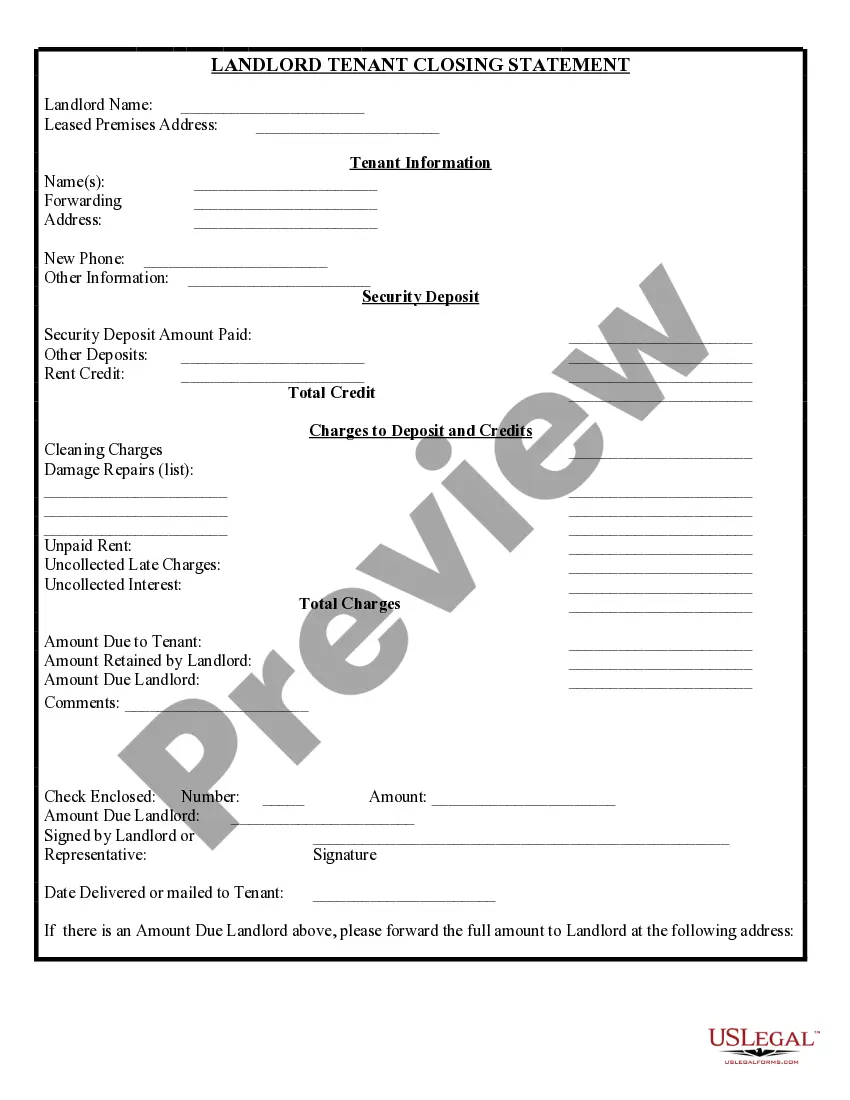
California Landlord Tenant Closing Statement to Reconcile Security Deposit
About this form
The Landlord Tenant Closing Statement to Reconcile Security Deposit is a vital document that allows landlords to itemize the security deposit amounts received from tenants, detailing any deductions for damages beyond regular wear and tear. This form distinguishes itself from similar forms by focusing specifically on reconciliation of the security deposit, ensuring both parties have a clear record of financial transactions. By accurately documenting these details, it facilitates transparency and helps prevent disputes over the security deposit upon the tenant's departure.
Key components of this form
- Landlord's contact information.
- Tenant's contact information.
- Total security deposit amount collected.
- Itemized list of deductions for damages or repairs.
- Final balance due to the tenant or retained by the landlord.
- Signatures of both parties to confirm agreement.
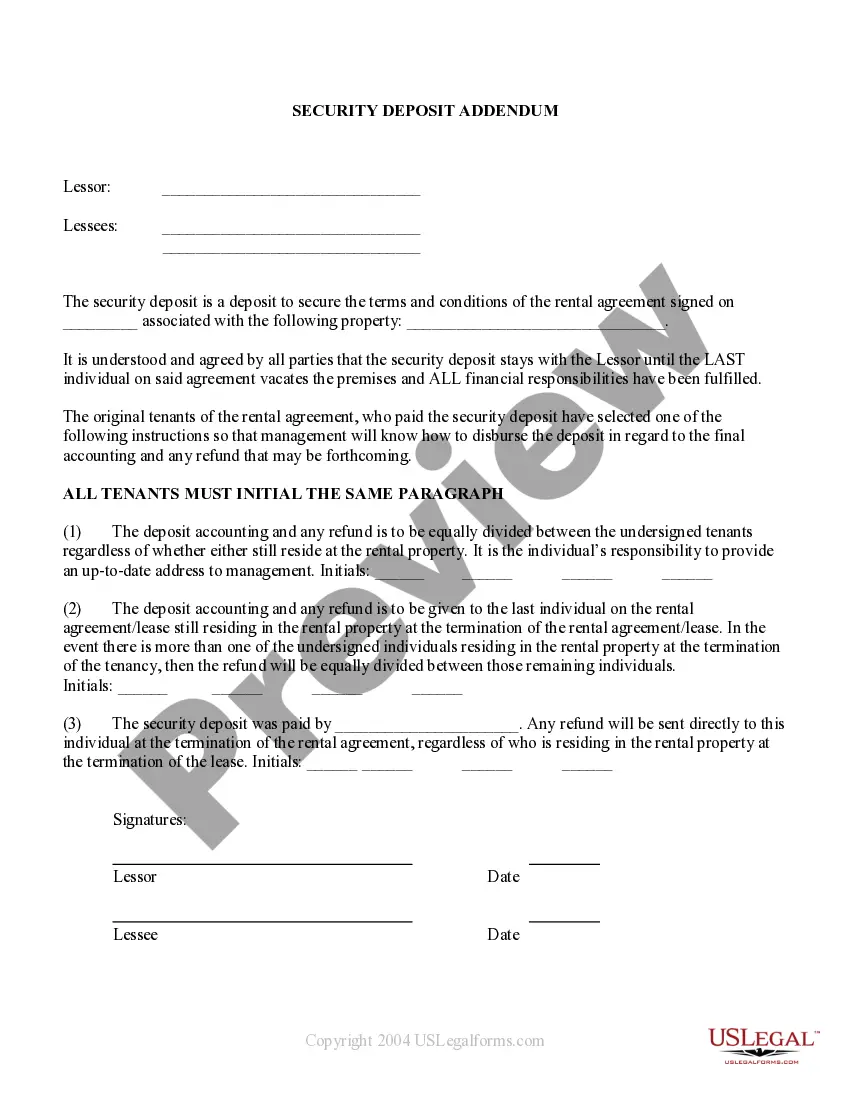
When to use this document
This form is used when a tenant moves out and the landlord needs to account for the return of the security deposit. It is essential when there are deductions to be made for damages or unpaid rent. Utilizing this form helps document all financial transactions related to the security deposit and ensures both parties are aware of the final amount returned or retained. It is also useful in states with specific laws governing the timeline and conditions for returning security deposits.
Who should use this form
This form is intended for:
- Landlords or property management companies managing rental properties.
- Tenants who are vacating a rental property and want to ensure proper documentation of their security deposit.
- Both parties involved in rental agreements requiring a reconciliation of the security deposit.
Steps to complete this form
- Identify and enter the names and addresses of both the landlord and tenant.
- Record the total amount of the security deposit collected.
- List any deductions for damages, cleaning, or unpaid rent with corresponding dollar amounts.
- Calculate and state the remaining balance to be returned to the tenant.
- Obtain signatures from both parties to validate the agreement.
Does this document require notarization?
In most cases, this form does not require notarization. However, some jurisdictions or signing circumstances might. US Legal Forms offers online notarization powered by Notarize, accessible 24/7 for a quick, remote process.
Get your form ready online
Our built-in tools help you complete, sign, share, and store your documents in one place.
Make edits, fill in missing information, and update formatting in US Legal Forms—just like you would in MS Word.
Download a copy, print it, send it by email, or mail it via USPS—whatever works best for your next step.
Sign and collect signatures with our SignNow integration. Send to multiple recipients, set reminders, and more. Go Premium to unlock E-Sign.
If this form requires notarization, complete it online through a secure video call—no need to meet a notary in person or wait for an appointment.
We protect your documents and personal data by following strict security and privacy standards.

Make edits, fill in missing information, and update formatting in US Legal Forms—just like you would in MS Word.

Download a copy, print it, send it by email, or mail it via USPS—whatever works best for your next step.

Sign and collect signatures with our SignNow integration. Send to multiple recipients, set reminders, and more. Go Premium to unlock E-Sign.

If this form requires notarization, complete it online through a secure video call—no need to meet a notary in person or wait for an appointment.

We protect your documents and personal data by following strict security and privacy standards.
Common mistakes
- Failing to provide clear itemization of deductions, leading to disputes.
- Not obtaining signatures from both parties, which can invalidate the agreement.
- Incorrectly calculating the final balance due, causing confusion for the tenant.
Why use this form online
- Convenient access to a professionally drafted form that complies with state laws.
- Easy to edit and customize for specific situations and amounts.
- Reliable documentation that can be saved, shared, and printed as needed.
Looking for another form?
Form popularity
FAQ
The new law in California has introduced important changes regarding security deposits. Under the updated legislation, landlords can no longer collect more than two months' rent for unfurnished properties or three months' rent for furnished ones. Understanding this new framework is essential for both tenants and landlords, and utilizing a California Landlord Tenant Closing Statement to Reconcile Security Deposit will help both parties ensure compliance and clarity in financial transactions.
Yes, landlords in California must provide receipts for any deductions taken from your security deposit. When you receive a California Landlord Tenant Closing Statement to Reconcile Security Deposit, it must include an itemized list of charges, along with receipts for any repairs or cleaning expenses. This requirement promotes accountability and helps tenants verify the legitimacy of deductions.
To get your security deposit back in California, you need to provide your landlord with your forwarding address in writing. According to state law, landlords are required to return the deposit within 21 days after you move out. Additionally, a California Landlord Tenant Closing Statement to Reconcile Security Deposit should be provided, detailing any deductions made. This ensures transparency and helps you understand the final amount you may receive.
Filling out a landlord statement involves providing key information about the tenancy and the condition of the property. Start by including your personal details, such as your name and address, followed by the landlord’s information. Use the California Landlord Tenant Closing Statement to Reconcile Security Deposit as a guide to document any damages or issues accurately. This organized approach not only facilitates clear communication but also promotes a smoother process for your deposit return.
To effectively communicate with your landlord about getting your deposit back, first, clearly state your request. Mention the California Landlord Tenant Closing Statement to Reconcile Security Deposit, as this document outlines your rights. Politely ask for an itemized list of any deductions, and provide supporting evidence, such as photos or receipts. A respectful conversation can help maintain a positive relationship while ensuring you secure your funds.
California has enacted new regulations regarding security deposits to protect tenants. The updated law limits the total deposit amount to two months' rent for unfurnished properties and three months' rent for furnished ones. Additionally, the California Landlord Tenant Closing Statement to Reconcile Security Deposit can be used to itemize deductions, ensuring transparency between landlords and tenants. Staying informed about these changes will help you better manage your rights as a tenant.
To request your security deposit back, start by writing a formal letter to your landlord. In this letter, clearly state your request for the return of the security deposit and provide your new address for the refund. Include your contact information, the dates of your tenancy, and reference the California Landlord Tenant Closing Statement to Reconcile Security Deposit. This document can help clarify any discrepancies and ensure a smooth transaction.
To send the security deposit back to a tenant, ensure you have completed a thorough inspection of the rental unit. Provide the tenant with a California Landlord Tenant Closing Statement to Reconcile Security Deposit that details any deductions and the reasons for them. Finally, issue the refund in a timely manner to maintain a positive relationship and fulfill legal obligations.
To retrieve your security deposit from your landlord in California, it's essential to first review your lease agreement for specific terms. Next, follow up with a written request for the deposit return, citing your California Landlord Tenant Closing Statement to Reconcile Security Deposit. If the landlord fails to respond or delays, you may consider mediation or seeking legal advice through platforms like US Legal Forms to ease the process.
To write a letter for your security deposit return, start by stating your full name, address, and the rental property details. Clearly request the return of your security deposit, referencing your California Landlord Tenant Closing Statement to Reconcile Security Deposit. Make sure to include your forwarding address for the deposit. This formal approach ensures that landlords understand your expectation for a prompt refund.