Mississippi Narrative of Foreclosure Sale and Procedure
Overview of this form
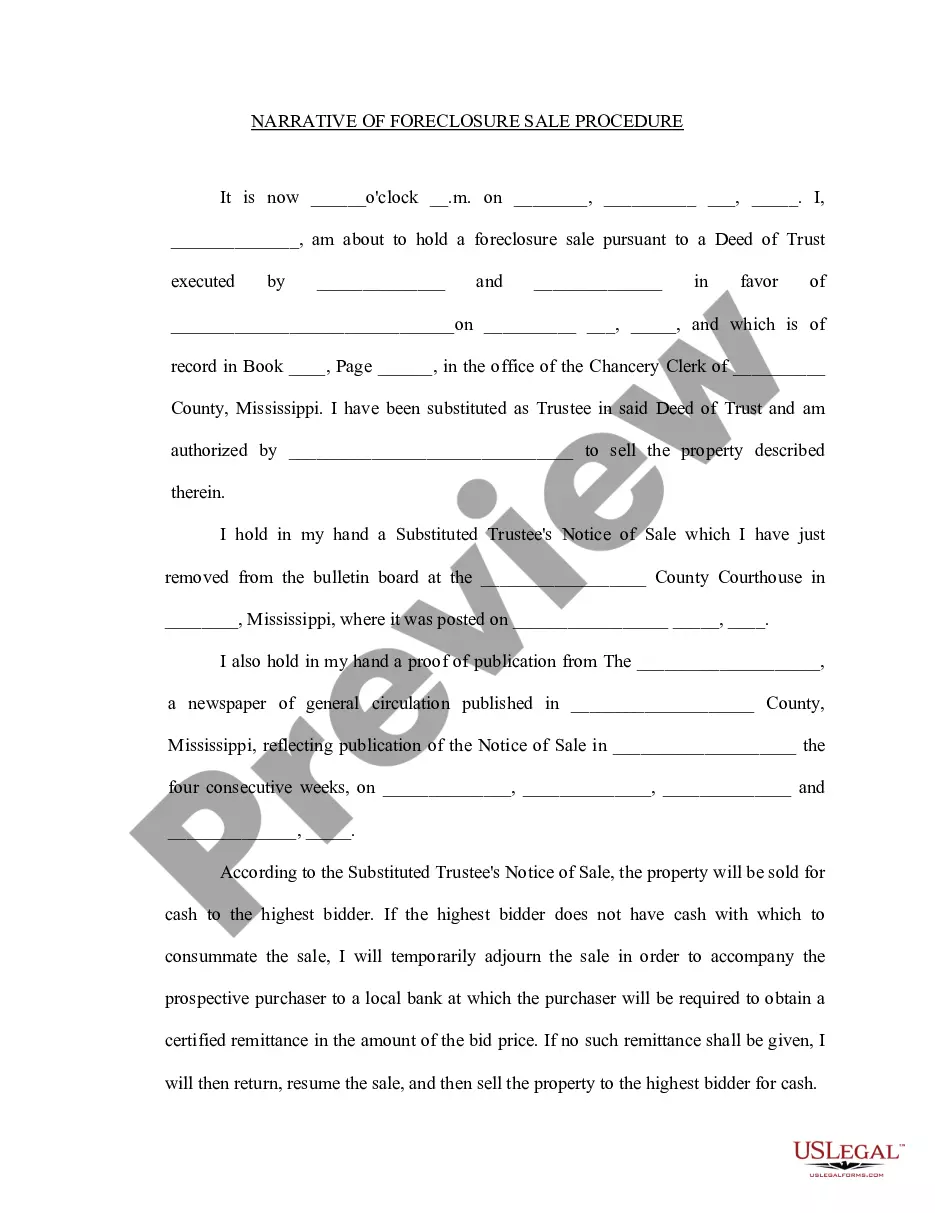
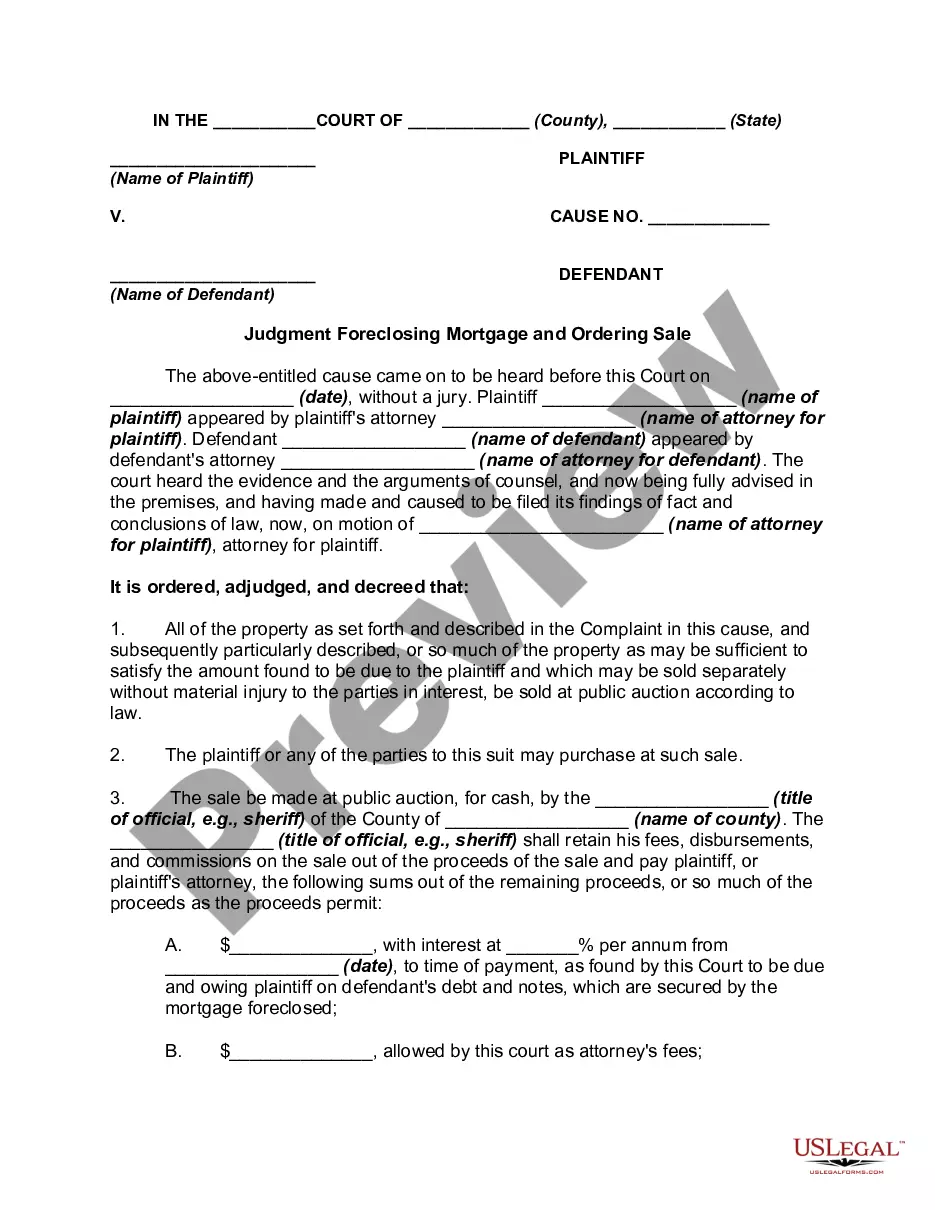
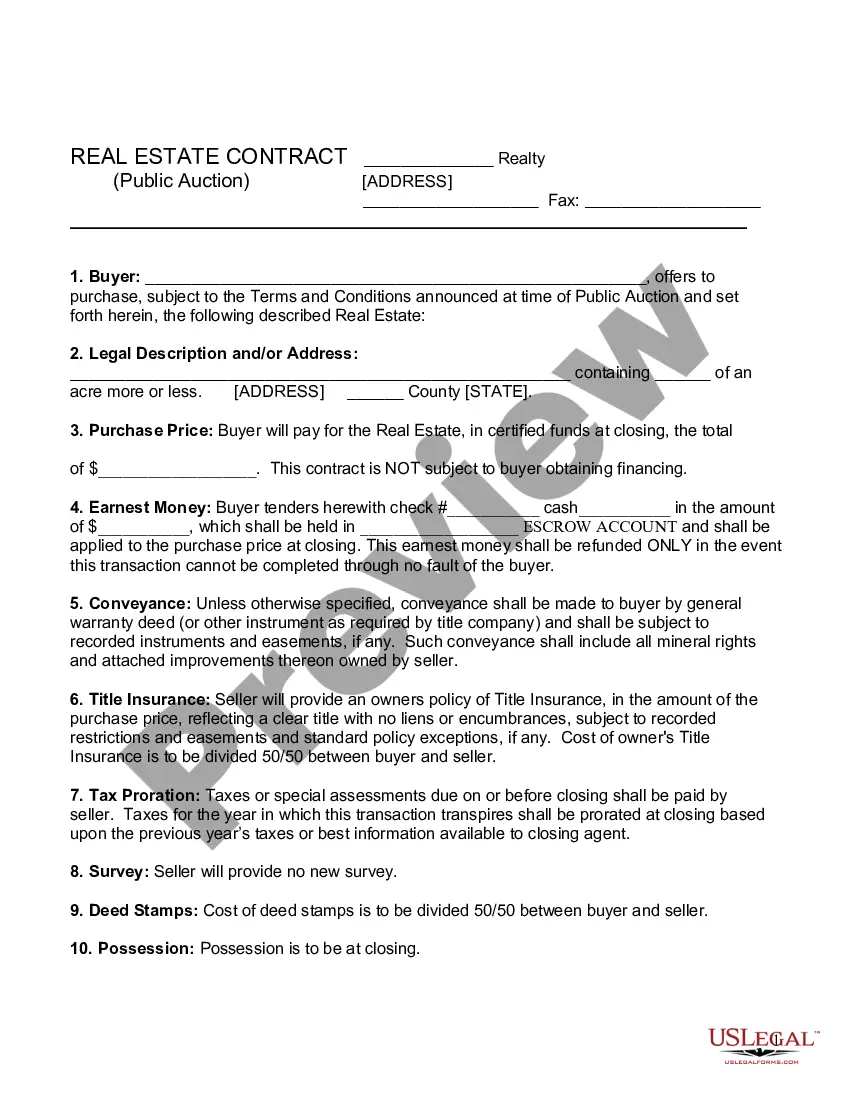
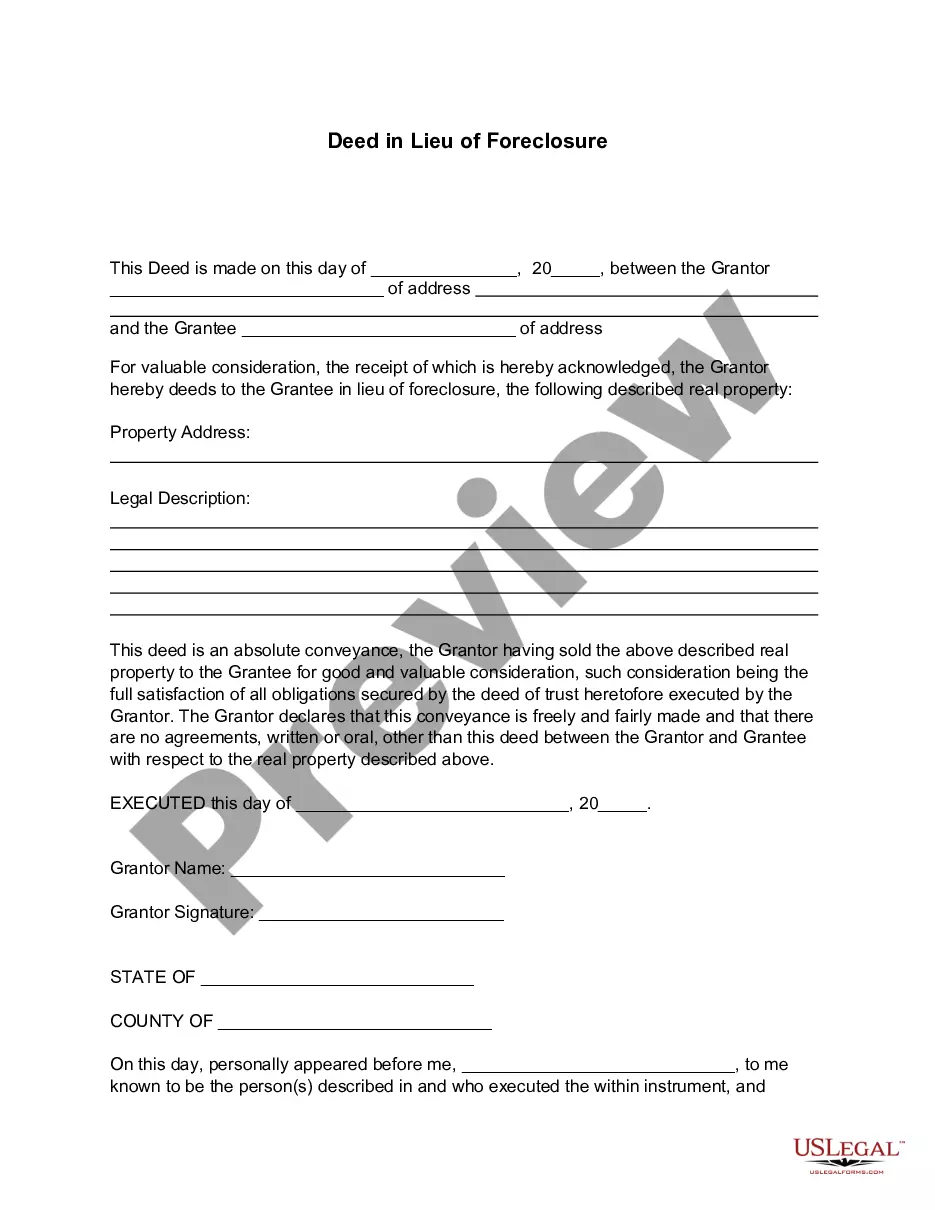
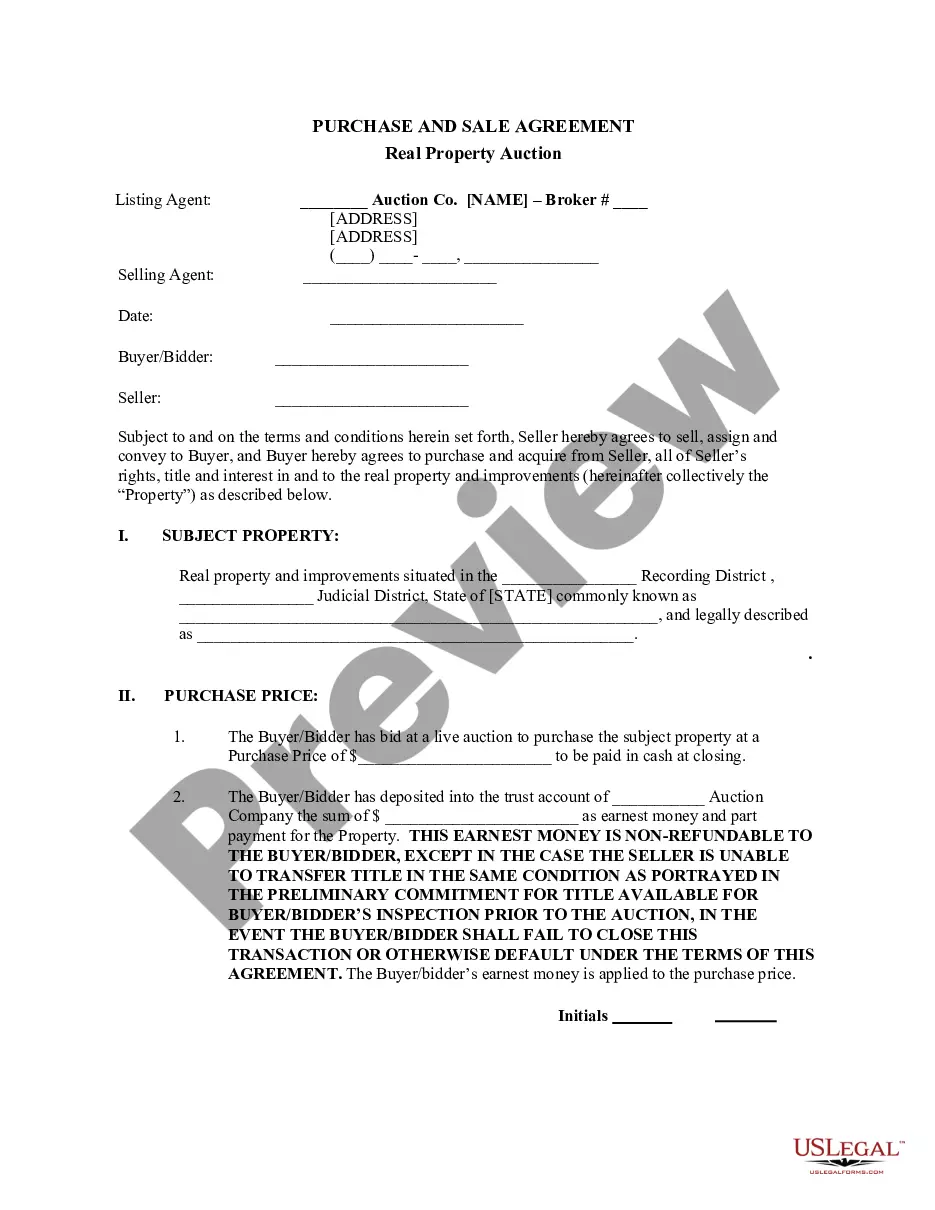
The Narrative of Foreclosure Sale and Procedure is a legal document used in Mississippi to document the events and procedures that take place during a foreclosure sale. This form is specifically designed for trustees conducting the sale, who must provide an accurate summary of the foreclosure process. It serves as a record of the sale, differentiating it from other legal forms related to real estate transactions by emphasizing the formalities and public notice requirements of foreclosure sales.
Main sections of this form
- Date and time of the foreclosure sale.
- Name of the trustee conducting the sale.
- Details of the original deed of trust.
- Proof of publication of the Notice of Sale.
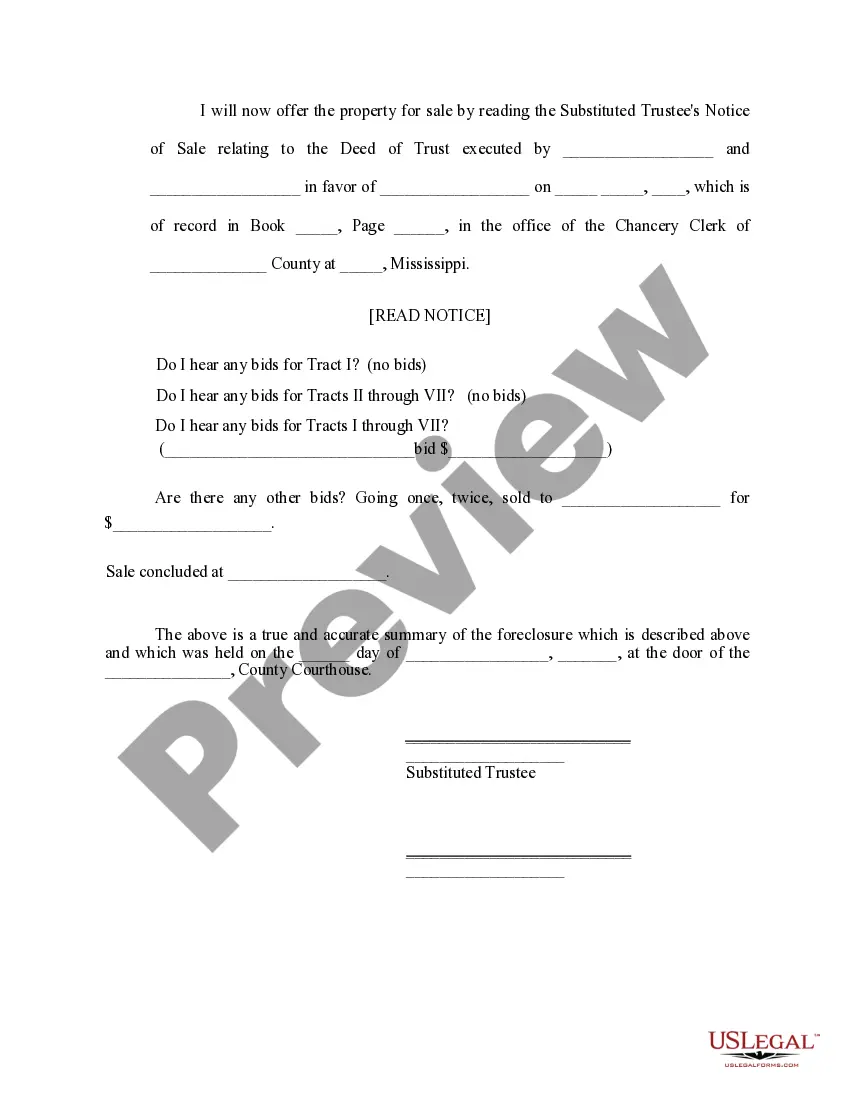
- Bidder information and sale confirmation details.
- Signature of the substituted trustee and date of completion.
When this form is needed
This form is necessary when a property is being sold under foreclosure in Mississippi. It should be completed by the trustee responsible for the sale after the proper notices have been published and the sale has occurred. Use this form to provide a formal record of the sale, especially when there are legal requirements for documentation in foreclosure proceedings.
Intended users of this form
- Trustees appointed to conduct foreclosure sales.
- Legal representatives involved in real estate and foreclosure matters.
- Property owners or borrowers affected by foreclosure actions.
- Real estate professionals seeking to understand foreclosure procedures.
How to complete this form
- Enter the date and time of the foreclosure sale.
- Provide the names of the parties involved in the foreclosure.
- Include details of the deed of trust being enforced.
- Attach proof of the notice of sale publication.
- Document the bidding process and sale conclusion.
- Have the substituted trustee sign and date the form.
Does this form need to be notarized?
This form does not typically require notarization unless specified by local law. It is important to check state regulations to ensure compliance with any additional requirements.
Get your form ready online
Our built-in tools help you complete, sign, share, and store your documents in one place.
Make edits, fill in missing information, and update formatting in US Legal Forms—just like you would in MS Word.
Download a copy, print it, send it by email, or mail it via USPS—whatever works best for your next step.
Sign and collect signatures with our SignNow integration. Send to multiple recipients, set reminders, and more. Go Premium to unlock E-Sign.
If this form requires notarization, complete it online through a secure video call—no need to meet a notary in person or wait for an appointment.
We protect your documents and personal data by following strict security and privacy standards.
Make edits, fill in missing information, and update formatting in US Legal Forms—just like you would in MS Word.
Download a copy, print it, send it by email, or mail it via USPS—whatever works best for your next step.
Sign and collect signatures with our SignNow integration. Send to multiple recipients, set reminders, and more. Go Premium to unlock E-Sign.

If this form requires notarization, complete it online through a secure video call—no need to meet a notary in person or wait for an appointment.
We protect your documents and personal data by following strict security and privacy standards.
Typical mistakes to avoid
- Failing to attach proof of public notice of the sale.
- Not providing a complete and accurate summary of the sale.
- Omitting required signatures or dates.
- Incorrectly identifying the parties involved in the deed of trust.
Advantages of online completion
- Immediate access to a legally compliant form tailored for Mississippi.
- Easy editing capabilities to ensure all details are accurate.
- Convenient download options for quick printing and filing.
- Forms are created by licensed attorneys, ensuring reliability.
What to keep in mind
- The Narrative of Foreclosure Sale and Procedure documents the entire process of a foreclosure sale.
- Accurate completion is essential for legal compliance and transparency.
- Trustees, lenders, attorneys, and homeowners can benefit from understanding and utilizing this form.
- This form must adhere to Mississippi-specific rules regarding foreclosure procedures.
Looking for another form?
Form popularity
FAQ
Catch Up on the Mortgage. Pay the mortgage arrears in full, plus all legal fees that the lender incurred. Enter Into a Forbearance Agreement. Contact your lender if you cannot pay in full. Try a Loan Modification. Ask the lender for a loan modification. Get Permission for a Short Sale. Do a Deed in Lieu of Foreclosure.
Generally, homeowners have to be more than 120 days delinquent before a foreclosure can begin. If you're behind in mortgage payments, you might be wondering how soon a foreclosure will start. Generally, a homeowner has to be at least 120 days delinquent before a mortgage servicer starts a foreclosure.
If a foreclosure sale results in excess proceeds, the lender doesn't get to keep that money. The lender is entitled to an amount that's sufficient to pay off the outstanding balance of the loan plus the costs associated with the foreclosure and salebut no more.
Gather your loan documents and set up a case file. Learn about your legal rights. Organize your financial information. Review your budget. Know your options. Call your servicer. Contact a HUD-approved housing counselor.
Phase 1: Payment Default. Phase 2: Notice of Default. Phase 3: Notice of Trustee's Sale. Phase 4: Trustee's Sale. Phase 5: Real Estate Owned (REO) Phase 6: Eviction. The Bottom Line.
Negotiate With Your Lender. If you are having financial difficulties, the worst thing that you can do is bury your head in the sand. Request a Forbearance. Modify Your Loan. Make a Claim. Get a Housing Counselor. Declare Bankruptcy. Use A Foreclosure Defense Strategy. Make Them Produce The Not.
When Does Foreclosure Start? Federal law generally requires the servicer to wait until the loan is over 120 days delinquent before officially starting a foreclosure.
If a foreclosure sale is scheduled to occur in the next day or so, the best way to stop the sale immediately is by filing for bankruptcy. The automatic stay will stop the foreclosure in its tracks. Once you file for bankruptcy, something called an "automatic stay" immediately goes into effect.
The automatic stay will stop the foreclosure in its tracks. The bank may file a motion for relief from the stay. Benefits of a Chapter 13 bankruptcy.