California Warning of Default on Residential Lease
About this form
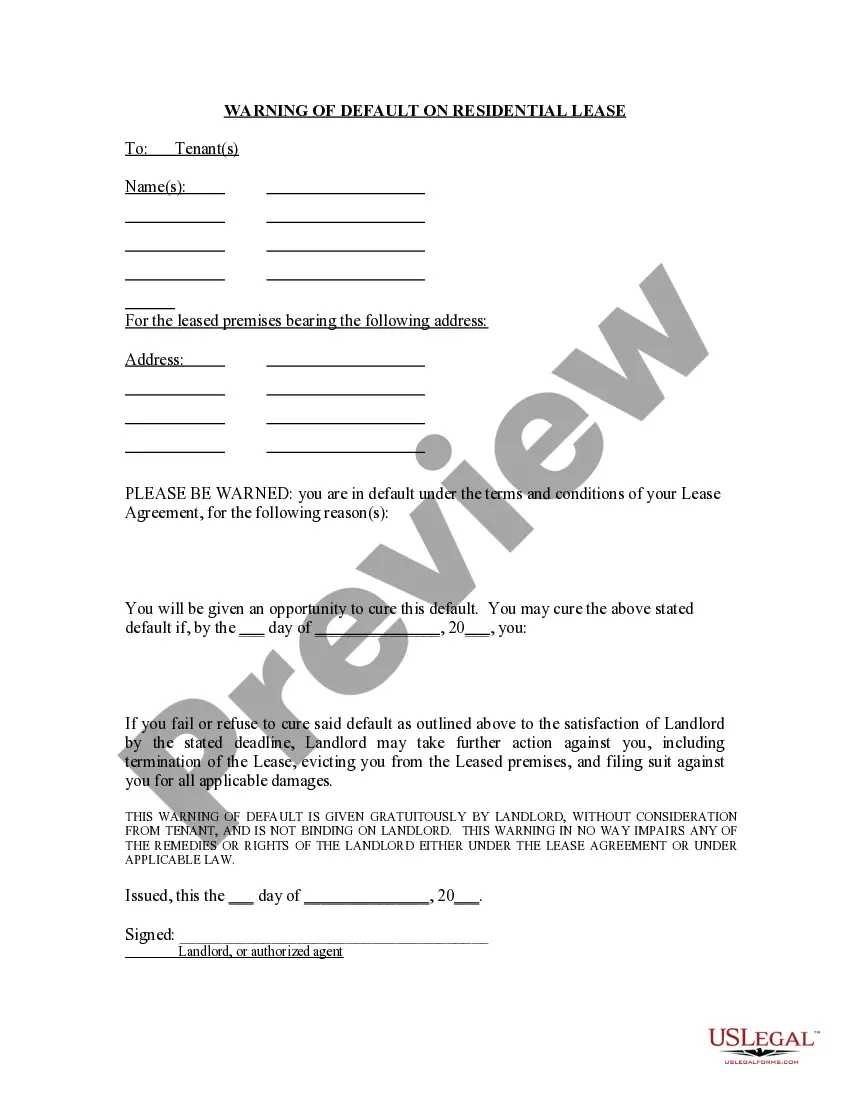
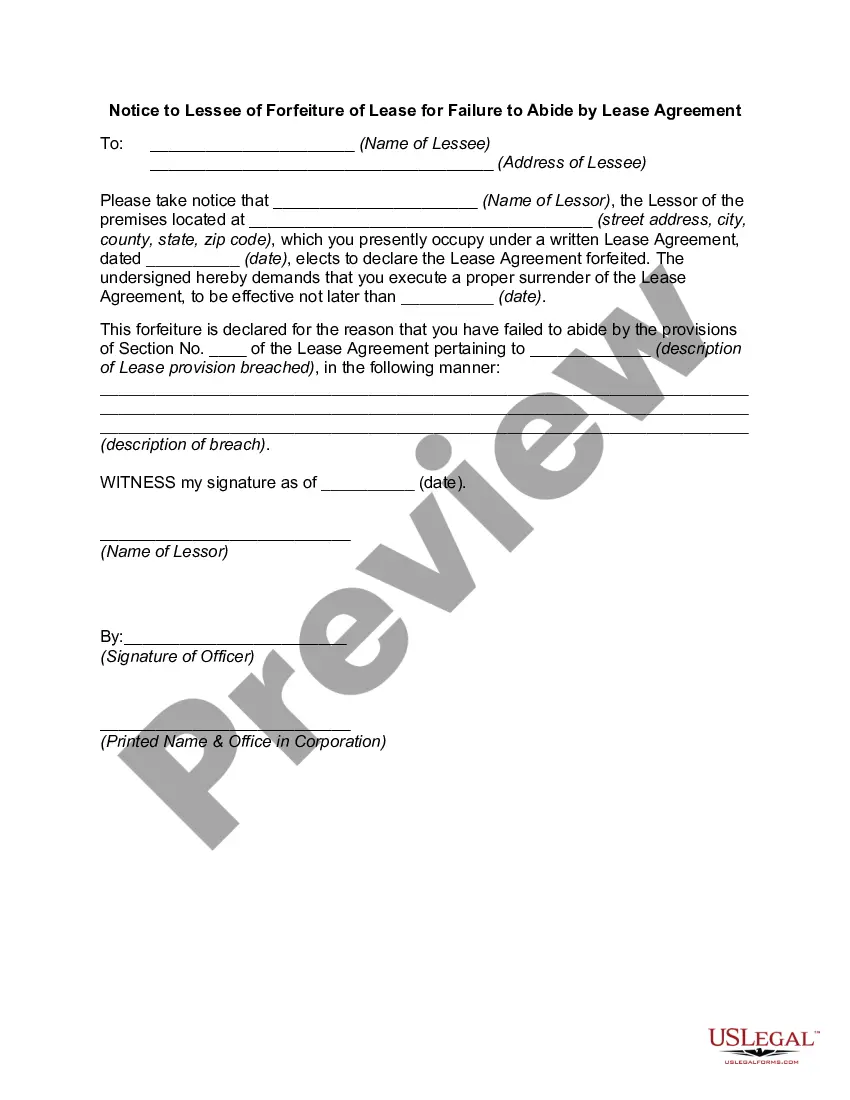
The Warning of Default on Residential Lease is a letter from a landlord to their tenant, indicating potential breaches of the lease agreement. This warning specifies that if certain issues are not addressed, the tenant may be in default of their lease. Unlike an actual eviction notice, this form serves as a preliminary step to communicate concerns and encourage resolution before further legal action is taken.
Key parts of this document
- Date of issuance.
- Identification of the landlord or authorized agent.
- Statement of issues leading to the warning of default.
- Clarification that this is not legally binding on the landlord.


Common use cases
This form should be used when a landlord believes the tenant has violated the terms of the lease agreement. Examples include non-payment of rent, failing to maintain the property, or any other breach of lease terms. By issuing this warning, the landlord provides the tenant with an opportunity to rectify the situation before any legal actions, such as eviction, are pursued.
Who should use this form
This form is intended for:
- Landlords who have tenants in a residential property.
- Property management professionals managing residential leases.
- Authorized agents acting on behalf of landlords.
Instructions for completing this form
- Enter the date of issuance.
- Identify yourself as the landlord or authorized agent by signing the form.
- Clearly state the issues that are causing concern and may lead to a default.
- Provide any necessary details that clarify the breach of lease terms.
Does this document require notarization?
In most cases, this form does not require notarization. However, some jurisdictions or signing circumstances might. US Legal Forms offers online notarization powered by Notarize, accessible 24/7 for a quick, remote process.
Get your form ready online
Our built-in tools help you complete, sign, share, and store your documents in one place.
Make edits, fill in missing information, and update formatting in US Legal Forms—just like you would in MS Word.
Download a copy, print it, send it by email, or mail it via USPS—whatever works best for your next step.
Sign and collect signatures with our SignNow integration. Send to multiple recipients, set reminders, and more. Go Premium to unlock E-Sign.
If this form requires notarization, complete it online through a secure video call—no need to meet a notary in person or wait for an appointment.
We protect your documents and personal data by following strict security and privacy standards.

Make edits, fill in missing information, and update formatting in US Legal Forms—just like you would in MS Word.

Download a copy, print it, send it by email, or mail it via USPS—whatever works best for your next step.

Sign and collect signatures with our SignNow integration. Send to multiple recipients, set reminders, and more. Go Premium to unlock E-Sign.

If this form requires notarization, complete it online through a secure video call—no need to meet a notary in person or wait for an appointment.

We protect your documents and personal data by following strict security and privacy standards.
Typical mistakes to avoid
- Failing to specify the lease violations clearly.
- Not signing the document or including the landlord's name.
- Missing the date of the warning.
Advantages of online completion
- Convenience of downloading and completing the form at your own pace.
- Editability allows for customization to match your specific circumstances.
- Reliability, knowing the form is drafted by licensed attorneys.
Legal use & context
- This form serves as a preliminary notification and does not initiate legal proceedings on its own.
- It gives the tenant an opportunity to correct the identified issues before facing possible eviction.
- Failure to issue such a warning may affect a landlord's ability to pursue eviction for the stated breaches.
Summary of main points
- The form is a warning letter for potential lease violations.
- It allows the tenant to address issues before further actions are taken.
- Using this form helps facilitate communication between the landlord and tenant.
Looking for another form?
Form popularity
FAQ
To file a notice of default in California, you need to prepare the document, including details about the lease and the amount owed. After completing the notice, file it with the appropriate court and serve it to the tenant, ensuring compliance with any state regulations. Familiarizing yourself with the California Warning of Default on Residential Lease can provide valuable insight into this process, ensuring you follow all necessary steps.
When writing to a tenant regarding nonpayment of rent, start by clearly stating the amount due and the payment deadline. Include a reference to the lease agreement and any applicable laws, including the California Warning of Default on Residential Lease. It is essential to maintain a professional tone and offer options for resolving the issue, which may help maintain a positive relationship.
To set aside an entry of default in California, you must file a motion with the court. This motion should include your reasons for requesting the set aside and any supporting evidence. The court may require a hearing, where you should clearly explain why the default should be set aside. Additionally, understanding the California Warning of Default on Residential Lease can help you navigate the process effectively.
To obtain a default judgment in California, you must first file a complaint in court and serve the defendant properly. If the defendant fails to respond within the required timeframe, you can then request the court to grant a default judgment. This process often relates closely to a California Warning of Default on Residential Lease when tenants face eviction. Utilizing services from USLegalForms can streamline your understanding of the legal process and help you handle your situation effectively.
In California, leases must include several key disclosures to protect both parties. These include information about lead-based paint, mold, and known hazards associated with the property. Additionally, a California Warning of Default on Residential Lease alerts tenants to any potential issues related to eviction or lease violations. Familiarizing yourself with these disclosures ensures you understand your rights and responsibilities.
When a landlord defaults, it typically means they have not fulfilled their obligations under the lease agreement, which could include failing to provide essential services or repairs. This situation can lead to legal complications for both parties. A California Warning of Default on Residential Lease acts as a crucial tool for tenants, allowing them to address the landlord's failure to meet their duties. Addressing these issues promptly can protect your rights as a tenant.
A letter of default from a landlord is a formal notice indicating that a tenant has failed to meet their lease obligations, such as paying rent. This letter serves as a California Warning of Default on Residential Lease, giving the tenant a specific period to rectify the situation. It outlines the violation and the potential consequences if the issue remains unresolved. Understanding this document helps tenants navigate their rights and responsibilities.
The recent tenant protection law in California provides more safeguards for renters, specifically against evictions and rent increases. It aims to prevent landlords from taking immediate action without proper notice and justification, including the California Warning of Default on Residential Lease. This law strengthens tenant rights and encourages communication between landlords and tenants. Familiarizing yourself with these new protections can help ensure your rights are upheld throughout your rental experience.
If you default on your lease, the landlord can initiate legal actions against you, including potential eviction. The California Warning of Default on Residential Lease serves as a crucial first step in this process, giving you a chance to resolve the matter before further action is taken. You might also face financial penalties or damages if the landlord has to pursue legal remedies. Resolving defaults early can help protect your rental history and reduce stress.
Defaulting on a lease typically occurs when a tenant fails to abide by the terms of the agreement, commonly seen in instances of unpaid rent or lease violations. When a tenant defaults, landlords have the right to issue a California Warning of Default on Residential Lease, notifying the tenant of the breach. Understanding your lease agreement and maintaining communication can help prevent issues from escalating into defaults. Always consider seeking legal advice for guidance tailored to your situation.