California Letter from Tenant to Landlord containing Notice of failure to return security deposit and demand for return
What is this form?
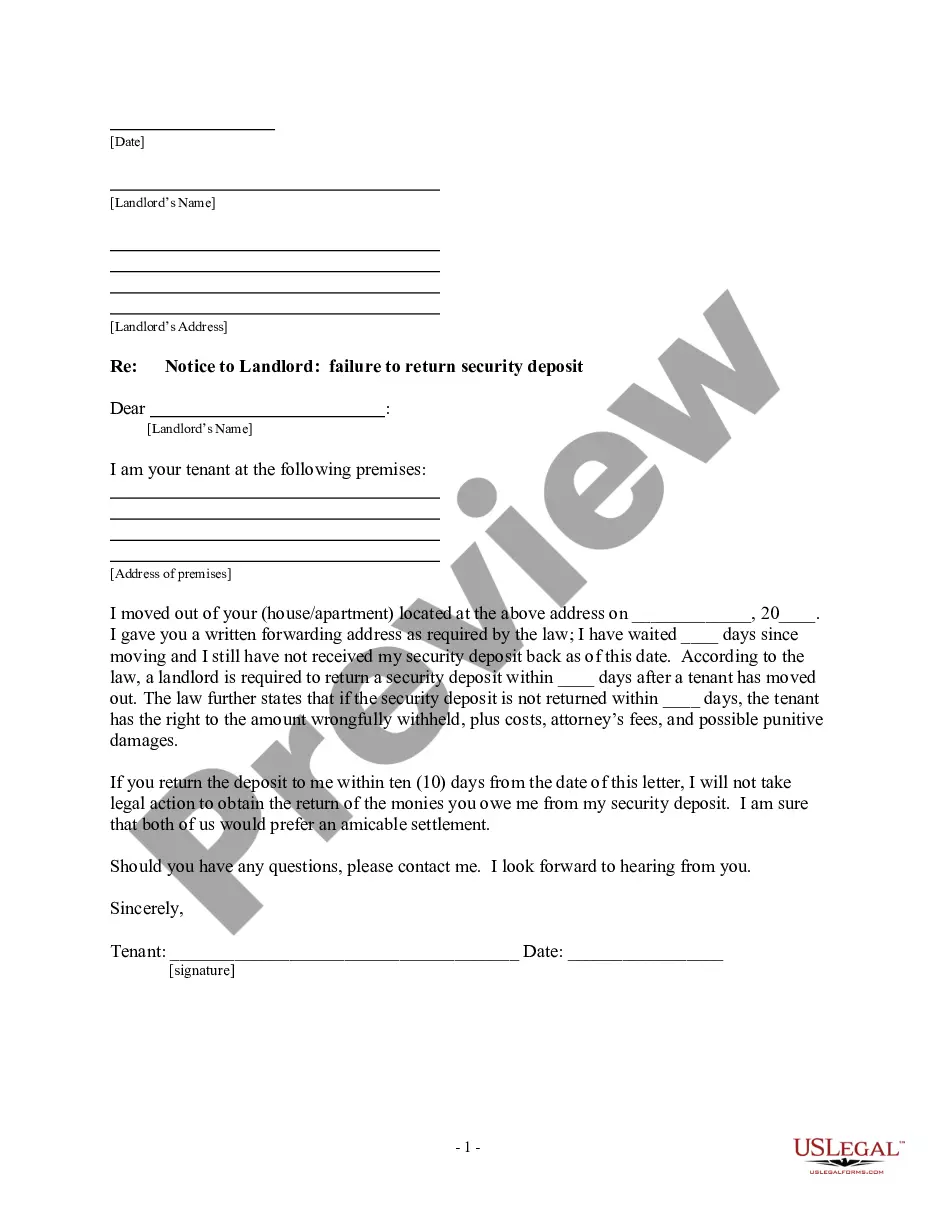
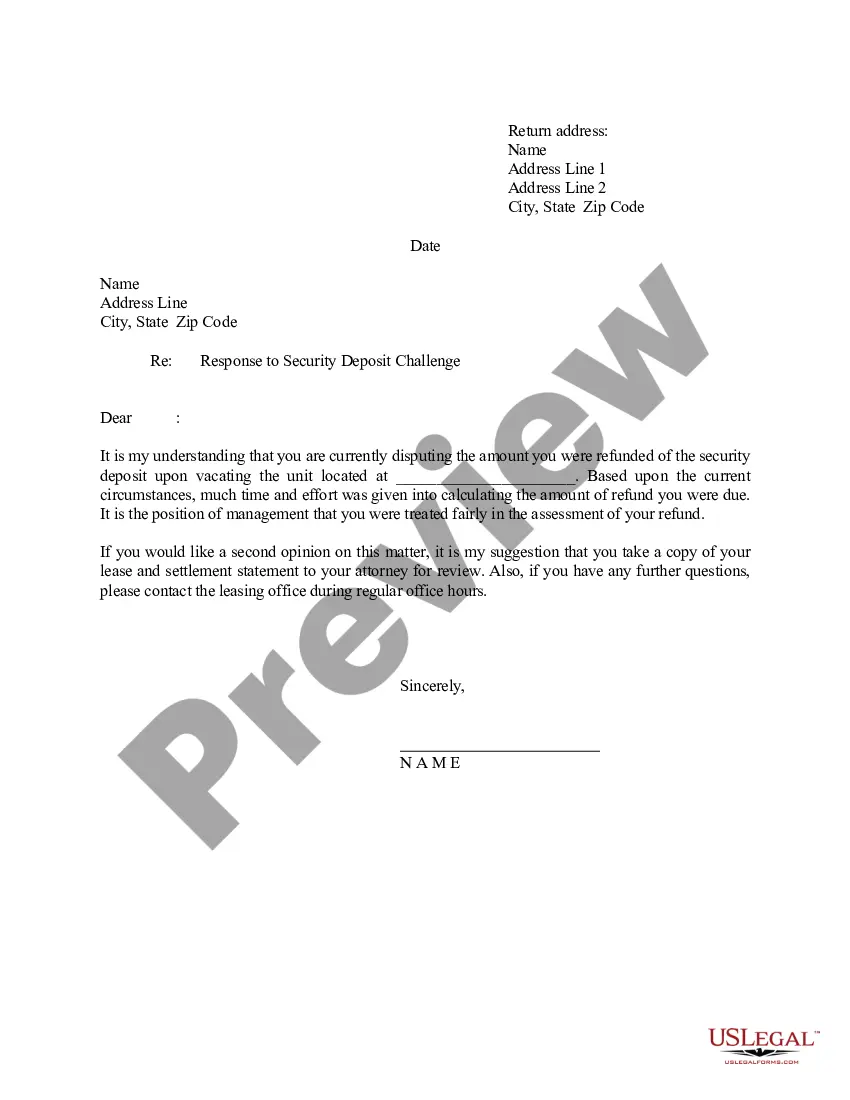
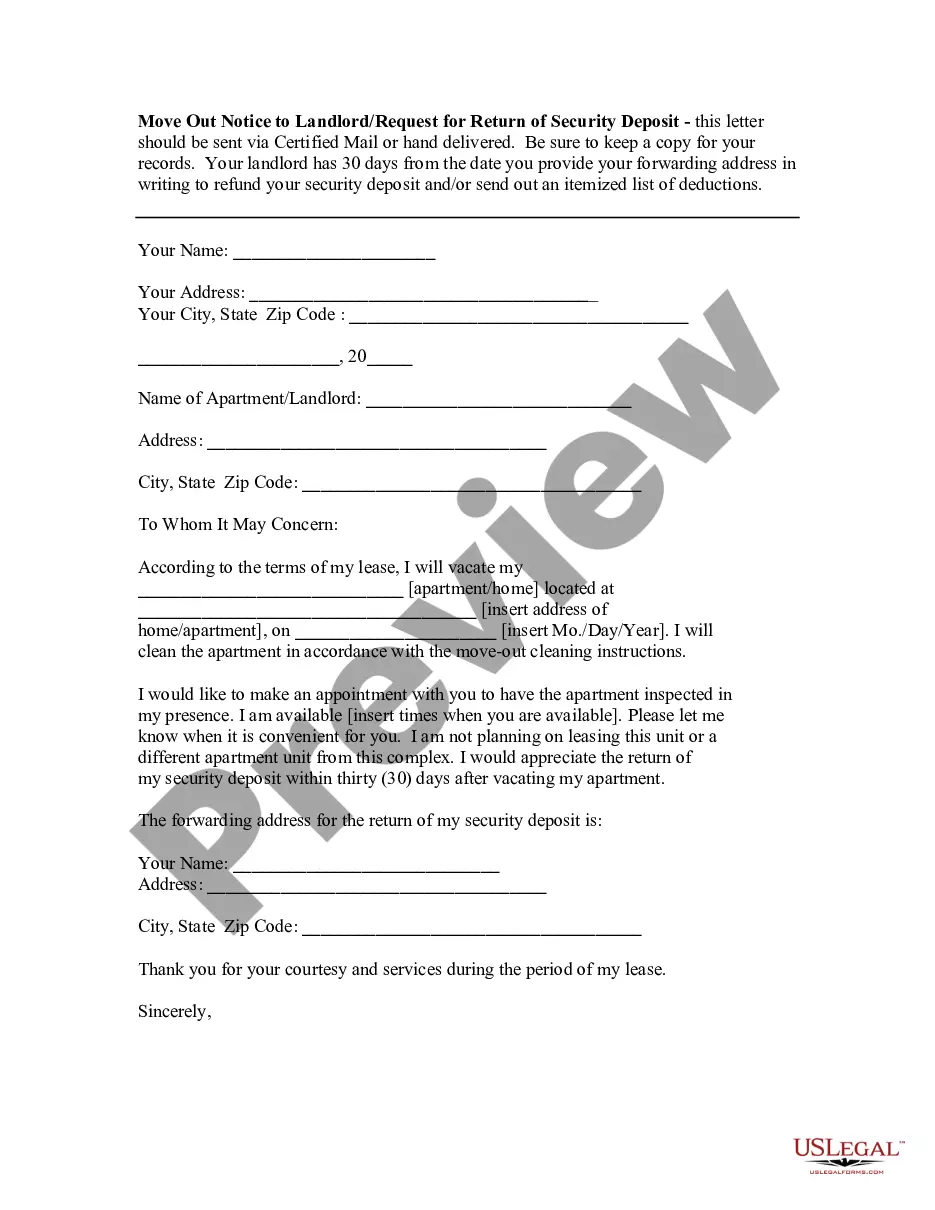
This letter from tenant to landlord is a formal demand for the return of a tenant's security deposit after vacating the rental property. This form serves to notify the landlord of their obligation to return the deposit within a specified time frame, as dictated by state law, to avoid potential legal actions. This differs from other forms, such as lease agreements, as it specifically addresses the return of funds rather than the conditions of tenancy or occupancy.
Key components of this form
- A statement of the demand for the return of the security deposit.
- A specified time frame (usually ten days) for the return of the deposit.
- A declaration that legal action will be avoided if the deposit is returned within the specified time.
- Contact information for the tenant in case of questions.
- Signature and date fields for the tenant.

When this form is needed
This form should be used when a tenant has vacated a rental property and the landlord has failed to return the security deposit within the legally required time frame. It serves as a final reminder to the landlord before legal action might be considered. Use this form to assert your rights as a tenant and encourage an amicable resolution to the return of your deposit.
Who can use this document
- Tenants who have moved out of a rental property.
- Individuals who are seeking the return of their security deposit.
- Tenants who have not received their deposit back within the time allowed by state law.
Instructions for completing this form
- Enter the date of the letter.
- Provide your name and contact information as the tenant.
- State your demand clearly for the return of your security deposit.
- Include a specific deadline for the return, typically ten days.
- Sign the letter to make it official.
Notarization requirements for this form
This form does not typically require notarization to be legally valid. However, some jurisdictions or document types may still require it. US Legal Forms provides secure online notarization powered by Notarize, available 24/7 for added convenience.
Get your form ready online
Our built-in tools help you complete, sign, share, and store your documents in one place.
Make edits, fill in missing information, and update formatting in US Legal Forms—just like you would in MS Word.
Download a copy, print it, send it by email, or mail it via USPS—whatever works best for your next step.
Sign and collect signatures with our SignNow integration. Send to multiple recipients, set reminders, and more. Go Premium to unlock E-Sign.
If this form requires notarization, complete it online through a secure video call—no need to meet a notary in person or wait for an appointment.
We protect your documents and personal data by following strict security and privacy standards.

Make edits, fill in missing information, and update formatting in US Legal Forms—just like you would in MS Word.

Download a copy, print it, send it by email, or mail it via USPS—whatever works best for your next step.

Sign and collect signatures with our SignNow integration. Send to multiple recipients, set reminders, and more. Go Premium to unlock E-Sign.

If this form requires notarization, complete it online through a secure video call—no need to meet a notary in person or wait for an appointment.

We protect your documents and personal data by following strict security and privacy standards.
Common mistakes to avoid
- Failing to specify the deadline for the return of the deposit.
- Not including complete contact information.
- Omitting a signature or date from the letter.
Why complete this form online
- Convenient access to downloadable forms.
- Easy to edit customizable templates tailored to your needs.
- Reliability with legally sound language crafted by licensed attorneys.
What to keep in mind
- This form is essential for tenants who seek to recover their security deposit.
- Timely submission can help avoid legal disputes and promote amicable resolutions.
- Ensure awareness of state laws regarding security deposit returns for effective use.
Looking for another form?
Form popularity
FAQ
When speaking to your landlord about getting your deposit back, be assertive and clear in your communication. Mention that you will be sending a California Letter from Tenant to Landlord containing Notice of failure to return security deposit and demand for return to formalize your request. This approach demonstrates your seriousness regarding the matter while keeping the conversation professional.
To write a return request for a security deposit, begin with your contact information followed by the landlord's details. A California Letter from Tenant to Landlord containing Notice of failure to return security deposit and demand for return is ideal for ensuring you cover all necessary elements. Explicitly state the request, including the date of your move-out and the expected response timeframe.
Writing a demand letter for your security deposit involves outlining the key facts of your situation. Use a California Letter from Tenant to Landlord containing Notice of failure to return security deposit and demand for return to get a professional tone. Clearly state the refund amount and mention laws or lease agreements that entitle you to the return of your deposit.
In your letter asking for a security deposit back, clearly express your expectation for the return. Refer to your California Letter from Tenant to Landlord containing Notice of failure to return security deposit and demand for return for an effective format. Include facts about your tenancy and any compliance with lease conditions to validate your request.
A demand letter to your landlord should clearly state your purpose and cite relevant lease provisions. Utilize a California Letter from Tenant to Landlord containing Notice of failure to return security deposit and demand for return to structure your message effectively. Be sure to include necessary details, such as the amount owed and a deadline for their response, to enforce your position.
When writing to your landlord for the return of your security deposit, use a polite but firm tone. Reference the specific terms in your lease that support your request while using a California Letter from Tenant to Landlord containing Notice of failure to return security deposit and demand for return. Ensure you include your current contact information and request a prompt response to foster better communication.
To write a letter requesting a refund of your deposit, start by addressing your landlord directly. Be clear and concise in your California Letter from Tenant to Landlord containing Notice of failure to return security deposit and demand for return. State the amount due, the reason why it should be returned, and any relevant dates, such as your move-out date, to strengthen your case.
If your landlord does not return your security deposit in California, begin by reviewing your rental agreement for applicable terms. Next, send a California Letter from Tenant to Landlord containing Notice of failure to return security deposit and demand for return. This letter formally requests the deposit and outlines the reasons for your claim, setting a clear timeframe for the landlord's response.
Begin your demand letter by clearly specifying that it is a California Letter from Tenant to Landlord containing Notice of failure to return security deposit and demand for return. Include your rental details, the amount owed, and the applicable laws. Be polite yet firm, clearly stating your expectations and timeline for a response. For added assurance, utilize services like uslegalforms to create a detailed letter that meets legal standards.
If your landlord fails to return your security deposit on time, you can send a California Letter from Tenant to Landlord containing Notice of failure to return security deposit and demand for return. California law requires landlords to return deposits within 21 days after you vacate the property. If they do not comply, they may be liable for damages up to twice the amount of the deposit, plus your attorney fees if you take legal action.