California Preliminary 20 Day Notice - Construction Liens - Civil Code Section 8200 - Individual
What is this form?
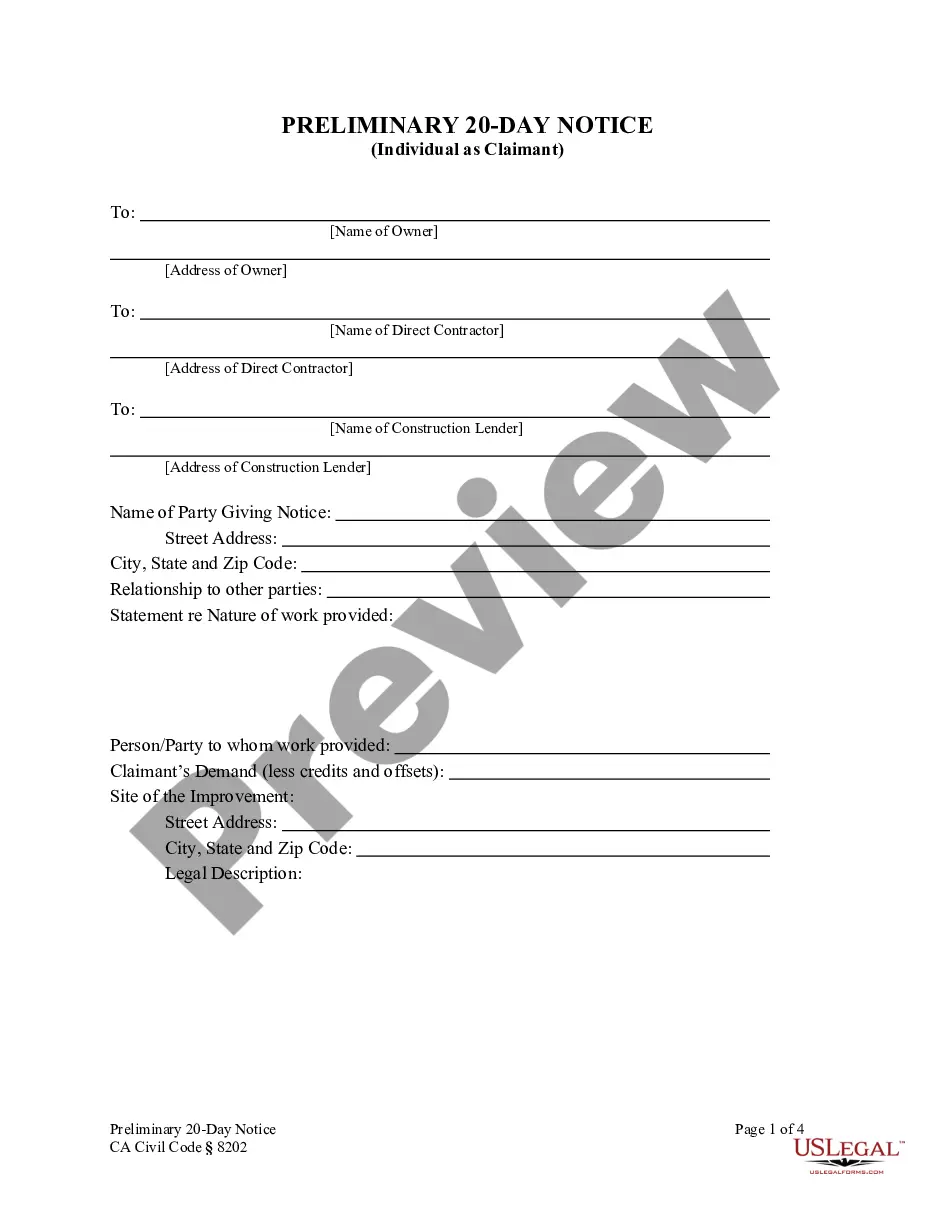
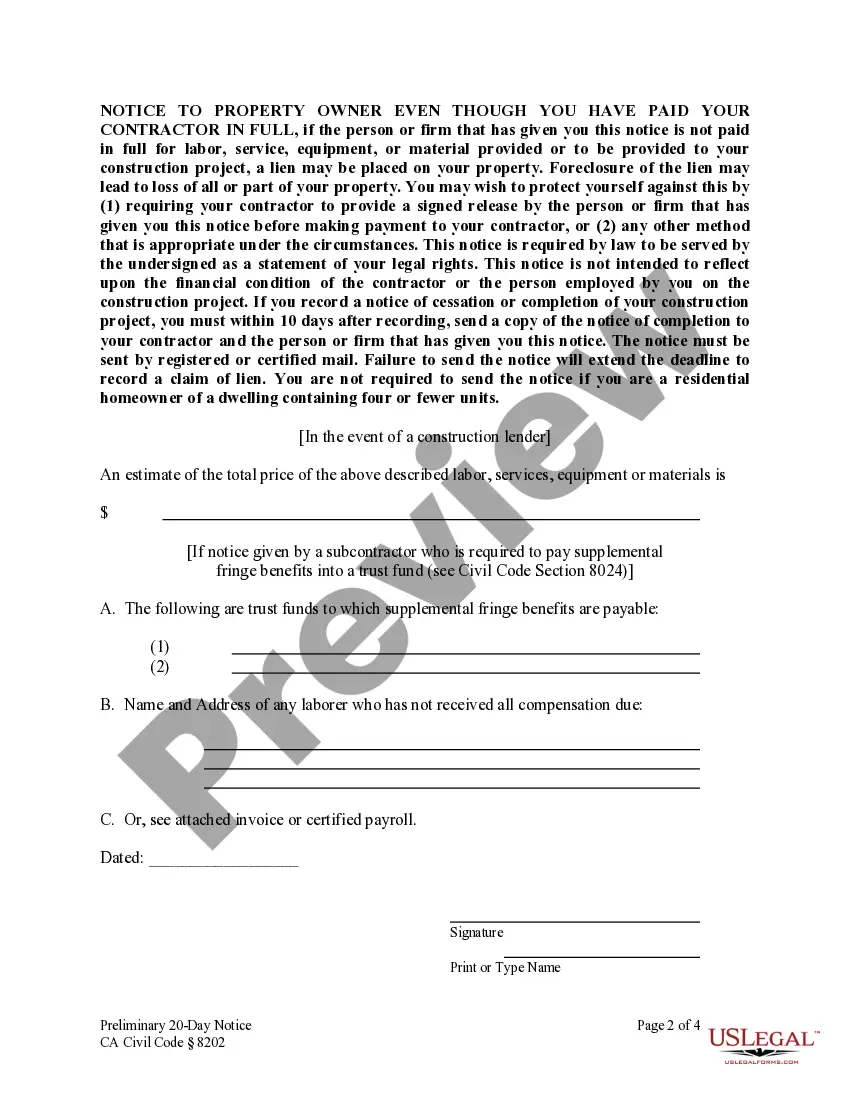
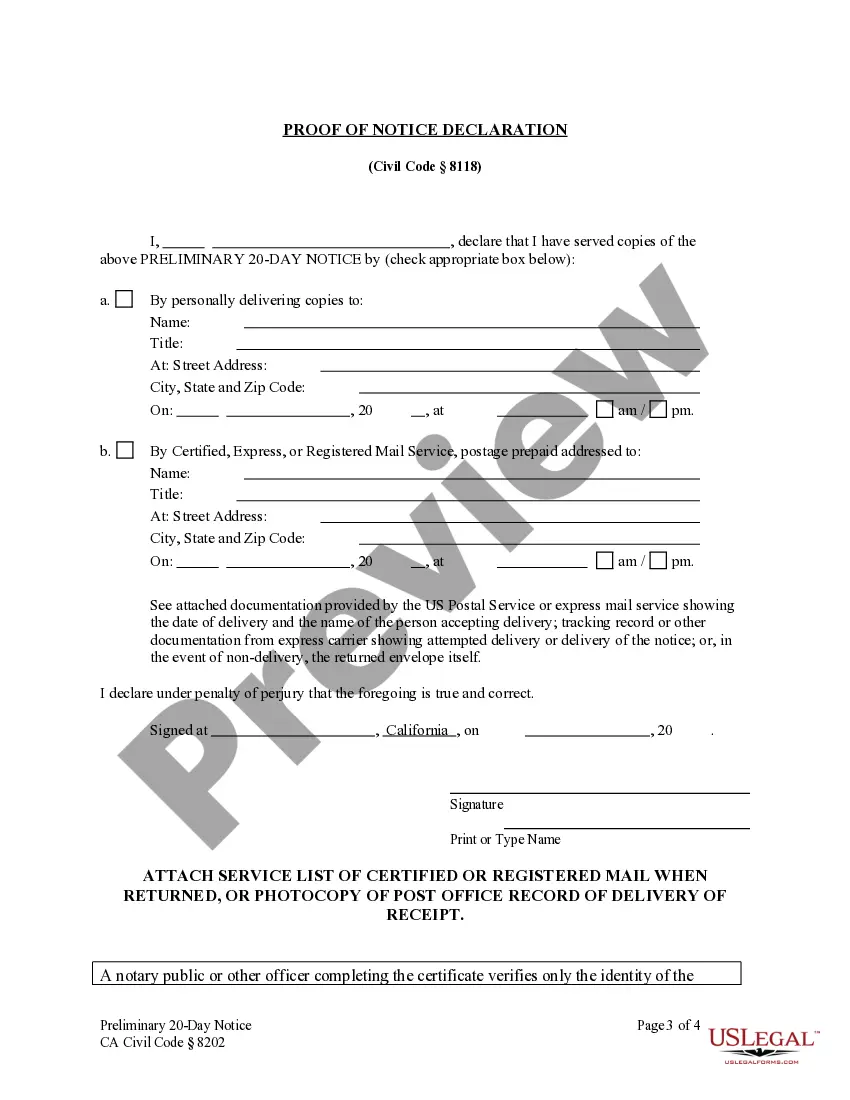
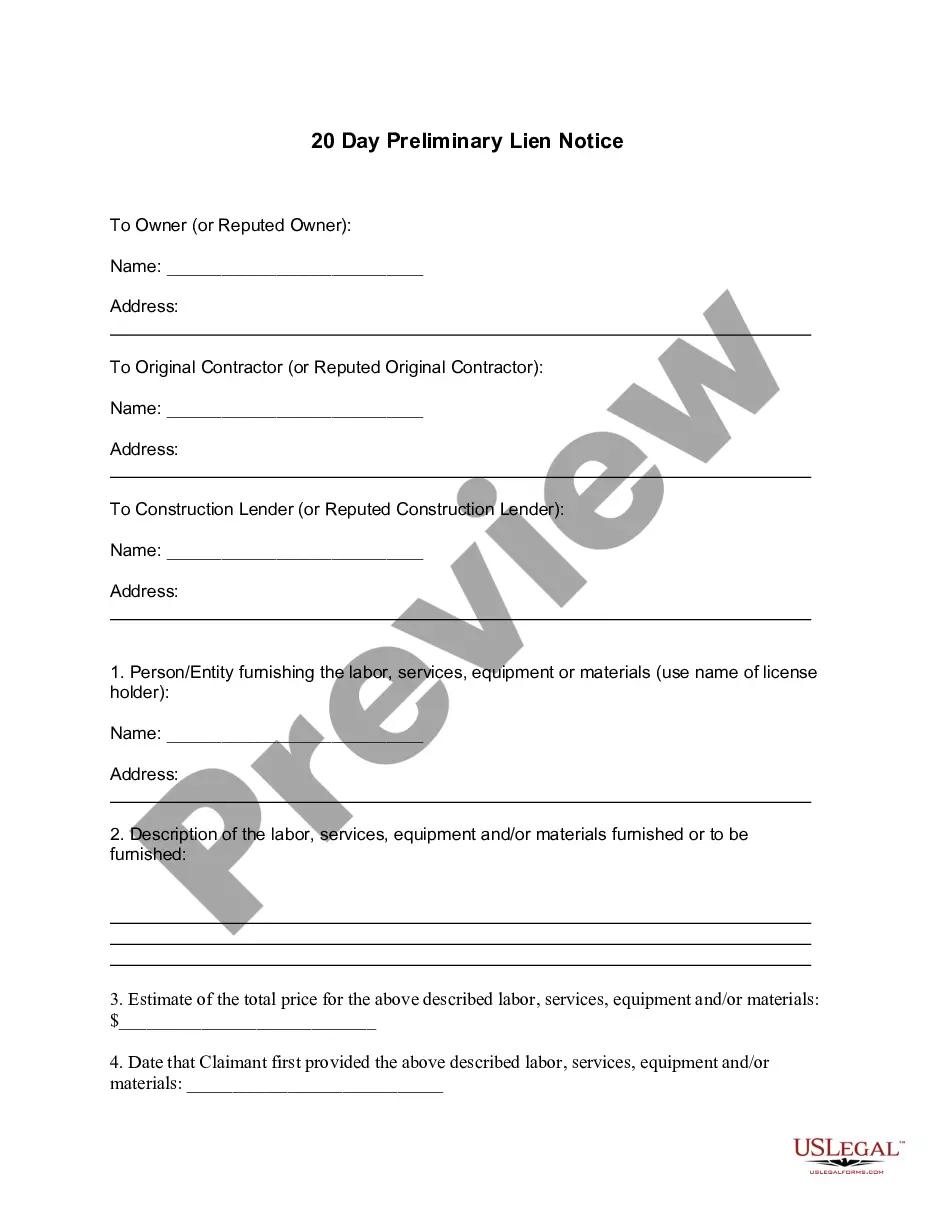
The Preliminary 20 Day Notice for Construction Liens is a legal document that informs relevant parties of a potential lien claim against a property. This form serves as a prerequisite for filing a lien claim, stop payment notice, or making a claim against a payment bond. It must be delivered to specific parties and contain critical information to be valid. By using this form, individuals ensure they follow the necessary legal steps to protect their rights in construction-related disputes.
Key parts of this document
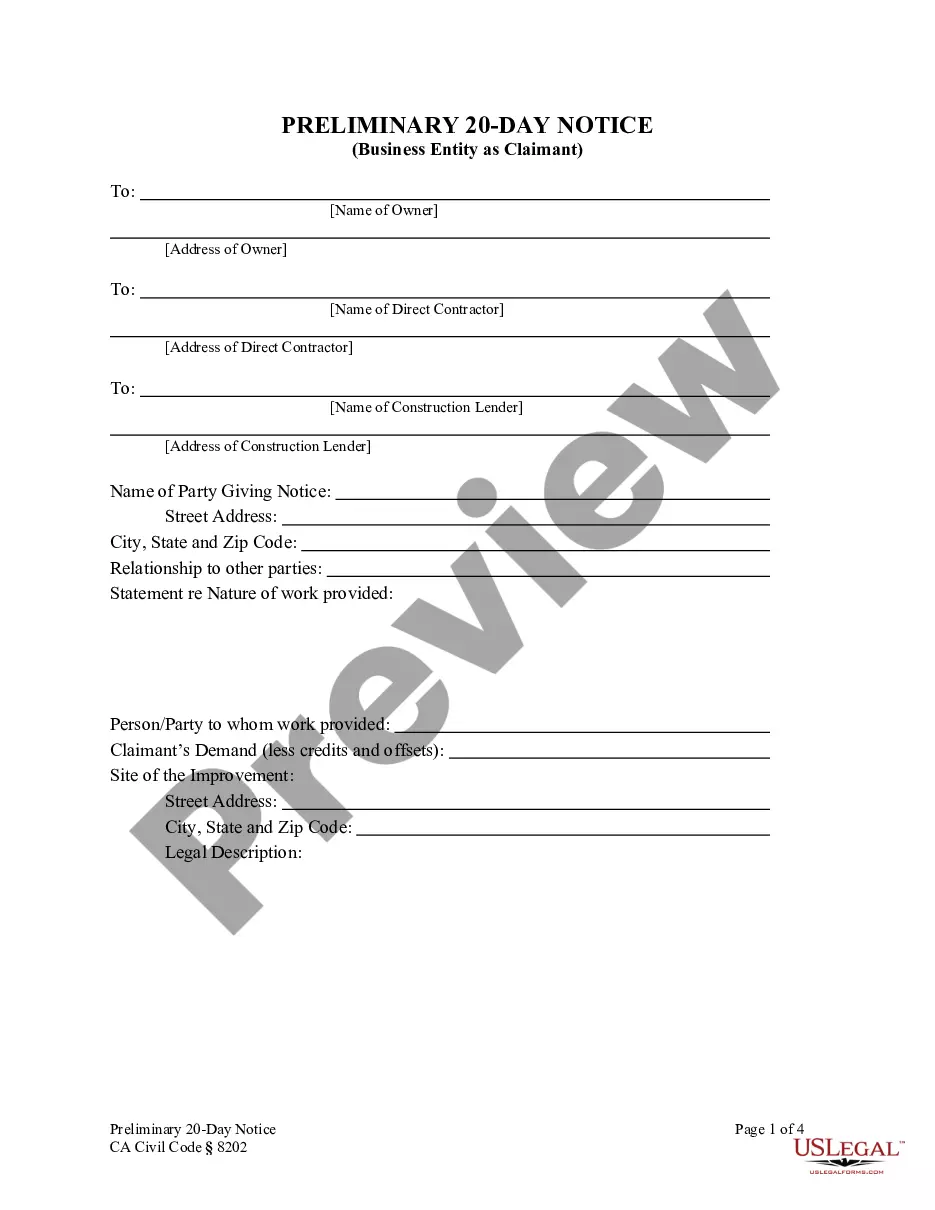
- Identifying information of the claimant and the property.
- Details of the labor, services, equipment, or materials provided.
- The total estimate for the services rendered or materials supplied.
- A list of parties to whom the notice is directed.
- Date of service of the notice.
Situations where this form applies
This form should be used when a contractor, subcontractor, or supplier wishes to notify certain parties about the intent to file a lien claim on a property due to unpaid services or materials. It is particularly crucial when the individual or entity providing the services has not received payment within the timeframe stipulated by law, ensuring that their rights are protected under construction lien laws.
Who should use this form
- Contractors providing labor or materials for construction projects.
- Subcontractors and suppliers who are not directly contracted by the property owner.
- Individuals or entities seeking to secure payment for work done on construction sites.
- Anyone involved in a construction project who may need to protect their lien rights.
Steps to complete this form
- Identify the parties involved, including the claimant and property owner.
- Provide detailed descriptions of the labor or materials supplied, including dates and quantities.
- Specify the total estimated price for services or materials.
- List the parties who should receive the notice, based on legal requirements.
- Enter the date of service and ensure the document is properly signed.
Notarization guidance
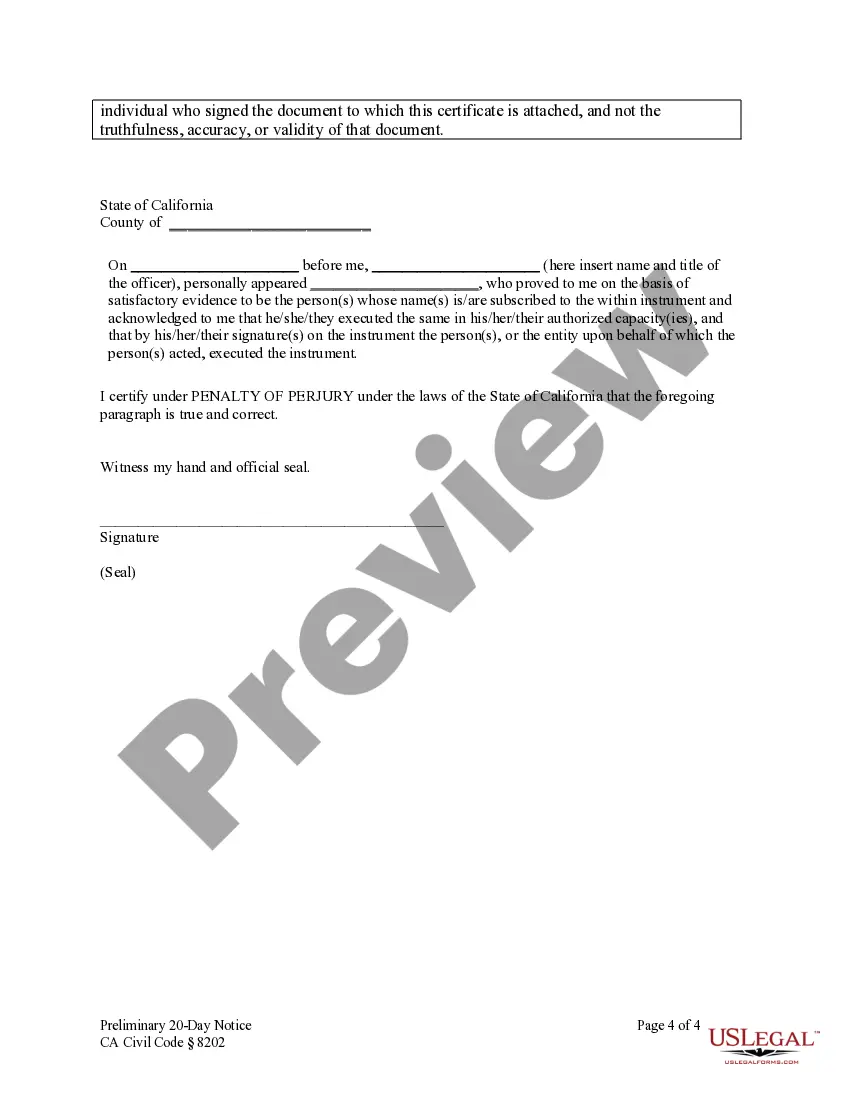
This form does not typically require notarization unless specified by local law. However, it's important to check state requirements to ensure compliance with jurisdictional rules.
Get your form ready online
Our built-in tools help you complete, sign, share, and store your documents in one place.
Make edits, fill in missing information, and update formatting in US Legal Forms—just like you would in MS Word.
Download a copy, print it, send it by email, or mail it via USPS—whatever works best for your next step.
Sign and collect signatures with our SignNow integration. Send to multiple recipients, set reminders, and more. Go Premium to unlock E-Sign.
If this form requires notarization, complete it online through a secure video call—no need to meet a notary in person or wait for an appointment.
We protect your documents and personal data by following strict security and privacy standards.

Make edits, fill in missing information, and update formatting in US Legal Forms—just like you would in MS Word.

Download a copy, print it, send it by email, or mail it via USPS—whatever works best for your next step.

Sign and collect signatures with our SignNow integration. Send to multiple recipients, set reminders, and more. Go Premium to unlock E-Sign.

If this form requires notarization, complete it online through a secure video call—no need to meet a notary in person or wait for an appointment.

We protect your documents and personal data by following strict security and privacy standards.
Mistakes to watch out for
- Failing to send the notice to all required parties, which can invalidate the lien.
- Not including the total estimated price for the services or materials.
- Missing the deadline for sending the notice within the 20-day period.
- Using incorrect or incomplete property information.
Benefits of using this form online
- Convenient access to professionally drafted legal forms.
- Edit and customize the form easily according to specific project details.
- Secure downloading of documents for immediate use.
- Guidance provided throughout the completion process for clarity.
Main things to remember
- The Preliminary 20 Day Notice is crucial for protecting lien rights in construction projects.
- Completing this form correctly ensures that all necessary parties are informed.
- State-specific compliance is essential for the notice to be valid and enforceable.
Looking for another form?
Form popularity
FAQ
Yes, a preliminary notice is required in California for many contractors, subcontractors, and suppliers working on a construction project. This notice must be sent within 20 days of the start of work to maintain lien rights. Understanding the requirements outlined in the California Preliminary 20 Day Notice - Construction Liens - Civil Code Section 8200 can help you navigate the legal landscape and protect your payment rights.
The preliminary notice is best described as a protective measure for contractors and suppliers working in California's construction industry. This document notifies parties involved of the intention to file a lien if payment is not made within a specified timeframe. Utilizing the California Preliminary 20 Day Notice - Construction Liens - Civil Code Section 8200 ensures that individuals take proactive steps to secure their financial interests.
The California Code 8200 is a specific law that outlines the requirements for issuing a preliminary notice before filing a mechanic's lien. This code defines the time limits and necessary notifications any individual must follow to protect their rights to payment. Compliance with California Code 8200 is crucial for contractors and suppliers to legally secure their positions in construction projects.
A preliminary lien notice is a formal document that notifies property owners and other parties that a contractor or supplier intends to file a mechanics lien. This notice is essential for entering the legal processes outlined in the California Preliminary 20 Day Notice - Construction Liens - Civil Code Section 8200. It establishes advanced notice and protects the contractor's right to seek payment for services rendered.
The California civil code, including Section 8200, exists to establish clear legal standards for all parties involved in construction projects. Crooks serves as a legal framework to protect the rights of individuals and entities participating in the construction industry. By following these codes, parties can improve project efficiency and reduce potential disputes over unpaid work.
A 20 day preliminary notice in California is a crucial document that informs property owners and contractors of a party's involvement in construction work. This notice must be sent within 20 days of starting the work to ensure lien rights. By adhering to the requirements of the California Preliminary 20 Day Notice - Construction Liens - Civil Code Section 8200, individuals can effectively safeguard their financial interests.
Section 8200 of the California Government Code outlines the requirements for providing a preliminary notice in construction projects. This section ensures that all parties involved in a construction project are aware of any potential liens. Understanding this section helps individuals comply with legal standards and maintain their rights in California construction projects.
A notice of intent to lien is not specifically required by California law, but a preliminary notice is necessary for certain contractors and suppliers. This notice provides an essential warning to property owners that payment is anticipated for work completed. Under the California Preliminary 20 Day Notice - Construction Liens - Civil Code Section 8200, individuals can protect their right to file a lien if payment is not received.
Yes, California requires a preliminary lien notice for certain construction projects. This document serves to inform property owners, general contractors, or lenders that a contractor or supplier intends to file a lien. By issuing the California Preliminary 20 Day Notice, individuals can safeguard their rights to payment within a specified timeframe under Civil Code Section 8200.
To file a California Preliminary 20 Day Notice - Construction Liens - Civil Code Section 8200 - Individual, begin by gathering the necessary information, including property details and your contact information. You can prepare the notice yourself or use a reliable platform like US Legal Forms for guidance. Once completed, send the notice via certified mail to the property owner and keep a copy for your records. Filing this notice properly keeps your rights intact and facilitates smoother payment processing.