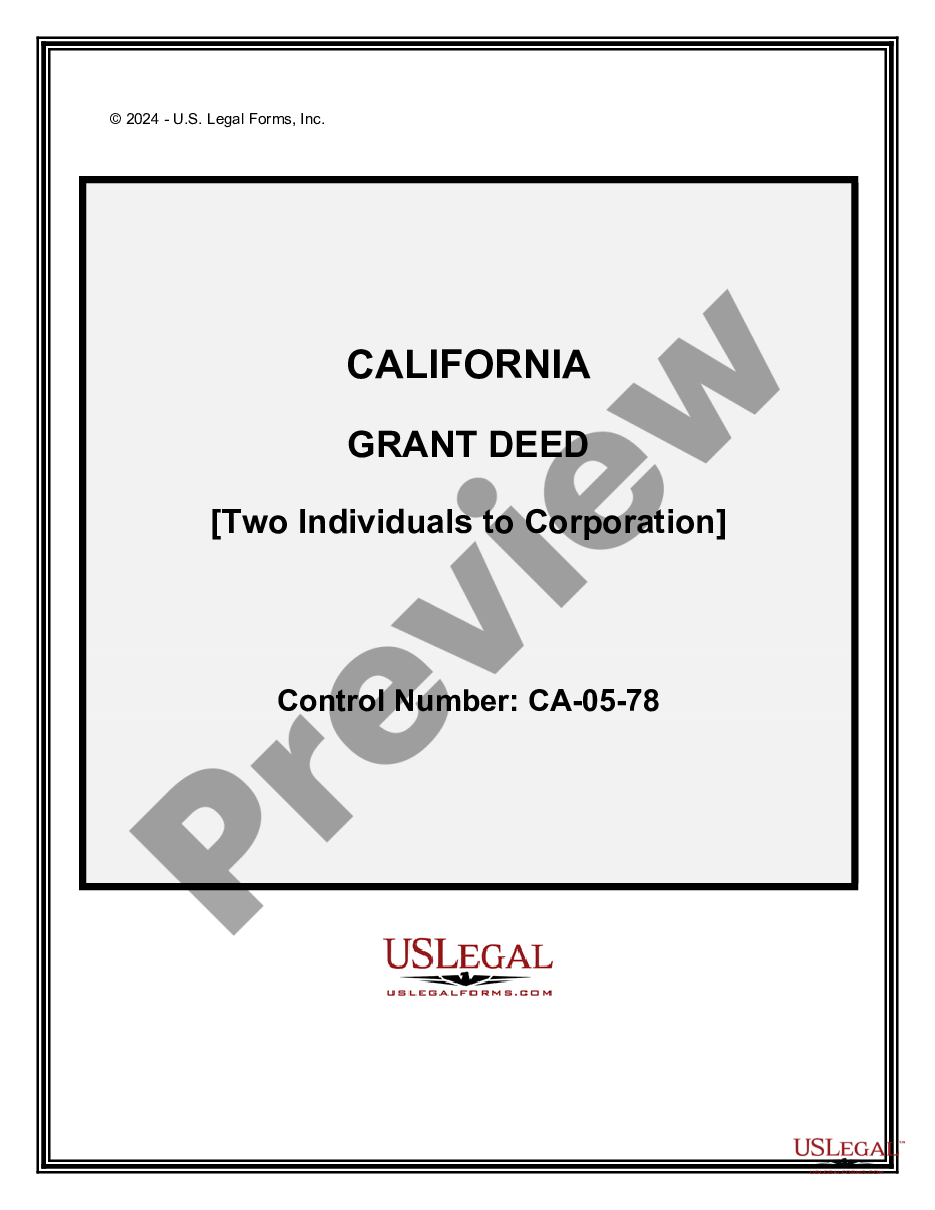
California Grant Deed from Two Individuals to Corporation
About this form
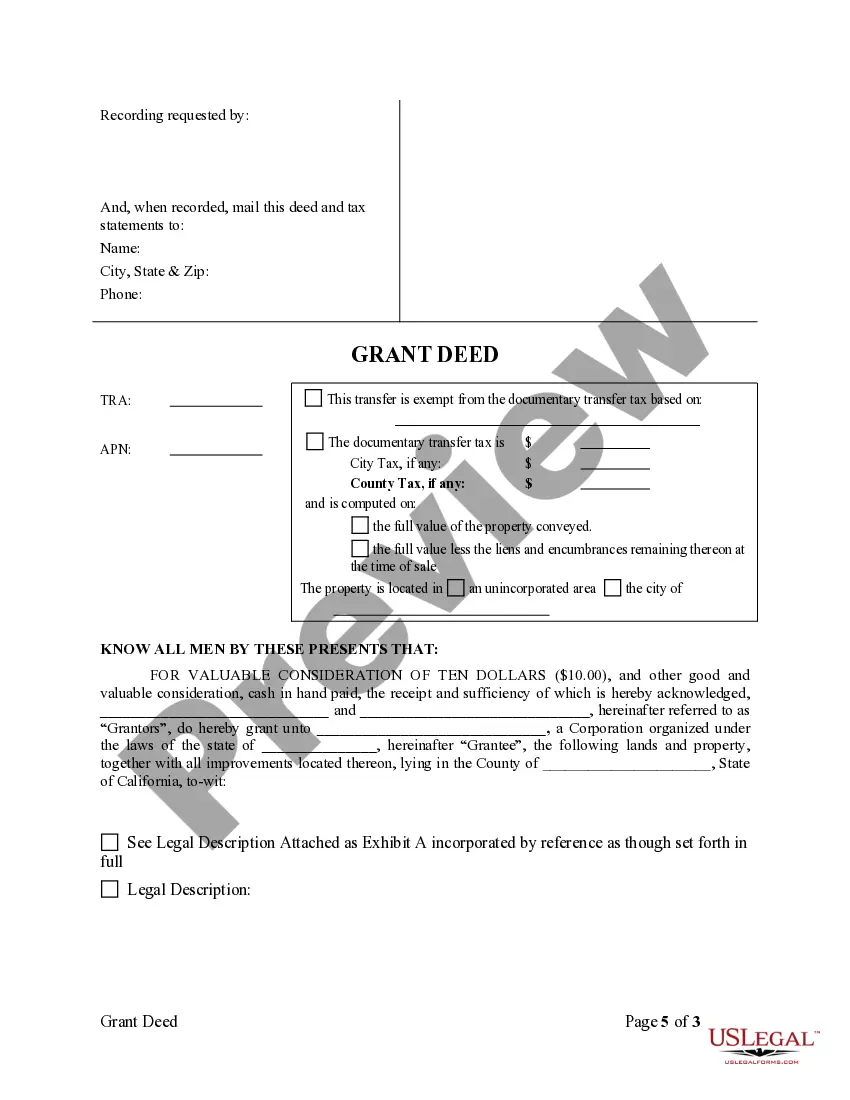
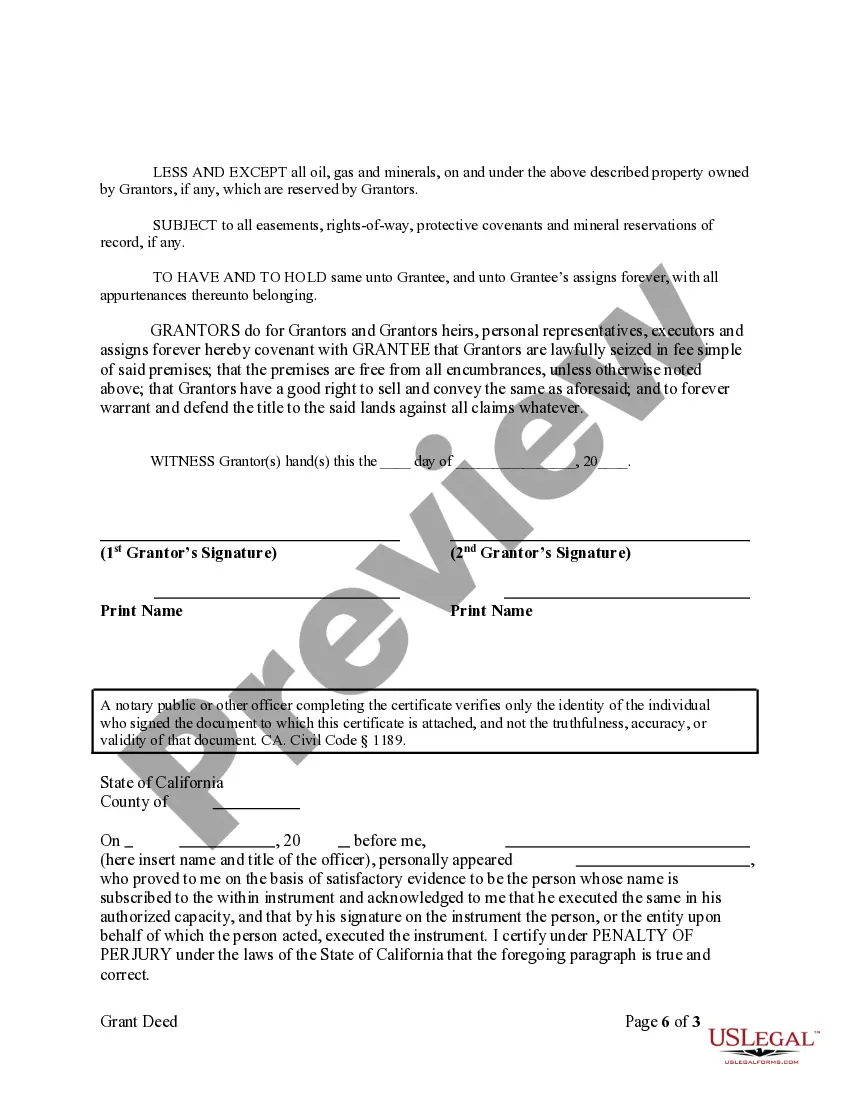
The Grant Deed from Two Individuals to Corporation is a legal document where two individuals (the Grantors) transfer ownership of real property to a corporation (the Grantee). This type of warranty deed ensures that the Grantors are conveying clear title to the property, except for any reserved rights such as oil, gas, and minerals. This form differs from other property transfer documents, as it specifically involves individuals transferring property to a corporate entity.
What’s included in this form
- Identification of Grantors and Grantee
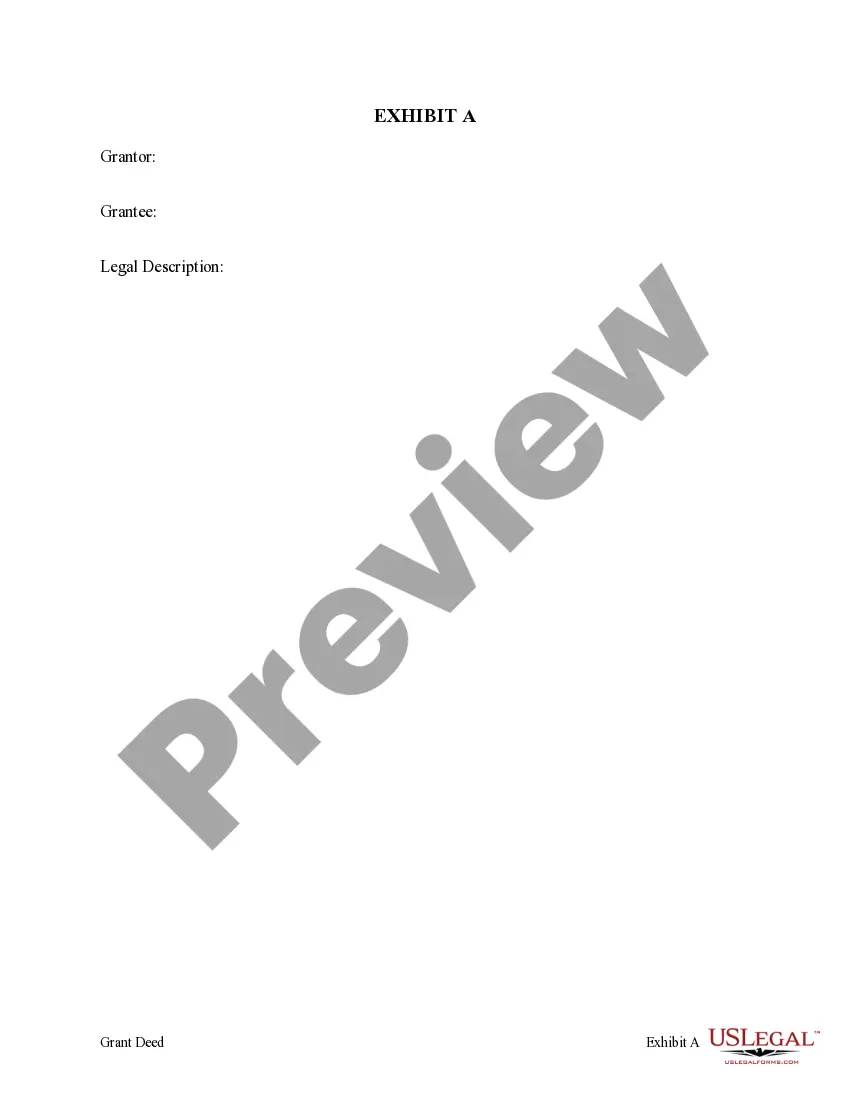
- Legal description of the property being transferred
- Reservation of rights for oil, gas, and minerals
- Warranties by the Grantors regarding clear title
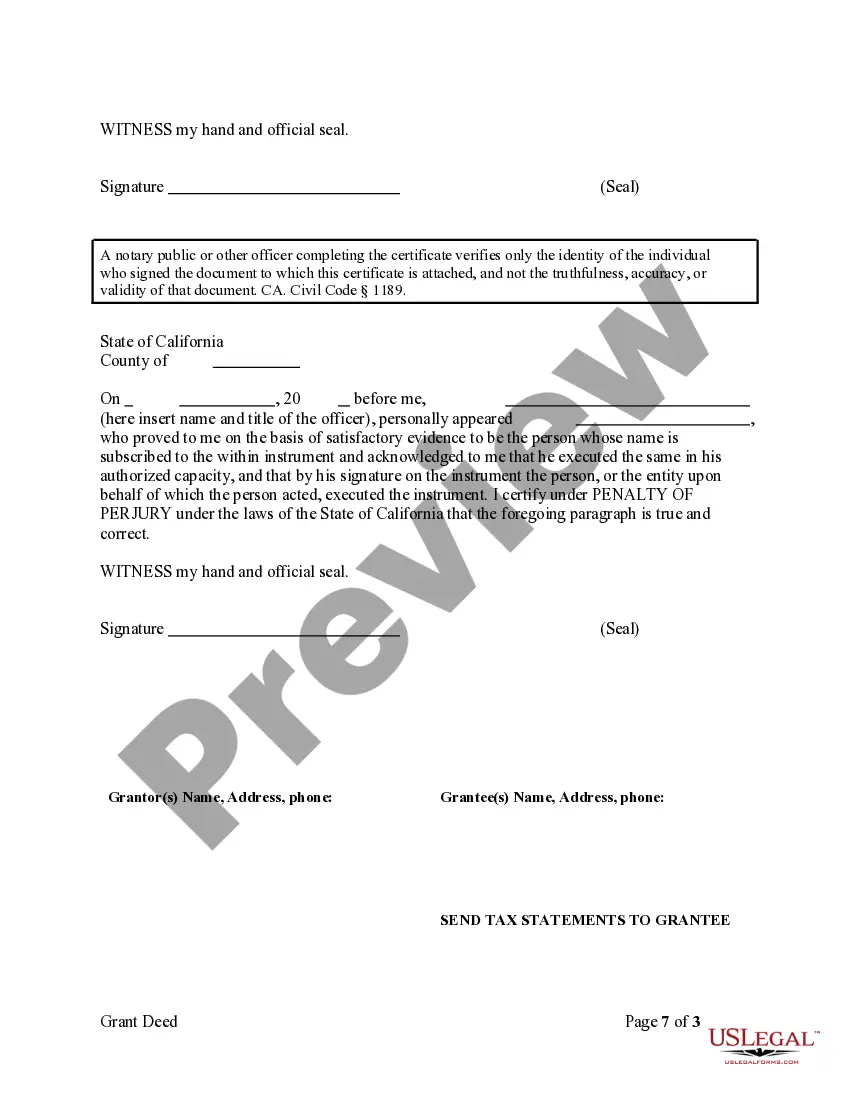
- Signature lines for Grantors
- Notarization requirements, if applicable

When to use this form
This form is essential when two individuals wish to convey real estate ownership to a corporation. It is commonly used in business transactions where property held by individuals is transferred to a corporate structure for purposes such as investment, leasing, or operational use. Additionally, this deed is applicable when the individuals want to delineate rights concerning natural resources attached to the property.
Who needs this form
This form is suitable for:
- Property owners consisting of two individuals
- Corporations seeking to acquire real property
- Individuals involved in real estate transactions where the buyer is a corporation
- Legal representatives of Grantors looking to convey property on their behalf
How to prepare this document
- Identify the two individuals acting as Grantors and enter their full names.
- Specify the name of the corporation as the Grantee.
- Provide a legal description of the property being transferred.
- Indicate any reservations regarding oil, gas, and mineral rights, if applicable.
- Have both Grantors sign the document in the presence of a notary public.
- Submit the completed deed to the appropriate local government office for recording.
Does this document require notarization?
This form must be notarized to be legally valid. US Legal Forms provides secure online notarization powered by Notarize, allowing you to complete the process through a verified video call.
Get your form ready online
Our built-in tools help you complete, sign, share, and store your documents in one place.
Make edits, fill in missing information, and update formatting in US Legal Forms—just like you would in MS Word.
Download a copy, print it, send it by email, or mail it via USPS—whatever works best for your next step.
Sign and collect signatures with our SignNow integration. Send to multiple recipients, set reminders, and more. Go Premium to unlock E-Sign.
If this form requires notarization, complete it online through a secure video call—no need to meet a notary in person or wait for an appointment.
We protect your documents and personal data by following strict security and privacy standards.

Make edits, fill in missing information, and update formatting in US Legal Forms—just like you would in MS Word.

Download a copy, print it, send it by email, or mail it via USPS—whatever works best for your next step.

Sign and collect signatures with our SignNow integration. Send to multiple recipients, set reminders, and more. Go Premium to unlock E-Sign.

If this form requires notarization, complete it online through a secure video call—no need to meet a notary in person or wait for an appointment.

We protect your documents and personal data by following strict security and privacy standards.
Common mistakes to avoid
- Not providing a complete legal description of the property.
- Failing to include all necessary signatures from the Grantors.
- Omitting reservation clauses for oil, gas, and minerals if applicable.
- Not having the document notarized where required.
- Neglecting to record the deed with the local government office.
Benefits of completing this form online
- Convenient download and instant access to legal templates.
- Editable format allows for easy customization of the form.
- Access to professionally drafted forms by licensed attorneys.
- Guidance throughout the process to ensure compliance with legal standards.
Looking for another form?
Form popularity
FAQ
To fill out a California Grant Deed from Two Individuals to Corporation, start by obtaining the appropriate form. Ensure you include the names of the grantors—those transferring the property—and the name of the grantee, which is the corporation receiving the property. Provide a clear description of the property in question, including its address and parcel number, if available. After completing the form, the grantors must sign it in front of a notary public to make it legally valid.
Yes, a joint tenant can transfer their interest in California. However, this transfer typically requires the execution of a California Grant Deed from Two Individuals to Corporation, which formalizes the change in ownership. It is important to understand that transferring your interest may impact the joint tenancy arrangement, so consulting a legal expert is advisable. Platforms like US Legal Forms provide essential resources and forms to simplify this process for you.
A corporation grant deed is a legal document used to transfer property ownership from individuals to a corporation. In the context of a California Grant Deed from Two Individuals to Corporation, this deed must meet specific requirements outlined by California law. This type of deed provides clear proof of the transfer, ensuring that the corporation becomes the legal owner of the property. For a smooth experience, you can utilize uslegalforms to help you generate accurate grant deed documents tailored to your needs.
Transferring a grant deed in California involves preparing a California Grant Deed from Two Individuals to Corporation. This deed must clearly state the new ownership details and be signed by the current owner. Finally, file the signed deed with the county recorder's office to update the public record.
To transfer ownership of a property to an LLC, draft a California Grant Deed from Two Individuals to Corporation that outlines the transfer details. Both the original owner and the LLC must sign the deed. Subsequently, file the deed with the appropriate county office to complete the transfer legally.
People often place their property in an LLC to benefit from limited liability protection and potential tax advantages. This strategy can safeguard personal assets from business liabilities and streamline property management. Utilizing a California Grant Deed from Two Individuals to Corporation facilitates this transfer and ensures legal compliance.
Amending a grant deed in California requires creating a new California Grant Deed from Two Individuals to Corporation that includes the desired changes. The new deed must be signed by all parties involved and then filed with the county recorder's office. This amendment effectively updates the record of ownership.
While you can transfer a deed without a lawyer, consulting with one can provide valuable guidance. A legal professional can help ensure the California Grant Deed from Two Individuals to Corporation is properly drafted and executed. This step can prevent potential disputes and ensure compliance with local regulations.
To remove someone from a grant deed in California, you need to execute a new California Grant Deed from Two Individuals to Corporation that reflects the change in ownership. Both the individual being removed and the remaining owner must sign the new deed. After signing, file the updated deed with the county recorder's office to finalize the removal.
When a corporation transfers ownership of property, the California Grant Deed from Two Individuals to Corporation must be signed by an authorized officer of the corporation. It's important to ensure that the signatory is specified in the corporation's bylaws or resolutions. This process maintains legal validity and protects the interests of all parties involved.