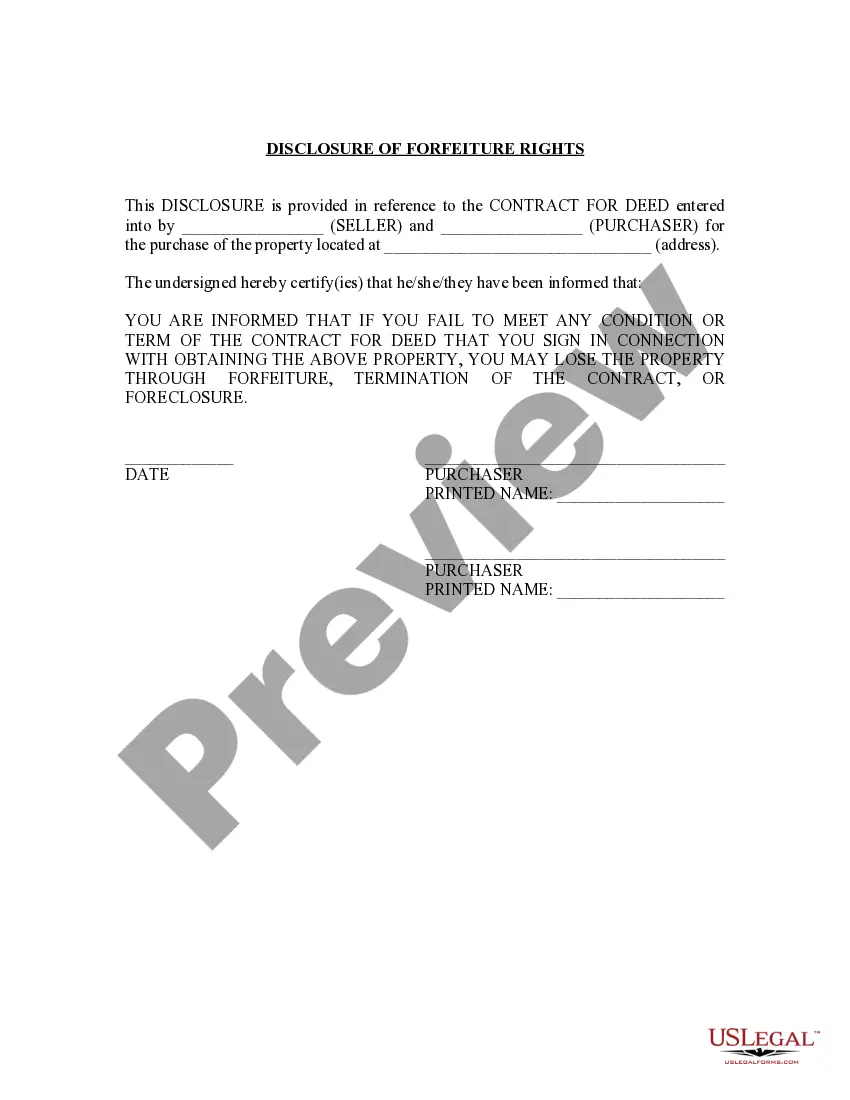
California Seller's Disclosure of Forfeiture Rights for Contract for Deed
Overview of this form
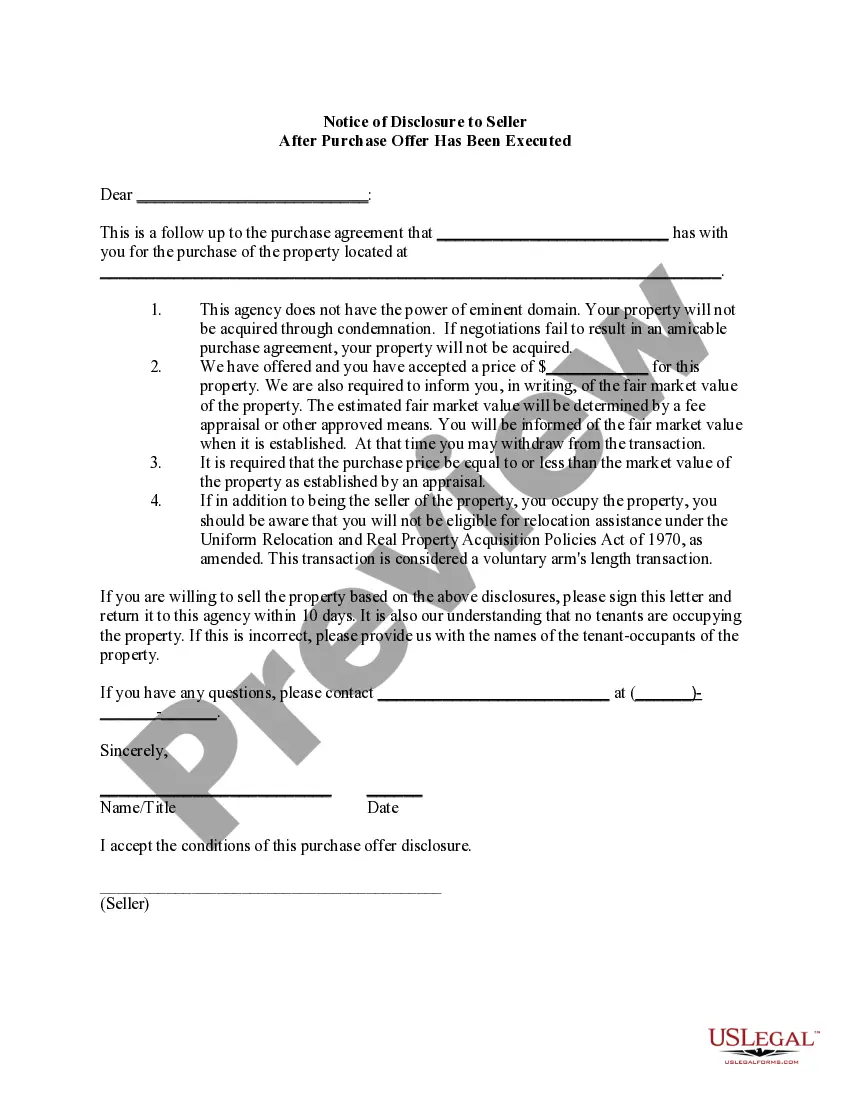
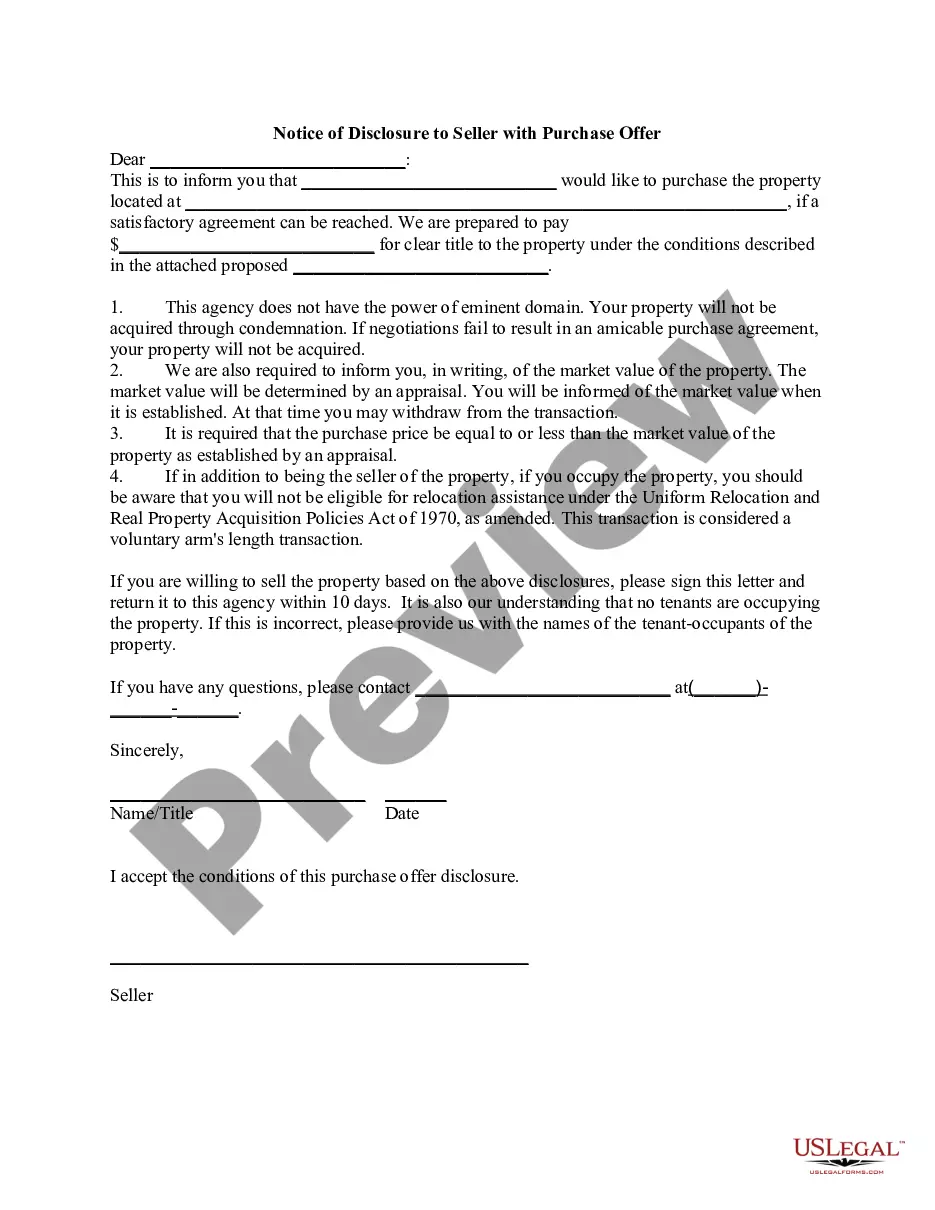
The Seller's Disclosure of Forfeiture Rights for Contract for Deed is a legal form provided by the seller to the purchaser at the time of signing the contract. This form is important as it informs the buyer about their forfeiture rights in the event of default on the contract. While not always mandatory, using this form helps ensure that the buyer understands the implications of failing to meet the contract terms, which could result in losing the property. This form distinguishes itself from other disclosures by specifically addressing forfeiture rights related to a contract for deed agreement.
Form components explained
- Certification of notification regarding forfeiture risks
- Details on conditions that may lead to forfeiture
- Signature lines for both parties to acknowledge understanding
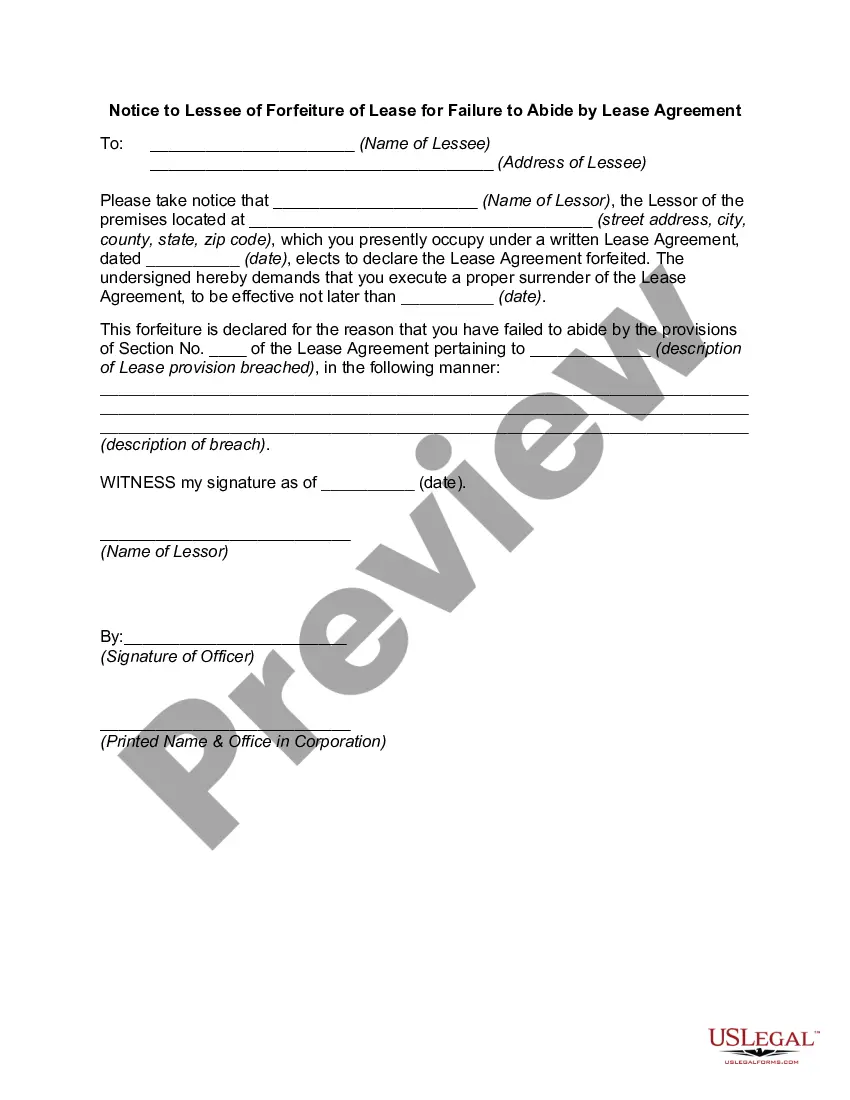
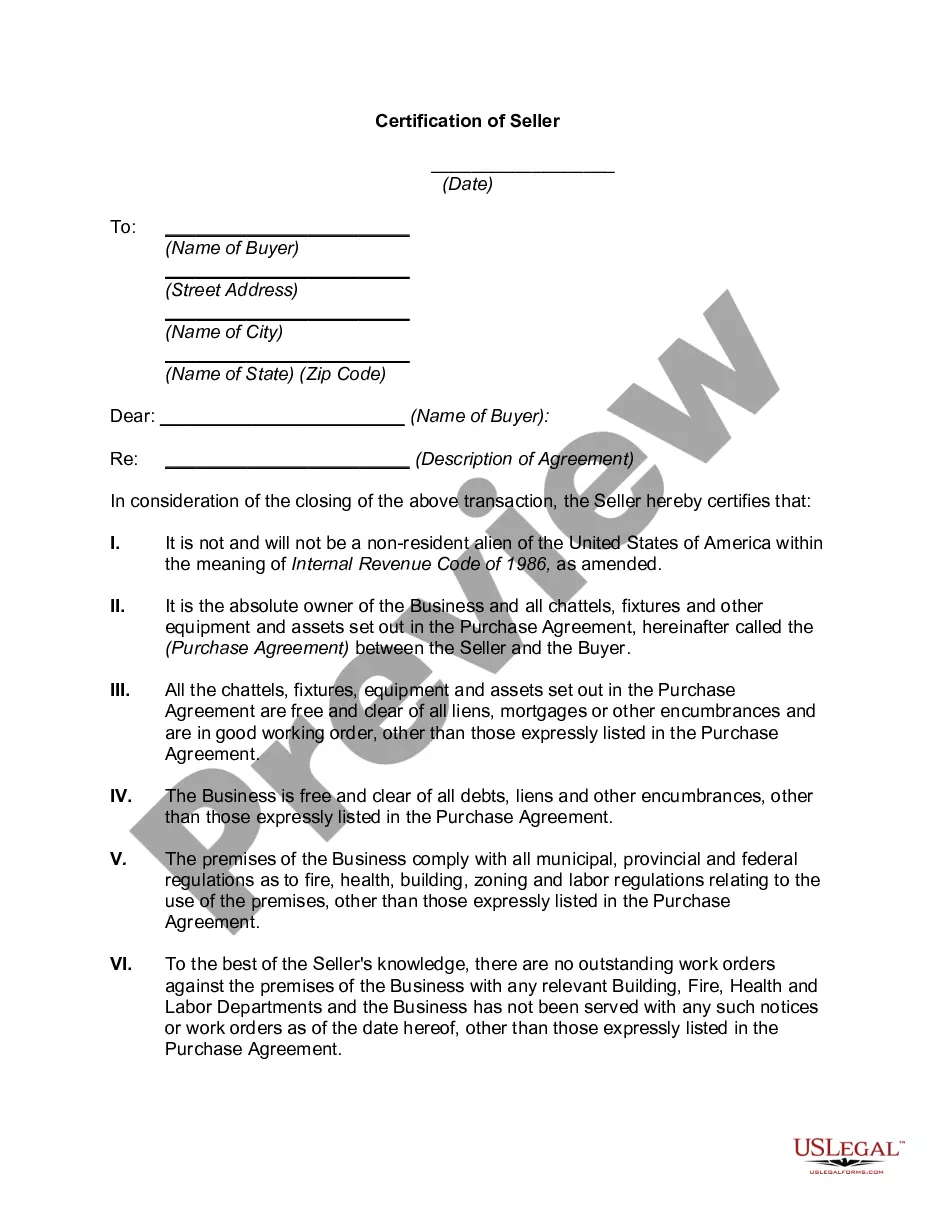
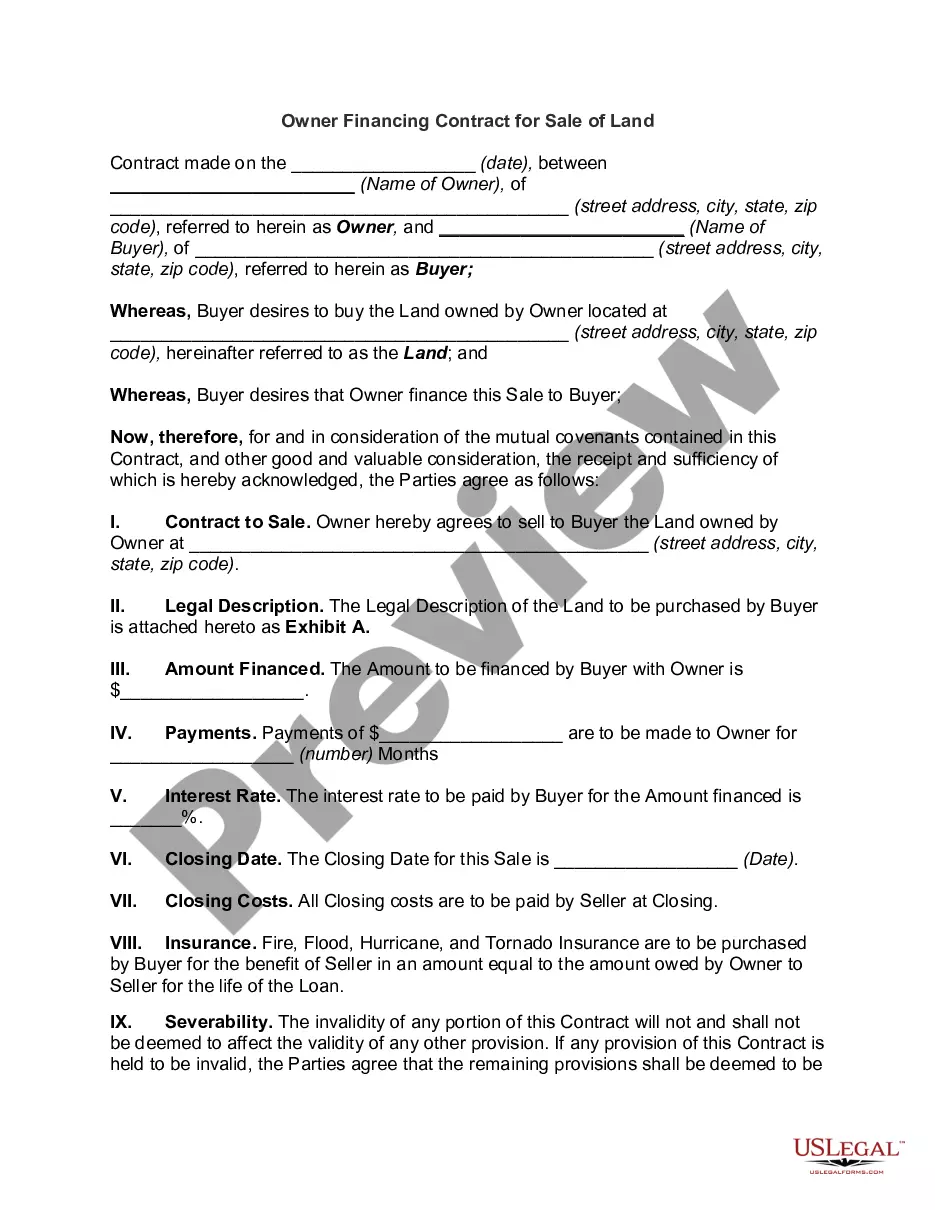
Common use cases
This form should be used when a seller and purchaser are entering into a contract for deed. It is particularly relevant when the seller wants to ensure that the buyer is fully aware of their rights regarding forfeiture in the event of non-compliance with the agreement. Utilizing this form can help clarify the terms of the contract and protect both parties should a dispute arise later.
Who needs this form
- Sellers of property under a contract for deed
- Purchasers entering into a contract for deed arrangement
- Real estate professionals advising clients on contract for deed transactions
How to complete this form
- Read the entire form carefully to understand the rights and responsibilities involved.
- Identify the parties involved in the transaction, including their names and addresses.
- Check all relevant conditions and terms that pertain to the contract for deed.
- Ensure both parties sign and date the disclosure to acknowledge their understanding.
- Retain a copy of the signed form for future reference.
Notarization guidance
This form does not typically require notarization to be legally valid. However, some jurisdictions or document types may still require it. US Legal Forms provides secure online notarization powered by Notarize, available 24/7 for added convenience.
Get your form ready online
Our built-in tools help you complete, sign, share, and store your documents in one place.
Make edits, fill in missing information, and update formatting in US Legal Forms—just like you would in MS Word.
Download a copy, print it, send it by email, or mail it via USPS—whatever works best for your next step.
Sign and collect signatures with our SignNow integration. Send to multiple recipients, set reminders, and more. Go Premium to unlock E-Sign.
If this form requires notarization, complete it online through a secure video call—no need to meet a notary in person or wait for an appointment.
We protect your documents and personal data by following strict security and privacy standards.
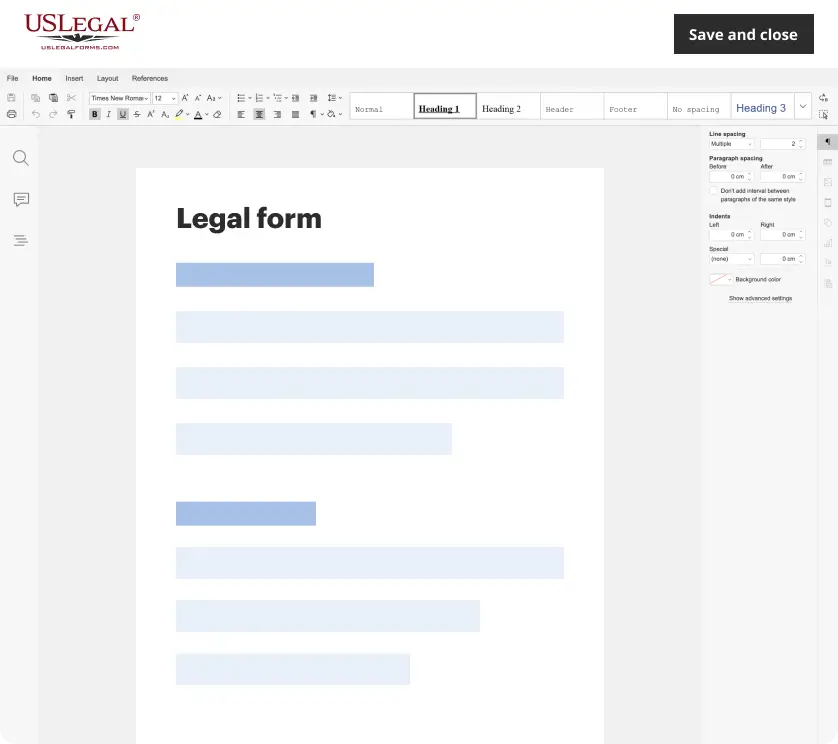
Make edits, fill in missing information, and update formatting in US Legal Forms—just like you would in MS Word.
Download a copy, print it, send it by email, or mail it via USPS—whatever works best for your next step.
Sign and collect signatures with our SignNow integration. Send to multiple recipients, set reminders, and more. Go Premium to unlock E-Sign.
If this form requires notarization, complete it online through a secure video call—no need to meet a notary in person or wait for an appointment.
We protect your documents and personal data by following strict security and privacy standards.
Common mistakes to avoid
- Failing to provide the form at the time of contract signing.
- Not reading or understanding the forfeiture implications before signing.
- Neglecting to keep a copy of the signed disclosure for record-keeping.
Why use this form online
- Immediate access to the form for quick transactions.
- Edit and customize the template as needed.
- Reliable and secure source provided by licensed attorneys.
What to keep in mind
- The Seller's Disclosure of Forfeiture Rights informs Purchasers of potential risks.
- Ensure all parties understand their rights and obligations in the contract for deed.
- Use this form to prevent future disputes and ensure clarity in real estate transactions.
Looking for another form?
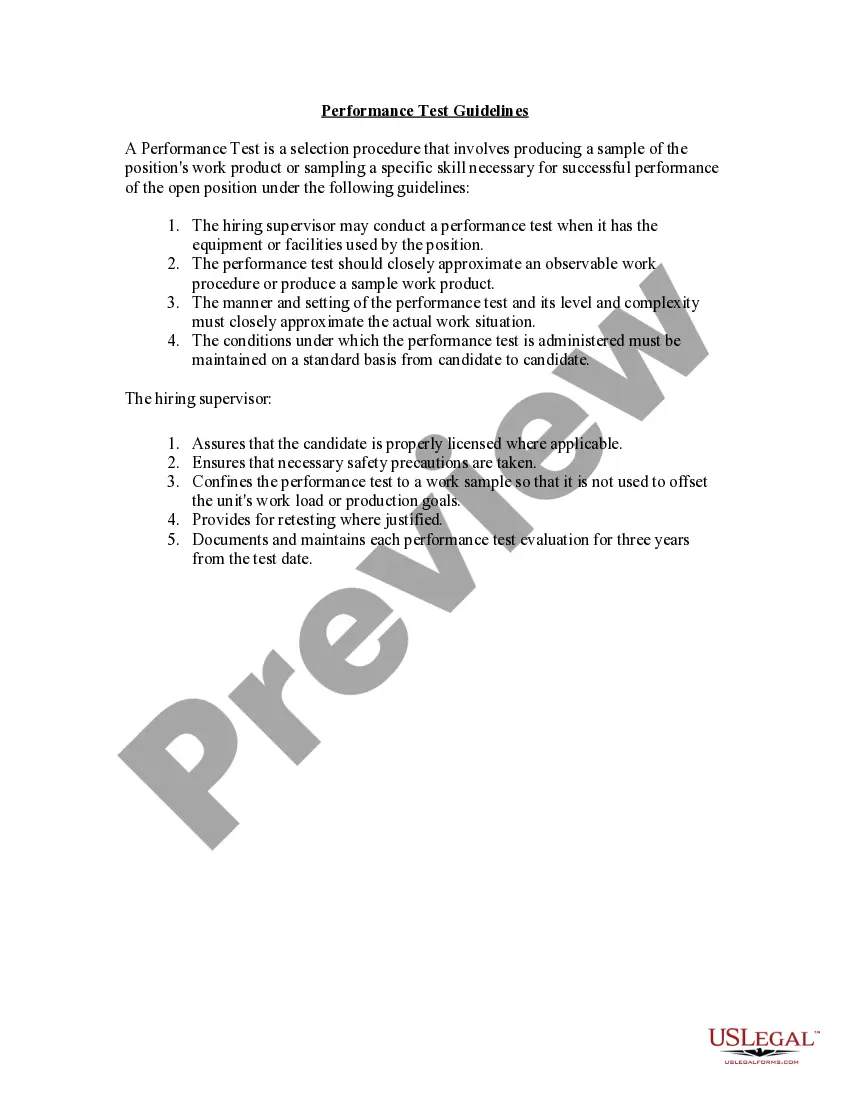

Form popularity
FAQ
In the first instance, if your deed is not recorded, there is nothing in the public record to stop the seller from conveying the property to another person.The second situation could happen if your seller fails to pay his or her debts and the seller's creditors file liens or judgments against your property.
This means that if you default and can?t make your payments, you lose the property and all of the money you have already paid into it (often including repairs and improvements). Unlike a traditional mortgage, a defaulting buyer in a contact for deed may only have 30-60 days to cure the default or move out.
If a seller defaults, he must return all deposits, plus added reasonable expenses, to the buyer. The other party may also seek to compel the erring party to complete the deal under specific performance. From a buyer's point of view, it is advisable to get the sale agreement registered.
Monetary Damages If the Seller decides to breach the contract and keep their home, they may do so, but the court may order the Buyer receive money for the resulting breach. Generally, the money owed to Buyer may include reimbursing the Buyer with: The buyer's temporary housing costs.
Backing out of a home sale can have costly consequences A home seller who backs out of a purchase contract can be sued for breach of contract. A judge could order the seller to sign over a deed and complete the sale anyway. The buyer could sue for damages, but usually, they sue for the property, Schorr says.
Contact the other party and ask whether they are willing to negotiate the cancellation of the contract. Offer the other party an incentive to cancel the contract for deed.
In the first instance, if your deed is not recorded, there is nothing in the public record to stop the seller from conveying the property to another person.The second situation could happen if your seller fails to pay his or her debts and the seller's creditors file liens or judgments against your property.
But unlike buyers, sellers can't back out and forfeit their earnest deposit money (usually 1-3 percent of the offer price). If you decide to cancel a deal when the home is already under contract, you can be either legally forced to close anyway or sued for financial damages.
If a seller is actually breaching a contract and you can prove you have been financially damaged, you could sue. However, the amount you can sue for depends on the law in your individual state.With that said, if you can show the seller acted in bad faith, your state may allow you to seek additional damages.