Arizona Lease Subordination Agreement
What this document covers
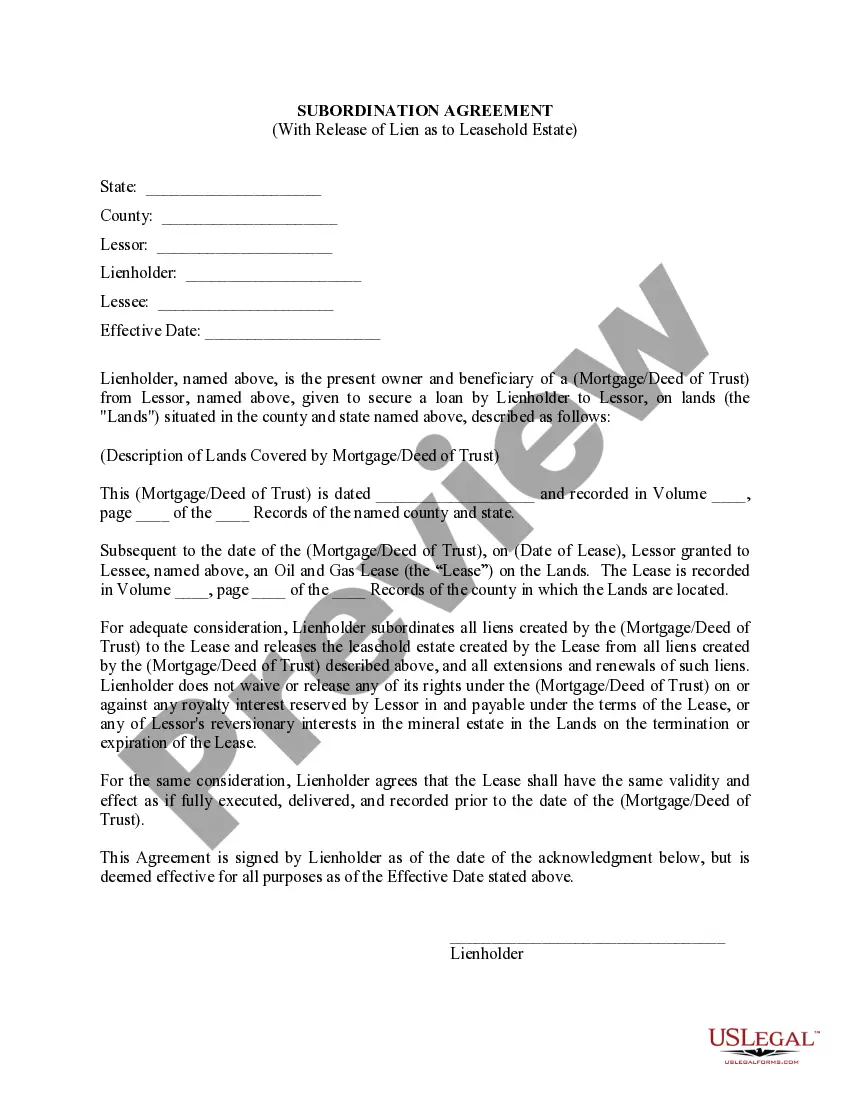
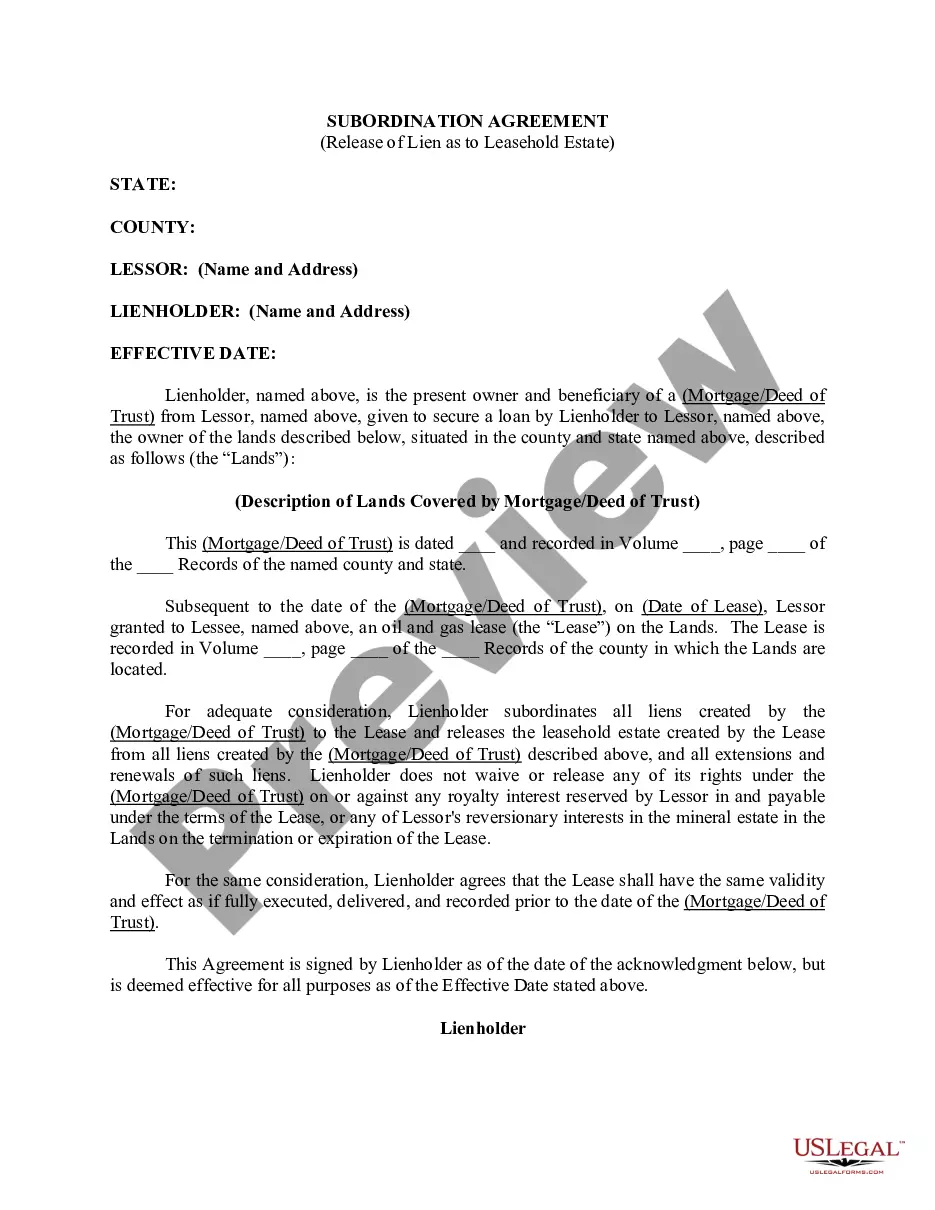
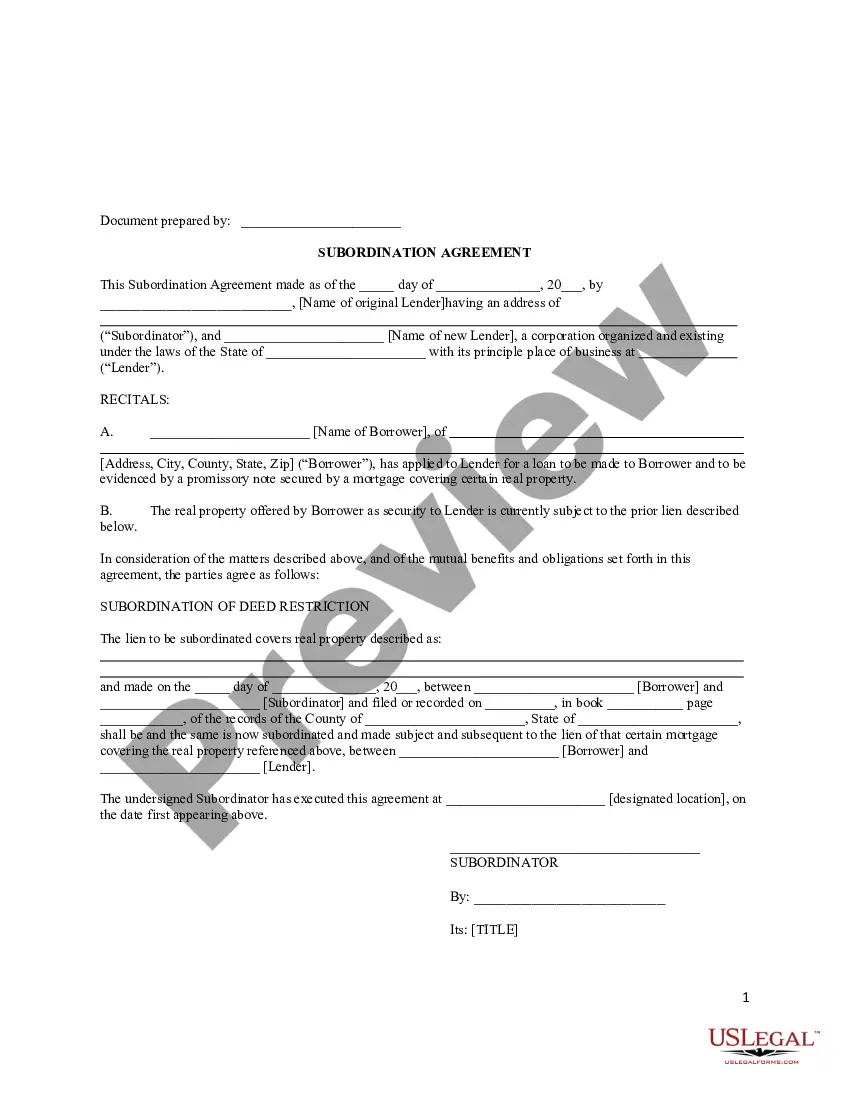
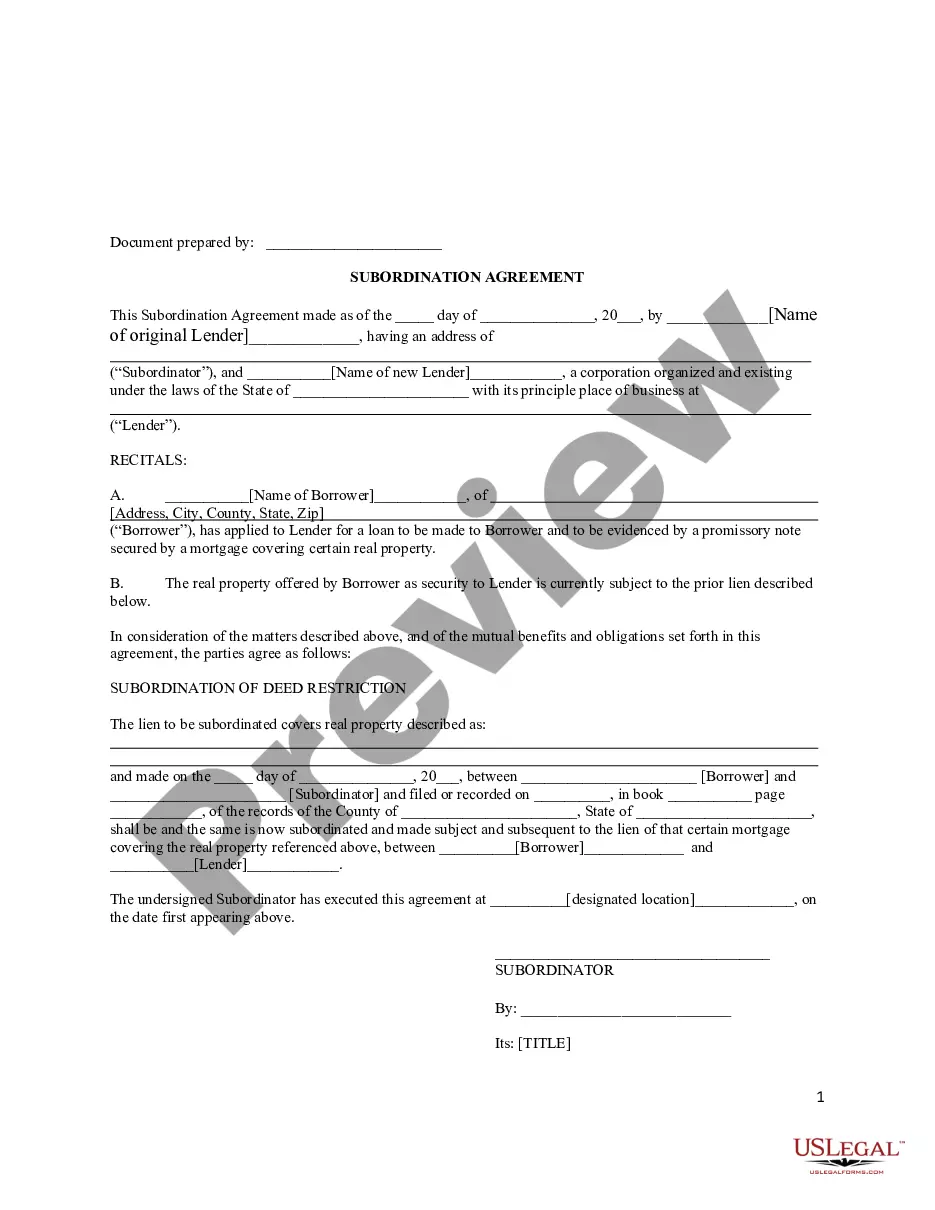
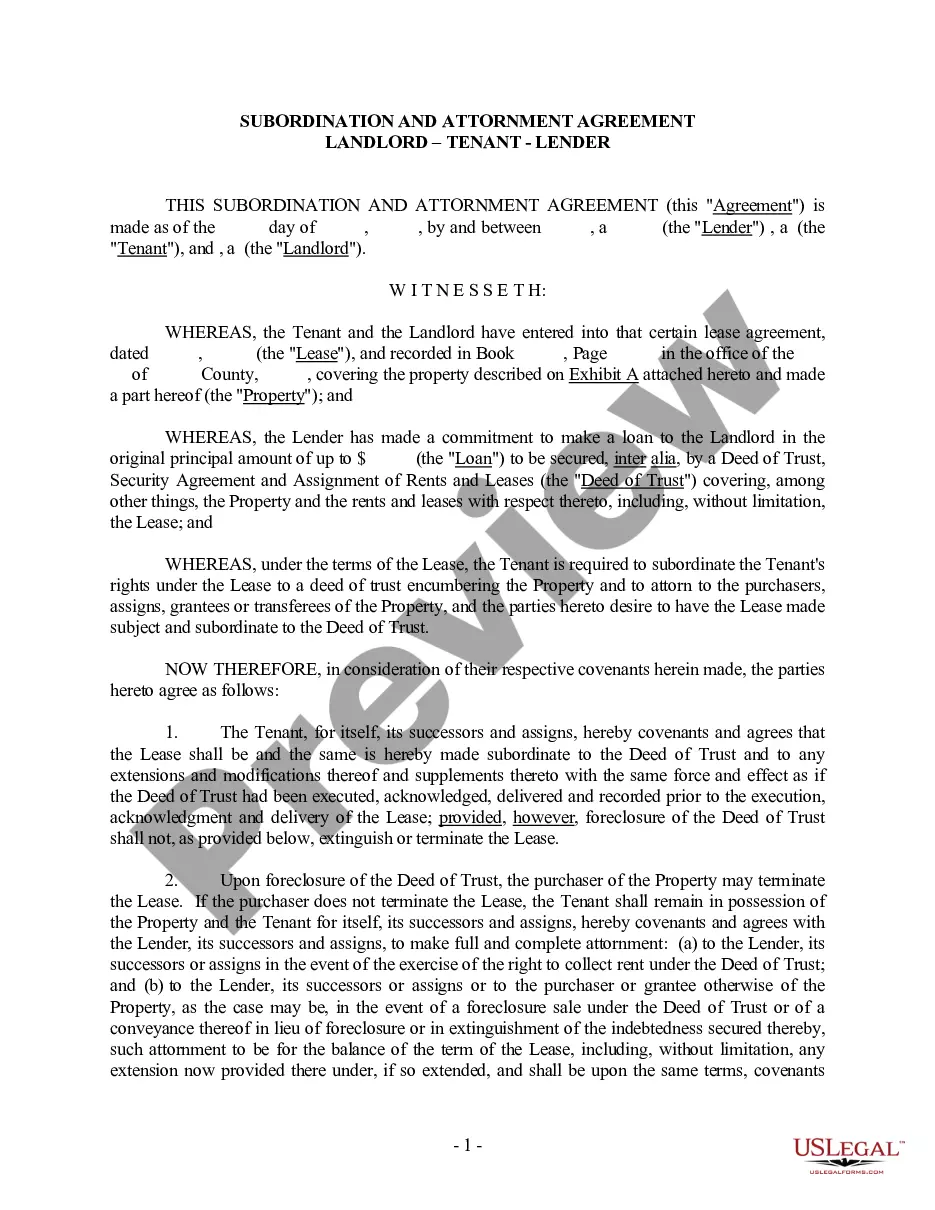
The Lease Subordination Agreement is a legal document that allows a lienholder's claims on a property to be subordinate to a mineral, oil, or gas lease. It is essential for property owners seeking to secure a new loan while maintaining the rights of existing leases. Unlike other agreements, this form specifically addresses the unique nature of mineral rights and leasing arrangements.
Main sections of this form
- Identification of the lessor, lienholder, and lessee involved.
- Effective date of the agreement.
- Details of the mortgage or deed of trust, including recorded documents.
- Description of the land covered by the lease.
- Clauses specifying that the lienholder subordinates their lien to the lease.
- Confirmation that the lease retains validity despite preceding liens.
When to use this form
This Lease Subordination Agreement is needed when a property owner files for a new mortgage or loan that necessitates subordinating existing liens due to the presence of a mineral or oil lease. It is particularly useful in real estate transactions where financing is contingent upon the orderly handling of lien priorities.
Who should use this form
This form is intended for:
- Property owners seeking to secure new financing while having existing oil, gas, or mineral leases.
- Tax professionals who need to arrange lien priorities for clients.
- Landlords and lessees involved in oil and gas leases requiring formal acknowledgement of lienholder rights.
Steps to complete this form
- Identify the parties involved: lessor, lienholder, and lessee.
- Specify the effective date of the agreement.
- Provide details regarding the mortgage or deed of trust.
- Describe the land covered by the lease explicitly.
- Sign the document to acknowledge acceptance of the subordination terms.
Does this form need to be notarized?
This form does not typically require notarization unless specified by local law.
Get your form ready online
Our built-in tools help you complete, sign, share, and store your documents in one place.
Make edits, fill in missing information, and update formatting in US Legal Forms—just like you would in MS Word.
Download a copy, print it, send it by email, or mail it via USPS—whatever works best for your next step.
Sign and collect signatures with our SignNow integration. Send to multiple recipients, set reminders, and more. Go Premium to unlock E-Sign.
If this form requires notarization, complete it online through a secure video call—no need to meet a notary in person or wait for an appointment.
We protect your documents and personal data by following strict security and privacy standards.

Make edits, fill in missing information, and update formatting in US Legal Forms—just like you would in MS Word.

Download a copy, print it, send it by email, or mail it via USPS—whatever works best for your next step.

Sign and collect signatures with our SignNow integration. Send to multiple recipients, set reminders, and more. Go Premium to unlock E-Sign.

If this form requires notarization, complete it online through a secure video call—no need to meet a notary in person or wait for an appointment.

We protect your documents and personal data by following strict security and privacy standards.
Common mistakes to avoid
- Failing to include detailed property descriptions.
- Not updating or clarifying the effective date, leading to confusion on applicability.
- Neglecting to have all parties sign the agreement.
Benefits of completing this form online
- Convenient access to a template drafted by licensed attorneys.
- Edit and customize the form to fit specific needs.
- Save time with instant download options.
Legal use & context
- Subordination agreements like this are legally binding once executed, provided all parties consent and meet local requirements.
- The subordination of liens is critical in real estate to establish priority and protect contractual rights.
Main things to remember
- The Lease Subordination Agreement prioritizes leases over existing liens, which is essential in mineral transactions.
- It is vital to accurately complete all sections to avoid legal pitfalls.
- Ensure compliance with state-specific regulations, especially for notarization and recording standards.
Looking for another form?

Form popularity
FAQ
In a lease, to subordinate means that the leasehold interest is made secondary to the interests of a lender or mortgagee. This means that in the event of foreclosure, the lender's rights take precedence over the tenant's lease. Understanding this concept is vital when entering an Arizona Lease Subordination Agreement, as it influences the security and rights of both tenants and landlords.
To subordinate a house means to place a mortgage or other claims below another claim in the order of priority. This action is often taken to secure additional financing against the property. In an Arizona Lease Subordination Agreement context, subordination can impact tenants' rights and the continuity of their leases when ownership changes hands.
A subordination clause in a lease serves to establish the priority of the lease over other interests, like mortgage loans. This clause is integral in an Arizona Lease Subordination Agreement as it helps clarify the rights of tenants in case of property foreclosure. It assures tenants that their lease remains in effect even if property ownership changes, providing peace of mind.
A sub under lease refers to a situation where a tenant leases out their rented space to another party. This arrangement allows the original tenant to retain some rights and responsibilities while also generating income from the subtenant. When considering an Arizona Lease Subordination Agreement, it’s essential to understand how subleasing can affect your lease terms and conditions.
A subordinated agreement is a legal document that establishes the priority of claims against a property. It often involves a lender accepting a lower priority position concerning claims in exchange for financing. Hence, understanding the intricacies of an Arizona Lease Subordination Agreement can allow you to navigate these complexities with confidence.
To terminate a lease in Arizona, tenants or landlords must provide notice as stipulated in the agreement. Typically, this involves delivering a written notice 30 days in advance for month-to-month leases. Utilizing resources like USLegalForms can guide you through the process and help you incorporate necessary elements of an Arizona Lease Subordination Agreement.
The subordination clause serves to clarify the hierarchy of claims relating to a property. It ensures that certain loans or obligations are prioritized over others, thus protecting the lender's interests. By incorporating an Arizona Lease Subordination Agreement, both parties can navigate potential conflicts more effectively.
In Arizona, a month-to-month rental agreement allows both landlords and tenants to maintain flexibility in their housing arrangements. The law requires a written notice for termination, usually 30 days before the intended end date. It is essential for parties entering such agreements to be aware of the stipulations outlined in an Arizona Lease Subordination Agreement.
The main purpose of a subordination agreement is to establish the priority of claims against property. This ensures that specific creditors, like lenders, have first rights to any proceeds in case of default. Hence, an Arizona Lease Subordination Agreement helps to protect the interests of important stakeholders in real estate transactions.
Subordination agreements offer several advantages, including greater financing flexibility and increased convenience for property owners. They also provide clarity regarding priority claims, which can protect tenants' rights. Employing an Arizona Lease Subordination Agreement can enhance your financial arrangements while securing your position.