Arkansas Last Will and Testament for Divorced person not Remarried with Adult Children
What this document covers
This Last Will and Testament is a legal document specifically designed for an individual who has gone through a divorce, has not remarried, and has adult children. Its main purpose is to clearly outline how the individual's estate and property will be distributed upon their death, as well as to appoint a personal representative or executor to manage the estate. Unlike other wills, this form accounts for the unique family dynamics that may arise after a divorce.
Form components explained
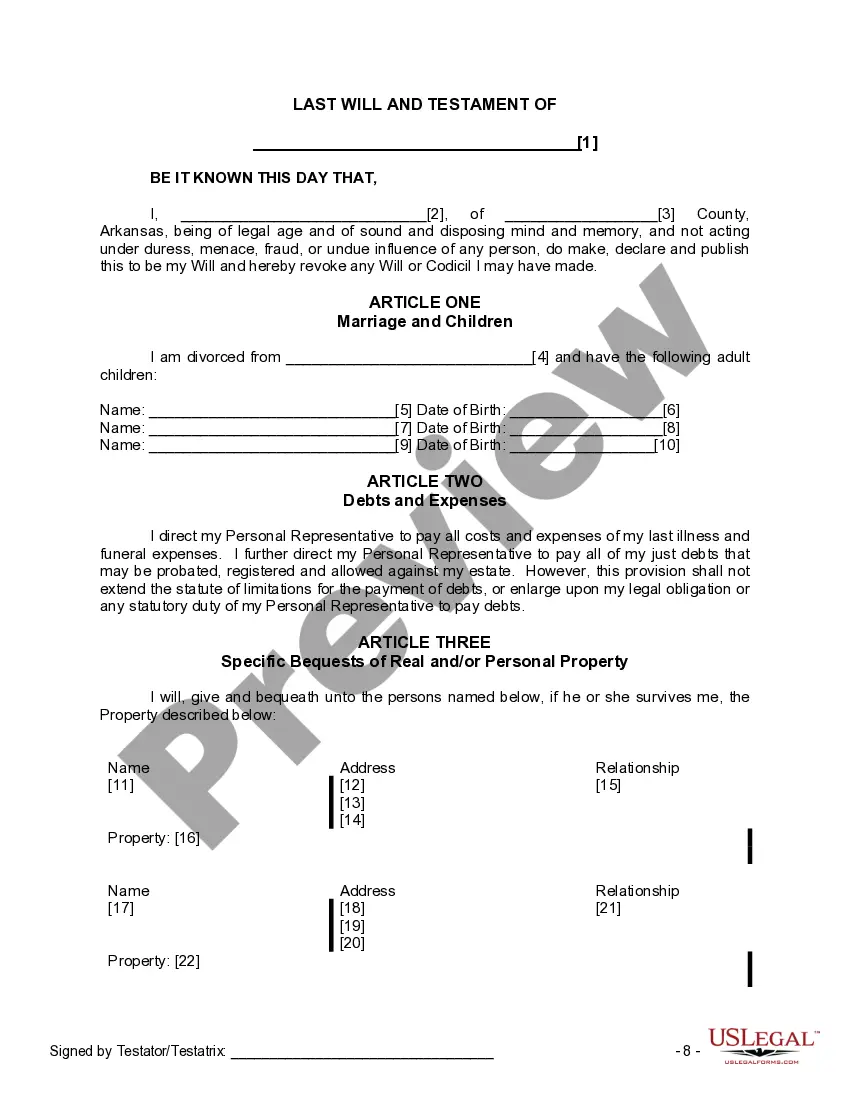
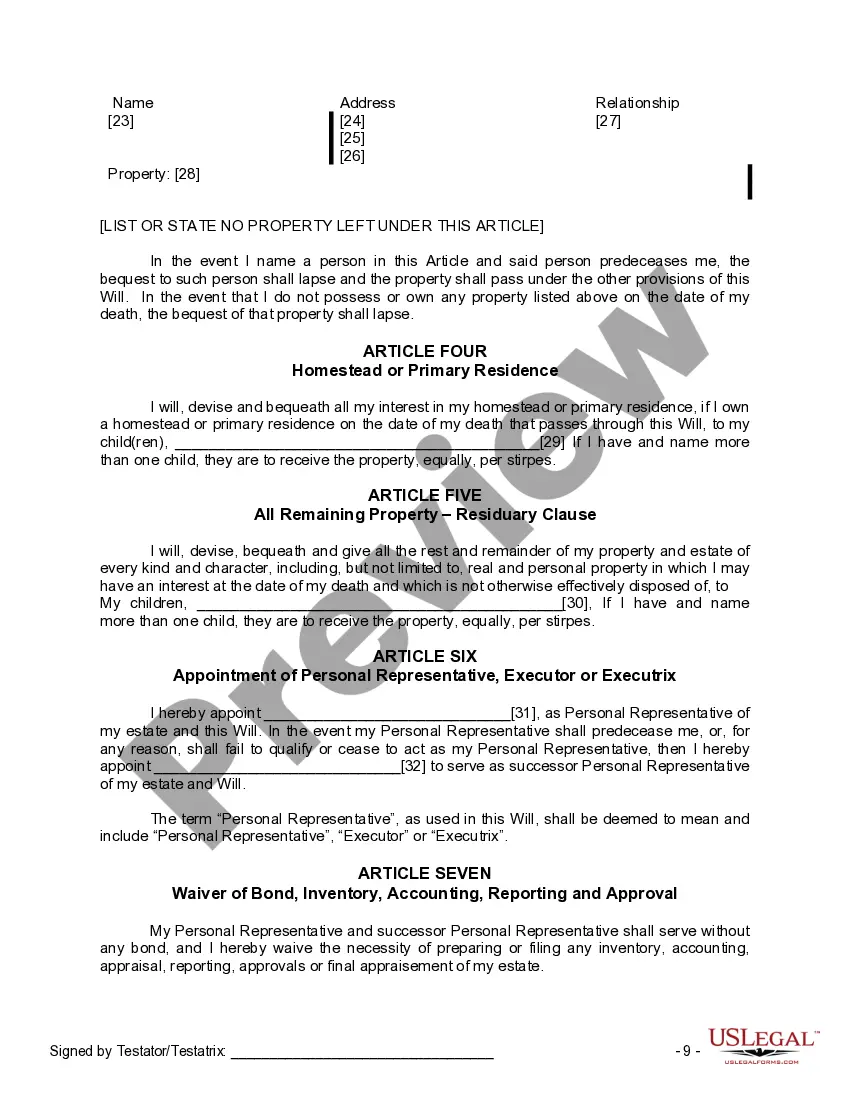
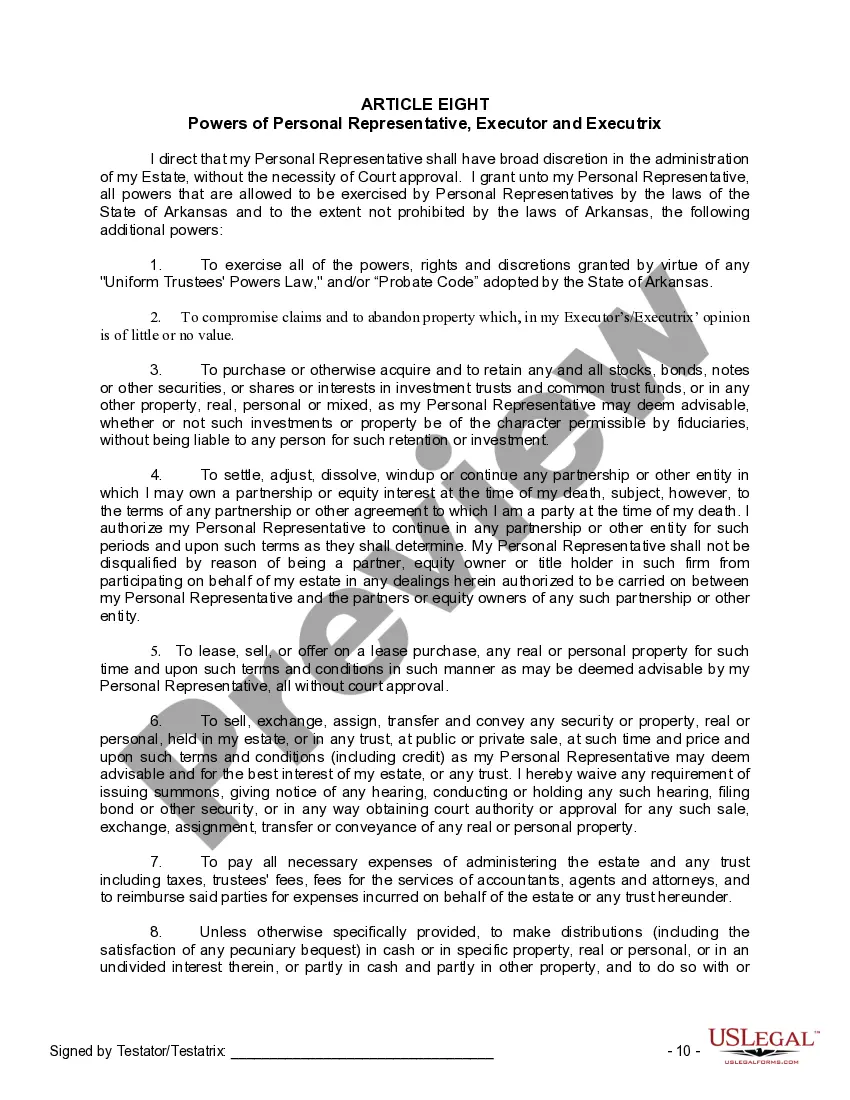
- Appointment of a personal representative to administer the estate.
- Designation of beneficiaries, specifically adult children.
- Provisions for specific bequests of property.
- Instructions regarding the homestead or primary residence.
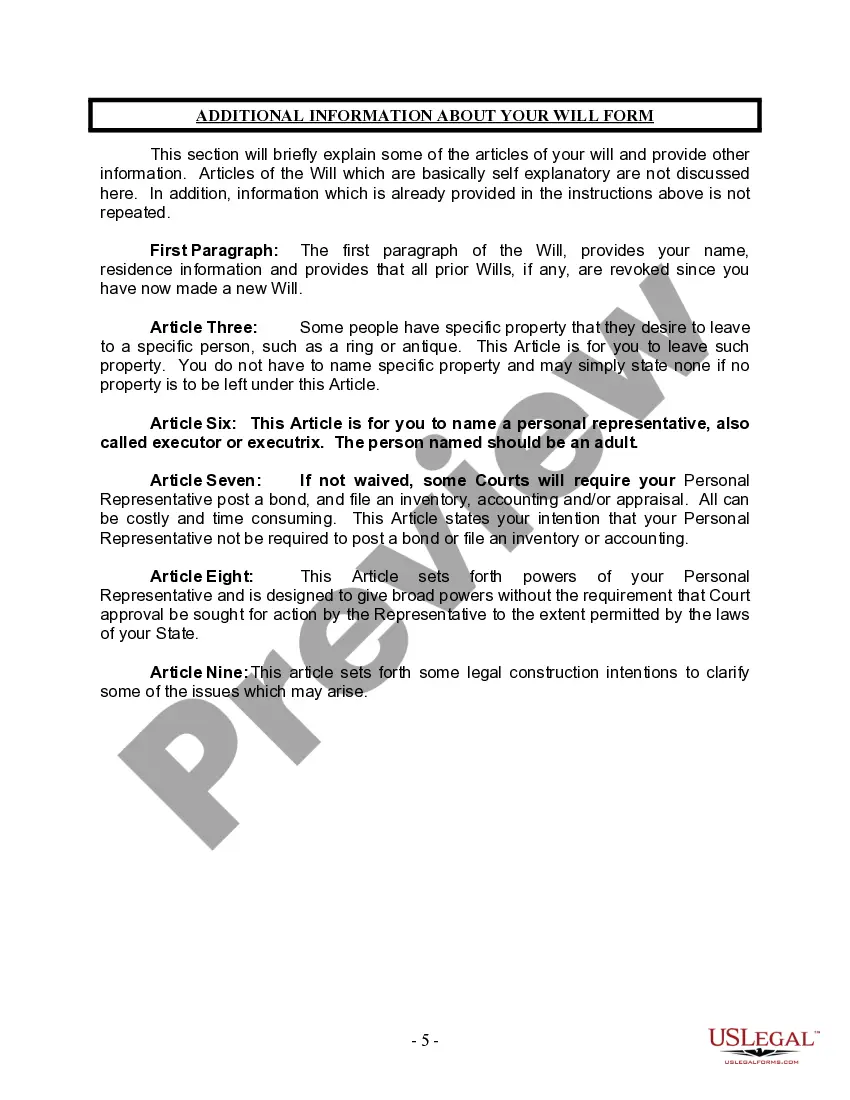
- Waiver of bond and inventory requirements for the personal representative.
- Optional provisions regarding burial or cremation preferences.






When to use this document
This form is useful for individuals who have experienced a divorce, have not remarried, and wish to ensure that their adult children inherit their estate. It is applicable when updating an existing will to reflect new family dynamics or when creating a will for the first time after a divorce.
Intended users of this form
- Divorced individuals who have not remarried.
- Parents with adult children who wish to specify how their estate should be divided.
- Anyone looking to make their estate planning clear and legally binding following a divorce.
- Individuals wanting to appoint a personal representative to oversee estate matters.
Steps to complete this form
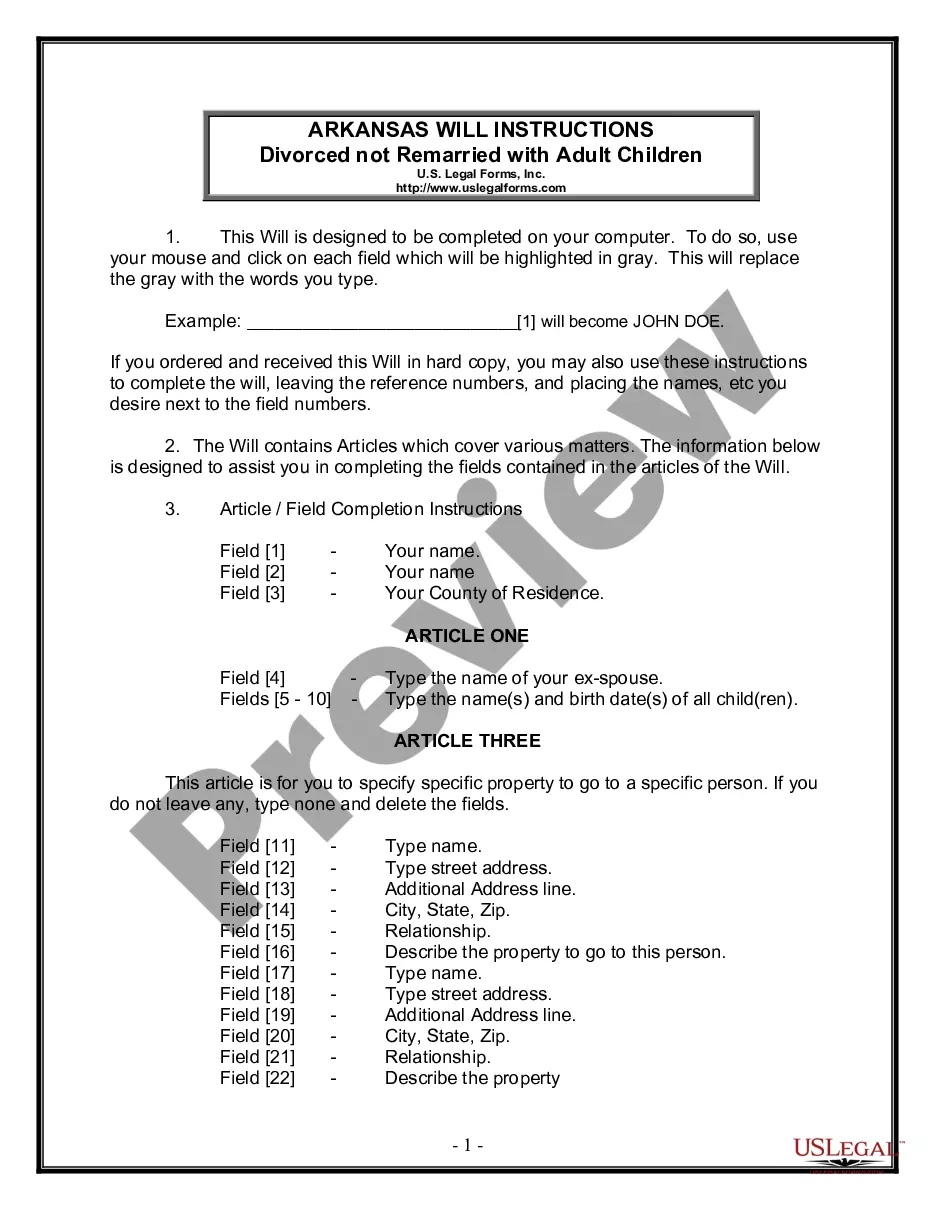
- Begin by entering your full name and county of residence.
- Provide the name of your ex-spouse and list all adult children, including their birth dates.
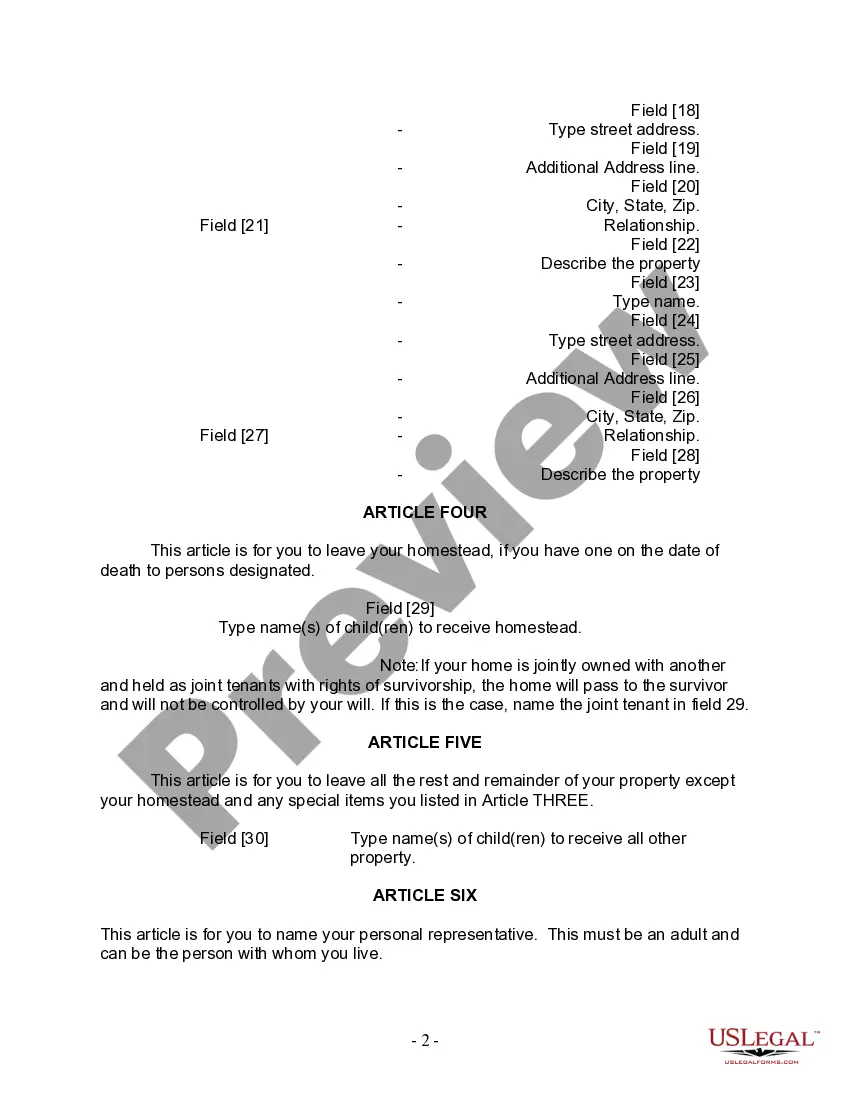
- Designate specific property to particular beneficiaries, if desired, or state that there are no specific bequests.
- Identify your personal representative and a successor representative to ensure estate management continuity.
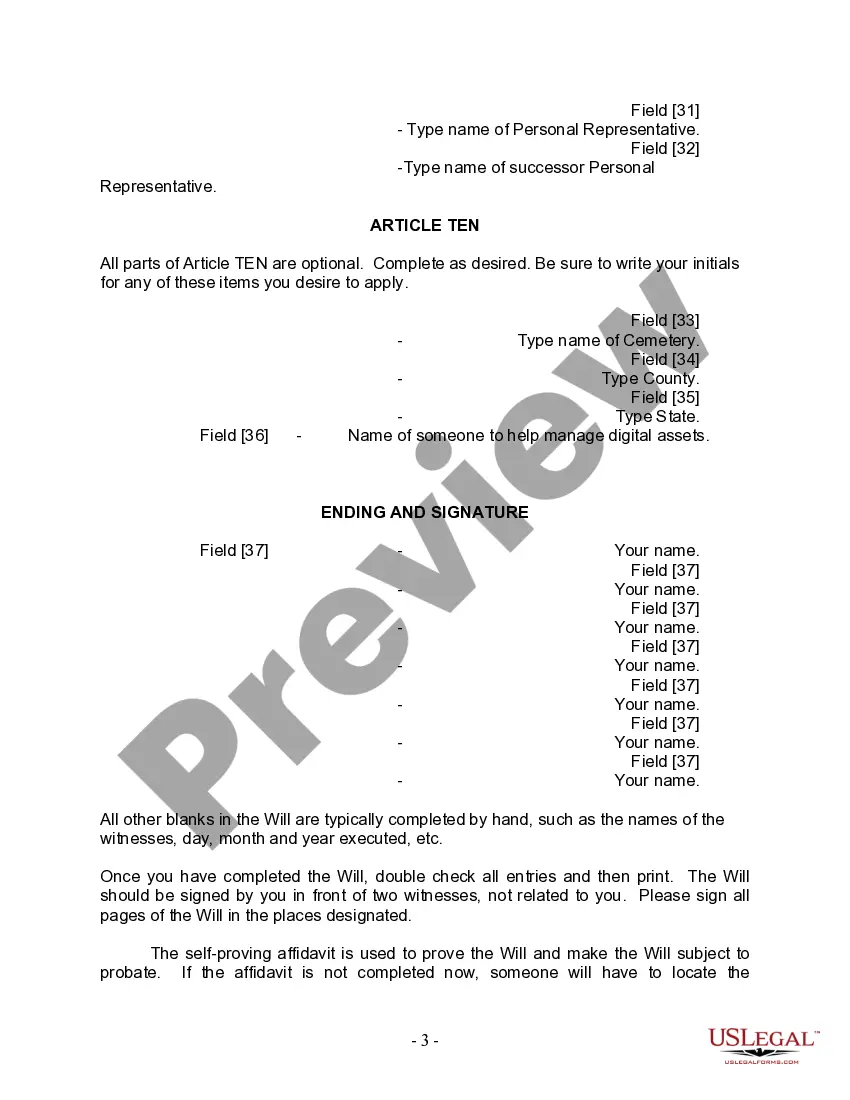
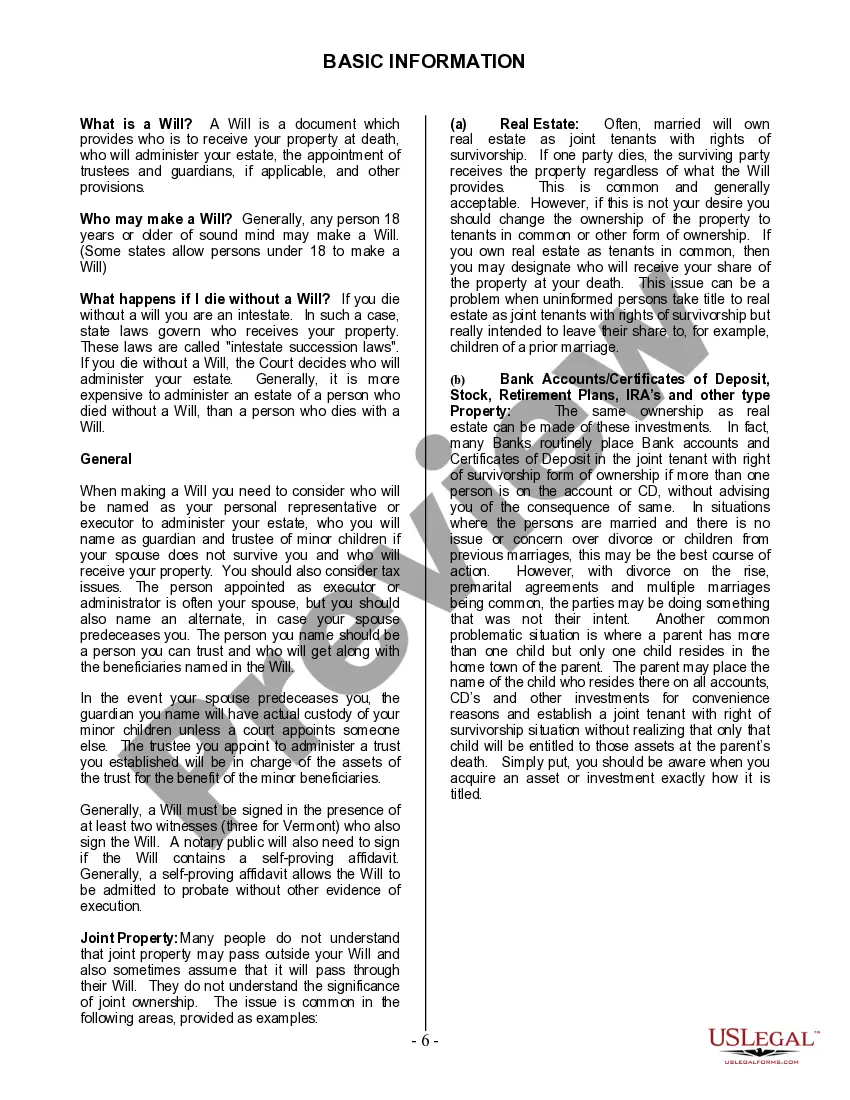
- Sign the will in front of two witnesses who are not related to you or named in your will.
- If applicable, complete the self-proving affidavit in front of a notary public to streamline probate process.
Does this document require notarization?
This form needs to be notarized to ensure legal validity. US Legal Forms provides secure online notarization powered by Notarize, allowing you to complete the process through a verified video call, available anytime.
Get your form ready online
Our built-in tools help you complete, sign, share, and store your documents in one place.
Make edits, fill in missing information, and update formatting in US Legal Forms—just like you would in MS Word.
Download a copy, print it, send it by email, or mail it via USPS—whatever works best for your next step.
Sign and collect signatures with our SignNow integration. Send to multiple recipients, set reminders, and more. Go Premium to unlock E-Sign.
If this form requires notarization, complete it online through a secure video call—no need to meet a notary in person or wait for an appointment.
We protect your documents and personal data by following strict security and privacy standards.

Make edits, fill in missing information, and update formatting in US Legal Forms—just like you would in MS Word.

Download a copy, print it, send it by email, or mail it via USPS—whatever works best for your next step.

Sign and collect signatures with our SignNow integration. Send to multiple recipients, set reminders, and more. Go Premium to unlock E-Sign.

If this form requires notarization, complete it online through a secure video call—no need to meet a notary in person or wait for an appointment.

We protect your documents and personal data by following strict security and privacy standards.
Common mistakes to avoid
- Failing to have the will signed in front of the required witnesses.
- Not updating the will after significant life changes.
- Neglecting to include specific bequests of personal belongings.
- Forgetting to sign all pages of the will.
Why complete this form online
- Convenience of completing the form from your own home.
- Easy to edit and customize according to personal preferences.
- Access to reliable legal templates drafted by licensed attorneys.
- Time-saving process with instant downloadable options.
Looking for another form?







Form popularity
FAQ
Setting up a will after divorce starts with assessing your current assets and understanding your wishes for their distribution. You can draft a new Arkansas Last Will and Testament for a Divorced person not Remarried with Adult Children using online platforms like uslegalforms, which provides user-friendly templates and guidelines. Make sure to include your adult children as beneficiaries to secure their future and ensure your estate reflects your current desires.
In Arkansas, a will generally takes precedence over terms outlined in divorce papers regarding asset distribution. However, specific stipulations in your divorce agreement may govern certain assets. Thus, it’s important to update your Arkansas Last Will and Testament for a Divorced person not Remarried with Adult Children to clearly state your intended wishes post-divorce.
Divorce can influence both your emotional and financial status significantly. In terms of your estate plan, you may lose the previous inheritance intentions expressed in your Arkansas Last Will and Testament for a Divorced person not Remarried with Adult Children. It’s important to adjust your will to reflect your current desires for asset distribution, ensuring your adult children are the primary beneficiaries.
Updating your will after a divorce while living out of state involves understanding specific state laws regarding wills. You can review your current Arkansas Last Will and Testament for a Divorced person not Remarried with Adult Children and make necessary changes. It may be beneficial to consult with an estate attorney familiar with Arkansas law to ensure compliance while addressing your new circumstances.
After a divorce, if you do not update your Arkansas Last Will and Testament for a Divorced person not Remarried with Adult Children, your ex-spouse may still inherit your assets. Arkansas law generally considers an ex-spouse as a beneficiary unless you alter the will. Therefore, it is crucial to review and amend your will after a divorce to ensure your wishes are honored.
In Arkansas, there is no mandatory waiting period to remarry after a divorce is finalized. You can proceed with your plans as soon as your divorce is complete. However, if you're considering creating an Arkansas Last Will and Testament for Divorced person not Remarried with Adult Children, reflecting on your life changes before remarrying can be beneficial. This planning ensures your legal documents properly align with your current wishes and family dynamics.
Yes, online wills are legal in Arkansas as long as they conform to state laws. By using reputable online platforms like US Legal Forms, you can ensure your Arkansas Last Will and Testament for Divorced person not Remarried with Adult Children is both valid and enforceable. These services provide resources and guidance to help you navigate the requirements for creating a legal will from the comfort of your home.
In Arkansas, a will does not need to be notarized to be valid. However, having your Arkansas Last Will and Testament for Divorced person not Remarried with Adult Children notarized can provide an extra layer of credibility. This is especially helpful if there is a possibility of your will being contested. Notarization can strengthen your intentions and help ease the probate process.
Yes, you can write your own will in Arkansas. It is important, however, to ensure that the document meets state requirements to be valid. For someone looking to create an Arkansas Last Will and Testament for Divorced person not Remarried with Adult Children, using a template can help simplify the process and ensure all necessary stipulations are included. Online platforms like US Legal Forms provide easy-to-use templates that comply with Arkansas law.
A will becomes legal in Arkansas when it is executed in accordance with state laws. This includes being written, dated, and signed by you or by someone at your direction, along with the required witness signatures. Understanding these fundamentals is crucial when creating your Arkansas Last Will and Testament for Divorced person not Remarried with Adult Children, as any mistakes can lead to disputes later.