Arkansas Letter from Tenant to Landlord containing Notice to landlord to cease retaliatory threats to evict or retaliatory eviction
Understanding this form
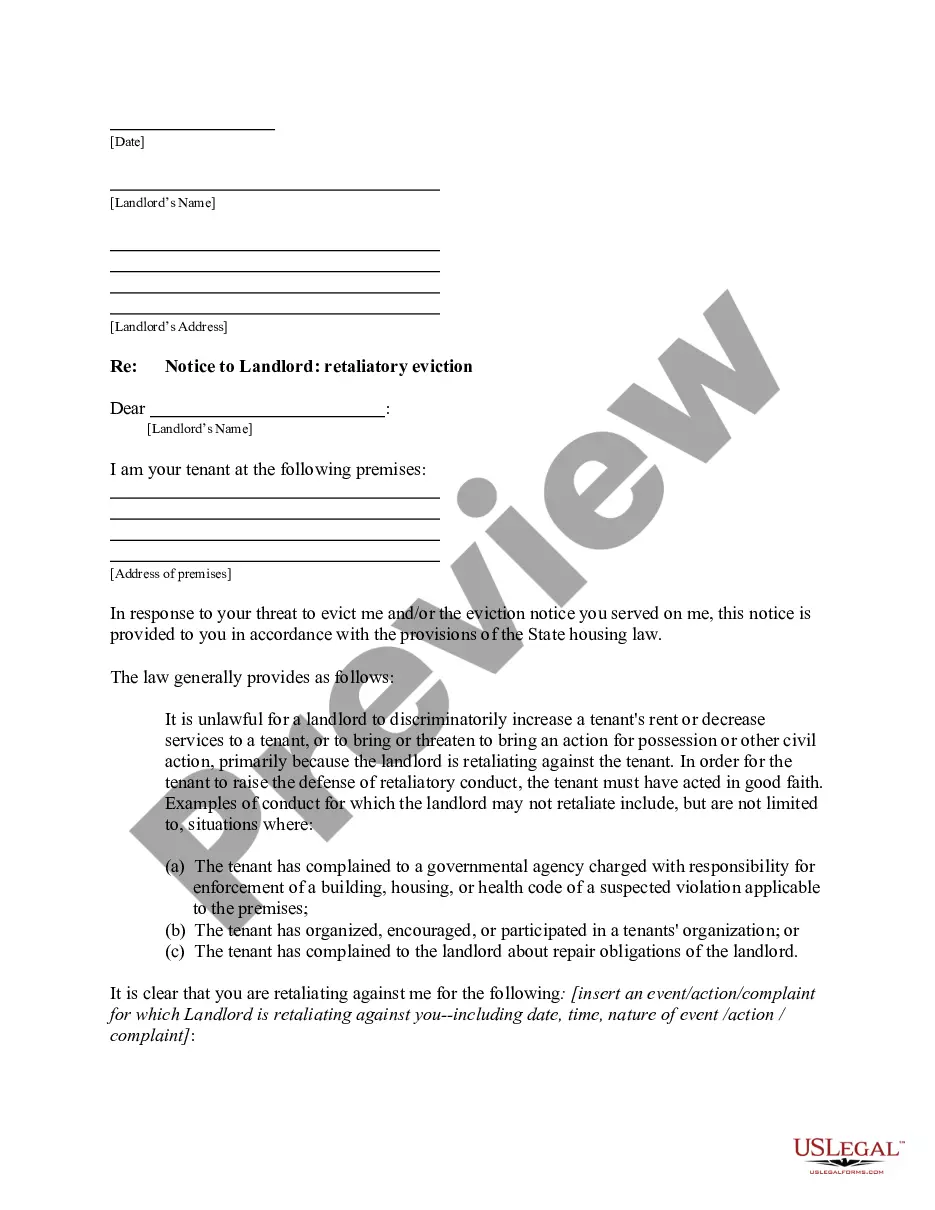
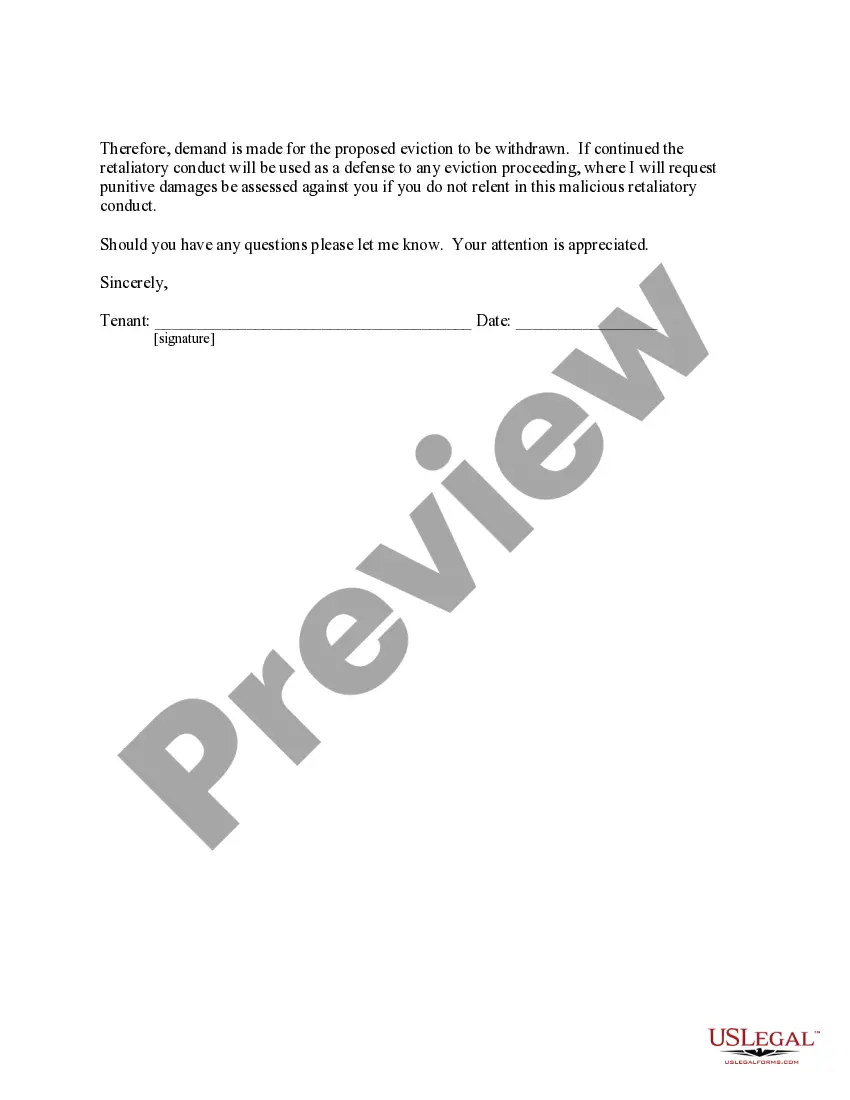
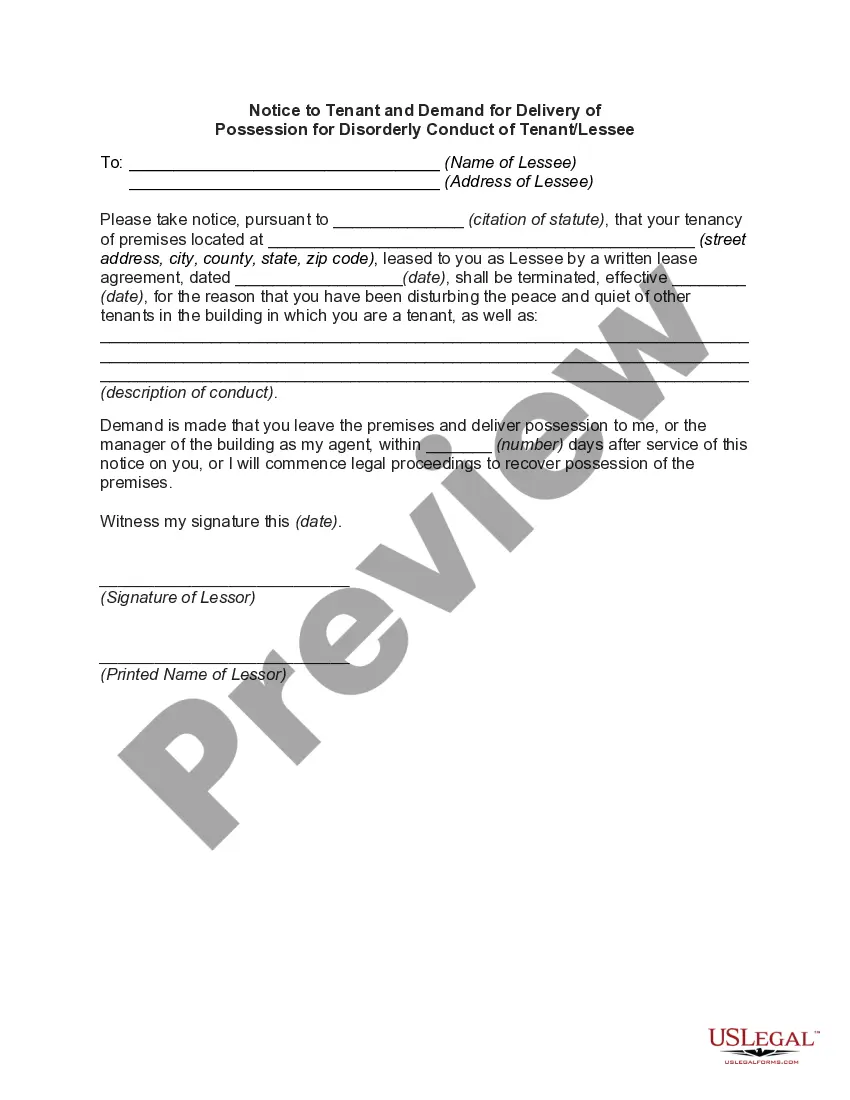
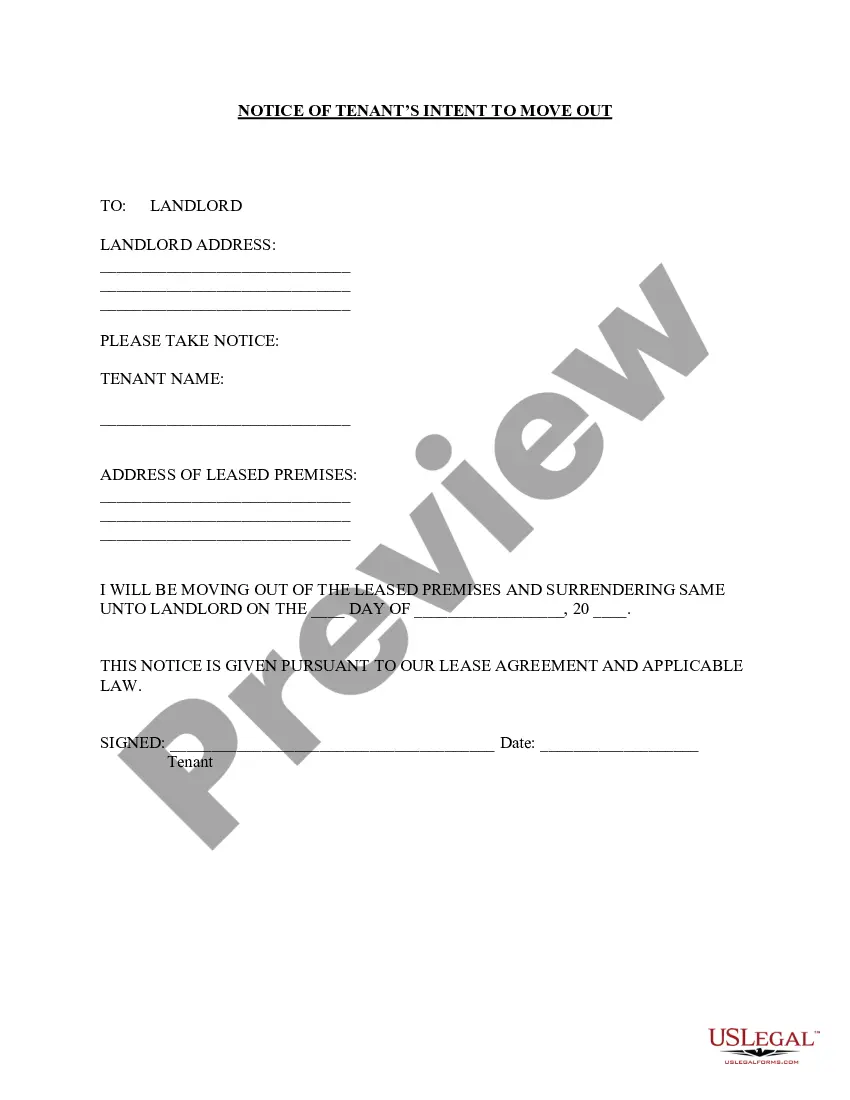
This form is a letter from a tenant to a landlord that serves to notify the landlord to cease retaliatory threats of eviction. It specifically addresses situations where a landlord may be threatening eviction as retaliation for the tenant's lawful actions. The form is designed to comply with state housing laws and is an important tool for tenants asserting their rights against retaliatory eviction practices.
Main sections of this form
- Tenant's identification details, including name and address.
- Landlord's identification details, including name and address.
- A clear statement of the landlord's retaliatory threat to evict the tenant.
- An assertion that the threat is a form of retaliation for protected tenant activities, such as filing complaints.
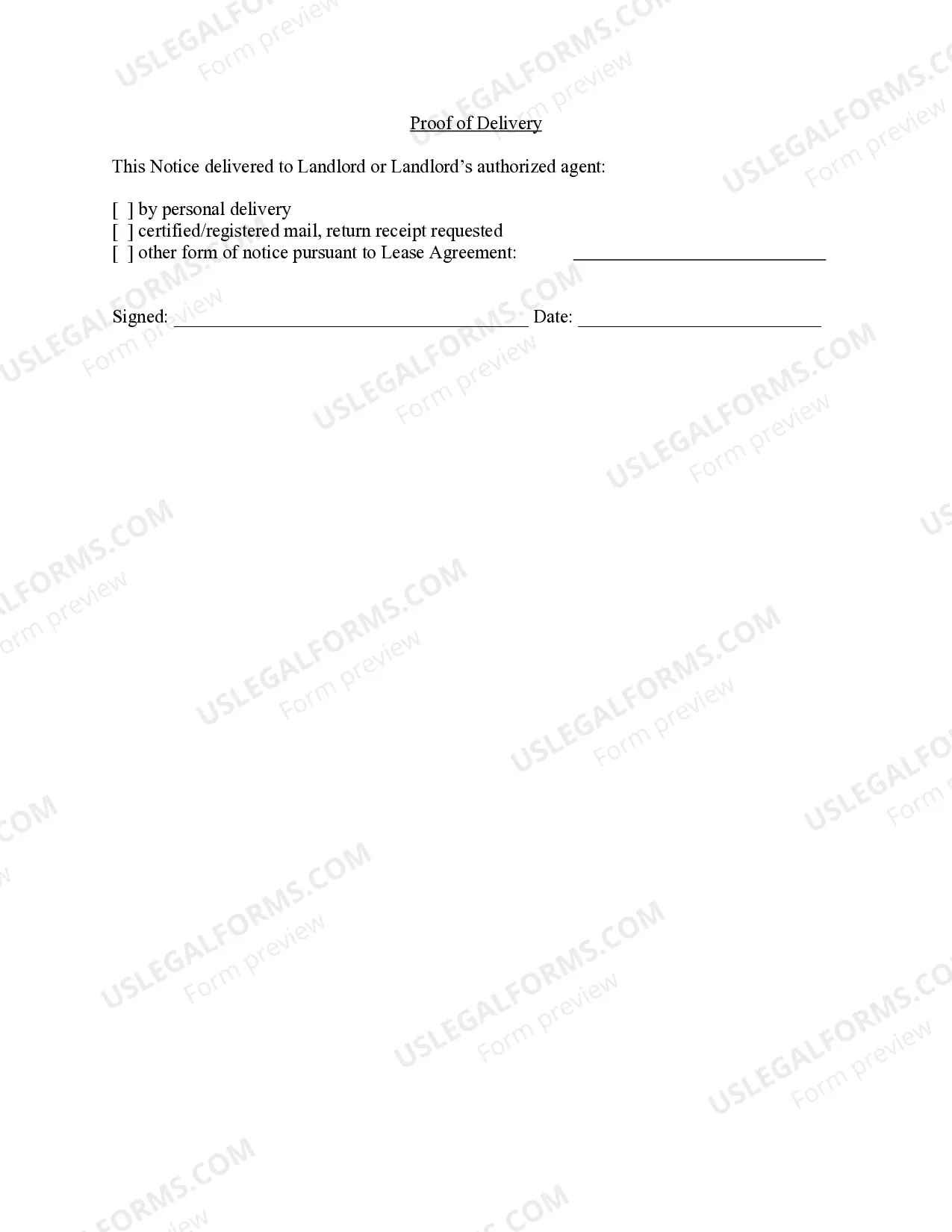
- Proof of delivery method, ensuring the landlord received the notice.



Common use cases
This form should be used when a tenant receives a threat of eviction from their landlord that is suspected to be retaliatory in nature. Situations that may warrant the use of this form include when a tenant has recently reported maintenance issues, filed complaints with authorities, or joined tenant support organizations. By sending this notice, a tenant asserts their rights and discourages retaliatory actions from the landlord.
Who this form is for
- Tenants who have received threats of eviction from their landlord.
- Individuals who have complained to authorities regarding landlord violations.
- Members of tenants' organizations or those contemplating joining one.
- Anyone seeking to protect their rights against unlawful eviction threats.
Steps to complete this form
- Identify and enter your name and address as the tenant.
- Enter the landlord's name and address accurately.
- Clearly state the threats of eviction made by the landlord.
- Include the actions that prompted the landlord's retaliatory behavior.
- Sign and date the document, ensuring that you have delivered it to the landlord.
Does this form need to be notarized?
This form does not typically require notarization unless specified by local law. It is recommended to check your stateâs rules regarding the need for notarization to ensure compliance.
Get your form ready online
Our built-in tools help you complete, sign, share, and store your documents in one place.
Make edits, fill in missing information, and update formatting in US Legal Forms—just like you would in MS Word.
Download a copy, print it, send it by email, or mail it via USPS—whatever works best for your next step.
Sign and collect signatures with our SignNow integration. Send to multiple recipients, set reminders, and more. Go Premium to unlock E-Sign.
If this form requires notarization, complete it online through a secure video call—no need to meet a notary in person or wait for an appointment.
We protect your documents and personal data by following strict security and privacy standards.

Make edits, fill in missing information, and update formatting in US Legal Forms—just like you would in MS Word.

Download a copy, print it, send it by email, or mail it via USPS—whatever works best for your next step.

Sign and collect signatures with our SignNow integration. Send to multiple recipients, set reminders, and more. Go Premium to unlock E-Sign.

If this form requires notarization, complete it online through a secure video call—no need to meet a notary in person or wait for an appointment.

We protect your documents and personal data by following strict security and privacy standards.
Common mistakes to avoid
- Failing to include all relevant details about the retaliatory threats.
- Not documenting proof of delivery to the landlord.
- Leaving out specific actions taken by the tenant that may have prompted the retaliation.
- Not signing and dating the form before delivery.
Benefits of completing this form online
- Convenience of immediate download and use, allowing quick response to eviction threats.
- Editability to customize the document while ensuring compliance with legal standards.
- Peace of mind knowing the form is drafted by licensed attorneys, reducing the risk of legal issues.
Legal use & context
- This form helps to establish a tenant's assertion against wrongful eviction based on retaliation.
- Using this notice can protect the tenant's rights under applicable housing laws.
- The document serves as a formal record of the tenant's concerns and actions taken against threats.
Key takeaways
- This form is critical for tenants facing retaliatory eviction threats.
- It outlines the tenant's rights and provides a structured response to unjust landlord behavior.
- Completing and delivering this notice helps safeguard the tenant's position and may prevent eviction.
Looking for another form?
Form popularity
FAQ
In Texas, tenants may stop an eviction by paying the rent owed before the eviction process reaches court, depending on the situation. This is an important option to consider but requires prompt action from the tenant. If a tenant faces retaliatory eviction attempts, sending an Arkansas Letter from Tenant to Landlord containing Notice to landlord to cease retaliatory threats can strengthen their position and address any unfair actions by the landlord.
Washington state has specific rules regarding evictions, which generally require landlords to provide notice before filing in court. For most situations, landlords must give the tenant a written notice detailing the reason for the eviction. Additionally, landlords should understand that any retaliatory eviction attempts are prohibited, and utilizing an Arkansas Letter from Tenant to Landlord containing Notice to landlord to cease retaliatory threats can help tenants defend their rights.
A landlord can stop an eviction by resolving any disputes directly with the tenant. Open communication and negotiation often lead to an amicable solution. If a tenant has received an Arkansas Letter from Tenant to Landlord containing Notice to landlord to cease retaliatory threats to evict or retaliatory eviction, it's essential for the landlord to address the concerns raised in that letter to prevent further legal actions.
A notice to vacate and an eviction notice are not the same. A notice to vacate is a communication from the landlord requesting the tenant to leave the property, while an eviction notice is a legal document that begins the eviction process. Tenants can use an Arkansas Letter from Tenant to Landlord containing Notice to landlord to cease retaliatory threats to evict or retaliatory eviction to respond appropriately to improper eviction actions.
A great tenant letter example combines professionalism with personal experience. It outlines the positive aspects of your rental history, such as timely payments and property care. When crafting an Arkansas Letter from Tenant to Landlord containing Notice to landlord to cease retaliatory threats to evict or retaliatory eviction, focus on articulating your strengths as a tenant while addressing your rights and concerns effectively.
To write a letter to your landlord asking to stop an eviction, you must state your case clearly and respectfully. Include any pertinent details and emphasize your commitment to resolving any issues. Utilize resources like an Arkansas Letter from Tenant to Landlord containing Notice to landlord to cease retaliatory threats to evict or retaliatory eviction to help guide your message and ensure it addresses all necessary points.
A good tenant reference letter highlights the strengths of the tenant while maintaining an honest tone. It should include specifics such as timely rent payments and care for the property. When writing an Arkansas Letter from Tenant to Landlord containing Notice to landlord to cease retaliatory threats to evict or retaliatory eviction, consider including instances where you have fulfilled your tenant duties faithfully and respectfully.
A good message to a landlord should be clear and concise. Express your concern or request while maintaining a professional tone. For example, if you are sending an Arkansas Letter from Tenant to Landlord containing Notice to landlord to cease retaliatory threats to evict or retaliatory eviction, make sure to reference the specifics of the issue and outline your expectations for resolution.
To write a formal letter to a landlord, start by including your contact information at the top. Next, address your landlord respectfully, then clearly state the purpose of your letter. For an Arkansas Letter from Tenant to Landlord containing Notice to landlord to cease retaliatory threats to evict or retaliatory eviction, be direct but courteous, ensuring to specify the issues you've encountered.
Landlord harassment in Arkansas can include actions that create an intimidating or hostile living environment for tenants, such as excessive visits, unsolicited notices to vacate, or verbal threats. Such behavior can be illegal and violate tenant rights. If tenants experience this, they should consider using an Arkansas Letter from Tenant to Landlord containing Notice to landlord to cease retaliatory threats to evict or retaliatory eviction as a formal response.