Arkansas Letter from Landlord to Tenant as Notice to remove Wild Animals in Premises
Overview of this form
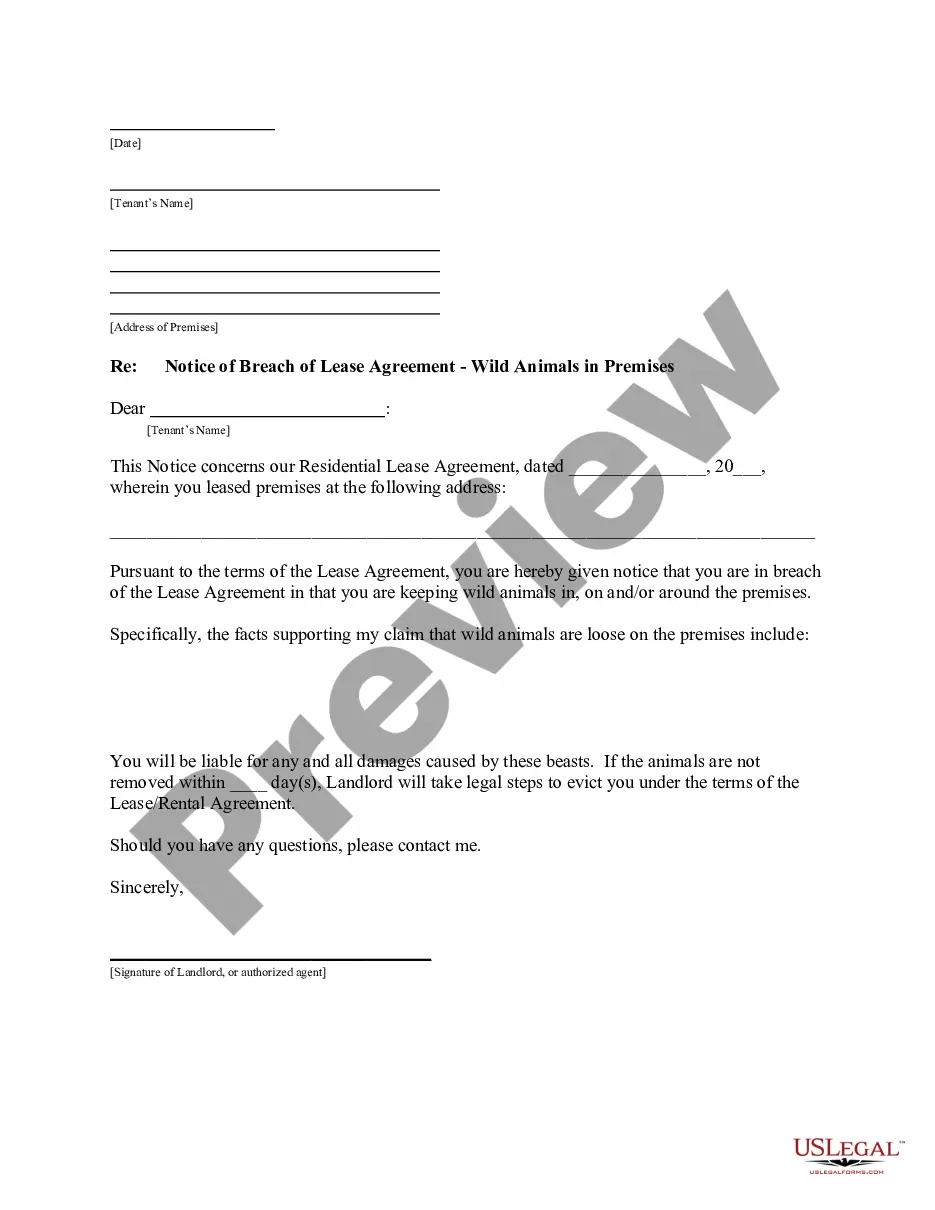
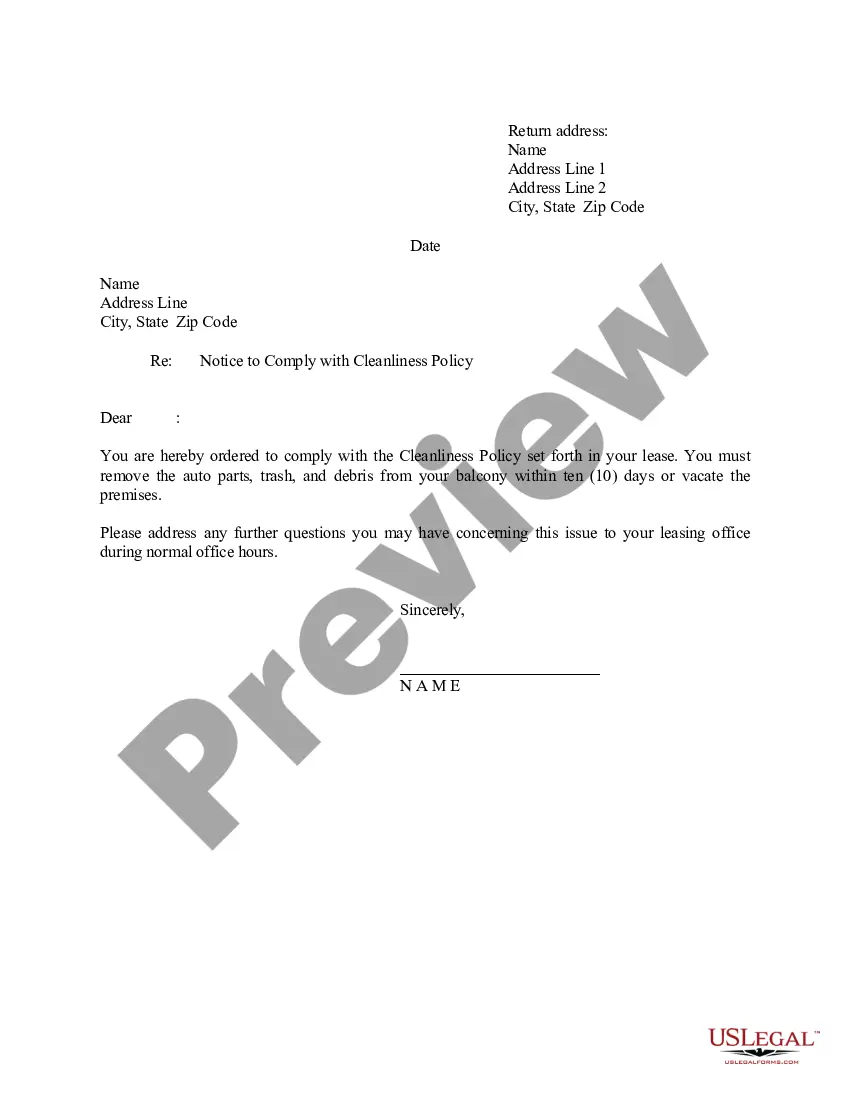
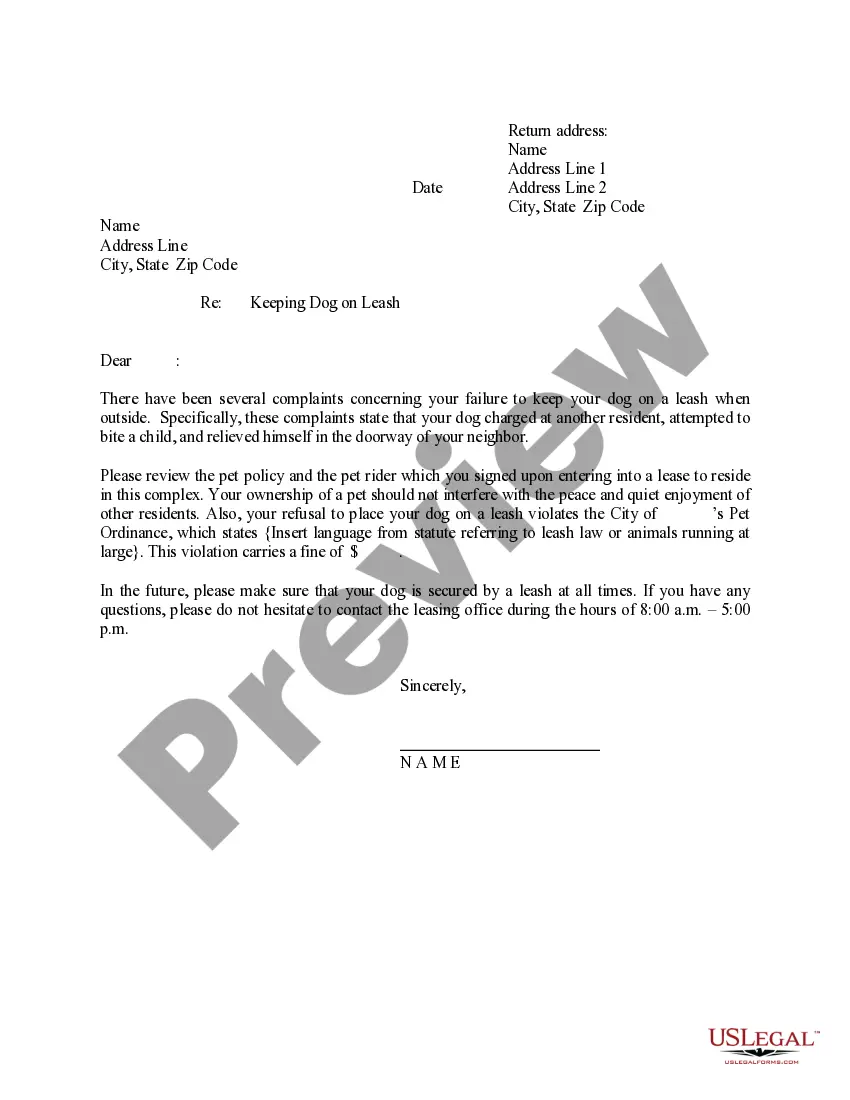
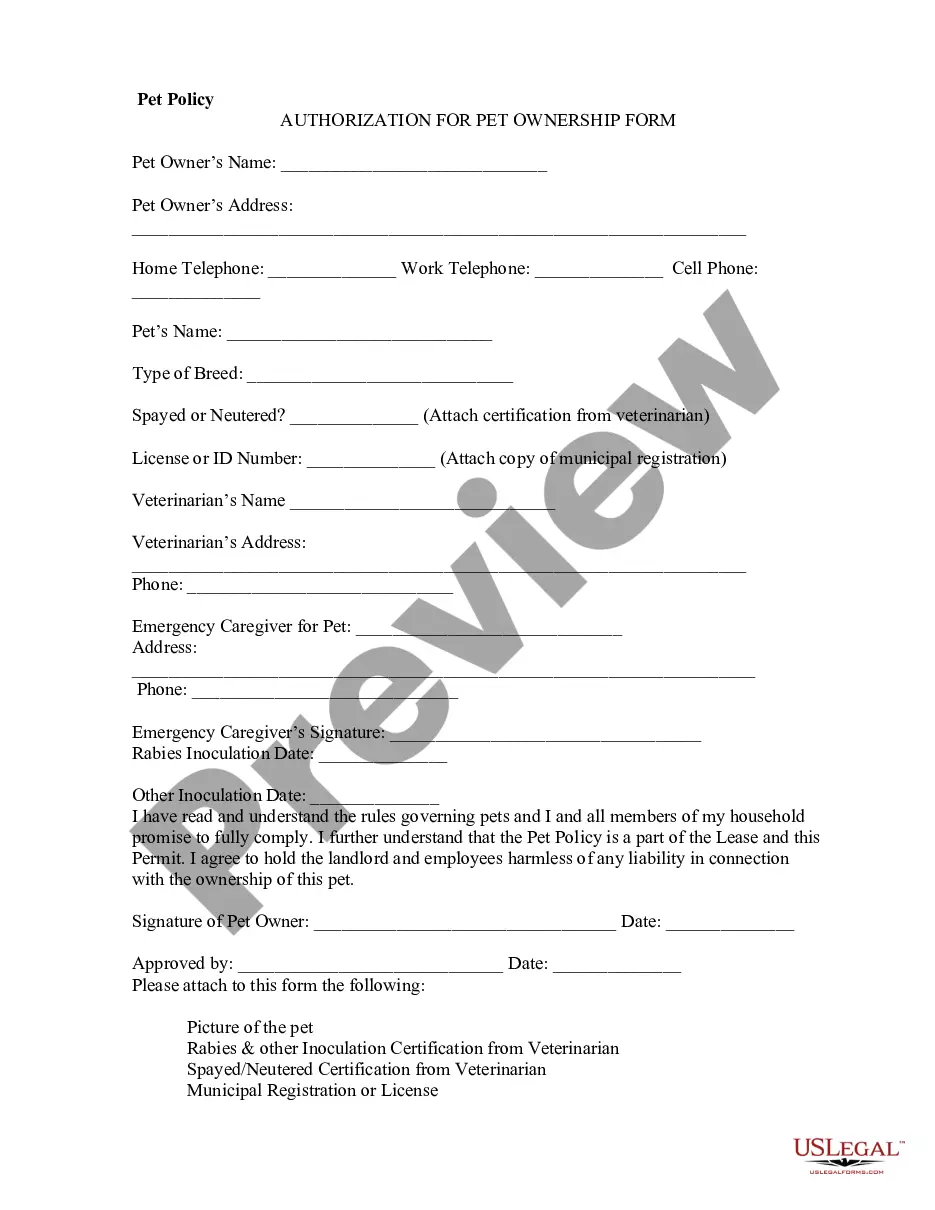
This form is a Letter from Landlord to Tenant as a Notice to remove wild animals in premises. It is used by landlords to formally notify tenants of lease violations related to keeping wild animals on the property. Unlike general eviction notices, this letter specifically addresses animal-related breaches of the lease agreement, focusing on the violation's nature and the action required by the tenant.
What’s included in this form
- Notice of breach: States that the tenant is violating lease terms by keeping wild animals.
- Reference to Lease Agreement: Mentions the specific lease agreement under which the notice is being issued.
- Signature of landlord: Includes the landlord's or authorized agent's signature to validate the notice.
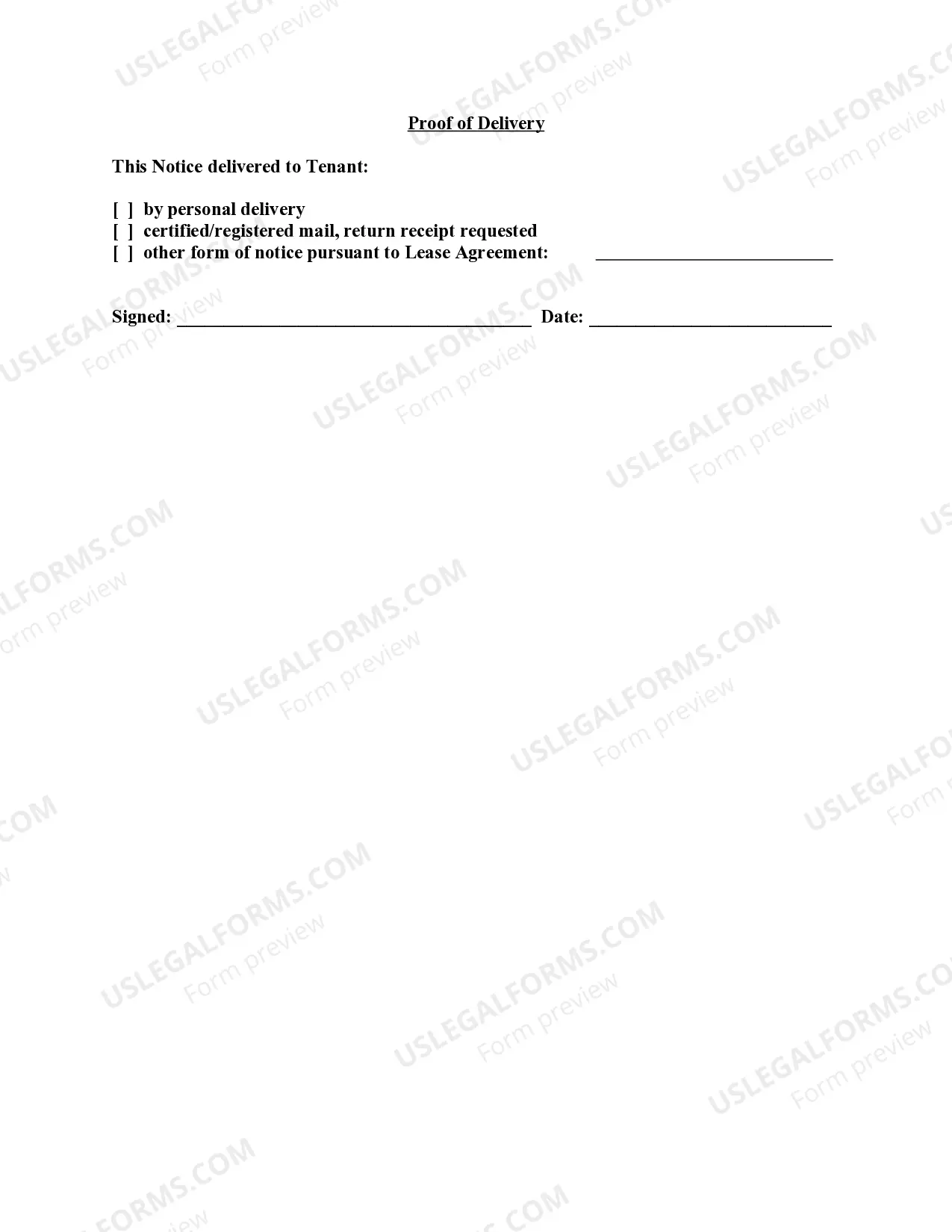
- Delivery proof option: Provides methods for delivering the notice to the tenant.

When this form is needed
This form should be used when a landlord discovers that a tenant is housing wild animals within the leased property, which is considered a breach of the lease agreement. This situation may arise if, for example, a tenant begins to keep exotic pets or fails to manage feral animals that could harm the property or violate local ordinances.
Intended users of this form
- Landlords who have tenants violating lease terms by keeping wild animals.
- Property managers authorized to act on behalf of the landlord.
- Real estate professionals involved in lease management.
How to complete this form
- Identify the parties involved: Clearly state the tenant's name and the property address.
- Specify the breach: Detail the specific lease clause that is being violated due to the presence of wild animals.
- Include the date: Write the date on which the notice is being issued.
- Provide your signature: Sign the letter as the landlord or authorized agent.
- Choose a delivery method: Indicate how the notice will be delivered to the tenant.
Does this document require notarization?
This form does not typically require notarization unless specified by local law.
Get your form ready online
Our built-in tools help you complete, sign, share, and store your documents in one place.
Make edits, fill in missing information, and update formatting in US Legal Forms—just like you would in MS Word.
Download a copy, print it, send it by email, or mail it via USPS—whatever works best for your next step.
Sign and collect signatures with our SignNow integration. Send to multiple recipients, set reminders, and more. Go Premium to unlock E-Sign.
If this form requires notarization, complete it online through a secure video call—no need to meet a notary in person or wait for an appointment.
We protect your documents and personal data by following strict security and privacy standards.

Make edits, fill in missing information, and update formatting in US Legal Forms—just like you would in MS Word.

Download a copy, print it, send it by email, or mail it via USPS—whatever works best for your next step.

Sign and collect signatures with our SignNow integration. Send to multiple recipients, set reminders, and more. Go Premium to unlock E-Sign.

If this form requires notarization, complete it online through a secure video call—no need to meet a notary in person or wait for an appointment.

We protect your documents and personal data by following strict security and privacy standards.
Common mistakes
- Failing to specify the exact lease terms being violated.
- Not including the date or the property address in the notice.
- Neglecting to provide proof of delivery to the tenant.
- Using ambiguous language that may lead to misunderstandings.
Why use this form online
- Easy access: Quickly download and fill out the form at your convenience.
- Editability: The form can be customized to fit specific situations regarding the lease agreement.
- Reliability: The form is drafted by licensed attorneys, ensuring legal compliance.
Legal use & context
- This letter serves as a formal notice of breach, which is a crucial step before potential legal actions like eviction.
- It is essential to follow up with the appropriate legal measures if the tenant does not comply with the notice.
What to keep in mind
- Use this notice to formally address the issue of wild animals on rental property.
- Ensure to customize the form according to the specific lease and local regulations.
- Deliver the notice correctly to maintain a record of communication with the tenant.
Looking for another form?

Form popularity
FAQ
In Arkansas, landlords have a responsibility to maintain a safe and habitable living environment. This includes addressing issues like pest control, especially when it involves wild animals. If tenants encounter wild animals on the premises, an Arkansas Letter from Landlord to Tenant as Notice to remove Wild Animals in Premises may be necessary. This formal communication helps clarify the landlord's obligations and ensures that both parties understand their rights and responsibilities.
If your landlord says no pets, respectfully ask for clarification and express your willingness to discuss possible alternatives. You could suggest a pet deposit or pet insurance to alleviate their concerns. If you're considering an emotional support animal, discuss this openly and refer to documents similar to the Arkansas Letter from Landlord to Tenant as Notice to remove Wild Animals in Premises for a formal approach.
To create a letter for removing your dog from your apartment, start by stating your intention to vacate the premises. Include relevant dates and express any concerns about relocating your pet safely. By aligning your approach with policies like the Arkansas Letter from Landlord to Tenant as Notice to remove Wild Animals in Premises, you demonstrate respect for the landlord's rules while also ensuring a smooth transition.
Yes, many landlords do verify emotional support animal (ESA) letters to ensure they are legitimate. This verification process can help landlords manage their properties in accordance with fair housing laws. If you provide an ESA letter, ensure it comes from a licensed healthcare provider to strengthen its credibility and avoid complications similar to what can arise with an Arkansas Letter from Landlord to Tenant as Notice to remove Wild Animals in Premises.
When writing a letter to your landlord about pets, be direct and polite. Start by introducing yourself and state your request clearly, specifying the type of pet you wish to keep. Express your understanding of their policies and your commitment to ensuring property safety, much like the Arkansas Letter from Landlord to Tenant as Notice to remove Wild Animals in Premises, which can serve as a reference to formal standards and protocols.
To convince your landlord to allow pets, start by presenting your case respectfully and clearly. Share information about your pet's temperament, training, and how you will maintain the property. You can also provide an Arkansas Letter from Landlord to Tenant as Notice to remove Wild Animals in Premises to demonstrate your seriousness and concern for property care.
An emotional support animal letter should clearly identify the tenant's need for an emotional support animal due to a diagnosed condition. It should be written by a licensed professional and include their contact information. This letter outlines how the animal assists the tenant and serves as a crucial document for any tenant dealing with regulations, such as the Arkansas Letter from Landlord to Tenant as Notice to remove Wild Animals in Premises.
Yes, tenants can face eviction for having too many pets if it violates the lease agreement. It's essential for landlords to clearly outline pet policies within the lease terms. If a tenant is in violation, a formal notice such as the Arkansas Letter from Landlord to Tenant as Notice to remove Wild Animals in Premises can be used to officially address the issue.
In Arkansas, landlord harassment may include frequent, unnecessary visits to the property, threats of eviction without proper notice, or altering the tenant's locks. Any action that infringes on a tenant's right to quiet enjoyment could be deemed harassment. It’s crucial for landlords to adhere to tenants’ rights while using provisions such as the Arkansas Letter from Landlord to Tenant as Notice to remove Wild Animals in Premises correctly.
Politely asking a tenant to move out involves clear communication and empathy. Begin by expressing your appreciation for them as a tenant and explain your reasons for needing them to leave. Provide a reasonable timeframe and offer assistance during their transition if possible. Addressing the situation with an Arkansas Letter from Landlord to Tenant as Notice to remove Wild Animals in Premises can be a helpful tool.