Arkansas Quitclaim Deed by Two Individuals to LLC
Overview of this form
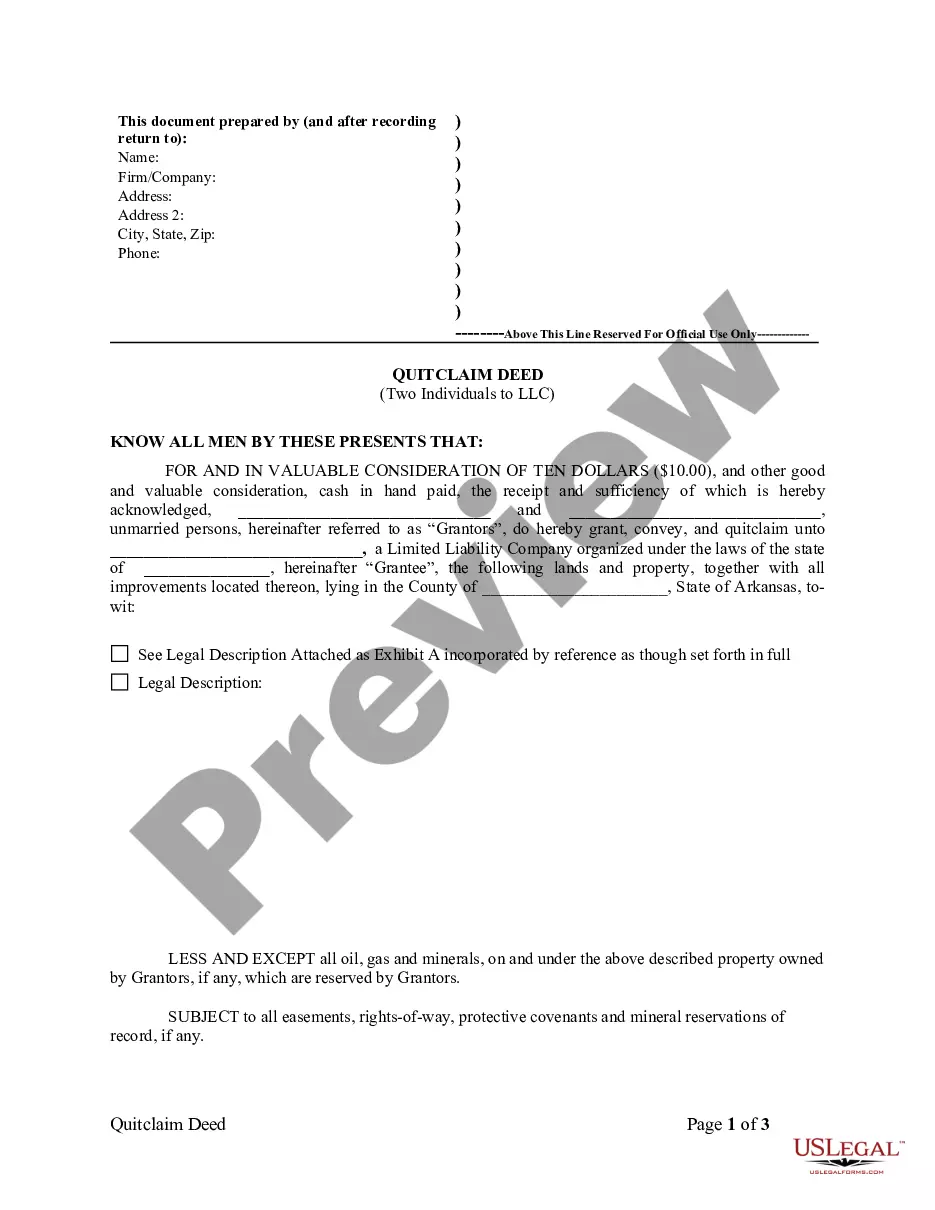
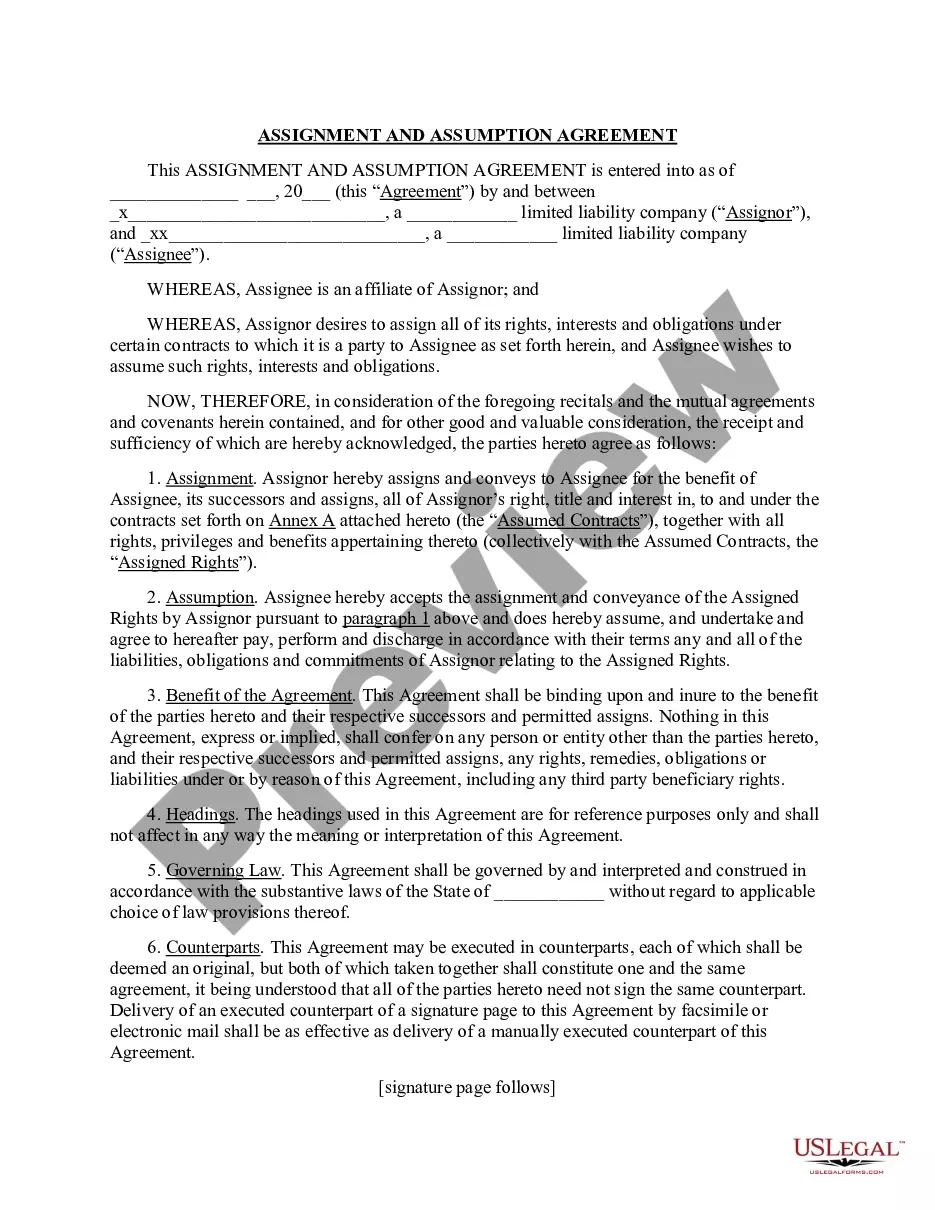
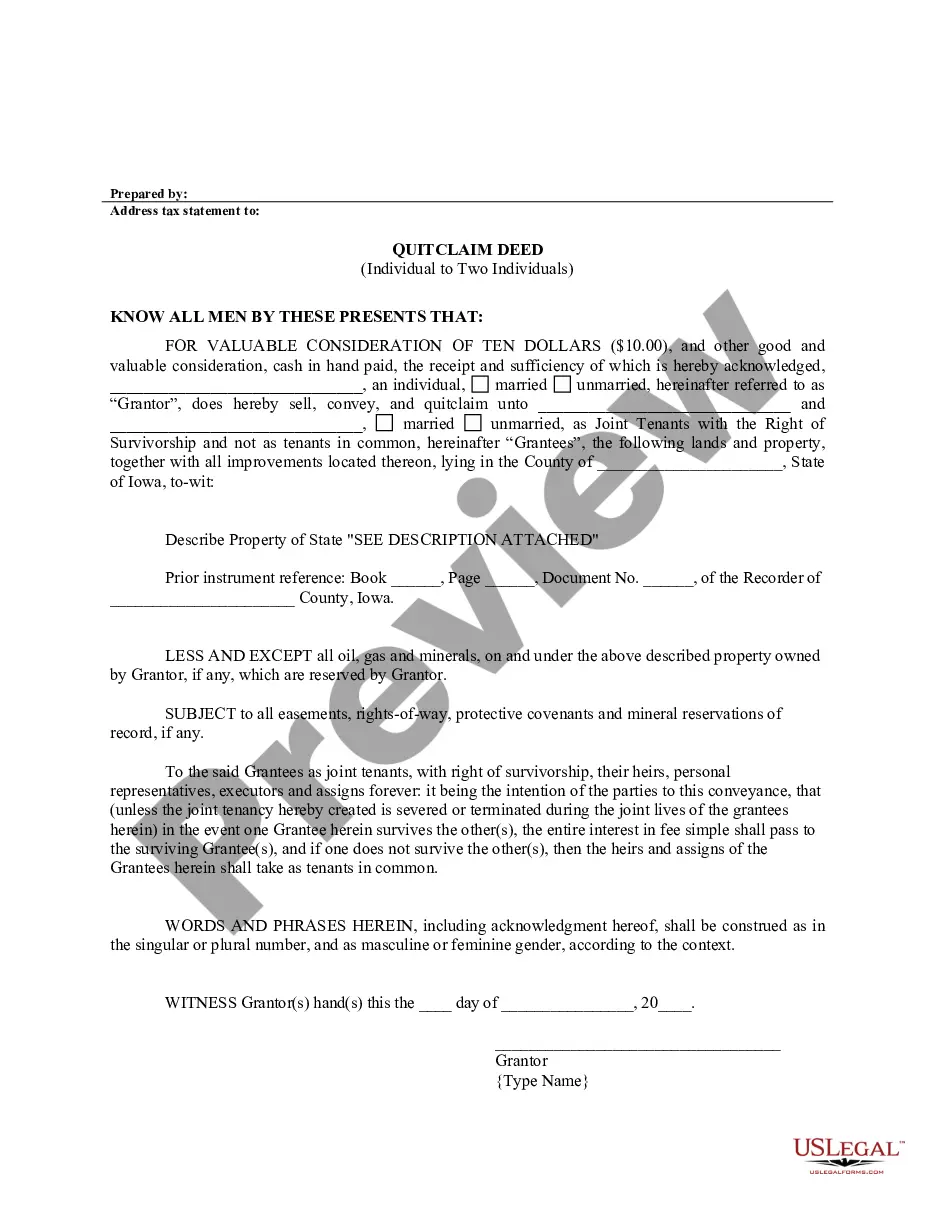
The Quitclaim Deed by Two Individuals to LLC is a legal document that allows two individual grantors to transfer their interest in a specific property to a limited liability company (LLC). This type of deed effectively conveys the property without guaranteeing that the grantors hold valid titles, making it different from a warranty deed. It is often used in property transactions where the grantors do not wish to assume liability for the property's future claims or titles.
Key parts of this document
- Identification of the grantors (the two individuals) and grantee (the LLC).
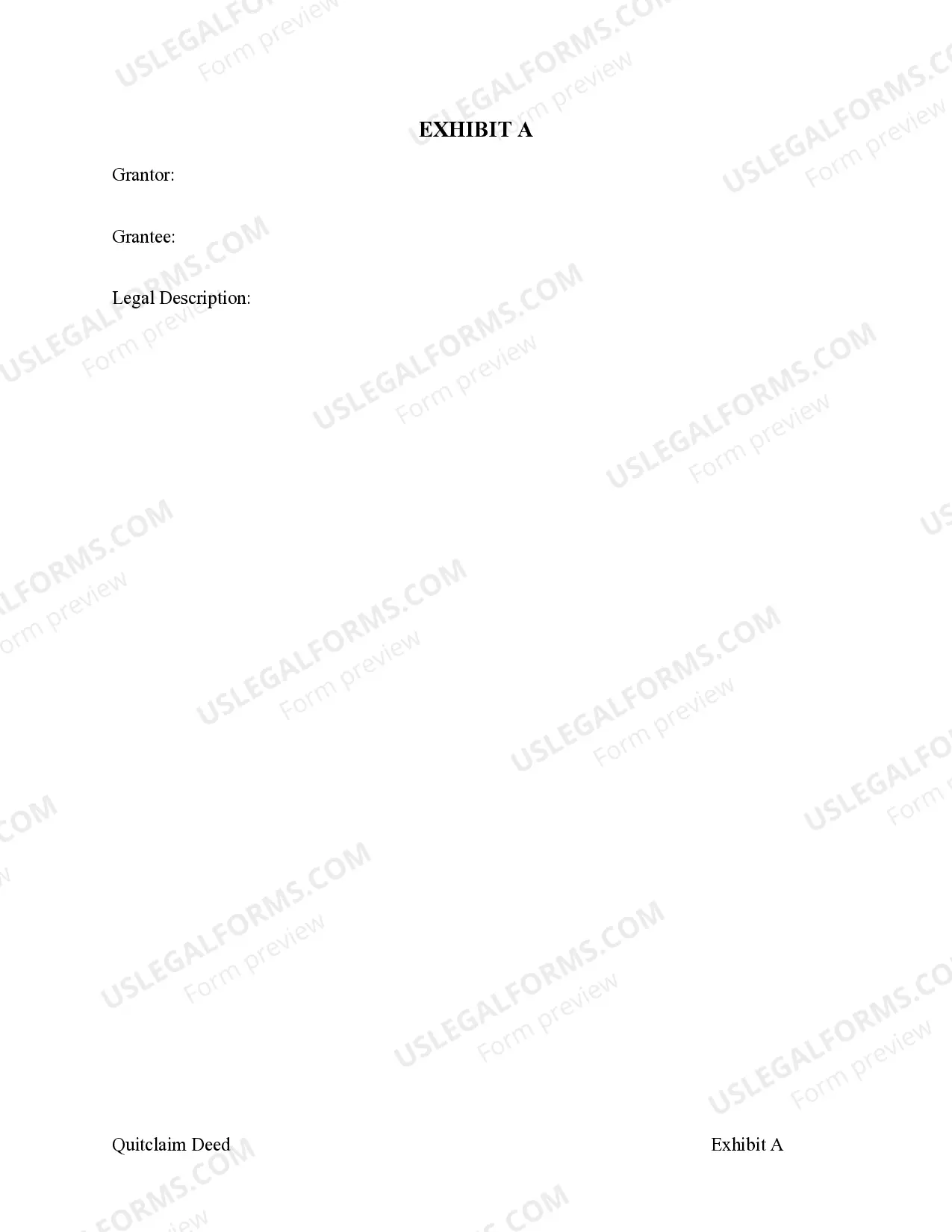
- Description of the property included in the transfer.
- Reservation clause stating that oil, gas, and minerals are not included in the transfer.
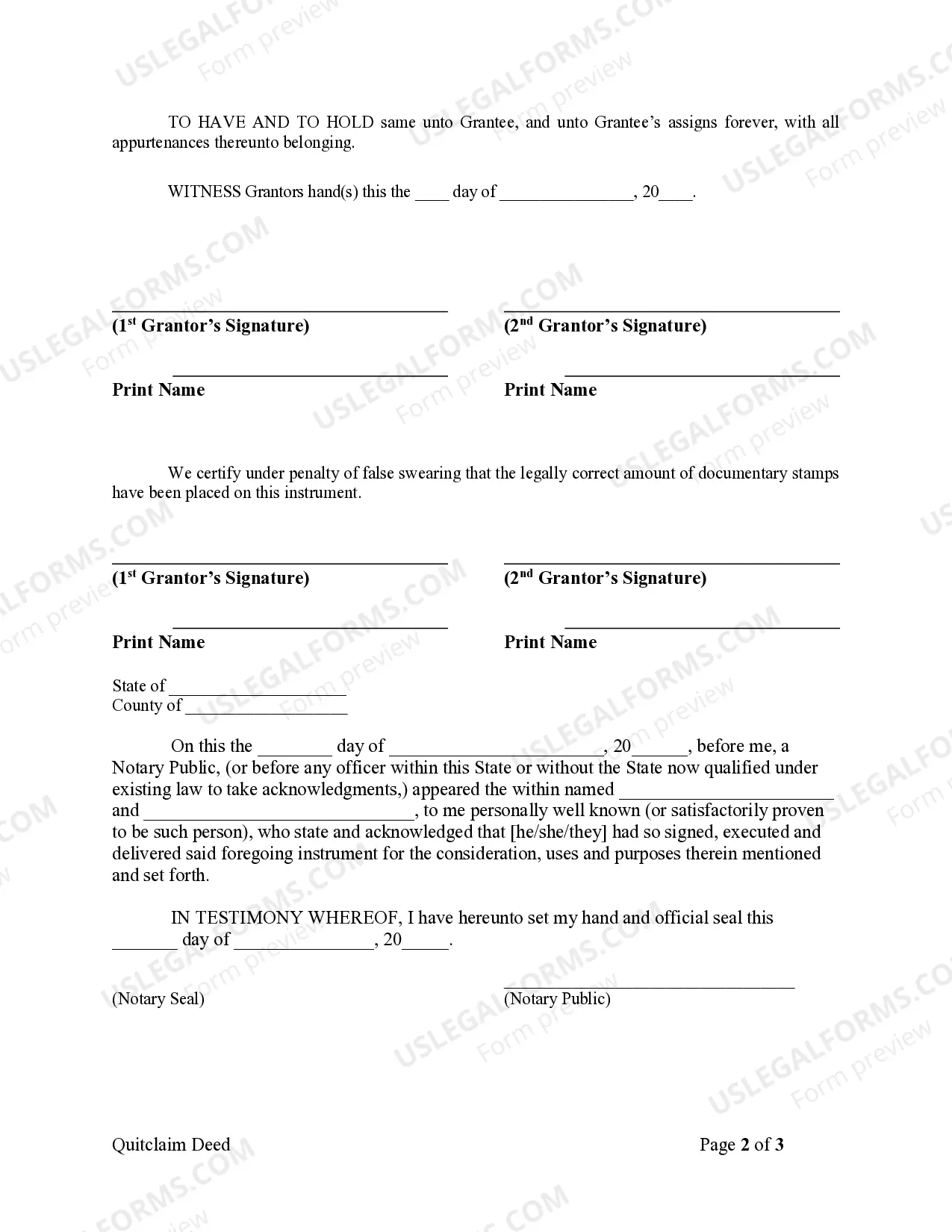
- Signature lines for both grantors to validate the deed.
- Date of execution for record-keeping purposes.





Situations where this form applies
This form is typically used in situations where two individuals wish to transfer their ownership interest in property to a newly formed or existing LLC. Common scenarios include converting personal property to business assets, facilitating estate planning transactions, or simplifying property management under a business structure.
Who should use this form
- Individuals looking to transfer real estate ownership to an LLC.
- Property owners involved in estate planning or financial restructuring.
- Partners or joint property owners wanting to consolidate assets under a limited liability company.
How to complete this form
- Identify the full legal names of the two grantors and the LLC.
- Provide a complete legal description of the property being transferred.
- Clearly state the reservation of oil, gas, and minerals if applicable.
- Both grantors should sign and date the form to validate the transfer.
- Ensure the executed form is filed with the appropriate local or county office as required.
Does this document require notarization?
To make this form legally binding, it must be notarized. Our online notarization service, powered by Notarize, lets you verify and sign documents remotely through an encrypted video session.
Get your form ready online
Our built-in tools help you complete, sign, share, and store your documents in one place.
Make edits, fill in missing information, and update formatting in US Legal Forms—just like you would in MS Word.
Download a copy, print it, send it by email, or mail it via USPS—whatever works best for your next step.
Sign and collect signatures with our SignNow integration. Send to multiple recipients, set reminders, and more. Go Premium to unlock E-Sign.
If this form requires notarization, complete it online through a secure video call—no need to meet a notary in person or wait for an appointment.
We protect your documents and personal data by following strict security and privacy standards.

Make edits, fill in missing information, and update formatting in US Legal Forms—just like you would in MS Word.

Download a copy, print it, send it by email, or mail it via USPS—whatever works best for your next step.

Sign and collect signatures with our SignNow integration. Send to multiple recipients, set reminders, and more. Go Premium to unlock E-Sign.

If this form requires notarization, complete it online through a secure video call—no need to meet a notary in person or wait for an appointment.

We protect your documents and personal data by following strict security and privacy standards.
Common mistakes to avoid
- Failing to provide a complete legal description of the property.
- Not including the reservation of minerals, if applicable, which can lead to misunderstandings.
- Missing signatures from one or both grantors.
- Not dating the document, which is important for legal clarity.
Why use this form online
- Instant access to professionally drafted legal templates.
- Convenient downloadable format for easy completion and filing.
- Eliminates the need for in-person consultations, saving time.
- Ensures compliance with state laws through up-to-date templates.
Looking for another form?
Form popularity
FAQ
Transferring property from a person to an LLC can be accomplished using an Arkansas Quitclaim Deed by Two Individuals to LLC. First, ensure the individual is legally prepared to make the transfer, using a Quitclaim Deed to initiate this process. It's crucial to fill out the deed accurately and include all necessary details about the property and parties involved. Once the document is signed and notarized, file it with the county to complete the transfer officially.
Filling out a Quitclaim Deed in Arkansas requires careful attention to detail. Start with an official form available through platforms like US Legal Forms. Clearly include the names of the two individuals transferring ownership to the LLC, and provide a detailed legal description of the property. Don't forget to have both parties sign the deed in front of a notary public and then record it with your local authority to legitimize the transfer.
To fill out an Arkansas Quitclaim Deed by Two Individuals to LLC, begin by downloading a template from a reputable source like US Legal Forms. Ensure you include the names of the two individuals and the LLC, along with the property description. After completing the form, sign it in front of a notary public to make it legally binding. Finally, file the completed deed with your county's recording office to ensure proper documentation.
To transfer a deed to an LLC, you typically start by drafting a quitclaim deed. This document should specifically state the property being transferred and identify the LLC as the grantee. Once prepared, it must be signed, notarized, and recorded with the appropriate county office. Using an Arkansas Quitclaim Deed by Two Individuals to LLC simplifies this process. Platforms like uslegalforms can provide templates and guidance to assist you.
When signing a deed for an LLC, it is usually an authorized member or manager of the LLC who executes the document. The individual signing should have the proper authority to act on behalf of the LLC. This ensures the deed complies with legal standards. If you are considering an Arkansas Quitclaim Deed by Two Individuals to LLC, you can verify the authority of signers through state regulations to ensure a valid transfer.
Typically, both parties do not need to be present for the execution of a quitclaim deed. One party can sign the deed in the presence of a notary, but the second party may provide their signature later. However, it’s essential to ensure every requirement is met to validate the Arkansas Quitclaim Deed by Two Individuals to LLC. Always check specific state regulations to avoid any complications.
Individuals commonly transfer their property into an LLC to protect personal assets from potential liabilities. By doing so, the assets held by the LLC remain separate from personal property. This shield can offer security for business operations and can streamline the management of multiple properties. An Arkansas Quitclaim Deed by Two Individuals to LLC facilitates this transition smoothly.
One major disadvantage of putting property in an LLC is the potential for increased costs. Forming and maintaining an LLC often includes state fees, taxes, and compliance costs. Additionally, if the LLC is viewed as a separate entity, it could complicate matters like financing, as lenders might hold stricter requirements. Thus, consider these factors when exploring the Arkansas Quitclaim Deed by Two Individuals to LLC.
An Arkansas Quitclaim Deed by Two Individuals to LLC can include multiple individuals as grantors or grantees. However, clarity in naming all parties is crucial to avoid any future disputes. When drafting the deed, ensure that you list each person’s full legal name to maintain clear ownership records.
Yes, an Arkansas Quitclaim Deed by Two Individuals to LLC requires signatures from both the grantor and the grantee for it to be valid. The grantor relinquishes their interest, and the grantee acknowledges acceptance. This mutual agreement is essential for the transfer to be legally recognized.