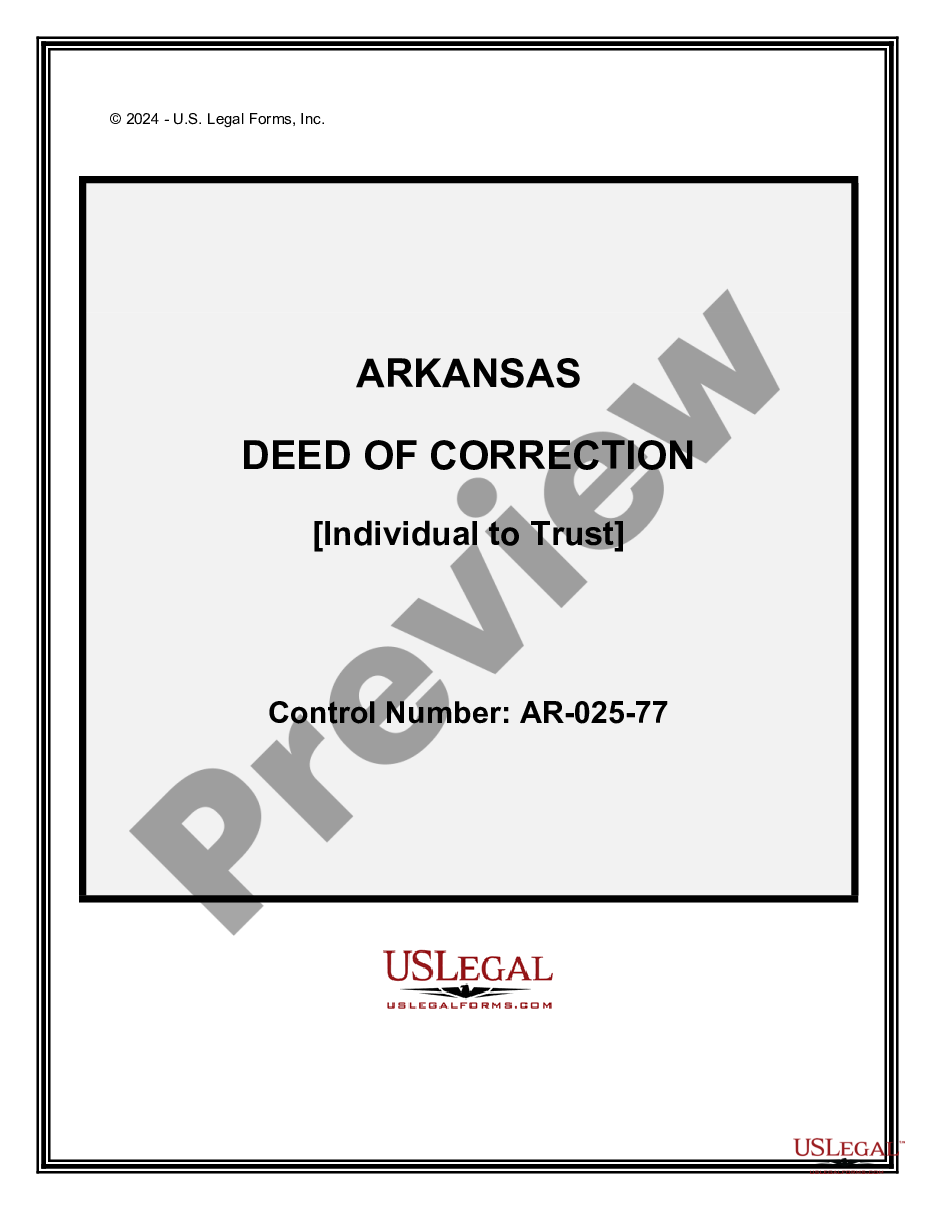
Arkansas Deed of Correction - Individual to Trust
Understanding this form
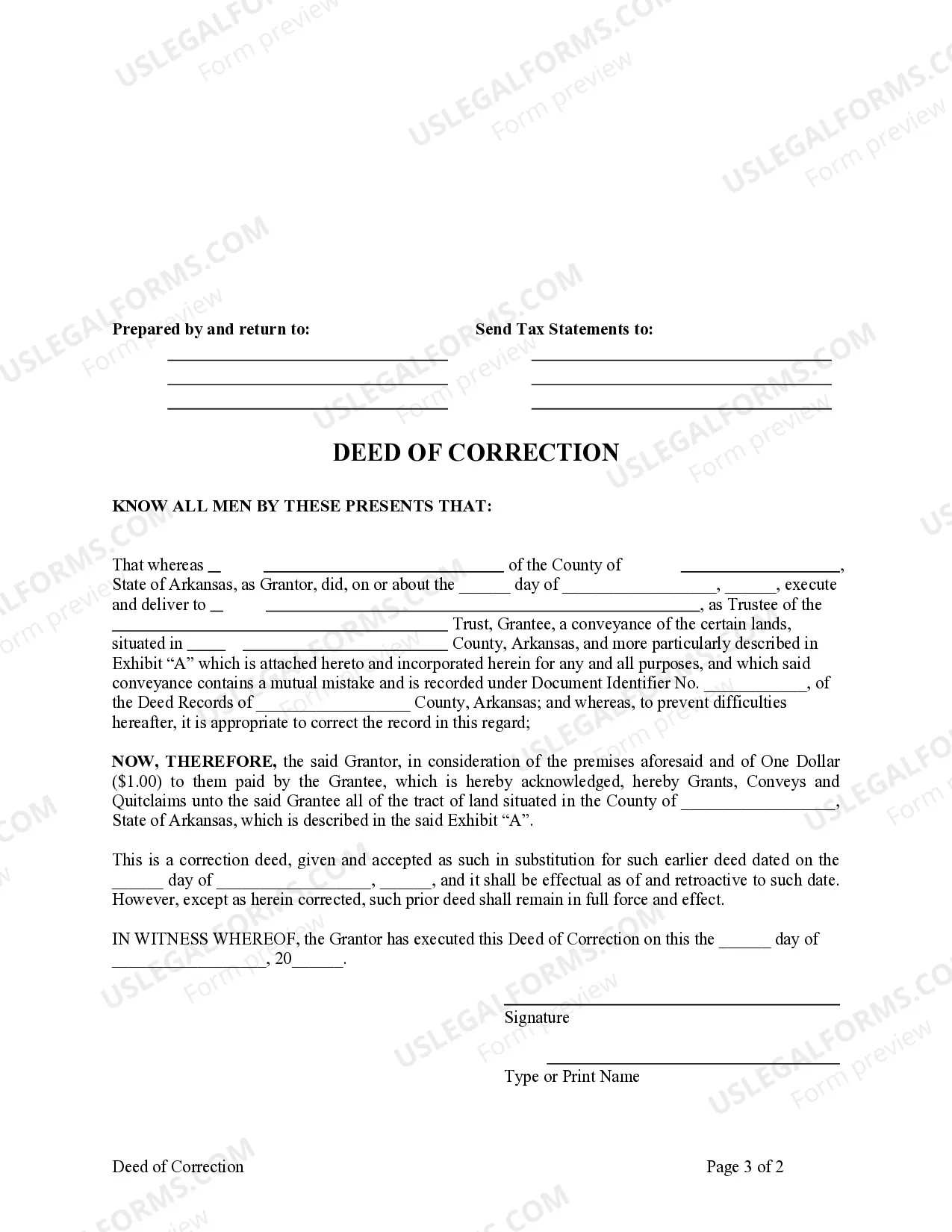
The Deed of Correction - Individual to Trust is a legal document in which an individual, referred to as the Grantor, corrects a previous deed that may have contained mistakes. This form allows the Grantor to convey property to a Trust, ensuring that the transfer is valid and accurate. It is specifically useful for rectifying errors in a previously recorded deed, distinguishing it from standard property transfer documents.
Main sections of this form
- Grantor's details: Information about the individual making the correction.
- Grantee's details: Information about the Trust receiving the property.
- Description of property: Specific details identifying the real estate involved.
- Consideration clause: Acknowledgment that consideration (usually a nominal amount) has been exchanged.
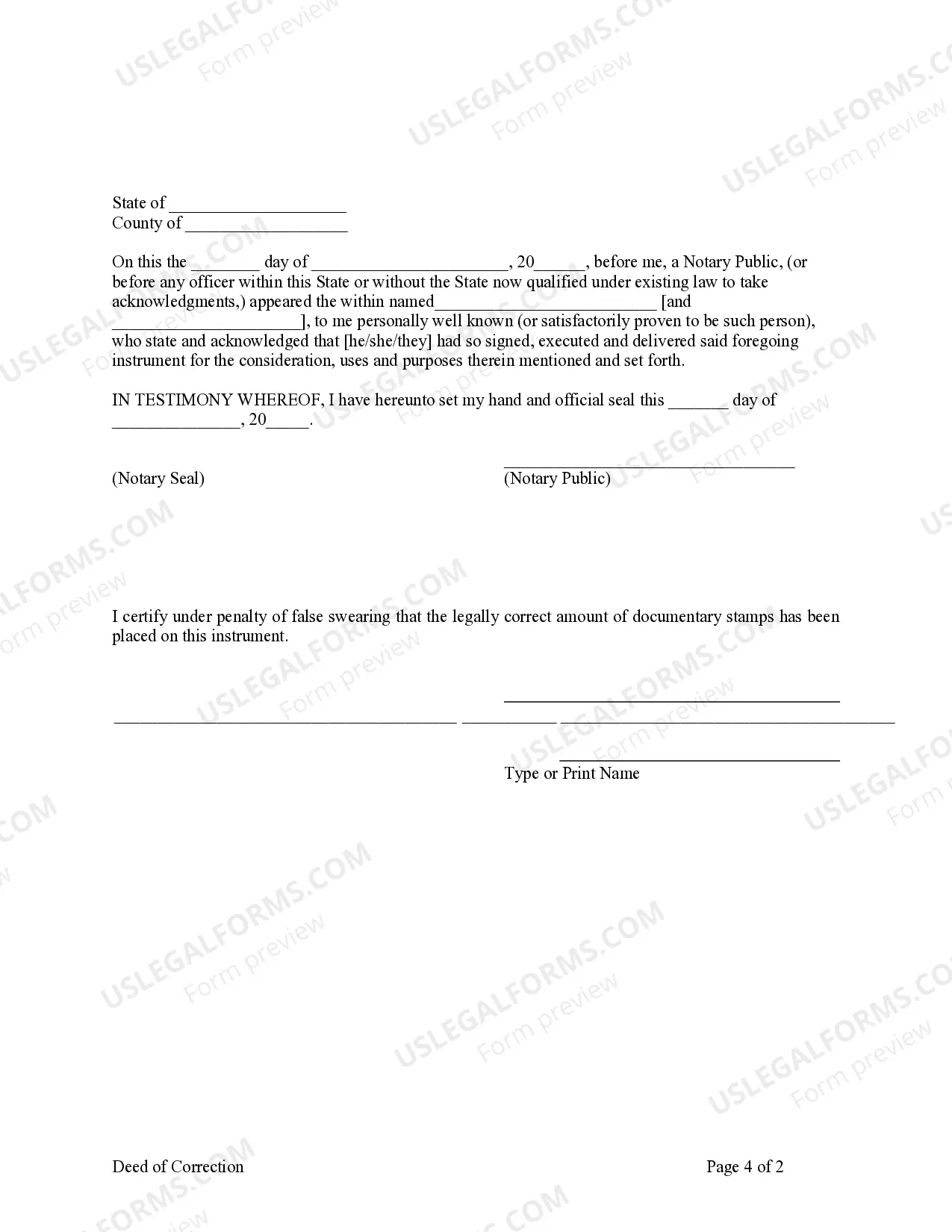
- Execution section: Where the Grantor signs in the presence of a notary or witness.



When to use this document
This form should be used when there has been a mutual mistake in a previously executed deed. For example, if incorrect parties were named, or if the property description was inaccurate, this Deed of Correction allows the Grantor to officially rectify those errors and ensure the Trust holds the rights to the property without any discrepancies.
Who needs this form
- Individuals who have made errors in a real estate deed.
- Grantors who need to clarify the ownership of property held in a Trust.
- Trustees looking to ensure accurate documentation for trusts involving real estate.
How to complete this form
- Identify the parties involved: Name the Grantor (individual) and the Grantee (Trust).
- Specify the property: Clearly describe the real estate being corrected, including its legal description.
- Fill in the date: Enter the date when the Deed of Correction is executed.
- Provide consideration: Insert the nominal value exchanged, typically one dollar.
- Sign the form: The Grantor must sign in the presence of a notary public or authorized witness.
Does this document require notarization?
Yes, this form must be notarized to be legally valid. Notarization serves to verify the identity of the Grantor, ensuring authenticity and reducing the risk of fraud. Consider using US Legal Formsâ integrated online notarization service, which provides secure video interactions available 24/7.
Get your form ready online
Our built-in tools help you complete, sign, share, and store your documents in one place.
Make edits, fill in missing information, and update formatting in US Legal Forms—just like you would in MS Word.
Download a copy, print it, send it by email, or mail it via USPS—whatever works best for your next step.
Sign and collect signatures with our SignNow integration. Send to multiple recipients, set reminders, and more. Go Premium to unlock E-Sign.
If this form requires notarization, complete it online through a secure video call—no need to meet a notary in person or wait for an appointment.
We protect your documents and personal data by following strict security and privacy standards.

Make edits, fill in missing information, and update formatting in US Legal Forms—just like you would in MS Word.

Download a copy, print it, send it by email, or mail it via USPS—whatever works best for your next step.

Sign and collect signatures with our SignNow integration. Send to multiple recipients, set reminders, and more. Go Premium to unlock E-Sign.

If this form requires notarization, complete it online through a secure video call—no need to meet a notary in person or wait for an appointment.

We protect your documents and personal data by following strict security and privacy standards.
Mistakes to watch out for
- Failing to accurately describe the property, leading to ongoing confusion about ownership.
- Not including the correct names of the Grantor and Grantee.
- Omitting the notary signature, which may invalidate the document.
Benefits of completing this form online
- Convenience: Download and complete the form from the comfort of your home.
- Editability: Easily make changes as needed before finalizing your document.
- Time-saving: Instant access to essential legal forms without waiting for postal services.
Looking for another form?
Form popularity
FAQ
An amended deed of trust is a legal document that modifies the original deed of trust, allowing for changes in the terms without the need to create a completely new document. This can include updates on the beneficiary or the name of the trust. In the context of an Arkansas Deed of Correction - Individual to Trust, this process helps clarify ownership and facilitate smoother transactions. Using US Legal Forms, you can easily access templates and guidance to create an amended deed of trust that meets your specific needs.
In Arkansas, deeds do not have to be prepared by an attorney, but it is often recommended. Using an attorney can help ensure that your Arkansas Deed of Correction - Individual to Trust meets all necessary legal requirements. If you prefer to handle it yourself, platforms like uslegalforms provide user-friendly templates and guidance to assist you through the process.
Preparing a deed can fall under the definition of practicing law, especially if it requires legal interpretation or advice. However, individuals can draft their own documents as long as they do not seek to advise others. If you are unsure about the legal implications of your Arkansas Deed of Correction - Individual to Trust, it is wise to seek advice from a legal professional.
To obtain the deed to your property in Arkansas, start by contacting your local county clerk's office. You can typically request a copy of the deed online or in person. If you're working on an Arkansas Deed of Correction - Individual to Trust, it may be beneficial to use online platforms like uslegalforms to streamline the process and ensure you follow the correct procedures.
In Arkansas, anyone who has legal capacity can create a deed. This includes individuals, as well as entities like trusts. When creating an Arkansas Deed of Correction - Individual to Trust, it's important to ensure that you have the proper authority to make changes to the title. Always consider consulting with a professional to confirm your eligibility for creating a deed.
Writing a deed of trust requires specific information: the names of the parties involved, a clear description of the property, and the terms of the trust. Ensure that all essential details are accurately included to prevent future legal issues. For those unfamiliar with legal documents, relying on a service like US Legal Forms can help you draft an Arkansas Deed of Correction - Individual to Trust correctly and efficiently.
Yes, you can modify a deed of trust, but the process can be somewhat complex. Typically, you will need to create an amendment or a new deed that outlines the changes. If you are transferring the deed into a trust, using an Arkansas Deed of Correction - Individual to Trust may simplify this transition while ensuring compliance with Arkansas regulations.
In Arkansas, you are not required to have an attorney prepare a deed, but it is advisable if you want to ensure everything is done correctly. An attorney can help navigate the complexities of property law and verify that all necessary details are included in the deed. For those tackling it independently, the Arkansas Deed of Correction - Individual to Trust offers guidance but consulting with a professional is always a good option.
To transfer a property title to a family member in Arkansas, you need a properly executed deed, like a quitclaim or warranty deed. It’s essential to specify the family member's name and the property details clearly. Recording the deed with the local county clerk ensures the transfer is legally recognized. If the family member is establishing a trust, consider the Arkansas Deed of Correction - Individual to Trust for proper registration.
A trust is a legal arrangement where a person (the grantor) transfers property to a trustee for the benefit of beneficiaries. On the other hand, a beneficiary deed allows property to pass directly to a named beneficiary upon the owner's death without going through probate. When transferring to a trust, utilizing an Arkansas Deed of Correction - Individual to Trust can help manage the assets within the trust effectively.