Arkansas Oil Gas and Mineral Deed - Corporation to Husband and Wife
Overview of this form
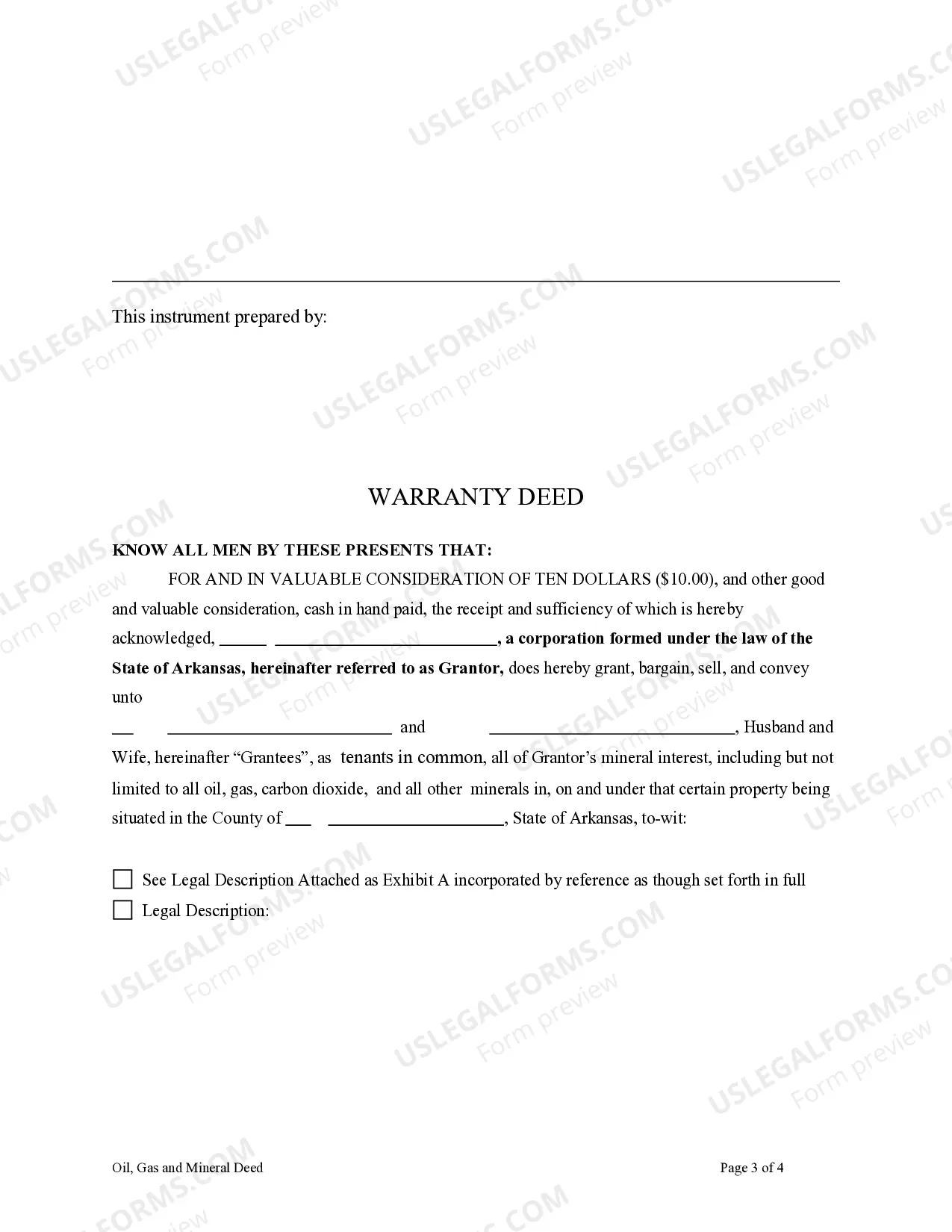
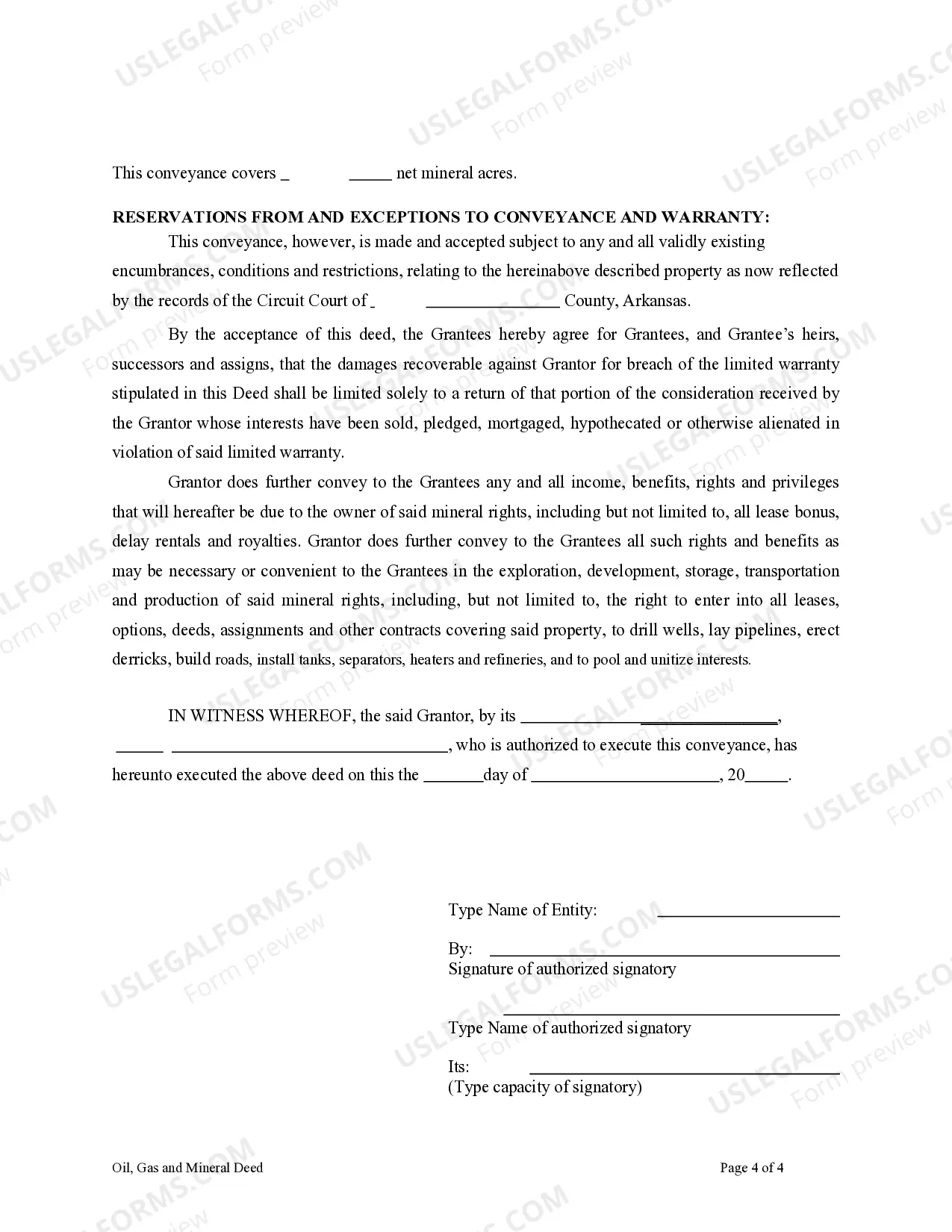
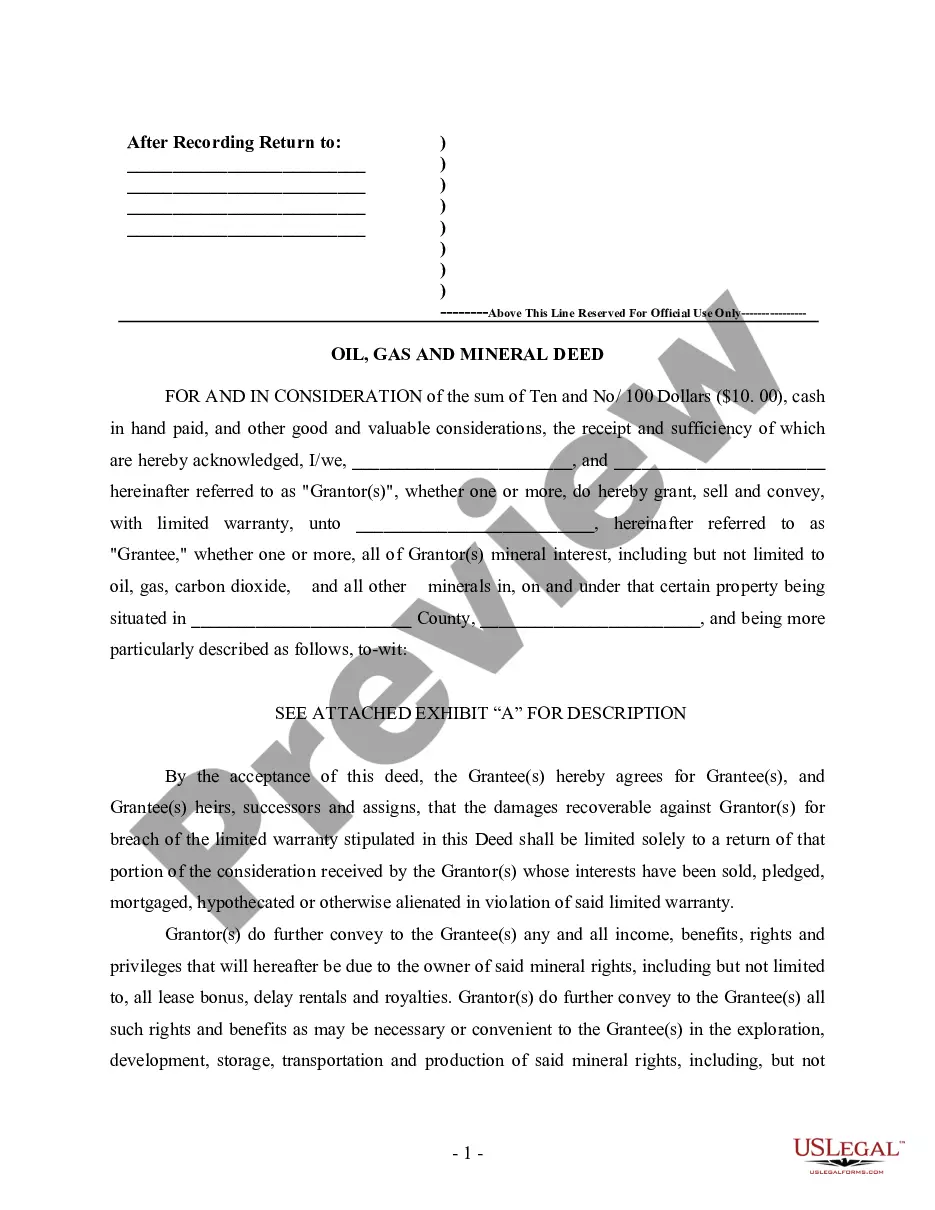
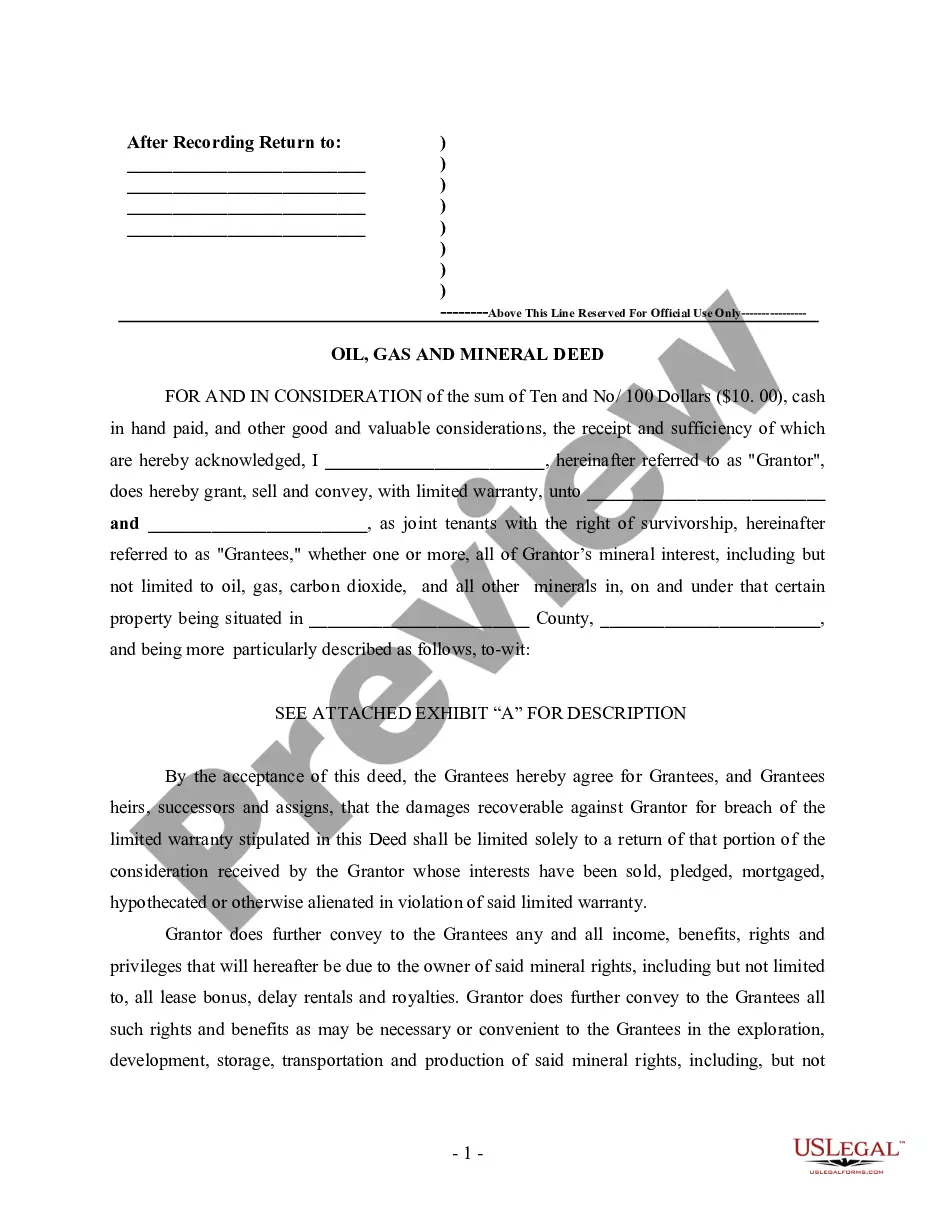
This Oil Gas and Mineral Deed is a legal document wherein a corporation, acting as the Grantor, conveys property rights for oil, gas, and minerals to a married couple, the Grantees. Unlike other deeds, this form specifically addresses the transfer of mineral rights and can indicate the type of tenancy the couple will hold, such as joint tenancy or tenancy by the entirety. This deed complies with state statutory laws, ensuring it is valid and enforceable.
Key parts of this document
- Identification of the Grantor (Corporation) and Grantees (Husband and Wife).
- Legal description of the mineral rights being conveyed.
- Terms of the conveyance and warranty of the property.
- Specification of the type of tenancy: tenants in common, joint tenants with the right of survivorship, or tenants by the entirety.
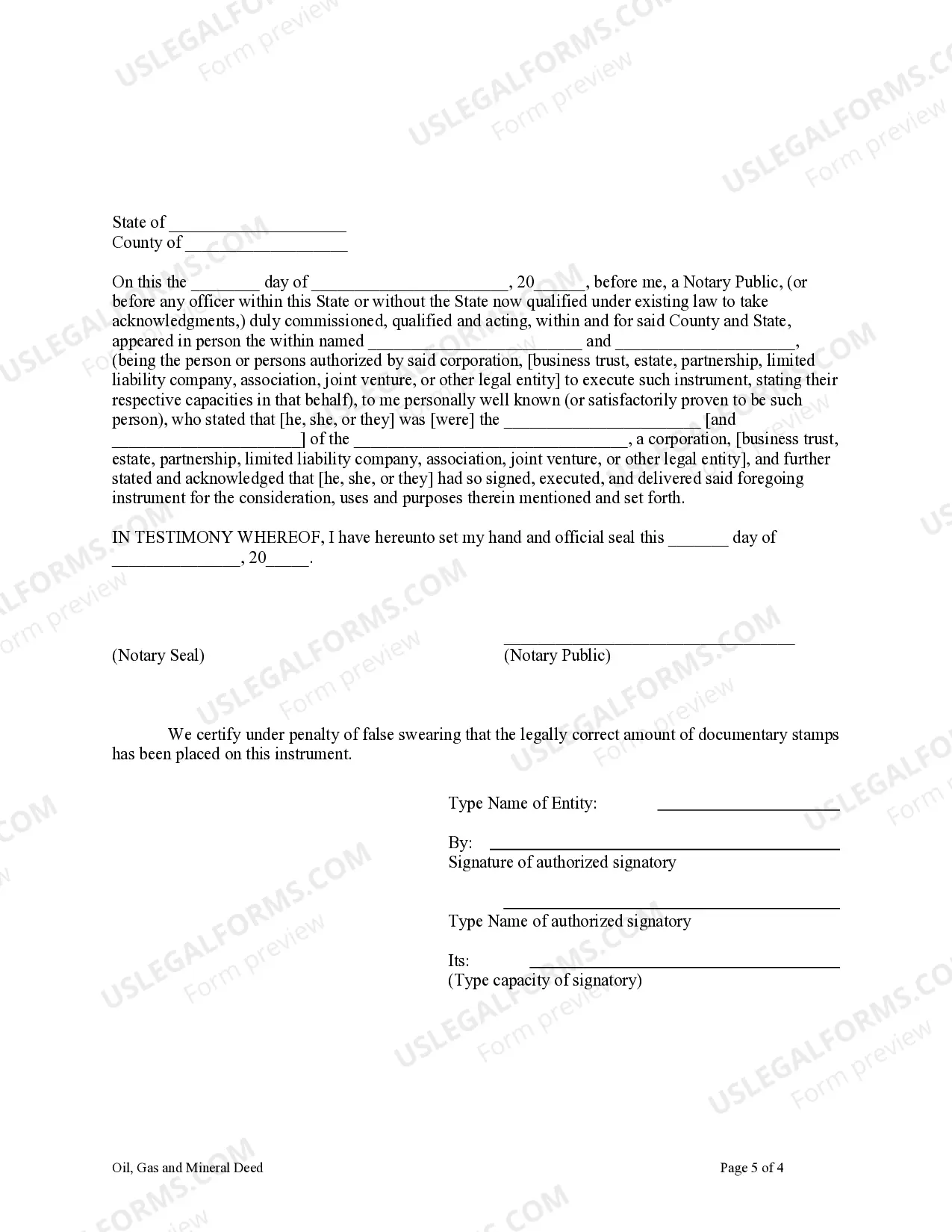
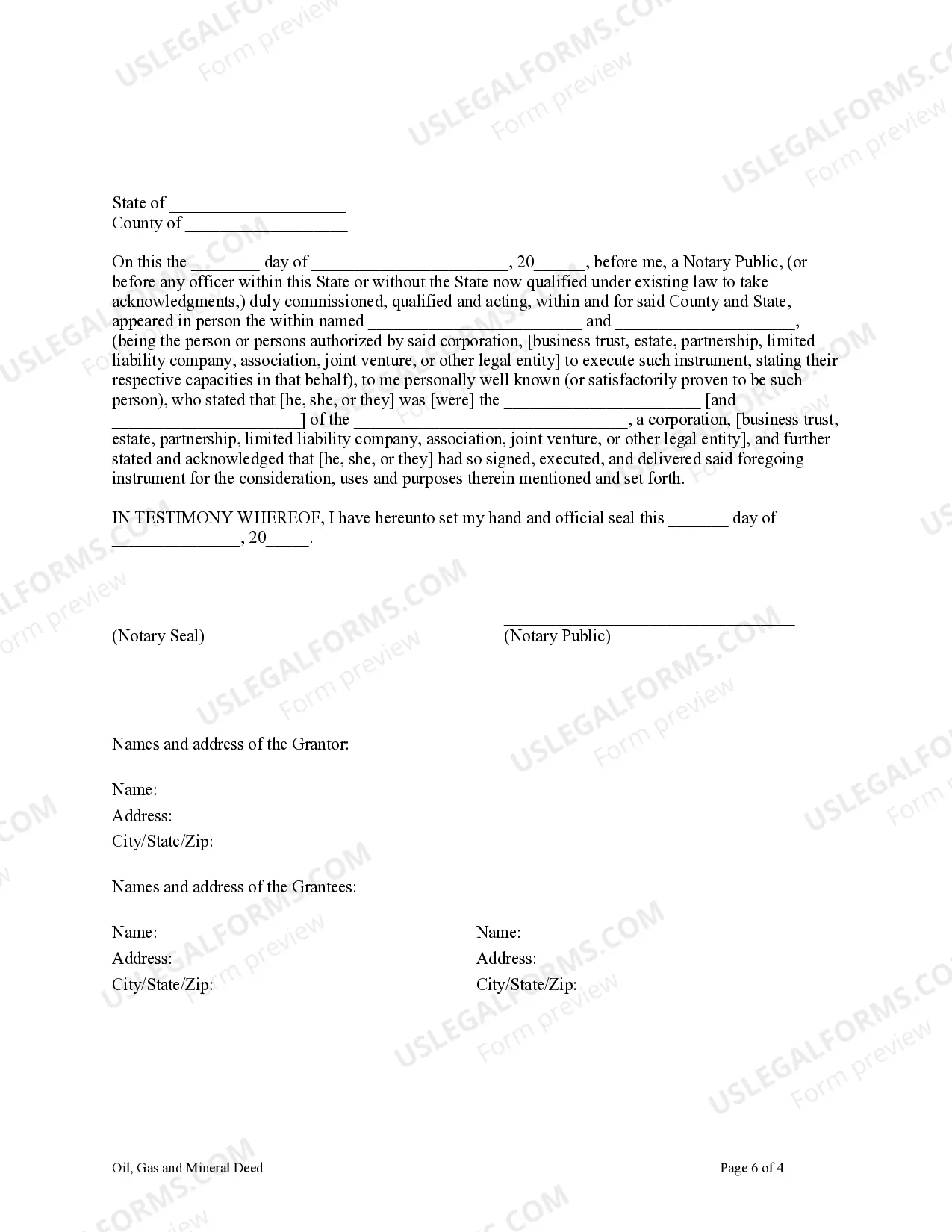
- Signature lines for the Grantor and Grantees.


Situations where this form applies
You would use the Oil Gas and Mineral Deed when a corporation wants to transfer rights to oil, gas, or minerals located beneath a property to a husband and wife. This transfer of ownership may be necessary for estate planning, financial investment, or gift purposes. It is crucial in instances where the couple wishes to ensure shared ownership or create survivorship rights in the event of one spouse's passing.
Who this form is for
This deed is intended for:
- Corporations looking to convey mineral rights.
- Married couples acquiring rights to oil, gas, or minerals.
- Individuals involved in estate planning where mineral rights are a consideration.
How to prepare this document
- Identify and enter the names of the Grantor and Grantees.
- Clearly describe the property and mineral rights being conveyed.
- Select the type of tenancy the Grantees will hold.
- Enter the date of the execution of the deed.
- Both the Grantor and Grantees must sign the document in the designated spaces.
Is notarization required?
This form does not typically require notarization unless specified by local law. However, notarization can add an extra layer of authenticity to the document, which may be beneficial for future legal proceedings.
Get your form ready online
Our built-in tools help you complete, sign, share, and store your documents in one place.
Make edits, fill in missing information, and update formatting in US Legal Forms—just like you would in MS Word.
Download a copy, print it, send it by email, or mail it via USPS—whatever works best for your next step.
Sign and collect signatures with our SignNow integration. Send to multiple recipients, set reminders, and more. Go Premium to unlock E-Sign.
If this form requires notarization, complete it online through a secure video call—no need to meet a notary in person or wait for an appointment.
We protect your documents and personal data by following strict security and privacy standards.

Make edits, fill in missing information, and update formatting in US Legal Forms—just like you would in MS Word.

Download a copy, print it, send it by email, or mail it via USPS—whatever works best for your next step.

Sign and collect signatures with our SignNow integration. Send to multiple recipients, set reminders, and more. Go Premium to unlock E-Sign.

If this form requires notarization, complete it online through a secure video call—no need to meet a notary in person or wait for an appointment.

We protect your documents and personal data by following strict security and privacy standards.
Mistakes to watch out for
- Failing to provide a complete legal description of the mineral rights.
- Not specifying the type of tenancy accurately.
- Omitting signatures or dates, which can invalidate the deed.
- Not ensuring that the conveyance complies with state-specific laws.
Benefits of using this form online
- Convenience of accessing and completing the form from any location.
- Editability allows for adjustments to be made easily based on specific needs.
- Reliable, as the forms are drafted by licensed attorneys to ensure compliance with legal standards.
Summary of main points
- The Oil Gas and Mineral Deed facilitates the transfer of rights from a corporation to a married couple.
- It is essential to ensure accurate information is provided to avoid legal issues.
- Using this form online streamlines the process and enhances reliability.
Looking for another form?
Form popularity
FAQ
Transferring mineral rights in Arkansas involves drafting a formal deed, such as the Arkansas Oil Gas and Mineral Deed - Corporation to Husband and Wife. This process includes detailing the specifics of the rights, the parties involved, and filing with the county clerk. For guidance, platforms like uslegalforms can provide you with templates to simplify this process.
Mineral rights do not automatically expire, but they may become inactive if not properly maintained. If no exploration or drilling occurs for a stipulated period, owners may lose their rights. Thus, it is essential to manage your Arkansas Oil Gas and Mineral Deed - Corporation to Husband and Wife actively to prevent expiration.
Yes, mineral rights are typically inherited just like any other property. If a property owner has mineral rights, these can pass to heirs according to the state’s inheritance laws. Using an Arkansas Oil Gas and Mineral Deed - Corporation to Husband and Wife helps clarify the rights being passed down.
To transfer mineral rights, you'll need to execute a formal deed, such as an Arkansas Oil Gas and Mineral Deed - Corporation to Husband and Wife. This document must clearly state the transferor and transferee's names and the specific rights being transferred. Ensure the deed is recorded with the appropriate county office to formalize the transfer.
Yes, mineral rights generally transfer upon death unless specified otherwise in a will. If the rights are part of the estate, they will pass to the designated heirs. When dealing with this process, utilizing an Arkansas Oil Gas and Mineral Deed - Corporation to Husband and Wife can streamline the transfer.
When a person passes away, their mineral rights typically become part of their estate. These rights can be inherited by heirs or beneficiaries named in a will. It's significant to execute a proper Arkansas Oil Gas and Mineral Deed - Corporation to Husband and Wife to ensure these rights transfer seamlessly.
Owning property does not automatically grant you the mineral rights that lie beneath it. In many cases, landowners may only possess surface rights, while mineral rights could belong to previous owners or separate entities. To clarify your ownership, review your property documents carefully. Engaging with experts or legal resources like US Legal Forms can help you understand the nuances of the Arkansas Oil Gas and Mineral Deed - Corporation to Husband and Wife and protect your interests.
Acquiring an Arkansas Oil Gas and Mineral Deed - Corporation to Husband and Wife involves a few straightforward steps. First, evaluate whether you possess the rights to the minerals beneath your land. Then, use resources such as US Legal Forms to find the appropriate documentation forms and instructions for your situation. After drafting your deed, ensure it is signed, notarized, and filed with your county clerk's office for official recognition.
To determine if you own the mineral rights associated with your property, you should check your property deed and any title documents. If your deed includes language about mineral rights, it is likely that you own them. Additionally, consulting with a title company or an attorney who specializes in real estate can provide clarity on your ownership status. Understanding your rights regarding the Arkansas Oil Gas and Mineral Deed - Corporation to Husband and Wife is essential for future decisions.
To obtain an Arkansas Oil Gas and Mineral Deed - Corporation to Husband and Wife, start by gathering necessary documents that prove ownership or rights to the property in question. Next, you can use a reliable platform like US Legal Forms to access templates and guidance tailored for your needs. After preparing the deed, make sure to have it notarized and recorded in the appropriate county office. This process ensures your mineral rights are officially documented and recognized.