Alabama Living Trust for individual, Who is Single, Divorced or Widow or Widower with Children
Understanding this form
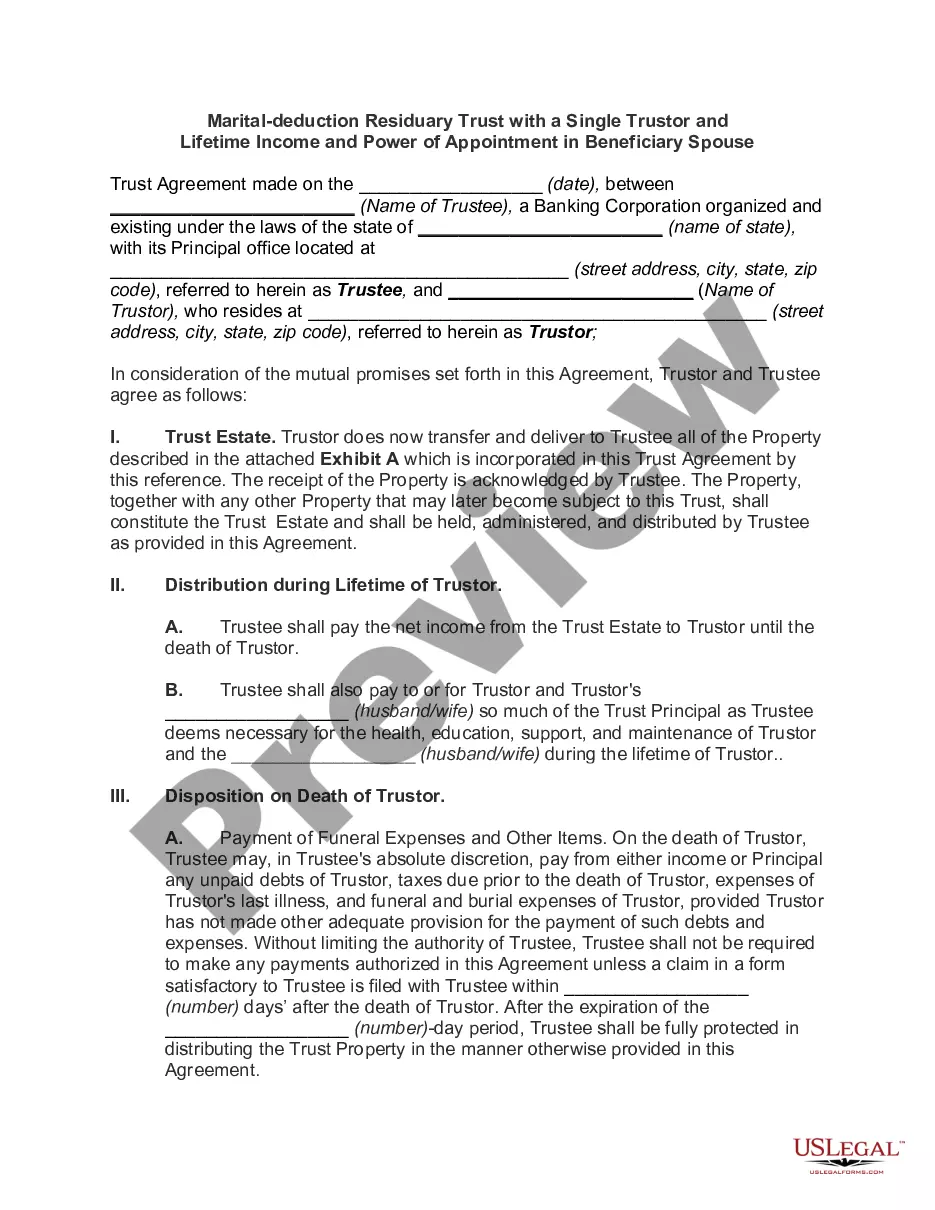
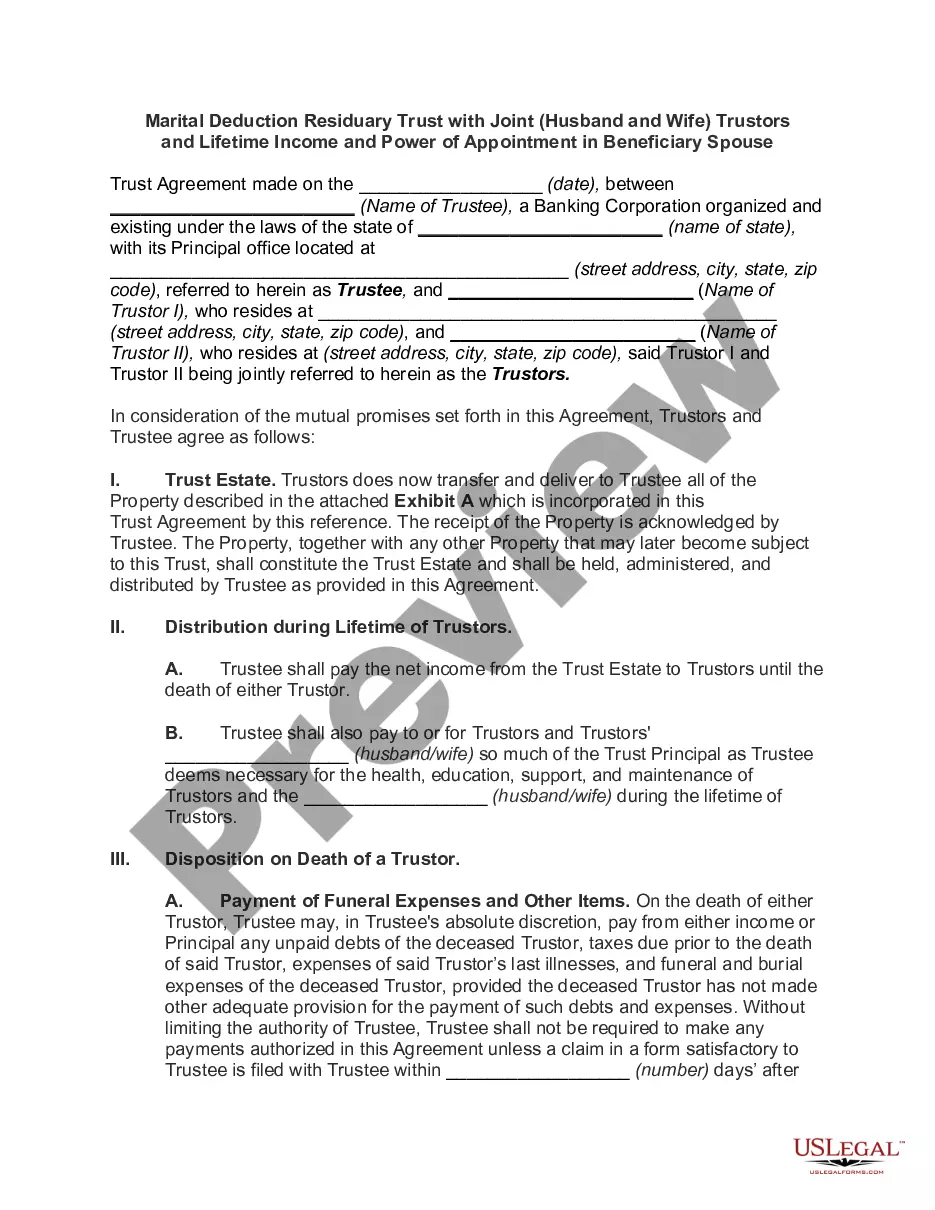
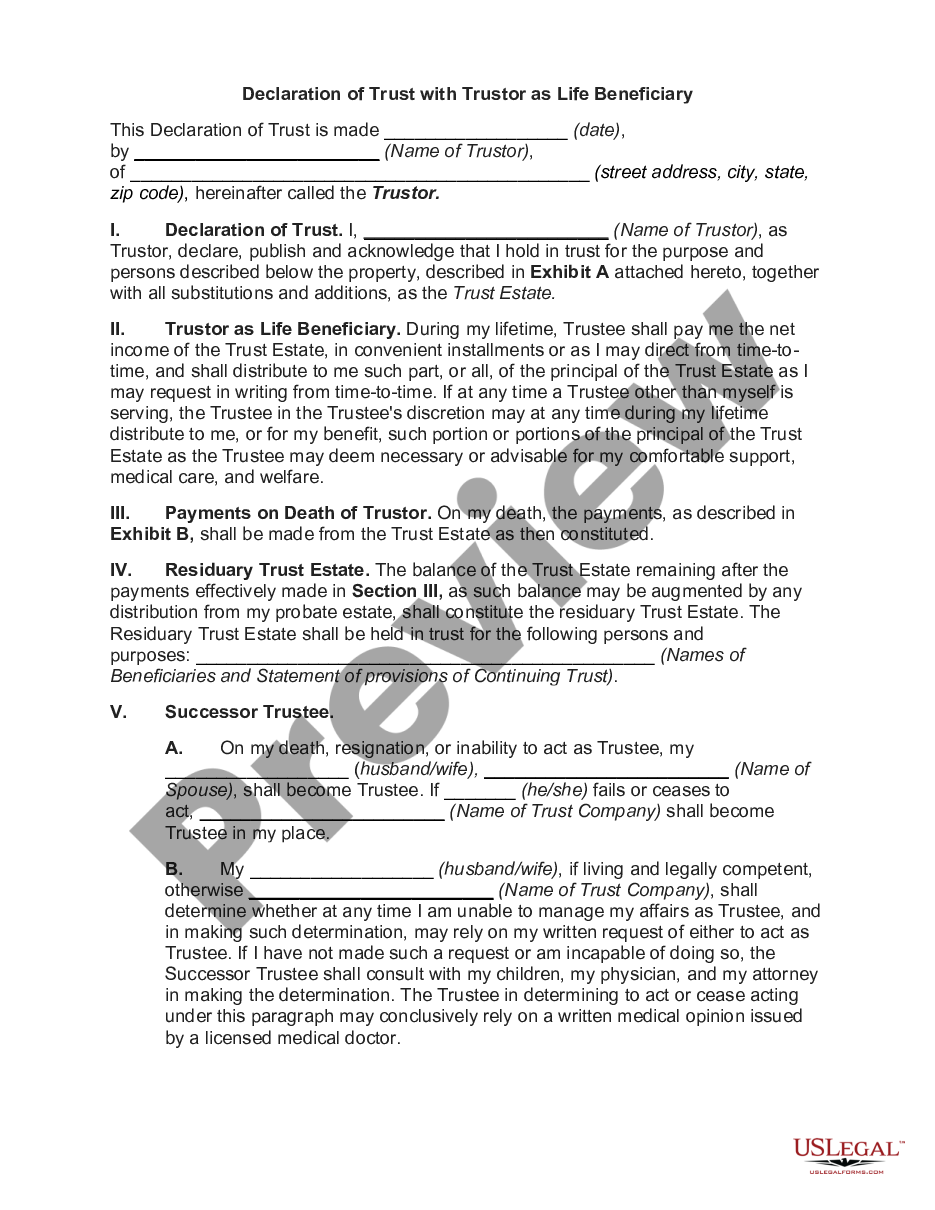
This Living Trust form is designed specifically for individuals who are single, divorced, or widowed and have children. The purpose of this document is to create a living trust that allows you to manage your assets during your lifetime and makes it easier for your heirs to receive those assets after your death, without the involvement of probate. A living trust differs from a will as it provides more control over your assets while you are still alive and ensures a smooth transition upon your passing.
Key parts of this document
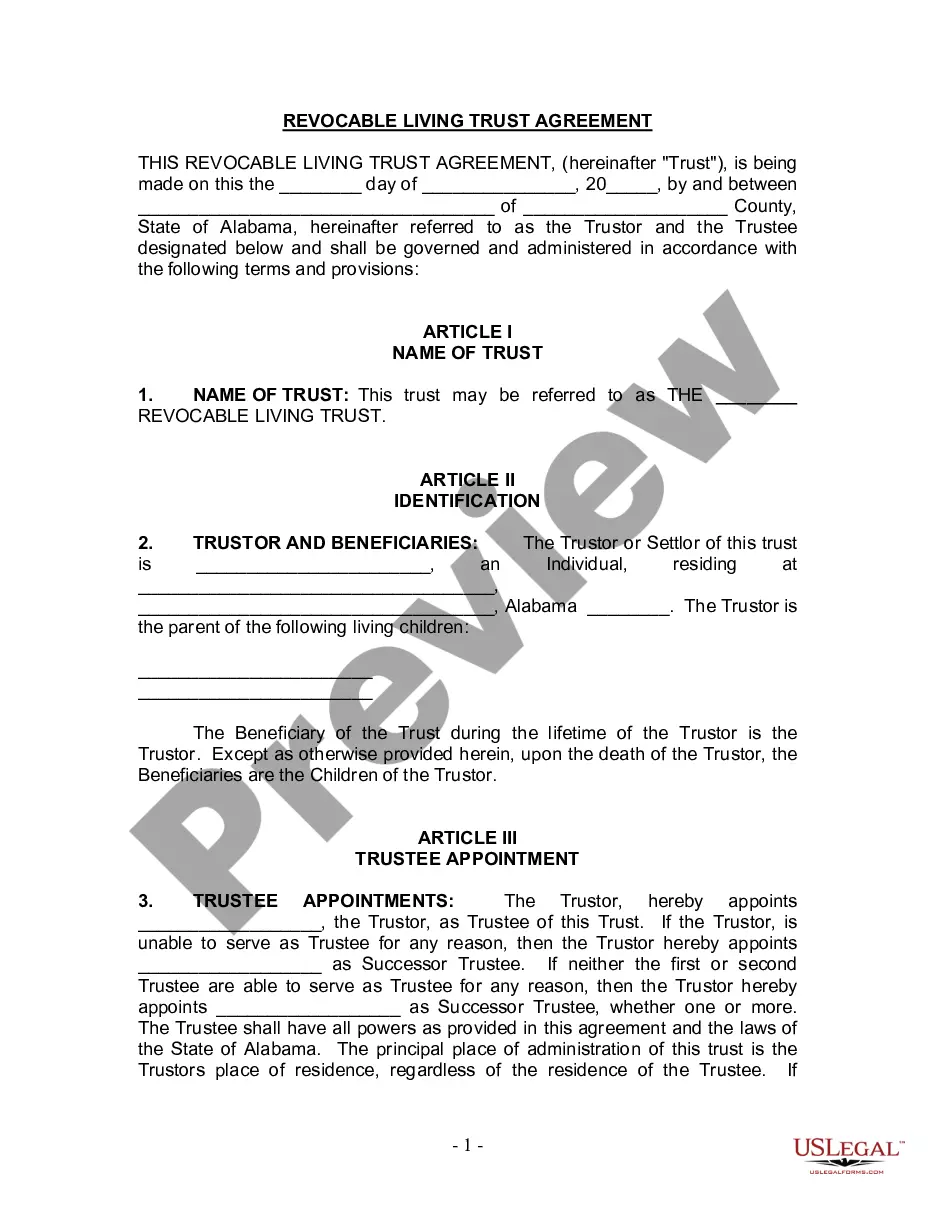
- Name of Trust: Clearly states the title of the trust.
- Trustor and Beneficiaries: Identifies the person creating the trust and designated beneficiaries, typically the children.
- Trustee Appointment: Specifies who will manage the trust and the succession plan for trustees.
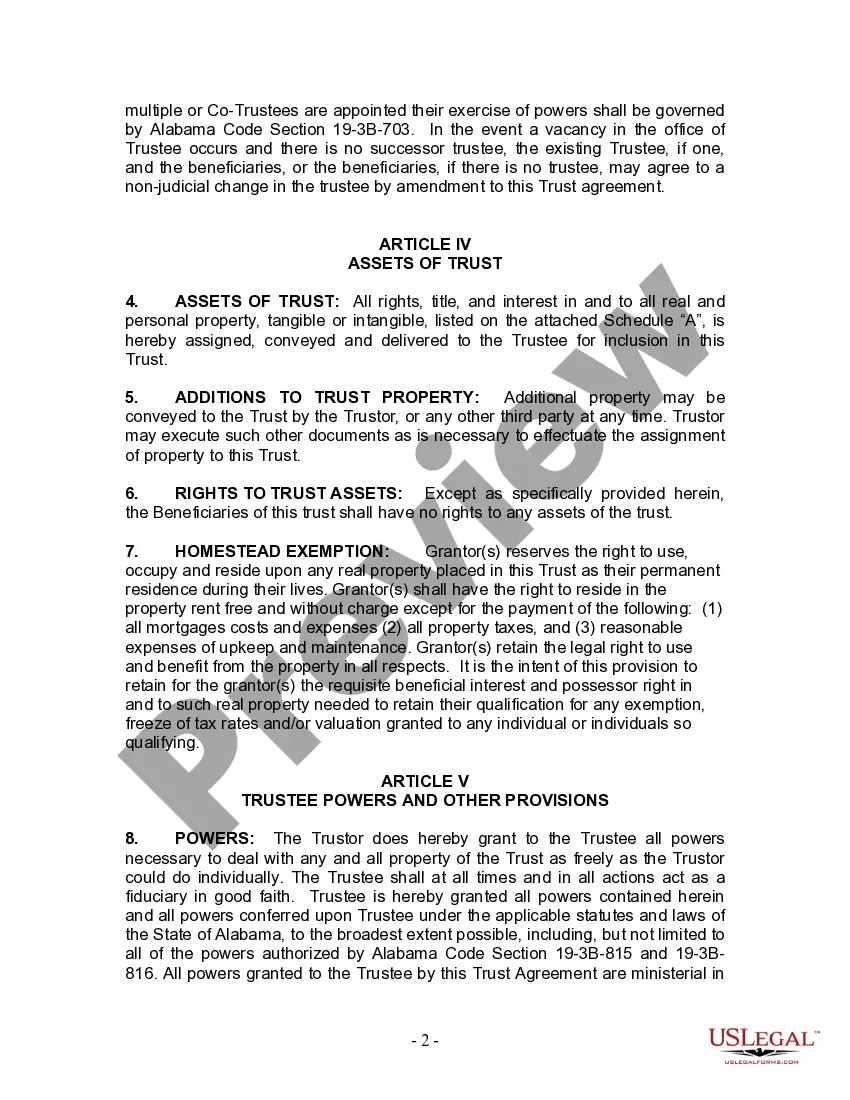
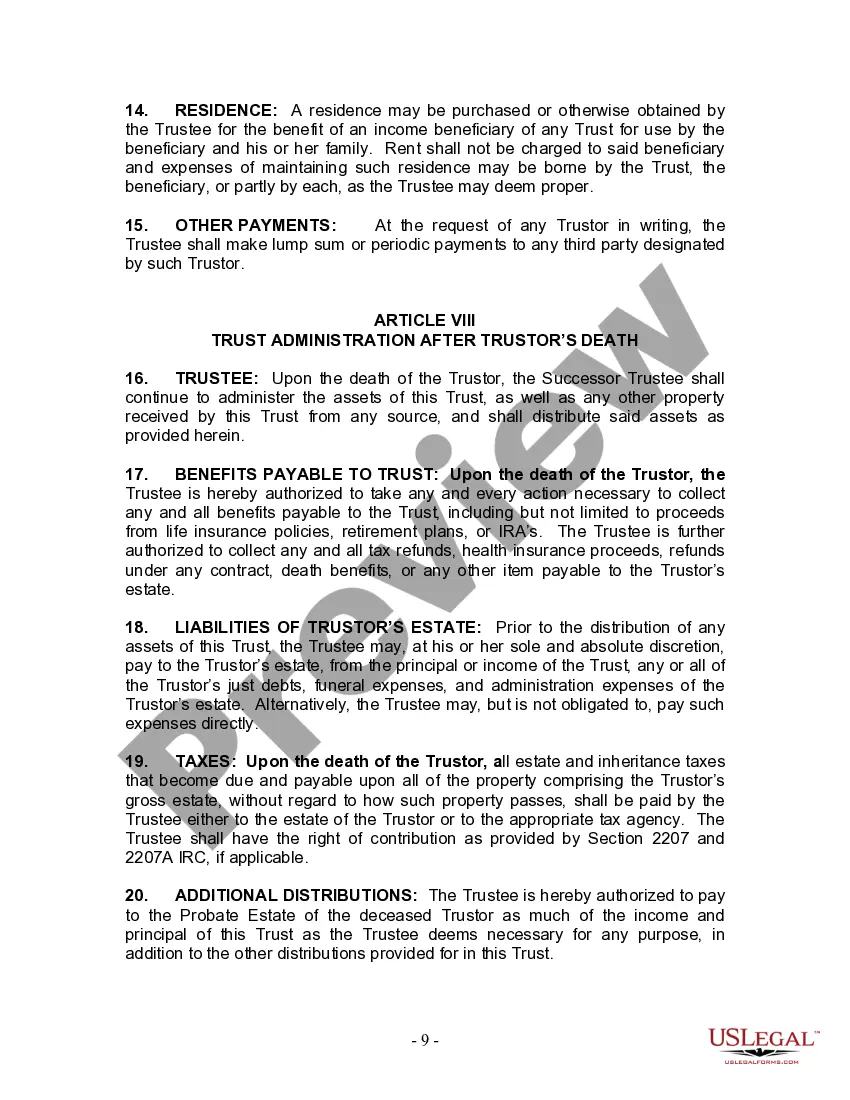
- Assets of Trust: Details the property held in the trust and any parameters for adding additional assets.
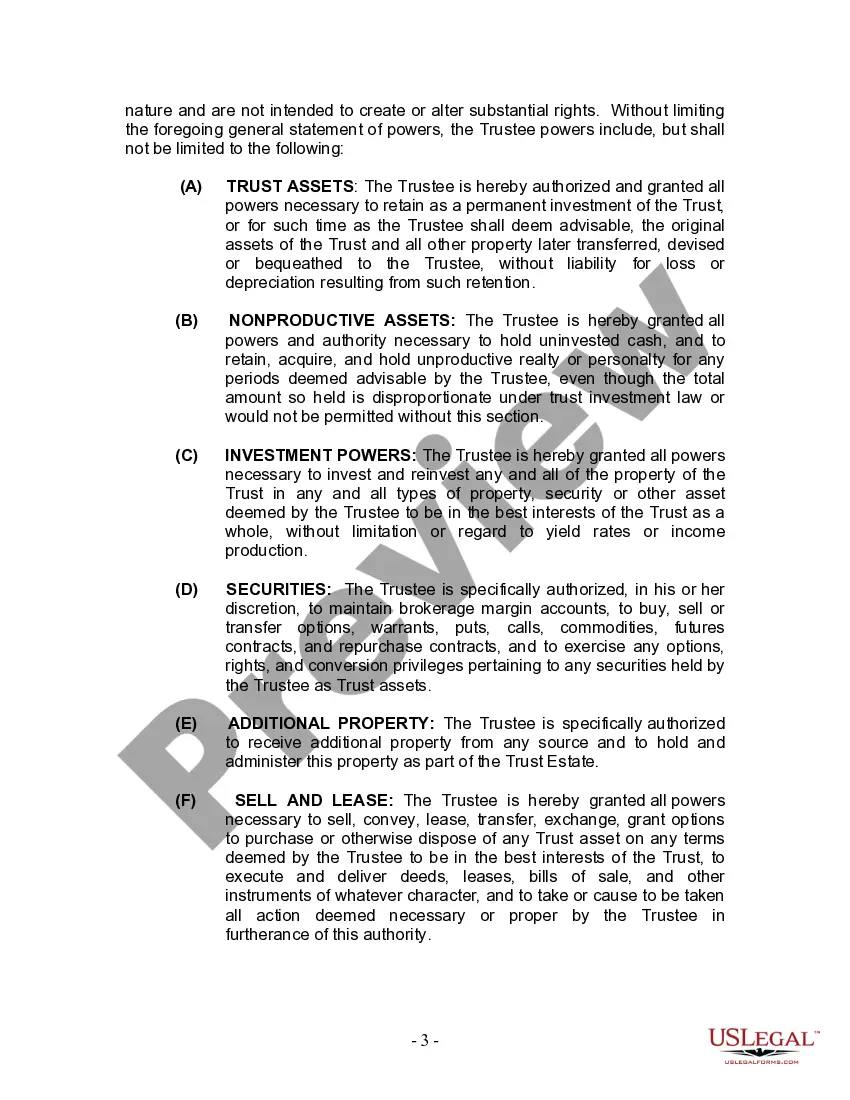
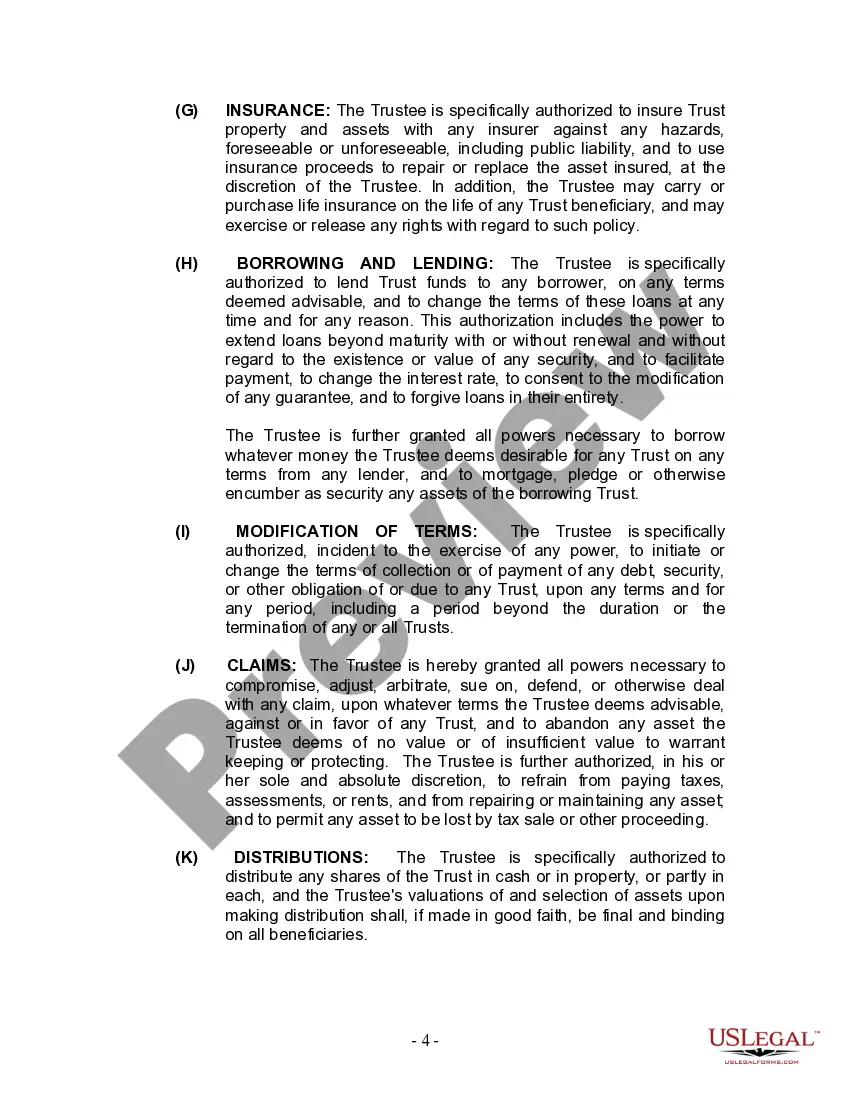
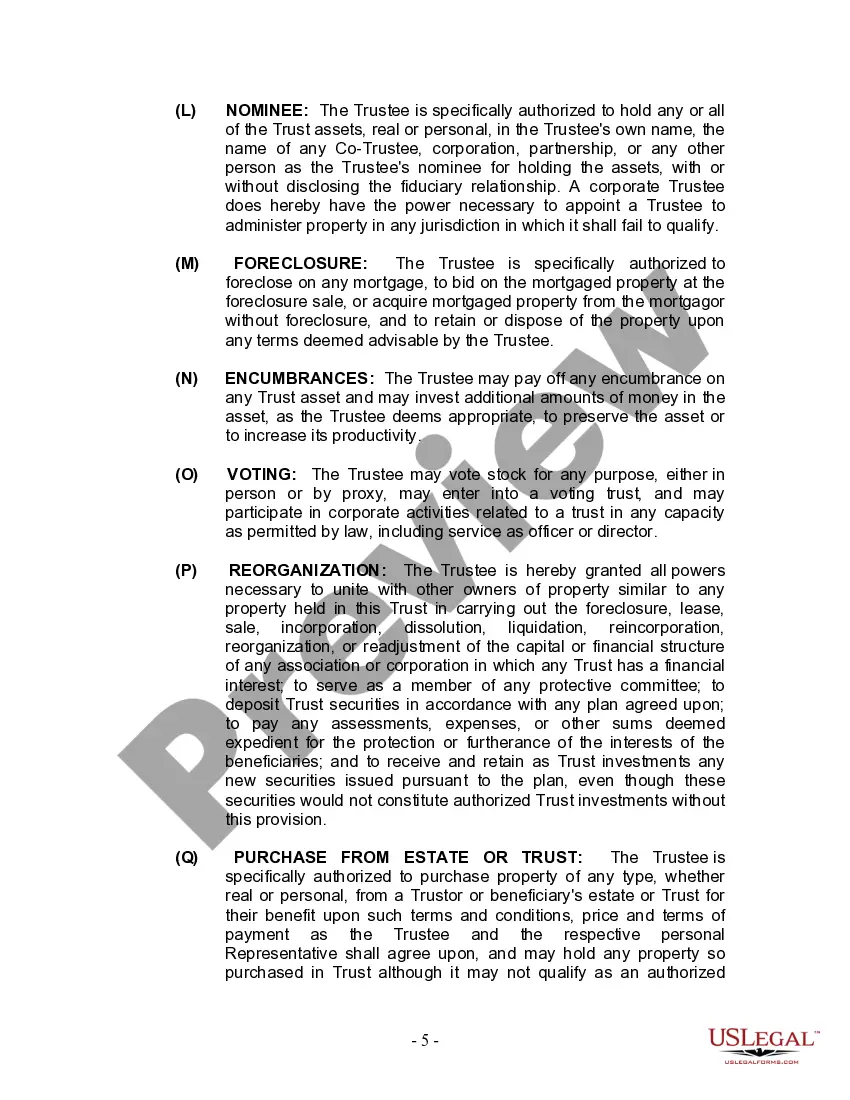
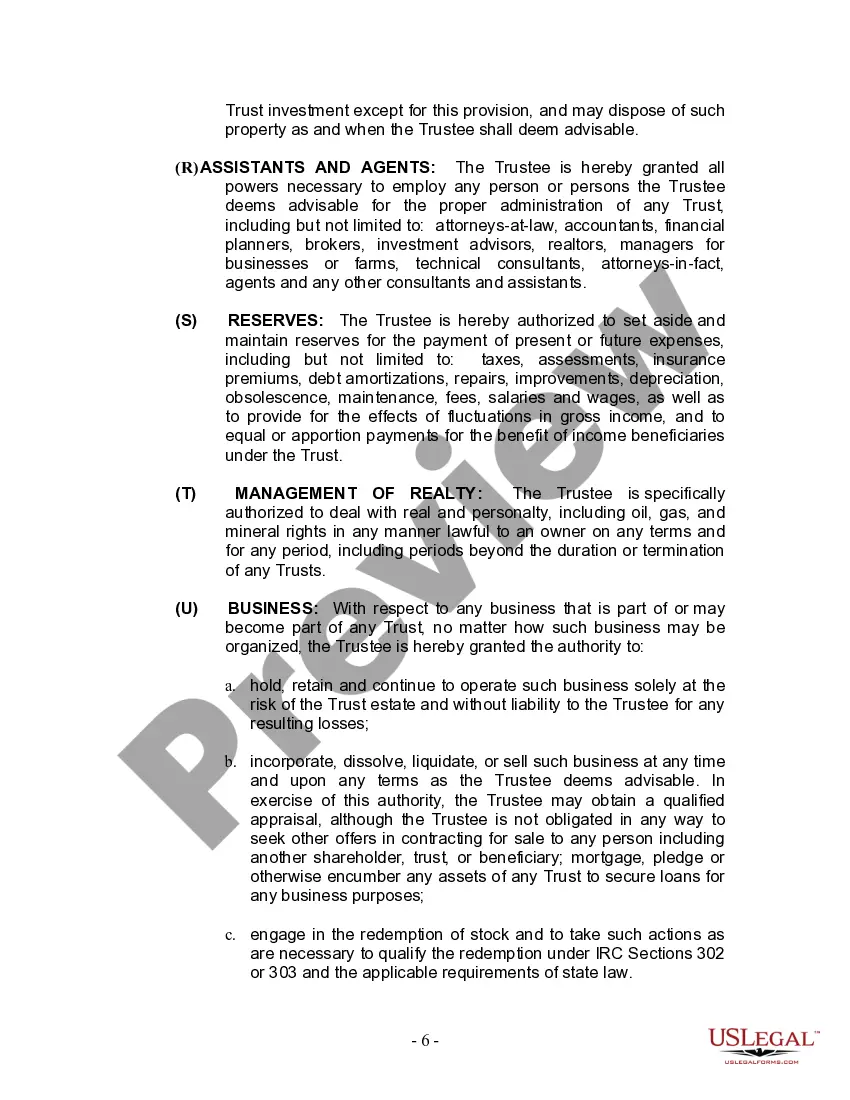
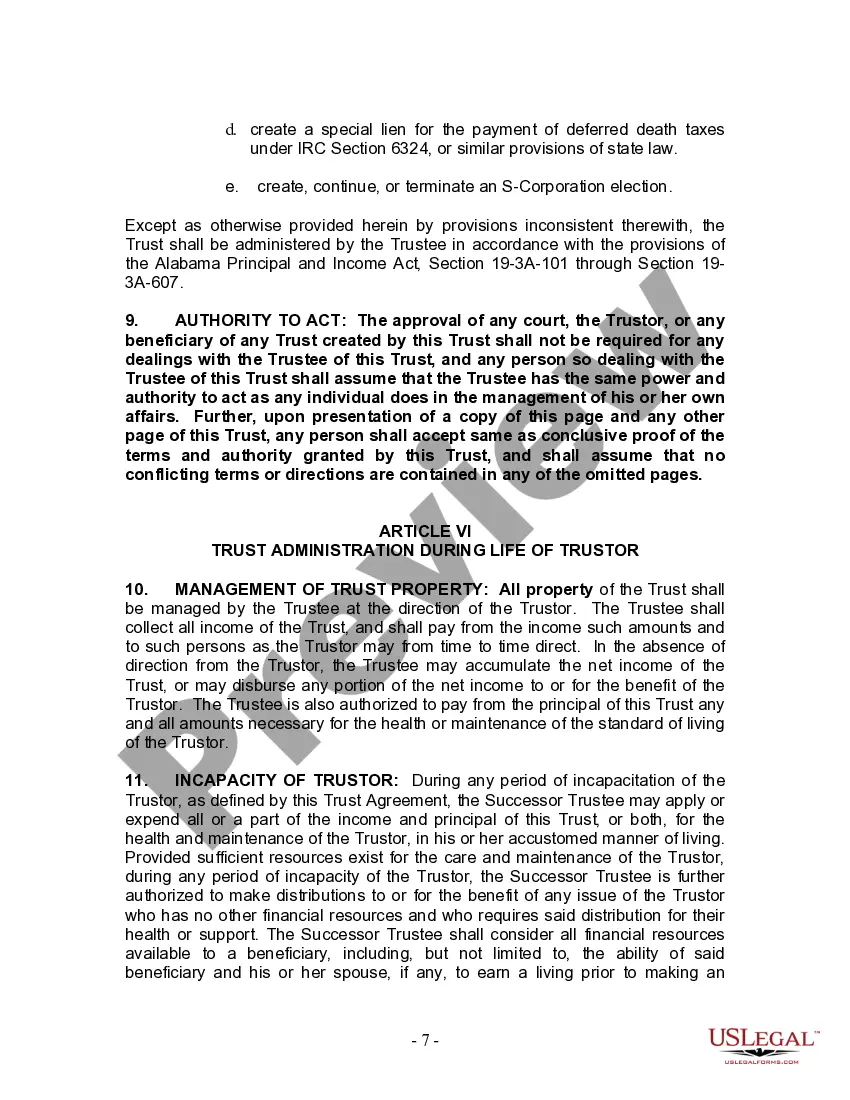
- Trustee Powers: Outlines the authority given to the trustee to manage the trust assets effectively.
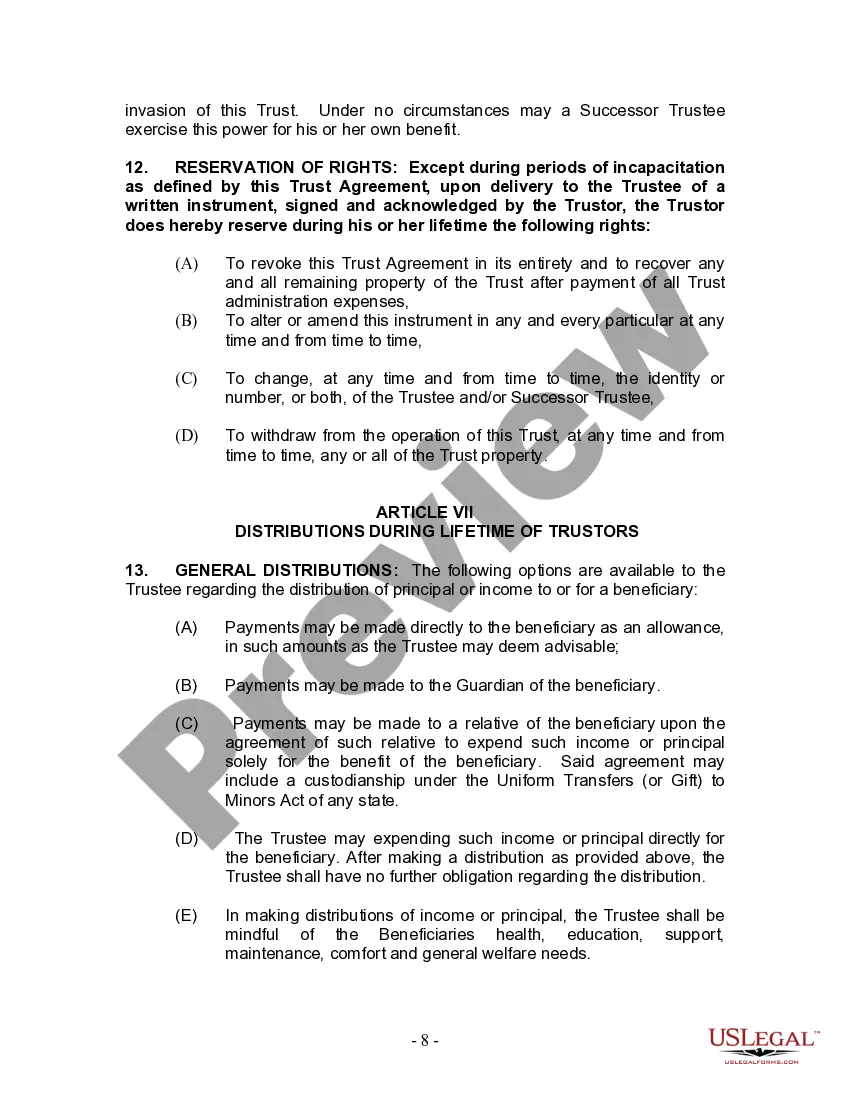
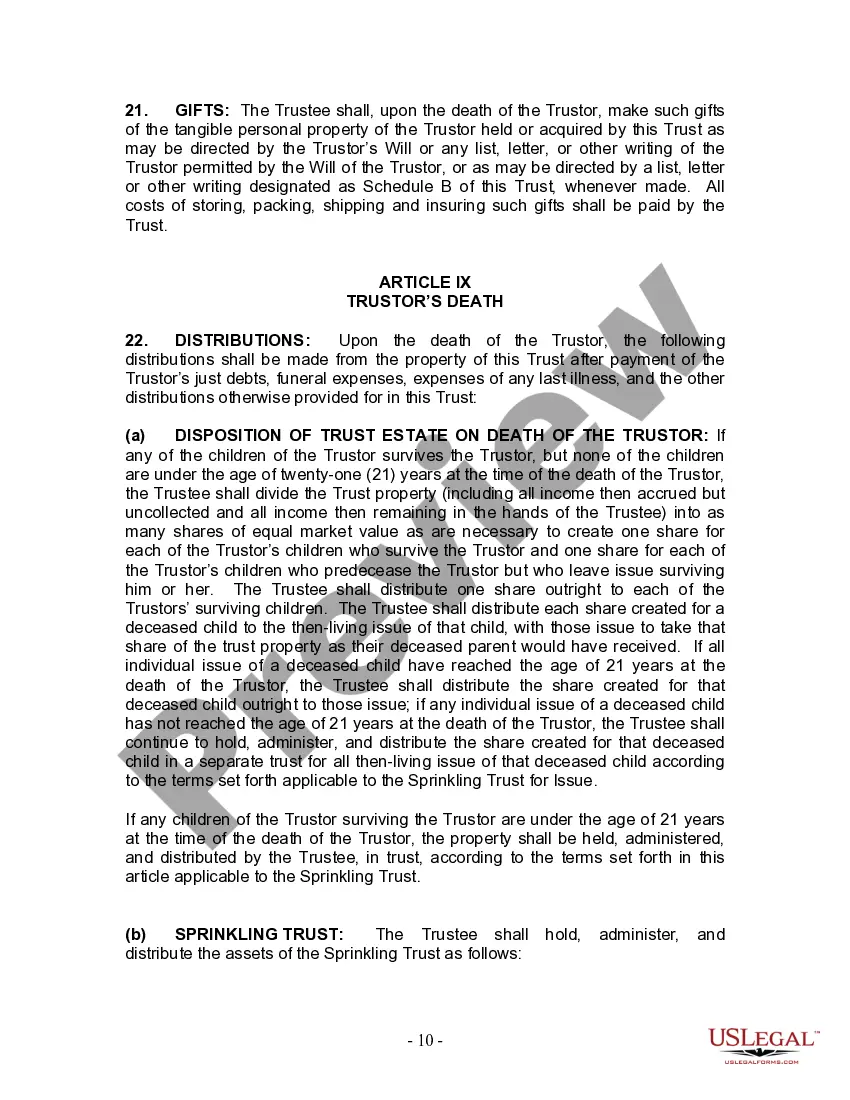
- Distributions: Describes how and when assets will be distributed to beneficiaries.



Common use cases
This Living Trust is particularly useful in situations where an individual wants to ensure that their assets are distributed according to their wishes without going through the lengthy probate process. It is also beneficial for those who wish to manage their property during their lifetime, especially if they seek to protect their childrenâs inheritance if they become unable to manage their affairs due to incapacity.
Who needs this form
- Individuals who are single, divorced, or widowed.
- Parents with one or more children.
- Anyone looking for a way to manage their assets and ensure their smooth transfer after death.
- Those who want to avoid probate and potential disputes among heirs.
Steps to complete this form
- Identify the parties: Fill in the names of the Trustor (you) and the Trustee (you or another individual).
- Specify the trust name: Enter the name you wish to give your revocable living trust.
- Detail the beneficiaries: List your children as the beneficiaries within the trust.
- Assign trust assets: Include all property and assets that will be transferred into the trust.
- Sign and date the document: Ensure all parties sign the trust agreement in the presence of a notary if required.
Does this form need to be notarized?
Yes, this form must be notarized to be legally valid. US Legal Forms provides integrated online notarization services that are available 24/7, ensuring secure and efficient completion of your trust documentation.
Get your form ready online
Our built-in tools help you complete, sign, share, and store your documents in one place.
Make edits, fill in missing information, and update formatting in US Legal Forms—just like you would in MS Word.
Download a copy, print it, send it by email, or mail it via USPS—whatever works best for your next step.
Sign and collect signatures with our SignNow integration. Send to multiple recipients, set reminders, and more. Go Premium to unlock E-Sign.
If this form requires notarization, complete it online through a secure video call—no need to meet a notary in person or wait for an appointment.
We protect your documents and personal data by following strict security and privacy standards.

Make edits, fill in missing information, and update formatting in US Legal Forms—just like you would in MS Word.

Download a copy, print it, send it by email, or mail it via USPS—whatever works best for your next step.

Sign and collect signatures with our SignNow integration. Send to multiple recipients, set reminders, and more. Go Premium to unlock E-Sign.

If this form requires notarization, complete it online through a secure video call—no need to meet a notary in person or wait for an appointment.

We protect your documents and personal data by following strict security and privacy standards.
Common mistakes
- Failing to include all intended assets in the trust.
- Not updating the trust after significant life changes (like marriage or divorce).
- Overlooking the need for a successor trustee in case of incapacity or death.
- Not discussing the trust arrangement with beneficiaries, leading to confusion.
Why complete this form online
- Convenience: Easily access and download the form from anywhere at any time.
- Editability: Customize the form according to your unique situation.
- Reliability: Trust the legality and completeness of forms prepared by licensed attorneys.
Key takeaways
- A living trust helps manage your assets and aids in estate planning.
- This form is specifically tailored for individuals who are single, divorced, or widowed with children.
- Proper execution and notarization of the trust are crucial for its legal validity.
- Creating a living trust can help your family avoid the complexities of probate court.
Looking for another form?


Form popularity
FAQ
In Alabama, a living trust operates by allowing you to place your assets into a trust during your lifetime. For individuals who are single, divorced, or widows or widowers with children, an Alabama Living Trust can help manage your assets effectively and provide for your children. Upon your passing, the trust assets pass directly to your designated beneficiaries without going through probate, simplifying the distribution process and providing peace of mind.
Yes, a divorced couple can maintain a family trust, although its terms may need revision to reflect the new relationship dynamics. People who are single, divorced, or widows or widowers with children can benefit from an Alabama Living Trust to ensure the trust's assets are allocated as they desire. Revisiting the trust can prevent future disputes and ensure clarity in asset distribution, making this a practical option.
The best way to protect your assets during a divorce is to create a solid estate plan, which includes an Alabama Living Trust for individuals who are single, divorced, or widows or widowers with children. By placing assets in a trust, you can designate specific beneficiaries, reducing the likelihood that these assets will be part of the divorce settlement. It's wise to consult with a qualified attorney to tailor your asset protection strategy.
Divorce can significantly impact a family trust, as it may demand a reevaluation of asset distribution. In Alabama, individuals who are single, divorced, or widows or widowers with children should consider updating their Alabama Living Trust to reflect their new circumstances. This ensures that the desired beneficiaries receive their intended share. Engaging a legal professional can help clarify the changes needed.
A living trust in Alabama simplifies the distribution of assets when one spouse dies. The trust usually contains provisions that allow for the seamless transfer of assets to the surviving spouse or directly to the children, ensuring their financial security. It's important to note that an Alabama Living Trust for individuals who are single, divorced, or widowed with children can help avoid the probate process, making it quicker and more private. Additionally, this arrangement allows you to clearly define your wishes and provide for your children’s needs without court interference.
A family trust, like any fiduciary arrangement, often comes with the disadvantage of potential family disputes. In an Alabama Living Trust for individuals who are single, divorced, or widowed with children, differing opinions about how the trust should be managed or assets allocated can arise. Additionally, if the trust is not structured properly, it can lead to misunderstandings and tension among family members. Clear terms and discussions about the trust can mitigate these issues and reinforce family unity.
Setting up a living trust in Alabama typically begins with drafting the trust document, which outlines how assets should be managed and distributed. Individuals who are single, divorced, or widowed with children can use resources like US Legal Forms to find templates and guidance needed to create an Alabama Living Trust. After drafting the document, transferring assets into the trust and obtaining any necessary endorsements or notarizations is crucial. This process ensures the trust operates according to your wishes.
Deciding whether to put assets in a trust can depend on your parents' specific goals and family situation. For those considering the benefits, an Alabama Living Trust for individuals who are single, divorced, or widowed with children can provide significant estate planning advantages. It helps avoid probate, ensures privacy, and can facilitate the smooth transfer of assets to heirs. Legal advice can provide further clarity on whether this option is suitable for their needs.
One downside of putting assets in a trust is the loss of direct control over those assets once they are transferred. For individuals who are single, divorced, or widowed with children, an Alabama Living Trust can safeguard your estate, but it also means you need to follow the terms you set. Moreover, misunderstandings about the trust's provisions can create friction among family members. Thus, always clarify your wishes regarding asset distribution carefully.
One significant mistake parents often make when establishing a trust fund is failing to communicate their intentions with their children. Clear communication about the purpose and management of the Alabama Living Trust for individuals who are single, divorced, or widowed with children can help prevent misunderstandings. Additionally, not updating the trust to reflect life changes can lead to complications down the road. Keeping your trust documents current and discussing them openly can save your family from future conflicts.