Alabama Notice of Breach of Written Lease for Violating Specific Provisions of Lease with No Right to Cure for Nonresidential Property from Landlord to Tenant
Overview of this form
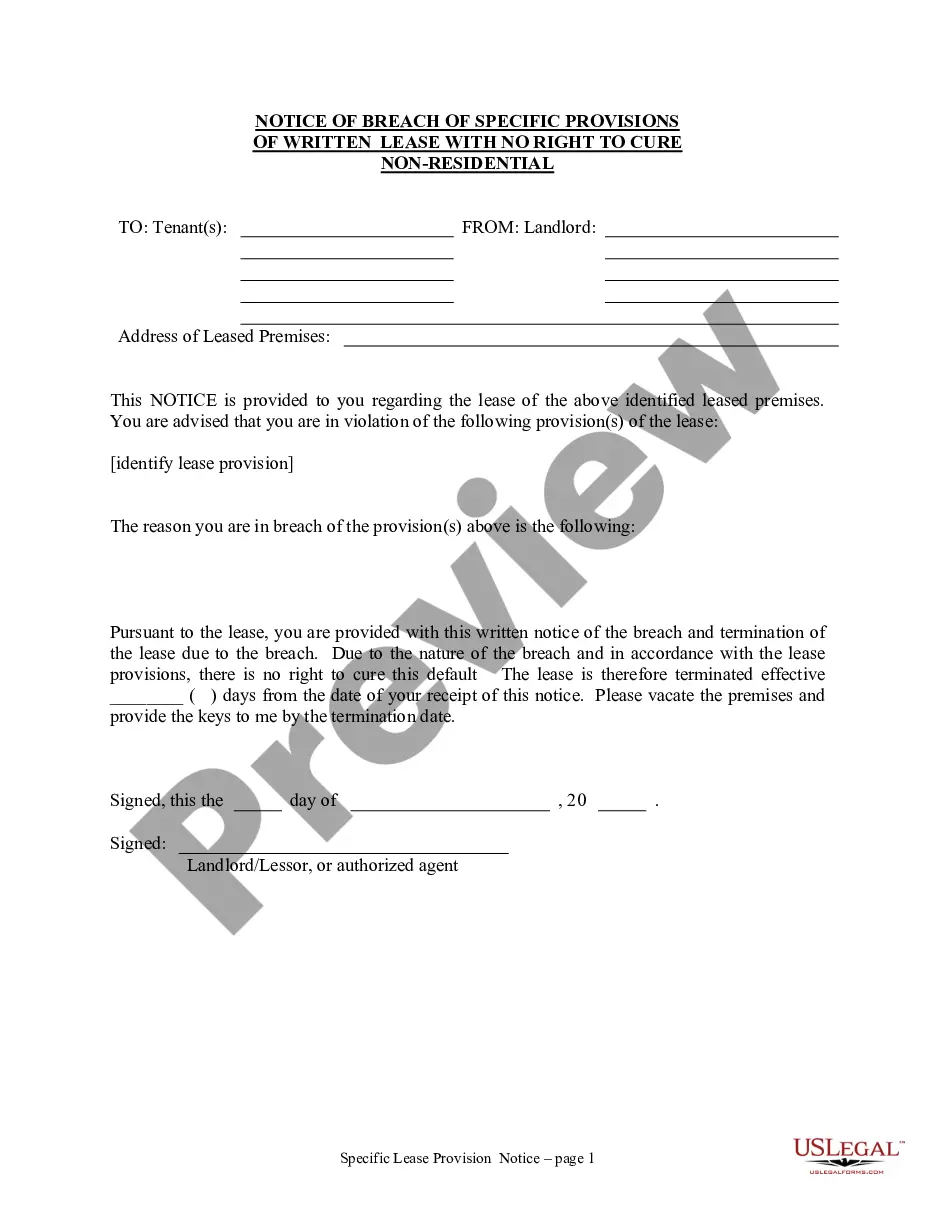
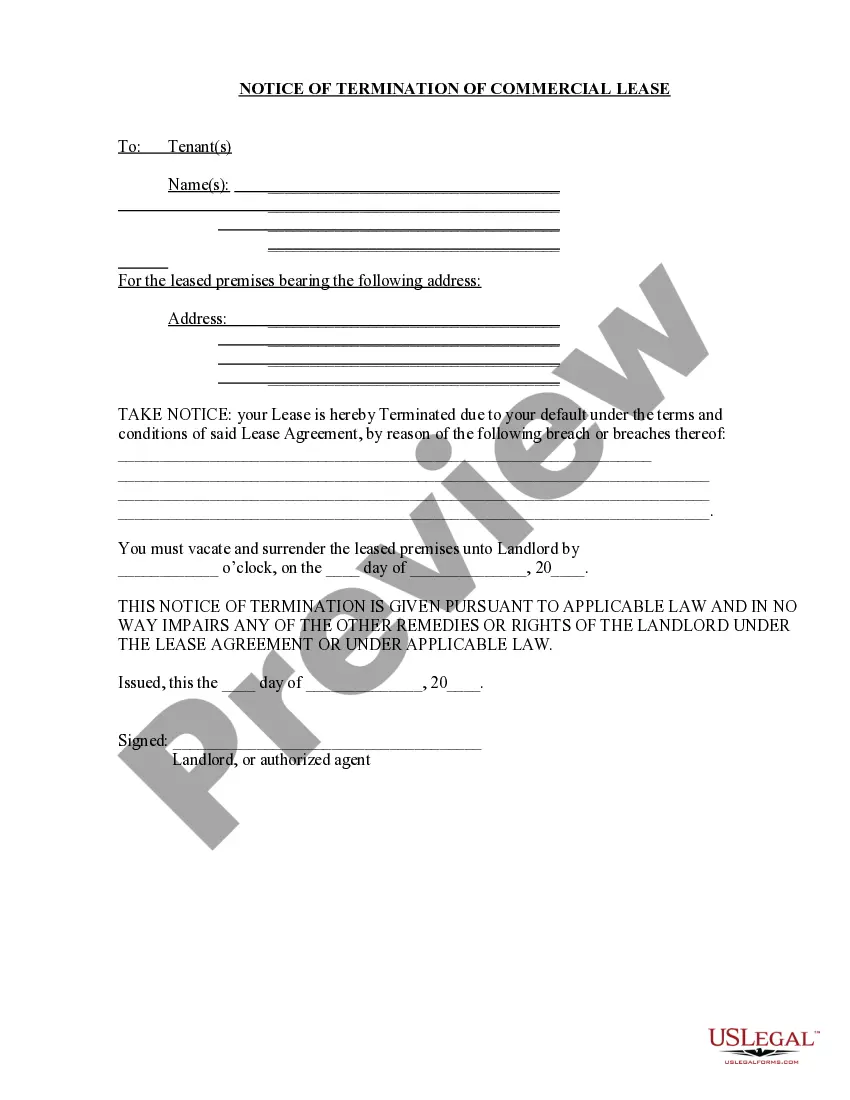
The Notice of Breach of Written Lease for Violating Specific Provisions of Lease with No Right to Cure is a legal document used by a landlord to inform a tenant about a breach of a non-residential lease. This form is specifically designed for situations where the lease contains provisions that have been violated, and the breach cannot be cured. It provides a formal way for landlords to communicate the termination of the lease, highlighting the specific violations and the lack of a right to remedy them.
Main sections of this form
- Identification of the landlord and tenant parties involved.
- Address of the leased premises.
- Specific lease provision that has been violated.
- Reasons for the breach of the lease.
- Effective date of termination of the lease.
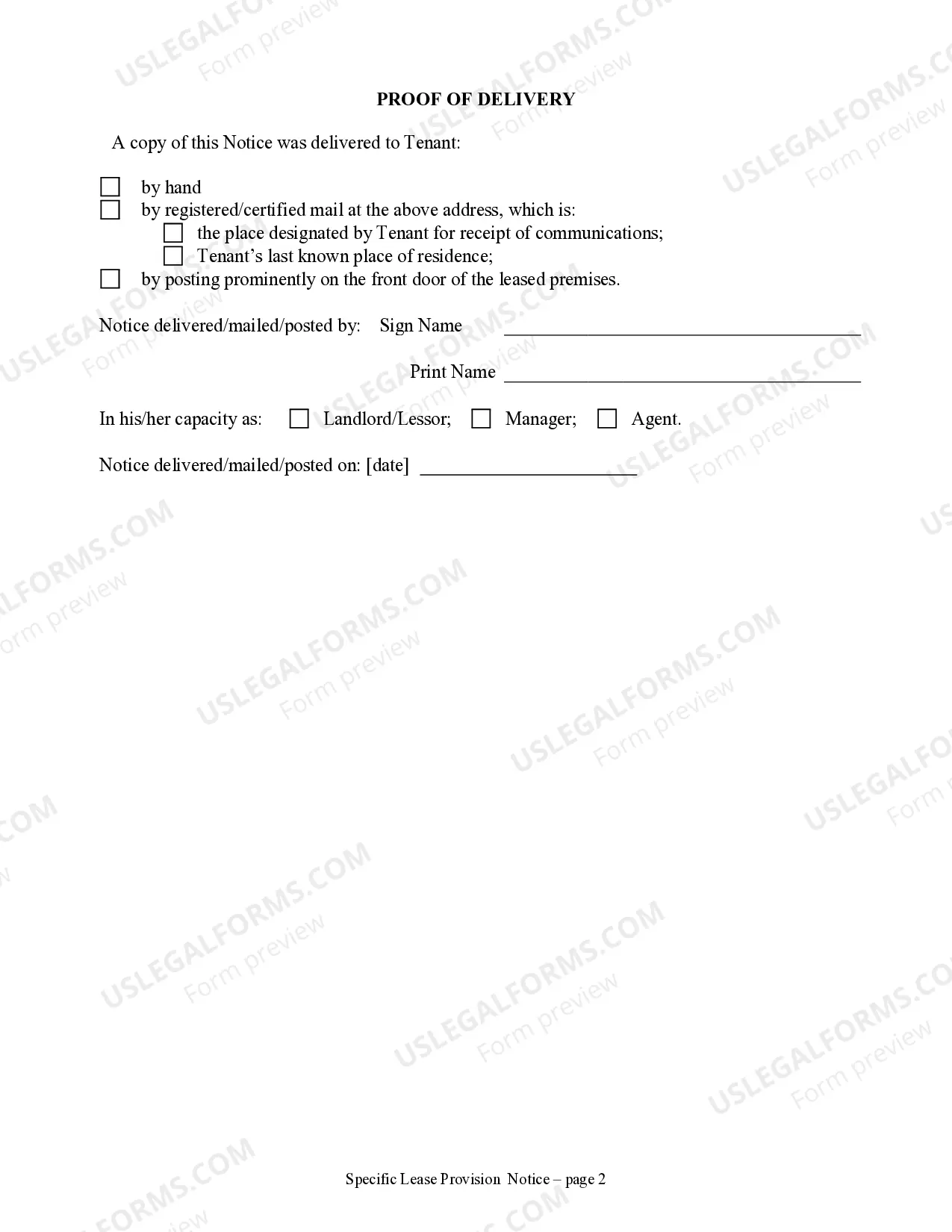
- Proof of delivery methods for the notice.


Common use cases
This form should be used when a landlord needs to inform a tenant of a serious lease violation in a non-residential lease where the violation is not curable. Common scenarios include failure to make timely rent payments, subleasing without permission, or violations of safety codes. This notice is critical for landlords seeking to officially end a tenancy due to these specific breaches.
Who should use this form
- Landlords of non-residential properties.
- Property managers authorized to act on behalf of the landlord.
- Legal representatives of landlords who need to issue a breach notice.
How to complete this form
- Identify the landlord and tenant by filling in their names and addresses.
- Specify the address of the leased premises.
- Clearly state the specific lease provision being violated.
- Provide details about how the tenant breached this provision.
- Enter the termination date, considering the notice period as outlined in the lease.
- Sign the notice and ensure it is delivered properly to the tenant.
Is notarization required?
This form usually doesn’t need to be notarized. However, local laws or specific transactions may require it. Our online notarization service, powered by Notarize, lets you complete it remotely through a secure video session, available 24/7.
Get your form ready online
Our built-in tools help you complete, sign, share, and store your documents in one place.
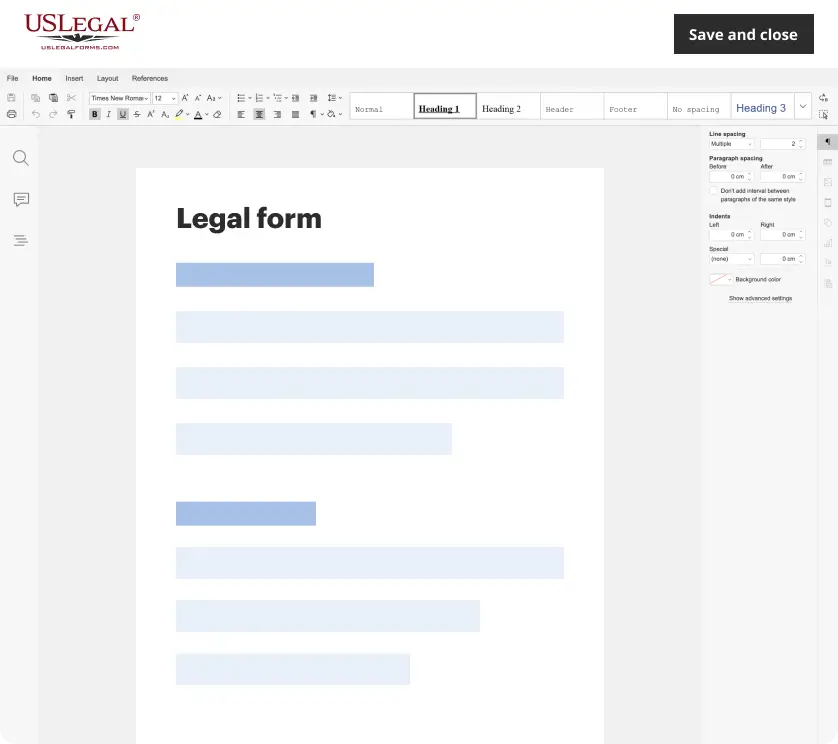
Make edits, fill in missing information, and update formatting in US Legal Forms—just like you would in MS Word.
Download a copy, print it, send it by email, or mail it via USPS—whatever works best for your next step.
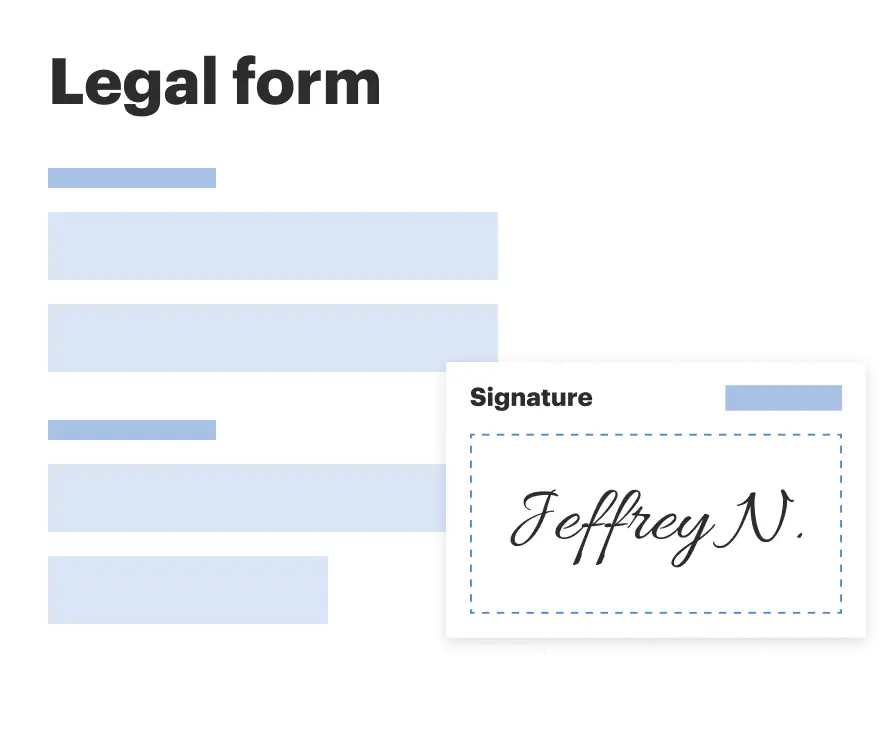
Sign and collect signatures with our SignNow integration. Send to multiple recipients, set reminders, and more. Go Premium to unlock E-Sign.
If this form requires notarization, complete it online through a secure video call—no need to meet a notary in person or wait for an appointment.
We protect your documents and personal data by following strict security and privacy standards.
Make edits, fill in missing information, and update formatting in US Legal Forms—just like you would in MS Word.
Download a copy, print it, send it by email, or mail it via USPS—whatever works best for your next step.
Sign and collect signatures with our SignNow integration. Send to multiple recipients, set reminders, and more. Go Premium to unlock E-Sign.
If this form requires notarization, complete it online through a secure video call—no need to meet a notary in person or wait for an appointment.
We protect your documents and personal data by following strict security and privacy standards.
Typical mistakes to avoid
- Failing to specify the exact lease provision being violated.
- Not providing detailed reasons for the eviction notice.
- Inaccurately calculating the notice period before termination.
- Neglecting to deliver the notice by the appropriate method specified in the lease.
Why use this form online
- Convenience of downloading and printing the form anytime.
- Editable fields allowing landlords to customize the notice as needed.
- Access to legal templates drafted by licensed attorneys, ensuring accuracy.
What to keep in mind
- The Notice of Breach is crucial for landlords managing lease violations.
- Ensure to specify the violated provision and that it cannot be cured for legality.
- Timely delivery and proper documentation of receipt are essential for enforcement.
Looking for another form?
Form popularity
FAQ
When writing a formal letter to break a lease, start with your contact information and the landlord's information, followed by the date. Clearly state your intention to terminate the lease and provide the reasons for your decision, referencing any relevant terms. Incorporate the idea of the Alabama Notice of Breach of Written Lease for Violating Specific Provisions of Lease with No Right to Cure for Nonresidential Property from Landlord to Tenant if applicable. Ensure to leave your contact details for a follow-up discussion and sign the letter appropriately.
If your landlord violates the lease, first document the violation by gathering evidence, such as photographs or written correspondence. Next, refer to the terms of the lease and negotiate a solution directly with your landlord. If unresolved, you may need to send an Alabama Notice of Breach of Written Lease for Violating Specific Provisions of Lease with No Right to Cure for Nonresidential Property from Landlord to Tenant. Should the situation remain unaddressed, consider seeking legal advice for further action.
To write a violation notice, begin by clearly stating the specifics of the lease violation. Include relevant details, such as the date of the violation and references to the specific provisions of the lease. Mention the implications of the Alabama Notice of Breach of Written Lease for Violating Specific Provisions of Lease with No Right to Cure for Nonresidential Property from Landlord to Tenant. Finally, provide instructions on how to address the violation, ensuring clarity and professionalism.
To fight a lease violation, gather all relevant evidence, including photos, witness statements, and previous correspondence. It may also help to understand your rights by reviewing the Alabama Notice of Breach of Written Lease for Violating Specific Provisions of Lease with No Right to Cure for Nonresidential Property from Landlord to Tenant. Consulting with a legal professional can also equip you with the necessary strategies to defend your case effectively.
An example of a breach of contract with a landlord could be a landlord failing to provide essential repairs, like plumbing issues or heating failures, as stipulated in the lease. Such actions can impede your ability to enjoy the property fully. Understanding the Alabama Notice of Breach of Written Lease for Violating Specific Provisions of Lease with No Right to Cure for Nonresidential Property from Landlord to Tenant can inform your next steps to address these grievances.
To write a letter of violation for a lease, start by stating the date and your contact information, followed by the landlord's details. Clearly outline the violation, referencing specific clauses in the lease, and include a request for resolution. Using the Alabama Notice of Breach of Written Lease for Violating Specific Provisions of Lease with No Right to Cure for Nonresidential Property from Landlord to Tenant as a reference can strengthen your position.
If a landlord violates a lease agreement, your first step should be to formally notify them in writing, outlining the specific violation. Make sure to document all communications so you have a clear record. Understanding the Alabama Notice of Breach of Written Lease for Violating Specific Provisions of Lease with No Right to Cure for Nonresidential Property from Landlord to Tenant may empower you to take further actions, like seeking legal advice or filing a formal complaint.
To sue a landlord for breach of a lease, gather documentation to support your claim, such as the lease agreement and any correspondence regarding the issue. It is essential to consult with a legal expert who understands the Alabama Notice of Breach of Written Lease for Violating Specific Provisions of Lease with No Right to Cure for Nonresidential Property from Landlord to Tenant. They can guide you through the process and help you file the necessary paperwork in court.
A breach of lease agreement generally involves failure to comply with any terms set forth in the lease, such as non-payment of rent, vandalism, or keeping unauthorized pets. Each violation can trigger different consequences, including an Alabama Notice of Breach of Written Lease for Violating Specific Provisions of Lease with No Right to Cure for Nonresidential Property from Landlord to Tenant. It is crucial to be aware of your lease terms to avoid such situations.
To legally break a lease in Alabama, review your lease agreement for any escape clauses or conditions that provide for termination. If none exist, you may negotiate with your landlord or provide a formal notice citing valid reasons. Ensure to document all communications, as this helps clarify situations involving an Alabama Notice of Breach of Written Lease for Violating Specific Provisions of Lease with No Right to Cure for Nonresidential Property from Landlord to Tenant.