Alabama Letter from Landlord to Tenant about time of intent to enter premises
What this document covers
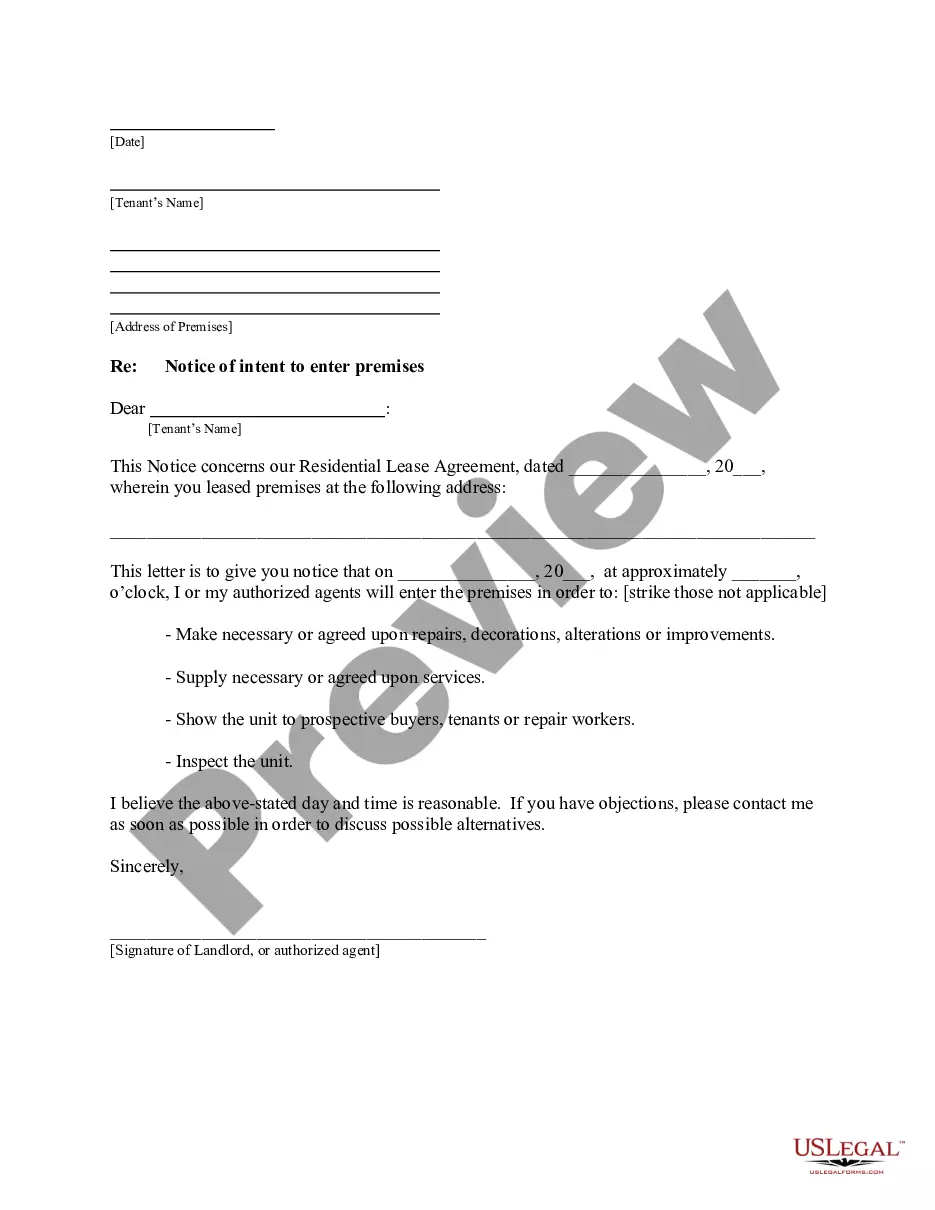
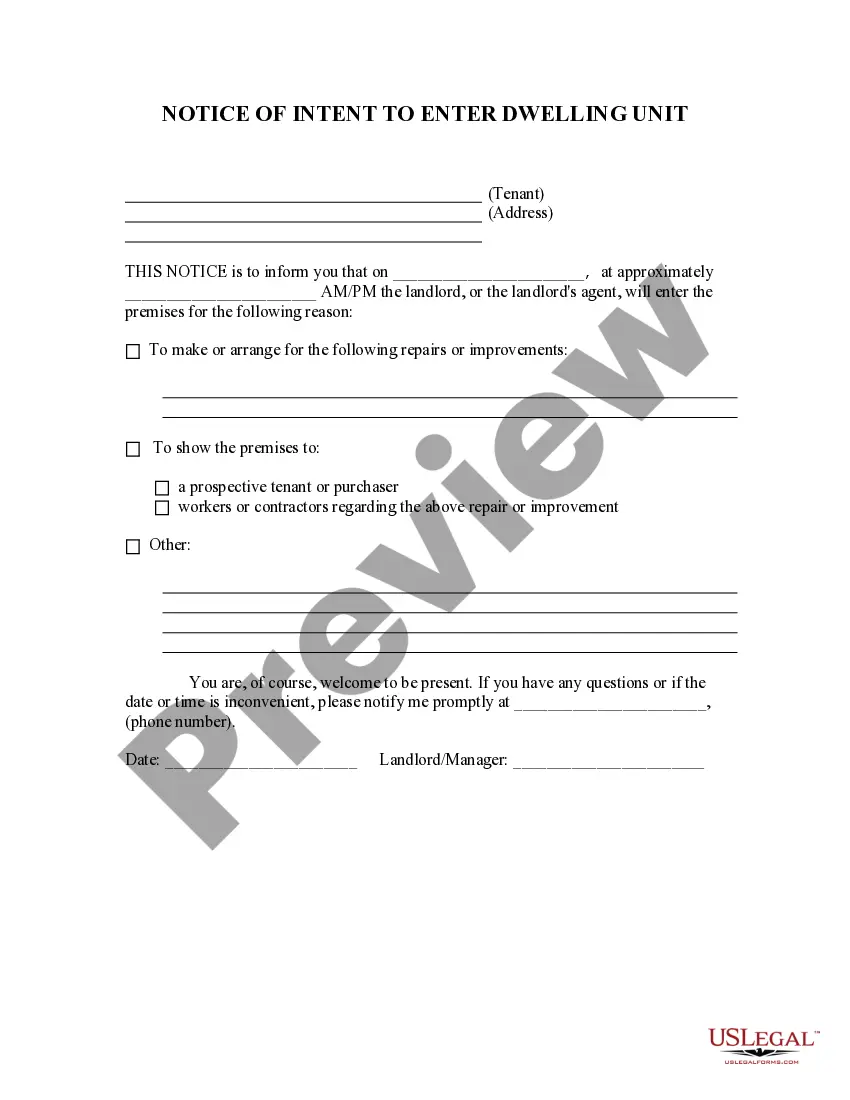
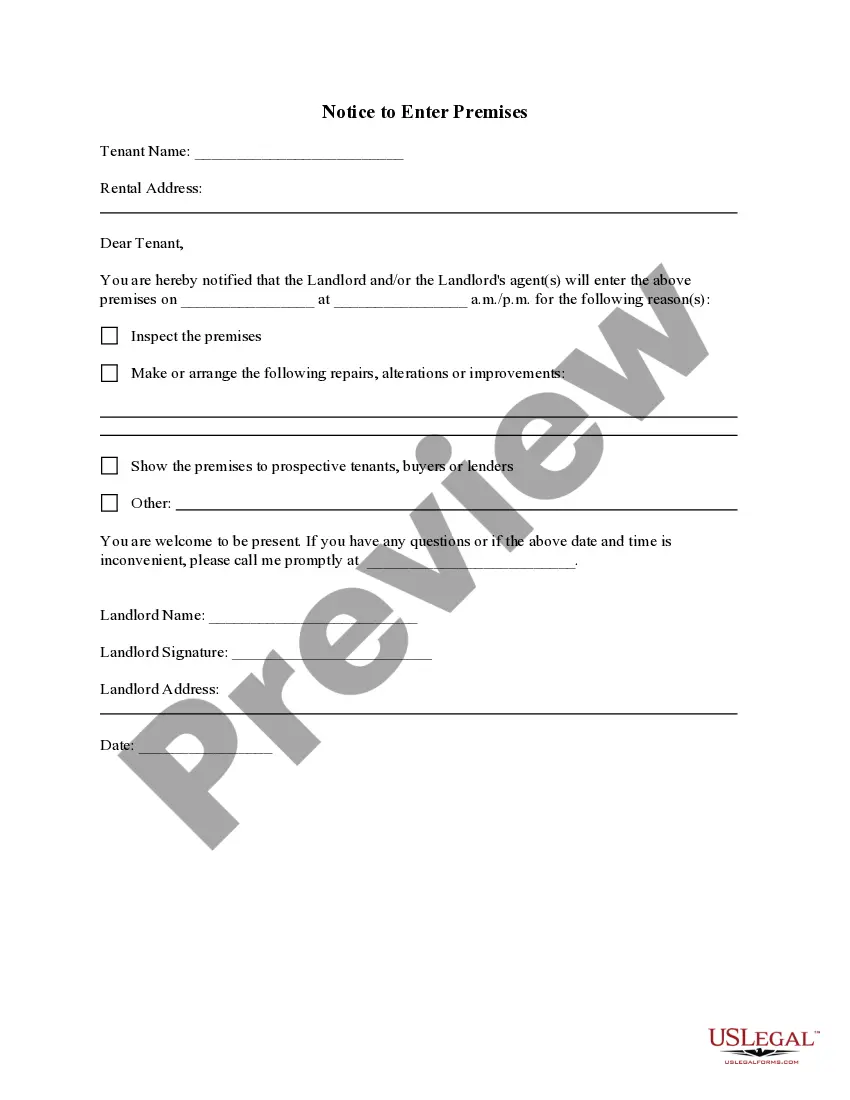
This form is a letter from a landlord to a tenant providing official notice of the landlord's intent to enter the leased premises. This notice informs the tenant of the specific date and time the landlord or their agent will enter the property, detailing the reasons for the visit, such as repairs, inspections, or showing the unit to potential occupants. Unlike general notices, this letter includes personalized details relevant to the specific lease agreement and the proposed entry, ensuring compliance with tenant laws.
Main sections of this form
- Reference to the Residential Lease Agreement
- Date and time of the landlord's intended entry
- Reasons for entry, with options to strike any that do not apply
- Contact information for discussing objections
- Signature line for the landlord or authorized agent
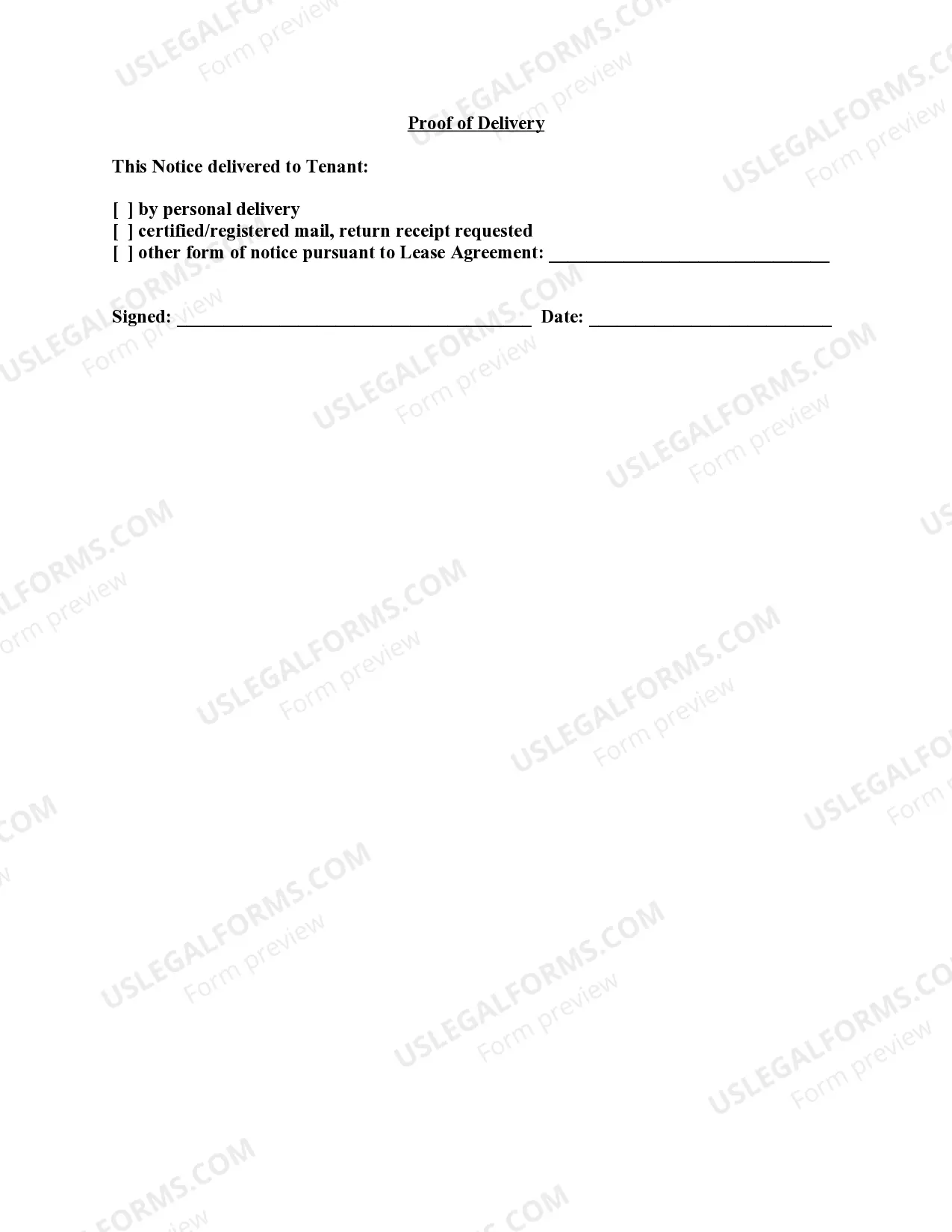
- Proof of delivery section
Common use cases
This form should be used when a landlord wishes to provide notice to the tenant about entering the rental property. It is particularly important to issue this notice to comply with local laws regarding tenant privacy and entry rights. Scenarios include completing necessary repairs, inspecting the rental unit, or showing the property to prospective buyers or tenants.
Who can use this document
The following individuals should use this form:
- Landlords needing to inform tenants of upcoming visits to their property.
- Property managers acting on behalf of landlords for maintenance, inspections, or viewings.
- Tenants who need to understand their rights regarding notice of entry.
How to prepare this document
- Fill in the date of the original Residential Lease Agreement.
- Provide the address of the leased premises.
- Specify the date and time the landlord will enter the property.
- Select the reason(s) for entry, crossing out those that do not apply.
- Include your contact information for any tenant objections.
- Sign the letter with your name to validate the notice.
Is notarization required?
This form does not typically require notarization unless specified by local law. It is important to check any relevant state regulations to ensure compliance with notarization requirements.
Get your form ready online
Our built-in tools help you complete, sign, share, and store your documents in one place.
Make edits, fill in missing information, and update formatting in US Legal Forms—just like you would in MS Word.
Download a copy, print it, send it by email, or mail it via USPS—whatever works best for your next step.
Sign and collect signatures with our SignNow integration. Send to multiple recipients, set reminders, and more. Go Premium to unlock E-Sign.
If this form requires notarization, complete it online through a secure video call—no need to meet a notary in person or wait for an appointment.
We protect your documents and personal data by following strict security and privacy standards.

Make edits, fill in missing information, and update formatting in US Legal Forms—just like you would in MS Word.

Download a copy, print it, send it by email, or mail it via USPS—whatever works best for your next step.

Sign and collect signatures with our SignNow integration. Send to multiple recipients, set reminders, and more. Go Premium to unlock E-Sign.

If this form requires notarization, complete it online through a secure video call—no need to meet a notary in person or wait for an appointment.

We protect your documents and personal data by following strict security and privacy standards.
Avoid these common issues
- Failing to provide adequate notice as required by law.
- Not including all necessary details such as date, time, and reasons for entry.
- Using vague language that does not clearly communicate the intent of entry.
- Forgetting to provide contact information for tenant correspondence.
Advantages of online completion
- Convenient access to downloadable templates, saving time and effort.
- Editable fields allow customization to fit specific situations.
- Reliability of professionally drafted forms, ensuring legal compliance.
- Quickly obtain and complete necessary legal documentation.
Legal use & context
- Using this notice helps maintain a transparent landlord-tenant relationship.
- Complying with legal obligations reduces the risk of disputes regarding property access.
- The form can serve as evidence of proper notification in case of legal proceedings.
Summary of main points
- This form is essential for landlords to notify tenants of entry into rental properties.
- Ensure compliance with local laws regarding notice requirements.
- A clear and respectful notice can prevent conflicts and misunderstandings.
Looking for another form?
Form popularity
FAQ
Alabama tenants are protected under Alabama's Uniform Residential Landlord and Tenant Act.Landlords can enter the premises, but only after giving notice in most cases. A landlord must generally provide tenants with at least two days' notice before entering a rental unit, according to the Alabama code.
Keep it short and only reference information relevant for an apartment application. If you are a landlord or property manager, outline your rental history and your experience with the tenant. Know what you can or cannot say. Be honest and accountable. Never lie. Keep emotions at bay. Keep it structured.
Sue the landlord and whoever for up to $10,000 in small claims court for trespassing, breach of contract, invasion of privacy, and breach of quiet enjoyment; if you are two or more tenants, each can separately sue them for up to $10,000, and a joint action is not required.
When you rent a property from a landlord it becomes your home. They should only enter the property without you being present, if you have given permission for them to do so, or in a genuine emergency.
When you rent a property from a landlord it becomes your home. They should only enter the property without you being present, if you have given permission for them to do so, or in a genuine emergency.
Tenants in the state of Alabama have the right to freedom from discrimination in housing-related activities. However, unlike most states, there is no statewide fair housing law that specifically protects tenants in Alabama. Instead, Alabama tenants must rely on protection under the Federal Fair Housing Act.
ENTRY WITHOUT NOTICE The landlord may enter the residential premises without permission and without giving the tenant any notice for two reasons: If the landlord believes there is an emergency; 2022 If the landlord believes the tenant has abandoned the residential premises.
Let's be clear, other than in emergency it's illegal for a landlord or agent to enter a property without agreement from the tenant. The golden rule to abide by is always to provide your tenants with written notice at least 24 hours before any planned visits.
The big take-away is that in most circumstances a landlord cannot enter a property without agreement from the tenant. And If the landlord ignores the law and enters the property without permission, the tenant may be able to claim damages or gain an injunction to prevent the landlord doing it again.