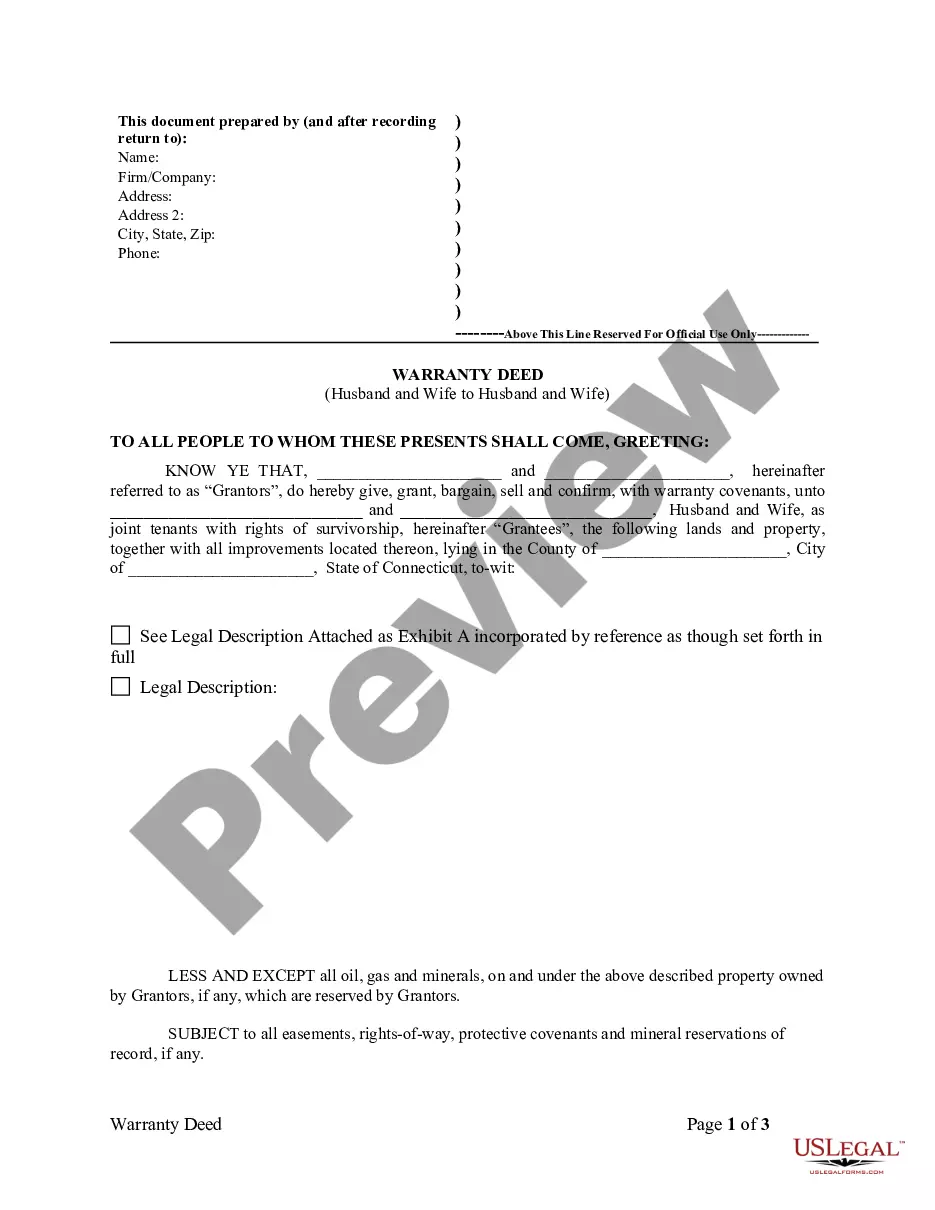
Alabama Quitclaim Deed by Two Individuals to LLC
What is this form?
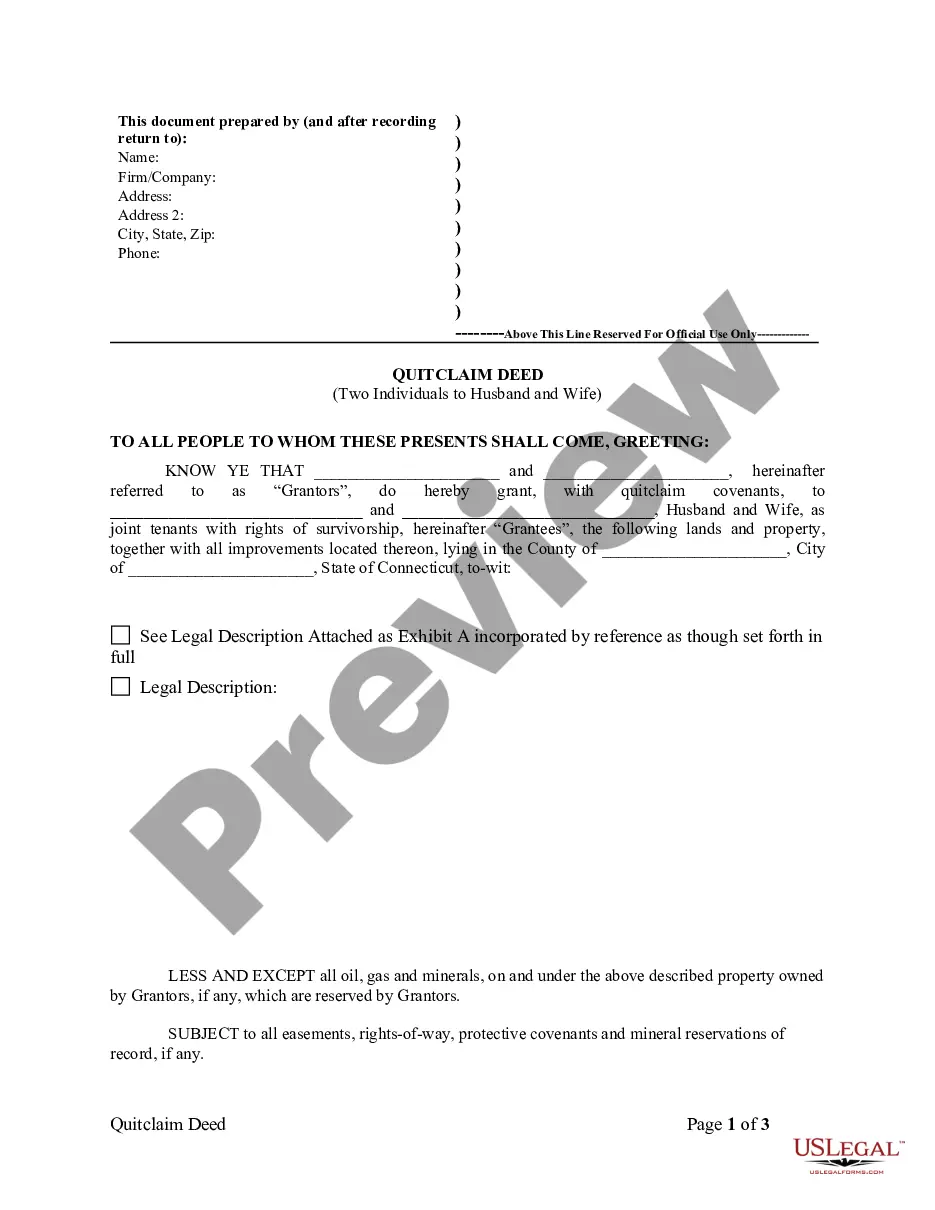
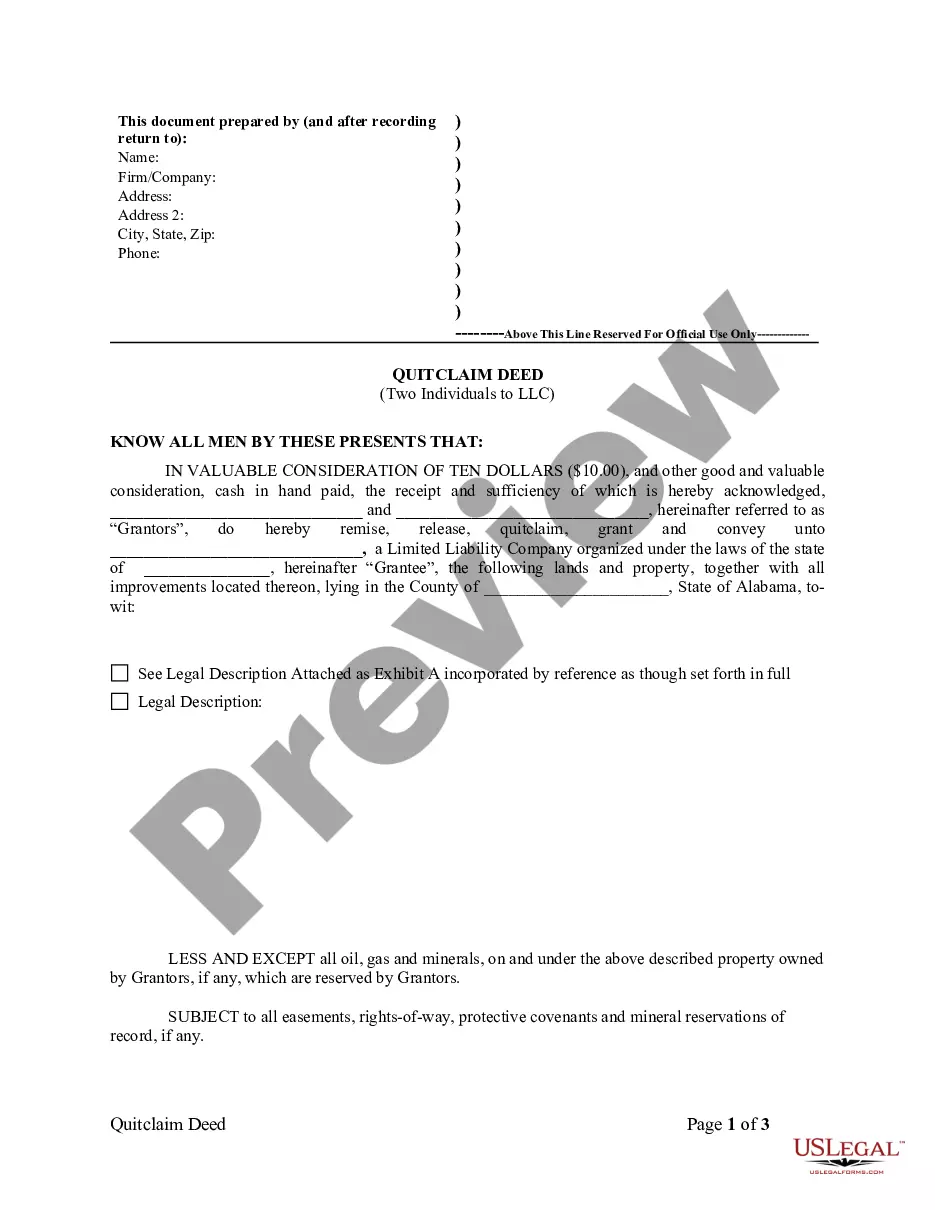
The Quitclaim Deed by Two Individuals to LLC is a legal document used to transfer ownership of real property from two individuals (the Grantors) to a limited liability company (the Grantee). This form allows the Grantors to convey their interest in the described property while reserving rights to any oil, gas, and minerals beneath the property, if applicable. Unlike a warranty deed, a quitclaim deed does not guarantee that the title is free of claims or encumbrances, making it a simpler and quicker way to transfer property ownership.
Key components of this form
- Identification of Grantors and Grantee
- Legal description of the property being transferred
- Statement of reservation for oil, gas, and minerals
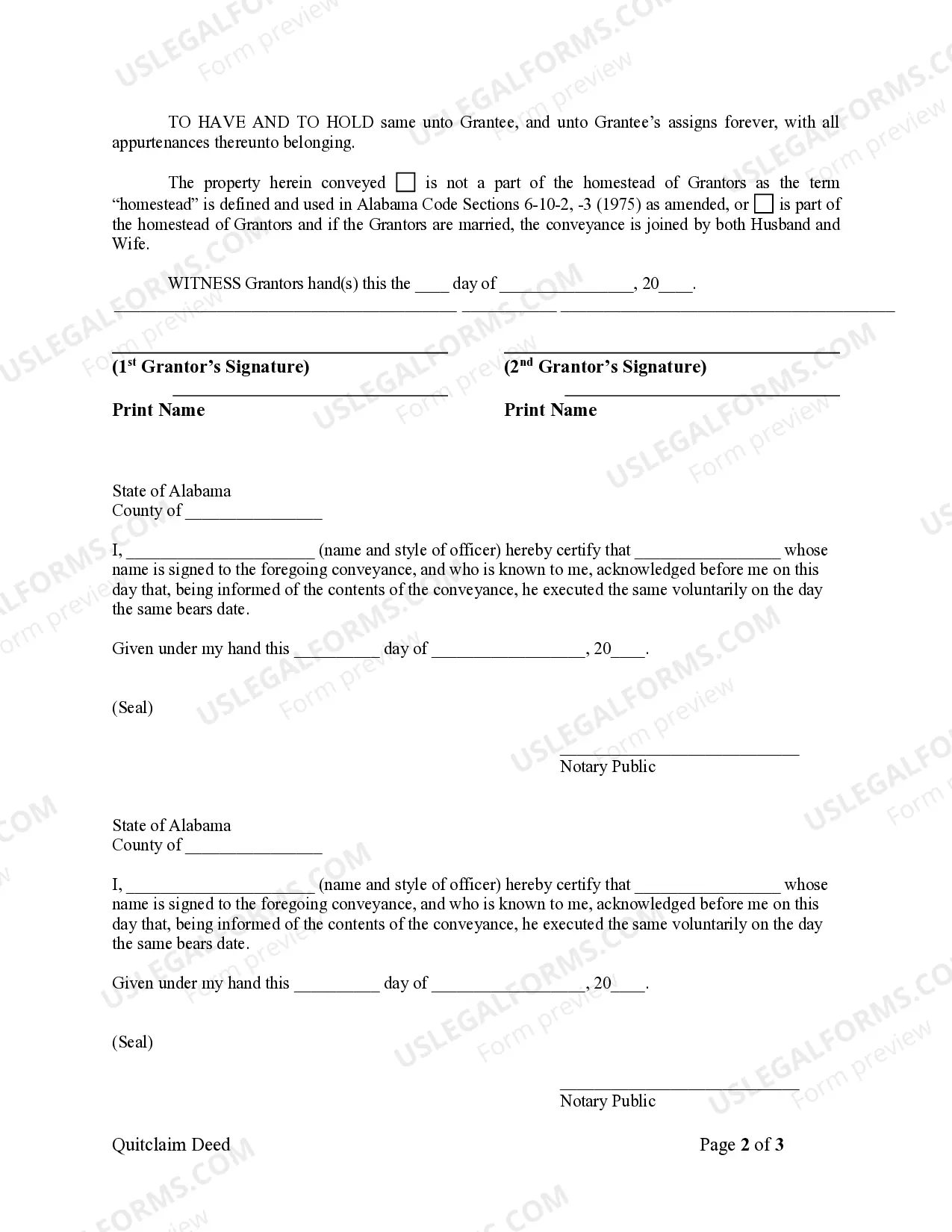
- Provision regarding homestead status of the property
- Signature lines for Grantors




When to use this document
This form is useful when two individuals wish to transfer their ownership interest in real property to a limited liability company. It is commonly utilized in situations such as business partnerships where property ownership is being consolidated into an LLC for liability protection and tax benefits. Additionally, this deed can be employed when one or both Grantors want to remove themselves as individual owners of the property while retaining mineral rights.
Who this form is for
This form is intended for:
- Two individuals transferring property to an LLC
- Individuals wanting to maintain certain rights (like mineral rights) while transferring property
- Partners or members in a business looking to formalize property ownership within a limited liability company
How to complete this form
- Identify the Grantors by including their full legal names.
- Specify the Grantee as the limited liability company by providing its full name.
- Include the legal description of the property being conveyed.
- Note any reservations for oil, gas, and minerals above or below the property.
- Have all Grantors sign the deed in the presence of a notary public, if required.
Is notarization required?
This form needs to be notarized to ensure legal validity. US Legal Forms provides secure online notarization powered by Notarize, allowing you to complete the process through a verified video call, available anytime.
Get your form ready online
Our built-in tools help you complete, sign, share, and store your documents in one place.
Make edits, fill in missing information, and update formatting in US Legal Forms—just like you would in MS Word.
Download a copy, print it, send it by email, or mail it via USPS—whatever works best for your next step.
Sign and collect signatures with our SignNow integration. Send to multiple recipients, set reminders, and more. Go Premium to unlock E-Sign.
If this form requires notarization, complete it online through a secure video call—no need to meet a notary in person or wait for an appointment.
We protect your documents and personal data by following strict security and privacy standards.

Make edits, fill in missing information, and update formatting in US Legal Forms—just like you would in MS Word.

Download a copy, print it, send it by email, or mail it via USPS—whatever works best for your next step.

Sign and collect signatures with our SignNow integration. Send to multiple recipients, set reminders, and more. Go Premium to unlock E-Sign.

If this form requires notarization, complete it online through a secure video call—no need to meet a notary in person or wait for an appointment.

We protect your documents and personal data by following strict security and privacy standards.
Common mistakes to avoid
- Failing to include a complete legal description of the property.
- Not specifying if the property is part of a homestead.
- Missing signatures from all Grantors.
- Not reserving rights for oil, gas, and minerals, when applicable.
Benefits of completing this form online
- Convenience of downloading and completing the form at your own pace.
- Editable templates that can be customized to suit specific needs.
- Access to forms created by licensed attorneys, ensuring legal compliance.
Looking for another form?
Form popularity
FAQ
Recording (§ 35-4-50) A quit claim deed should be filed in the office of the County Probate Judge along with any required fees. Signing (A§ 35-4-20) All quit claim deeds are to be signed with a notary public present or with two (2) witnesses.
A quitclaim deed is a legal instrument that is used to transfer interest in real property.The owner/grantor terminates (quits) any right and claim to the property, thereby allowing the right or claim to transfer to the recipient/grantee.
Once a quitclaim is signed and recorded, can the deed be challenged in court? Yes, it can. Recording your deed only provides notice of your ownership claim to the public. It does not guarantee ownership.
Quit Claim Deeds in Alabama So not only is the grantor not guaranteeing that there are no liens or encumbrances on the property, they aren't even guaranteeing they own the property. Our local property deed attorneys are currently charging $250 to prepare your quit claim deed for you to record yourself.
When done properly, a deed is recorded anywhere from two weeks to three months after closing. However, there are many instances where deeds are not properly recorded. Title agents commit errors, lose deeds, and even go out of business. Even county offices sometimes fail to record deeds that were properly submitted.
The drawback, quite simply, is that quitclaim deeds offer the grantee/recipient no protection or guarantees whatsoever about the property or their ownership of it. Maybe the grantor did not own the property at all, or maybe they only had partial ownership.
But you might be wondering if an owner can transfer a deed to another person without a real estate lawyer. The answer is yes. Parties to a transaction are always free to prepare their own deeds.A quitclaim deed, for example, is far simpler than a warranty deed.