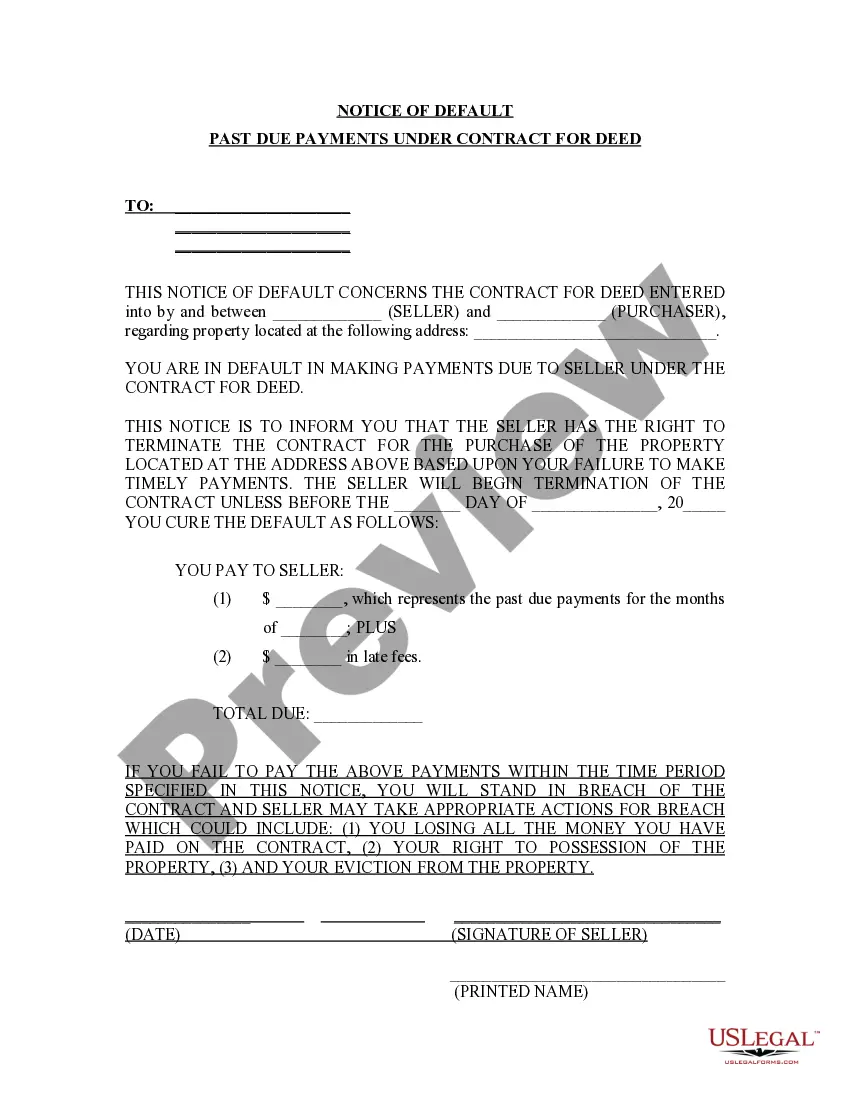
Alabama Life Estate Deed - Individual to Two Individuals with Grantor Retaining Life Estate
Overview of this form
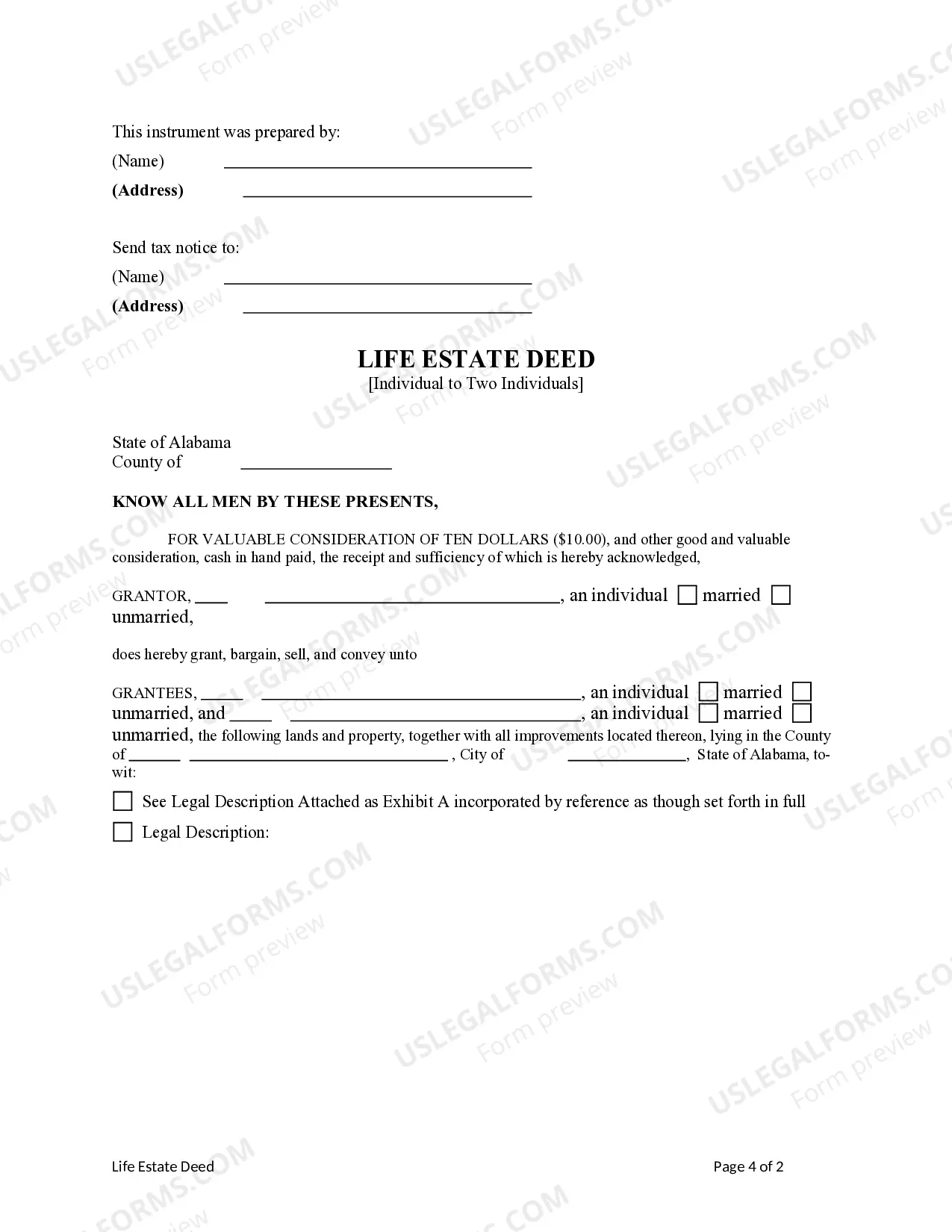
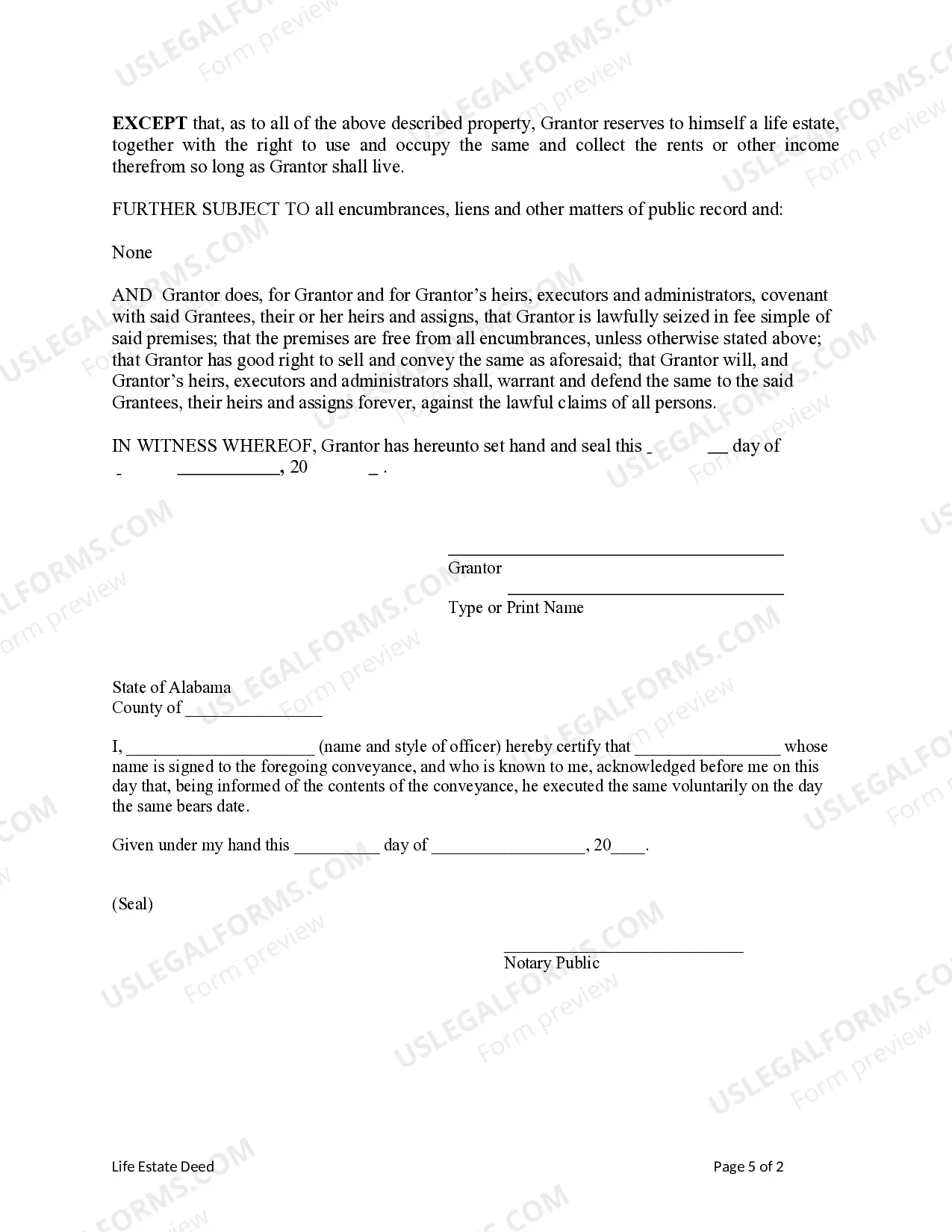
The Life Estate Deed - Individual to Two Individuals with Grantor Retaining Life Estate is a legal document that allows an individual (the Grantor) to transfer property to two individuals (the Grantees) while retaining the right to live on the property for the duration of their life. This deed is distinct because it maintains the Grantorâs life estate, allowing them to benefit from the property until they pass away, after which the Grantees will fully own the property. This form complies with all relevant state statutory laws.
Main sections of this form
- Identification of the Grantor and Grantees involved in the property transfer.
- Description of the property being transferred, including its legal boundaries.
- The Grantor's retention of a life estate, specifying their rights to occupy the property.
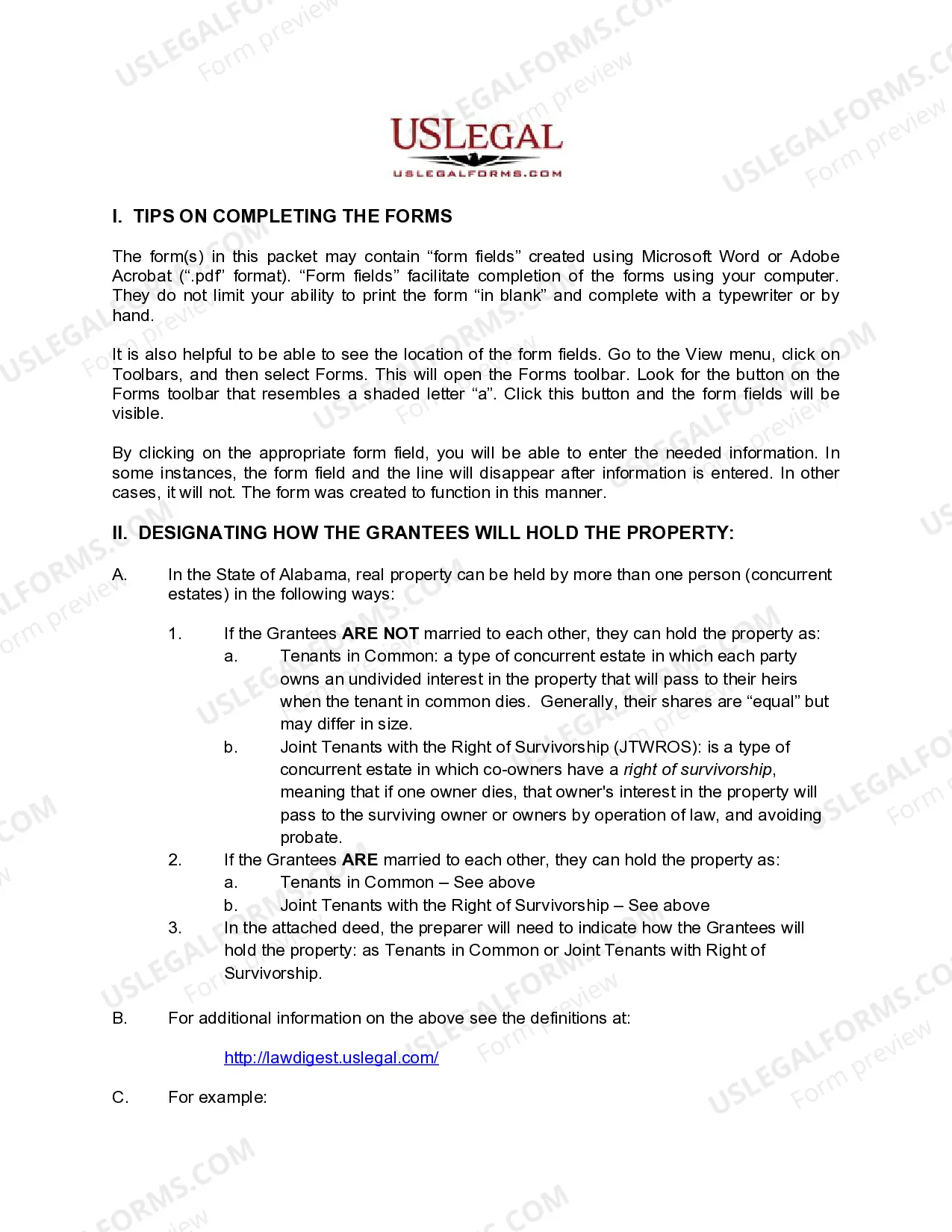
- Designation of how the Grantees will hold the property (as Tenants in Common or Joint Tenants with Right of Survivorship).
- Signature lines for all parties involved, confirming the legal transfer and agreement.
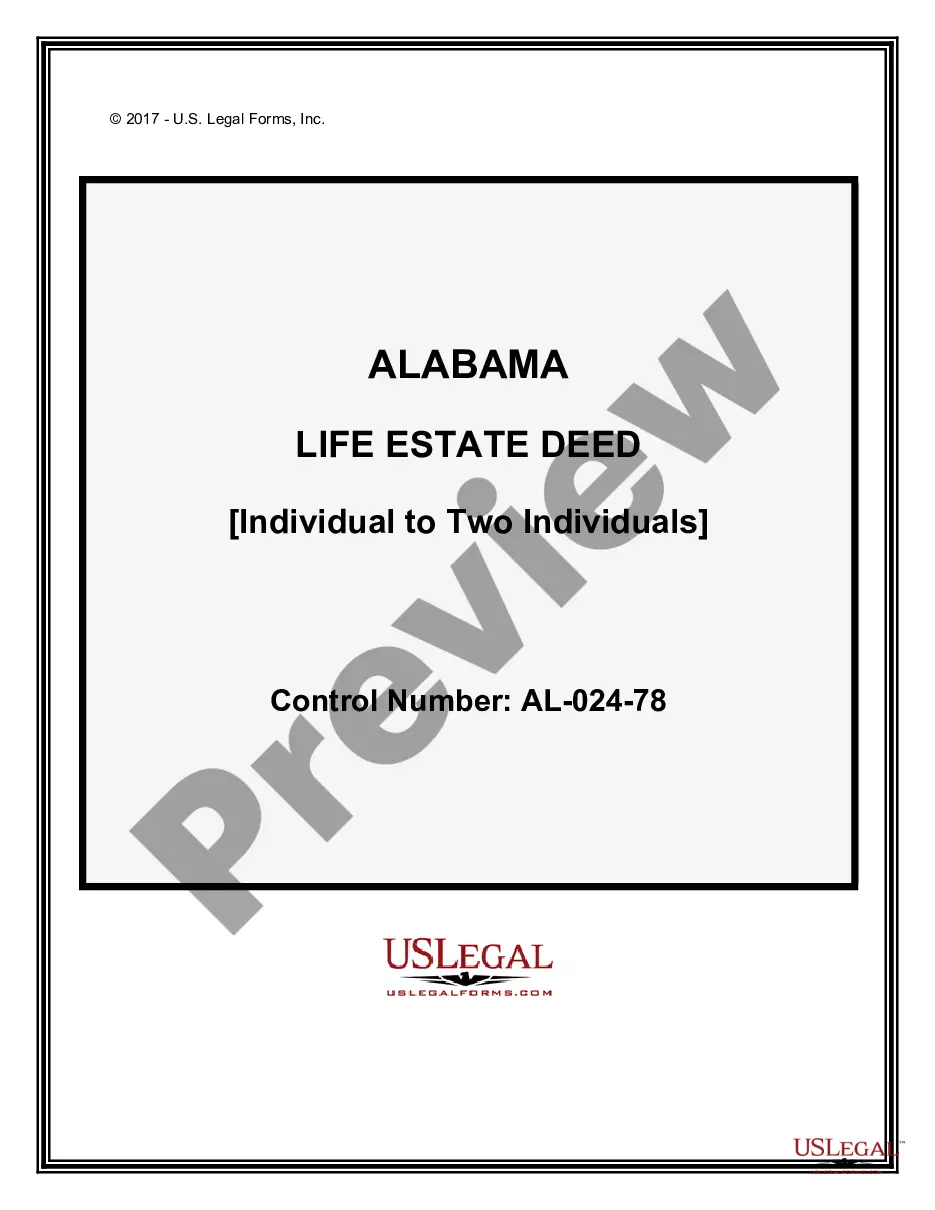





Common use cases
This form is used when an individual wishes to transfer ownership of real estate to two other parties while retaining the right to live in the property for their lifetime. It is particularly applicable in scenarios involving family members, such as parents transferring a family property to their children, ensuring that they can continue to live there until death while providing the next generation with full ownership thereafter.
Who should use this form
- Individuals who own property and want to ensure their right to live in it for their lifetime.
- Those looking to transfer property to two individuals while controlling the use of the property during their life.
- People planning their estate who wish to avoid probate issues for their heirs.
Instructions for completing this form
- Identify the parties involved: the Grantor and the two Grantees.
- Provide a clear description of the property, including its address and legal description.
- Specify how the Grantees will hold the property: either as Tenants in Common or Joint Tenants with Right of Survivorship.
- Fill in the date of the transfer and any applicable details required by state law.
- Ensure that all parties sign the document in accordance with state requirements to validate the transfer.
Is notarization required?
This form does not typically require notarization unless specified by local law. However, it is advisable to check state regulations or consult a local attorney to ensure compliance with any specific requirements.
Get your form ready online
Our built-in tools help you complete, sign, share, and store your documents in one place.
Make edits, fill in missing information, and update formatting in US Legal Forms—just like you would in MS Word.
Download a copy, print it, send it by email, or mail it via USPS—whatever works best for your next step.
Sign and collect signatures with our SignNow integration. Send to multiple recipients, set reminders, and more. Go Premium to unlock E-Sign.
If this form requires notarization, complete it online through a secure video call—no need to meet a notary in person or wait for an appointment.
We protect your documents and personal data by following strict security and privacy standards.

Make edits, fill in missing information, and update formatting in US Legal Forms—just like you would in MS Word.

Download a copy, print it, send it by email, or mail it via USPS—whatever works best for your next step.

Sign and collect signatures with our SignNow integration. Send to multiple recipients, set reminders, and more. Go Premium to unlock E-Sign.

If this form requires notarization, complete it online through a secure video call—no need to meet a notary in person or wait for an appointment.

We protect your documents and personal data by following strict security and privacy standards.
Typical mistakes to avoid
- Failing to provide a clear legal description of the property being transferred.
- Not specifying how the Grantees will hold the property, leading to confusion about ownership rights.
- Missing signatures from any involved parties, which can invalidate the form.
- Not consulting state-specific laws that might affect the deed's enforceability.
Why complete this form online
- Convenience: Easily fill out and download the form from your computer.
- Editability: Make corrections or updates as necessary before finalizing the document.
- Compliance: The form is drafted to meet legal standards, reducing the risk of errors.
Main things to remember
- The Life Estate Deed allows for property transfer while retaining the right to use it for a lifetime.
- Carefully select how the Grantees will hold the property to avoid future disputes.
- Ensure clear descriptions and accurate identification of all parties involved are included in the form.
Looking for another form?
Form popularity
FAQ
This deed lets a property owner (the Grantor) transfer title to two named grantees while keeping a life estate to live on the property during the Grantor’s life. After the Grantor’s death, the two grantees take full ownership. The deed also specifies how the grantees hold title (Tenants in Common or Joint Tenants with Right of Survivorship) and includes signature lines, compliant with Alabama law.
During the Grantor’s life, the Grantor retains a life estate and may live on the property. After the Grantor’s death, ownership passes to the two named grantees, who hold the property as Tenants in Common or as Joint Tenants with Right of Survivorship, as designated in the deed.
The grantor retains a life estate, giving the right to occupy and use the property for the grantor's lifetime. The deed then provides that, after the grantor's death, the two grantees become the owners, with title held as Tenants in Common or Joint Tenants with Right of Survivorship as chosen.
The form does not specify tax or ongoing expense responsibilities. It focuses on the transfer, the grantor’s life estate, and how the two grantees hold the property. For Alabama-specific guidance on taxes and costs, consult a licensed attorney.
Yes. This form allows two named grantees and specifies how they hold title—either as Tenants in Common or Joint Tenants with Right of Survivorship—so ownership passes to both grantees after the grantor’s death.
This form explicitly names two grantees and defines how title is held between them. A single-beneficiary life estate deed would transfer ownership to only one grantee and may not offer the two-party holding options provided here.