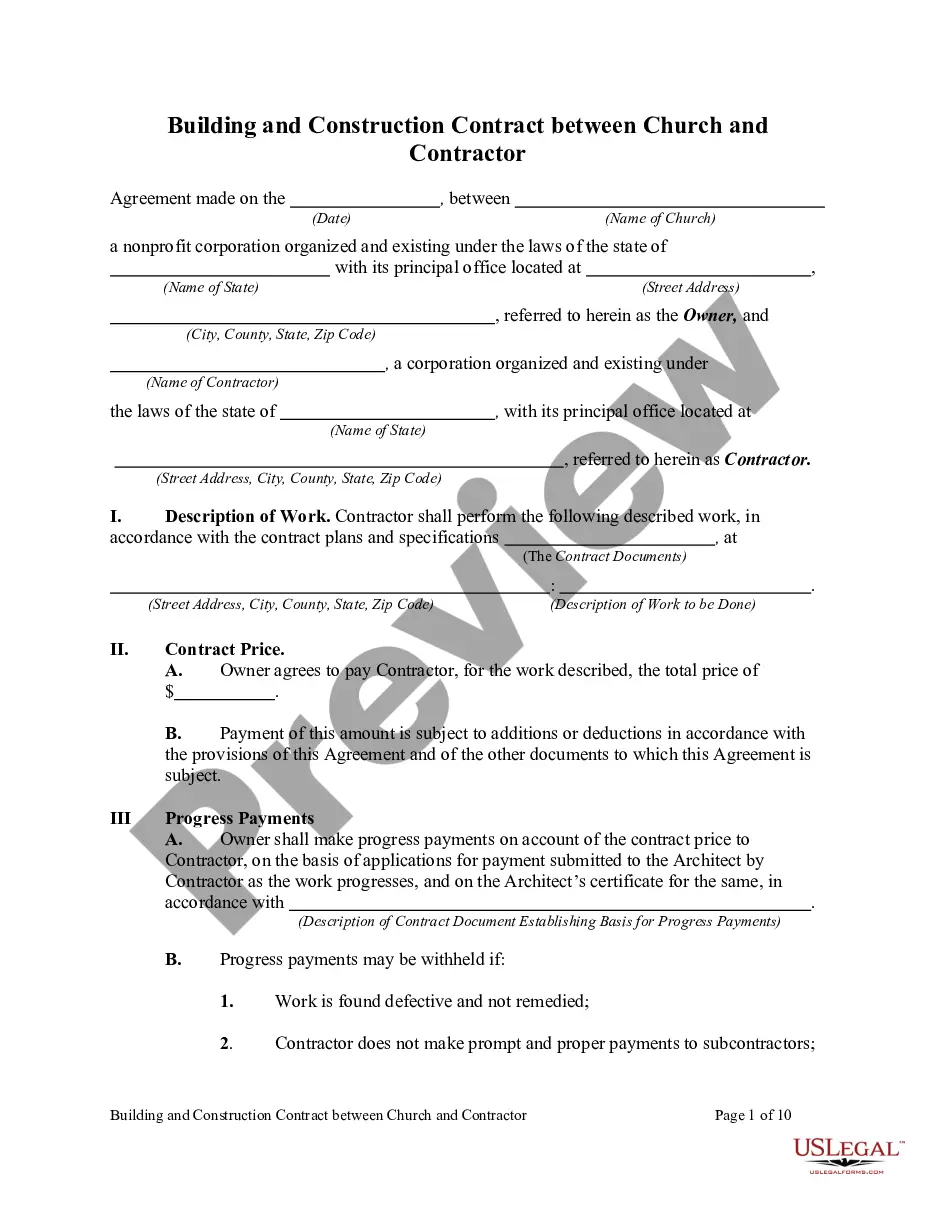
Wisconsin Renovation Contract for Contractor
What is this form?
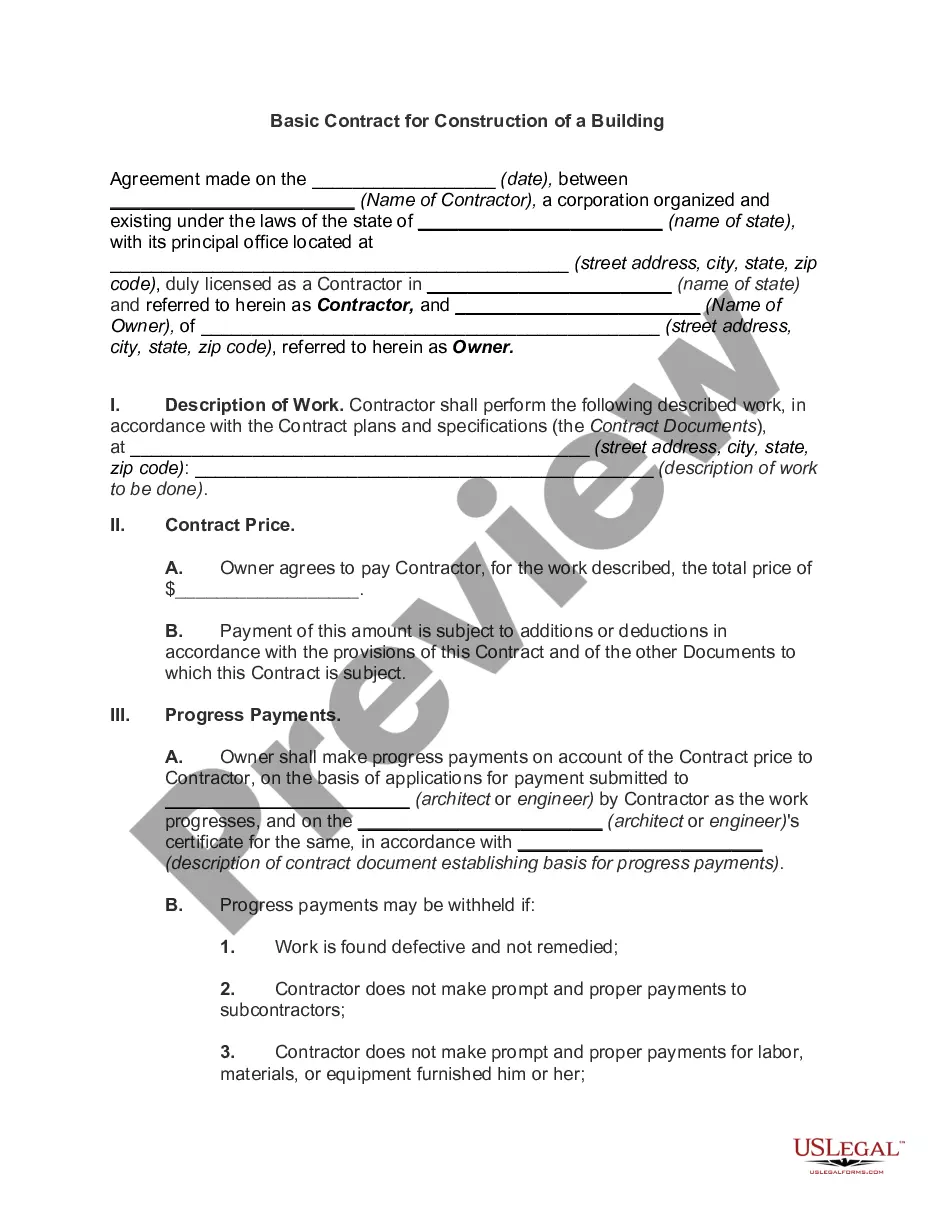
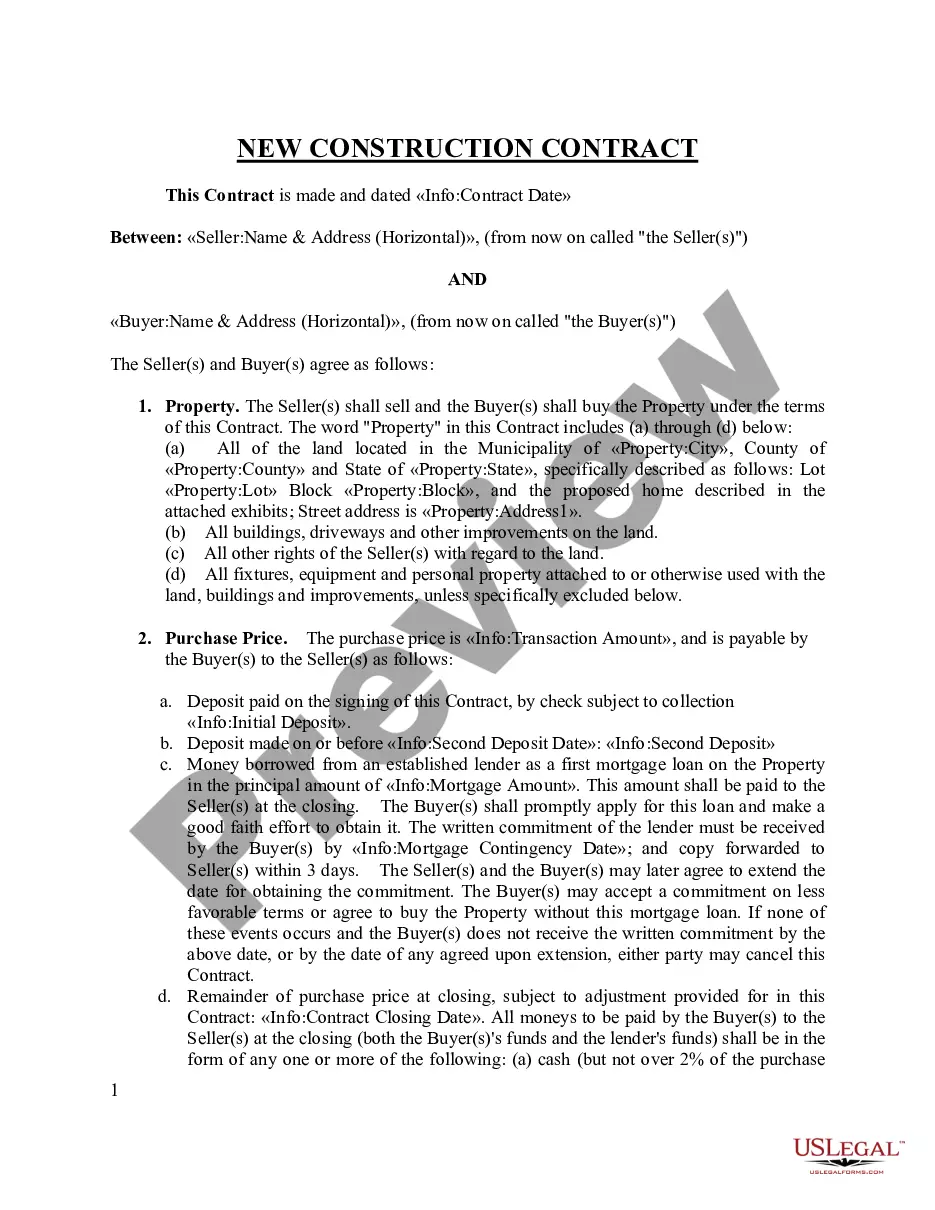
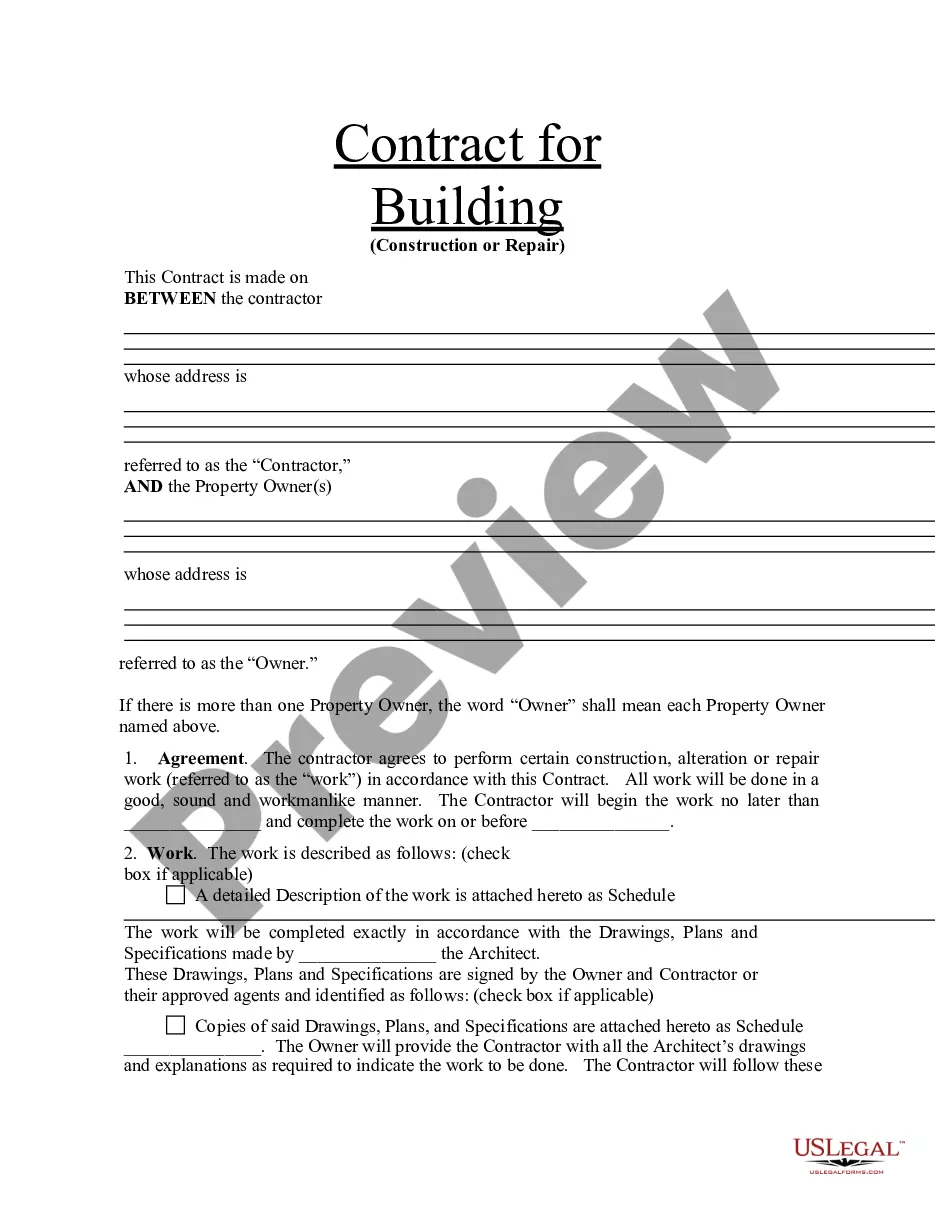
The Renovation Contract for Contractor is a legal document that outlines the agreement between property owners and renovation contractors for construction projects. This form is crucial for defining payment termsâeither cost-plus or fixed feeâand encompasses various essential elements such as change orders, warranty information, and insurance obligations. It ensures that both parties are aware of their rights and responsibilities under the laws of the State of Wisconsin, differentiating it from other general construction agreements.
What’s included in this form
- Parties involved: Identification of the Owner and Contractor, including contact information.
- Payment terms: Specification of either a cost-plus or fixed fee arrangement.
- Change orders: Procedures for modifying the scope of work during the project, requiring written agreements.
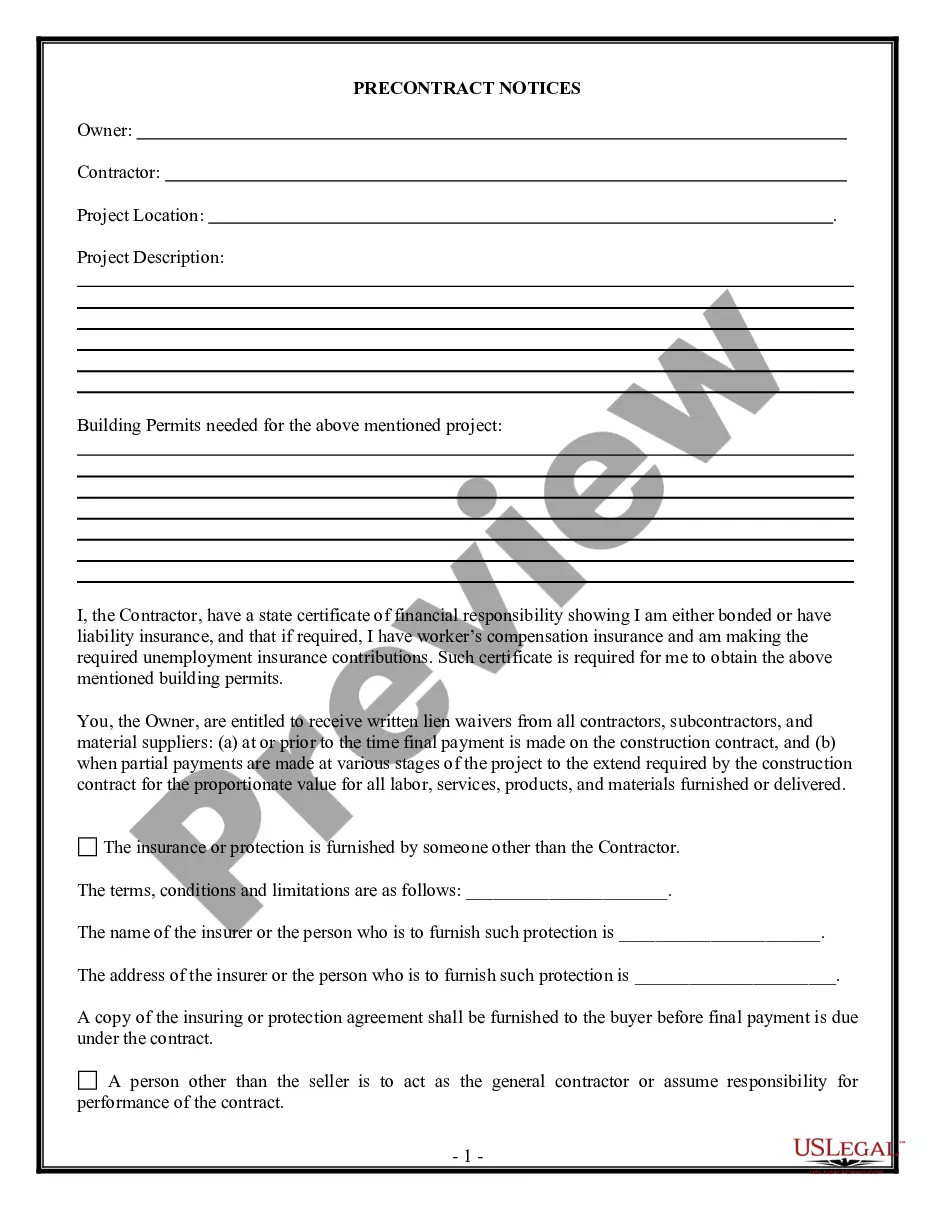
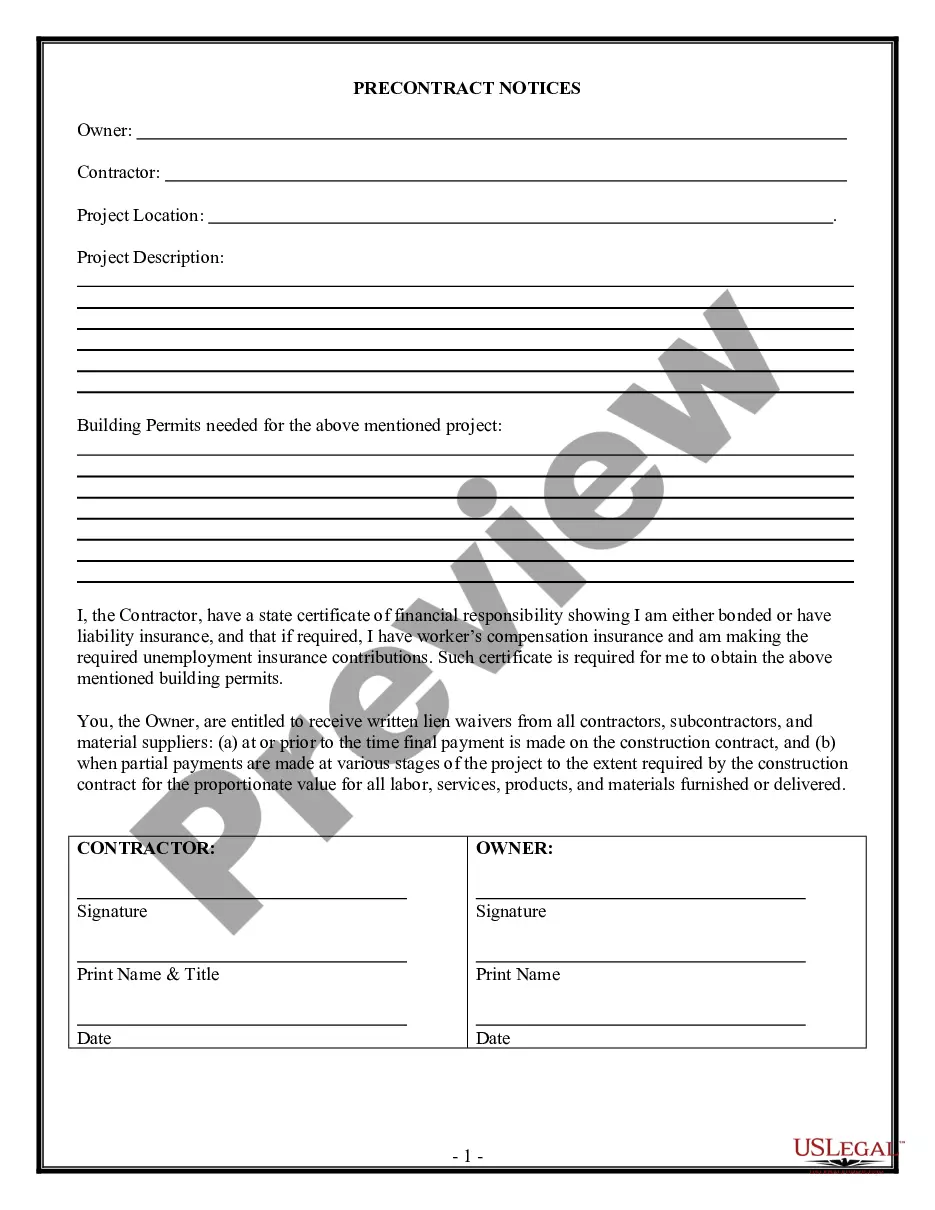
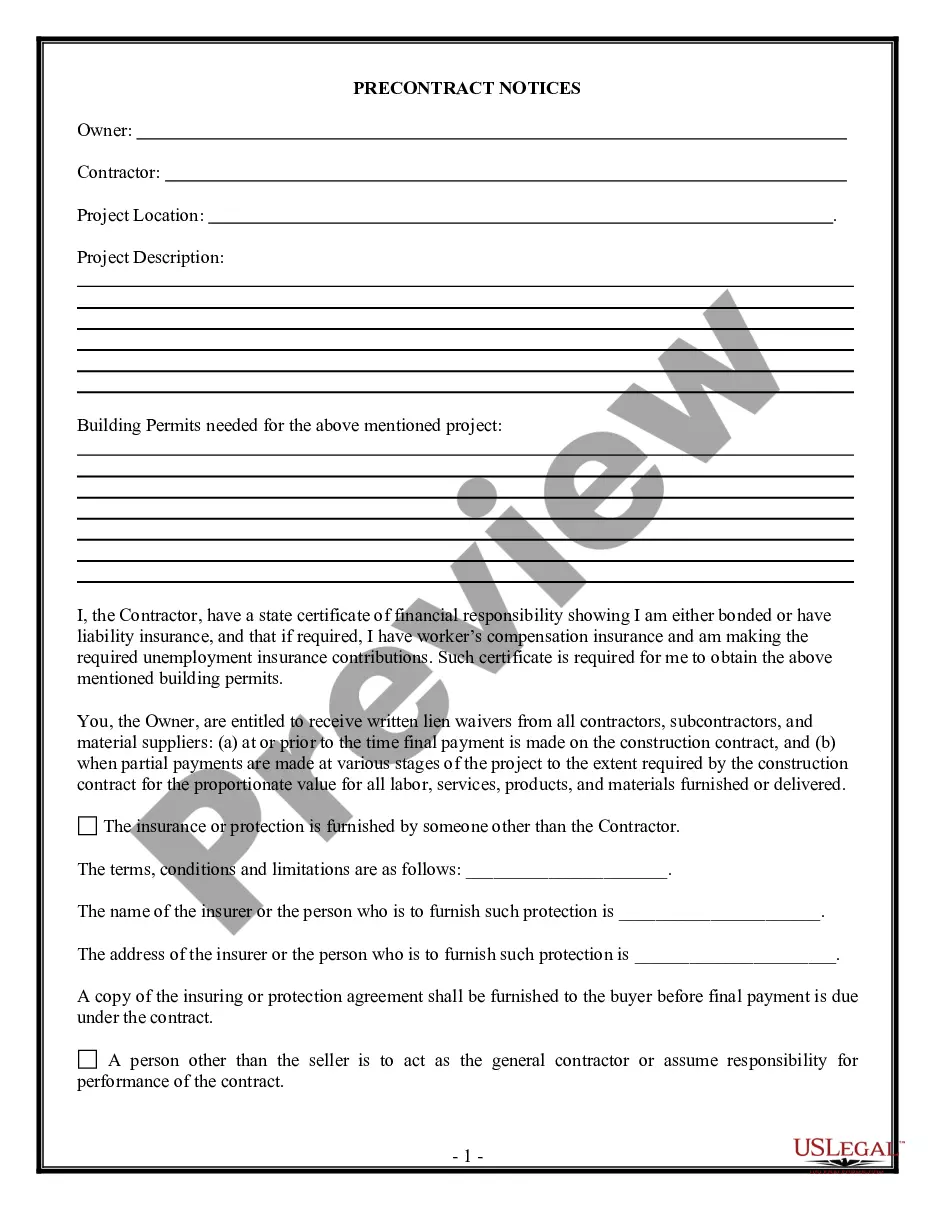
- Insurance: Requirements for insurance coverage necessary for the execution of the contract.
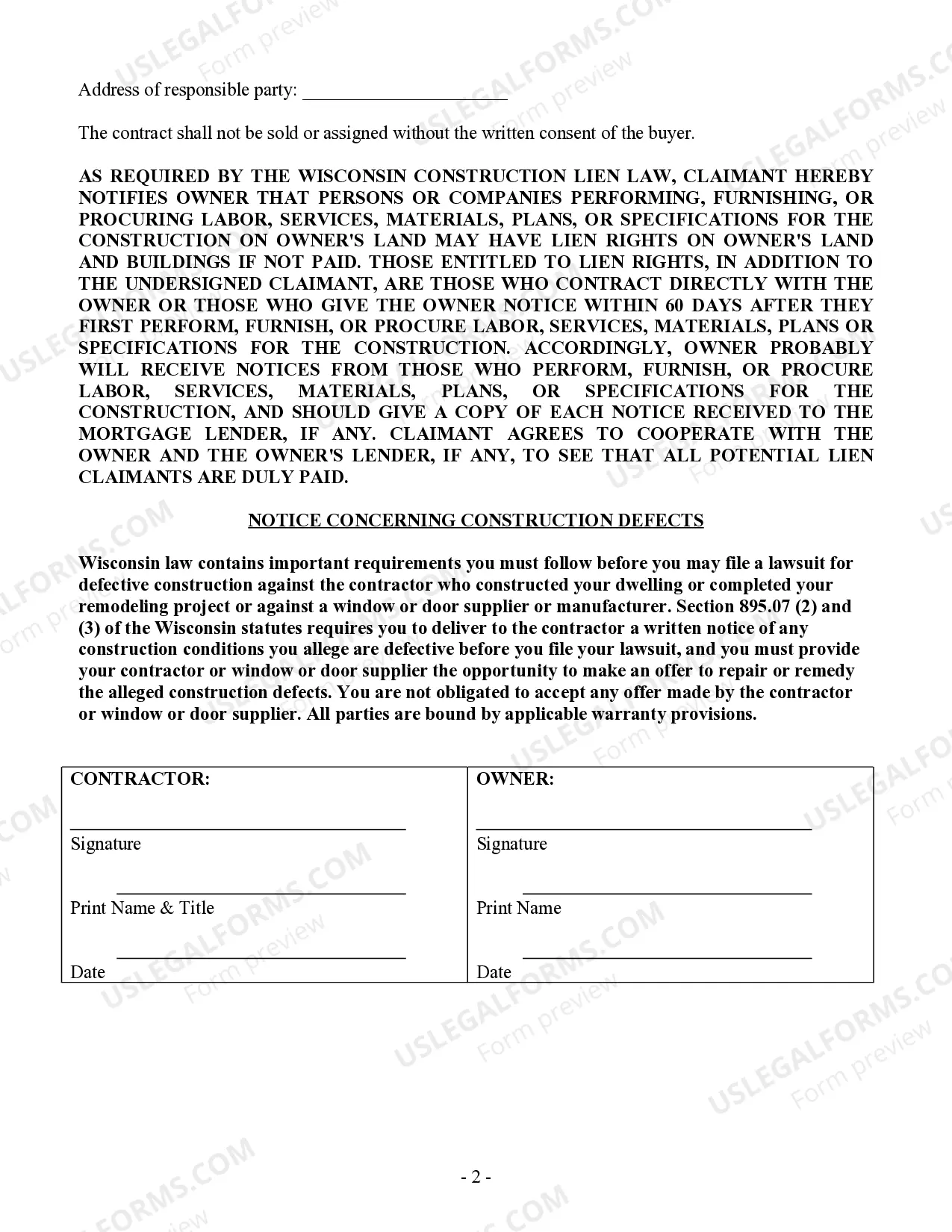
- Lien waivers: Ensuring owners receive proper waivers after payments to contractors, subcontractors, and suppliers.
- Construction defects: Notifying the contractor about alleged defects before potential legal actions.

When to use this form
This form is ideal for property owners planning renovation projects and engaging contractors. It should be used when entering into a formal agreement regarding payment and work scope. Situations may include home renovations, additions, or repairs where clear contract terms can protect both parties' interests.
Intended users of this form
The following individuals and entities should use this form:
- Property owners looking to renovate or remodel their properties.
- Renovation contractors seeking to formalize agreements with clients.
- Subcontractors and suppliers who want protection under construction lien laws.
Instructions for completing this form
Follow these steps to complete the Renovation Contract for Contractor:
- Identify the parties: Enter the full names and addresses of both the property owner and the renovation contractor.
- Specify the payment terms: Indicate whether the agreement is cost-plus or fixed fee, and detail the payment structure.
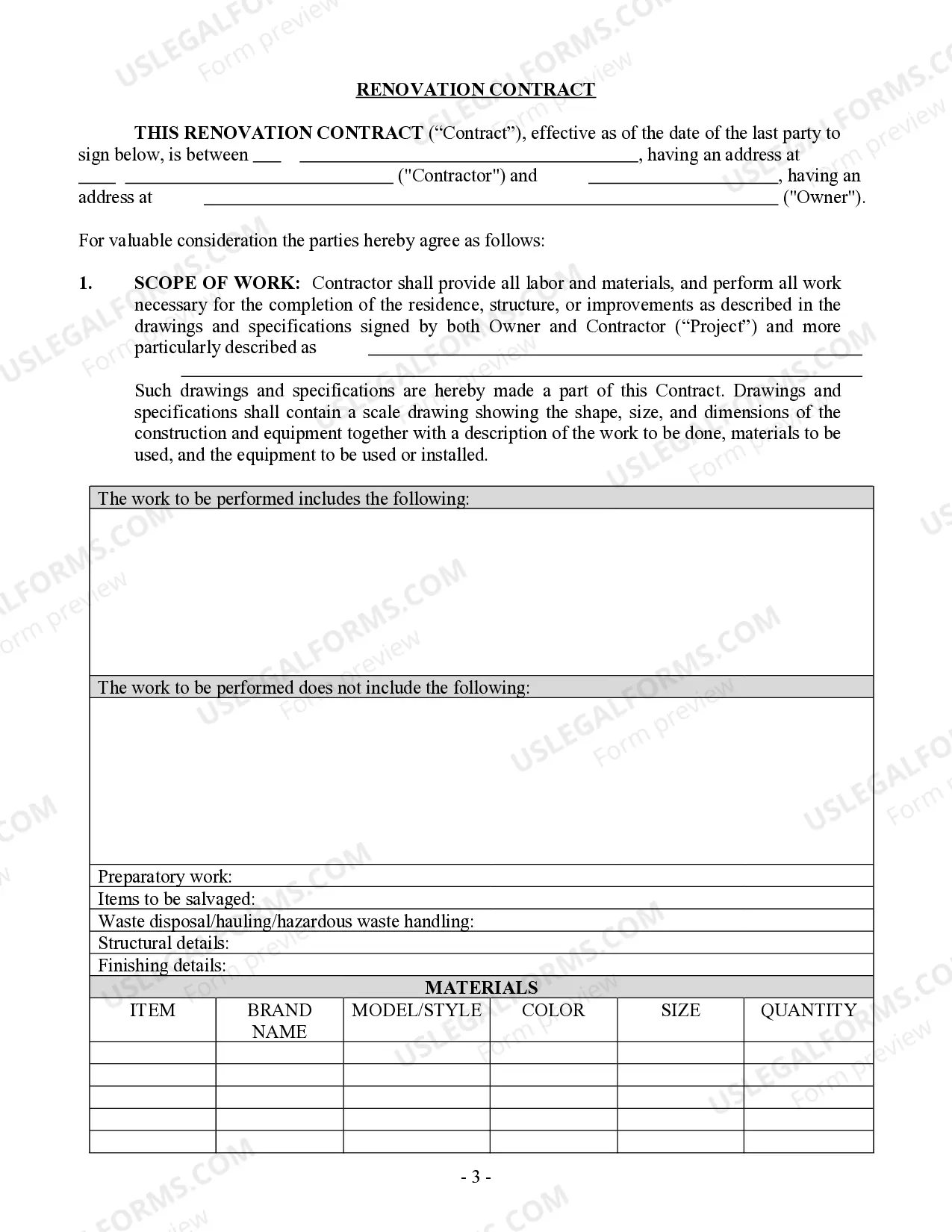
- Detail project information: Include descriptions of the work to be performed and any relevant specifications.
- Include insurance details: Identify the insurer and provide documentation of the required insurance coverage.
- Gather signatures: Ensure that both parties review the document and sign where indicated to finalize the agreement.
Is notarization required?
This form does not typically require notarization unless specified by local law. It is advisable for both parties to keep copies of the signed contract for their records.
Mistakes to watch out for
Common mistakes to avoid when using this form include:
- Failing to include all necessary project specifications in the contract.
- Not obtaining written change orders for any modifications to the project.
- Overlooking insurance requirements and lien waivers.
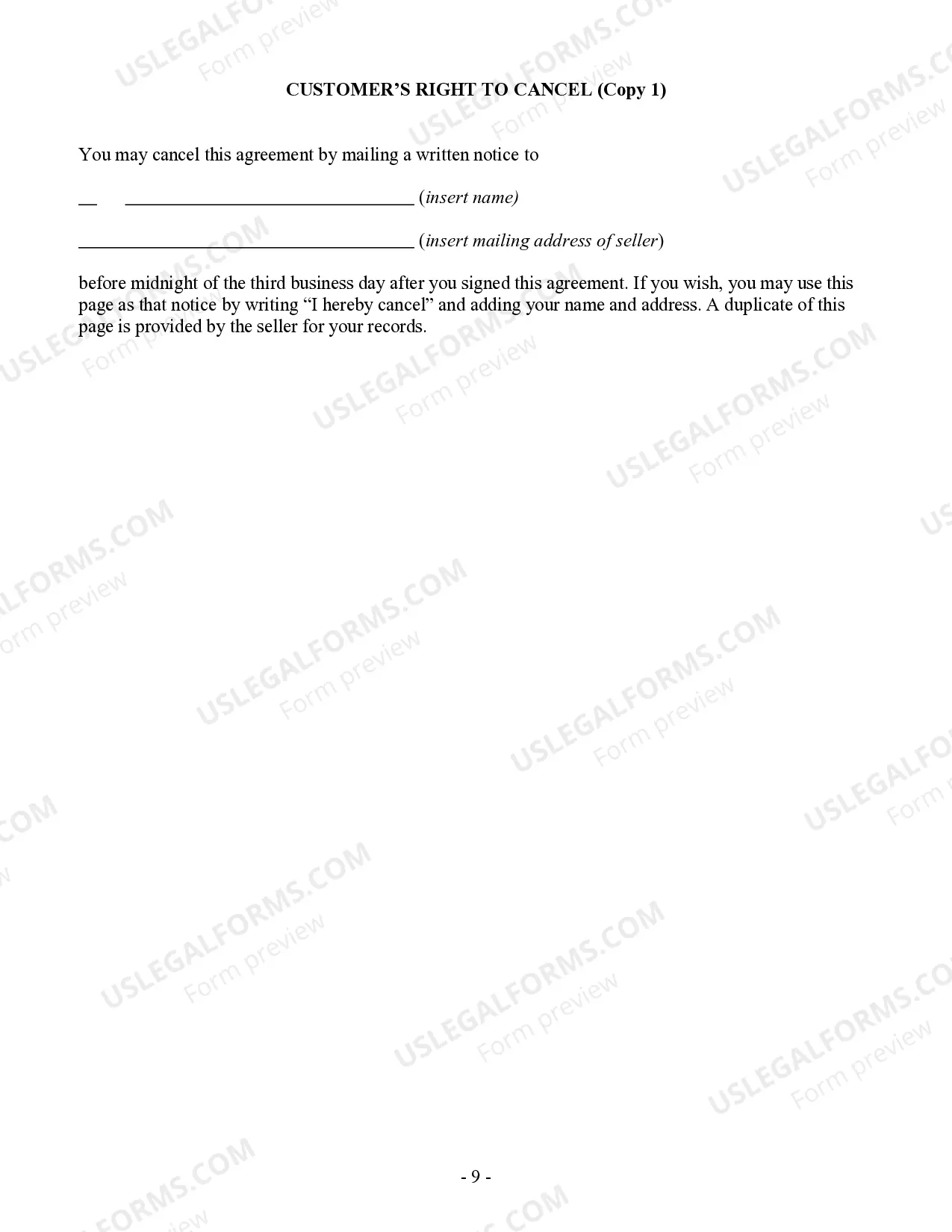
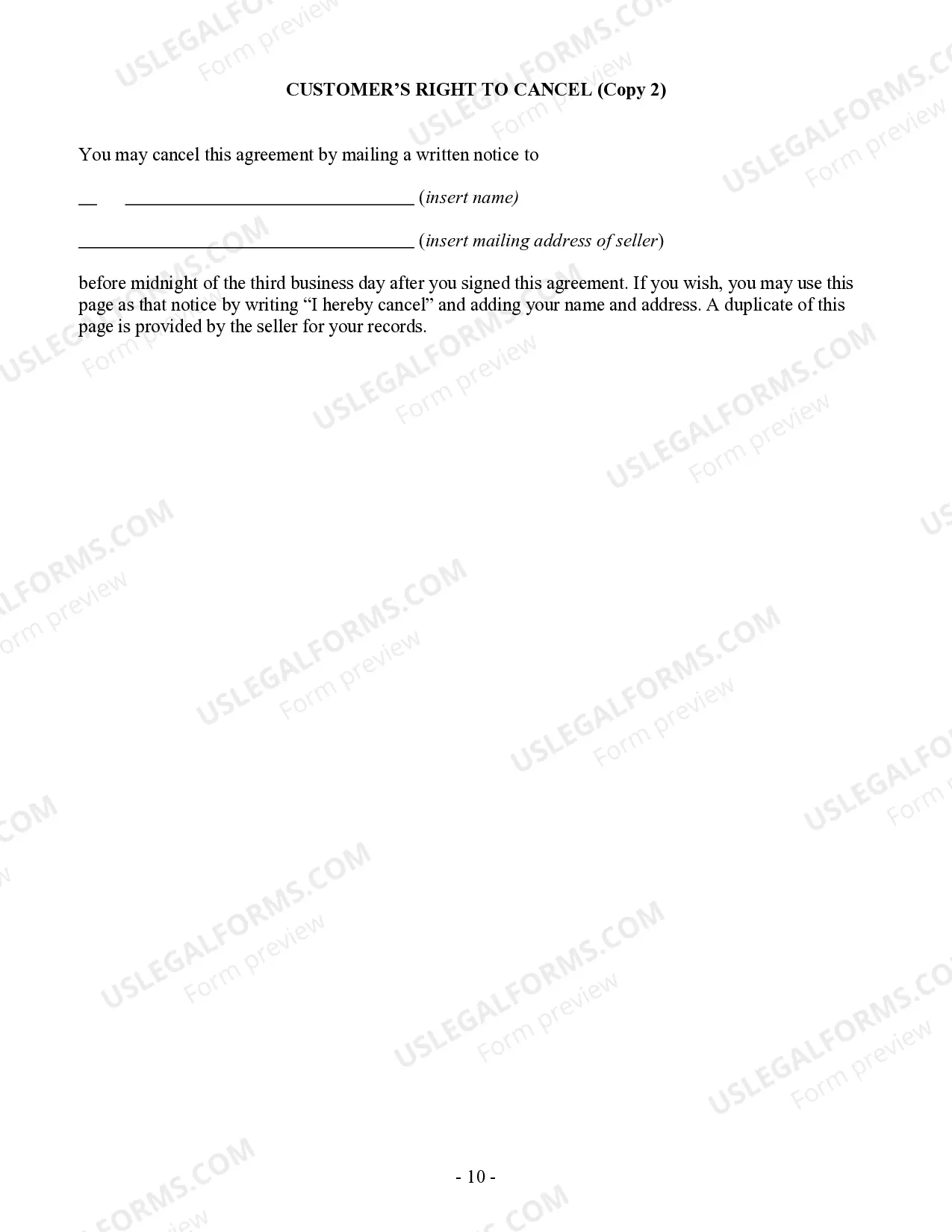
- Neglecting to provide copies of the customerâs right to cancel as required by law.
- Not reviewing the local regulations that may affect contract terms.
Benefits of using this form online
Benefits of using this form online include:
- Convenience: Easily download and customize the contract to fit your specific needs.
- Editability: Make necessary changes to the contract terms before finalizing.
- Reliability: Forms are drafted by licensed attorneys, ensuring legal compliance.
- Accessibility: Instant access to the form allows for timely project initiation.
Legal use and context:
- The contract helps establish clear expectations and obligations for both the owner and the contractor.
- It provides legal protection against potential disputes over payment and work scope.
- This form complies with Wisconsin law regarding construction contracts and lien rights.
Summary of main points
Key takeaways about the Renovation Contract for Contractor:
- The contract protects both property owners and contractors by clearly defining terms and responsibilities.
- Written documentation is essential for modifications and payment processes.
- Understanding state-specific requirements, particularly under Wisconsin law, is crucial for enforceability.
- Using this contract can help avoid common disputes related to construction projects.








Form popularity
FAQ
Parties to the contract. This includes who the contractor is, their name, full address, phone number, email, business license where required, and business/GST number. Scope of work. Project schedule. Price. Contractor's insurance and workers' compensation. Warranty. Other contract elements.
Identifying/Contact Information. Title and Description of the Project. Projected Timeline and Completion Date. Cost Estimate and Payment Schedule. Stop Work Clause and Stop Payment Clause. Act of God Clause. Change Order Agreement. Warranty.
Identifying/Contact Information. Title and Description of the Project. Projected Timeline and Completion Date. Cost Estimate and Payment Schedule. Stop Work Clause and Stop Payment Clause. Act of God Clause. Change Order Agreement. Warranty.
Scope of Work, Selection Sheet and Drawings. License Number and Insurance. Description of Change Orders. Warranty information. Subcontractor Agreements. Payment schedule. Completion Schedule / Timeline. Clauses Required by Law.
A contract defines the agreement between you and the builder.It ensures that you and your builder are agreeing to the same thing and outlines the responsibilities of each party.
Define and describe the project in detail. Include what materials must be used; be as specific as possible. Include weight, brand name and other identifying features. Specify the work being performed and all equipment being used or installed.
Check Contract Basics. The basic job of a contractor agreement is to spell out the scope of the project's work. Set a Payment Schedule. Schedule Start and End Dates. Specify Change Orders. Research Your Arbitration Options. Turn Down the Contractor's Warranty.
Both parties should sign the contract, and both should be bound by the terms and conditions spelled out in the agreement. In general that means the contractor will be obliged to provide specified materials and to perform certain services for you. In turn, you will be required to pay for those goods and that labor.