Motor Vehicle Lease
What this document covers
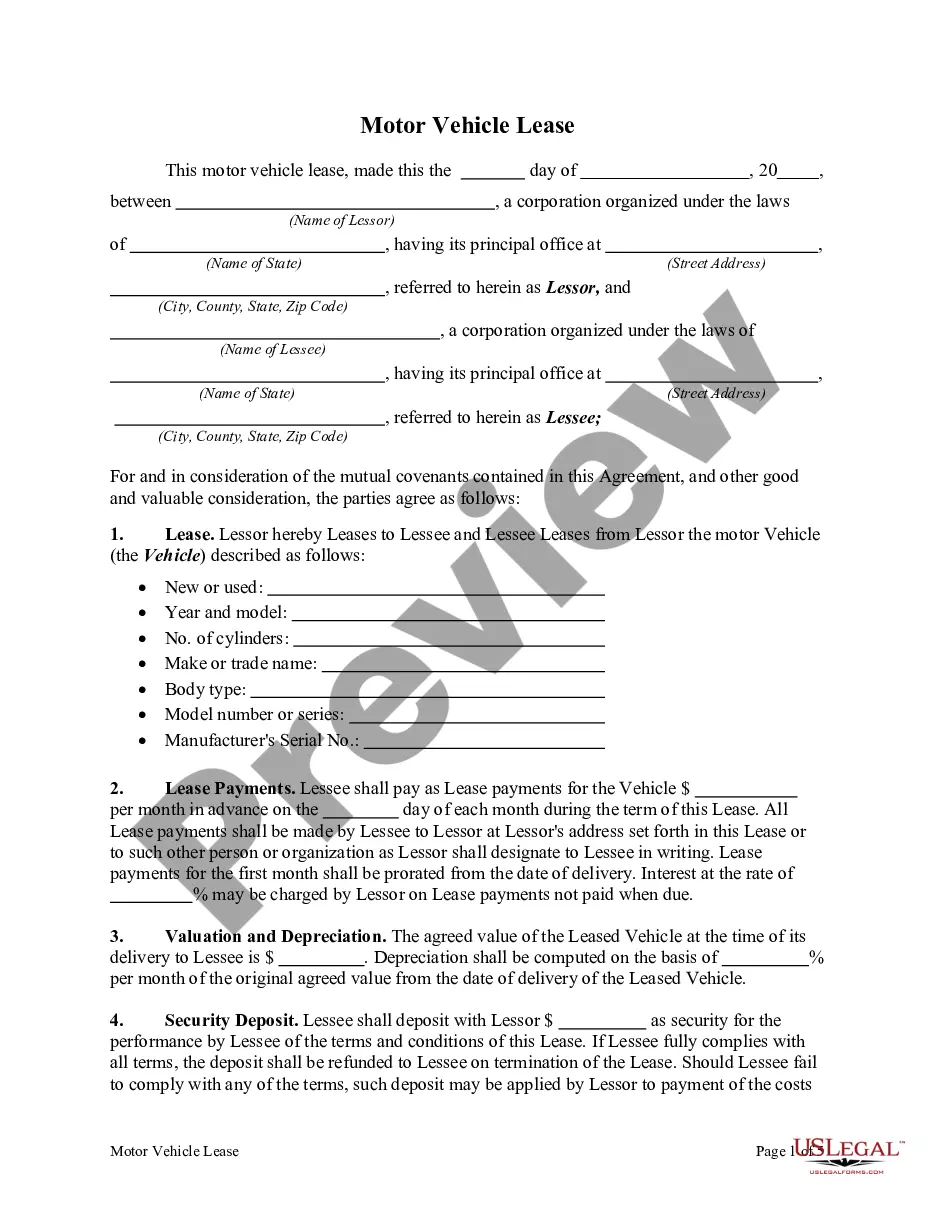
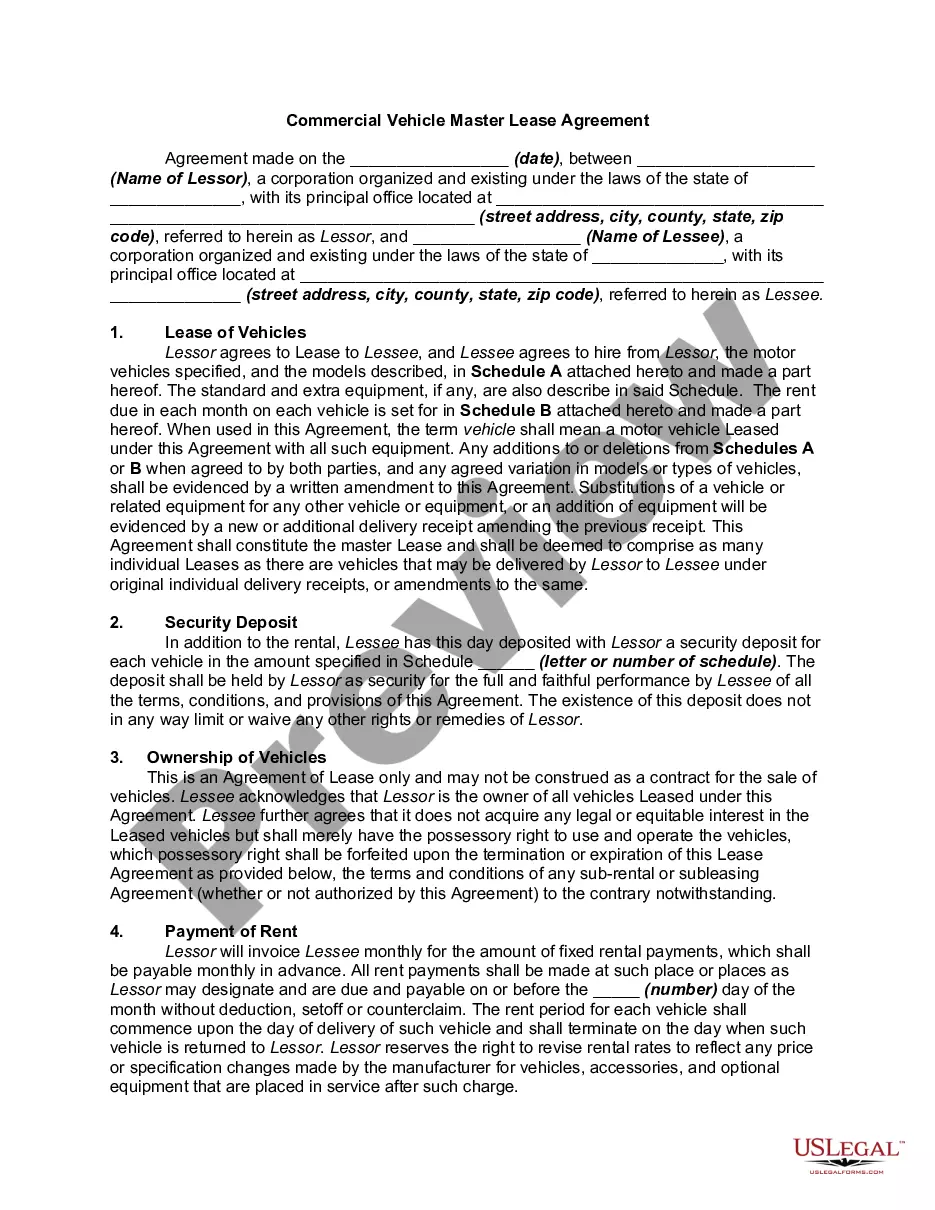
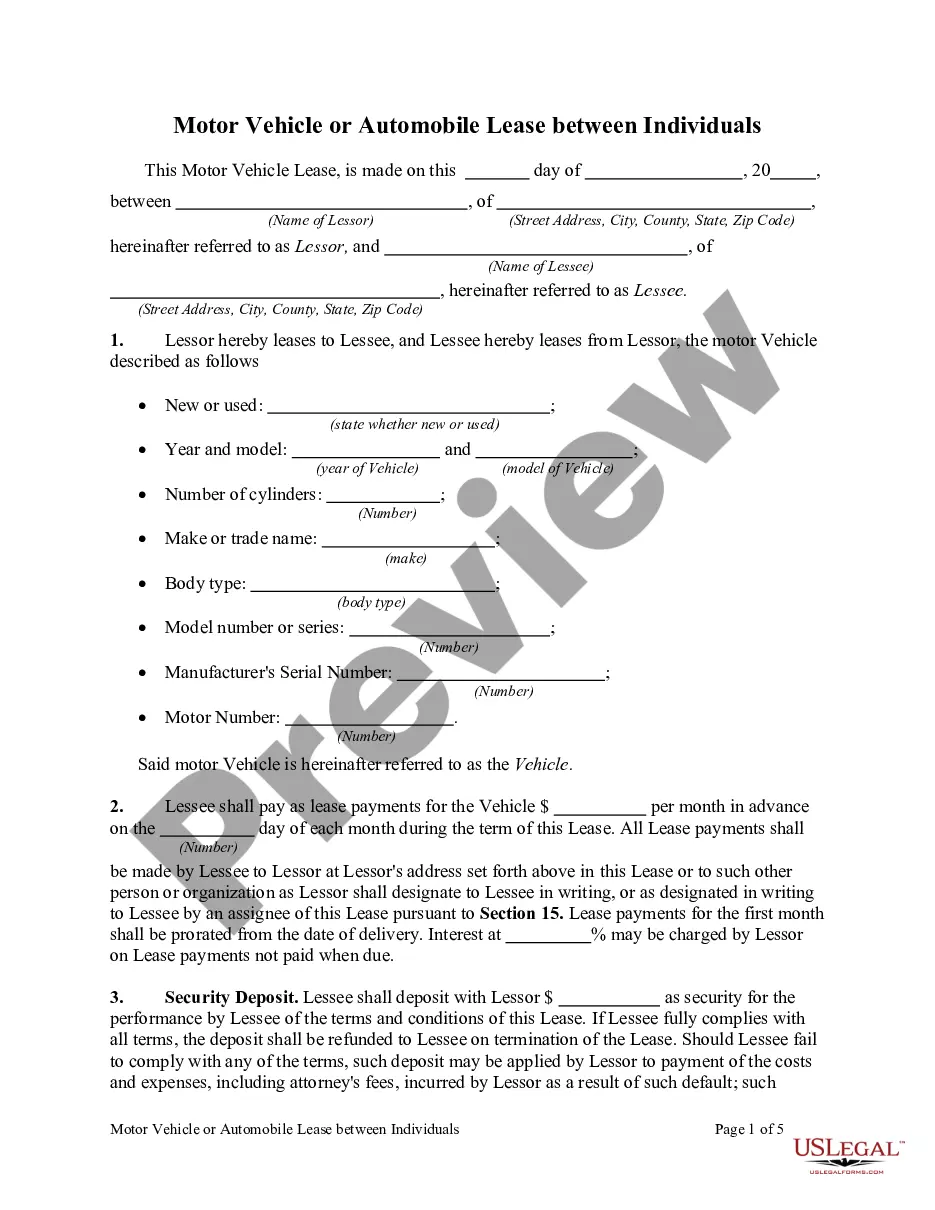
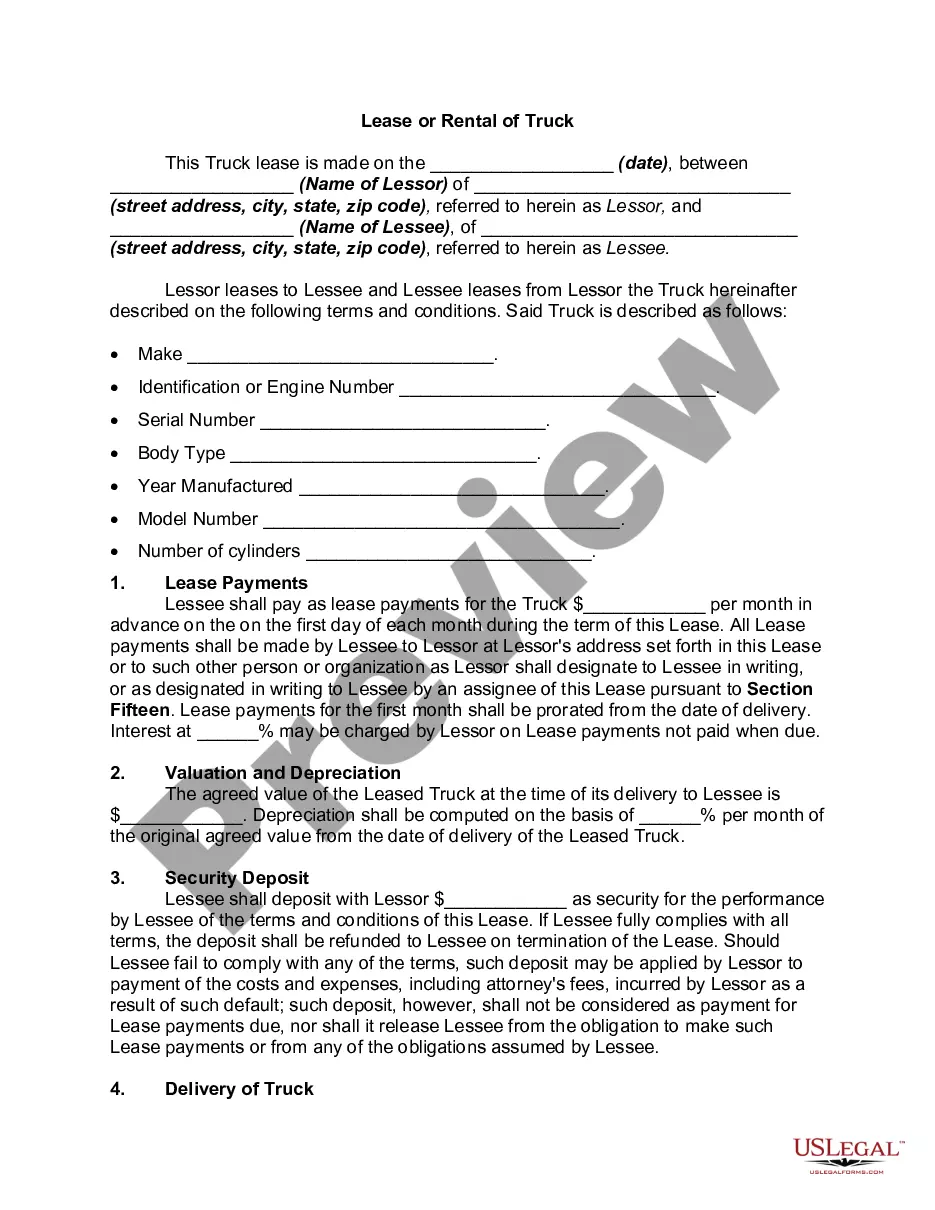
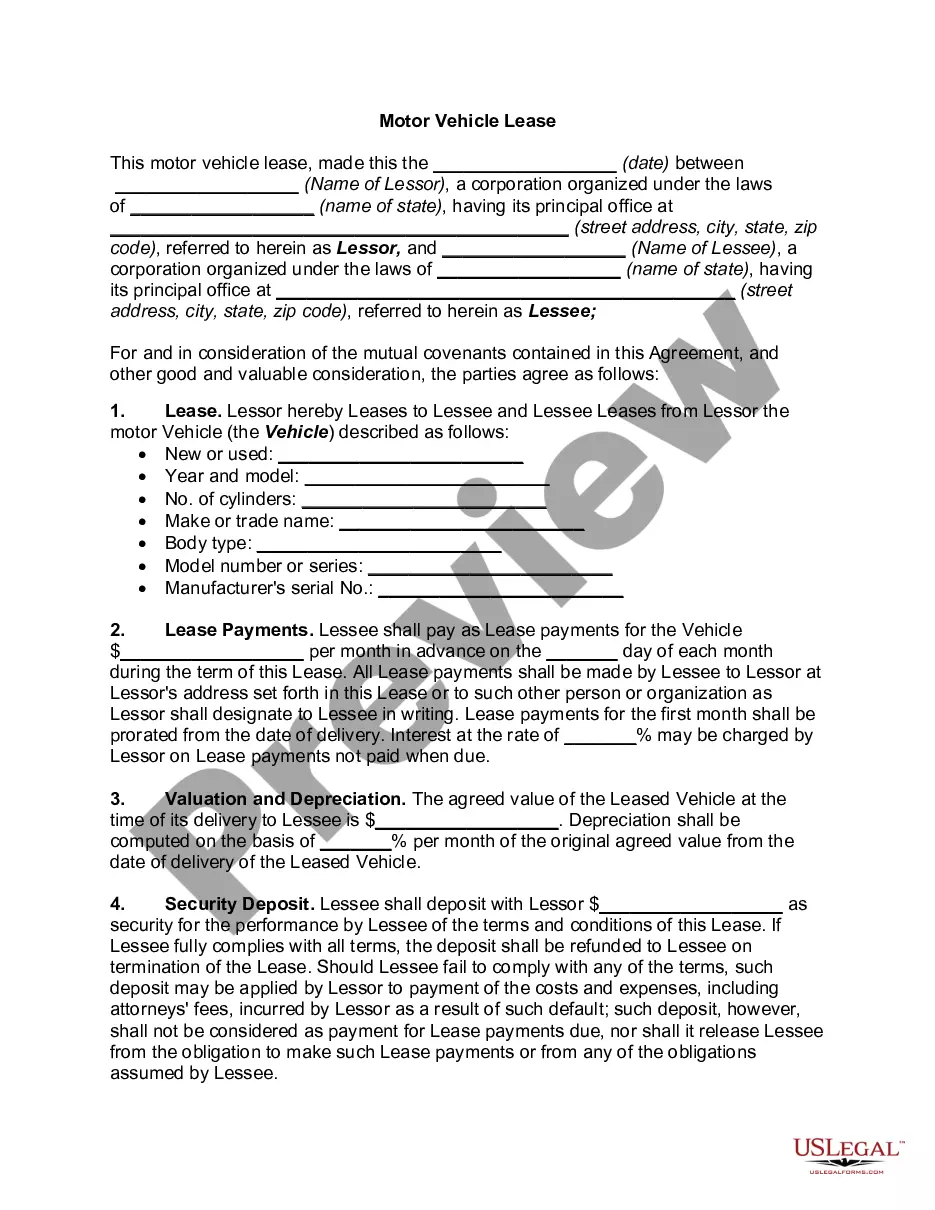
The Motor Vehicle Lease is a legal document that outlines the terms under which a lessor allows a lessee to use a motor vehicle for a specified time in exchange for payment. This form is different from a vehicle purchase agreement, as it does not transfer ownership of the vehicle but rather allows for its temporary use. The lease includes responsibilities, liabilities, and conditions that protect both parties involved in the transaction.
Form components explained
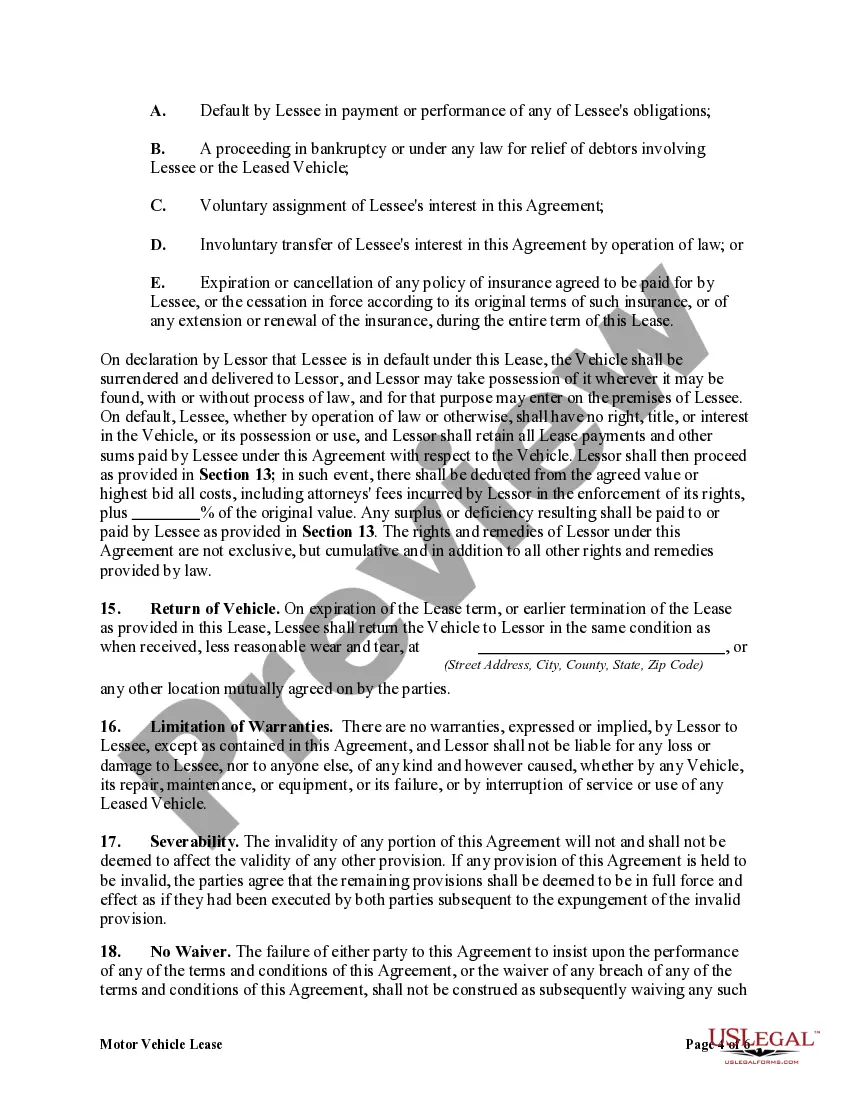
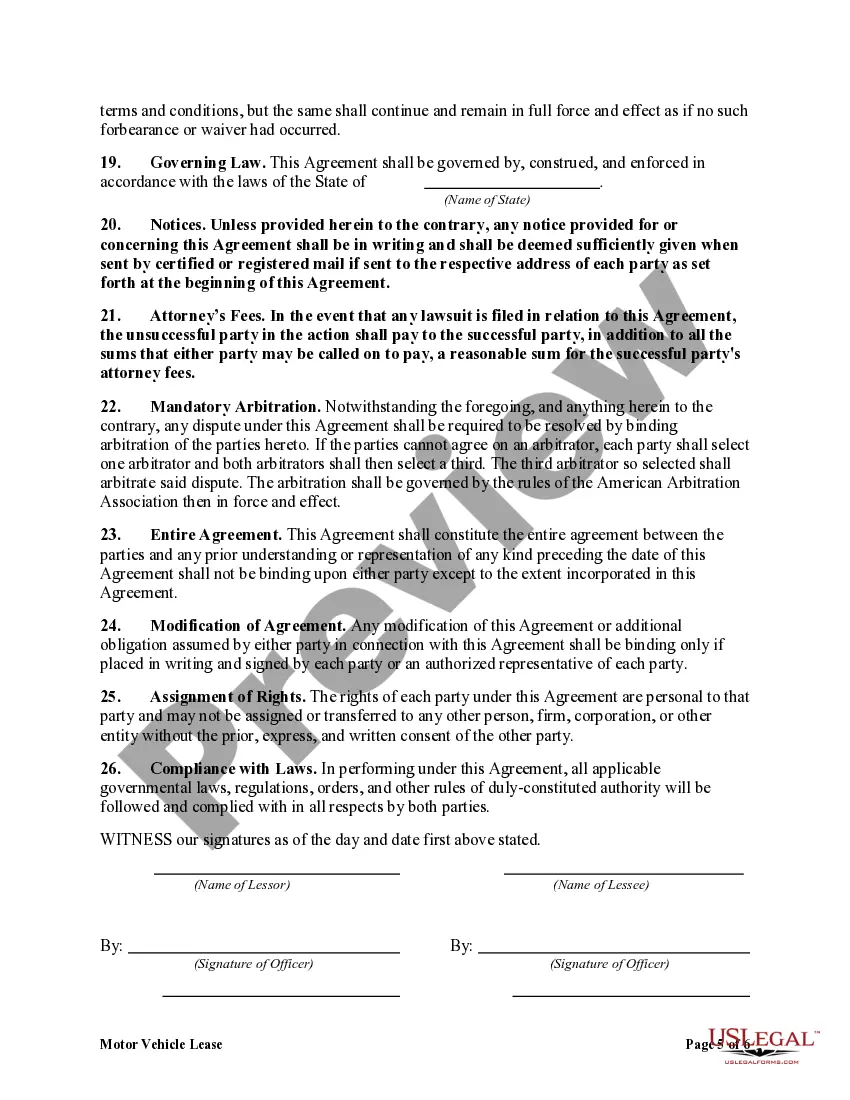
- Lease Agreement: Clearly states the conditions under which the vehicle is leased.
- Delivery of Vehicle: Outlines the obligations of the lessor to deliver the vehicle.
- Use of Vehicle: Specifies permitted and prohibited uses of the vehicle.
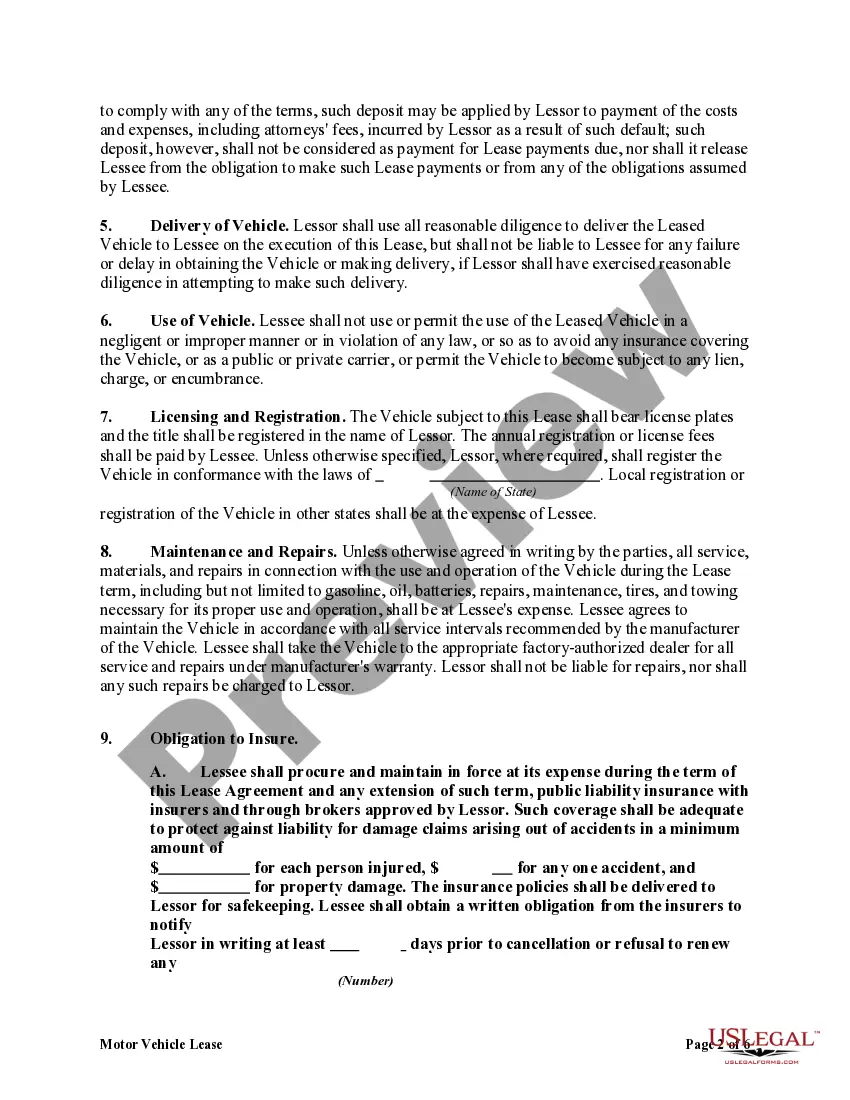
- Obligation to Insure: Mandates the lessee to maintain insurance throughout the lease term.
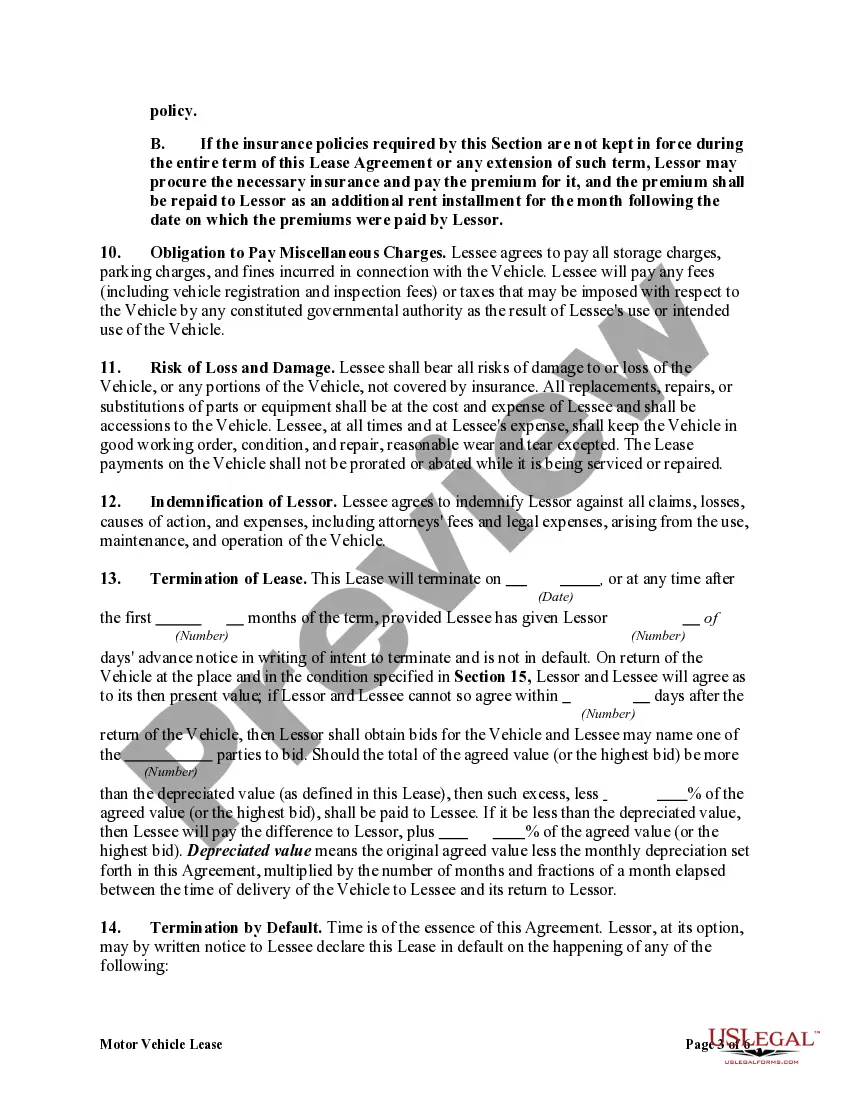
- Risk of Loss and Damage: Sets forth the lessee's responsibility for damage or loss of the vehicle.
- Indemnification: Requires the lessee to protect the lessor from claims related to the vehicle's use.
Situations where this form applies
This Motor Vehicle Lease should be used whenever an individual or business wishes to lease a vehicle instead of purchasing it. It's appropriate in scenarios such as temporary vehicle needs for personal use, business leasing for company vehicles, or when an individual wants to drive a vehicle without the long-term commitment of ownership.
Who this form is for
- Individuals looking to lease a vehicle for personal use.
- Businesses requiring vehicles for employees or operational needs.
- Vehicle dealerships that offer leasing options to customers.
- Lessors who want to clearly define the terms of leasing an automobile.
How to complete this form
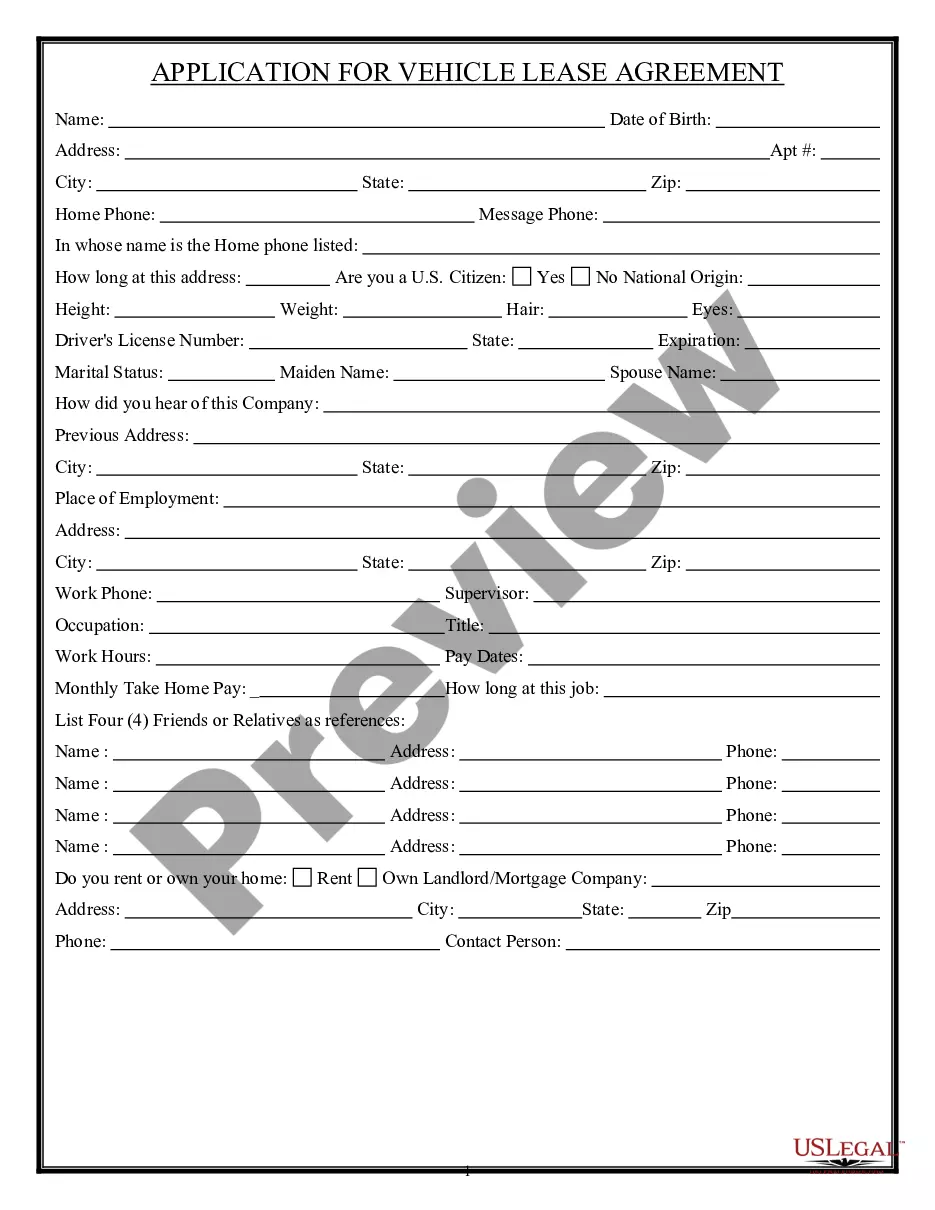
- Identify the parties involved: Include the names and addresses of the lessor and lessee.
- Specify the vehicle: Provide details about the vehicle being leased, including make, model, and VIN.
- Outline lease terms: Enter the start and end dates of the lease, including payment amounts and due dates.
- Include insurance obligations: State the type and amount of insurance required for the lease duration.
- Sign and date the agreement: Ensure both parties sign and date the lease to make it legally binding.
Notarization requirements for this form
Notarization is generally not required for this form. However, certain states or situations might demand it. You can complete notarization online through US Legal Forms, powered by Notarize, using a verified video call available anytime.
Mistakes to watch out for
- Failing to provide accurate vehicle details, which can lead to confusion.
- Not specifying the terms of payment, such as late fees or payment methods.
- Neglecting to outline both parties' responsibilities, leading to disputes.
- Omitting required insurance information, which can risk liability issues.
Benefits of completing this form online
- Convenience: Download and fill out the form at your own pace.
- Editability: Easily modify the template to match specific leasing needs.
- Reliability: Forms are drafted by licensed attorneys to ensure legal accuracy.
Legal use & context
- Legally binds both parties to the terms of the vehicle lease.
- Offers a clear framework for resolving disputes through arbitration.
- Provides a basis for indemnification, protecting the lessor from certain liabilities.
Key takeaways
- The Motor Vehicle Lease form establishes clear obligations and rights for lessees and lessors.
- This form is suitable for both personal and business leasing needs.
- Carefully review all terms, especially regarding insurance and default conditions.







Form popularity
FAQ
Leasing a vehicle is typically a rent-to-own setup, where you make monthly payments with the option to purchase the car and the end of the contract term. You normally don't get a copy of the title, as that goes to the leasing company.
A lease transfer is a simple process in which the name on a lease account is changed for the duration of the term.In order to initiate a lease transfer, the driver who wishes to transfer their lease must contact their finance company to make sure that a lease transfer is possible.
Whoever buys your lease agrees to make the remaining monthly payments. While some finance companies won't allow such transfers, the vast majority do. The trick is finding someone who's interested in taking the car and the lease over from you. Fortunately there are websites that can make that relatively easy.
Another way to transfer your lease is to simply ask a family member or a trusted friend to take over the monthly payments. Make sure auto insurance still covers the vehicle, and have a clear understanding of who will pay for any excess wear and tear at the end of the lease.
Find someone who is willing to take over your lease for the remaining term and payments. Get the new person approved for the necessary credit to take over the lease by you AND the leasing company. Pay necessary lease transfer fees to the bank, dealership, and/or manufacturer.
A car lease typically comes with a three-year or four-year contract. In order to calculate your monthly payment amount, the dealer will analyze the value of the new car versus its residual value (what it should be worth when your lease expires).
Yes, to the lessor, any person to whom you grant permission can drive your vehicle. Furthermore, if you are planning to allow others to drive your vehicle, you should consult your insurer.
In the case of a leased vehicle, the "owner" is typically the lessor, i.e., the car dealership or bank/finance company through which the car has been leased, so a state's owner's liability law would seem to expose lessors to liability for a lessee's negligence.