Pennsylvania Closing Statement
What this document covers
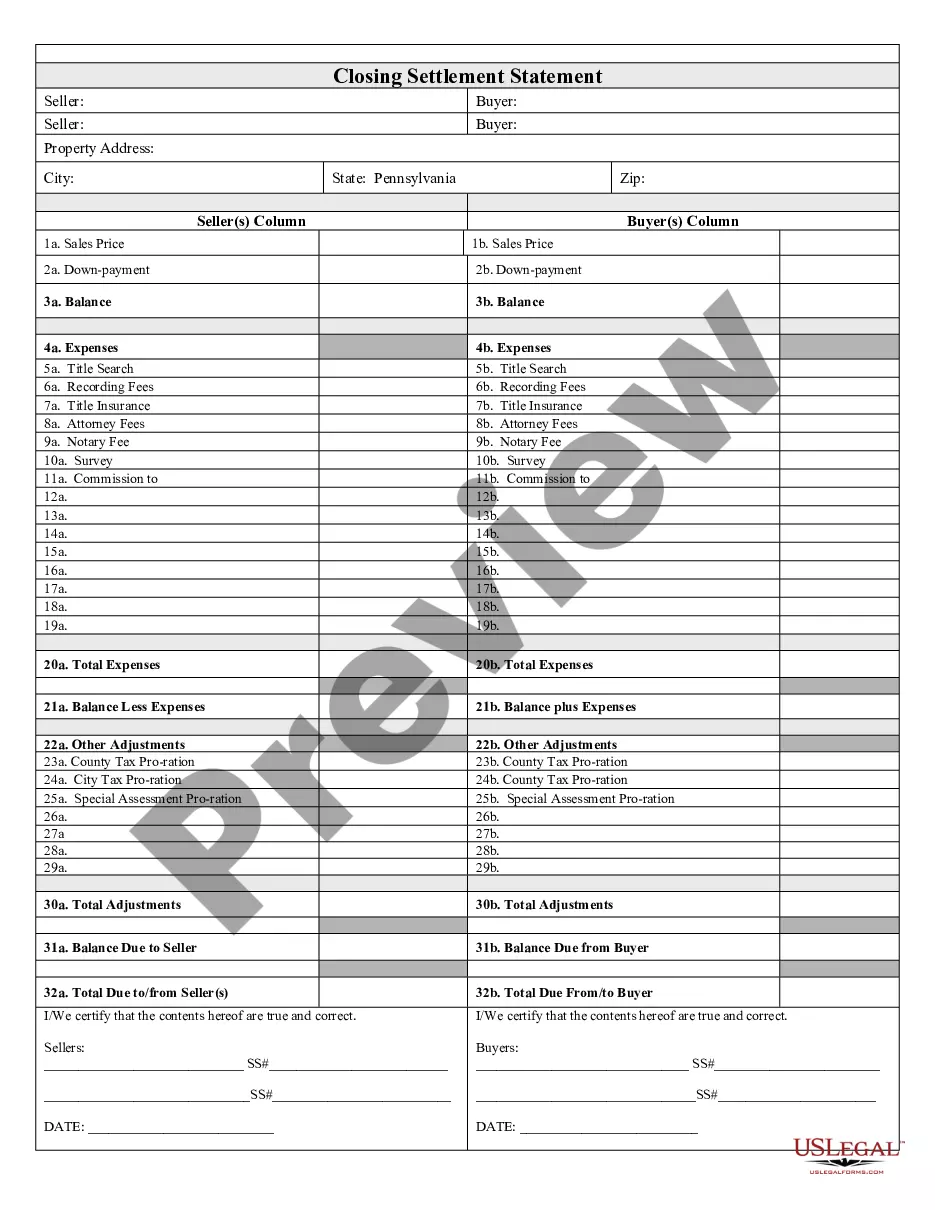
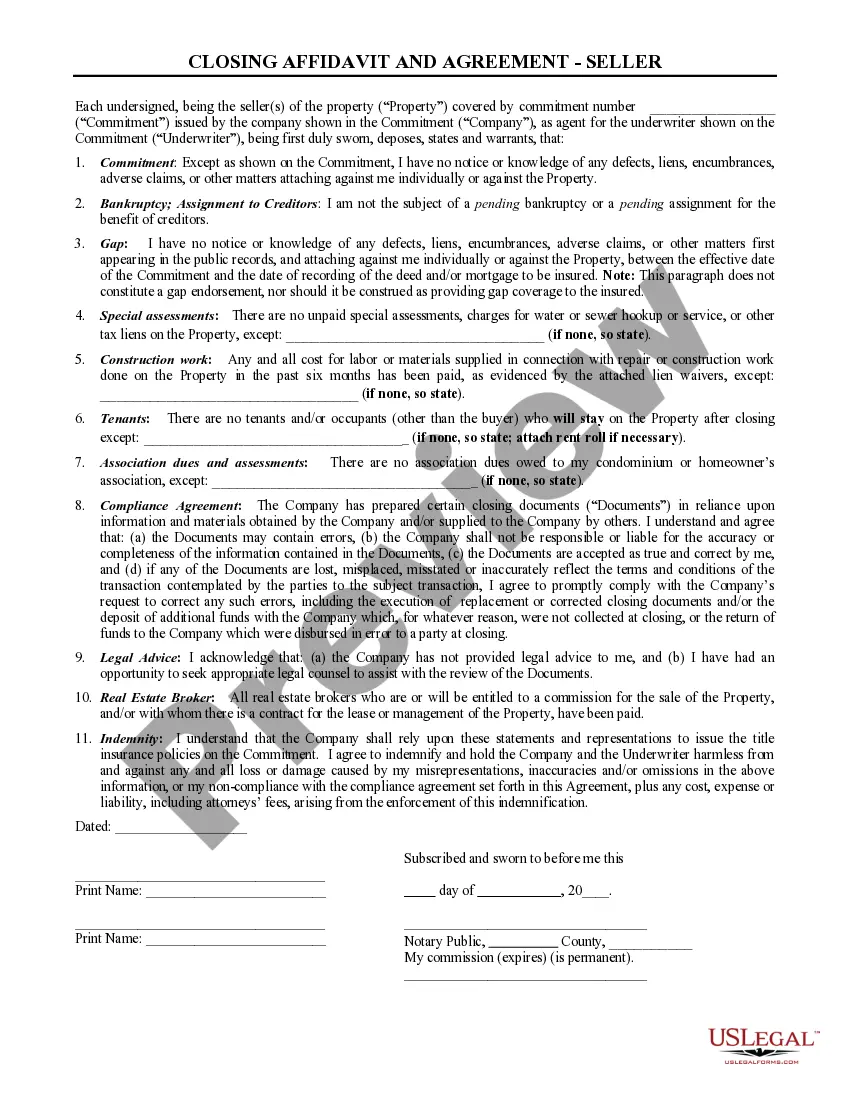
The Closing Statement is a vital document used in real estate transactions involving cash sales or owner financing. This form outlines the financial details of the transaction, including all applicable expenses and balances. Unlike other forms that may not require detailed financial breakdowns, this statement ensures both the buyer and seller agree on the final numbers involved in the sale, making it an essential part of the closing process.
Key components of this form
- Balance sections detailing amounts due to and from each party.
- Itemized list of expenses including title search, recording fees, title insurance, and attorney fees.
- Adjustment sections for prorated taxes and other local assessments.
- Certification statements that require signatures from both the seller and buyer.
- Final totals indicating amounts due and how each party is balanced after adjustments.

When to use this form
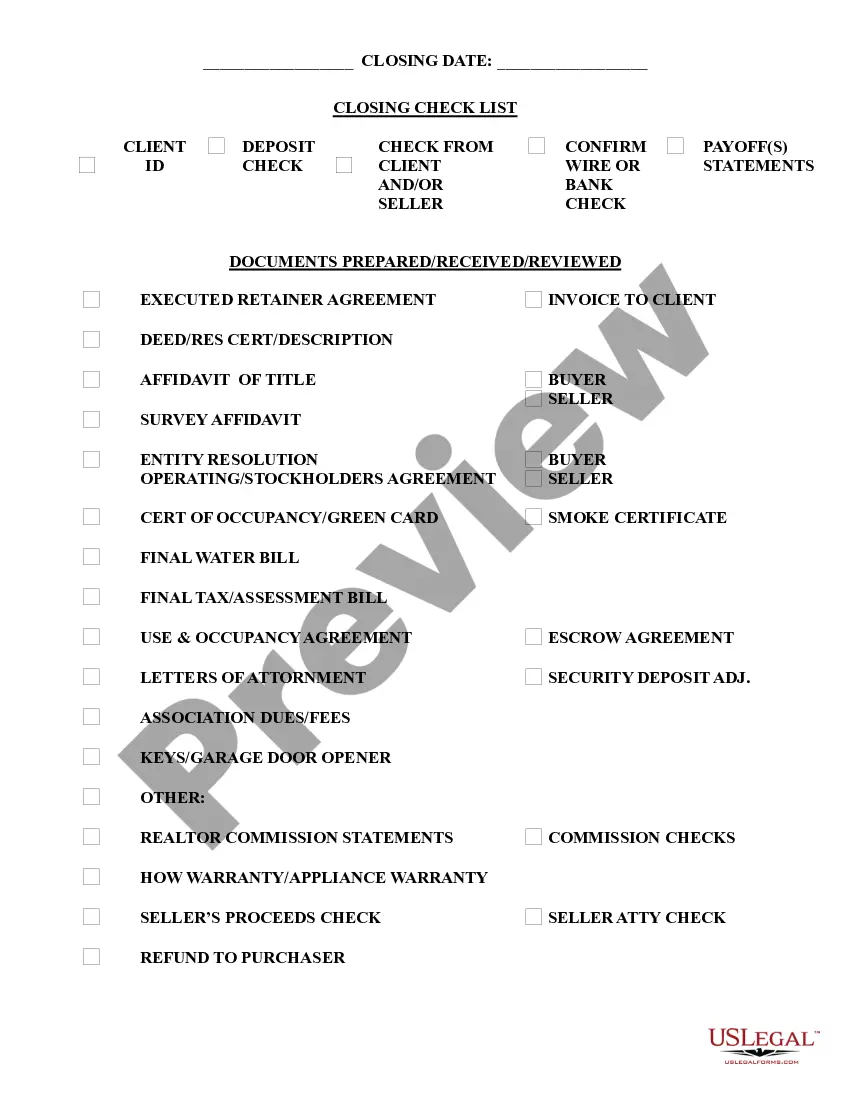
This form should be used in any real estate transaction where there is a cash payment or owner financing involved. It is typically utilized at the closing meeting, ensuring that both parties verify and agree on the financial aspects of the sale before finalizing the transfer of property.
Who this form is for
This Closing Statement is intended for:
- Home sellers and buyers engaging in cash or owner-financed transactions.
- Real estate agents and brokers facilitating the transaction.
- Attorneys involved in real estate closings who need to verify and document financial agreements.
Completing this form step by step
- Identify the parties involved in the transaction (buyer and seller).
- List all financial details such as sale price, deposits, and loan amounts, if any.
- Include an itemized breakdown of expenses, ensuring accuracy for all fees and charges.
- Calculate totals for expenses and adjustments to determine final amounts due to or from each party.
- Both parties should review the statement for accuracy and sign to certify the agreement.
Notarization guidance
No, this form does not typically require notarization unless specified by local law. It is important to verify in your jurisdiction whether notarization is necessary for the closing statement to ensure its legal validity.
Avoid these common issues
- Forgetting to include all relevant expenses, which can lead to disputes later.
- Calculating prorations incorrectly, resulting in imbalanced totals.
- Failing to obtain required signatures, making the form unenforceable.
Benefits of using this form online
- Instant access to legally drafted closing statement templates.
- Easy customization to suit specific transaction details.
- Safe and secure storage and download options without the need for physical documentation.




Form popularity
FAQ
Factual Evidence. How it supports your case. Factual Evidence. How it supports your case. Factual Evidence. How it supports your case. Comments on the credibility of witnesses: How do the puzzle pieces of evidence and testimony fit into a compelling whole? This is your narrative of what happened.
The prosecution goes first, followed by the defense and a rebuttal by the prosecution. Because the prosecution has the burden of proof, it gets the final word. After the closing arguments, the judge will give the jury its final instructions.Criminal juries must reach a unanimous verdict of guilty or not guilty.
As the terms suggest, an opening statement comes at the beginning of the trial, while a closing argument occurs at the end of the trial after all the evidence is established.An opening statement is a time to state to the judge and jury the forthcoming evidence.
The closing statement is the attorney's final statement to the jury before deliberation begins. The attorney reiterates the important arguments, summarizes what the evidence has and has not shown, and requests jury to consider the evidence and apply the law in his or her client's favor.
Each closing argument usually lasts 20-60 minutes. Some jurisdictions limit how long the closing may be, and some jurisdictions allow some of that time to be reserved for later.
A closing argument, summation, or summing up is the concluding statement of each party's counsel reiterating the important arguments for the trier of fact, often the jury, in a court case.A closing argument may not contain any new information and may only use evidence introduced at trial.
A summary of the evidence. any reasonable inferences that can be draw from the evidence. an attack on any holes or weaknesses in the other side's case. a summary of the law for the jury and a reminder to follow it, and.
The lawyer for the plaintiff or government usually goes first. The lawyer sums up and comments on the evidence in the most favorable light for his or her side, showing how it proved what he or she had to prove to prevail in the case. After that side has made its case, the defense then presents its closing arguments.
In a criminal trial by judge alone, these final arguments are delivered by Crown and defence counsel after the defence's case is finished. If defence counsel has presented evidence then she or he will be the first to make final arguments. Crown counsel will speak last.