Evict Tenant
Description
Get your form ready online
Our built-in tools help you complete, sign, share, and store your documents in one place.
Make edits, fill in missing information, and update formatting in US Legal Forms—just like you would in MS Word.
Download a copy, print it, send it by email, or mail it via USPS—whatever works best for your next step.
Sign and collect signatures with our SignNow integration. Send to multiple recipients, set reminders, and more. Go Premium to unlock E-Sign.
If this form requires notarization, complete it online through a secure video call—no need to meet a notary in person or wait for an appointment.
We protect your documents and personal data by following strict security and privacy standards.

Make edits, fill in missing information, and update formatting in US Legal Forms—just like you would in MS Word.

Download a copy, print it, send it by email, or mail it via USPS—whatever works best for your next step.

Sign and collect signatures with our SignNow integration. Send to multiple recipients, set reminders, and more. Go Premium to unlock E-Sign.

If this form requires notarization, complete it online through a secure video call—no need to meet a notary in person or wait for an appointment.

We protect your documents and personal data by following strict security and privacy standards.
Looking for another form?




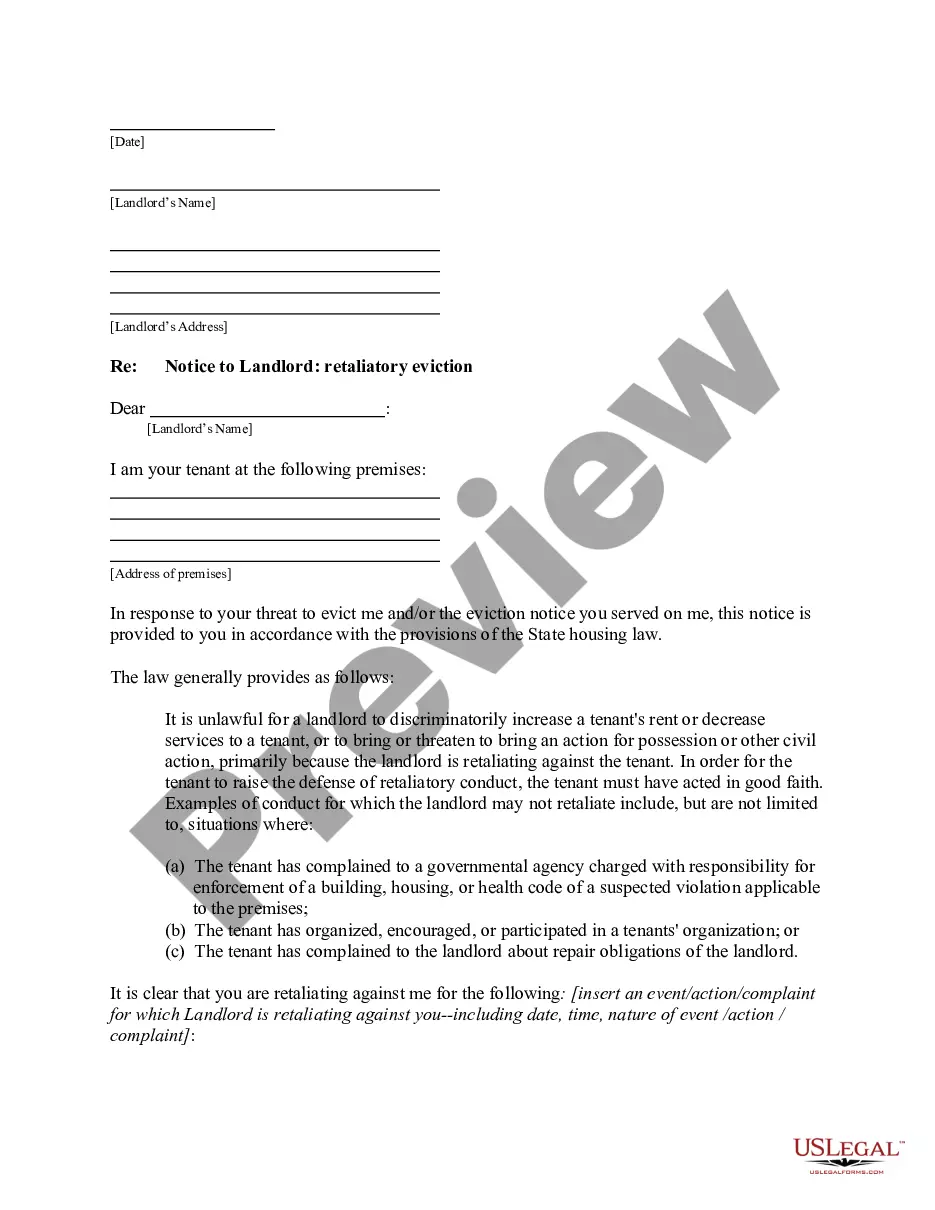
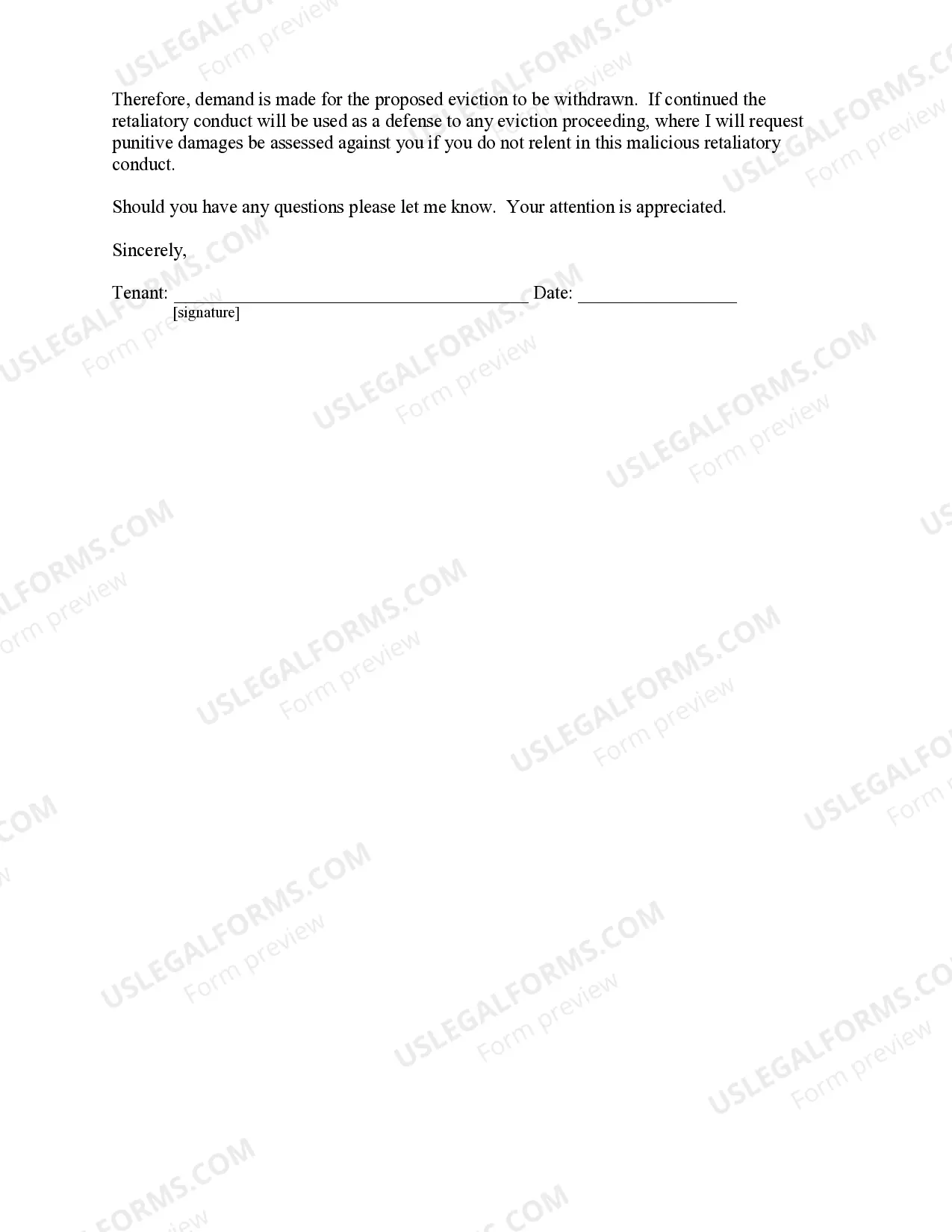
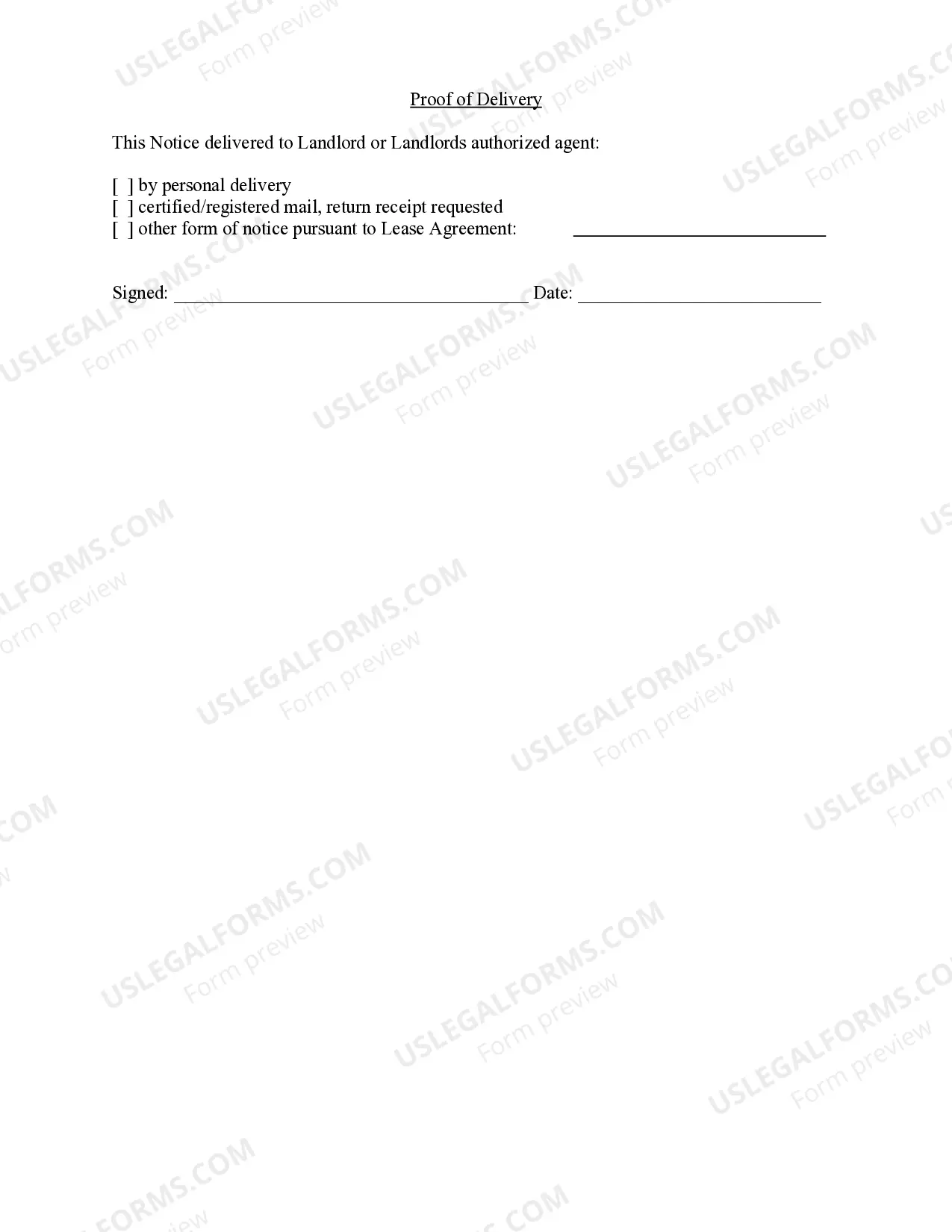
How to fill out West Virginia Letter From Tenant To Landlord Containing Notice To Landlord To Cease Retaliatory Threats To Evict Or Retaliatory Eviction?
- Log into your US Legal Forms account to access previously used documents. Ensure your subscription is active; renew if necessary.
- If you're a new user, begin by exploring the form library. Check the description and preview mode to verify the form fits your specific needs and complies with your local laws.
- Utilize the search feature and browse additional templates if your first choice isn’t suitable. Find the right form that meets your requirements.
- Proceed to purchase the selected document by clicking 'Buy Now' and choosing a satisfying subscription plan. Create an account for full access to the library.
- Complete the payment process using credit card details or PayPal to finalize your subscription.
- Download the required eviction form and save it on your device. Access your downloaded forms easily anytime from the 'My Forms' section.
In conclusion, utilizing US Legal Forms streamlines the eviction process, saving you time and ensuring legal compliance. With over 85,000 forms available, you can trust that you'll find the right document for any situation.
Don't hesitate! Start your journey with US Legal Forms today and handle your eviction process with confidence.
Form popularity
FAQ
To evict someone without a lease in Oklahoma, landlords can serve a thirty-day notice to vacate. This notice gives the tenant time to find alternative arrangements. If the tenant does not comply, the landlord may proceed with filing an eviction lawsuit. Using resources from US Legal Forms can simplify this process by providing the necessary legal documents.
In Wisconsin, the eviction process can take anywhere from 2 to 8 weeks. This timeline starts once the landlord files the eviction action, following the required notice period. If a court hearing is necessary, it may extend the duration further depending on the court's schedule. Being prepared and familiar with these timelines helps landlords efficiently navigate the process.
The timeline to evict a tenant in Oklahoma typically ranges from a few weeks to a couple of months, depending on various factors. If a landlord wishes to evict a tenant for nonpayment of rent, they must provide a five-day notice. After filing for eviction, the court process can take additional time, especially if the tenant contests the eviction. It is important to stay informed to effectively handle the situation.
Evicting a tenant in Wisconsin requires following specific legal procedures. Landlords must provide a valid reason for eviction, which includes nonpayment of rent or lease violations. Additionally, landlords must serve proper notice, allowing tenants time to respond before filing in court. Understanding these laws is crucial to ensure a smooth eviction process.
In New York, the eviction process can take six weeks to several months, depending on the type of eviction. Factors such as court availability, tenant responses, and whether a trial is necessary can influence the timeline. It's essential to adhere to state laws and regulations when seeking to evict a tenant. For clear guidance and documentation, many landlords find uslegalforms invaluable in streamlining the eviction process.
The eviction process in Vermont can take anywhere from a few weeks to a few months. The timeline depends on various factors, including the grounds for eviction and court scheduling. After a landlord files for eviction, the court will set a hearing date, which can range from a few days to several weeks. Being informed about this timeline can help landlords effectively plan their next steps to evict a tenant.
Vermont eviction laws dictate that landlords must follow specific procedures to evict a tenant. This includes providing a legal reason for eviction, serving the appropriate notice, and obtaining a court order if the tenant does not vacate. Familiarizing yourself with these laws is crucial to effectively evict a tenant. Using platforms like uslegalforms can help simplify this process by providing necessary documents and guidelines.
Yes, you can evict someone in the winter in Vermont; however, special considerations apply during colder months. Courts may assess the weather conditions and consider tenant hardships before proceeding. It's important to follow legal eviction procedures regardless of the season. If you’re uncertain about the steps to take when you need to evict a tenant during winter, consulting legal resources may prove beneficial.
In Vermont, a tenant must provide notice according to the lease agreement or law. Typically, this involves giving 30 days' notice for month-to-month rentals. This notice period allows landlords to prepare for the tenant's departure and helps ensure a smooth transition. If you're looking to evict a tenant, understanding these notice requirements is essential for a successful process.
Grounds for immediate eviction in Florida typically include non-payment of rent, substantial lease violations, or illegal activities on the property. If a tenant engages in behavior that poses risks to others or violates terms of the lease, the landlord can act promptly. Utilizing US Legal Forms can provide you with the needed documents and guidance to evict a tenant effectively under these circumstances.