Written Property Landlord For Tenant
Description

Get your form ready online
Our built-in tools help you complete, sign, share, and store your documents in one place.
Make edits, fill in missing information, and update formatting in US Legal Forms—just like you would in MS Word.
Download a copy, print it, send it by email, or mail it via USPS—whatever works best for your next step.
Sign and collect signatures with our SignNow integration. Send to multiple recipients, set reminders, and more. Go Premium to unlock E-Sign.
If this form requires notarization, complete it online through a secure video call—no need to meet a notary in person or wait for an appointment.
We protect your documents and personal data by following strict security and privacy standards.

Make edits, fill in missing information, and update formatting in US Legal Forms—just like you would in MS Word.

Download a copy, print it, send it by email, or mail it via USPS—whatever works best for your next step.

Sign and collect signatures with our SignNow integration. Send to multiple recipients, set reminders, and more. Go Premium to unlock E-Sign.

If this form requires notarization, complete it online through a secure video call—no need to meet a notary in person or wait for an appointment.

We protect your documents and personal data by following strict security and privacy standards.
Looking for another form?






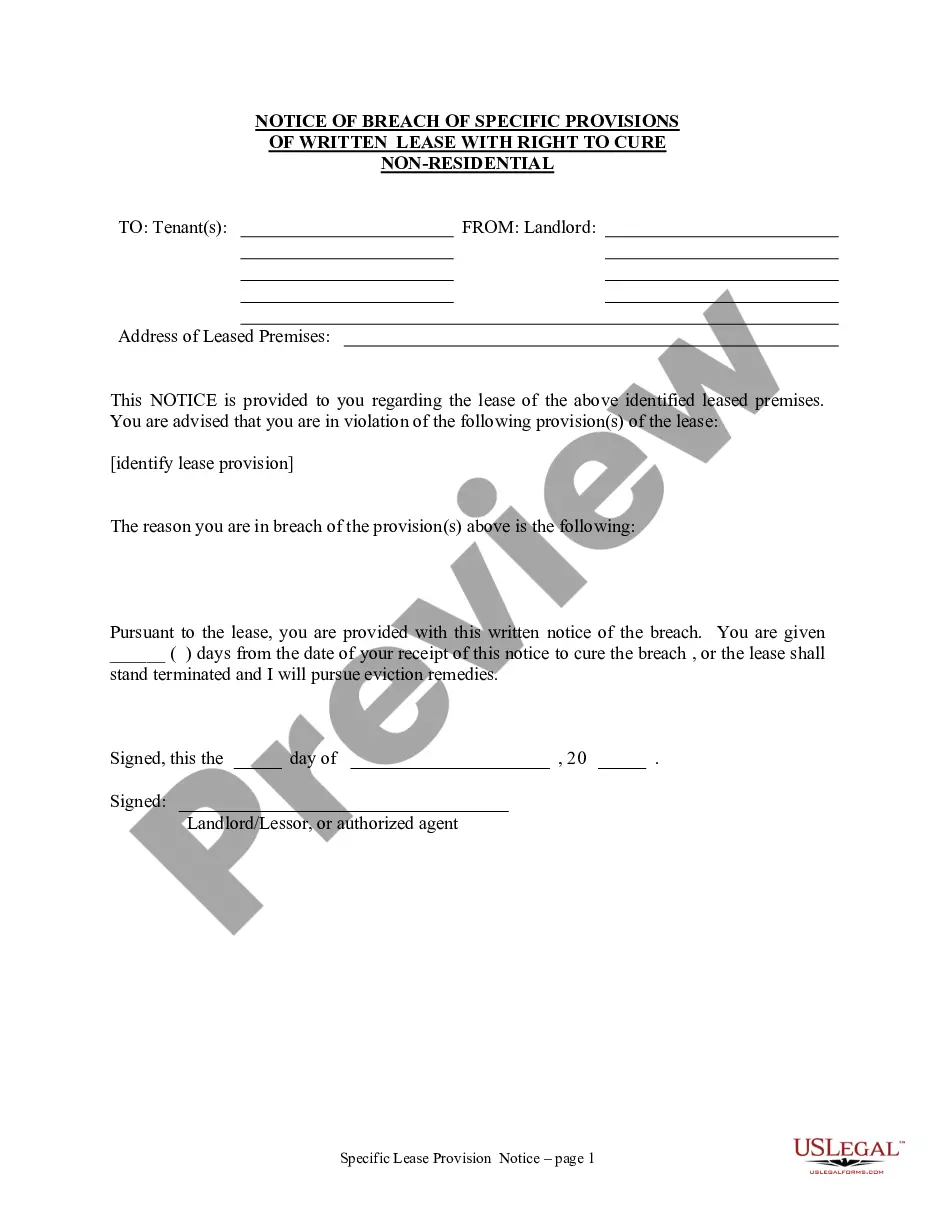
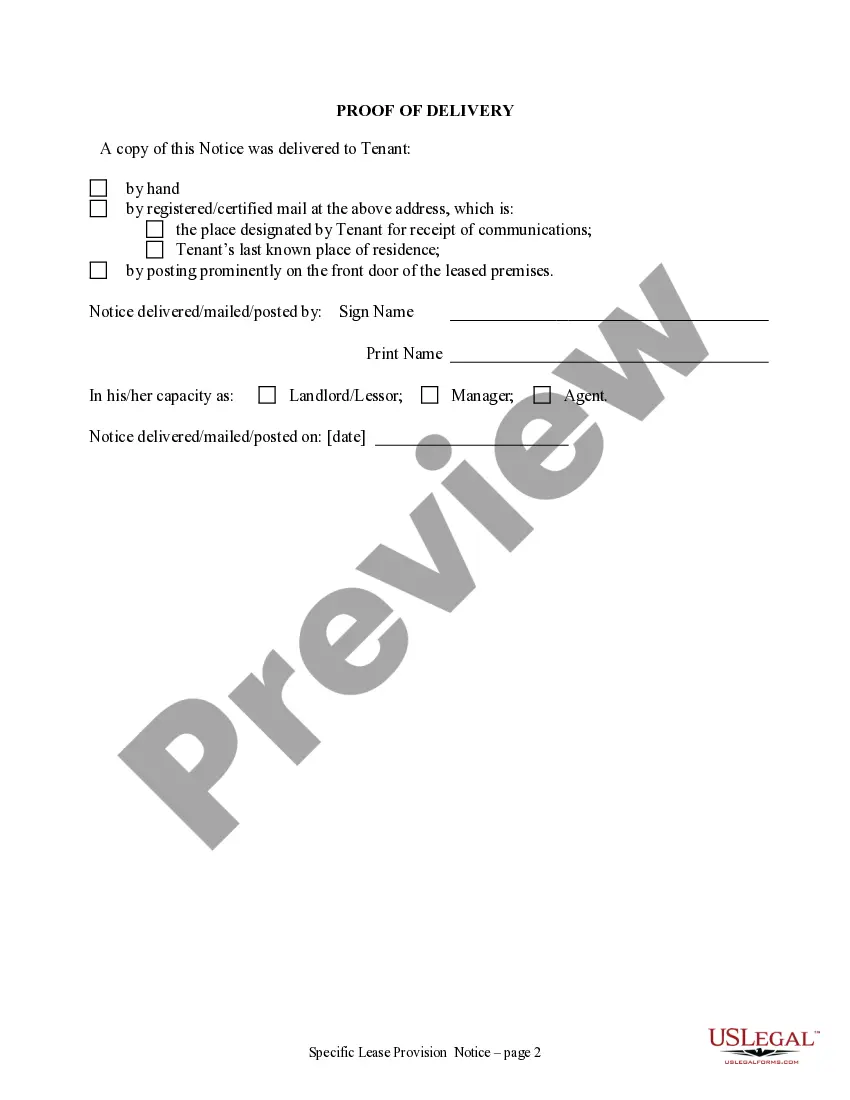
How to fill out Washington Notice Of Breach Of Written Lease For Violating Specific Provisions Of Lease With Right To Cure For Nonresidential Property From Landlord To Tenant?
- Log in to your US Legal Forms account. If you are a returning user, ensure that your subscription is active.
- Explore the available templates by checking the Preview mode. Verify that the selected form aligns with your specific requirements and local laws.
- If necessary, utilize the Search tab to find alternative templates until you identify the most suitable one.
- Proceed to purchase the document by clicking the Buy Now button. Choose your desired subscription plan after creating your account.
- Complete your transaction by entering your payment details via credit card or PayPal.
- Download the completed form onto your device and access it anytime through the My Forms section of your account.
With US Legal Forms, you gain access to a robust library equipped with over 85,000 customizable legal forms. This empowers you to create precise documents that adhere to legal standards, backed by the opportunity to consult premium experts for personalized assistance.
Start your journey towards seamless legal documentation today. Create your account and unlock the full potential of US Legal Forms.
Form popularity
FAQ
In New York, landlord retaliation occurs when a landlord takes adverse action against a tenant for exercising their legal rights, such as making complaints or requesting repairs. Actions like raising rent, attempting to evict the tenant, or cutting off essential services may qualify as retaliation. Understanding your rights as outlined in your written property landlord for tenant agreement is crucial in identifying and addressing such actions effectively.
To file a complaint against a landlord in New York, you can submit a complaint form through the New York State Division of Housing and Community Renewal's website or contact your local housing authority. Make sure to include detailed information about your situation and attach any relevant documents, such as your written property landlord for tenant agreement. Clear documentation increases the chances of a favorable outcome for your case.
If you encounter issues with your landlord in New York, you can report them to local housing authorities or the New York State Division of Housing and Community Renewal. Complaints about health or safety violations should also be directed to the city or county health department. Having a written property landlord for tenant agreement helps document your situation and provides necessary details for authorities to act on your behalf.
The New York State Division of Homes and Community Renewal operates a hotline dedicated to tenant rights. You can call 1-833-499-0343 to get assistance with various tenant-related issues and learn more about your rights. This resource is vital for tenants seeking guidance, especially regarding their written property landlord for tenant agreements. Staying informed is essential for protecting your rights.
In New York, a landlord cannot discriminate against tenants based on race, religion, gender, or disability. Additionally, they must provide a habitable living environment, including necessary repairs and maintenance. They also cannot unlawfully evict tenants without following the proper legal procedures. Understanding your rights as a tenant and the responsibilities of a written property landlord for tenant can help you address any misconduct effectively.
Verbal rental agreements may hold up in court, but they often lead to disputes due to lack of clear, written evidence. To ensure enforceability and clarity, it is wise to use a written property landlord for tenant lease. This written documentation provides clear terms for both parties, reducing potential conflicts and misunderstandings.
Yes, you can write your own lease agreement. However, it is crucial to include essential terms and conditions to make it enforceable. A written property landlord for tenant template can guide you in creating a legally sound document. This approach protects your interests and enhances transparency.
Documenting rental property involves creating a written agreement that outlines all terms. Include details such as lease duration, rent amount, and any specific rules. Using a written property landlord for tenant agreement template simplifies this process. It ensures that you have a comprehensive record that protects both parties.
Hand-written leases are legal if they meet the basic requirements of a lease agreement. Such requirements include clear terms about rent, duration, and responsibilities of both parties. For added assurance, consider using a written property landlord for tenant template. This helps avoid potential legal disputes and ensures completeness.
In Arizona, a landlord cannot refuse to rent based on race, gender, or religion, nor can they harass or enter a tenant's property without notice. Understanding tenant rights helps landlords create fair and effective agreements. Utilize a written property landlord for tenant document that outlines responsibilities and protections clearly. This practice fosters a respectful and legal rental relationship.