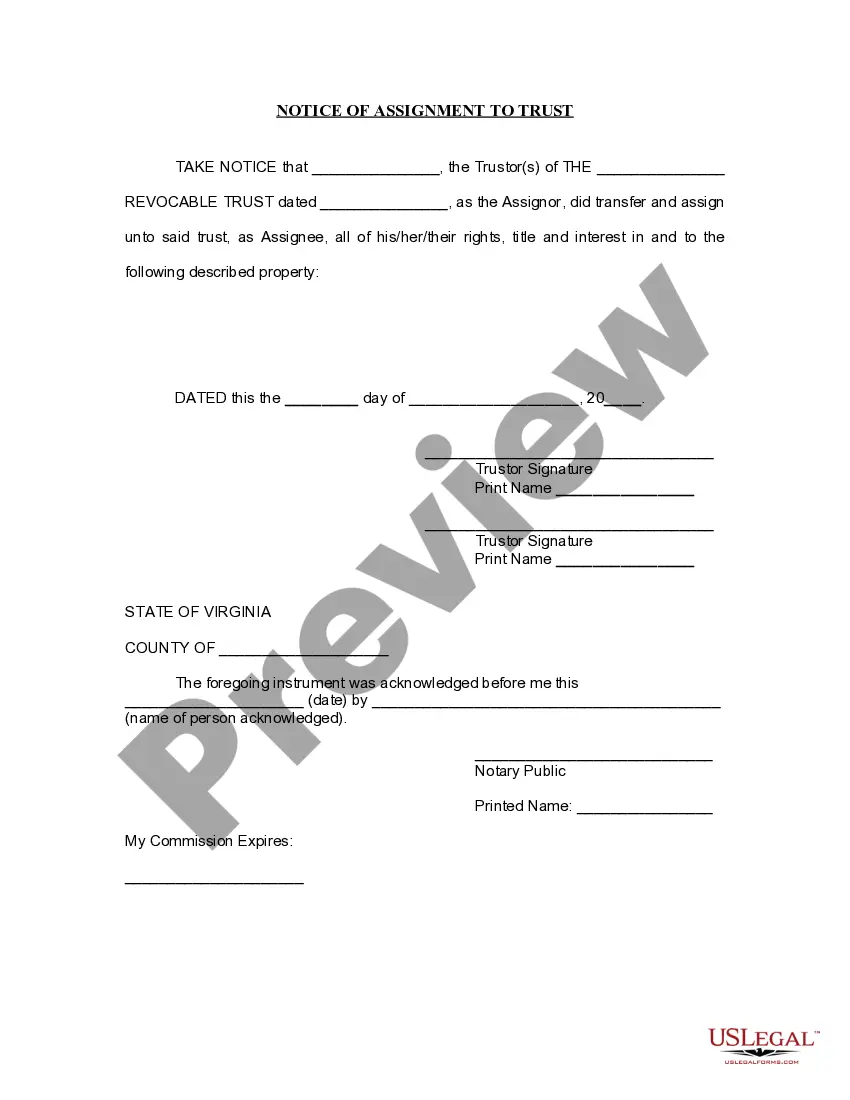
Virginia Living Trust With Beneficiary
Description

Get your form ready online
Our built-in tools help you complete, sign, share, and store your documents in one place.
Make edits, fill in missing information, and update formatting in US Legal Forms—just like you would in MS Word.
Download a copy, print it, send it by email, or mail it via USPS—whatever works best for your next step.
Sign and collect signatures with our SignNow integration. Send to multiple recipients, set reminders, and more. Go Premium to unlock E-Sign.
If this form requires notarization, complete it online through a secure video call—no need to meet a notary in person or wait for an appointment.
We protect your documents and personal data by following strict security and privacy standards.

Make edits, fill in missing information, and update formatting in US Legal Forms—just like you would in MS Word.

Download a copy, print it, send it by email, or mail it via USPS—whatever works best for your next step.

Sign and collect signatures with our SignNow integration. Send to multiple recipients, set reminders, and more. Go Premium to unlock E-Sign.

If this form requires notarization, complete it online through a secure video call—no need to meet a notary in person or wait for an appointment.

We protect your documents and personal data by following strict security and privacy standards.
Looking for another form?









How to fill out Virginia Notice Of Assignment To Living Trust?
Handling legal documents and processes can be a lengthy addition to your day.
Virginia Living Trust With Beneficiary and similar forms generally require you to search for them and learn how to fill them out correctly.
Therefore, whether you are managing financial, legal, or personal issues, having a comprehensive and user-friendly online directory of forms readily available will be very beneficial.
US Legal Forms is the leading online platform for legal templates, providing over 85,000 state-specific documents and various tools to help you complete your paperwork with ease.
Is this your first time using US Legal Forms? Register and set up your account in a few minutes to access the form directory and Virginia Living Trust With Beneficiary. Then, follow the steps outlined below to complete your form: Make sure you have located the correct form using the Review feature and reading the form details. Select Buy Now when ready, and choose the subscription plan that fits your needs. Click Download, then fill out, eSign, and print the form. US Legal Forms has twenty-five years of experience assisting clients with their legal documentation. Find the form you need today and streamline any process effortlessly.
- Explore the directory of pertinent documents accessible with a single click.
- US Legal Forms provides state- and county-specific forms available for download at any time.
- Safeguard your document management processes with a premium service that allows you to prepare any form in minutes without extra or concealed fees.
- Simply Log In to your account, find Virginia Living Trust With Beneficiary, and obtain it immediately from the My documents section.
- You can also retrieve previously saved forms.
Form popularity
FAQ
You live in your home and spend what you want. After you die, you continue to maintain control over the trust because the assets stay in the trust until the dates you choose for distribution to your beneficiaries. Some people choose specific ages for beneficiaries to inherit to ensure maturity.
Duty to inform and report. A. A trustee shall keep the qualified beneficiaries of the trust reasonably informed about the administration of the trust and of the material facts necessary for them to protect their interests.
The beneficiaries receive a benefit from the trust assets. Under Virginia law, a beneficiary may be a person, animal or charity. Some frequently used types of trusts in Virginia include: Revocable Living Trusts.
To leave property to your living trust, name your trust as beneficiary for that property, using the trustee's name and the name of the trust. For example: John Doe as trustee of the John Doe Living Trust, dated January 1, 20xx.
The primary disadvantage of naming a trust as beneficiary is that the retirement plan's assets will be subjected to required minimum distribution (RMD) payouts, which are calculated based on the life expectancy of the oldest beneficiary.