Utah Divorce And Custody Laws
Description
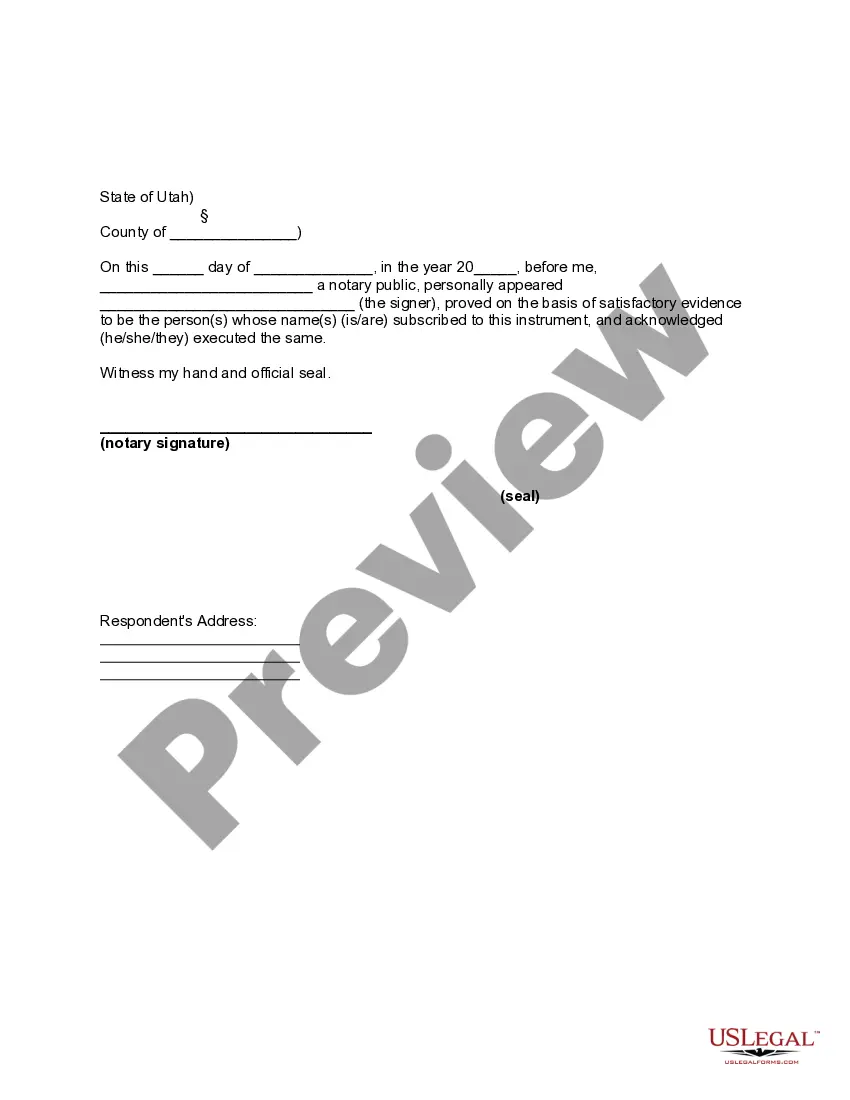
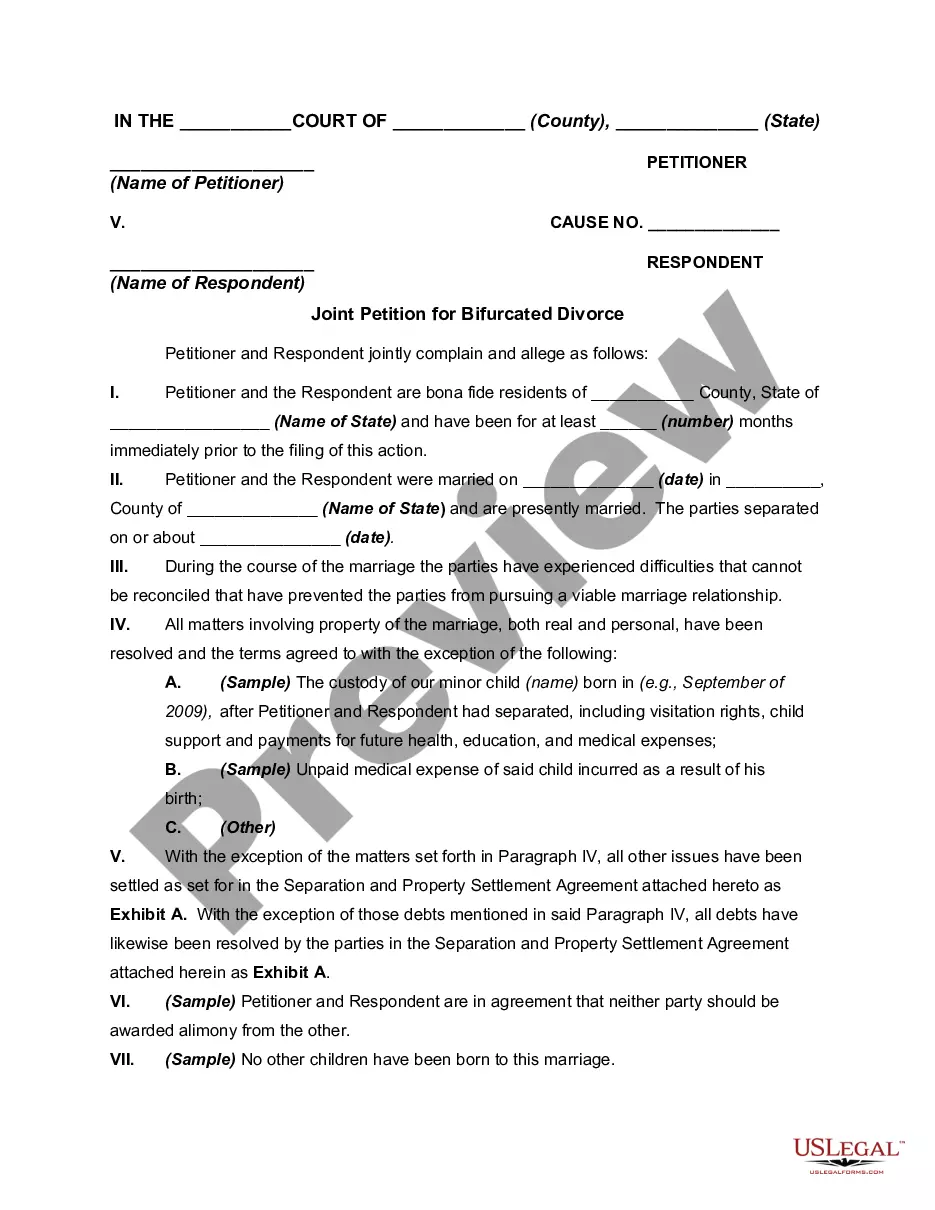
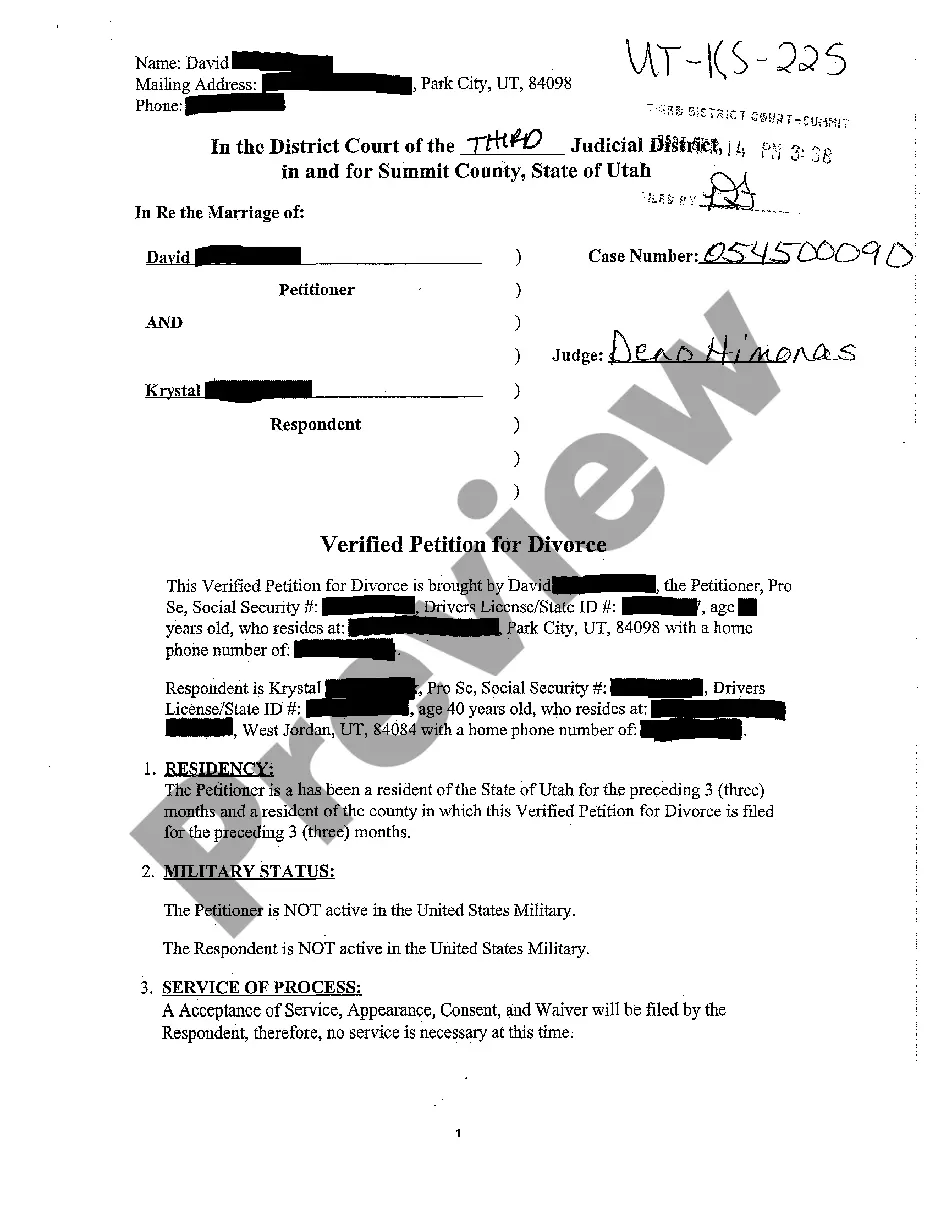
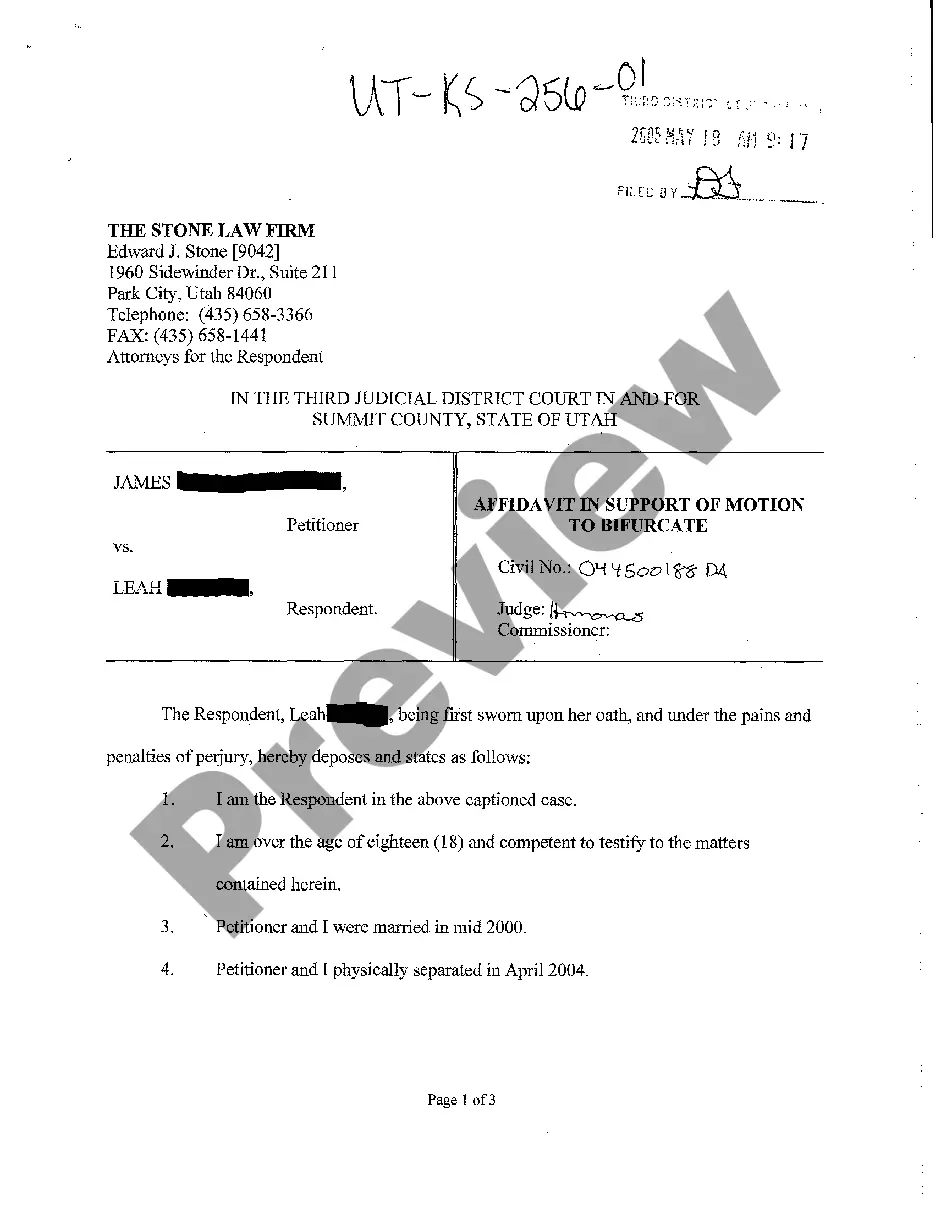
Get your form ready online
Our built-in tools help you complete, sign, share, and store your documents in one place.
Make edits, fill in missing information, and update formatting in US Legal Forms—just like you would in MS Word.
Download a copy, print it, send it by email, or mail it via USPS—whatever works best for your next step.
Sign and collect signatures with our SignNow integration. Send to multiple recipients, set reminders, and more. Go Premium to unlock E-Sign.
If this form requires notarization, complete it online through a secure video call—no need to meet a notary in person or wait for an appointment.
We protect your documents and personal data by following strict security and privacy standards.

Make edits, fill in missing information, and update formatting in US Legal Forms—just like you would in MS Word.

Download a copy, print it, send it by email, or mail it via USPS—whatever works best for your next step.

Sign and collect signatures with our SignNow integration. Send to multiple recipients, set reminders, and more. Go Premium to unlock E-Sign.

If this form requires notarization, complete it online through a secure video call—no need to meet a notary in person or wait for an appointment.

We protect your documents and personal data by following strict security and privacy standards.
Looking for another form?









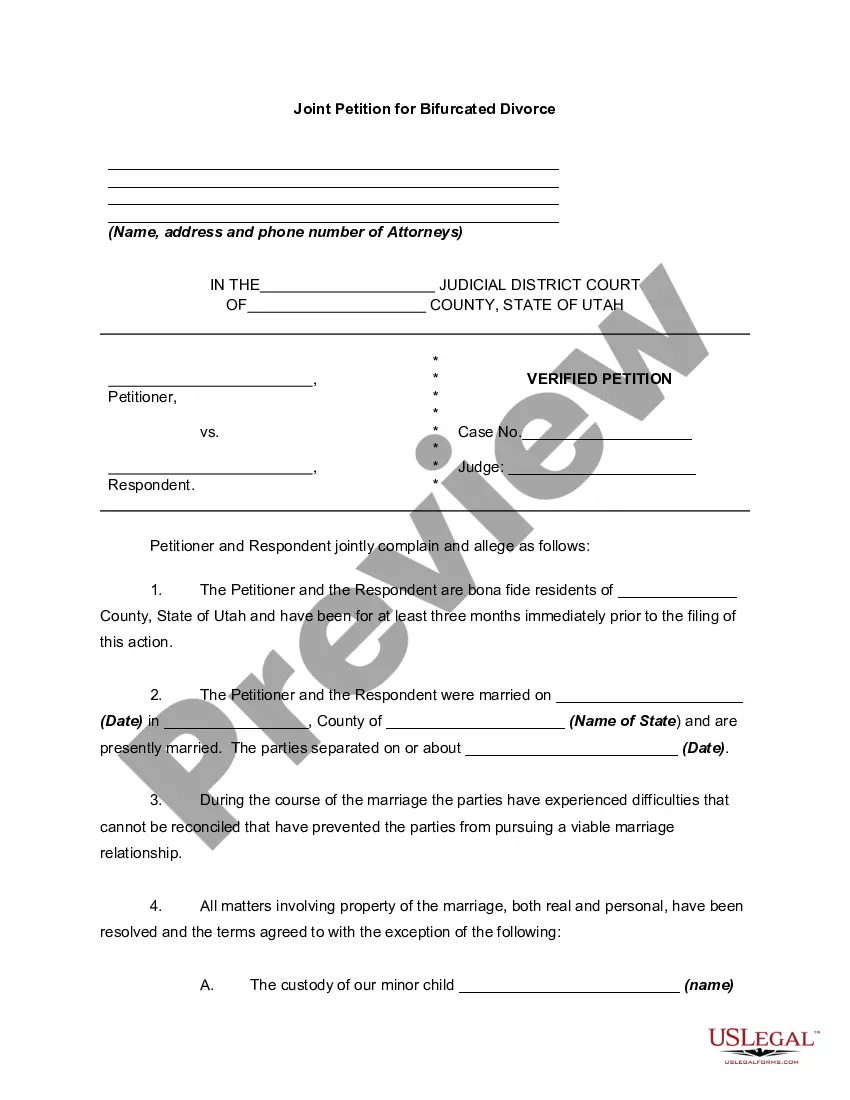
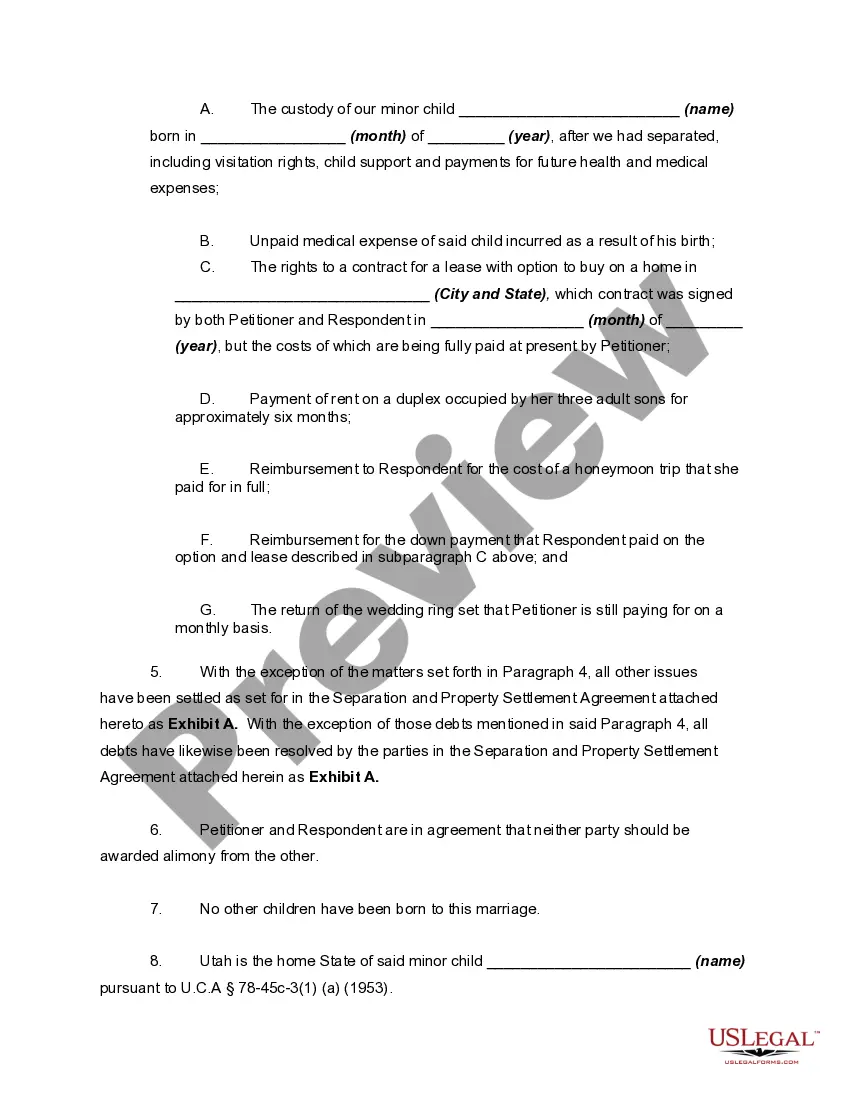
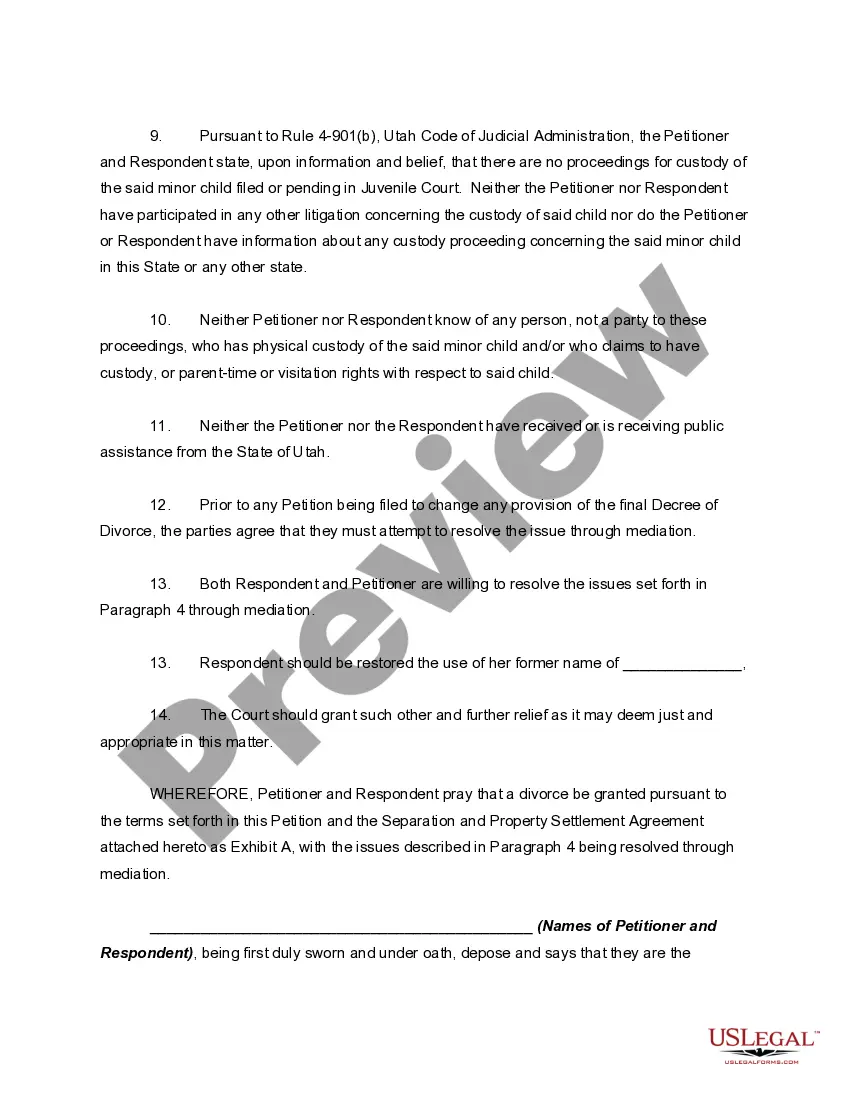
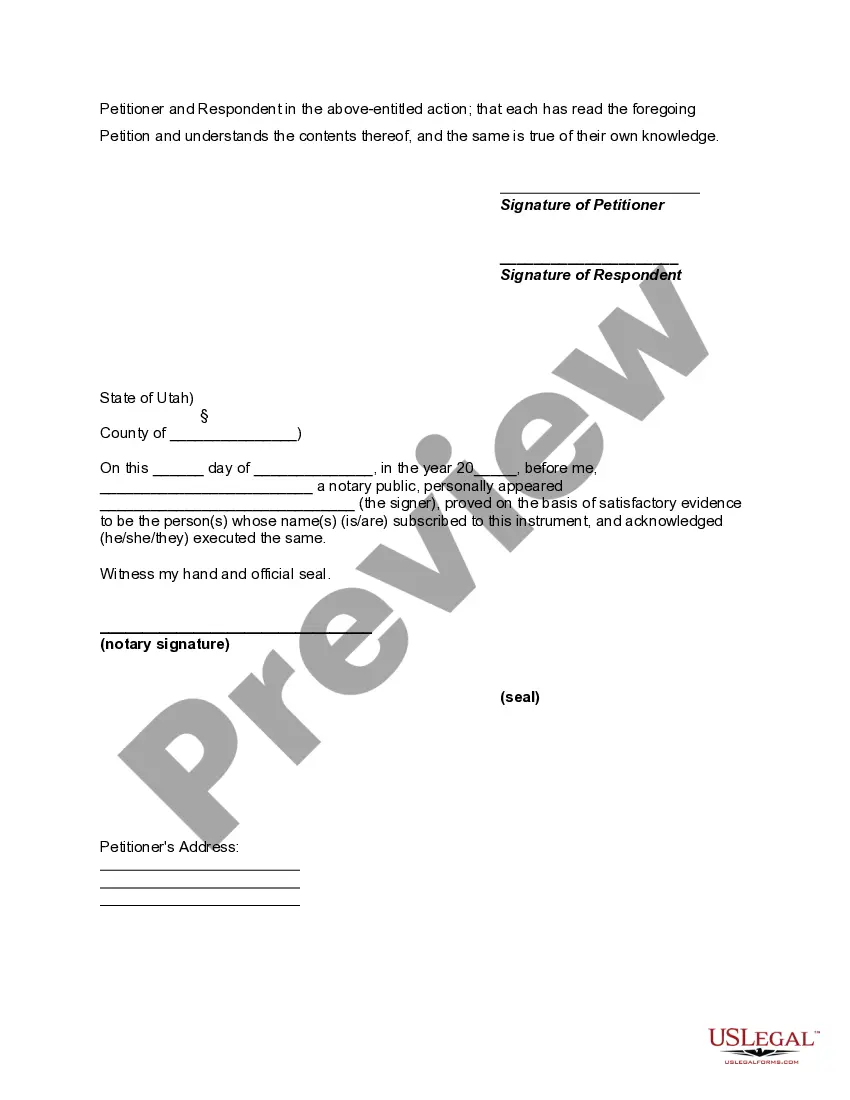
How to fill out Utah Joint Petition For Bifurcated Divorce - Bifurcation?
It’s clear that you can’t rapidly become a legal specialist, nor can you quickly learn to draft Utah Divorce And Custody Laws without possessing a particular skill set.
Formulating legal documents is a lengthy endeavor that necessitates specific training and expertise.
So why not leave the drafting of the Utah Divorce And Custody Laws to the professionals.
You can revisit your documents from the My documents tab at any time.
If you’re an existing client, you can effortlessly Log In, and locate and download the template from the same tab.
- Access the document you require through the search bar at the top of the page.
- Preview it (if this option is provided) and read the accompanying description to see if Utah Divorce And Custody Laws is what you need.
- Start your search again if you require another template.
- Sign up for a complimentary account and select a subscription option to purchase the form.
- Click Buy now. Once the payment is confirmed, you can download the Utah Divorce And Custody Laws, complete it, print it, and send or mail it to the designated recipients or organizations.
Form popularity
FAQ
Failure to co-parent can manifest in various ways, such as one parent consistently undermining the other's decisions or refusing to share important information regarding the child's education and health. This lack of collaboration can damage the child's emotional stability and erode trust between parents. Understanding how these behaviors are viewed under Utah divorce and custody laws can help you recognize the importance of effective co-parenting for your child's benefit.
In a custody battle, several factors can work against you, including a lack of communication with your co-parent and failure to demonstrate your commitment to your child's well-being. Courts often look for evidence of cooperation and a willingness to support the child's relationship with both parents. Familiarizing yourself with Utah divorce and custody laws can help you avoid common pitfalls and strengthen your position during these challenging situations.
The new child custody law in Utah emphasizes the importance of shared parenting and encourages both parents to remain actively involved in their children's lives. It aims to create a balanced approach that serves the best interests of the child while ensuring both parents have a voice in custody arrangements. Understanding these laws is essential for any parent navigating Utah divorce and custody laws, as they can significantly impact custody outcomes.
Although your focus may be on Utah divorce and custody laws, it’s helpful to know that custody in Nebraska is also based on the child's best interests, which include factors like the child's age, the parents' relationship with the child, and the stability of each home. Each state has unique processes, so familiarize yourself with local laws if you're considering a custody case in another state. Consulting legal resources can further clarify these distinctions.
In a custody case, behaviors such as neglect, substance abuse, or failure to comply with court orders can negatively impact your chances. Courts often scrutinize parental conduct, so maintaining a stable environment and showing engagement in your child's life is essential. Understanding these factors can help you navigate the complexities of Utah divorce and custody laws more effectively.
One of the biggest mistakes in a custody battle is failing to prioritize the child's best interests. Instead of focusing on winning at all costs, it is vital to approach the situation with a cooperative mindset. Keeping communication respectful and documenting any relevant interactions can improve your standing in accordance with Utah divorce and custody laws.
When filing for custody in Utah, start by determining the appropriate court for your case, usually the district court in your county. Make sure to prepare the required forms, which can often be found online or at the courthouse. Additionally, you can leverage platforms like uslegalforms to access customizable legal documents tailored to Utah divorce and custody laws, which can streamline your filing process.
To begin the custody process under Utah divorce and custody laws, first gather necessary documentation, including any existing custody agreements and evidence of your relationship with the child. Next, consider consulting a family law attorney who specializes in Utah divorce and custody laws to guide you through the legal steps. Filing a petition with the court is crucial, as this will formally initiate the custody proceedings.