Last Will In Spanish With C
Description
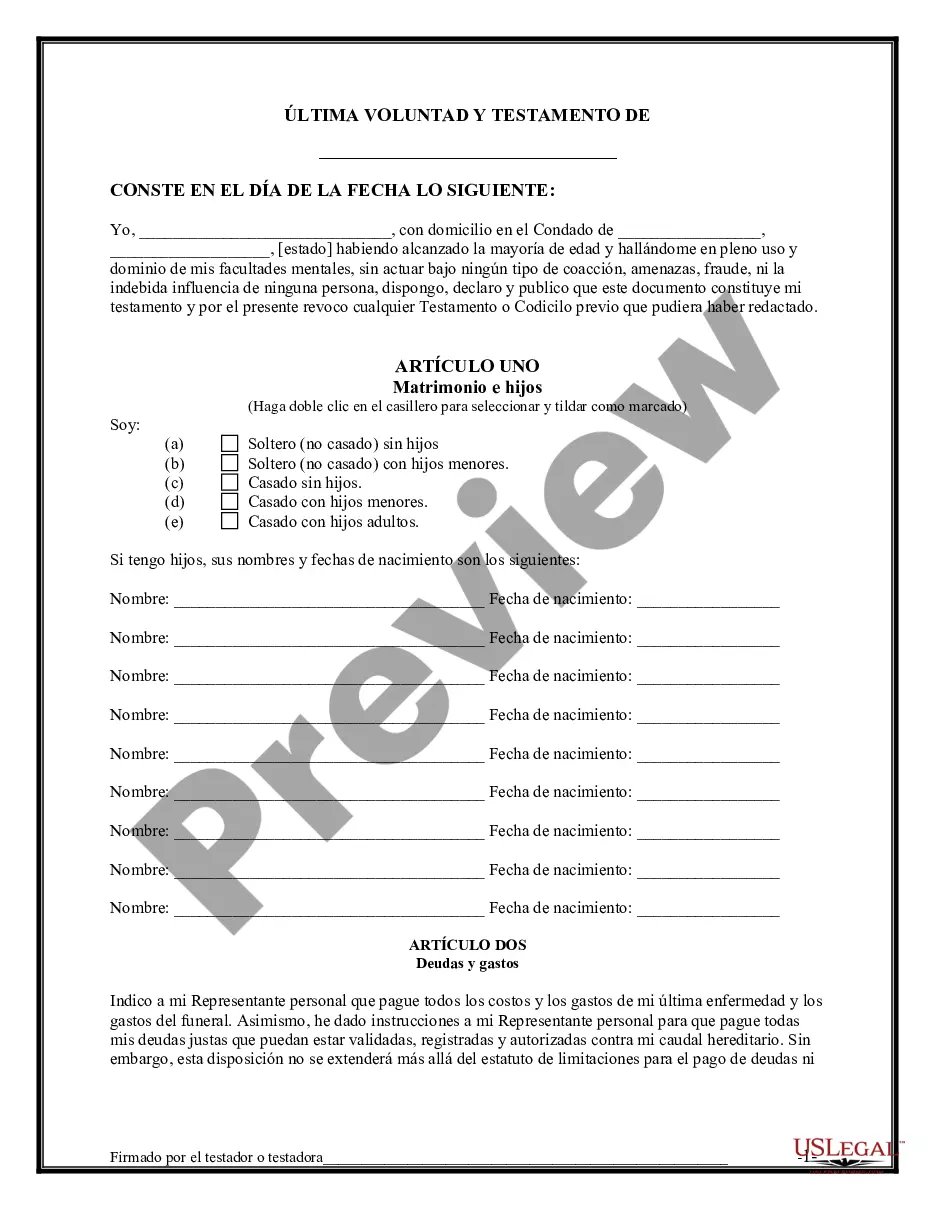
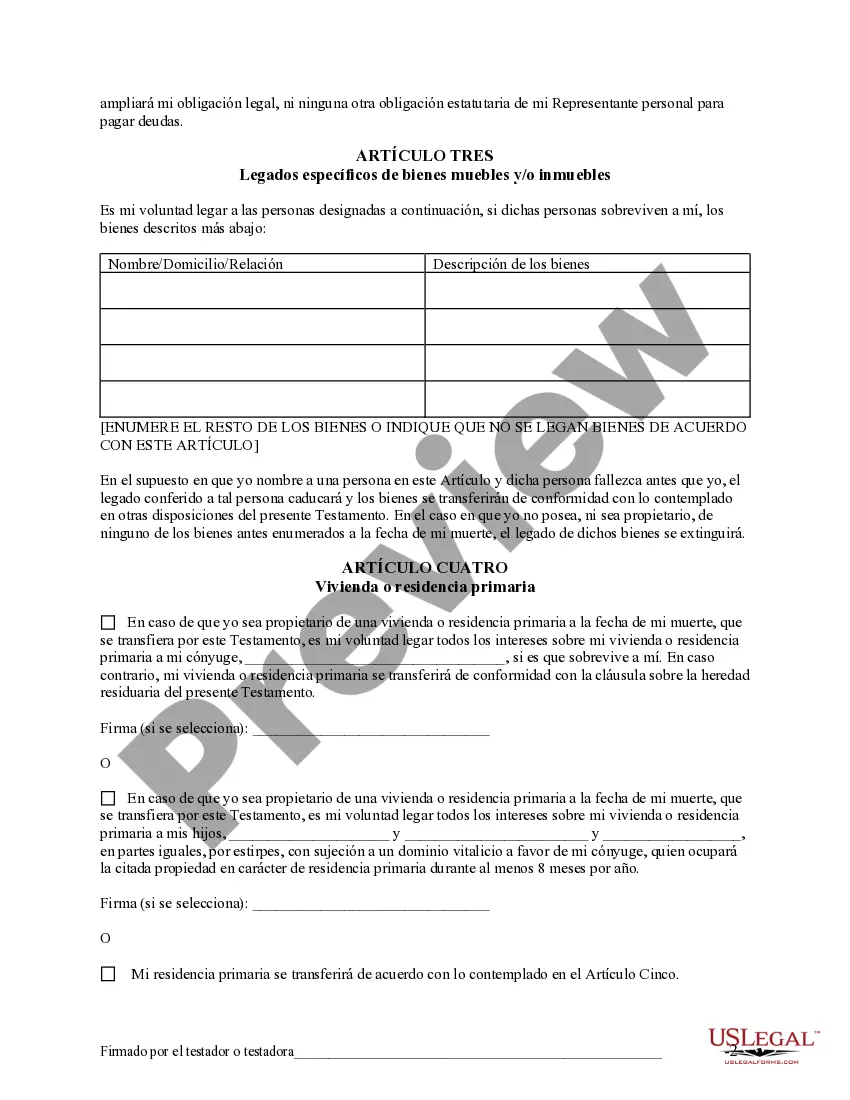
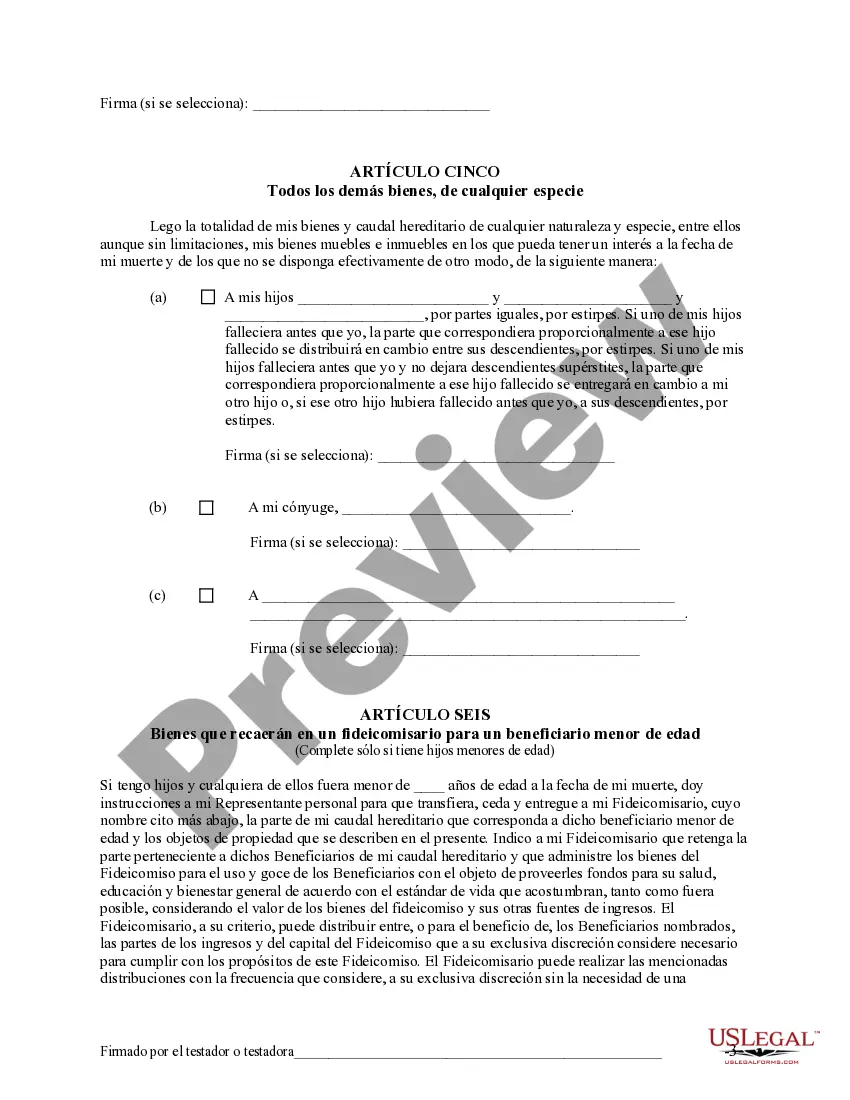
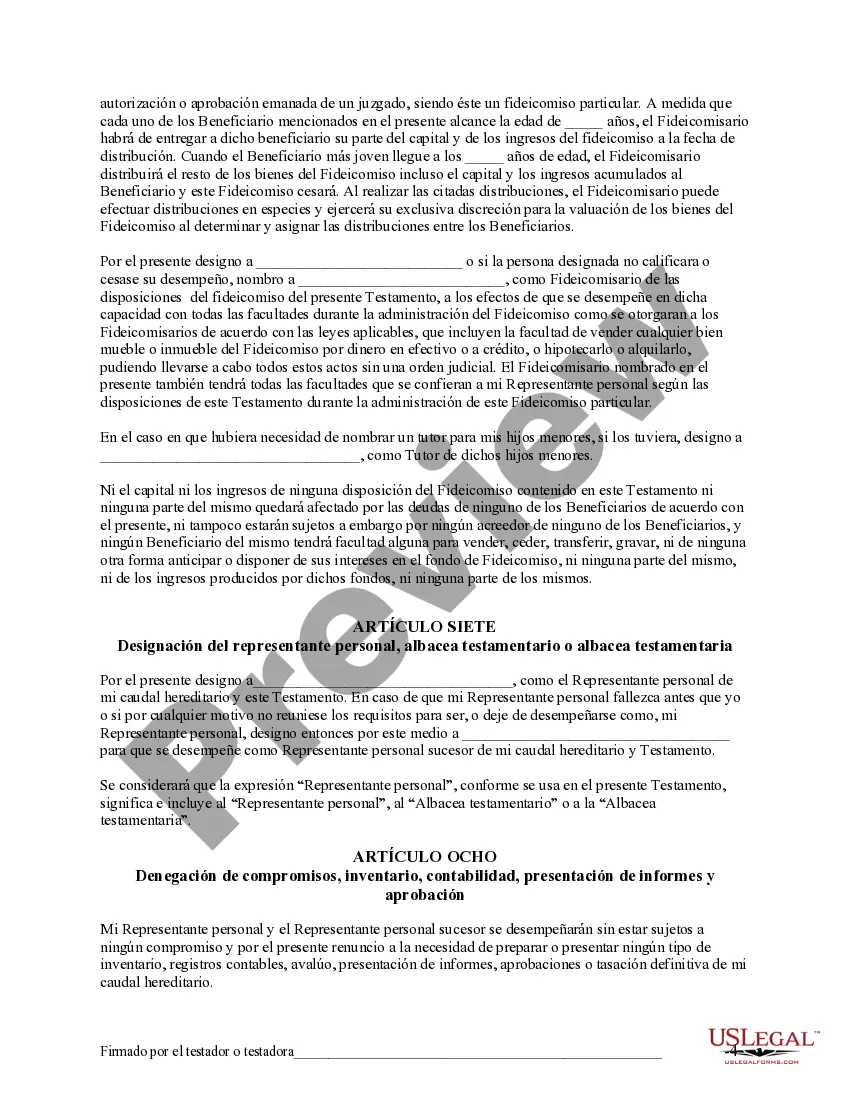
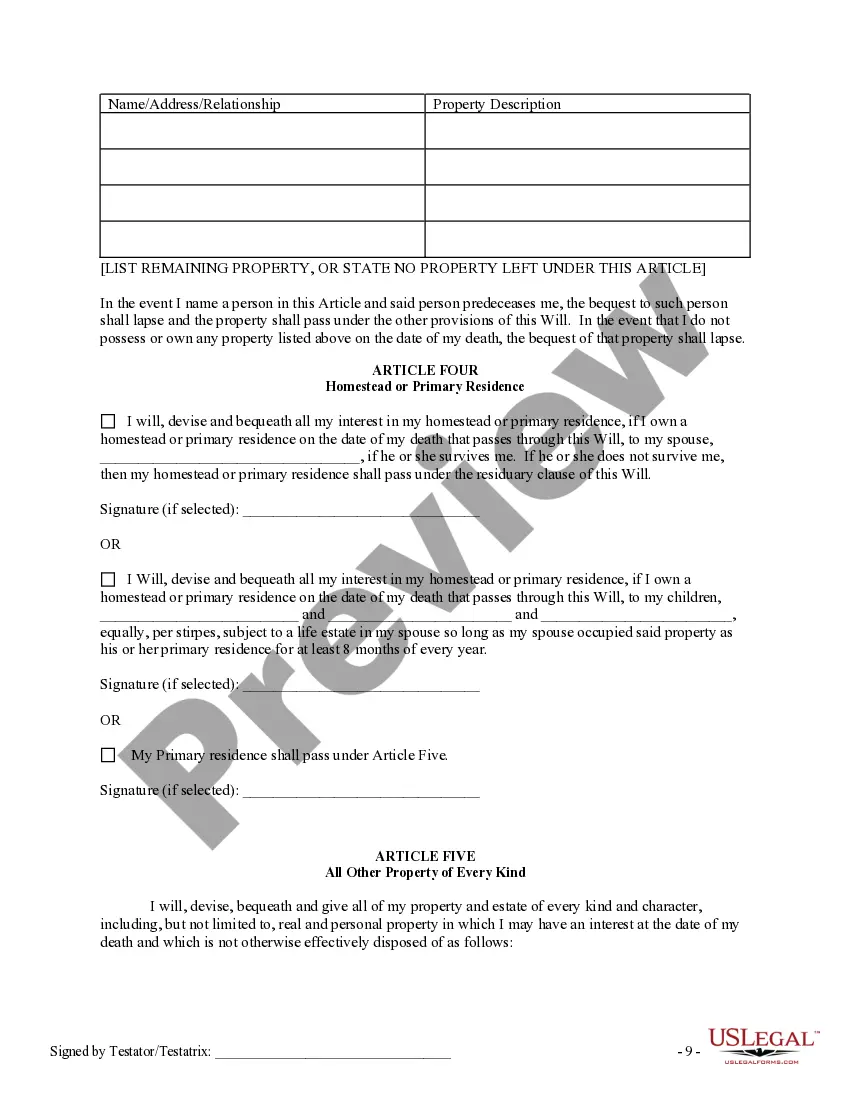
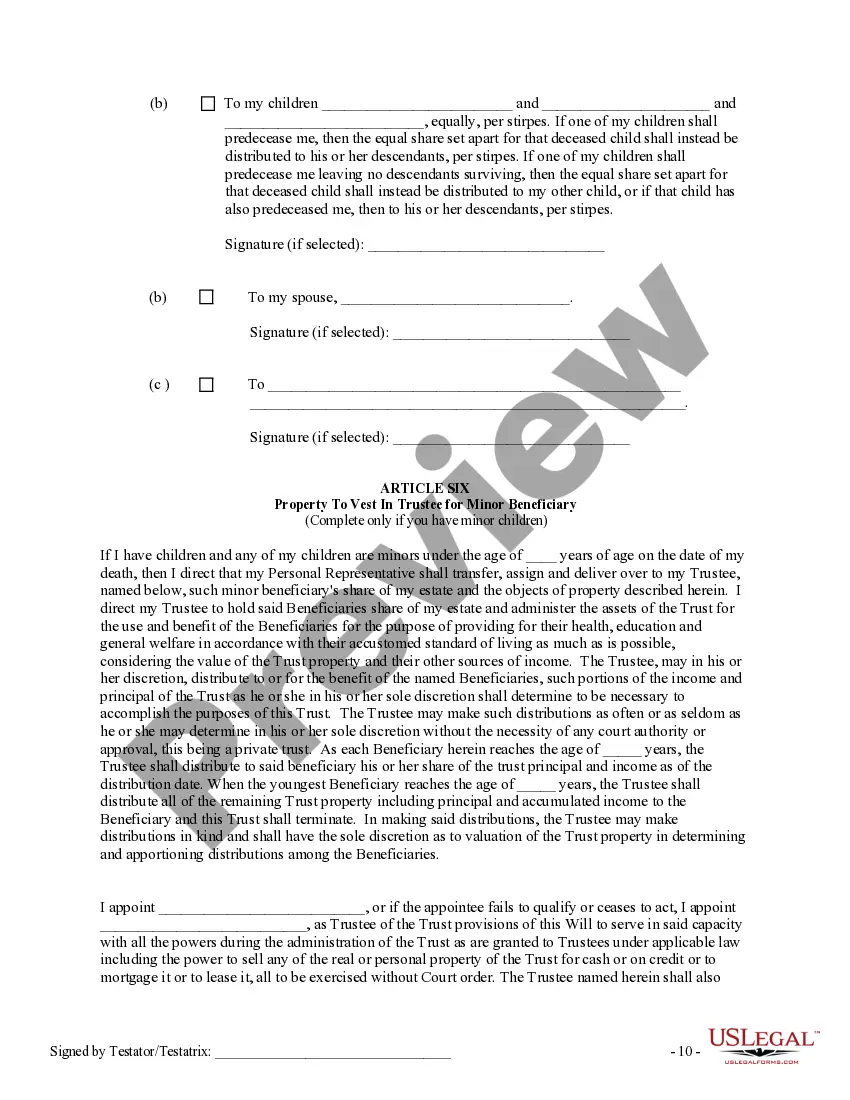


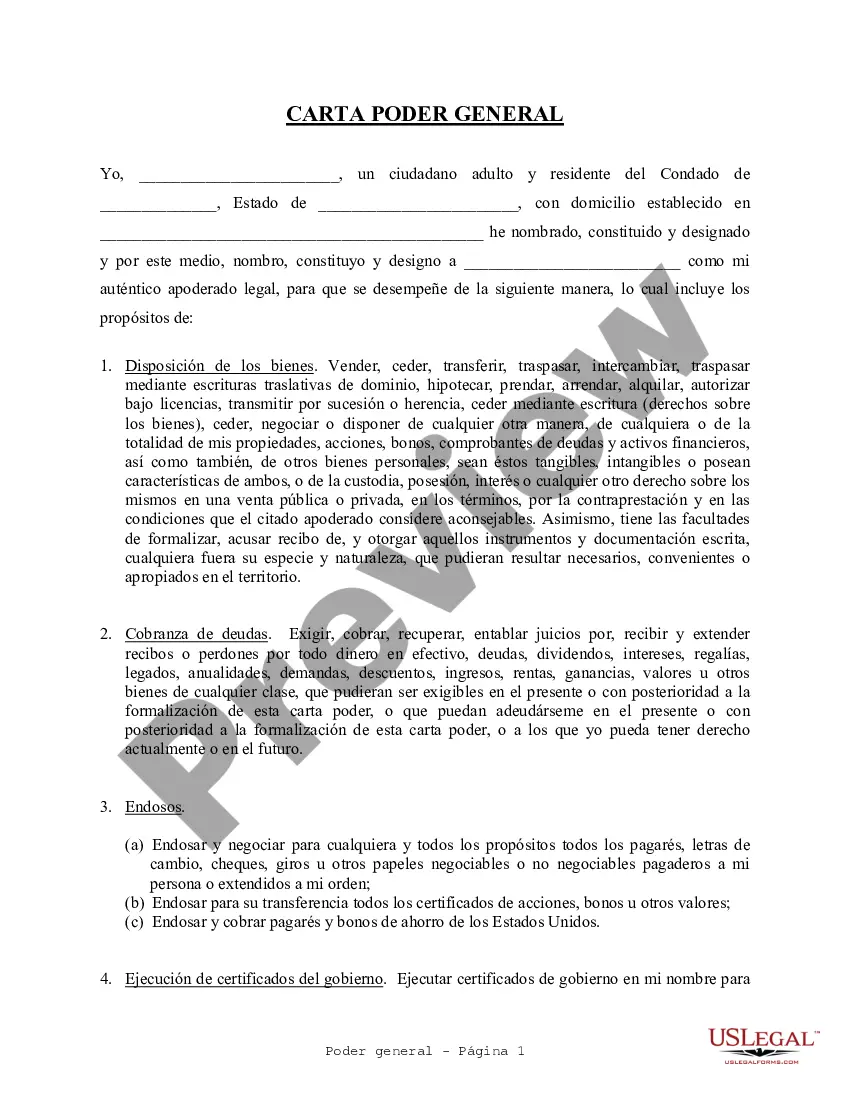
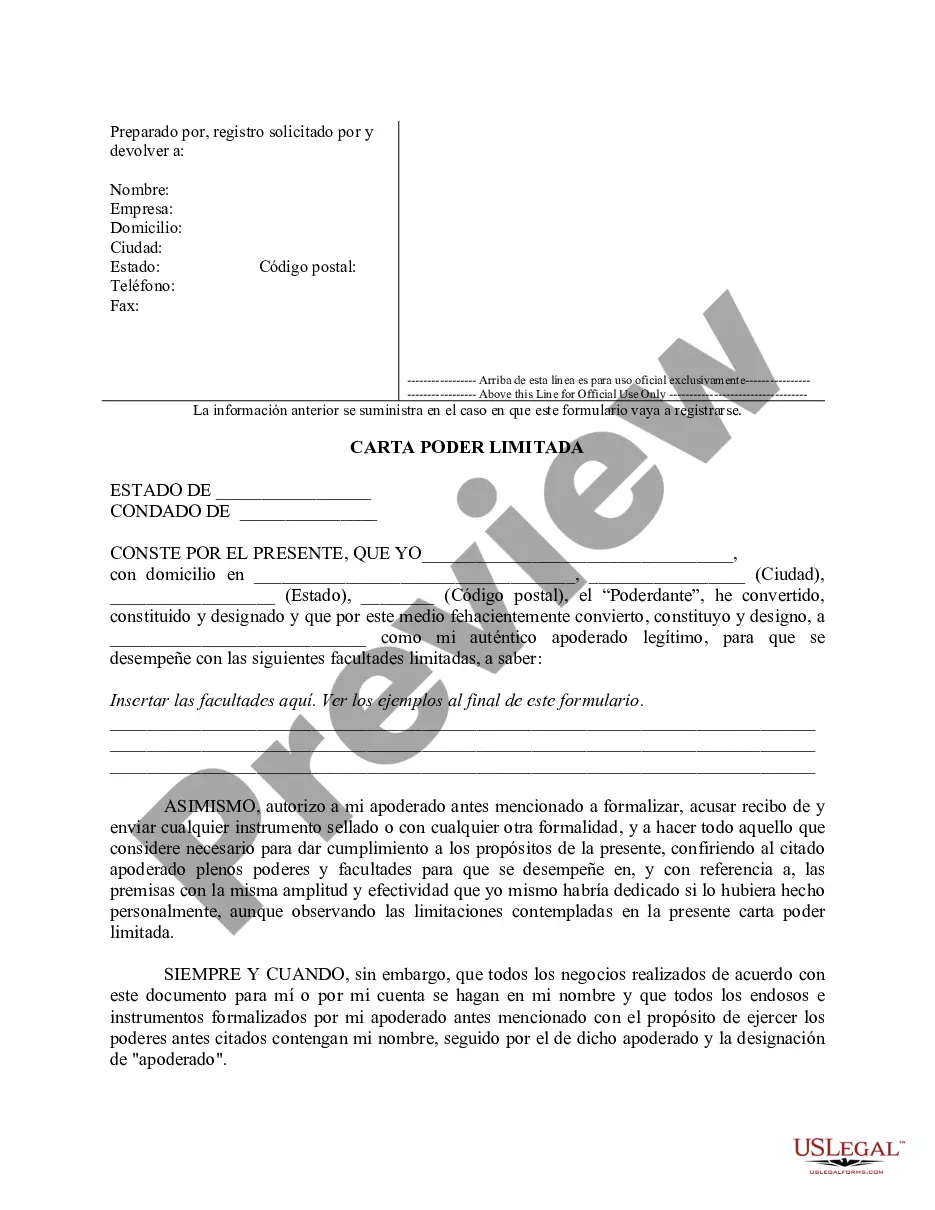
Get your form ready online
Our built-in tools help you complete, sign, share, and store your documents in one place.
Make edits, fill in missing information, and update formatting in US Legal Forms—just like you would in MS Word.
Download a copy, print it, send it by email, or mail it via USPS—whatever works best for your next step.
Sign and collect signatures with our SignNow integration. Send to multiple recipients, set reminders, and more. Go Premium to unlock E-Sign.
If this form requires notarization, complete it online through a secure video call—no need to meet a notary in person or wait for an appointment.
We protect your documents and personal data by following strict security and privacy standards.

Make edits, fill in missing information, and update formatting in US Legal Forms—just like you would in MS Word.

Download a copy, print it, send it by email, or mail it via USPS—whatever works best for your next step.

Sign and collect signatures with our SignNow integration. Send to multiple recipients, set reminders, and more. Go Premium to unlock E-Sign.

If this form requires notarization, complete it online through a secure video call—no need to meet a notary in person or wait for an appointment.

We protect your documents and personal data by following strict security and privacy standards.
Looking for another form?






How to fill out Ultima Voluntad Y Testamento - Last Will And Testament?
Whether for commercial reasons or for individual issues, everyone must confront legal circumstances at some time in their lives.
Completing legal paperwork necessitates meticulous care, starting from selecting the correct form template.
With a vast US Legal Forms directory available, you never need to waste time searching for the right template online. Utilize the library's easy navigation to find the suitable template for any occasion.
- Obtain the template you require by using the search bar or catalog browsing.
- Review the form's description to verify it aligns with your circumstances, state, and county.
- Click on the form's preview to examine it.
- If it is the incorrect document, return to the search feature to find the Last Will In Spanish With C sample you need.
- Acquire the template if it satisfies your requirements.
- If you already possess a US Legal Forms account, just click Log in to access previously saved documents in My documents.
- If you do not have an account yet, you can obtain the form by clicking Buy now.
- Select the appropriate pricing option.
- Complete the profile registration form.
- Choose your payment method: you can use a credit card or PayPal account.
- Select the desired file format and download the Last Will In Spanish With C.
- Once it is downloaded, you can fill out the form utilizing editing software or print it and complete it manually.
Form popularity
FAQ
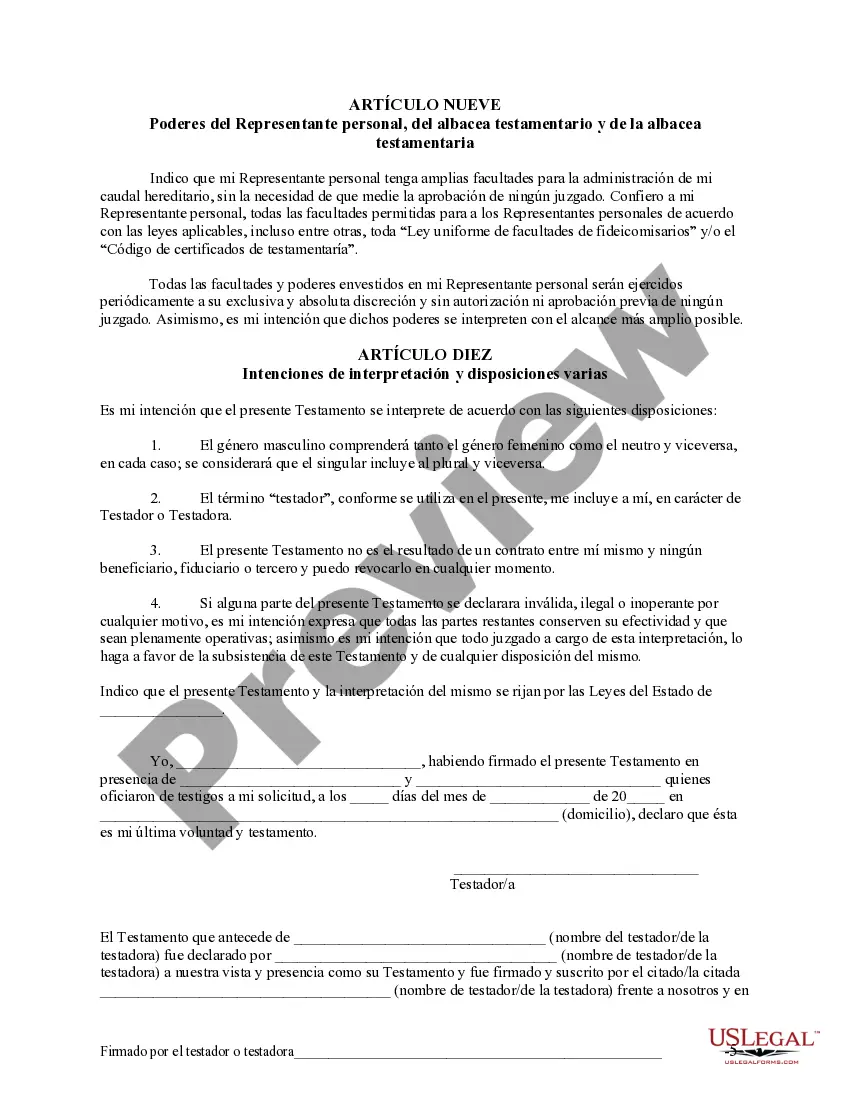
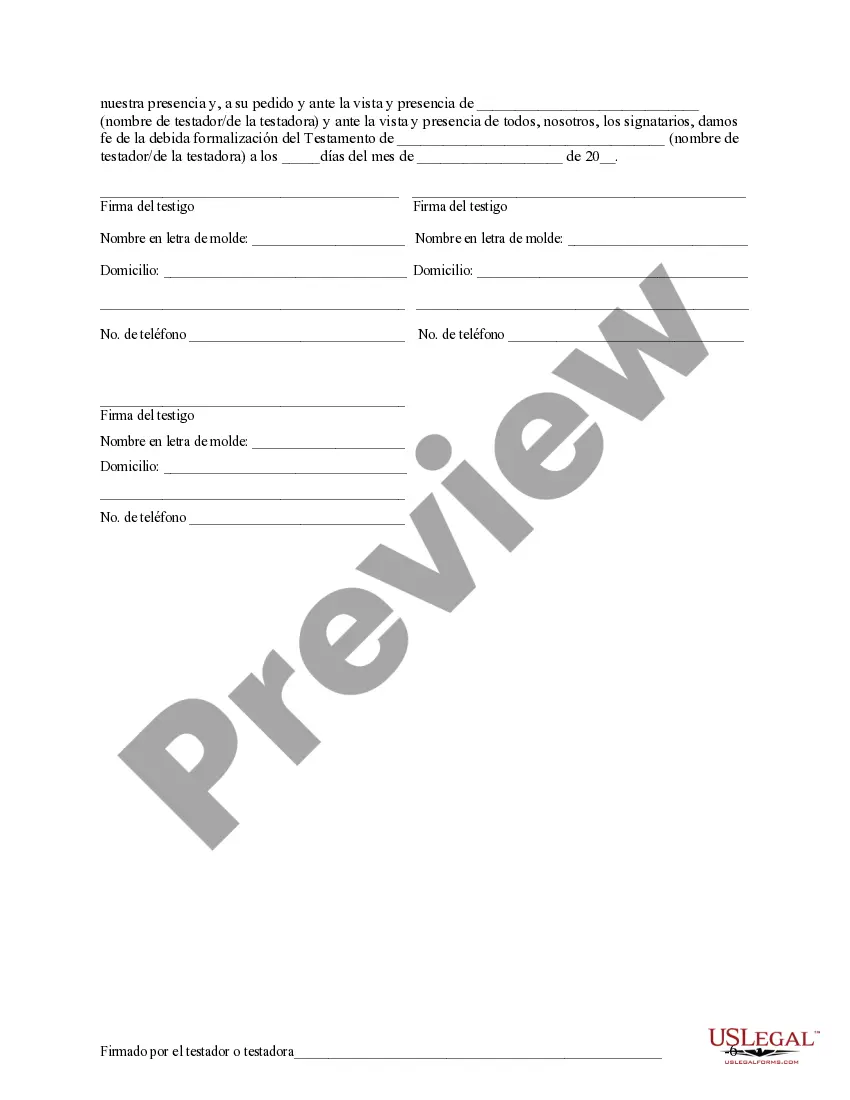
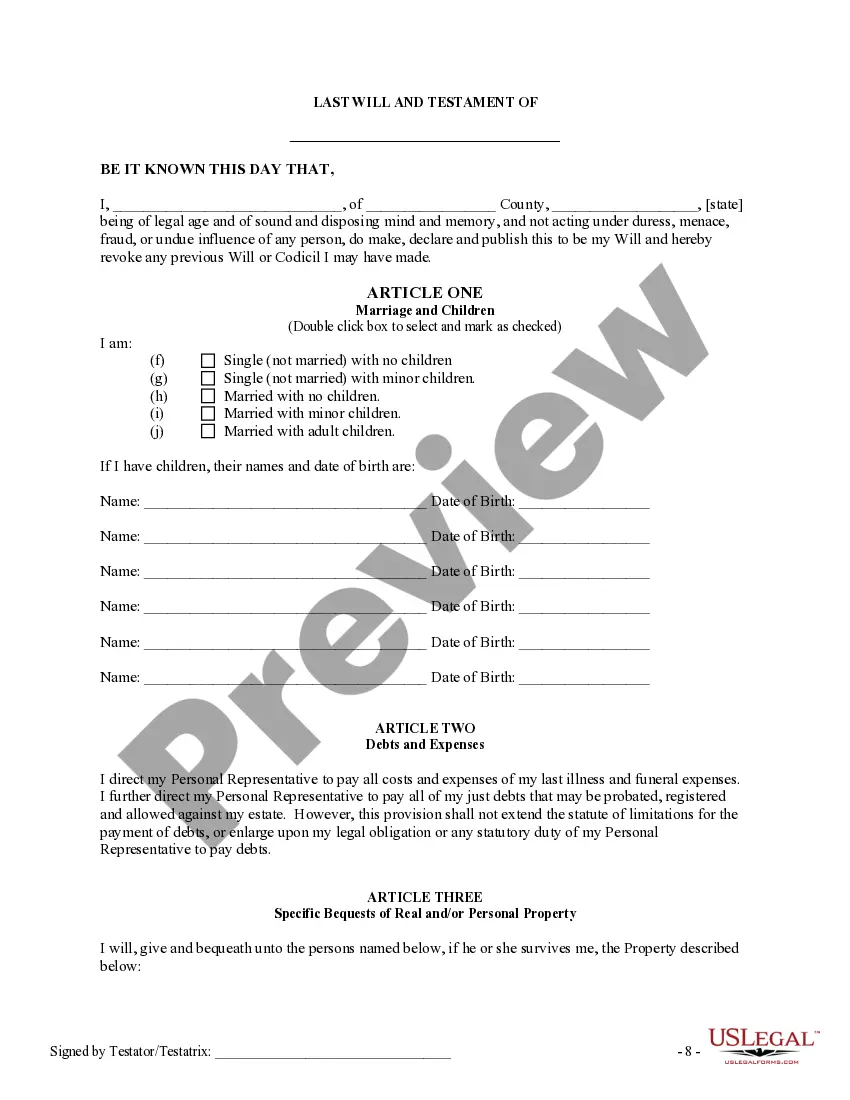
In Spanish, 'last will and testament' is translated as 'testamento.' This term is crucial for discussions related to estate planning and legal matters in Spanish-speaking communities. Using the correct terminology helps in accurately conveying your wishes to family members and legal representatives. If you're looking to create a document, you might want to consider a last will in Spanish with c for assistance.
Executors are bound to the terms of the will, which means that they are not permitted to change beneficiaries. The beneficiaries who were named by the decedent will remain beneficiaries so long as the portions of the will in which they appear are not invalidated through a successful will contest.
In Ontario, it is legal to write your own will as long as you've met all the criteria for a legal will. This means you can confidently create your will with an online platform, like Willful, or even by hand if you wish.
When you change your will, you are not required to advise your executor of the changes. However, since they carry a vital role in the enforcement of your will, we recommend letting them know of the modifications.
To make a will in Spain you must be over 14 years old, have your wishes in writing and it must be signed and certified before a 'notary'. It will then be registered at the central registry in Madrid, known as 'Registro General de Actos de Ultima Voluntad' (Central Registry of Wills).
Spanish succession law requires that a certain amount of the estate is left to children. This is often called 'forced heirship' and descendants must inherit two-thirds of their parents' inheritance: The first third must be distributed equally to all children or other descendants.