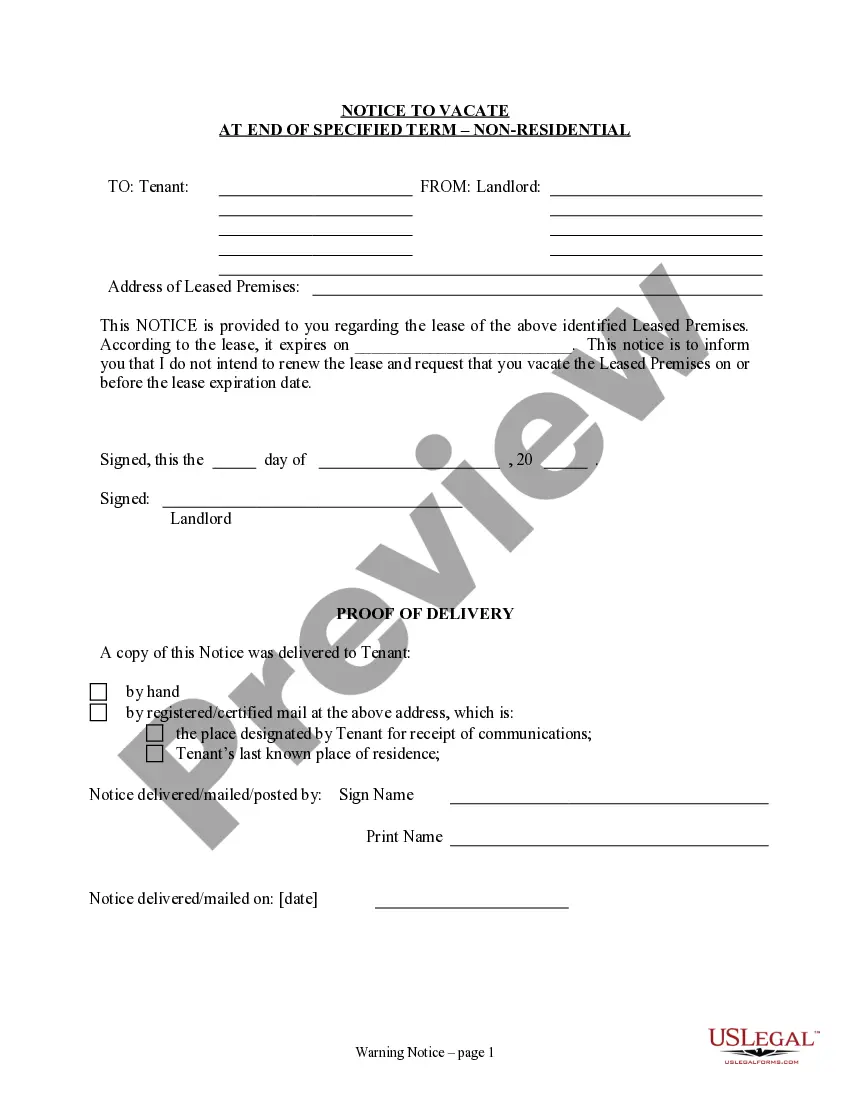
ACCOMPLICE-INFORMANT-IMMUNITY
About this form
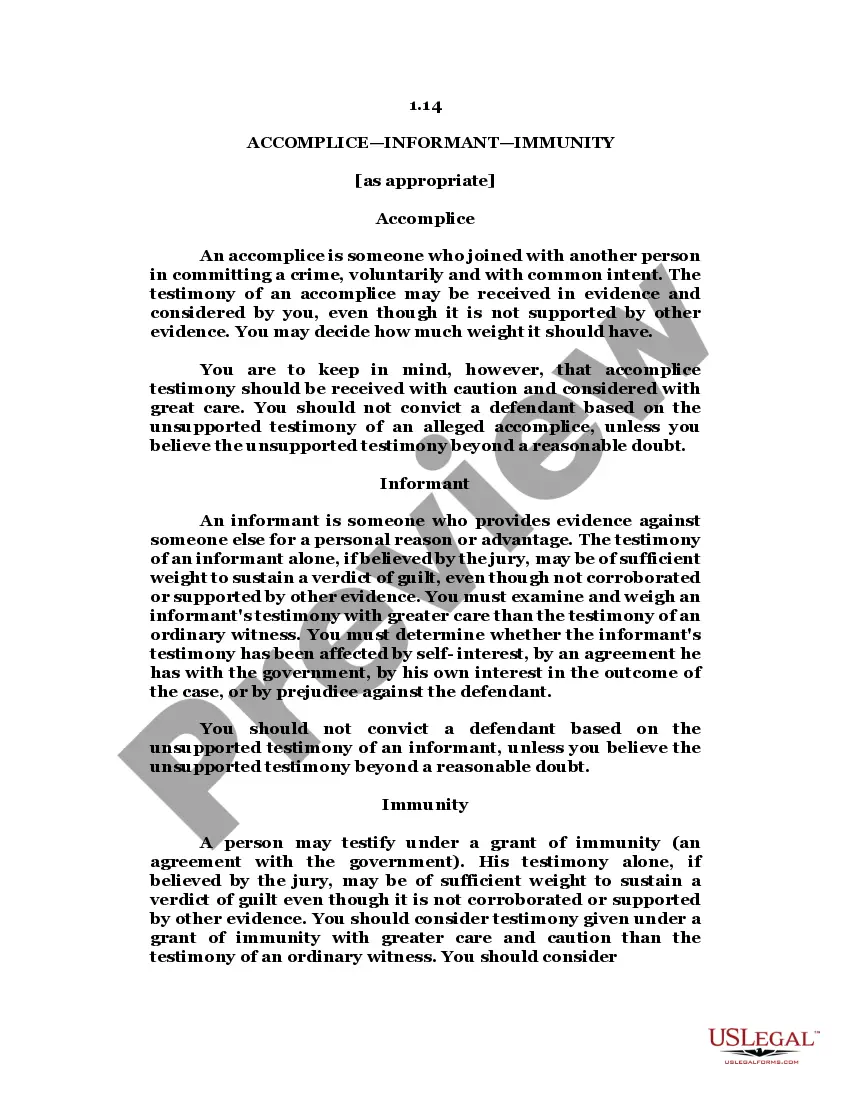
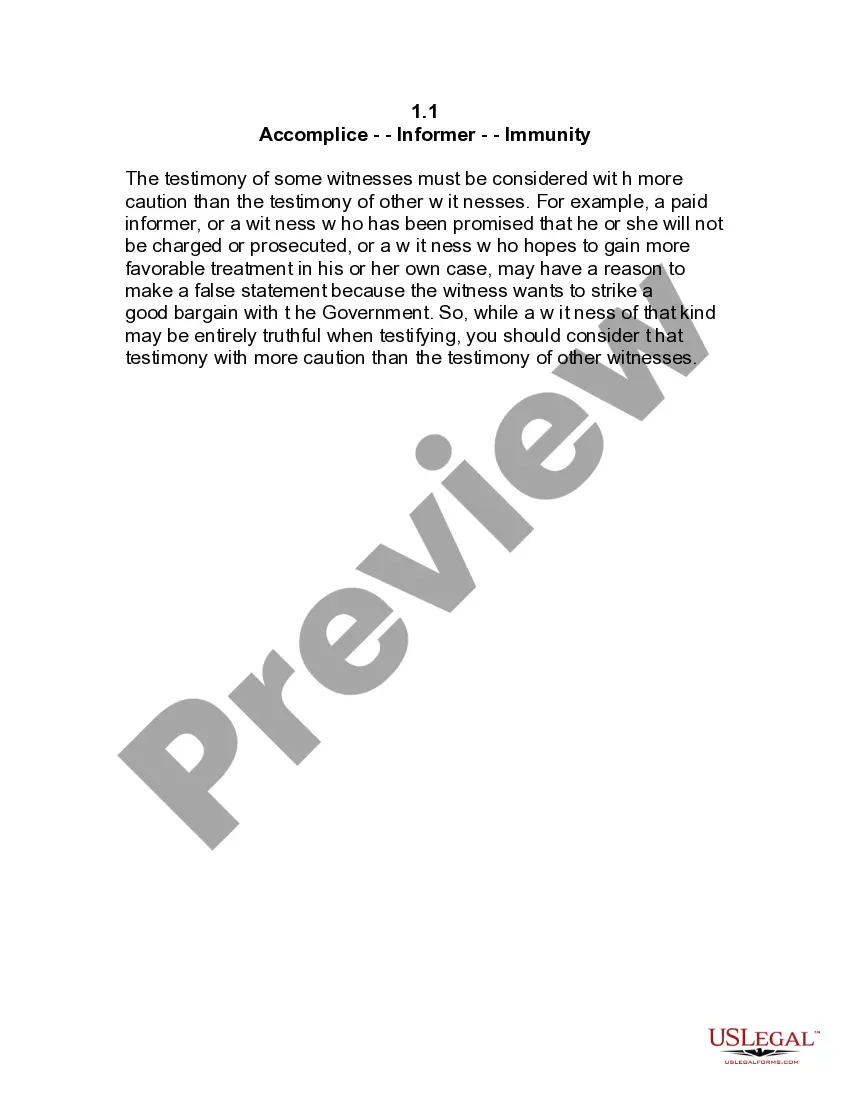
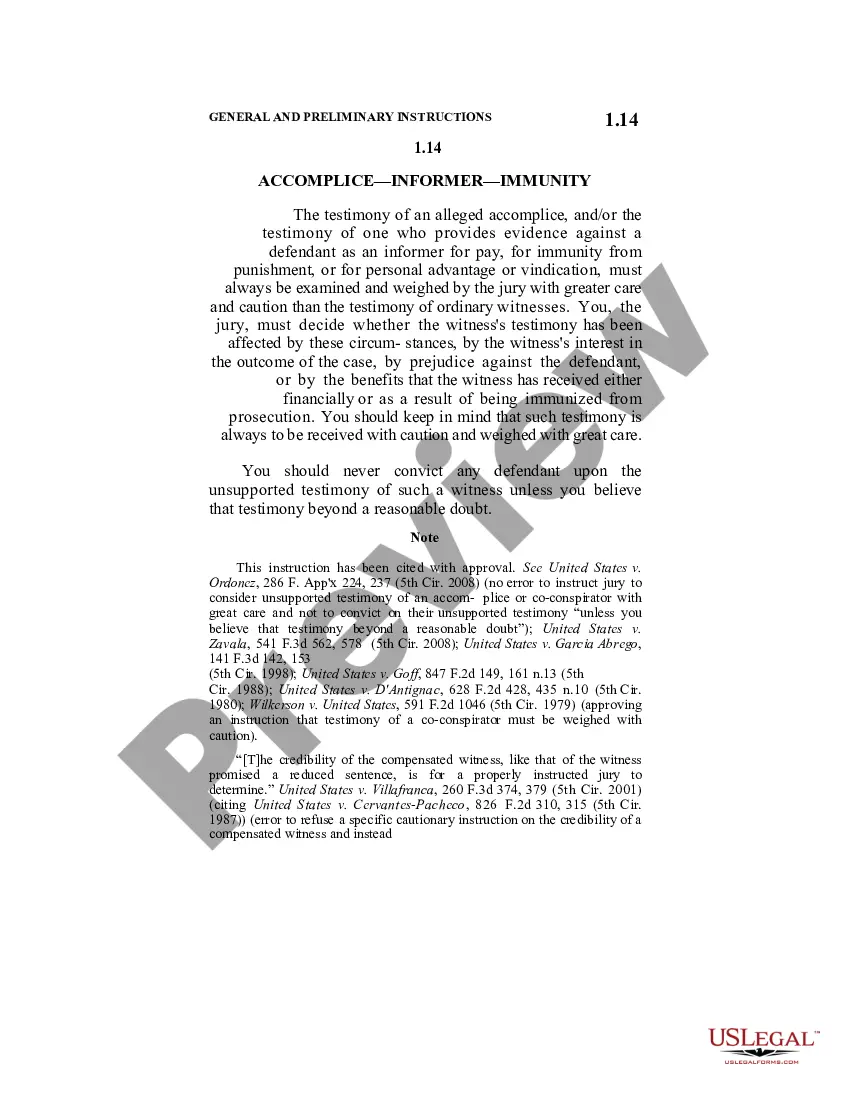
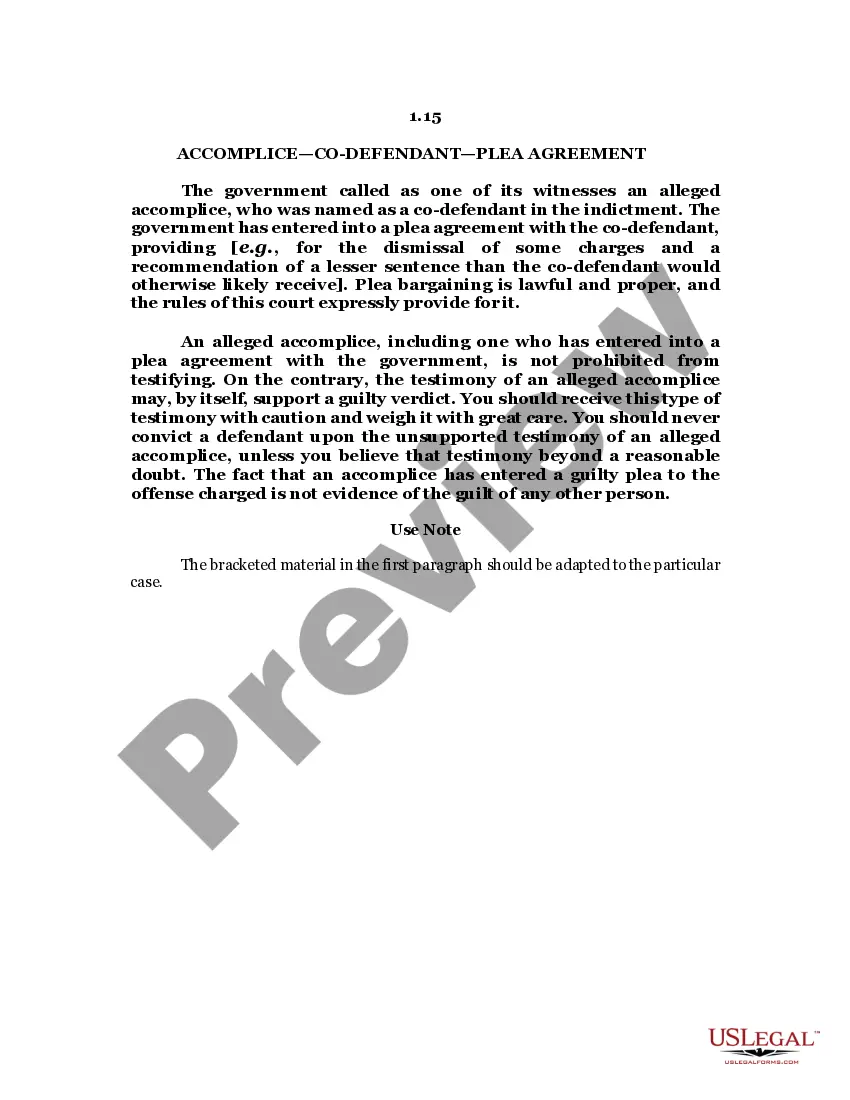
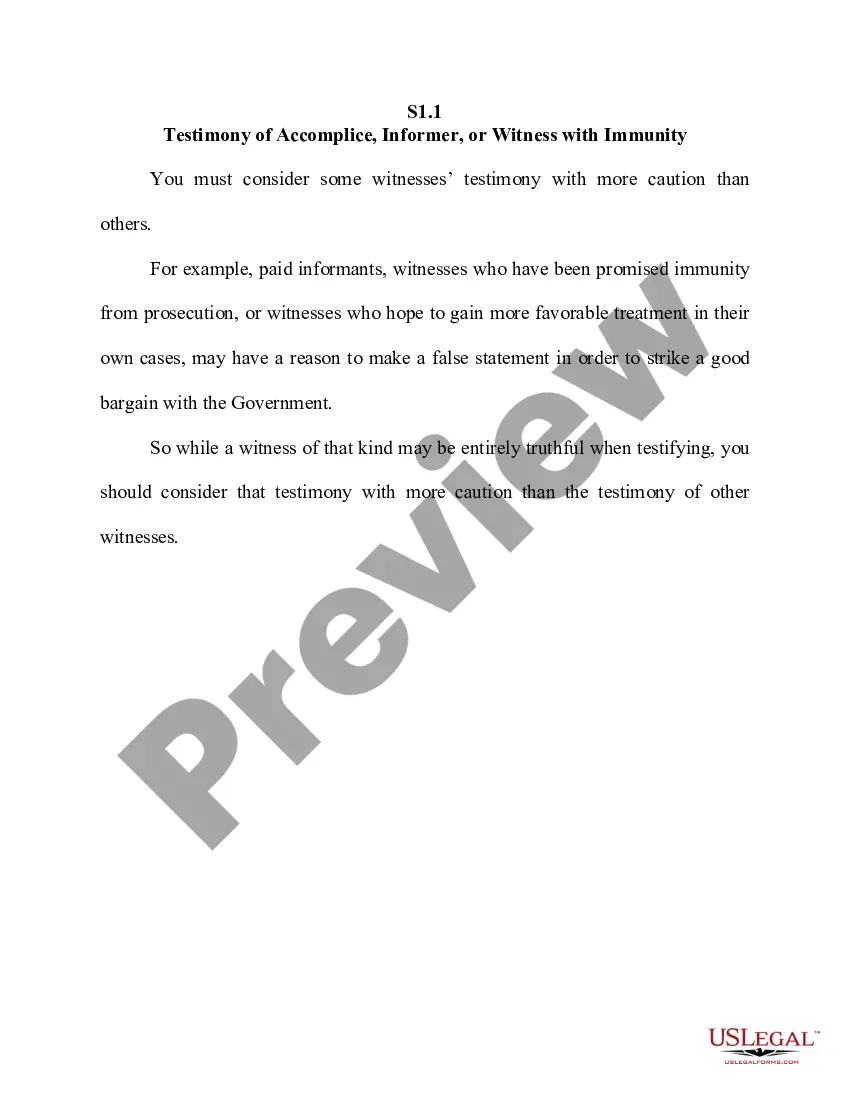
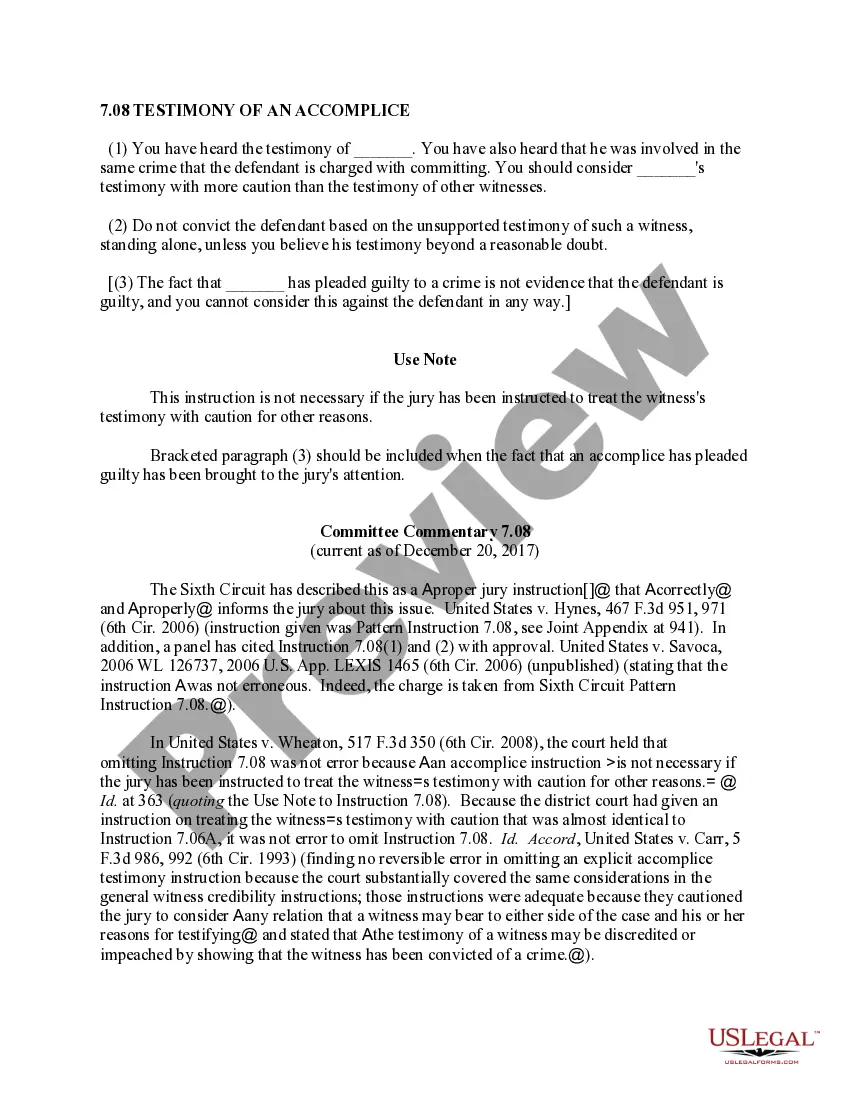
The Accomplice-Informant-Immunity form is a legal guideline used in court to help juries evaluate the testimony given by accomplices, informants, or witnesses testifying under immunity. This form outlines how much weight should be given to such testimonies, considering factors like potential biases and interests involved. It differs from other legal forms by specifically focusing on the credibility and evidentiary value of testimony from individuals who may have ulterior motives or agreements with the government.
Key components of this form
- Definition of an accomplice and the nature of their testimony.
- Guidelines for evaluating the reliability of informant testimony and the self-interest factors to consider.
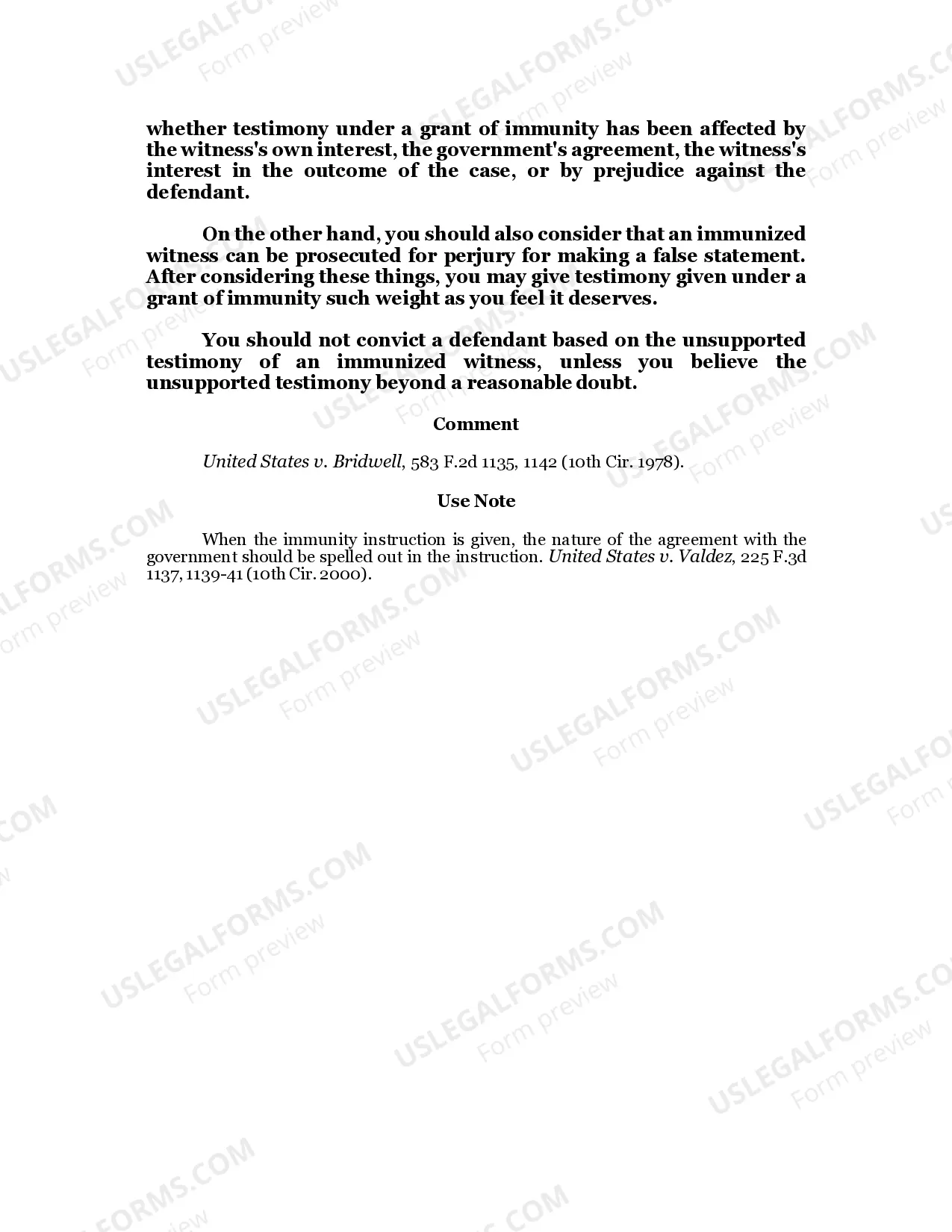
- Instructions on considering testimony from immunized witnesses and the implications of perjury.
- Judicial considerations for jury members regarding the weight of such testimonies.
- Legal precedents that support the instructions provided in the form.
Common use cases
This form is typically used during criminal trials where accomplice or informant testimony is presented as evidence. It is essential in cases that rely on the statements of individuals who may have participated in the crime or who have provided testimony in exchange for immunity or other benefits. The form assists juries in determining what weight to assign to such testimony, particularly when it is not supported by other evidence.
Who can use this document
- Judges presiding over criminal trials where accomplice or informant testimony is relevant.
- Jury members tasked with evaluating the credibility of witness testimonies.
- Prosecutors and defense attorneys looking to understand the criteria for weighing testimonies in court.
How to prepare this document
- Identify the type of testimony being presented (accomplice, informant, or immunized witness).
- Outline the agreement or circumstances surrounding the testimony if immunity is granted.
- Consider the potential biases or interests of the witness.
- Provide instructions for jury members on evaluating weight and credibility of the testimony.
- Reference relevant legal case precedents that may apply to the current situation.
Does this form need to be notarized?
Notarization is generally not required for this form. However, certain states or situations might demand it. You can complete notarization online through US Legal Forms, powered by Notarize, using a verified video call available anytime.
Get your form ready online
Our built-in tools help you complete, sign, share, and store your documents in one place.
Make edits, fill in missing information, and update formatting in US Legal Forms—just like you would in MS Word.
Download a copy, print it, send it by email, or mail it via USPS—whatever works best for your next step.
Sign and collect signatures with our SignNow integration. Send to multiple recipients, set reminders, and more. Go Premium to unlock E-Sign.
If this form requires notarization, complete it online through a secure video call—no need to meet a notary in person or wait for an appointment.
We protect your documents and personal data by following strict security and privacy standards.

Make edits, fill in missing information, and update formatting in US Legal Forms—just like you would in MS Word.

Download a copy, print it, send it by email, or mail it via USPS—whatever works best for your next step.

Sign and collect signatures with our SignNow integration. Send to multiple recipients, set reminders, and more. Go Premium to unlock E-Sign.

If this form requires notarization, complete it online through a secure video call—no need to meet a notary in person or wait for an appointment.

We protect your documents and personal data by following strict security and privacy standards.
Mistakes to watch out for
- Overlooking the necessity to assess an accomplice's motives, leading to unjust weight on their testimony.
- Failing to clearly outline the terms of any immunity granted, which could create confusion.
- Not instructing jurors adequately on the importance of corroboration or lack thereof.
Why complete this form online
- Convenient access to essential legal guidelines at any time.
- Easy modifications to accommodate specific case needs.
- Reliability backed by licensed attorneys ensuring accurate legal standards.
What to keep in mind
- The Accomplice-Informant-Immunity form provides crucial guidance for evaluating potentially biased testimonies.
- Understanding the contexts in which this form applies is essential for all parties involved in criminal proceedings.
- Jurors must approach accomplice and informant testimony with caution to ensure fair deliberation.
Looking for another form?
Form popularity
FAQ
If the confidential informant is disclosed and proceeds to testify at trial, the way to beat them would be to make them appear unreliable. You impeach them on the stand, which discredits the evidence, information, and testimony they give. Criminal defense attorneys have a host of tools to do this.
Reliability. Evidence that a CI has reliably provided accurate information in the past may indicate to the court that he or she is credible. A relatively untested CI, with no resulting arrests or convictions, may be less likely to be believed.
INFORMANTS MUST GIVE THEIR CORRECT NAMES AND ADDRESSES AT TRIAL TO ESTABLISH CREDIBILITY ONLY IF THEIR TESTIMONY DIFFERS FROM THE DEFENDANT'S AND THE DEFENSE WISHES TO IMPEACH.
Confidential Reliable Informant: A person whose reliability and credibility have previously been established. This usually consists of, but is not limited to, validating at least one prior occasion where information from this informant proved to be factual and resulted in a valid arrest, seizure, or conviction.
The most common ways of establishing the reliability of an informant's report are by showing that ?it is corroborated by other evidence, or that the confidential informant has a history of providing reliable information.? United States v. Butler, 594 F.
Generally speaking, citizen informants are considered more reliable sources of information than police confidential informants because they have less reason to lie. However, prosecutors have ultimately obtained many convictions based on the initial testimony of police confidential informants.
There are four types of informant: a member of the public, a victim of a crime, a member of an organized criminal group or police officers themselves. Informants are also referred to as "justice collaborators" or they may be known as "cooperating witnesses" (UNODC, 2008).
Although in theory the police maintain that informants are not made immune from prosecution should they break the law in the course of their informant career, in practice, much of the lawbreaking of the informant is overlooked in the interest of maintaining him/her as a valuable information source.