Lemon Law Remedies
Description
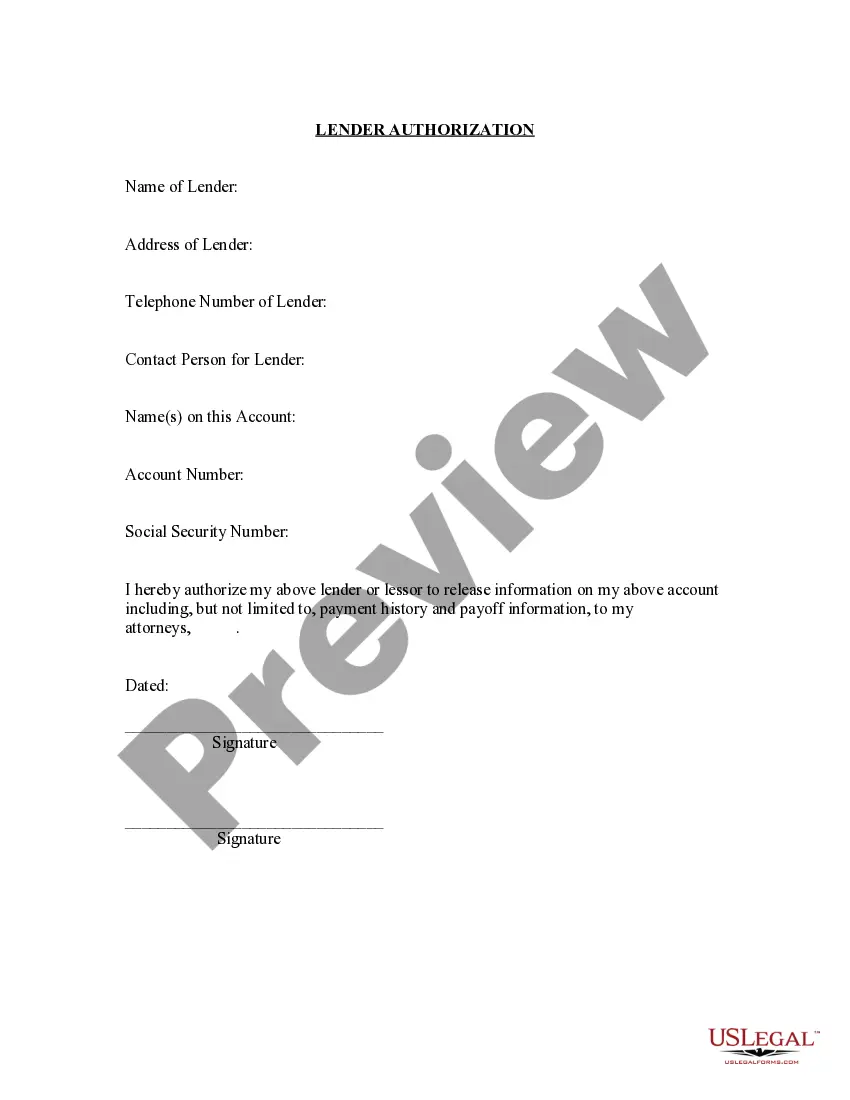
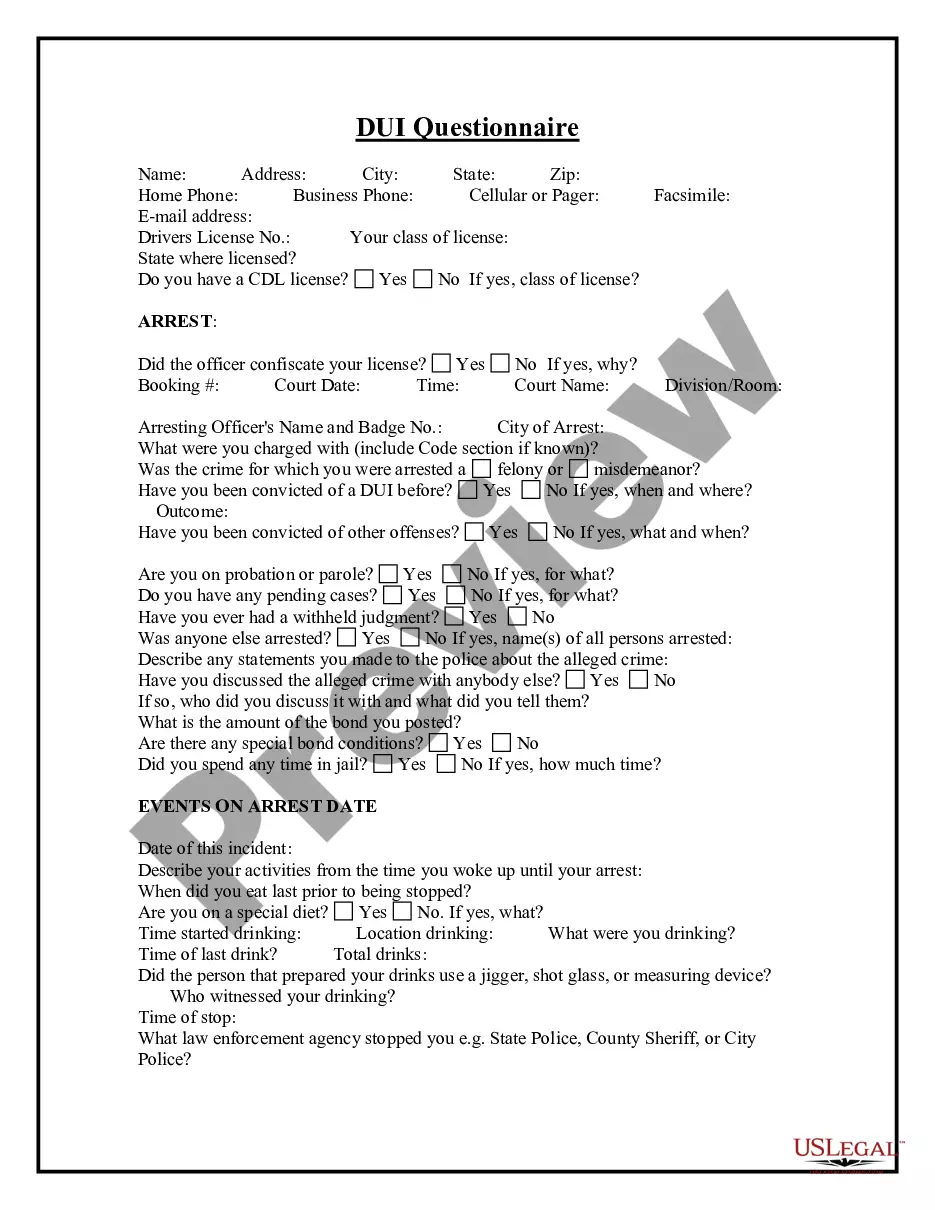
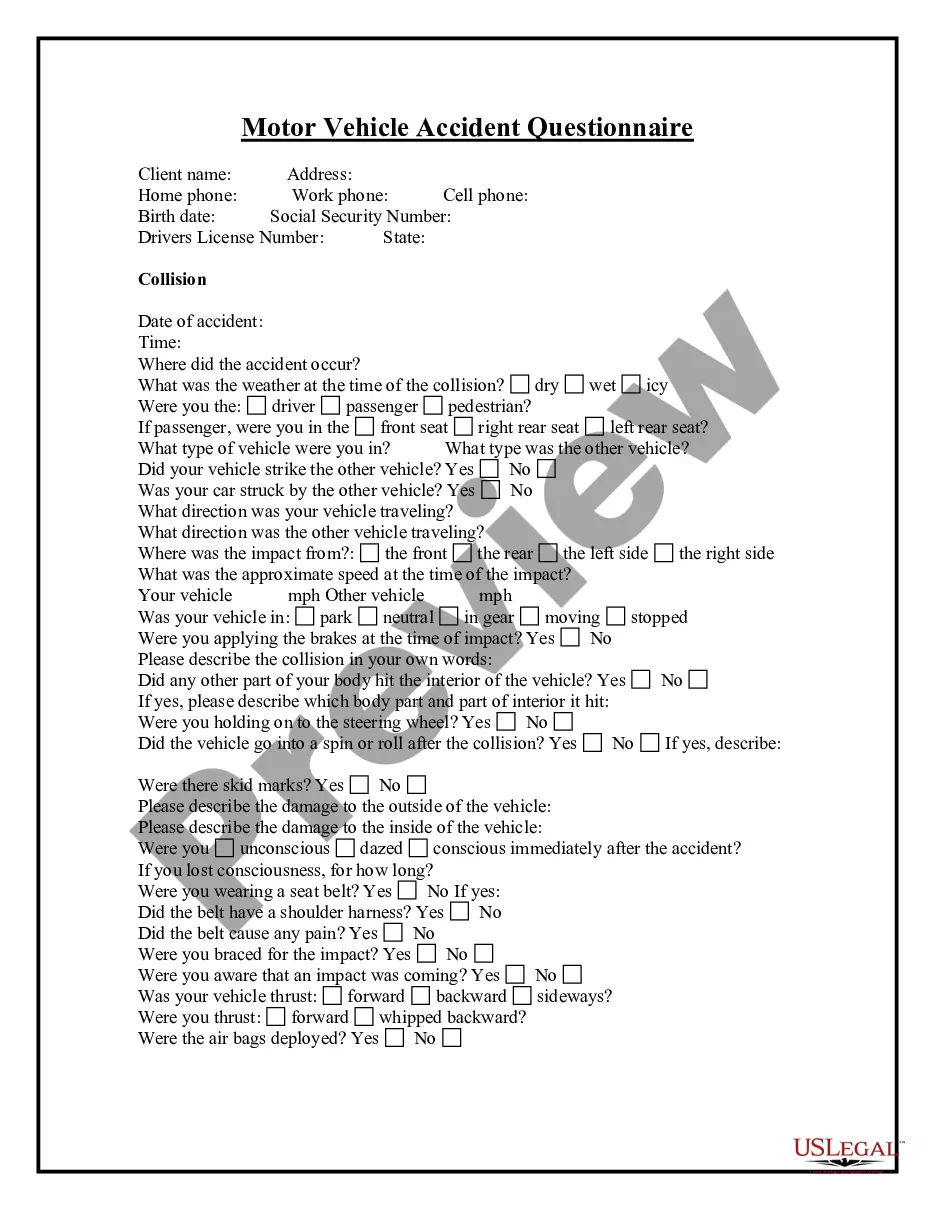
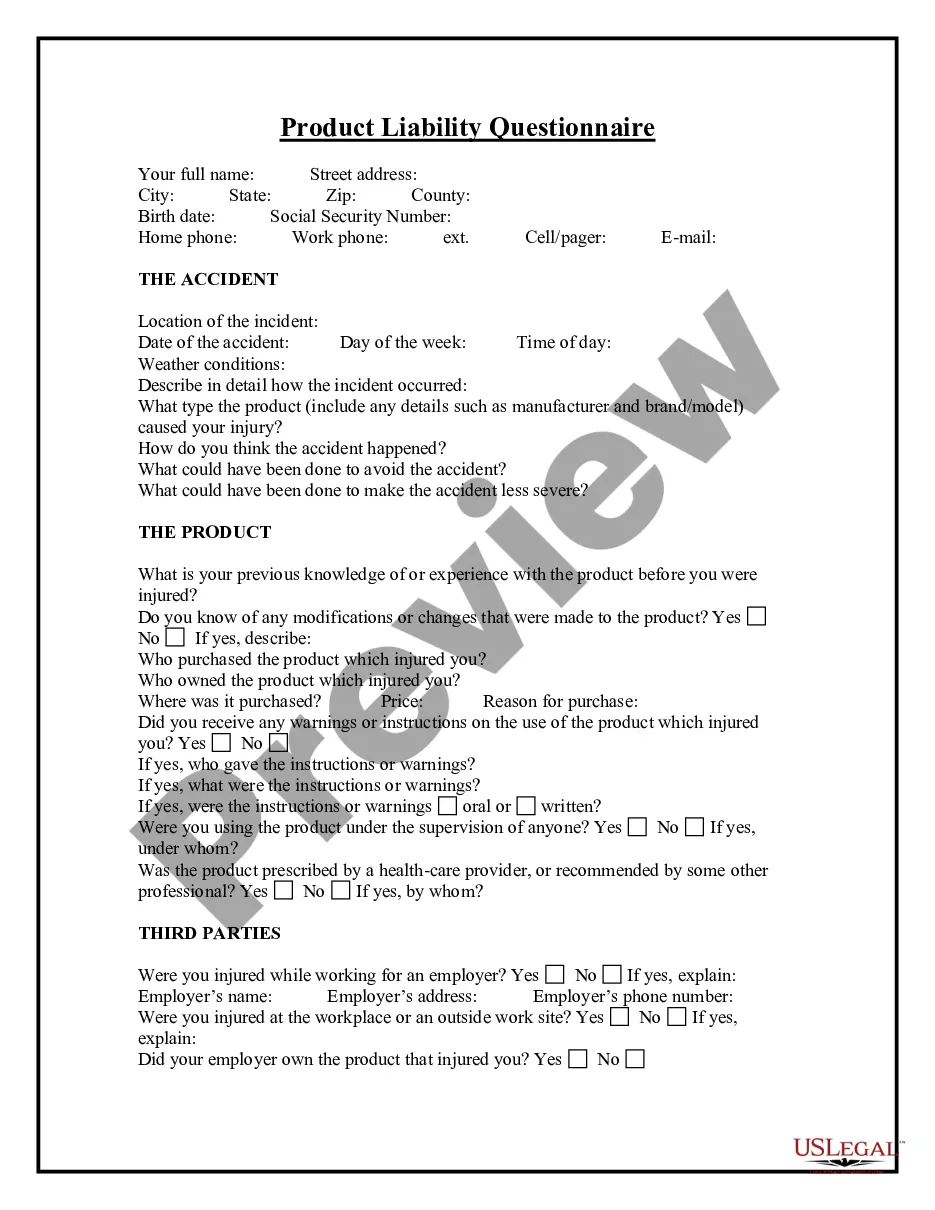
Get your form ready online
Our built-in tools help you complete, sign, share, and store your documents in one place.
Make edits, fill in missing information, and update formatting in US Legal Forms—just like you would in MS Word.
Download a copy, print it, send it by email, or mail it via USPS—whatever works best for your next step.
Sign and collect signatures with our SignNow integration. Send to multiple recipients, set reminders, and more. Go Premium to unlock E-Sign.
If this form requires notarization, complete it online through a secure video call—no need to meet a notary in person or wait for an appointment.
We protect your documents and personal data by following strict security and privacy standards.

Make edits, fill in missing information, and update formatting in US Legal Forms—just like you would in MS Word.

Download a copy, print it, send it by email, or mail it via USPS—whatever works best for your next step.

Sign and collect signatures with our SignNow integration. Send to multiple recipients, set reminders, and more. Go Premium to unlock E-Sign.

If this form requires notarization, complete it online through a secure video call—no need to meet a notary in person or wait for an appointment.

We protect your documents and personal data by following strict security and privacy standards.
Looking for another form?






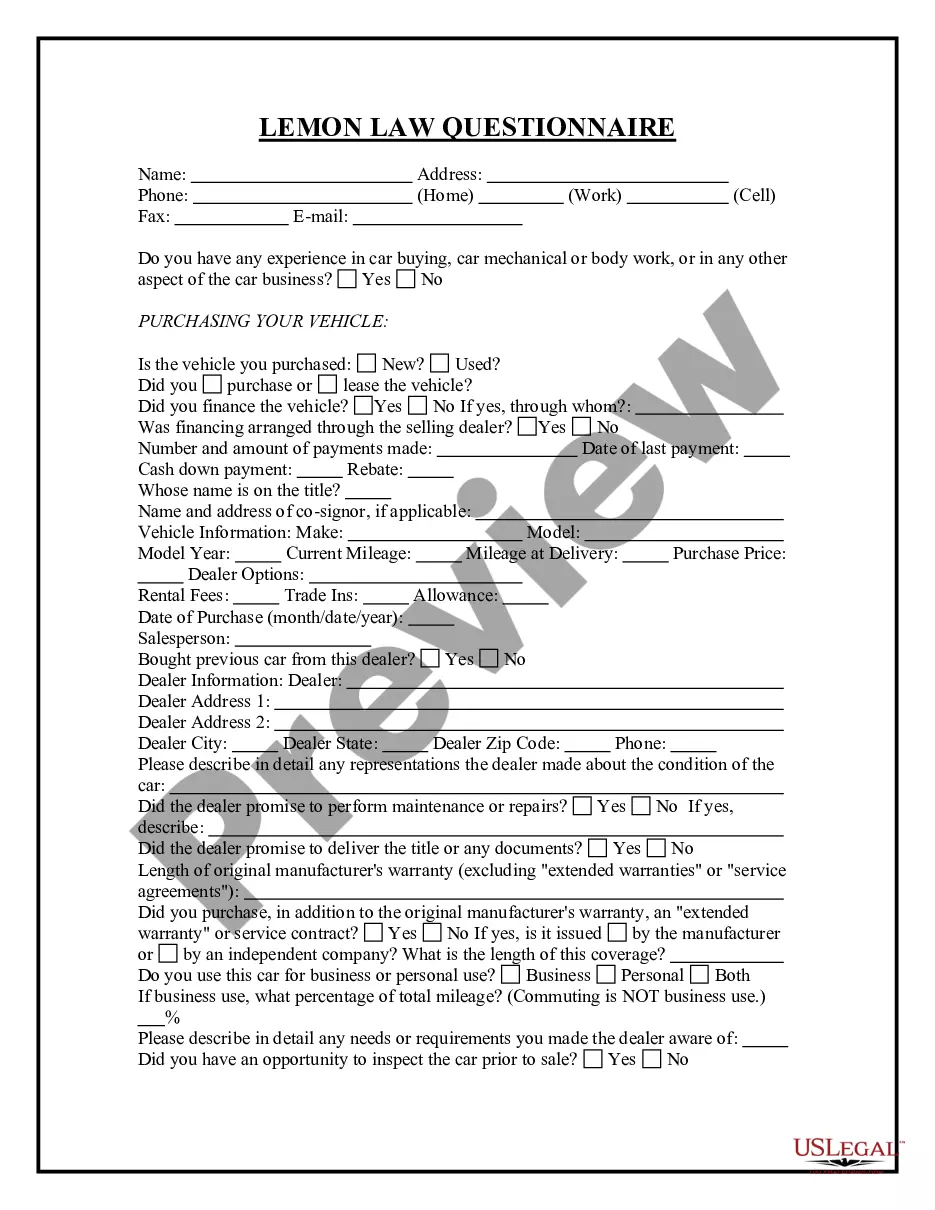
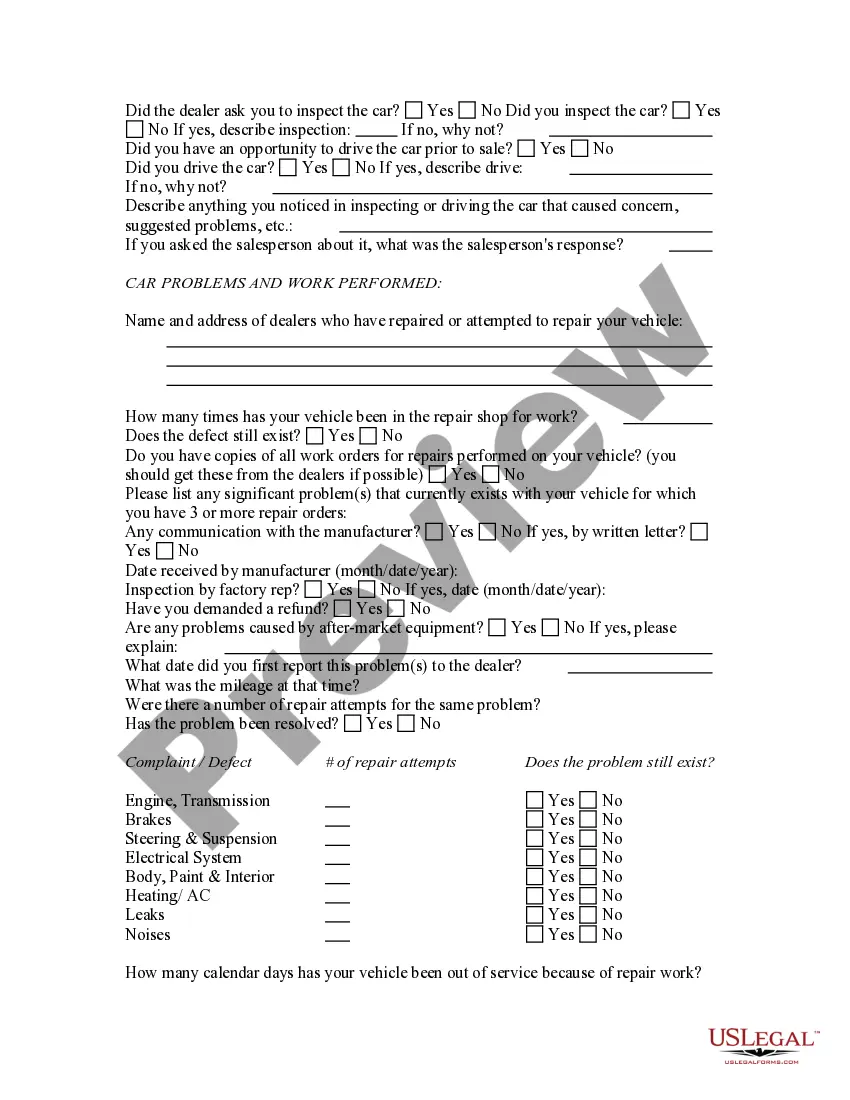
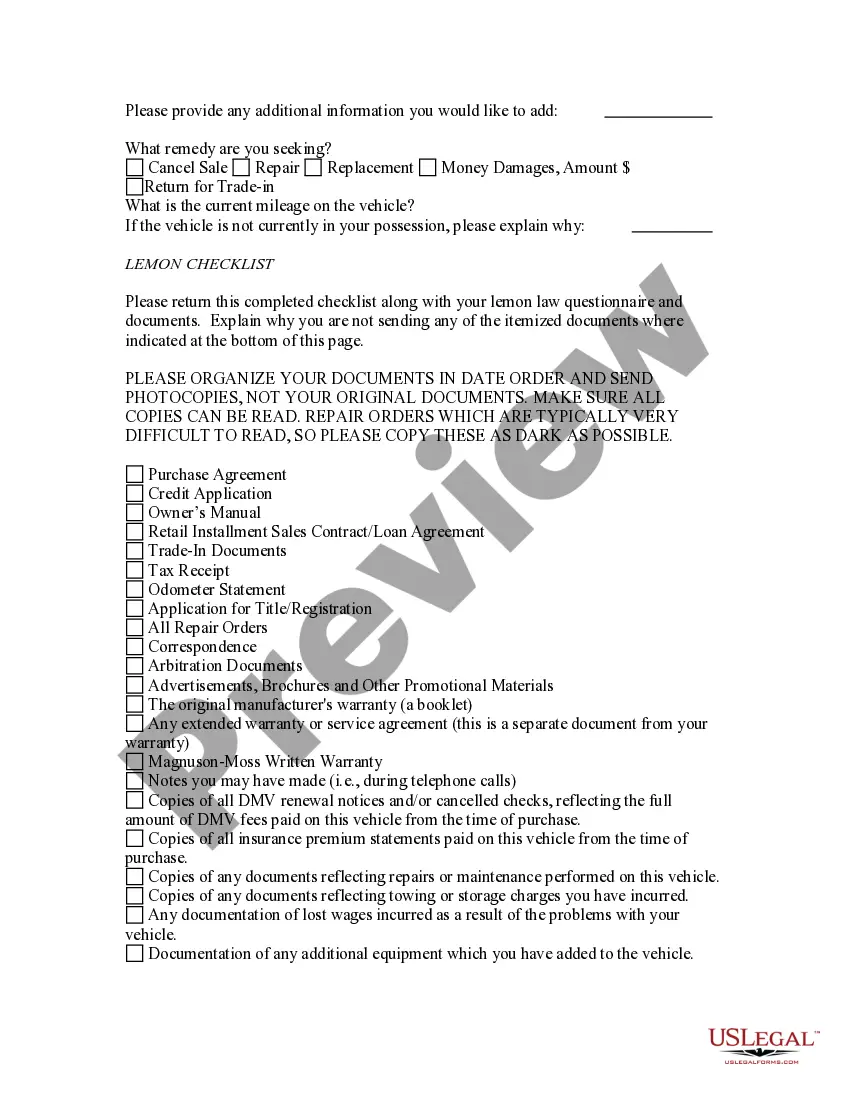
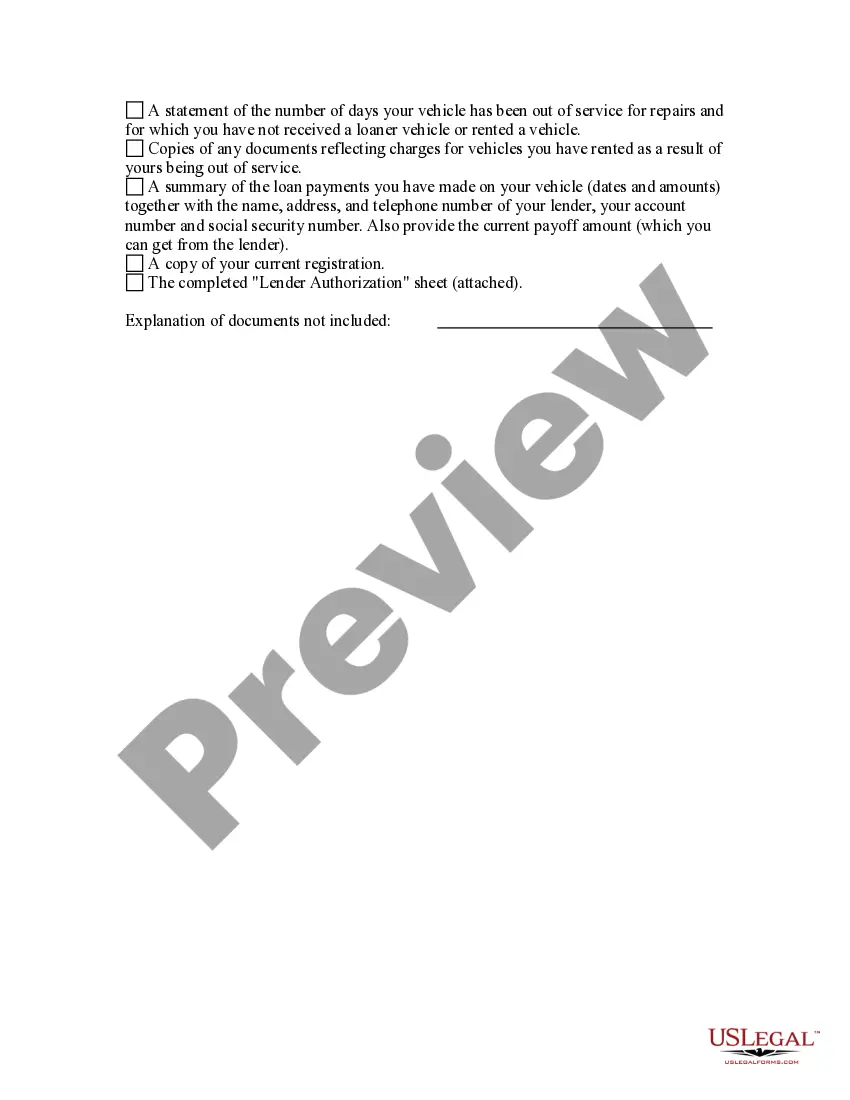
How to fill out Automobile Lemon Law Questionnaire?
The Lemon Law Remedies presented on this page is a versatile legal template crafted by expert attorneys in accordance with federal and local regulations.
For over 25 years, US Legal Forms has supplied individuals, businesses, and legal experts with more than 85,000 authenticated, state-specific documents for any professional and personal event. It’s the quickest, simplest, and most reliable method to acquire the forms you require, as the service ensures bank-level data security and anti-malware safeguards.
Pick the format you desire for your Lemon Law Remedies (PDF, Word, RTF) and download the sample to your device.
- Browse for the document you need and review it.
- Examine the file you searched and preview it or check the form description to confirm it meets your needs. If it does not, use the search function to locate the correct one. Click Buy Now when you have found the template you need.
- Subscribe and Log In.
- Select the pricing plan that fits you and create an account. Use PayPal or a credit card to make a swift payment. If you already possess an account, Log In and check your subscription to continue.
- Obtain the editable template.
Form popularity
FAQ
In Oregon, a vehicle qualifies for lemon law remedies if it has a substantial defect that impairs its use, safety, or value. The defect must occur within the first two years or 24,000 miles of ownership. Additionally, the manufacturer must have been given a reasonable opportunity to fix the issue, typically defined as three attempts for the same problem or if the vehicle is out of service for more than 30 days. If your vehicle meets these criteria, you may be entitled to lemon law remedies, which can include a refund or replacement.
In Georgia, lemon law remedies are available if a vehicle has a defect that substantially impairs its use, safety, or value, and the manufacturer fails to repair it after a reasonable number of attempts. The law requires that the defect must be reported within the warranty period and the owner must give the manufacturer a chance to fix the issue. If you have been unsuccessful in getting your vehicle repaired, US Legal Forms can assist you in understanding your options and filing a claim.
In California, lemon law remedies apply when a vehicle has a significant defect that the manufacturer cannot repair after a reasonable number of attempts. Typically, if the vehicle has been in the shop for 30 days or has had multiple repair attempts for the same issue, it may qualify. Additionally, the vehicle must be covered under warranty, and the defect must occur within the warranty period. For guidance through this process, consider using US Legal Forms to ensure you take the right steps.
In New York, a vehicle qualifies for lemon law remedies if it has a defect that affects its use, value, or safety and is covered under warranty. The owner must report the problem to the manufacturer or dealer and give them a chance to fix it. If the vehicle requires repairs after 30 days or has been out of service for 15 days, it may be eligible for a buyback or replacement. Understanding your rights is essential, and US Legal Forms can help you navigate the lemon law process.
Winning a lemon law case can be challenging, but it largely depends on the specifics of your situation. If you have clear documentation of the vehicle's defects and your attempts to resolve the issues, your chances improve significantly. Many individuals find success with lemon law remedies when they utilize knowledgeable legal assistance. Platforms like US Legal Forms can provide you with the necessary resources and forms to navigate the process more effectively.
How to File a Lemon Law Case Take Your Vehicle to the Dealership for Repair. ... Get Your Dealership Repair Orders. ... Give the Dealership a ?Reasonable Number of Attempts? to Resolve the Issue. ... Gather All Relevant Documentation. ... Your Car Warranty Does Not Need to be Current. ... Hire an Experienced Lemon Lawyer.
While lemon laws are determined at the state level, the common factors to determine a lemon include the number of miles driven, major defects, reasonable repair attempts, and number of days spent in the shop.
Under the California lemon law, a consumer who purchased a defective car or truck is entitled to: (1) have the manufacturer either replace the vehicle with a new one or repurchase the automobile, subject to a ?mileage offset? for the consumer's use of the vehicle; (2) be reimbursed for all incidental damages suffered ...
Nature of the defect. New or used vehicle. Statute of limitations. Proof of repair attempts. Quality and skill of your attorney.
The lemon law covers any nonconformity, which is defined as any specific or generic defect or malfunction, or any defect or condition that substantially impairs the use and/or market value of a motor vehicle.