Legal Temp For Schools
Description

Get your form ready online
Our built-in tools help you complete, sign, share, and store your documents in one place.
Make edits, fill in missing information, and update formatting in US Legal Forms—just like you would in MS Word.
Download a copy, print it, send it by email, or mail it via USPS—whatever works best for your next step.
Sign and collect signatures with our SignNow integration. Send to multiple recipients, set reminders, and more. Go Premium to unlock E-Sign.
If this form requires notarization, complete it online through a secure video call—no need to meet a notary in person or wait for an appointment.
We protect your documents and personal data by following strict security and privacy standards.

Make edits, fill in missing information, and update formatting in US Legal Forms—just like you would in MS Word.

Download a copy, print it, send it by email, or mail it via USPS—whatever works best for your next step.

Sign and collect signatures with our SignNow integration. Send to multiple recipients, set reminders, and more. Go Premium to unlock E-Sign.

If this form requires notarization, complete it online through a secure video call—no need to meet a notary in person or wait for an appointment.

We protect your documents and personal data by following strict security and privacy standards.
Looking for another form?










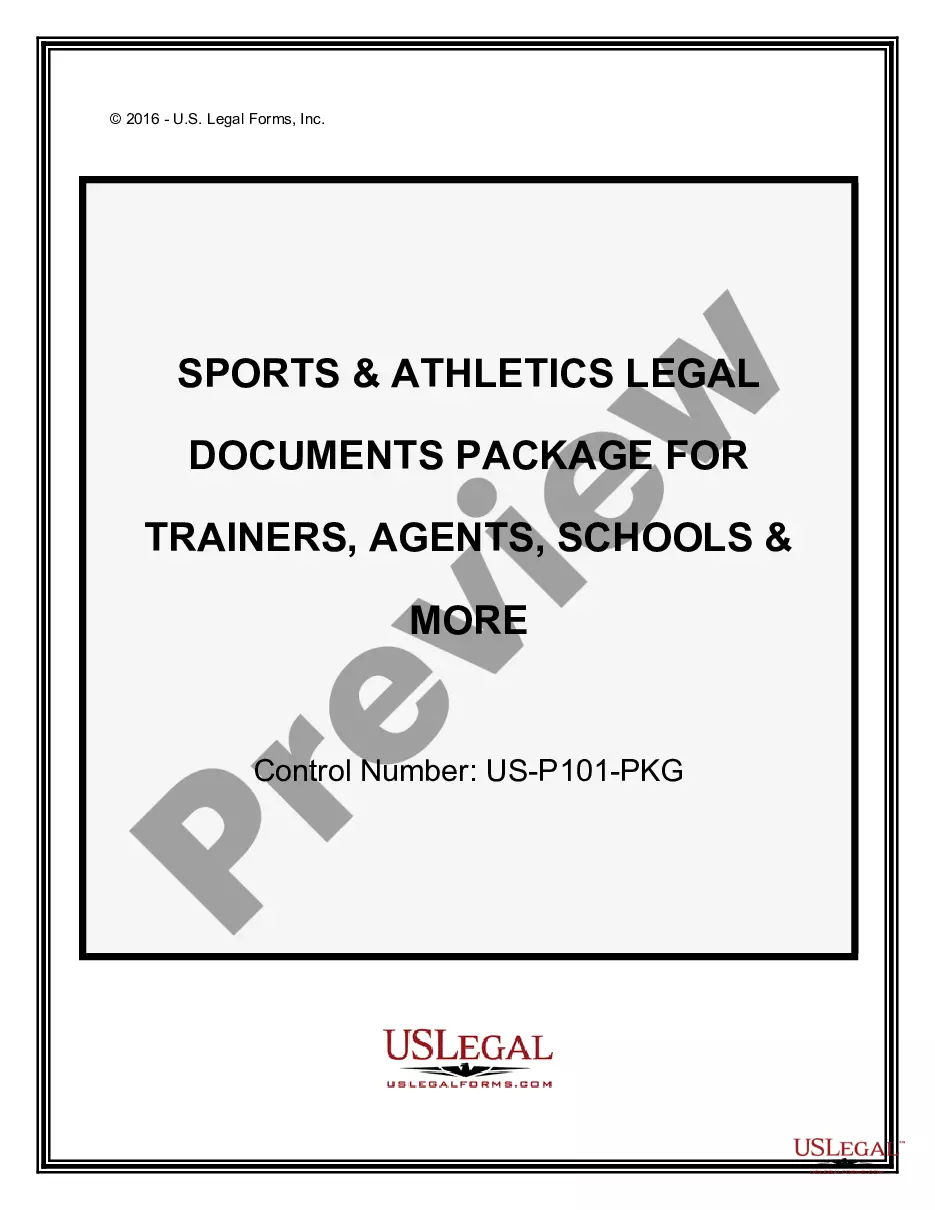
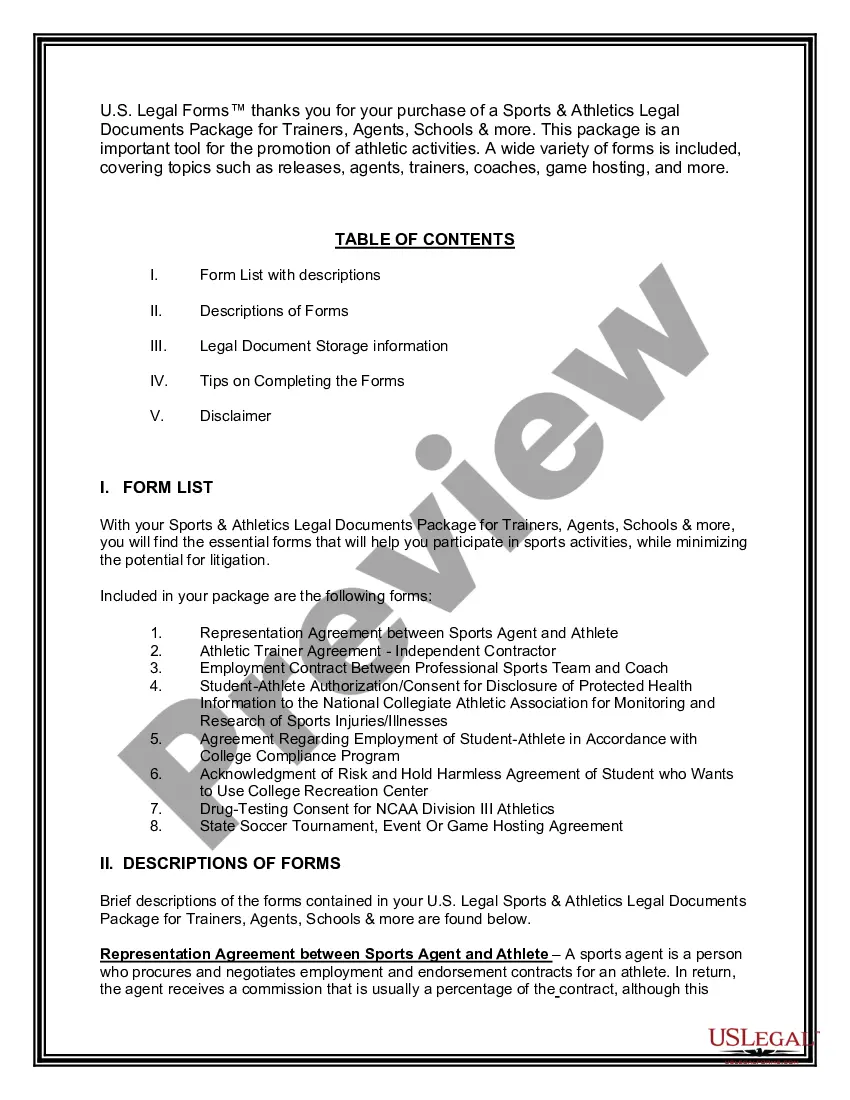
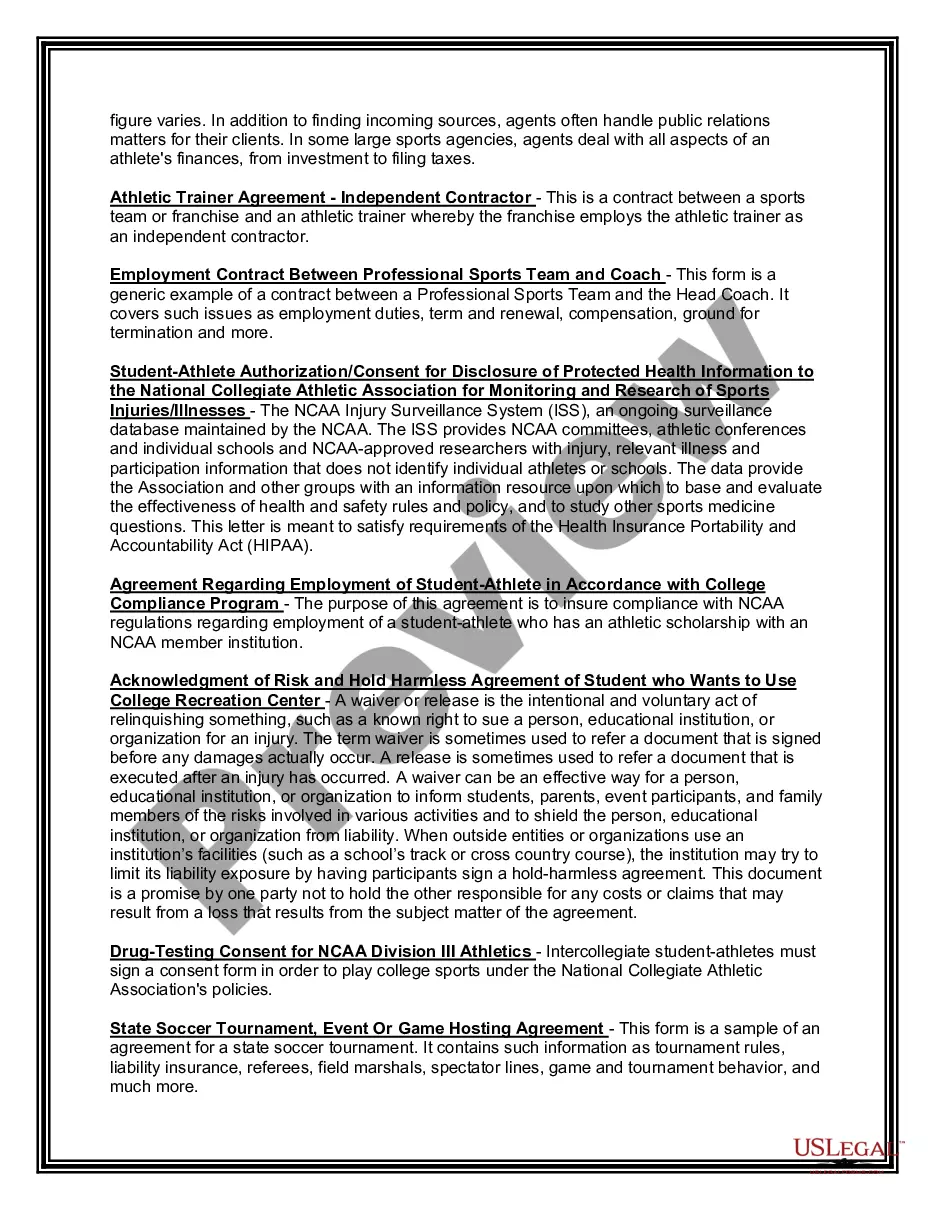
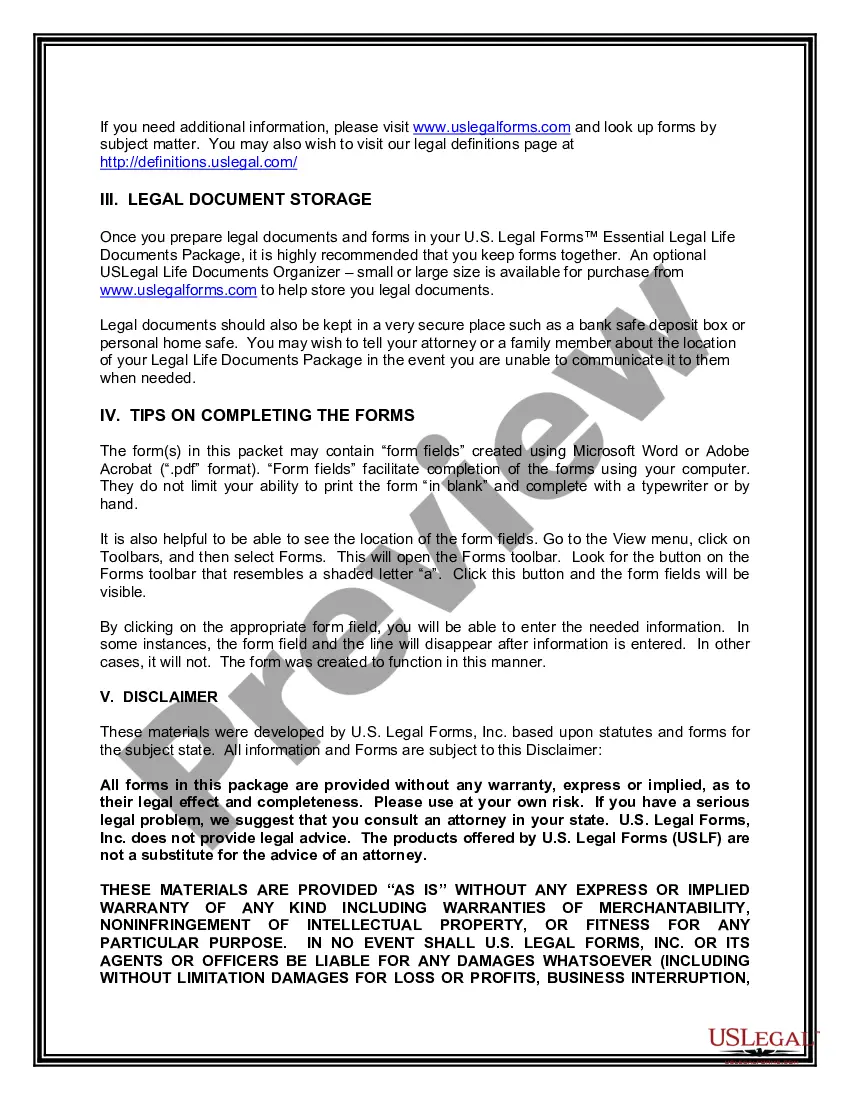
How to fill out Sports & Athletics Legal Documents Package For Trainers Or Training, Agents, Schools & More?
- Log in to your US Legal Forms account if you're a returning user. Ensure your subscription is active to access your documents.
- For new users, view the form preview and read the descriptions to verify you’ve selected the appropriate form for your local jurisdiction.
- If you encounter any inconsistencies, utilize the Search function to find the correct template that suits your needs.
- Proceed to purchase your chosen document by clicking the Buy Now button, and select the subscription plan that best fits your requirements.
- Enter your payment information or use your PayPal account to finalize the purchase.
- Download the completed form to your device and find it anytime in the My Forms section of your profile.
In conclusion, US Legal Forms offers a robust library of over 85,000 legal documents, empowering users to create precise and legally compliant forms effortlessly.
Start your process today with US Legal Forms, and simplify your school's legal documentation!
Form popularity
FAQ
When temperatures fall below 20°F, or if a heat advisory is issued for temperatures above 100°F, many schools may cancel classes. Legal temp for schools encourages schools to enforce these standards for student safety. Various factors, including air quality and weather advisories, also influence these decisions. Be sure to stay informed with your local school's policy on temperature-related closures.
The maximum safe temperature for schools usually hovers around 95°F. At this point, schools must implement precautions to keep students safe, as the risk of heat stress increases. Legal temp for schools helps schools remain vigilant in monitoring temperatures. Each school district might have specific thresholds, so it’s best to check local policies.
Schools often close when temperatures reach extremes, like above 100°F or below 20°F, as safety is a top concern. Legal temp for schools provides guidelines to ensure that educational institutions protect students from severe weather. Additionally, if combined with dangerous weather conditions, policies may vary by district. Always consult local school regulations for specific closures.
Typically, if temperatures drop below 20°F, schools may choose to close due to safety concerns. Legal temp for schools requires schools to prioritize student health in such extreme conditions. Other factors, like wind chill or significant snow, may also influence this decision. Each school district usually sets its own policies based on local climate conditions.
Generally, temperatures above 90°F can be considered unsafe for students, especially during physical activities. Schools need to monitor these conditions to ensure students remain hydrated and avoid heat-related illnesses. Legal temp for schools emphasizes keeping students safe by implementing policies that address extreme heat. Always check with local education authorities for specific guidelines.
The highest legal temp for schools is typically set at around 80 to 85 degrees Fahrenheit, depending on state regulations. Maintaining temperatures below this threshold helps prevent discomfort and distractions in the classroom. It's crucial for school administrators to stay informed about these limits. Using tools available on platforms like uslegalforms, schools can ensure compliance with legal temperature regulations and prioritize student wellbeing.
The legal temp for schools varies, but generally, a classroom should not exceed 80 degrees Fahrenheit. Excessive heat can hinder students' ability to focus and learn effectively. It's essential for schools to monitor classroom temperatures to provide a comfortable learning environment. By adhering to legal temperature guidelines, schools can ensure a better educational experience for all.
The minimum legal temperature in schools often hovers around 60°F, depending on state regulations. This temperature aims to keep students warm and comfortable in classroom environments. Ensuring compliance with the legal temp for schools is essential for maintaining a conducive learning atmosphere. Schools must routinely check their heating systems to meet these requirements.
School cancellation typically occurs when temperatures approach or drop below 20°F with dangerous wind chills. Each district has criteria based on local climate conditions and safety assessments. Understanding the legal temp for schools helps ensure that decisions prioritize student wellbeing. Parents should check for updates from school officials regarding closures.
Temperatures below freezing can be unsafe for students outside. Specifically, when wind chill creates a perceived temperature of 0°F or colder, safety becomes a serious concern. Schools must adhere to precautions and guidelines related to the legal temp for schools. Ensuring student safety is always the top priority.