Arizona Profit and Loss Statement
What this document covers
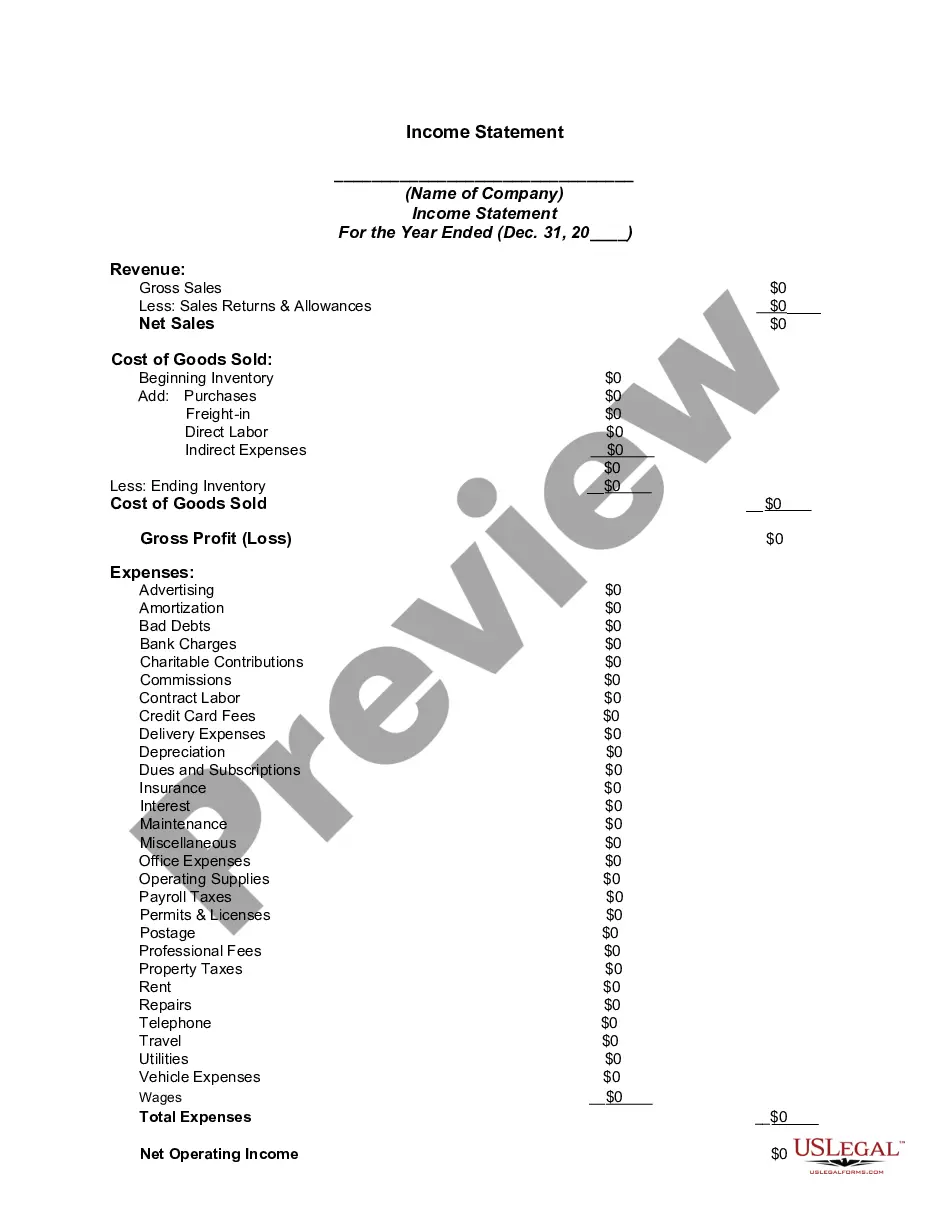
The Profit and Loss Statement is a key financial document that summarizes a company's revenues, costs, and expenses over a specific period. It is essential for tracking financial performance and understanding profitability. Unlike other financial statements, such as balance sheets, the Profit and Loss Statement focuses solely on operational performance, making it a crucial tool for both corporations and sole proprietors.
What’s included in this form
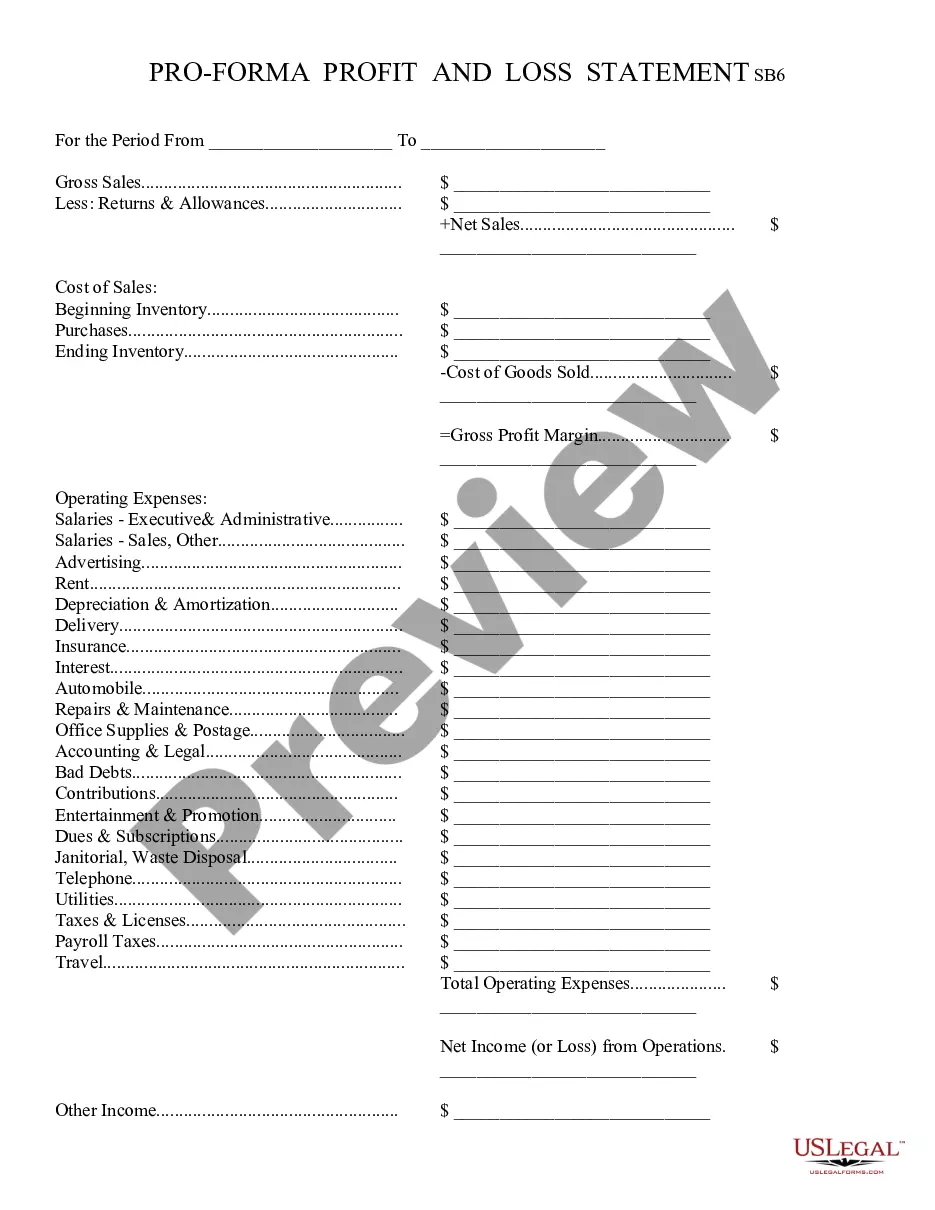
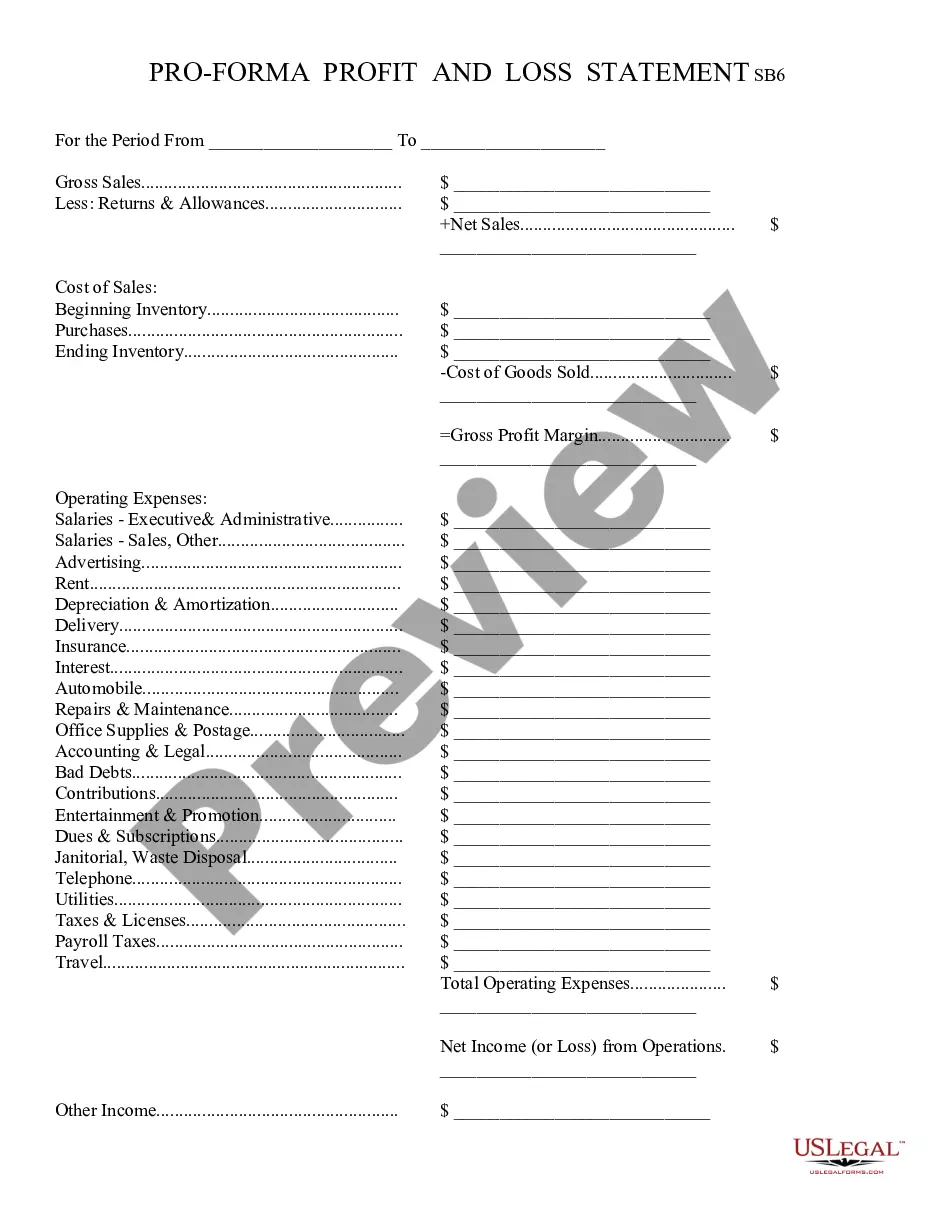
- Gross Sales: Total sales revenue before any deductions.
- Returns and Allowances: Deductions from sales due to returns or discounts.
- Net Sales: Total sales after accounting for returns and allowances.
- Cost of Goods Sold: Total cost associated with producing or purchasing the goods sold.
- Gross Profit Margin: The difference between net sales and cost of goods sold.
- Operating Expenses: Costs required to run the business that are not directly tied to producing goods or services.
- Net Income (or Loss): The final profit or loss after all expenses have been deducted from total earnings.

When this form is needed
This form is applicable when businesses want to assess their performance over a specific period. It is vital for preparing annual financial statements, securing loans, understanding financial viability, and making strategic decisions regarding operations and growth. Utilize this statement during tax preparation or when seeking investment to provide a clear picture of financial health.
Who needs this form
- Small business owners looking to track profitability.
- Corporations needing to prepare financial statements for stakeholders.
- Sole proprietors assessing their operational success.
- Accountants and financial advisors preparing financial reports.
Steps to complete this form
- Identify the reporting period and fill in the start and end dates.
- Enter total gross sales before any deductions in the Gross Sales section.
- Calculate and input any returns and allowances to determine net sales.
- Detail the cost of goods sold by inputting beginning inventory, purchases, and ending inventory.
- Sum and record total operating expenses to assess net income or loss.
Does this document require notarization?
This form does not typically require notarization unless specified by local law. Users can complete and retain the form without a notary, providing flexibility in its use.
Get your form ready online
Our built-in tools help you complete, sign, share, and store your documents in one place.
Make edits, fill in missing information, and update formatting in US Legal Forms—just like you would in MS Word.
Download a copy, print it, send it by email, or mail it via USPS—whatever works best for your next step.
Sign and collect signatures with our SignNow integration. Send to multiple recipients, set reminders, and more. Go Premium to unlock E-Sign.
If this form requires notarization, complete it online through a secure video call—no need to meet a notary in person or wait for an appointment.
We protect your documents and personal data by following strict security and privacy standards.

Make edits, fill in missing information, and update formatting in US Legal Forms—just like you would in MS Word.

Download a copy, print it, send it by email, or mail it via USPS—whatever works best for your next step.

Sign and collect signatures with our SignNow integration. Send to multiple recipients, set reminders, and more. Go Premium to unlock E-Sign.

If this form requires notarization, complete it online through a secure video call—no need to meet a notary in person or wait for an appointment.

We protect your documents and personal data by following strict security and privacy standards.
Mistakes to watch out for
- Failing to include all revenues which skews the profitability assessment.
- Omitting certain operating expenses, leading to an inflated net income.
- Inaccurate inventory calculations affecting the cost of goods sold.
Why use this form online
- Easy to download and edit for various reporting periods.
- Less time-consuming than manual preparation using traditional methods.
- Accessible for updates and modifications as needed throughout the year.
Looking for another form?


Form popularity
FAQ
The Arizona Profit and Loss Statement is a financial template that summarizes revenues, costs, and expenses over a defined period. It highlights operating profitability and performance for Arizona-based small businesses, corporations, and sole proprietors, and supports annual financial statements, tax prep, loan applications, and strategic decisions.
To generate it, enter values for Gross Sales, Returns and Allowances, Net Sales, Cost of Goods Sold, and Operating Expenses, then calculate Gross Profit Margin and Net Income. The template provides a clear, period-by-period view of profitability, aiding financial reporting, tax preparation, and presenting results to lenders or investors.
This Arizona Profit and Loss Statement can be prepared by the business owner, a corporation, a sole proprietor, or their accountant or financial advisor. Use the included components—Gross Sales, Returns and Allowances, Net Sales, Cost of Goods Sold, Operating Expenses, Gross Profit Margin, and Net Income—to compile a formal P&L for a specific period.
This template is provided as a downloadable file for use in recording revenues, costs, and expenses for a specific period. It supports financial reporting, tax preparation, and financing discussions by providing a structured P&L with the standard components.
You download the Arizona Profit and Loss Statement by saving the template file to your device, then open it in your preferred program to fill the fields—Gross Sales, Returns and Allowances, Net Sales, Cost of Goods Sold, Operating Expenses, Gross Profit Margin, and Net Income—and finalize the document for your records.
Its main difference is state scope and intended audience. The Arizona Profit and Loss Statement is tailored for Arizona small businesses and partnerships, guiding reporting, tax prep, and financing within AZ, while retaining the same core line items—Gross Sales, Returns and Allowances, Net Sales, Cost of Goods Sold, Operating Expenses, and Net Income—found in general P&Ls.