Arizona Statement of Assets and Liabilities - Asset Purchase
What is this form?
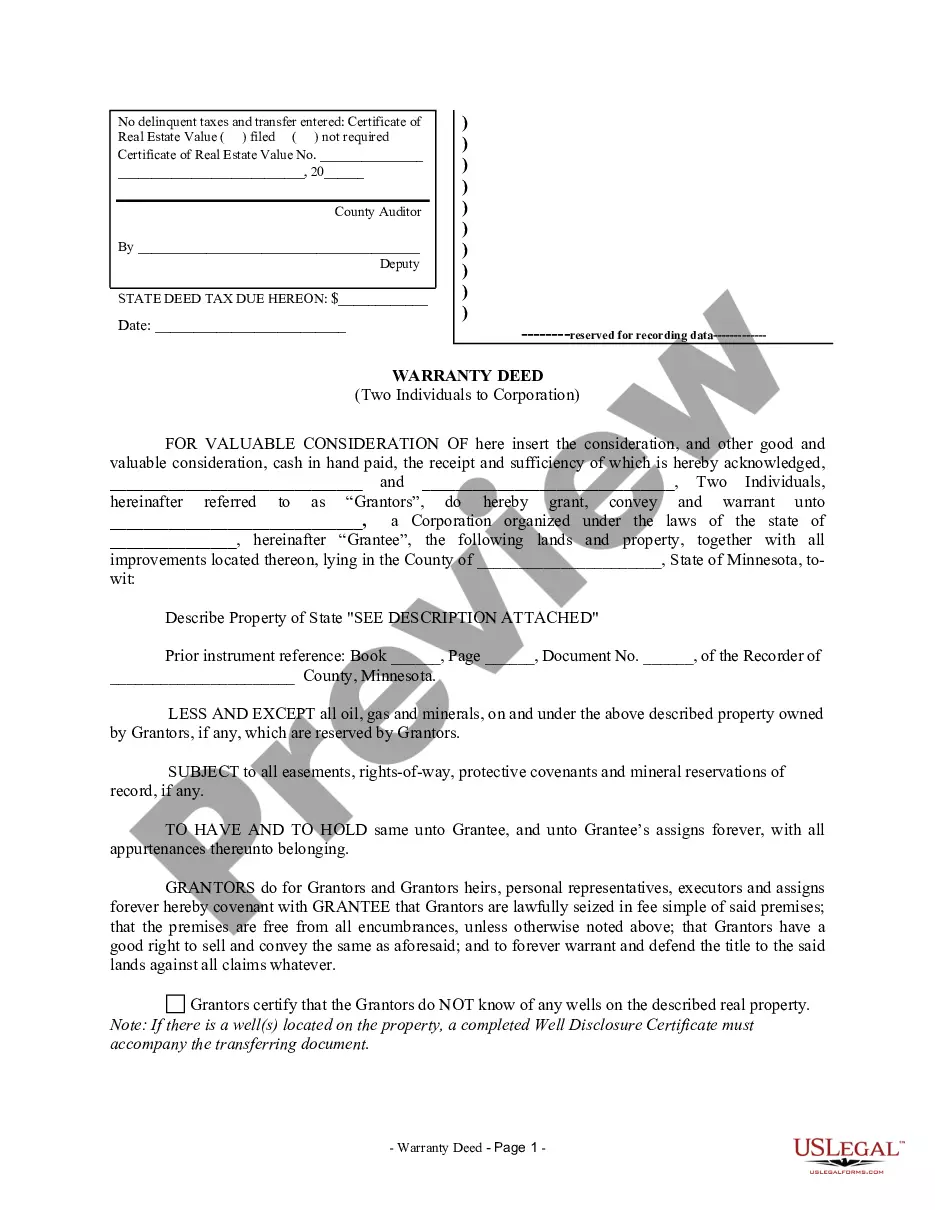
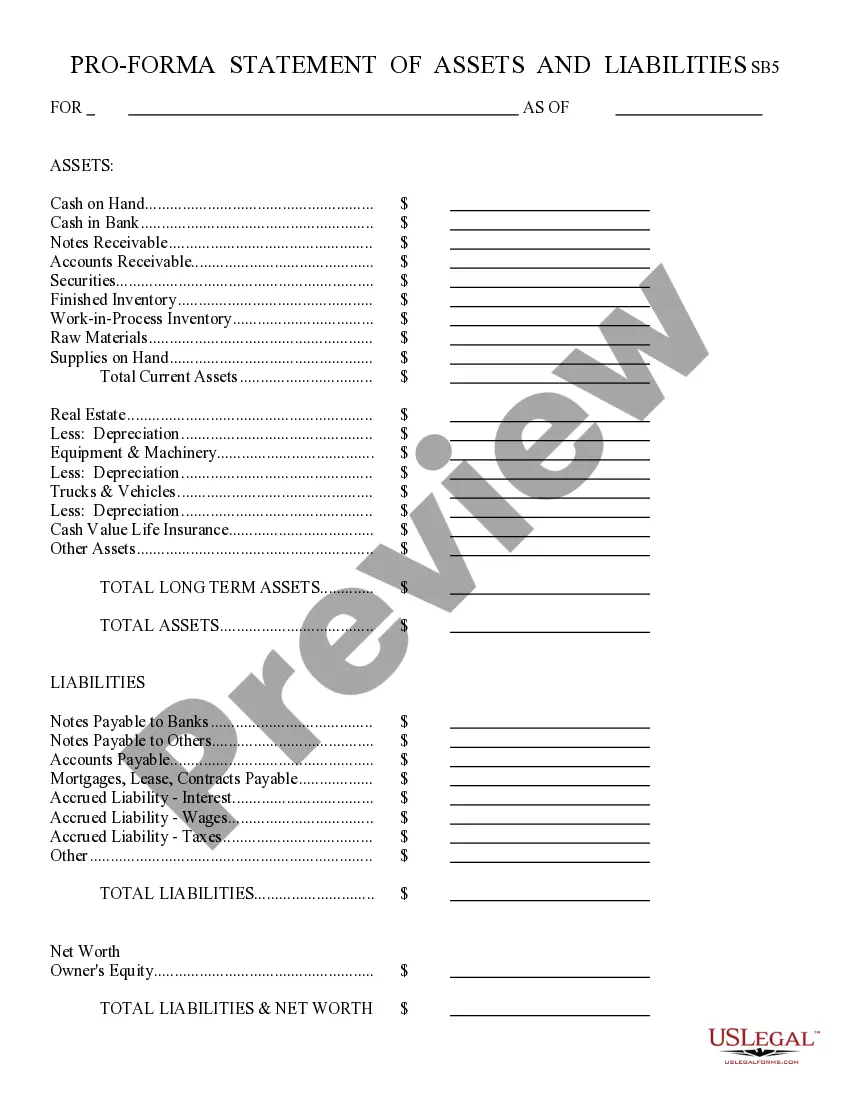
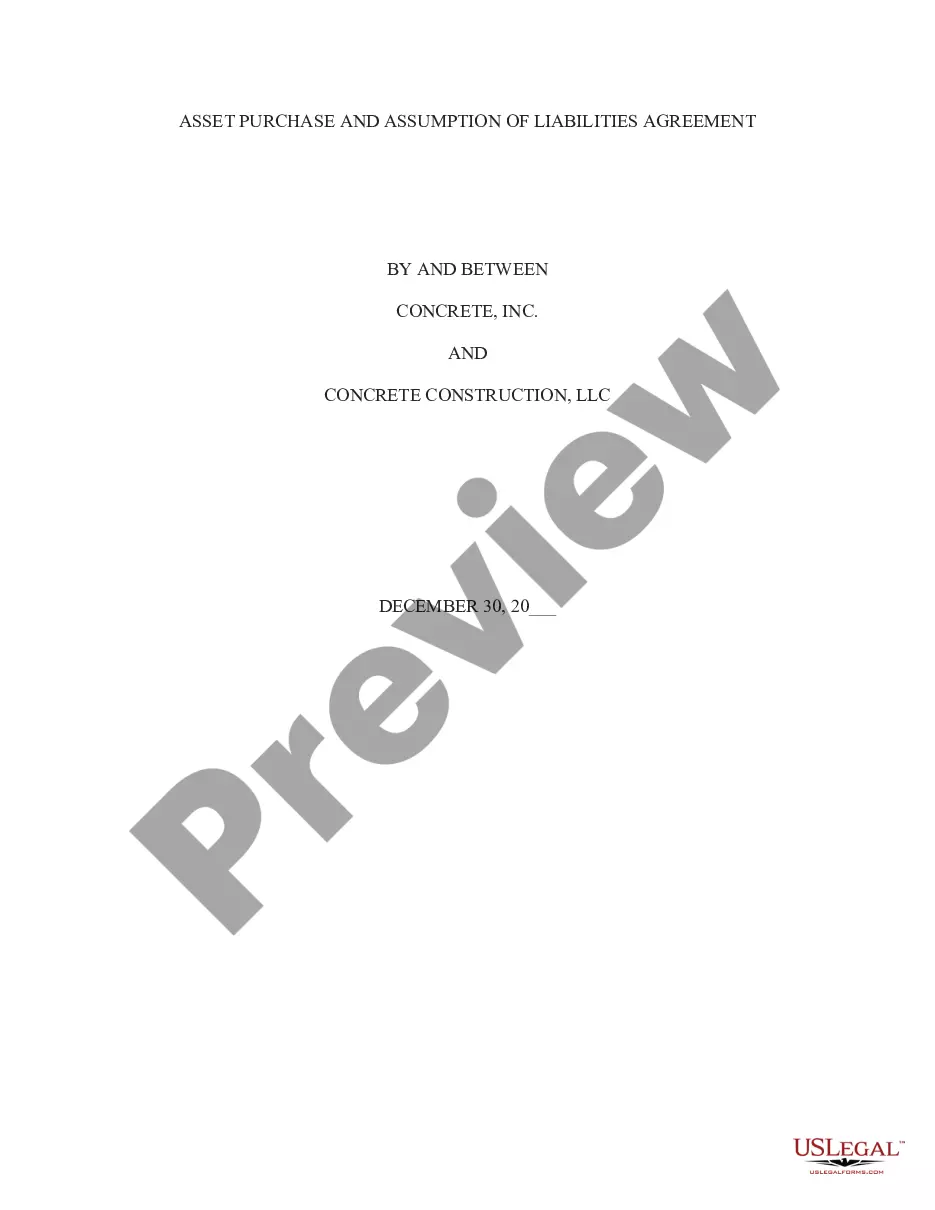
The Statement of Assets and Liabilities - Asset Purchase is a critical document for companies looking to establish a clear understanding of their financial standing. This form lays out a detailed account of all company assets, including real property and machinery, alongside any liabilities such as debts or expenditures. Unlike other financial statements, this document focuses specifically on assets and liabilities related to an asset purchase, making it essential for evaluating any potential business transactions or mergers.
Key parts of this document
- Identification of all assets, including cash, property, and equipment.
- Detailed list of liabilities, such as loans, rent, and outstanding payments.
- Sections for signatures from authorized company representatives.
- Relevant dates for asset assessment and declaration.
- Clarification of asset ownership and valuation methods.


When to use this document
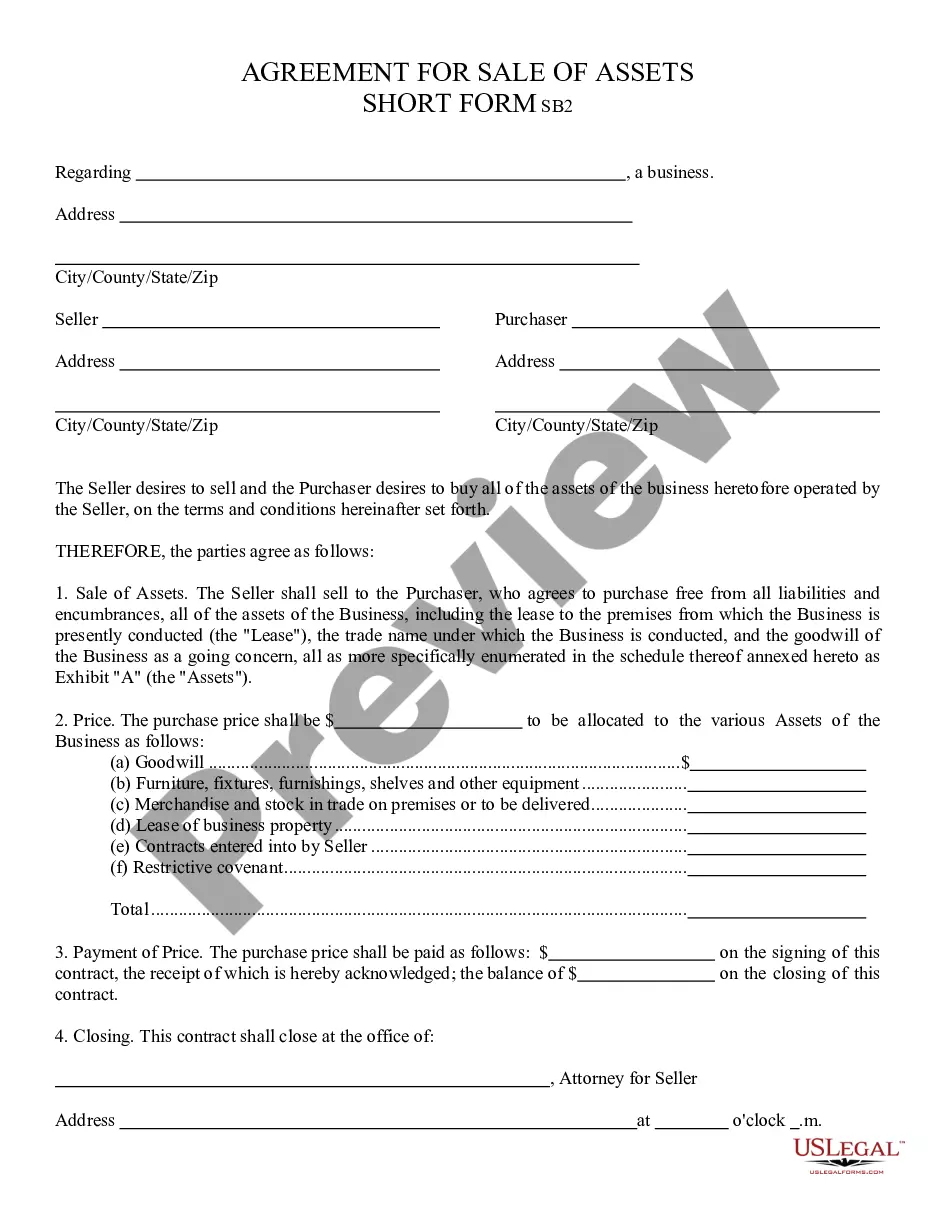
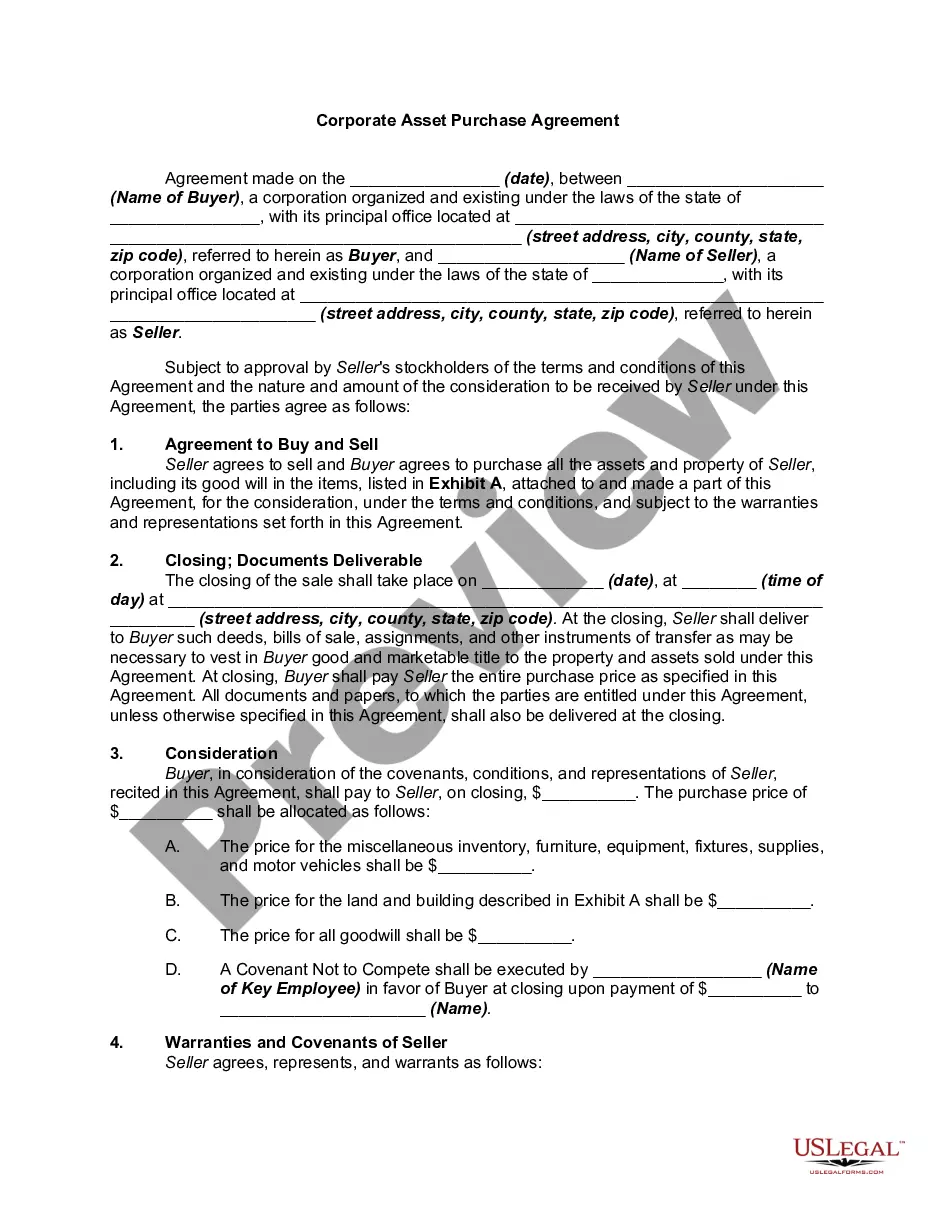
This form is typically used during an asset purchase to provide potential buyers with a comprehensive overview of the seller's financial position. It is essential for evaluating the viability of the purchase and ensuring that all aspects of the company's financial health are transparent. This document can also serve as a reference in negotiations and due diligence processes.
Who can use this document
Eligible users of the Statement of Assets and Liabilities include:
- Corporations preparing for an asset sale or merger.
- Sole proprietors looking to document their financial status for potential investors.
- Business owners involved in due diligence processes.
- Financial professionals assessing a company's assets and liabilities.
How to complete this form
- Identify all assets owned by the company and list them with estimated values.
- Compile a complete list of current liabilities the company holds.
- Enter the date of the asset assessment and ensure all figures are current.
- Have authorized representatives sign the document to validate the information.
- Review the form for accuracy before submission or distribution.
Notarization requirements for this form
This form does not typically require notarization unless specified by local law.
Get your form ready online
Our built-in tools help you complete, sign, share, and store your documents in one place.
Make edits, fill in missing information, and update formatting in US Legal Forms—just like you would in MS Word.
Download a copy, print it, send it by email, or mail it via USPS—whatever works best for your next step.
Sign and collect signatures with our SignNow integration. Send to multiple recipients, set reminders, and more. Go Premium to unlock E-Sign.
If this form requires notarization, complete it online through a secure video call—no need to meet a notary in person or wait for an appointment.
We protect your documents and personal data by following strict security and privacy standards.

Make edits, fill in missing information, and update formatting in US Legal Forms—just like you would in MS Word.

Download a copy, print it, send it by email, or mail it via USPS—whatever works best for your next step.

Sign and collect signatures with our SignNow integration. Send to multiple recipients, set reminders, and more. Go Premium to unlock E-Sign.

If this form requires notarization, complete it online through a secure video call—no need to meet a notary in person or wait for an appointment.

We protect your documents and personal data by following strict security and privacy standards.
Typical mistakes to avoid
- Omitting significant assets or liabilities from the list.
- Providing outdated or inaccurate valuations.
- Failing to include required signatures from authorized individuals.
- Not specifying ownership details for various assets.
Why complete this form online
- Convenient access to a legally vetted template from anywhere.
- Editability allows for quick adjustments to reflect accurate data.
- Reliable format ensures compliance with legal standards.
- The completed form serves as an official record of the financial standing of the business at the time of the asset purchase.
- It is critical for due diligence in any business acquisition process.
Summary of main points
- This form is essential for documenting a companyâs financial position during an asset purchase.
- It includes detailed sections on assets and liabilities, and must be accurate and complete.
- Authorized signatures add validity to the document, making it a crucial part of business transactions.
Looking for another form?

Form popularity
FAQ
Every resident and non-resident with income sourced from Arizona is required to file an Arizona state tax return. This also applies to businesses involved in asset purchases, ensuring that all necessary financial aspects, including the statement of assets and liabilities, are reported. Staying informed about filing requirements helps you avoid issues down the road.
If your business generates revenue in Arizona, then yes, you will need to file an Arizona corporate tax return. This includes accurately reporting your Arizona Statement of Assets and Liabilities related to asset purchases. Filing on time helps ensure compliance with state laws and avoids unnecessary penalties.
Certain individuals and organizations, like non-profits and certain governmental entities, may be exempt from Arizona state income tax. Additionally, depending on your income level and other factors, you might qualify for some deductions. Ensure you understand your situation or consult with a tax adviser to clarify your eligibility.
Yes, non-residents may need to file an Arizona tax return if they earn income from Arizona sources. This includes entities involved in asset purchases that are subject to Arizona tax laws. Understanding your filing obligations is crucial, and platforms like US Legal Forms can help streamline the process.
You can file Arizona Form 120 directly with the Arizona Department of Revenue. This submission ensures that your Arizona Statement of Assets and Liabilities for asset purchases is accurately recorded. For convenience, electronic filing may also be available, making the process smoother and faster.
Typically, any corporation or partnership that has incurred a tax liability in Arizona must file Arizona Form 165. This form is essential for reporting the Arizona Statement of Assets and Liabilities related to asset purchases. If you are not sure whether your situation applies, consider consulting a tax professional for guidance.
An asset purchase involves the purchase of the selling company's assets -- including facilities, vehicles, equipment, and stock or inventory. A stock purchase involves the purchase of the selling company's stock only.
No goodwillGoodwill is not recognized in an asset acquisition. Even if there is economic goodwill in the transaction, this amount is allocated to the assets acquired based on their relative fair values. This results in a higher asset basis that must then be amortized or depreciated.
In a merger, two separate legal entities become one surviving entity. All of the assets and liabilities of each are owned by the new surviving legal entity by operation of state law.
Once an asset purchase is complete, the assets and liabilities that have been purchased are moved to the new entity and the old entity (and any assets or liabilities it still owns) must be wound down. In a stock purchase, the buyer purchases the entire company, including all assets and liabilities.