Legal Advice For Schools
Description


Get your form ready online
Our built-in tools help you complete, sign, share, and store your documents in one place.
Make edits, fill in missing information, and update formatting in US Legal Forms—just like you would in MS Word.
Download a copy, print it, send it by email, or mail it via USPS—whatever works best for your next step.
Sign and collect signatures with our SignNow integration. Send to multiple recipients, set reminders, and more. Go Premium to unlock E-Sign.
If this form requires notarization, complete it online through a secure video call—no need to meet a notary in person or wait for an appointment.
We protect your documents and personal data by following strict security and privacy standards.

Make edits, fill in missing information, and update formatting in US Legal Forms—just like you would in MS Word.

Download a copy, print it, send it by email, or mail it via USPS—whatever works best for your next step.

Sign and collect signatures with our SignNow integration. Send to multiple recipients, set reminders, and more. Go Premium to unlock E-Sign.

If this form requires notarization, complete it online through a secure video call—no need to meet a notary in person or wait for an appointment.

We protect your documents and personal data by following strict security and privacy standards.
Looking for another form?









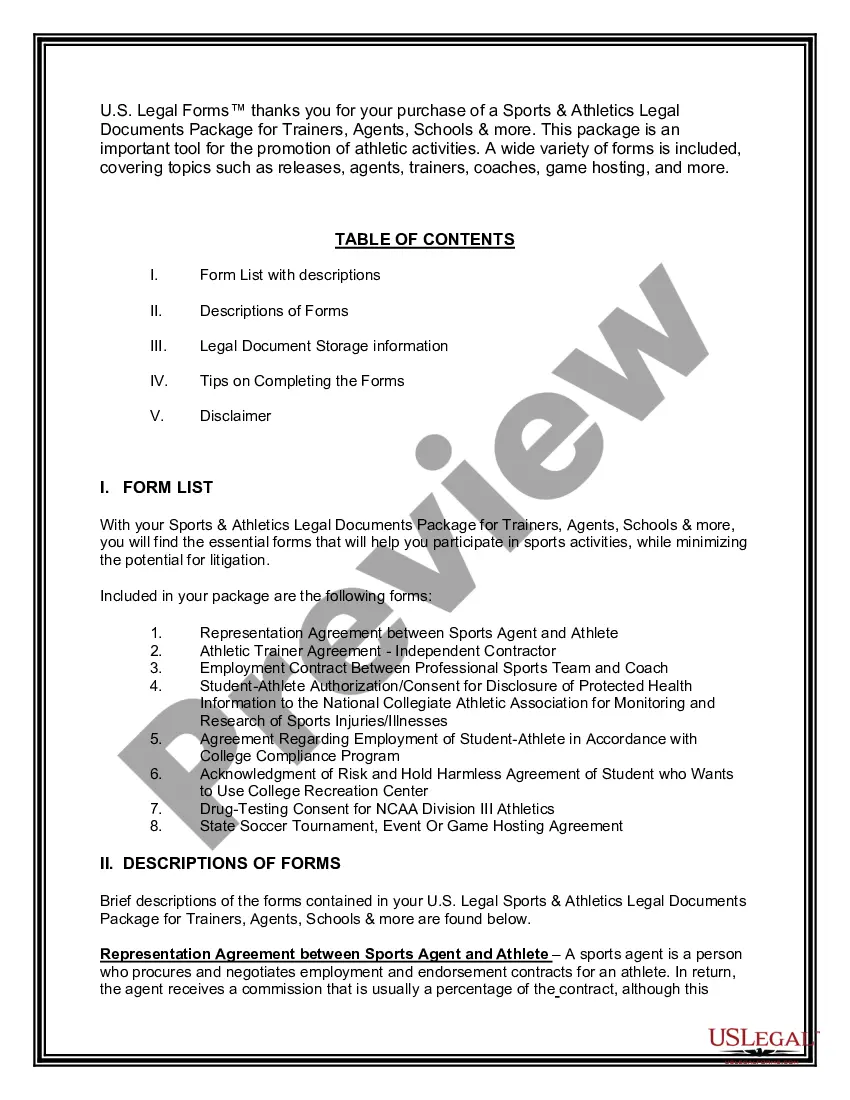
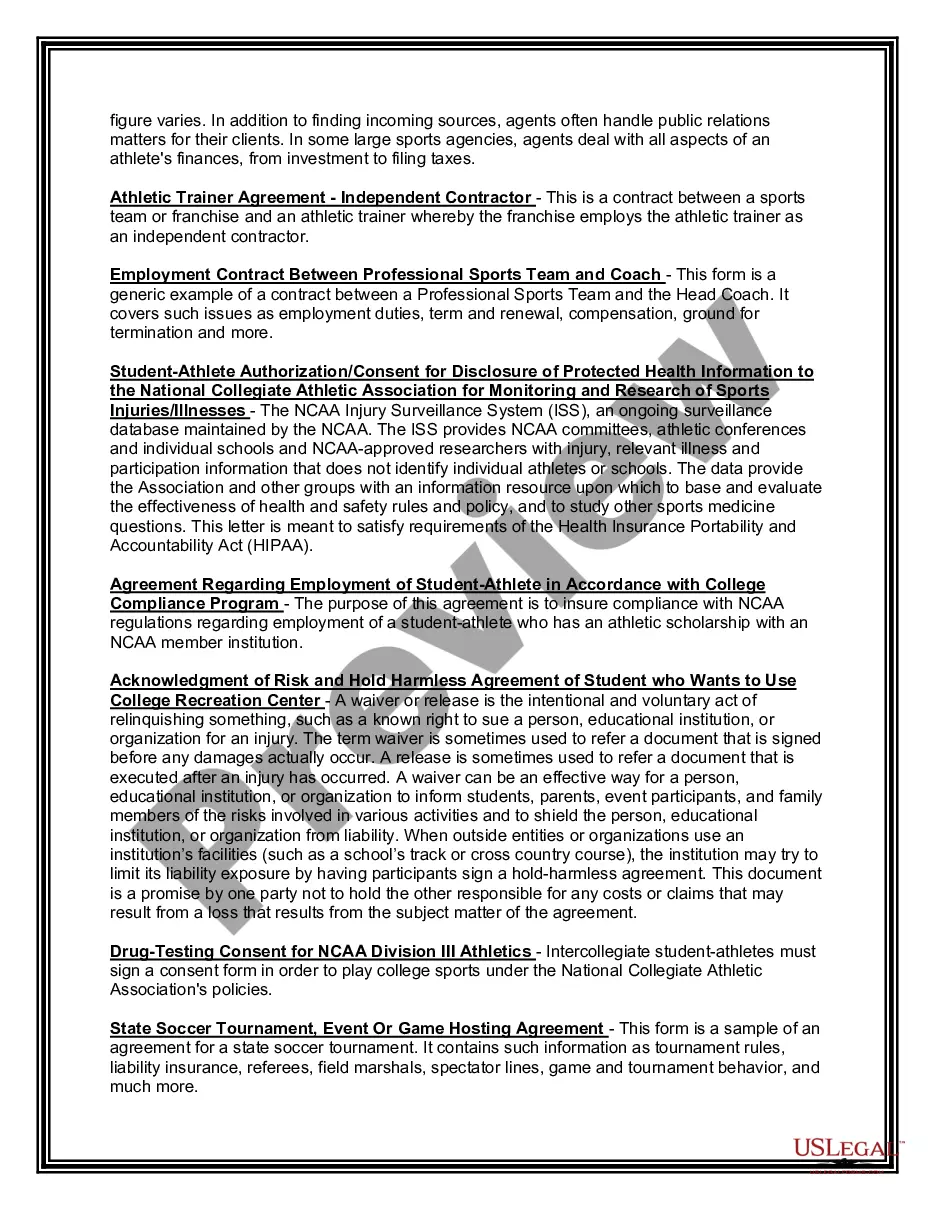
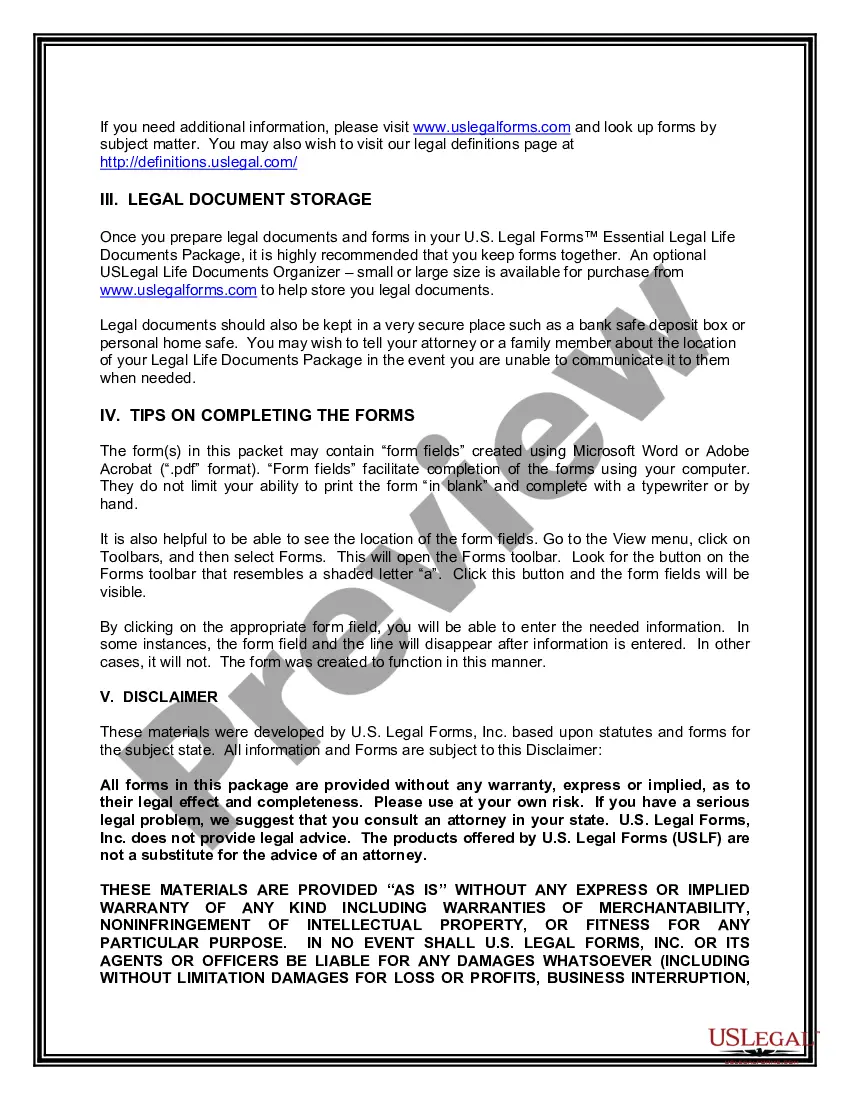
How to fill out Sports & Athletics Legal Documents Package For Trainers Or Training, Agents, Schools & More?
- Begin by logging into your US Legal Forms account. Ensure your subscription is active; if expired, promptly renew it based on your selected payment plan.
- Review the document preview and description carefully. Confirm that the legal form aligns with your specific needs and meets local jurisdiction requirements.
- If the initial form isn't a match, utilize the search feature to explore additional templates that may better fit your requirements.
- Once you've identified the correct document, click the 'Buy Now' button and select an appropriate subscription plan. Remember, you need to create an account to access the extensive library.
- Proceed to checkout by entering your payment information via credit card or PayPal for a secure transaction.
- After purchase, download the form directly to your device. You can also access it anytime through the 'My Forms' section in your profile.
With US Legal Forms, educational institutions can efficiently secure necessary legal documents backed by a vast library of over 85,000 customizable forms. This service is not only cost-effective but also provides access to legal experts who can assist in ensuring the accuracy and legality of your documents.
Take advantage of US Legal Forms today and simplify your school’s legal documentation process. Start now to access the diverse range of legal forms available!
Form popularity
FAQ
Yes, parents can bring anyone they choose to an IEP meeting, including family members, advocates, or legal representatives. Having supportive individuals can provide a better understanding of the IEP process and ensure your child's needs are met. Legal advice for schools can be particularly beneficial during these discussions, helping you make informed decisions. Always inform the school in advance about additional attendees to promote collaboration.
Yes, you can bring a lawyer to a school meeting if you feel it is necessary. This is especially relevant in meetings concerning your child's education and services, such as IEP meetings. Legal advice for schools can empower you to advocate effectively for your child's needs. It’s wise to inform the school in advance about your decision to bring legal representation to ensure a smooth meeting.
To sue a school in New Jersey, you typically need an attorney who specializes in education law or civil rights. This type of lawyer understands the complexities of legal procedures related to educational institutions. They can provide invaluable legal advice for schools and help you navigate the lawsuit process effectively. If you're considering legal action, consulting with a qualified school attorney can make a significant difference.
Yes, you can bring your lawyer to a work meeting, especially if you are discussing legal matters. Having legal representation can help ensure that your rights are protected during important discussions. If the meeting pertains to school-related issues, legal advice for schools is highly beneficial in understanding your options and responsibilities. Always check with your employer beforehand to avoid any misunderstandings.
An educational lawyer is often referred to as a school attorney. This lawyer specializes in issues related to education law, providing essential legal advice for schools. They assist institutions with compliance, policies, and disputes, ensuring that schools operate within the legal framework. If you need guidance on navigating education laws, engaging a knowledgeable legal expert is crucial.
A legal advisor does not necessarily have to be a lawyer, but their advice may not carry the same weight as that of a qualified attorney. Non-lawyer advisors may offer perspectives based on experience or training but should be cautious about providing specific legal advice. For comprehensive legal advice for schools, it is always best to consult with a licensed lawyer who understands educational law.
Yes, you can bring a lawyer to a school meeting, especially if you want to address complex legal matters. Having legal representation can help clarify issues and ensure that your rights are safeguarded during discussions. If you're seeking legal advice for schools, involving a lawyer can also facilitate a smoother communication process among all parties.
While individuals who are not lawyers can provide guidance based on their knowledge, they cannot offer legal advice in a formal sense. Only licensed attorneys can interpret laws and advise you on your legal rights and responsibilities. To ensure you receive accurate legal advice for schools, seek help from a qualified legal professional who specializes in education law.
Not all legal advisors are lawyers; however, their advice may lack the authority and depth that a lawyer can provide. Legal advisors may have expertise in specific areas, such as compliance or educational best practices, but they cannot represent you legally. For robust and reliable legal advice for schools, it is prudent to consult a qualified attorney.
Lawyers specializing in education law focus on legal issues related to schools and educational institutions. They address matters such as student rights, special education, administrative compliance, and employee relations within educational settings. If you are seeking legal advice for schools, consulting an education lawyer can help ensure that your institution adheres to required legal standards.