(non Disclosure Agreement)
Description
Get your form ready online
Our built-in tools help you complete, sign, share, and store your documents in one place.
Make edits, fill in missing information, and update formatting in US Legal Forms—just like you would in MS Word.
Download a copy, print it, send it by email, or mail it via USPS—whatever works best for your next step.
Sign and collect signatures with our SignNow integration. Send to multiple recipients, set reminders, and more. Go Premium to unlock E-Sign.
If this form requires notarization, complete it online through a secure video call—no need to meet a notary in person or wait for an appointment.
We protect your documents and personal data by following strict security and privacy standards.

Make edits, fill in missing information, and update formatting in US Legal Forms—just like you would in MS Word.

Download a copy, print it, send it by email, or mail it via USPS—whatever works best for your next step.

Sign and collect signatures with our SignNow integration. Send to multiple recipients, set reminders, and more. Go Premium to unlock E-Sign.

If this form requires notarization, complete it online through a secure video call—no need to meet a notary in person or wait for an appointment.

We protect your documents and personal data by following strict security and privacy standards.
Looking for another form?









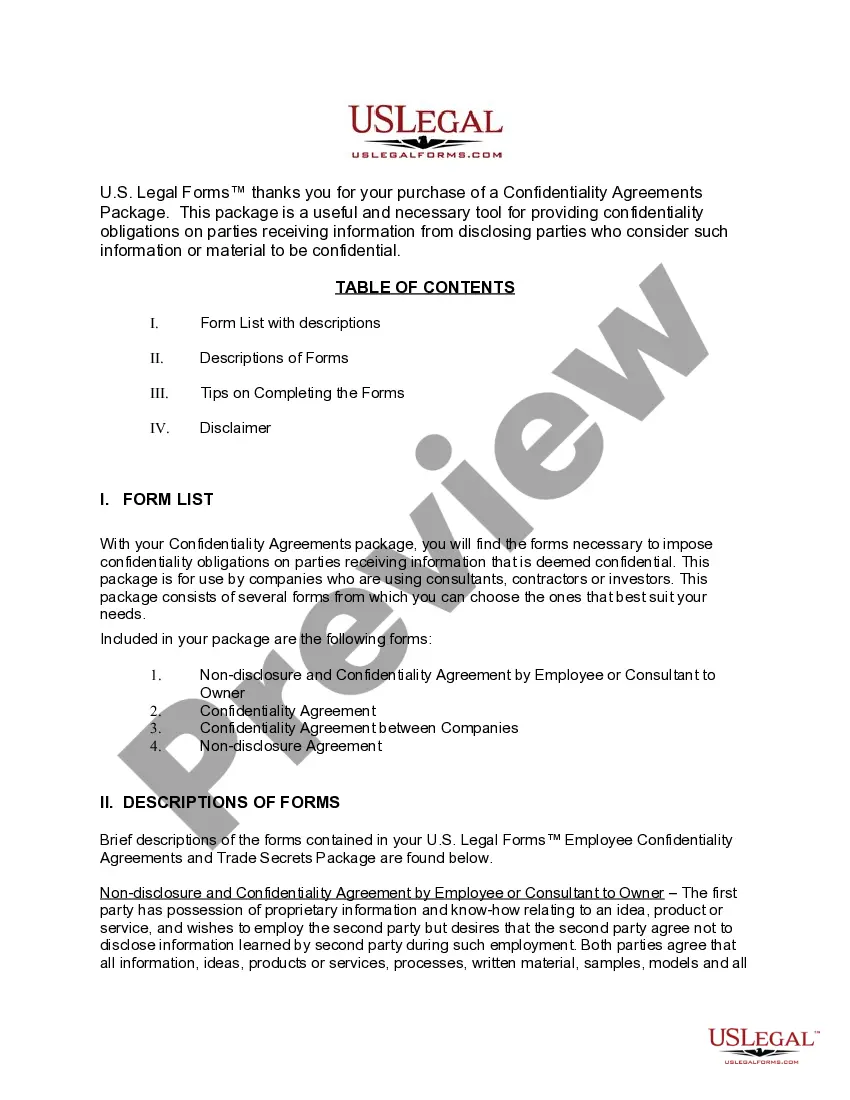
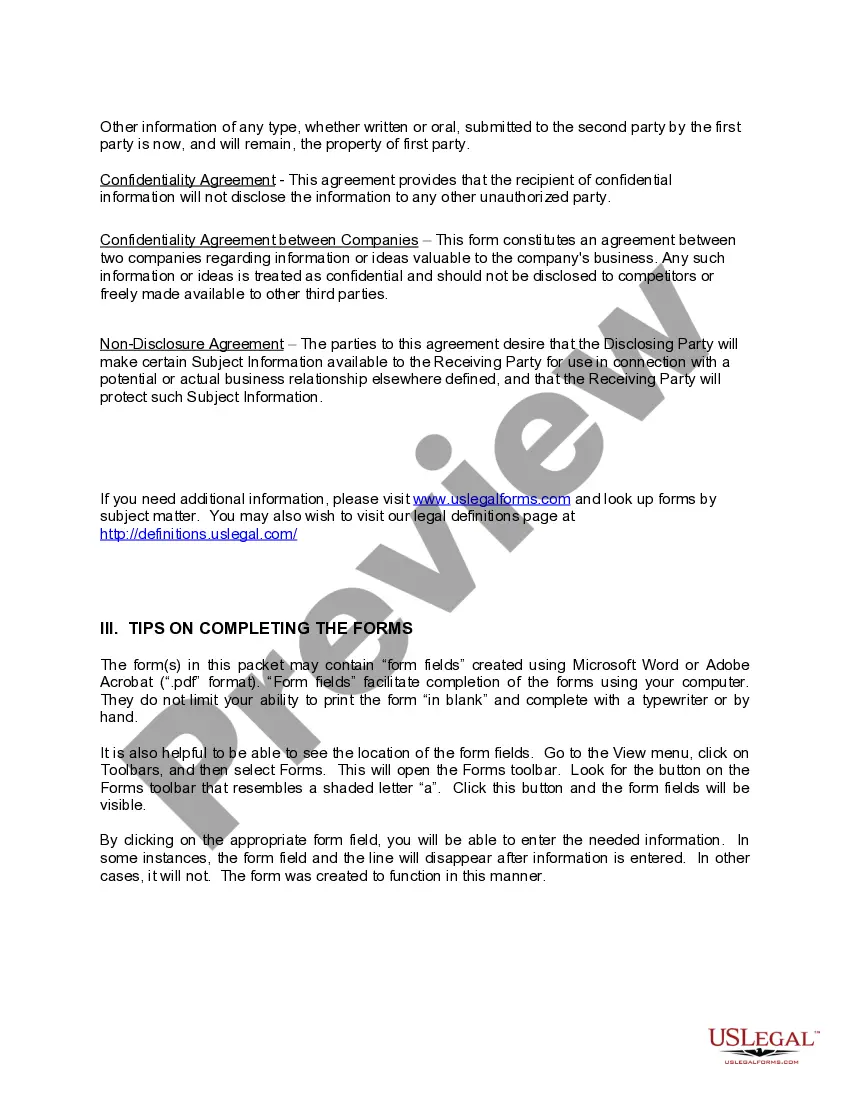
How to fill out Confidentiality Agreements Package?
- If you’re a returning user, log in to access your account and retrieve the necessary form template by clicking the Download button. Ensure your subscription is active, and renew it if required.
- For first-time users, begin by previewing the form options. Evaluate the descriptions to select an NDA that aligns with your specific needs and complies with your local regulations.
- If the NDA doesn’t match your requirements, utilize the Search tab to locate a more suitable template.
- Proceed to purchase the chosen document by clicking the Buy Now button, selecting the subscription plan that best fits your needs. You will need to create an account to unlock the extensive library.
- Complete your payment using your credit card or PayPal account for subscription access.
- Download your NDA form directly to your device for completion. You can always find it later in the My Forms section of your profile.
By following these steps, you will efficiently secure a non disclosure agreement tailored for your needs. Remember, US Legal Forms features a comprehensive library and professional support to help ensure your document is legally sound.
Start protecting your sensitive information today by visiting US Legal Forms and explore their vast selection of legal templates!
Form popularity
FAQ
Red flags in a non-disclosure agreement often include overly broad language or vague definitions of what constitutes confidential information. Additionally, indefinite timeframes or unjust penalties for breaches can be concerning. It's also a warning sign if the NDA imposes obligations that extend beyond reasonable limits. When reviewing an NDA, always look for clarity and fairness in the terms; this will help you avoid potential pitfalls.
Non-disclosure agreements typically hold up well in court, provided they are carefully drafted and reasonable in scope. Courts generally enforce these agreements as long as they are clear and specific about the information being protected. However, enforceability can depend on factors like the jurisdiction and the particular circumstances surrounding the breach. Consulting with legal professionals, such as those at uslegalforms, can help ensure your NDA is strong and comprehensive.
The purpose of a non-disclosure agreement is to protect sensitive information from being disclosed to unauthorized parties. This agreement helps businesses safeguard trade secrets, proprietary data, and intellectual property. When both parties sign a non-disclosure agreement, they clearly establish the expectations surrounding confidentiality. This clarity fosters trust, allowing for more open and transparent communications.
The validity period of a non-disclosure agreement can vary significantly depending on its terms. Most NDAs specify a duration during which the confidentiality obligations must be upheld. This period is usually outlined in the agreement itself and can range from a few years to an indefinite timeframe, depending on the nature of the information involved. Be sure to clarify this aspect before finalizing the NDA.
If you break a non-disclosure agreement, the consequences can be severe. The party that suffers from the breach may take legal action against you, seeking damages or injunctive relief. This means you could face financial penalties or be compelled to stop any actions that violate the agreement. Thus, it is imperative to understand your obligations under an NDA to avoid such situations.
Yes, signing a non-disclosure agreement is a significant commitment that should not be taken lightly. By agreeing to an NDA, you are legally bound to keep confidential information private. This agreement protects sensitive business information and intellectual property, so it is essential to review the terms carefully. If you have questions, consider consulting a legal expert for guidance.
The punishment for breaking a non-disclosure agreement can vary based on the terms outlined in the contract. In many cases, the harmed party can seek monetary damages, which may include lost profits or expenses incurred due to the breach. Furthermore, the court may impose additional penalties if the violation was willful or egregious. It is crucial to understand the seriousness of a non-disclosure agreement before signing.
Filling out a non-disclosure agreement involves stating the parties involved, defining the confidential information, and outlining the obligations of each party. You should also specify the duration of confidentiality and include any consequences for breach. Platforms like US Legal Forms provide useful resources and templates that can guide you through this process.
An example of a non-disclosure statement might start with, 'The undersigned party agrees not to disclose any proprietary information shared during our discussions.' This statement can include specifics about what information is deemed confidential and outline the obligations of both parties. Using such clear language helps establish mutual understanding and trust.
Yes, you can write a non-disclosure agreement yourself, but it is important to ensure it covers all necessary aspects. While template resources like US Legal Forms can simplify the process, careful consideration should be given to terms and language used. Having a legal professional review your NDA can further confirm its legality and effectiveness.