Confidentiality Between With Student
Description


Get your form ready online
Our built-in tools help you complete, sign, share, and store your documents in one place.
Make edits, fill in missing information, and update formatting in US Legal Forms—just like you would in MS Word.
Download a copy, print it, send it by email, or mail it via USPS—whatever works best for your next step.
Sign and collect signatures with our SignNow integration. Send to multiple recipients, set reminders, and more. Go Premium to unlock E-Sign.
If this form requires notarization, complete it online through a secure video call—no need to meet a notary in person or wait for an appointment.
We protect your documents and personal data by following strict security and privacy standards.

Make edits, fill in missing information, and update formatting in US Legal Forms—just like you would in MS Word.

Download a copy, print it, send it by email, or mail it via USPS—whatever works best for your next step.

Sign and collect signatures with our SignNow integration. Send to multiple recipients, set reminders, and more. Go Premium to unlock E-Sign.

If this form requires notarization, complete it online through a secure video call—no need to meet a notary in person or wait for an appointment.

We protect your documents and personal data by following strict security and privacy standards.
Looking for another form?

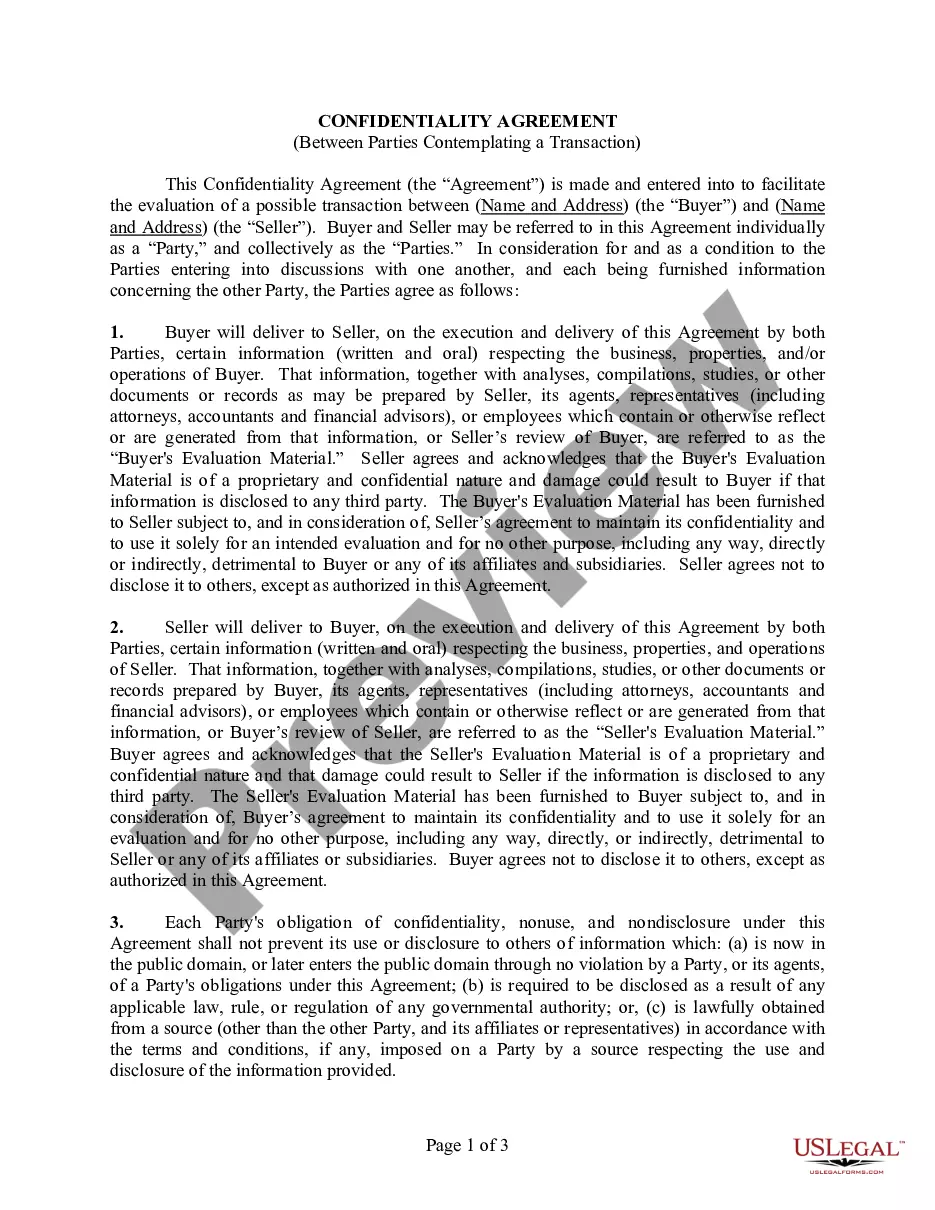
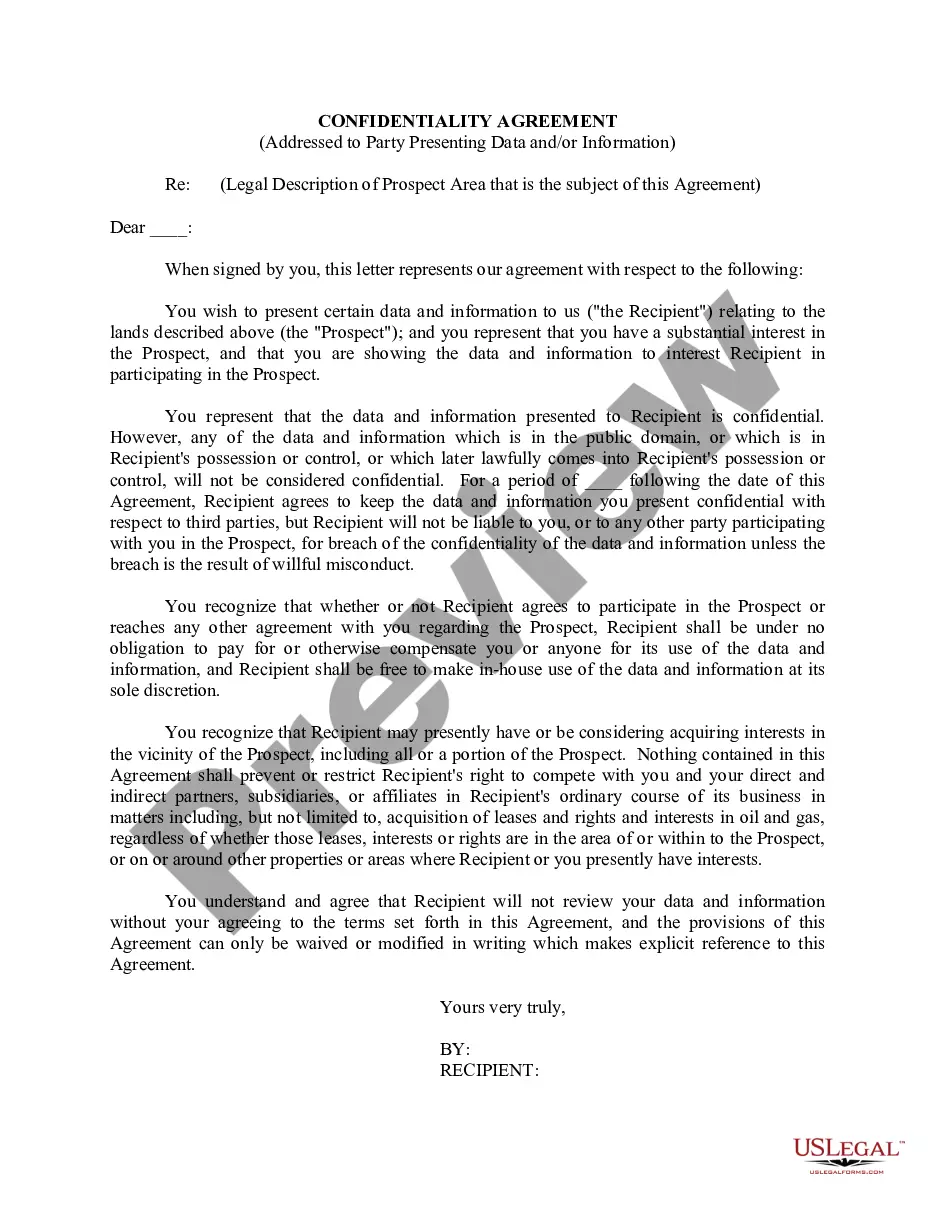
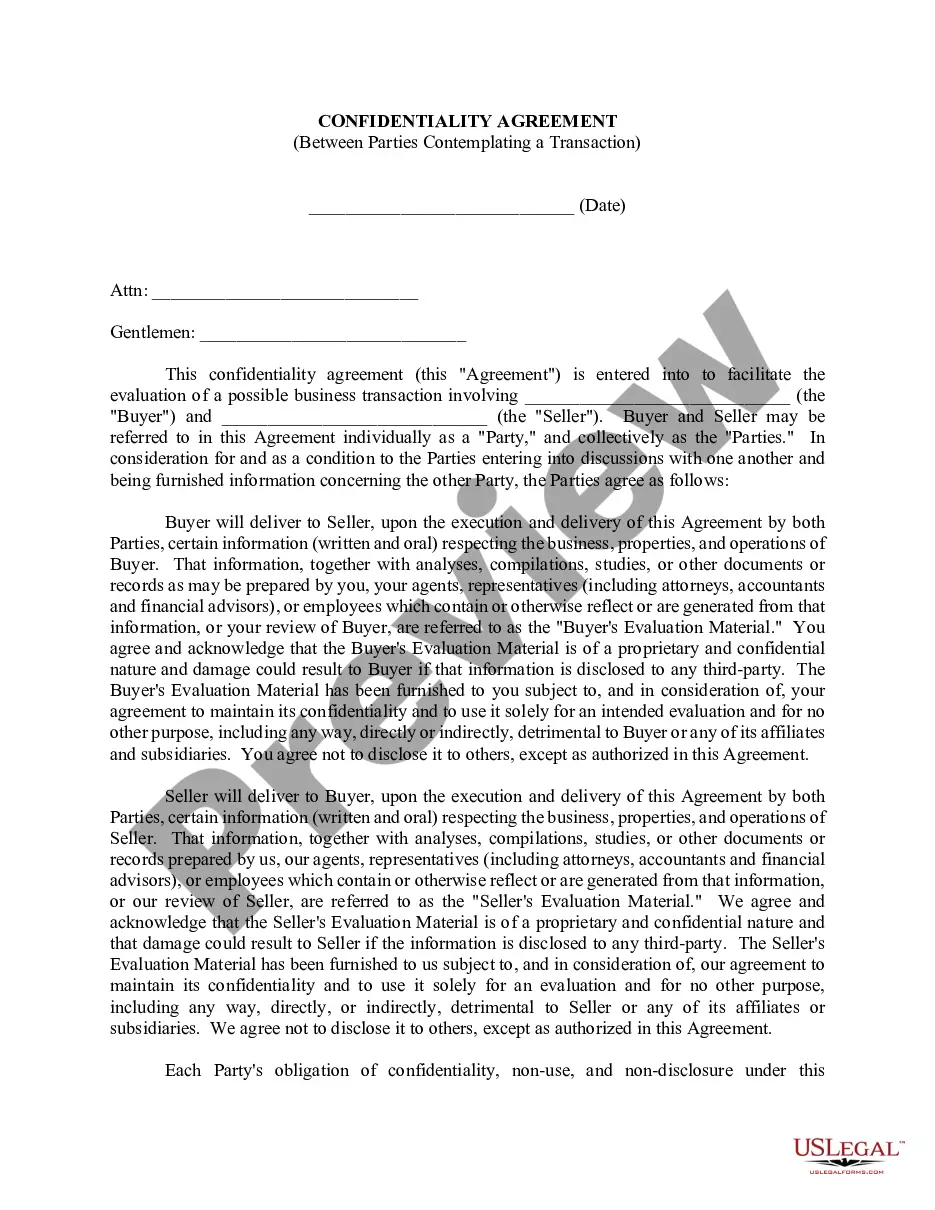
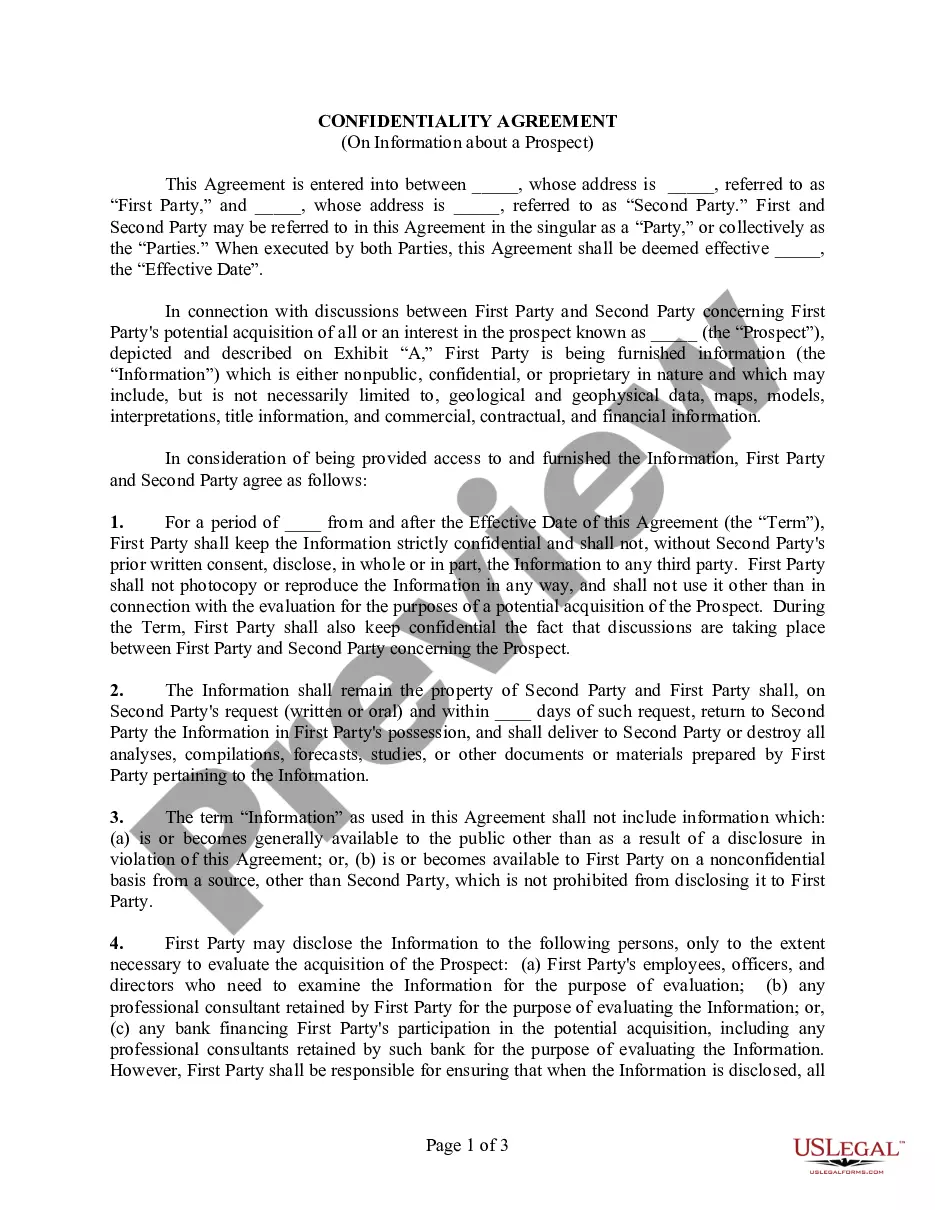
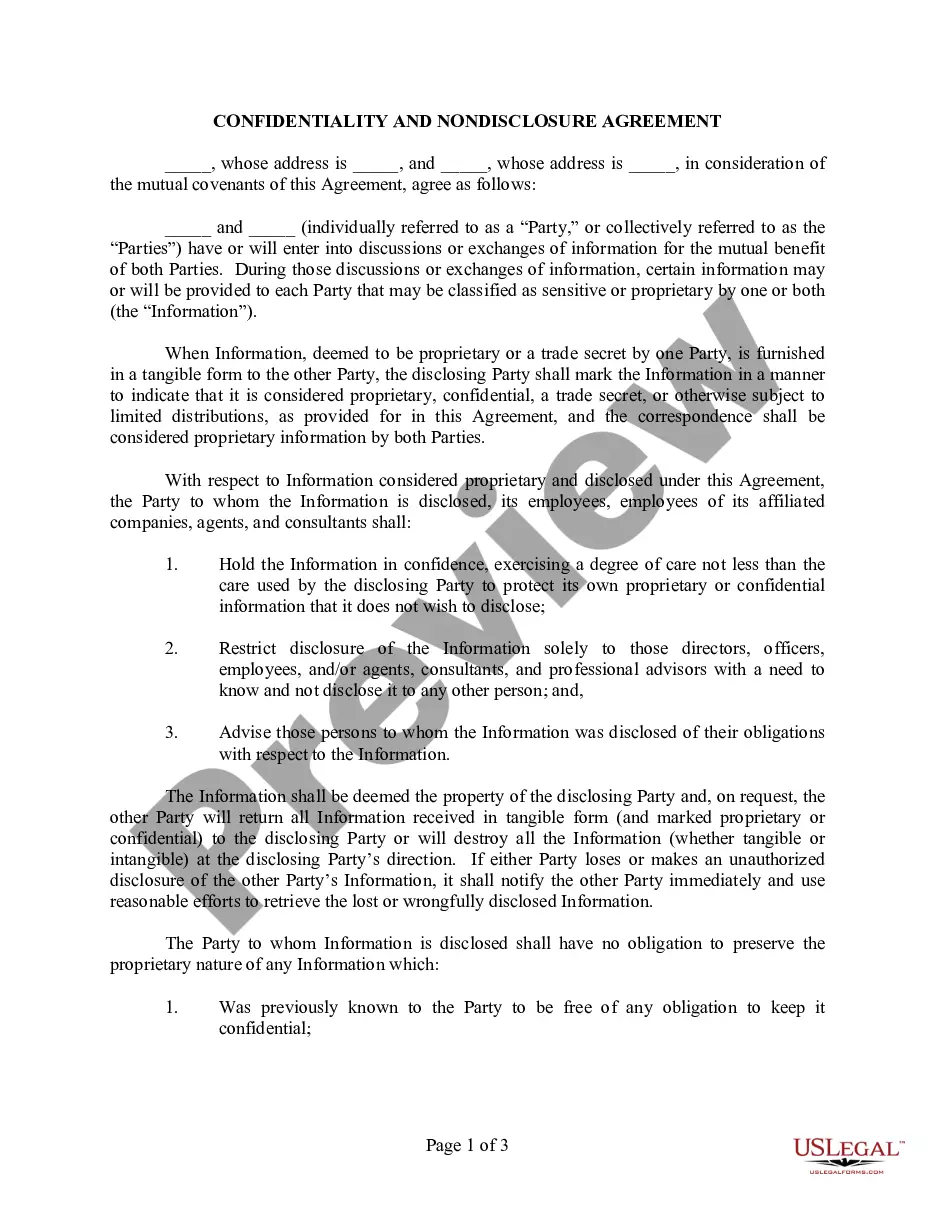
How to fill out Confidentiality Agreement (Between Parties Contemplating A Transaction)?
Securing a reliable location to obtain the most up-to-date and suitable legal templates is half the challenge of managing bureaucracy.
Selecting the correct legal documents demands accuracy and meticulousness, which is why it is crucial to obtain samples of Confidentiality Between With Student exclusively from trustworthy sources, such as US Legal Forms.
Avoid the hassle associated with your legal documentation. Discover the extensive US Legal Forms library where you can locate legal templates, verify their applicability to your situation, and download them instantly.
- Utilize the catalog browsing or search bar to locate your template.
- Examine the form’s description to determine if it meets the requirements of your state and region.
- Preview the form, if accessible, to confirm it is indeed the document you are looking for.
- Return to the search if the Confidentiality Between With Student does not fulfill your needs and look for the appropriate template.
- If you are confident about the document’s suitability, proceed to download it.
- If you are a registered user, click Log in to verify and access your selected forms in My documents.
- If you don’t have an account yet, click Buy now to purchase the form.
- Select the payment plan that suits your needs.
- Continue to the registration to finalize your order.
- Complete your transaction by choosing a payment method (credit card or PayPal).
- Select the file format for downloading Confidentiality Between With Student.
- Once the document is on your device, you can modify it with the editor or print it and fill it out manually.
Form popularity
FAQ
Confidentiality extends to information about either individuals or organizations. In schools, districts, or state education agencies, that usually means establishing procedures that limit access to information about students or their families.
Answer and Explanation: Some examples of confidentiality in schools includes maintaining school records protected against those who do not have the right to see them.
Examples of confidential information include a person's phone number and address, medical records, and social security. Companies also have confidential information such as financial records, trade secrets, customer information, and marketing strategies.
When considering privacy, teachers should remember that all student personal information belongs to the student and therefore should be kept private. This information includes things like assessment results, grades, and demographic information.
Confidentiality extends to information about either individuals or organizations. In schools, districts, or state education agencies, that usually means establishing procedures that limit access to information about students or their families.