Motion To Dismiss With Prejudice Texas
Description
Get your form ready online
Our built-in tools help you complete, sign, share, and store your documents in one place.
Make edits, fill in missing information, and update formatting in US Legal Forms—just like you would in MS Word.
Download a copy, print it, send it by email, or mail it via USPS—whatever works best for your next step.
Sign and collect signatures with our SignNow integration. Send to multiple recipients, set reminders, and more. Go Premium to unlock E-Sign.
If this form requires notarization, complete it online through a secure video call—no need to meet a notary in person or wait for an appointment.
We protect your documents and personal data by following strict security and privacy standards.

Make edits, fill in missing information, and update formatting in US Legal Forms—just like you would in MS Word.

Download a copy, print it, send it by email, or mail it via USPS—whatever works best for your next step.

Sign and collect signatures with our SignNow integration. Send to multiple recipients, set reminders, and more. Go Premium to unlock E-Sign.

If this form requires notarization, complete it online through a secure video call—no need to meet a notary in person or wait for an appointment.

We protect your documents and personal data by following strict security and privacy standards.
Looking for another form?







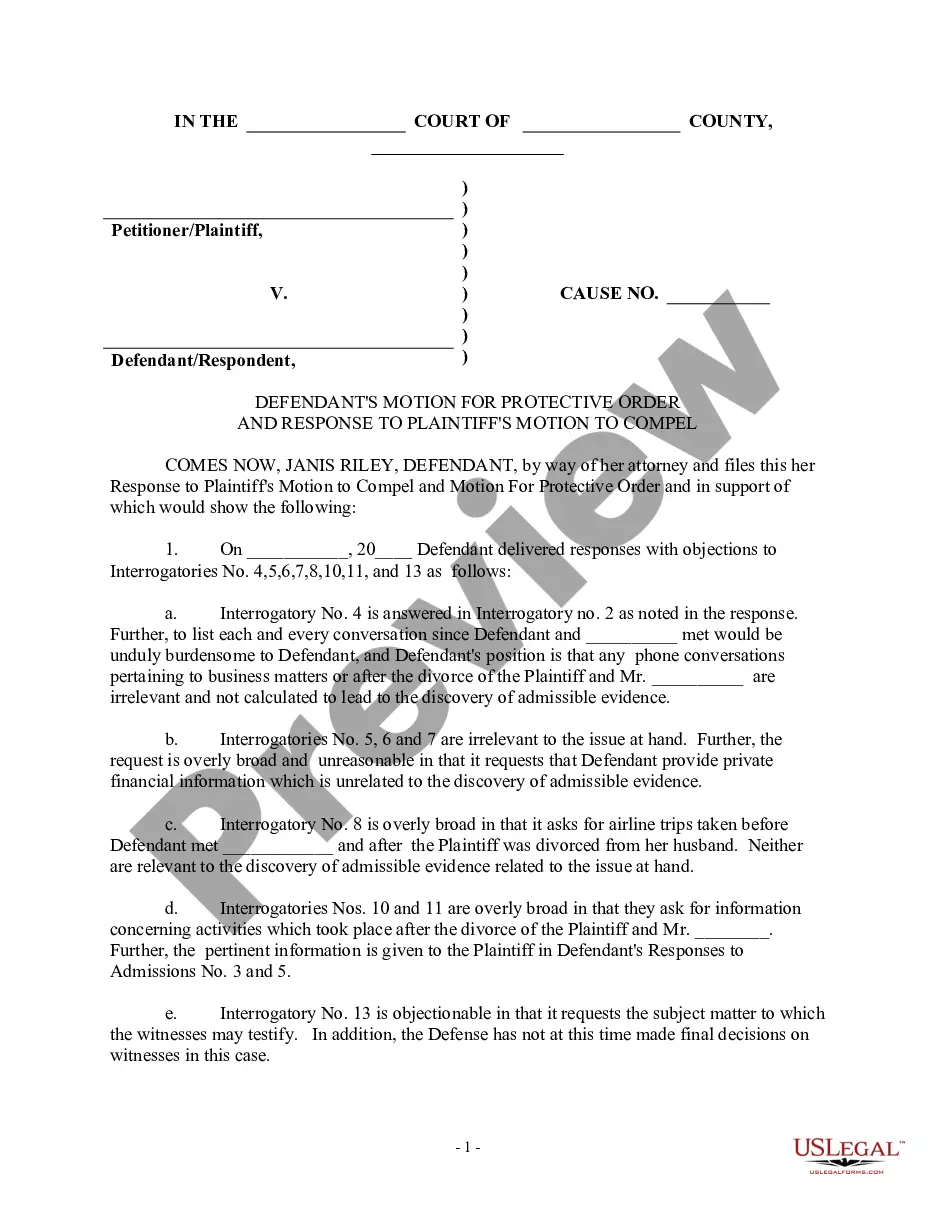
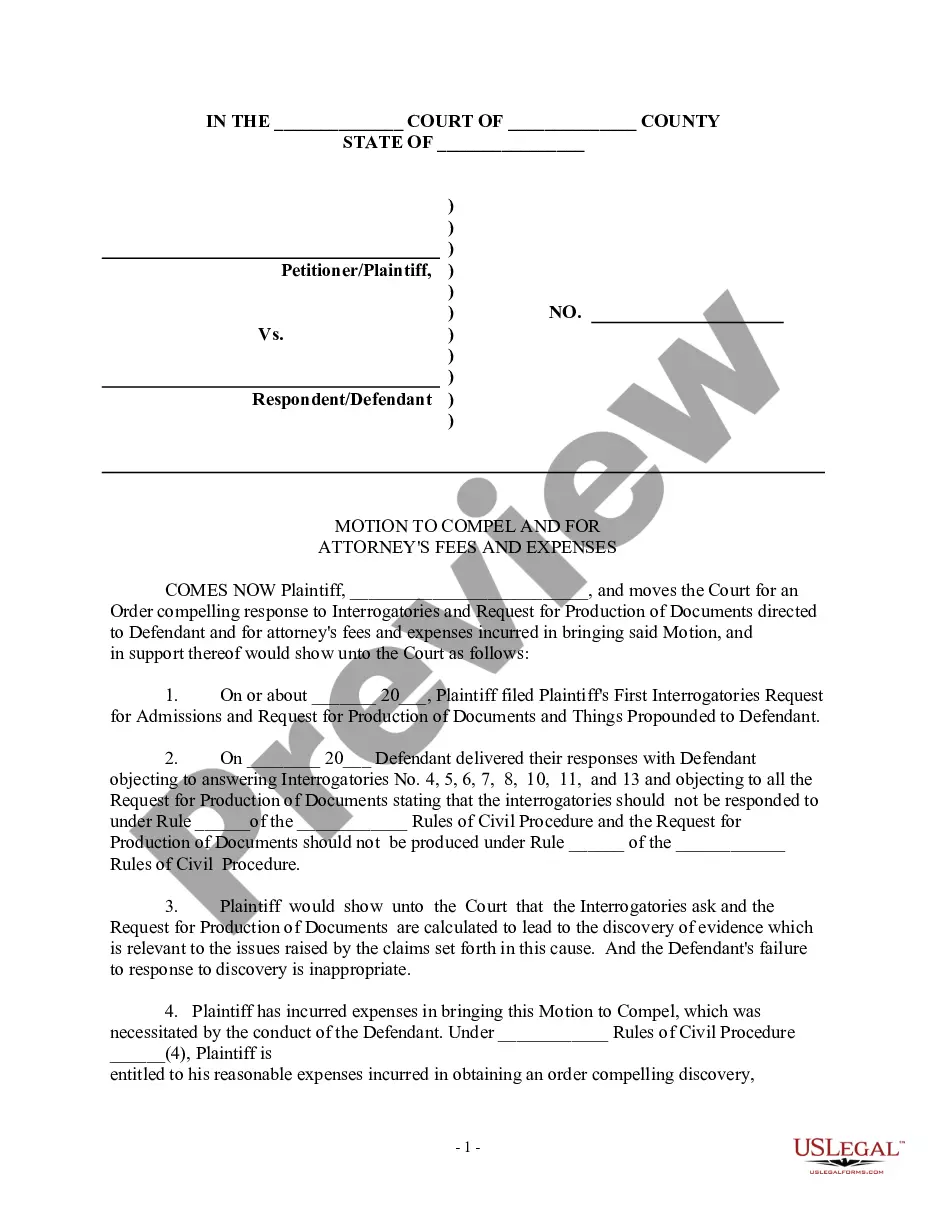
How to fill out Defendant's Motion For Protective Order And Response To Plaintiff's Motion To Compel?
Regardless of whether it's for corporate reasons or personal affairs, everyone must deal with legal circumstances at some stage in their lives.
Completing legal forms requires thorough care, starting from selecting the correct template. For instance, if you choose an incorrect version of the Motion To Dismiss With Prejudice Texas, it will be rejected upon submission.
With a comprehensive US Legal Forms catalog available, you don’t have to waste time searching for the right template online. Utilize the library’s straightforward navigation to find the appropriate form for any circumstance.
- Locate the template you need by using the search bar or browsing the catalog.
- Review the form's details to confirm it fits your scenario, state, and region.
- Click on the form's preview to view it.
- If it is the wrong form, return to the search function to find the correct Motion To Dismiss With Prejudice Texas template.
- Download the template if it aligns with your specifications.
- If you already possess a US Legal Forms account, simply click Log in to access previously saved forms in My documents.
- If you do not have an account yet, you can acquire the form by clicking Buy now.
- Select the appropriate pricing choice.
- Complete the profile registration form.
- Choose your payment method: you can use a credit card or PayPal account.
- Select the desired file format and download the Motion To Dismiss With Prejudice Texas.
- Once downloaded, you can fill out the form with editing software or print it and complete it by hand.
Form popularity
FAQ
An example of a motion to dismiss with prejudice could involve a case where the plaintiff has repeatedly failed to remedy their legal claims after being given opportunities to do so. This motion asserts that not only should the case be dismissed, but it should also be barred from re-filing. In Texas, using a motion to dismiss with prejudice ensures that the matter is resolved permanently, preventing any further legal action on the same claims.
To write an effective motion, organize your arguments logically and support them with strong evidence. Use clear language and remain concise, as this helps keep the court’s focus on your key points. When filing a motion to dismiss with prejudice in Texas, be sure to highlight why your motion should be granted, leaving no room for ambiguity.
Filling out a motion to dismiss form involves providing accurate information about the case, including the title, case number, and parties. Ensure that you articulate the grounds for your motion clearly and cite relevant laws. If you seek a motion to dismiss with prejudice in Texas, emphasize this in the form to convey the finality of your request.
The opening paragraph of a motion to dismiss sets the stage for your argument. It typically introduces the parties involved, the case number, and the specific motion being filed. Additionally, clearly state that you are seeking a motion to dismiss with prejudice in Texas, outlining the reasons right from the start to capture the court's attention.
An example of a motion to dismiss could involve a case where the plaintiff fails to state a claim upon which relief can be granted. In this scenario, the defendant files a motion to dismiss outlining why the claims are insufficient. This example illustrates the purpose of a motion to dismiss with prejudice in Texas, ultimately preventing the plaintiff from re-filing the same claim.
To write a good motion to dismiss, begin by stating the legal grounds for your motion clearly. Focus on the relevant laws and how they apply to your case. Include factual evidence that supports your position, and be concise in your arguments. Remember to emphasize your reasons for seeking a motion to dismiss with prejudice in Texas, as it signifies a legal end to the case.
A Rule 91 motion to dismiss in Texas refers to a specific legal procedure that allows a defendant to challenge the sufficiency of a plaintiff's claims without going through a lengthy trial. This rule encourages timely legal resolutions and can lead to a dismissal with prejudice if warranted. By utilizing this motion, defendants can streamline their cases and seek closure more effectively. Understanding this process can enhance your strategy if you face such legal circumstances.
Yes, a motion can indeed be dismissed with prejudice. When this occurs, it signifies that the case is permanently closed, preventing the plaintiff from bringing the same claim again. This type of dismissal generally results from a serious legal issue or lack of merit in the claim. It's crucial to understand the implications of such a dismissal when using the motion to dismiss with prejudice in Texas.
To secure a dismissal with prejudice in Texas, you must file a motion to dismiss with the appropriate court. This motion must clearly state the reasons for your request and demonstrate that further court action on the same issue is unwarranted. The court then reviews your motion and makes a ruling. A successful motion means the case cannot be refiled, ensuring a firm end to your legal matter.
Dismissal with prejudice is important because it promotes judicial efficiency and finality. It prevents frivolous lawsuits from cluttering the court system, ensuring that only valid claims proceed. This mechanism protects parties from prolonged legal battles over the same issue. Therefore, understanding dismissal with prejudice is crucial for anyone involved in legal disputes, and resources like USLegalForms can provide valuable support throughout the process.