Music Co Publishing Agreement Template With Cost
Description
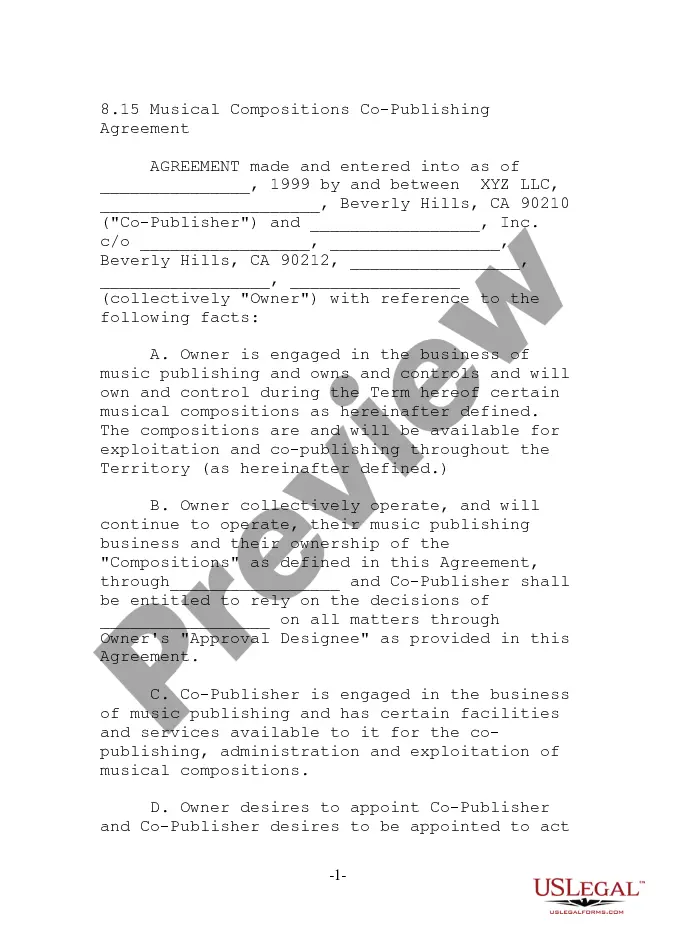
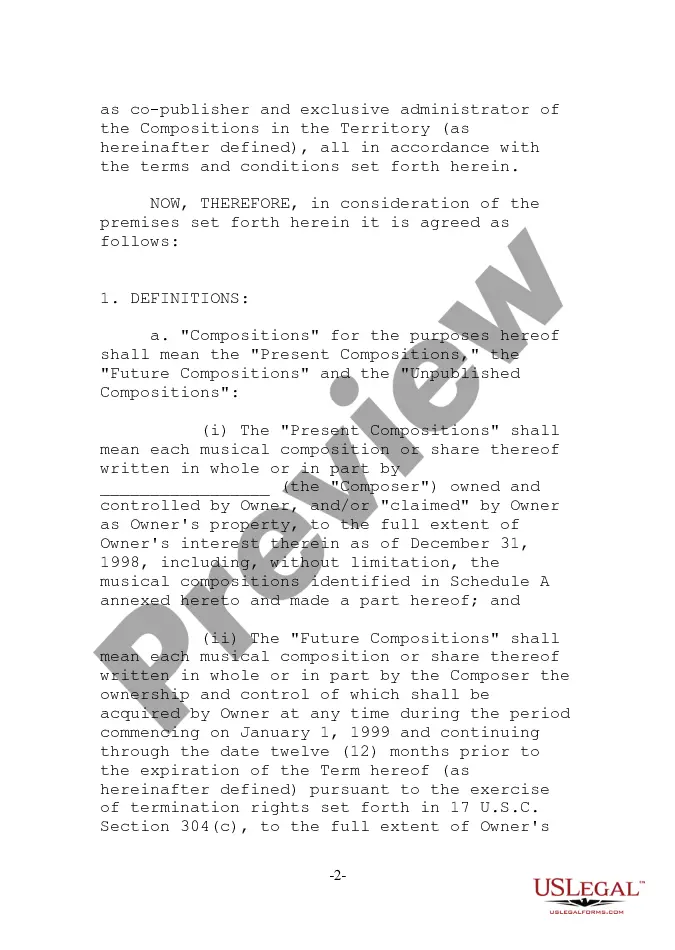
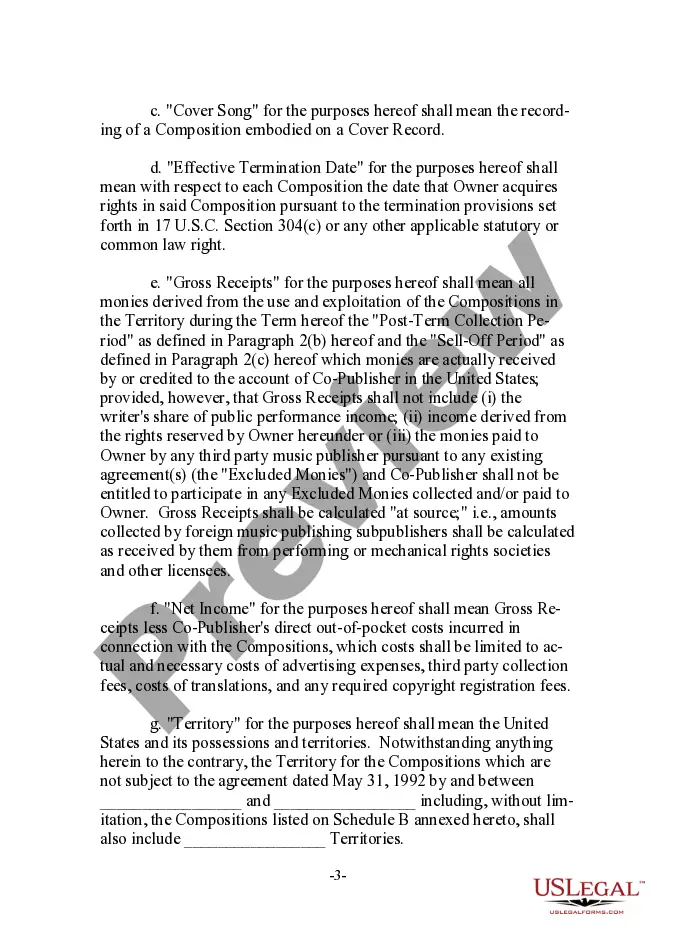
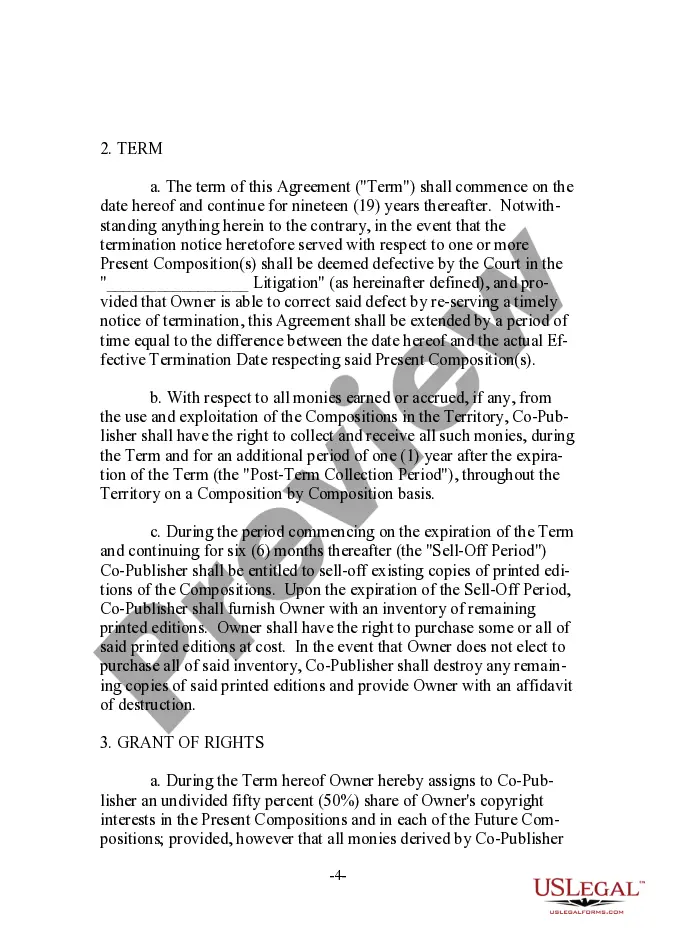
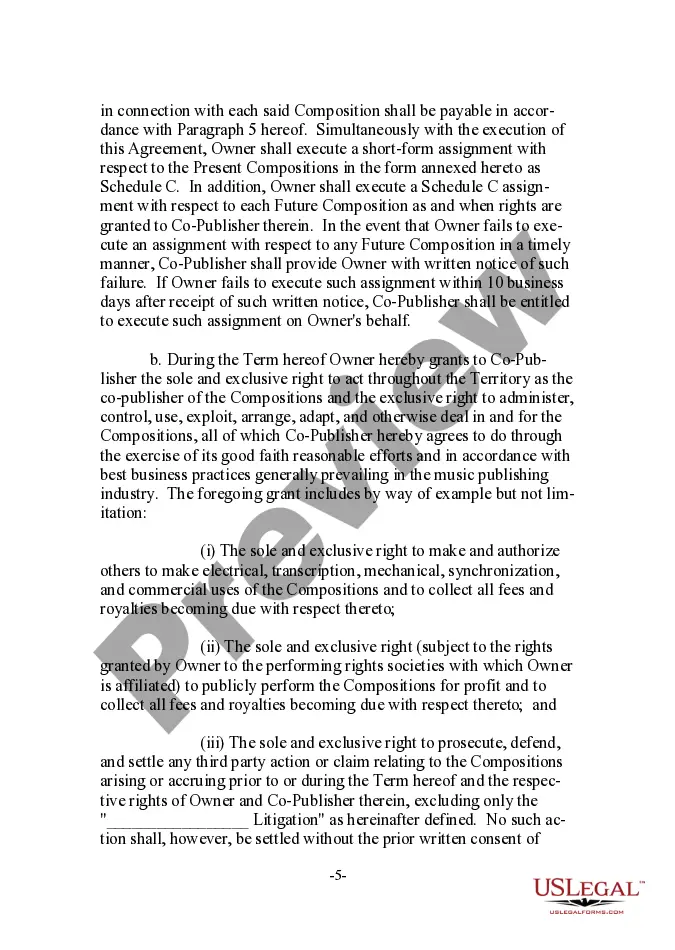
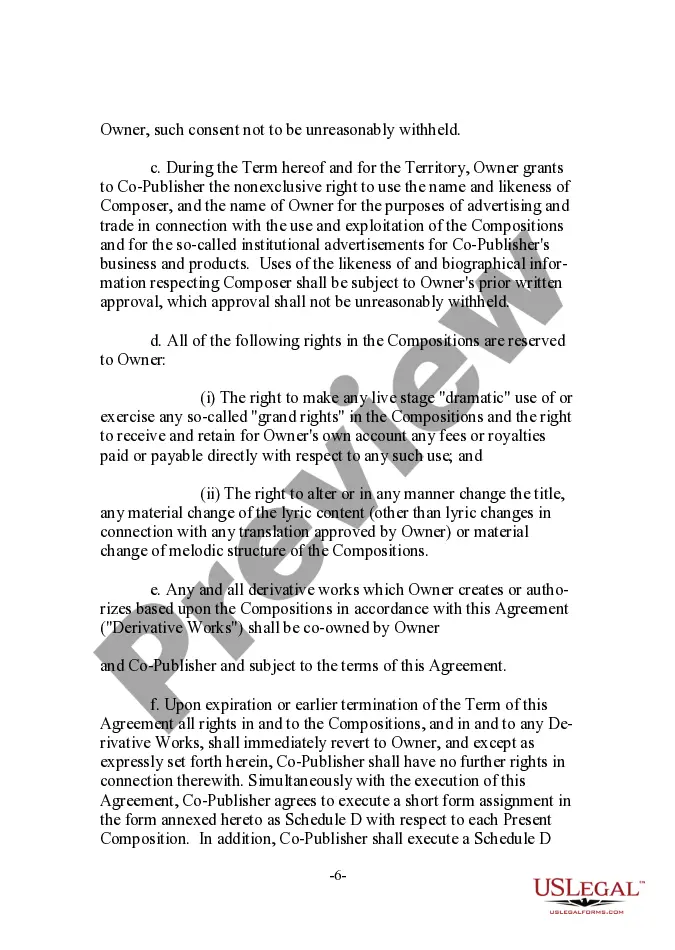
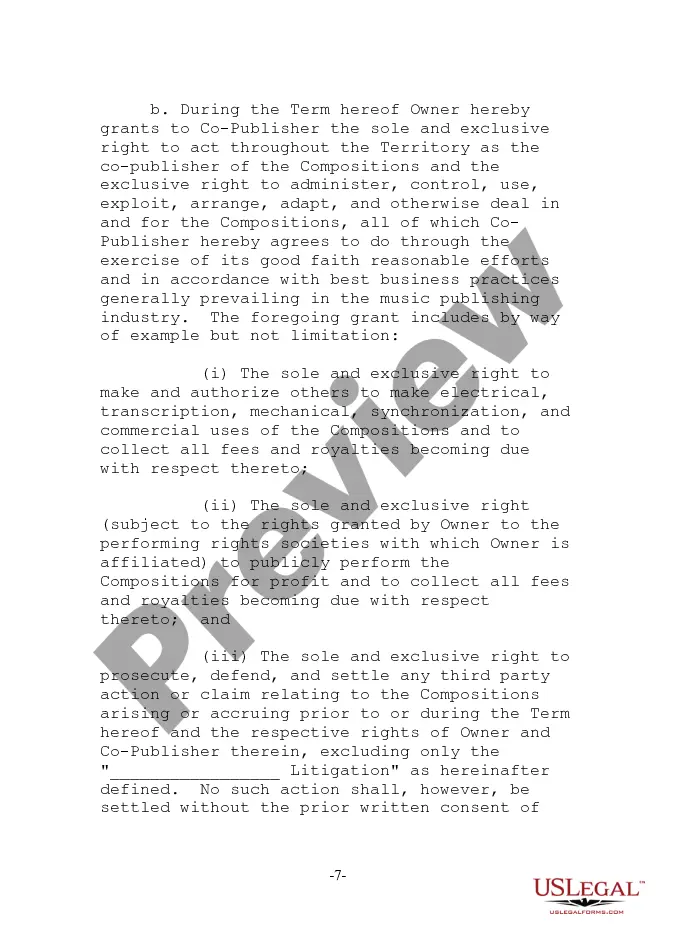

Get your form ready online
Our built-in tools help you complete, sign, share, and store your documents in one place.
Make edits, fill in missing information, and update formatting in US Legal Forms—just like you would in MS Word.
Download a copy, print it, send it by email, or mail it via USPS—whatever works best for your next step.
Sign and collect signatures with our SignNow integration. Send to multiple recipients, set reminders, and more. Go Premium to unlock E-Sign.
If this form requires notarization, complete it online through a secure video call—no need to meet a notary in person or wait for an appointment.
We protect your documents and personal data by following strict security and privacy standards.

Make edits, fill in missing information, and update formatting in US Legal Forms—just like you would in MS Word.

Download a copy, print it, send it by email, or mail it via USPS—whatever works best for your next step.

Sign and collect signatures with our SignNow integration. Send to multiple recipients, set reminders, and more. Go Premium to unlock E-Sign.

If this form requires notarization, complete it online through a secure video call—no need to meet a notary in person or wait for an appointment.

We protect your documents and personal data by following strict security and privacy standards.
Looking for another form?








How to fill out Musical Compositions Co-Publishing Agreement?
Regardless of whether for commercial reasons or personal issues, everyone must confront legal matters at some stage in their life.
Filling out legal documents demands meticulous care, beginning with choosing the suitable template sample.
Once it is downloaded, you can fill out the form using editing software or print it and complete it by hand. With an extensive US Legal Forms catalog available, you will never have to waste time searching for the right template online. Utilize the library’s user-friendly navigation to find the correct form for any occasion.
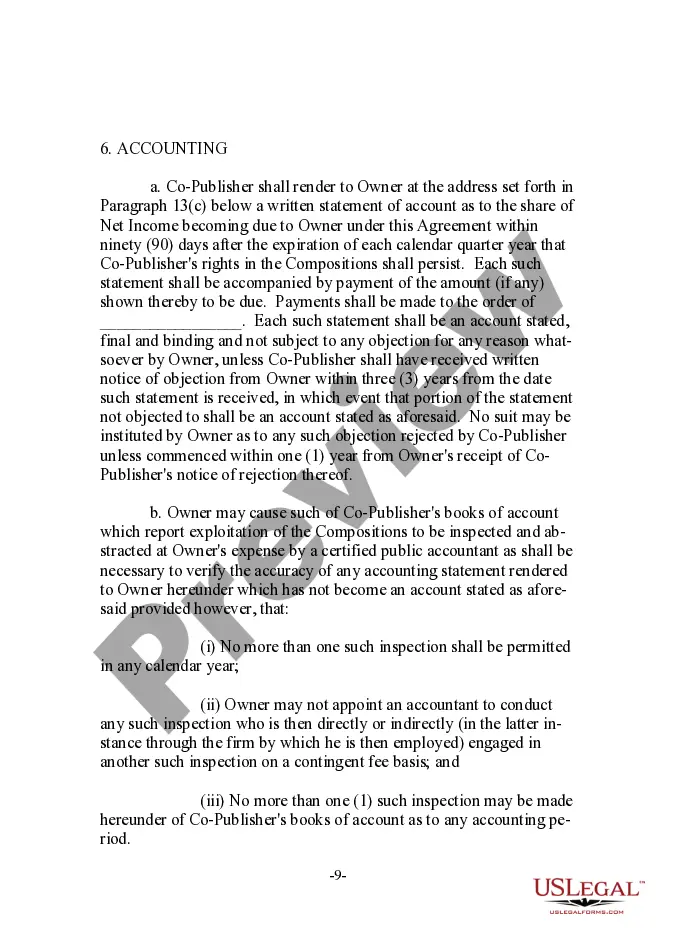
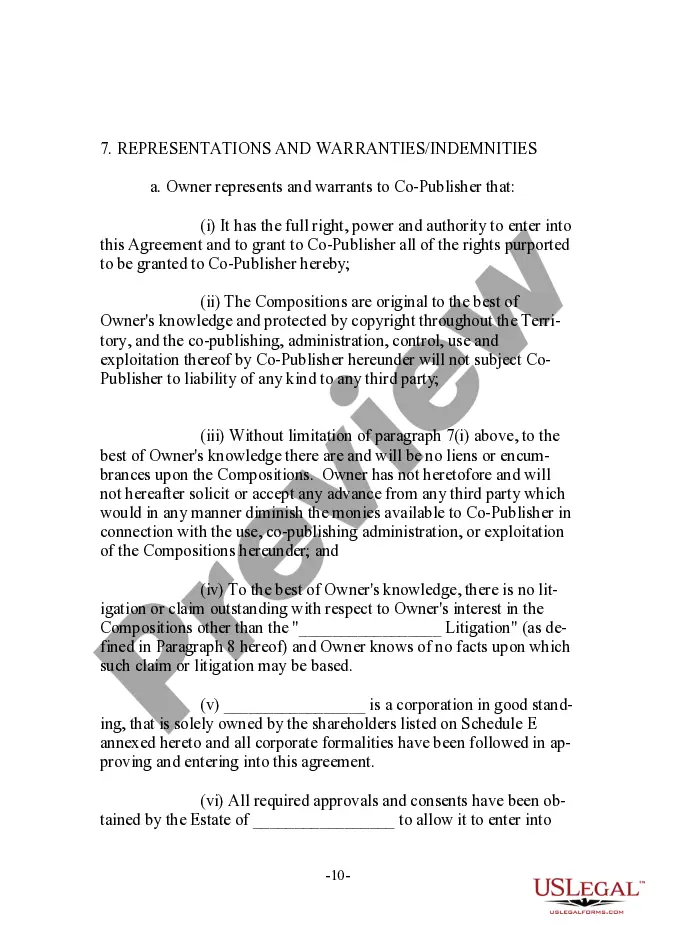
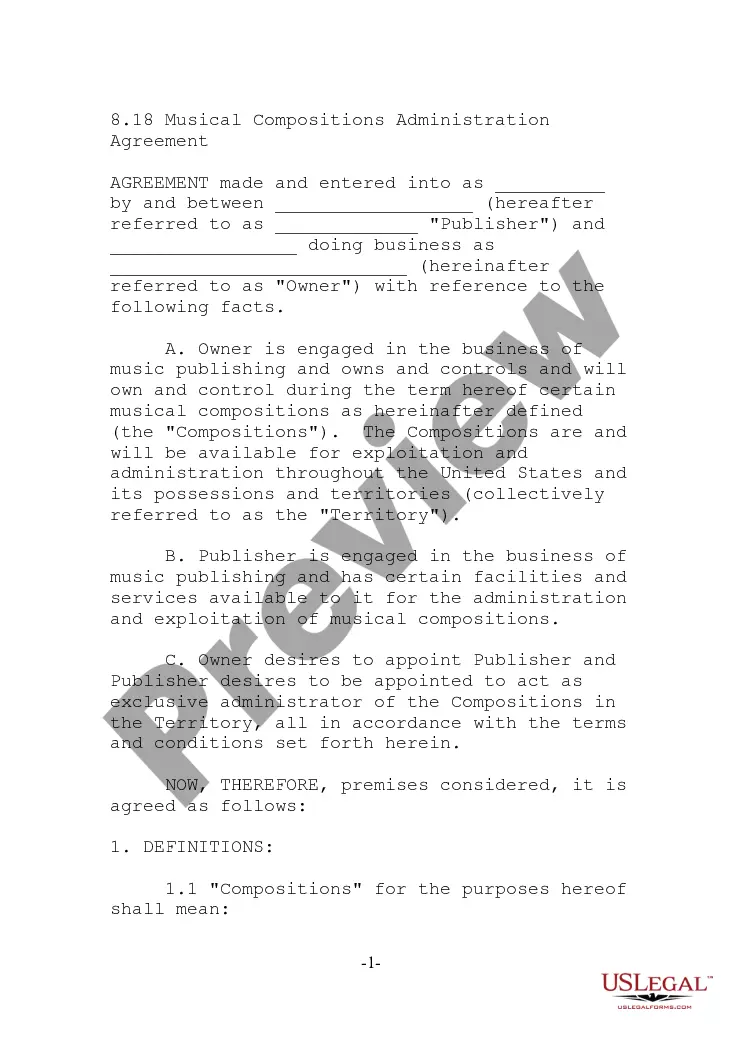
- For example, if you select an incorrect version of a Music Co Publishing Agreement Template With Cost, it will be rejected upon submission.
- Thus, it is crucial to find a trustworthy source for legal documents like US Legal Forms.
- If you need to acquire a Music Co Publishing Agreement Template With Cost sample, follow these simple steps.
- Locate the template you require using the search field or catalog navigation.
- Review the form’s description to confirm it fits your situation, state, and county.
- Click on the form’s preview to view it.
- If it is the incorrect document, return to the search function to locate the Music Co Publishing Agreement Template With Cost sample you need.
- Download the template if it meets your needs.
- If you already possess a US Legal Forms profile, simply click Log in to access previously saved templates in My documents.
- In case you do not have an account yet, you may download the form by clicking Buy now.
- Select the appropriate pricing option.
- Complete the profile registration form.
- Choose your payment method: use a credit card or PayPal account.
- Select the document format you prefer and download the Music Co Publishing Agreement Template With Cost.
Form popularity
FAQ
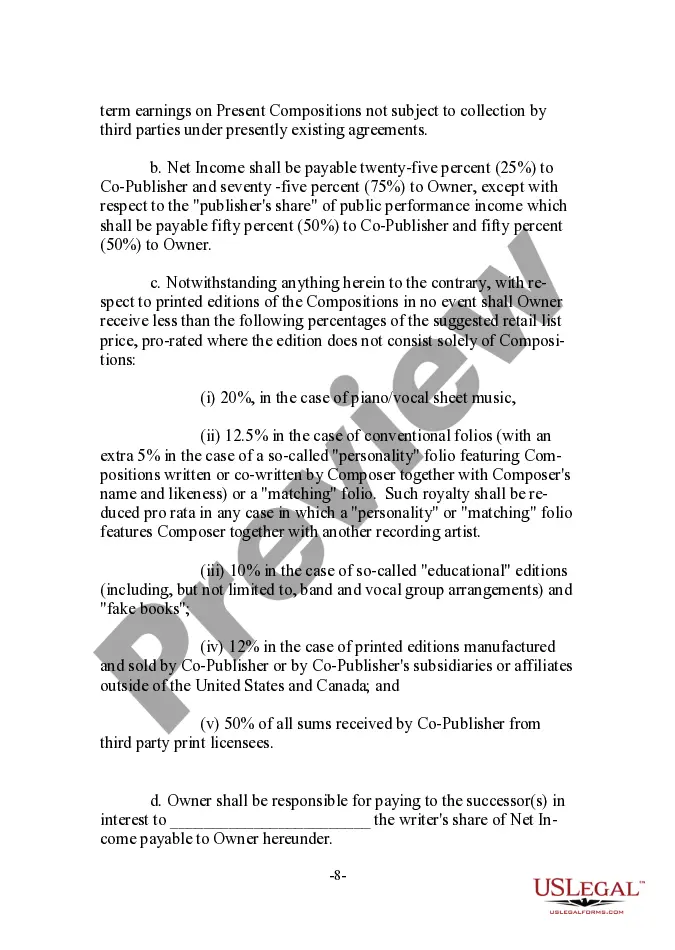
In a typical publishing deal, the Music Publisher is usually paid 50% (the ?Publisher's share?) of all mechanical and residual income, which is income from mechanical and synchronization royalties. For your performance income, since those monies are collected by PROs, the Music Publisher usually gets only 25%.
Royalties generated are typically split 50/50 between songwriter and publisher. There are often multiple songwriters attached to a song, each of whom may be owed a different percentage of the royalties collected, and each may work with different publishers to collect.
How to create a Music Recording Contract Step 1: Specify where you're creating the Music Recording Contract. ... Step 2: Provide the recording company's and artist's details. ... Step 3: Outline the production details. ... Step 4: Outline the recording details. ... Step 5: Decide if the contract will include an exclusive agreement clause.
Some artists would greatly benefit from signing on with a big publisher, but others are much better off having a manager connect their music with placement opportunities. But no matter what you do, don't be afraid to turn down a bad contract.
A Publishing or Song-writing Agreement is the document by which a songwriter assigns the copyright in their compositions to a music publisher in exchange for royalties and, in appropriate cases, an advance against those royalties.