Payment Contract Schedule With Time
Description

Get your form ready online
Our built-in tools help you complete, sign, share, and store your documents in one place.
Make edits, fill in missing information, and update formatting in US Legal Forms—just like you would in MS Word.
Download a copy, print it, send it by email, or mail it via USPS—whatever works best for your next step.
Sign and collect signatures with our SignNow integration. Send to multiple recipients, set reminders, and more. Go Premium to unlock E-Sign.
If this form requires notarization, complete it online through a secure video call—no need to meet a notary in person or wait for an appointment.
We protect your documents and personal data by following strict security and privacy standards.

Make edits, fill in missing information, and update formatting in US Legal Forms—just like you would in MS Word.

Download a copy, print it, send it by email, or mail it via USPS—whatever works best for your next step.

Sign and collect signatures with our SignNow integration. Send to multiple recipients, set reminders, and more. Go Premium to unlock E-Sign.

If this form requires notarization, complete it online through a secure video call—no need to meet a notary in person or wait for an appointment.

We protect your documents and personal data by following strict security and privacy standards.
Looking for another form?





How to fill out Self-Employed Independent Contractor Payment Schedule?
Utilizing legal document templates that comply with federal and state laws is essential, and the internet provides numerous alternatives.
However, what’s the benefit of spending time searching for the suitable Payment Contract Schedule With Time sample online when the US Legal Forms online repository already consolidates such templates in a single location.
US Legal Forms is the largest online legal directory featuring over 85,000 customizable templates created by attorneys for any professional and personal situation.
All templates you discover through US Legal Forms are reusable. To re-download and complete previously retrieved documents, access the My documents tab in your account. Take advantage of the most comprehensive and user-friendly legal document service!
- They are simple to navigate with all documents categorized by state and intended use.
- Our experts stay updated with legal amendments, ensuring your form is current and adheres to regulations when obtaining a Payment Contract Schedule With Time from our site.
- Obtaining a Payment Contract Schedule With Time is fast and straightforward for both existing and new users.
- If you already possess an account with an active subscription, Log In and download the document template you require in the correct format.
- If you're a newcomer to our platform, follow these steps.
Form popularity
FAQ
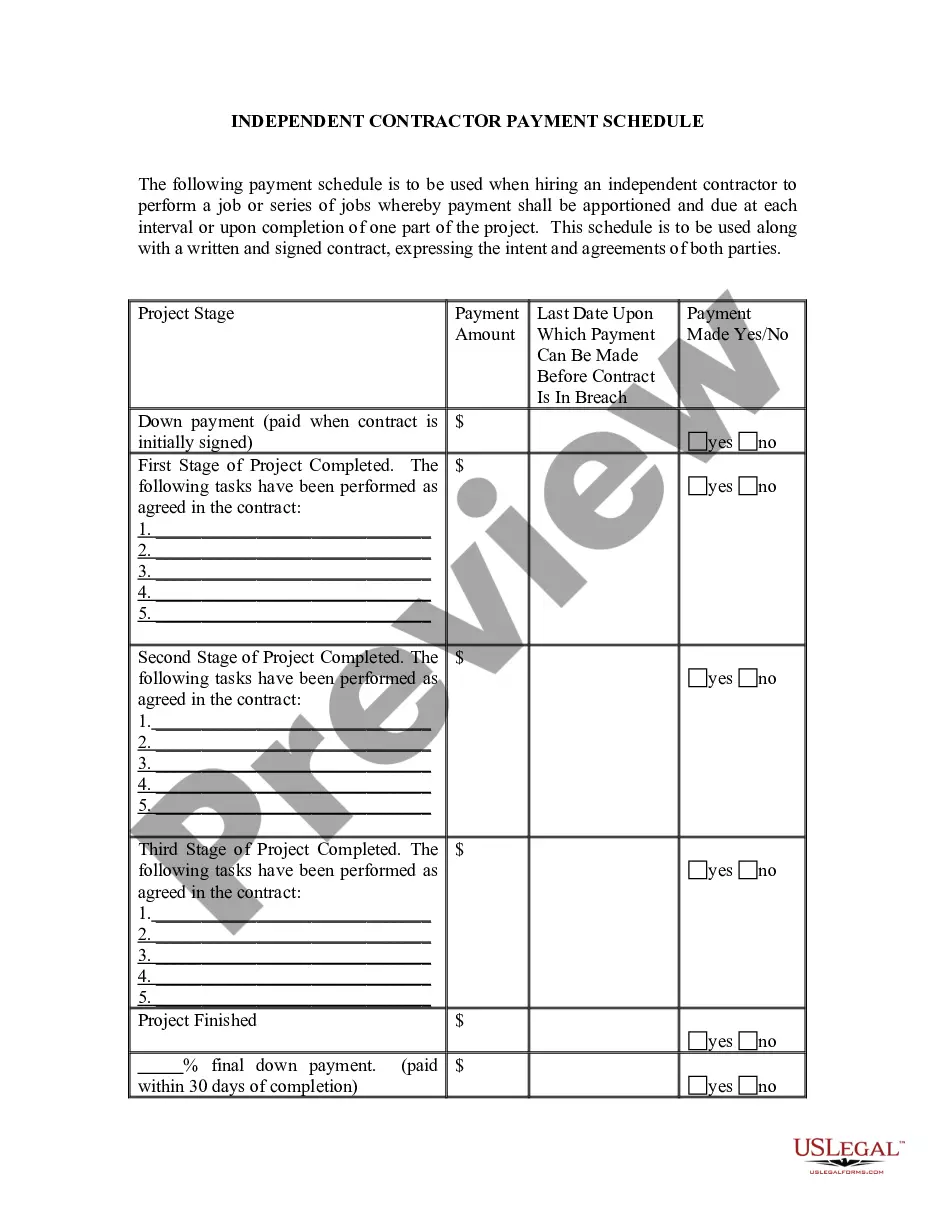
Writing a time and material contract involves detailing the scope of work and specifying labor rates and material costs. Clearly outline how time and materials will be tracked and billed. Additionally, include a payment contract schedule with time for regular billing intervals to maintain transparency with the client. This format protects both parties and fosters a clear working relationship.
To write a payment schedule, start by clearly stating the total amount due and the payment frequency. Specify the due dates and amounts for each installment. Include any consequences for late payments to encourage timely compliance. Using a well-defined payment contract schedule with time ensures both parties understand their obligations.
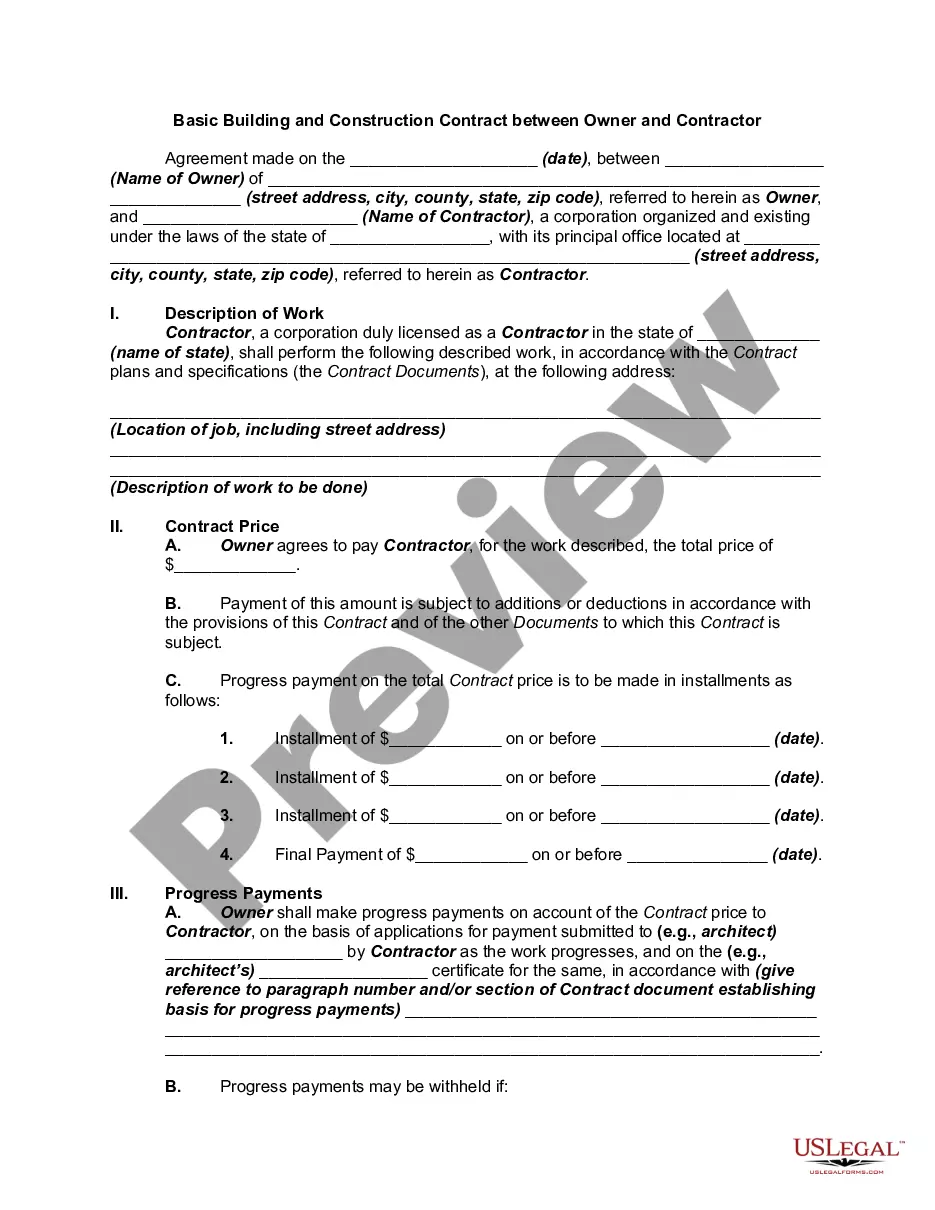
A payment contract schedule with time outlines the specific dates and amounts due for payments. This schedule helps both parties understand their financial obligations, ensuring that payments are made in a timely manner. Typically, the payment schedule includes details like the total amount owed, payment frequency, and any penalties for late payments. Utilizing a clear payment contract schedule with time can enhance financial planning and foster trust between parties.
To create a payment schedule, start by listing all tasks and associated costs for your project. Then, assign specific dates to each payment based on the project timeline. This payment contract schedule with time helps ensure all parties understand their obligations and strengthens overall project management.
Creating a payment plan contract involves documenting the agreed payment terms between parties. Include details like total debt, installment amounts, due dates, and any applicable interest rates. This formal agreement serves as a safeguard, promoting accountability and clarity regarding the payment contract schedule with time.
To make a payment plan in Excel, begin by creating a simple spreadsheet with columns for dates, payment amounts, and any remaining balance. Enter the total amount due and then divide it into manageable increments based on your agreed schedule. Excel's formulas can automatically calculate remaining balances, making adjustments straightforward.
An example of a payment schedule might include an initial deposit upon contract signing, followed by payments at designated project milestones. For instance, you might allocate a percentage for the completion of design documents, another percentage for beginning construction, and a final payment upon project completion. This structured payment contract schedule with time not only clarifies expectations but also builds trust between clients and contractors.
To create a payment schedule, start by determining project milestones and their corresponding costs. Next, outline the timeline for these payments in accordance with your payment contract schedule with time. It is essential to communicate this schedule to all stakeholders and ensure they agree to the terms. Using a platform like uslegalforms can simplify the process by providing templates and guidance to help you establish a solid schedule.
A typical payment contract schedule with time outlines the milestones and timelines for payments due to a contractor. Generally, payments align with project phases, such as deposits, progress payments, and final payments upon project completion. This structure helps ensure all parties remain aligned on expectations and financial commitments. Creating a clear schedule can prevent disputes and enhance project flow.