Equity Advisory
Description






Get your form ready online
Our built-in tools help you complete, sign, share, and store your documents in one place.
Make edits, fill in missing information, and update formatting in US Legal Forms—just like you would in MS Word.
Download a copy, print it, send it by email, or mail it via USPS—whatever works best for your next step.
Sign and collect signatures with our SignNow integration. Send to multiple recipients, set reminders, and more. Go Premium to unlock E-Sign.
If this form requires notarization, complete it online through a secure video call—no need to meet a notary in person or wait for an appointment.
We protect your documents and personal data by following strict security and privacy standards.

Make edits, fill in missing information, and update formatting in US Legal Forms—just like you would in MS Word.

Download a copy, print it, send it by email, or mail it via USPS—whatever works best for your next step.

Sign and collect signatures with our SignNow integration. Send to multiple recipients, set reminders, and more. Go Premium to unlock E-Sign.

If this form requires notarization, complete it online through a secure video call—no need to meet a notary in person or wait for an appointment.

We protect your documents and personal data by following strict security and privacy standards.
Looking for another form?
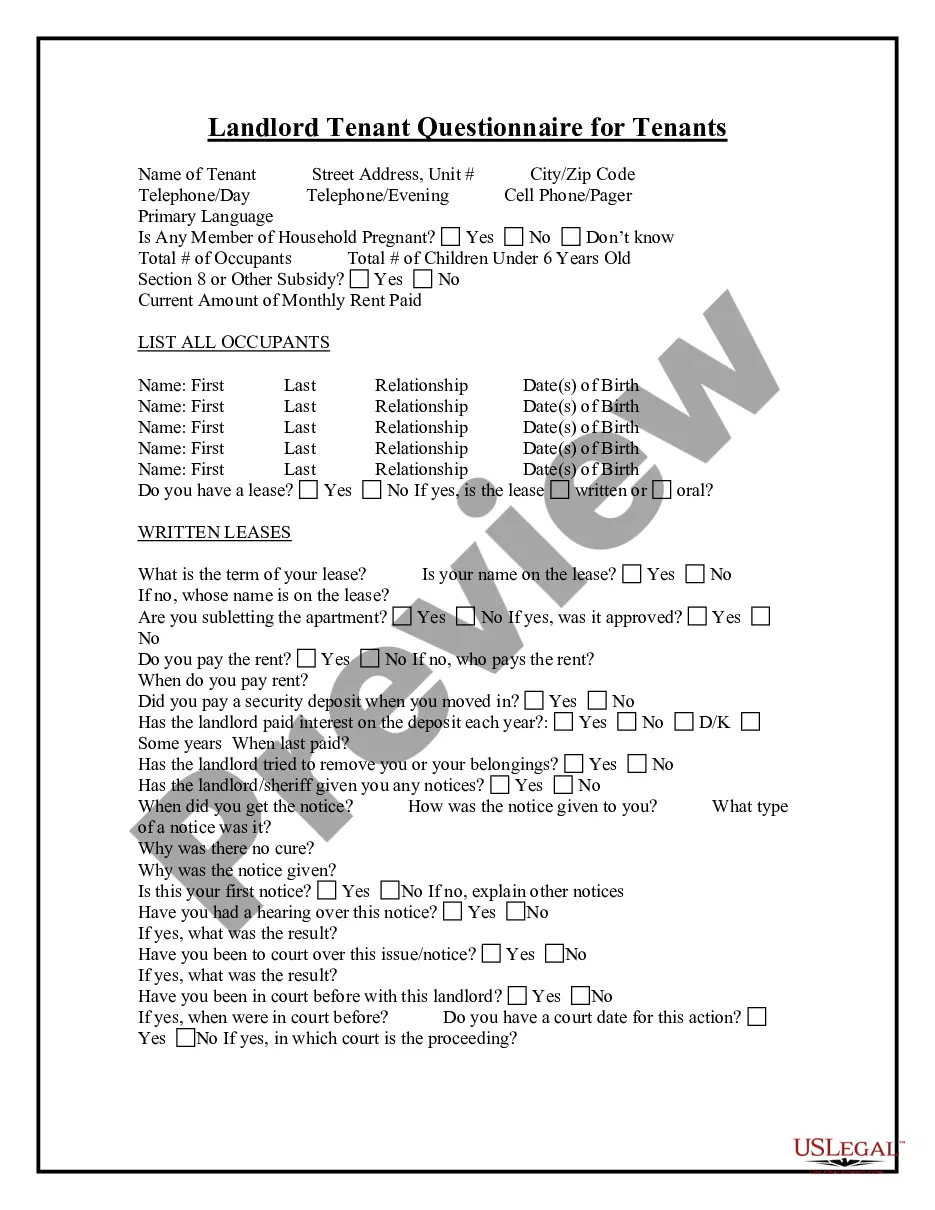



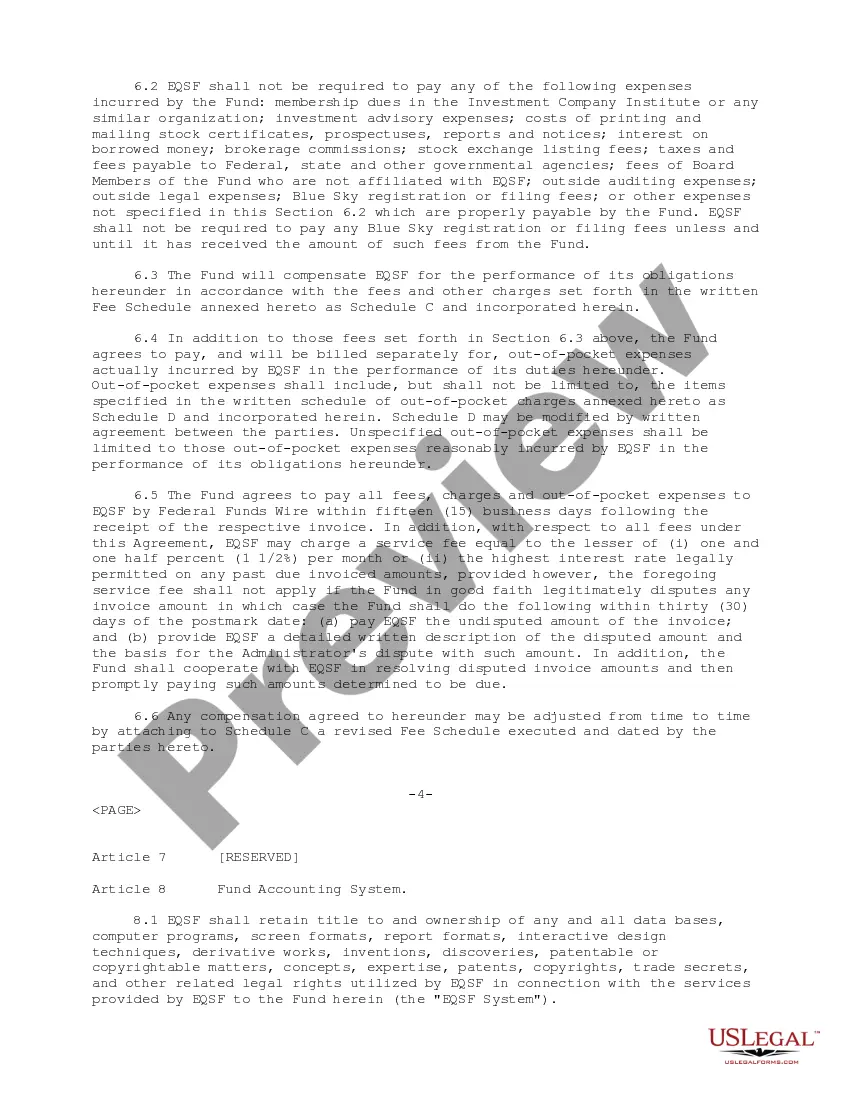
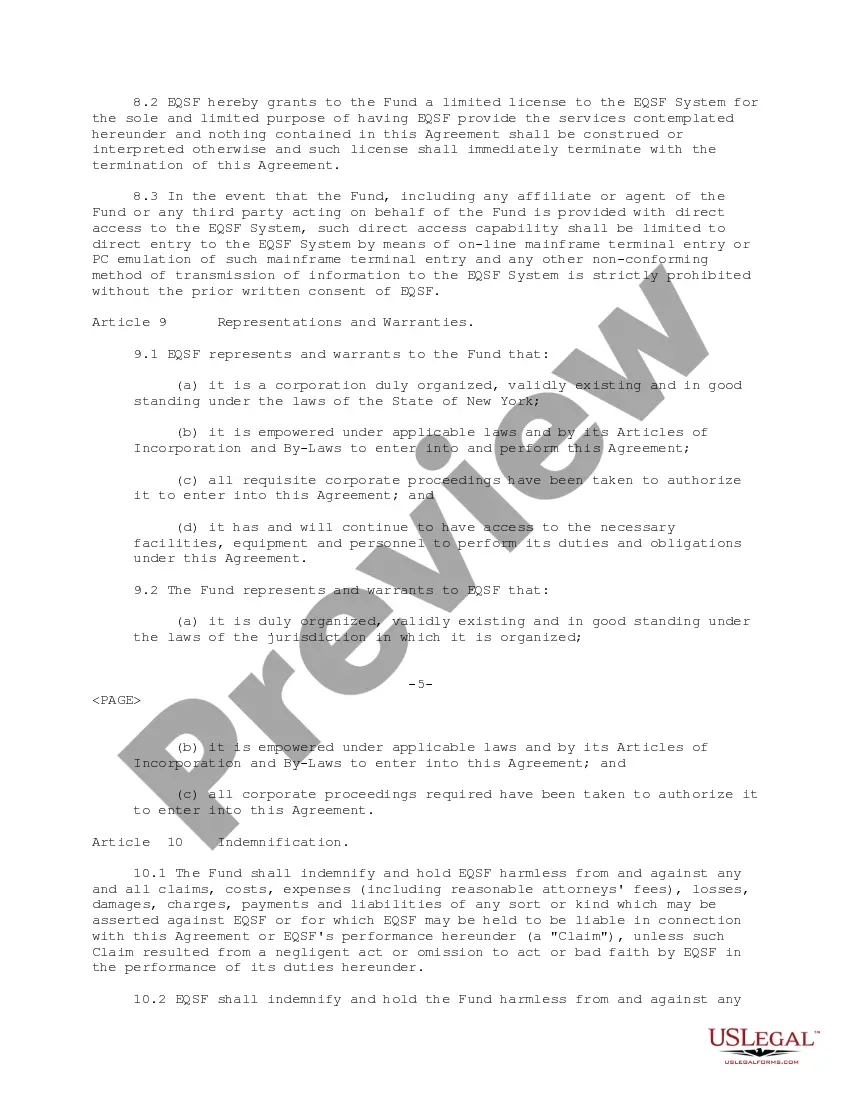
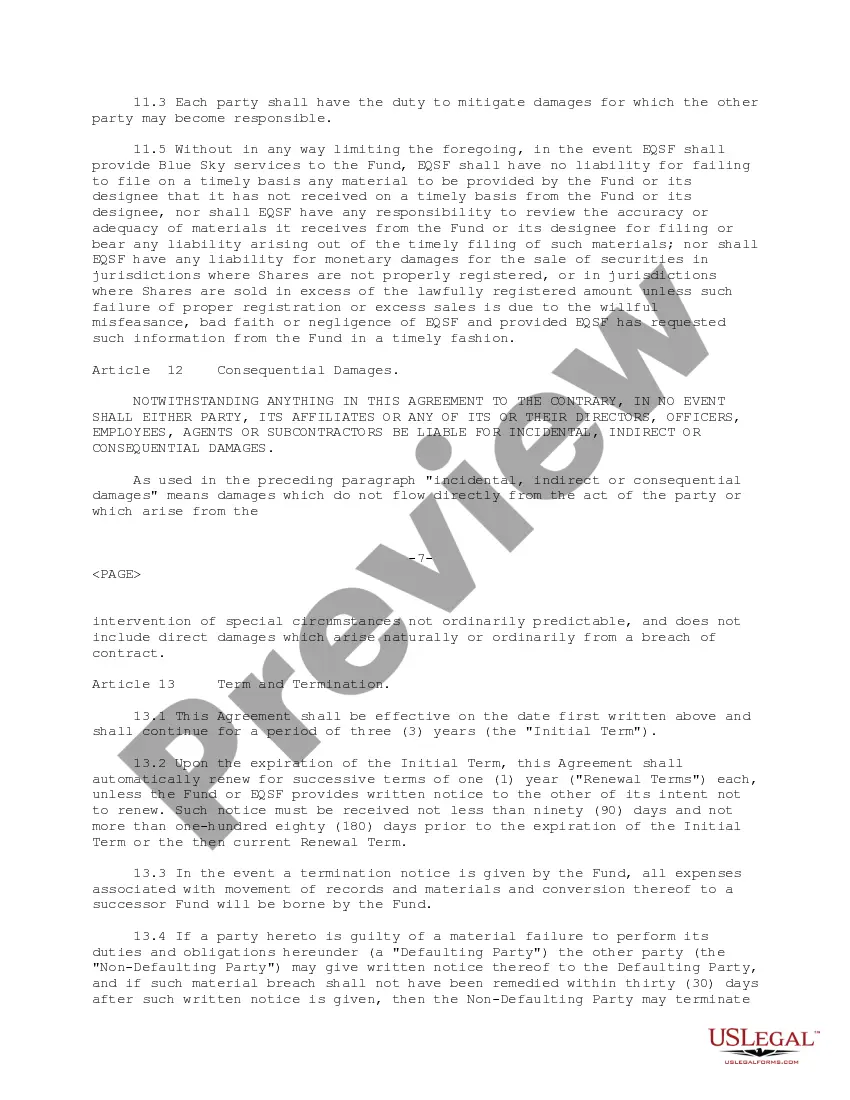
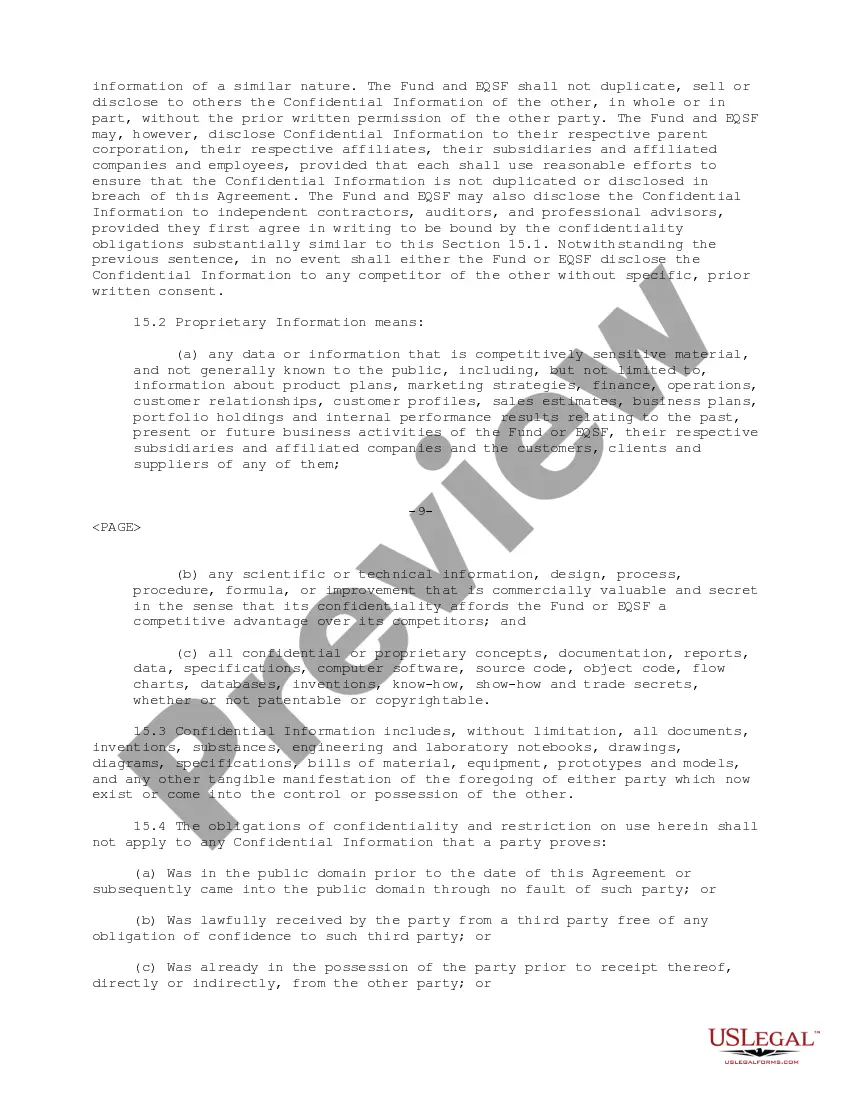
How to fill out Administration Agreement Between EQSF Advisors, Inc. And Third Avenue Trust Regarding Retaining EQSF To Render Administrative Services With Respect To Investment?
- If you are a returning user, simply log in to your account and locate the required form template. Verify that your subscription is active and renew it if necessary.
- For new users, start by browsing the Preview mode and form descriptions to ensure you select the right document that complies with your jurisdiction's requirements.
- If you can't find the suitable template, use the Search tab to discover the correct form.
- Once you have the right document, click the Buy Now button and choose your preferred subscription plan. You will need to register an account for access.
- Complete your purchase by entering your credit card details or using your PayPal account.
- After purchasing, download the form and save it to your device. You can also access it later through the My Forms section of your account.
In conclusion, US Legal Forms stands out with its extensive library of over 85,000 legal forms, ensuring you have access to more options than competitors at a similar cost. Plus, you can rely on premium experts for assistance, guaranteeing precise and compliant documentation.
Start your journey today and simplify your legal process with US Legal Forms!
Form popularity
FAQ
Receiving 1% equity in a startup can often be a solid opportunity, especially if the company has high growth potential. This stake can increase significantly in value if the startup performs well and attracts investment. However, the significance of this equity varies based on the company's valuation and market position. Consider leveraging equity advisory to maximize your contributions and secure a favorable arrangement.
Negotiating advisory equity involves understanding both your worth and the startup's needs. Begin by considering the value you bring and the time you will invest. Clearly communicate your expectations and benefits to the startup’s growth, and be open to discussing alternatives like vesting schedules. Utilizing platforms like US Legal Forms can provide templates and resources to guide your negotiation process.
The amount of equity you should seek as an advisor depends on your level of involvement and the startup's stage. Generally, advisors may receive between 0.5% to 2% equity, though some may negotiate more if they provide significant value. It's important to discuss clearly your expected contributions and align them with the startup’s growth. The right equity advisory arrangement can foster a successful partnership.
A 5% advisory share means that the advisor holds 5% of the company’s ownership in terms of equity. This percentage gives the advisor a stake in the company’s growth and success, aligning their interests closely with the company's objectives. Such equity stakes may come with specific terms and vesting schedules. To navigate these complexities, engaging with an equity advisory service can help clarify both the benefits and responsibilities tied to these shares.
The amount of advisory equity you receive can differ considerably based on several factors such as the role's significance, the startup's valuation, and negotiation outcomes. Generally, advisory equity can range from 0.5% to 3% for advisory board roles. Understanding the metrics surrounding equity advisory can guide discussions on what’s reasonable and industry-specific. Always consider obtaining legal insights when determining these terms.
Yes, in many cases, boards of advisors receive equity as part of their compensation package. This form of incentive ensures their interests are aligned with the long-term success of the company. The exact portion of equity can vary significantly, influenced by the industry and individual contributions. It’s essential for companies to thoughtfully assess this allocation when restructuring advisory arrangements.
The equity allocation for board members often depends on the company’s stage and size. Startups may offer between 1% to 5% of equity, while established firms might provide a smaller percentage. This allocation reflects their responsibilities and contributions to the company. Understanding these dynamics can guide boards in managing compensation packages effectively.
Advisory board members typically receive equity compensation based on their level of involvement and the company’s valuation. This can range from a fraction of a percent to several percent of the company’s equity. The specific amount may vary due to factors like industry standards, the size of the firm, and the experience of the advisor. Engaging with an experienced equity advisory team can help determine the right compensation structure for your advisory board.
To fill out a statement of owners' equity, start by gathering relevant financial information, including capital contributions, retained earnings, and distributions. Next, use a structure that outlines the equity changes over a specific period. This includes a beginning balance, additions, subtractions, and a final balance. Utilizing resources like USLegalForms can simplify this process with templates that make it easy to ensure compliance and accuracy.
The percentage of equity advisors receive can vary widely but commonly ranges from 1% to 5% depending on the agreement and the advisor's experience. Factors like the advisor's role, the company's stage, and market standards influence this percentage. As part of effective equity advisory, it’s essential for companies to negotiate terms that reflect the advisor’s expected contributions. This ensures that both parties are motivated to achieve mutual success.