False Imprisonment For Private Security
Description
Get your form ready online
Our built-in tools help you complete, sign, share, and store your documents in one place.
Make edits, fill in missing information, and update formatting in US Legal Forms—just like you would in MS Word.
Download a copy, print it, send it by email, or mail it via USPS—whatever works best for your next step.
Sign and collect signatures with our SignNow integration. Send to multiple recipients, set reminders, and more. Go Premium to unlock E-Sign.
If this form requires notarization, complete it online through a secure video call—no need to meet a notary in person or wait for an appointment.
We protect your documents and personal data by following strict security and privacy standards.

Make edits, fill in missing information, and update formatting in US Legal Forms—just like you would in MS Word.

Download a copy, print it, send it by email, or mail it via USPS—whatever works best for your next step.

Sign and collect signatures with our SignNow integration. Send to multiple recipients, set reminders, and more. Go Premium to unlock E-Sign.

If this form requires notarization, complete it online through a secure video call—no need to meet a notary in person or wait for an appointment.

We protect your documents and personal data by following strict security and privacy standards.
Looking for another form?



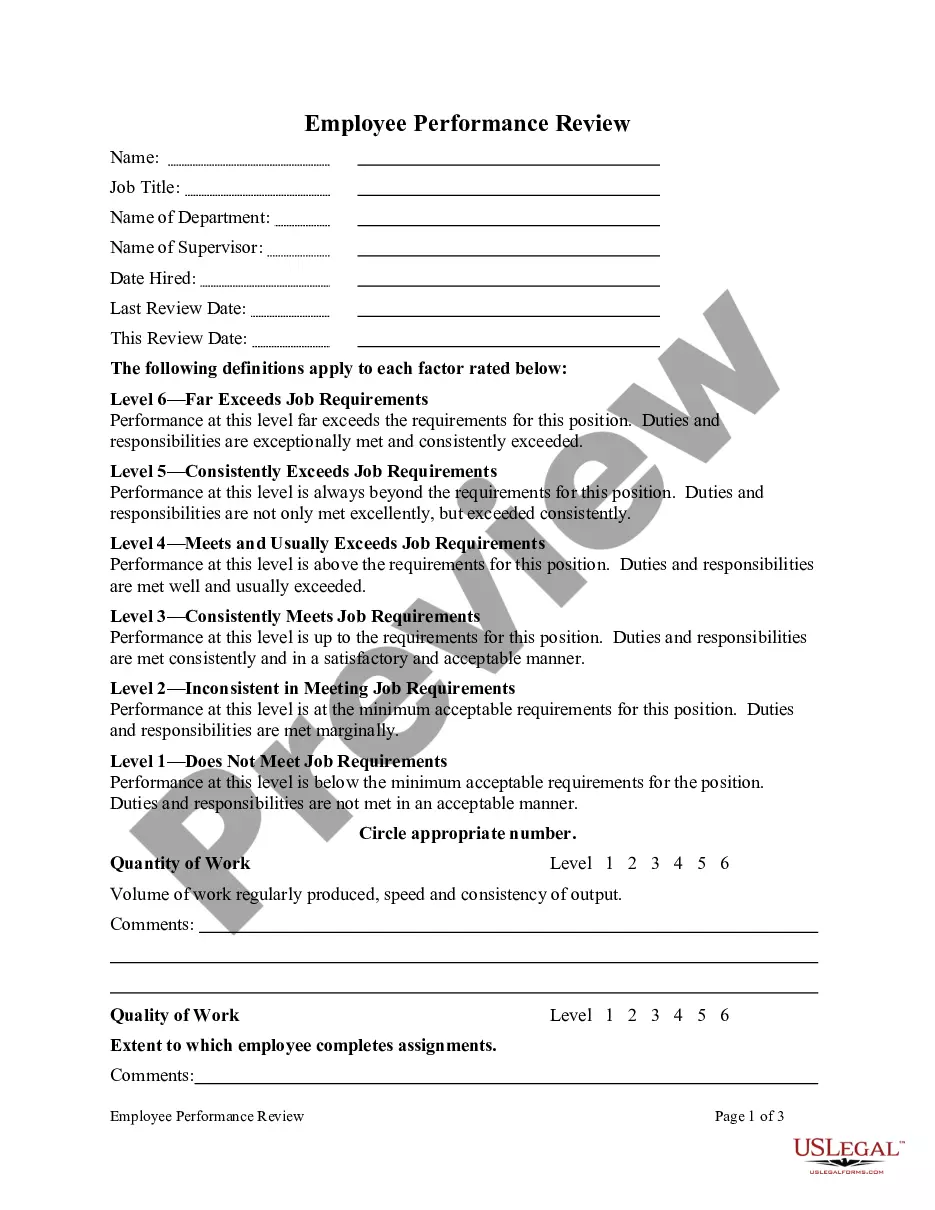
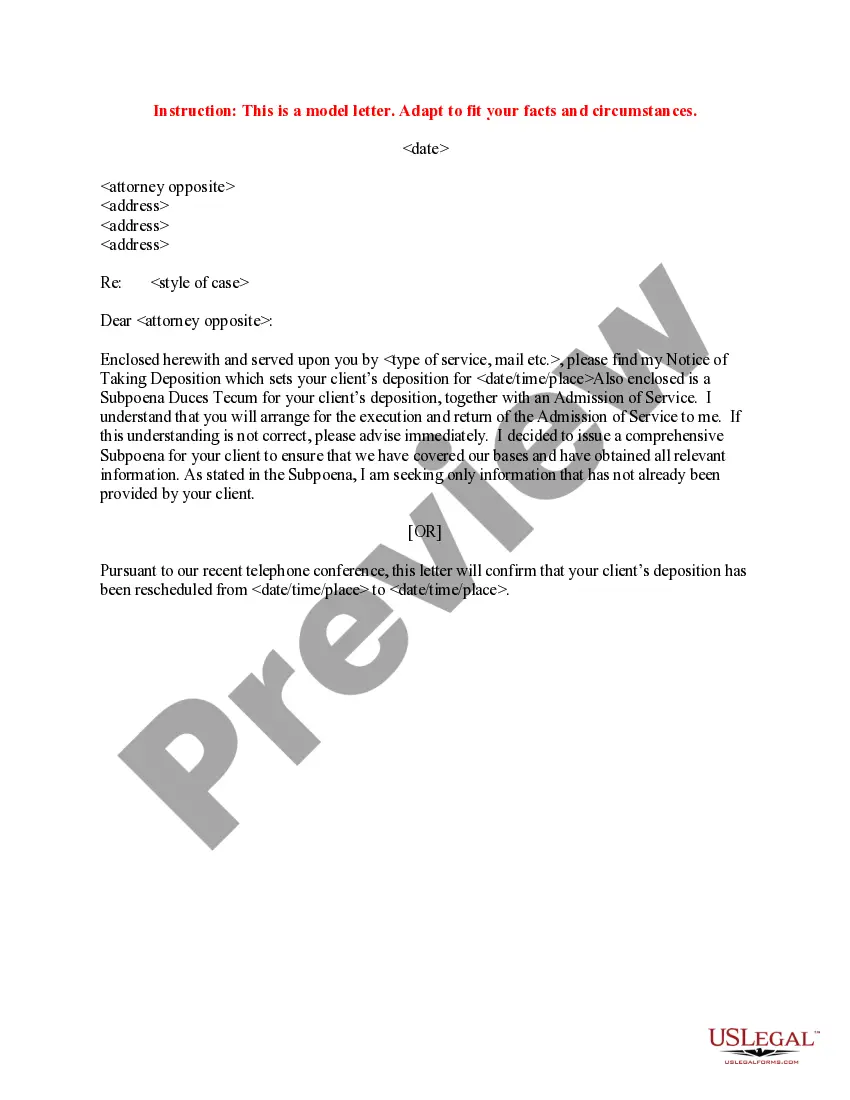



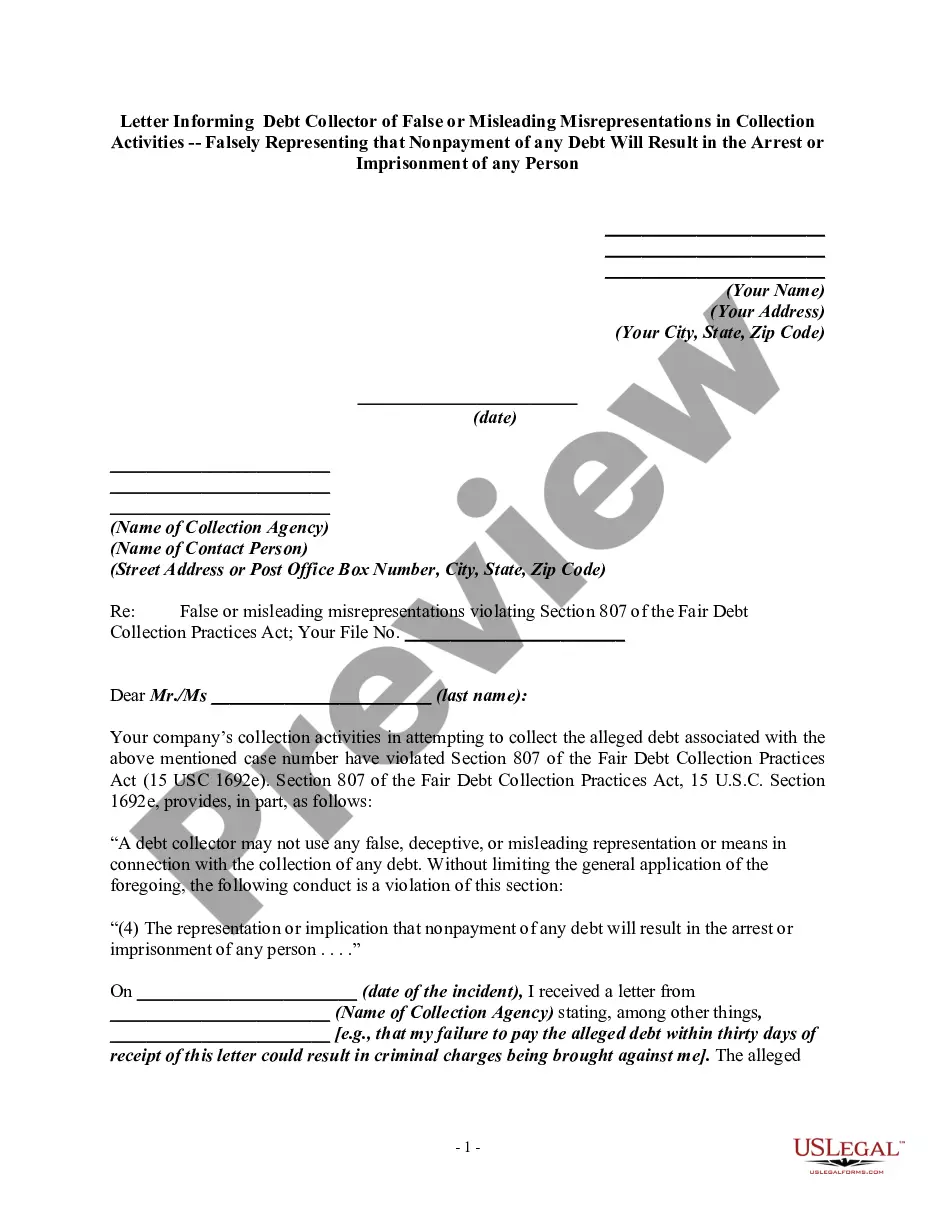
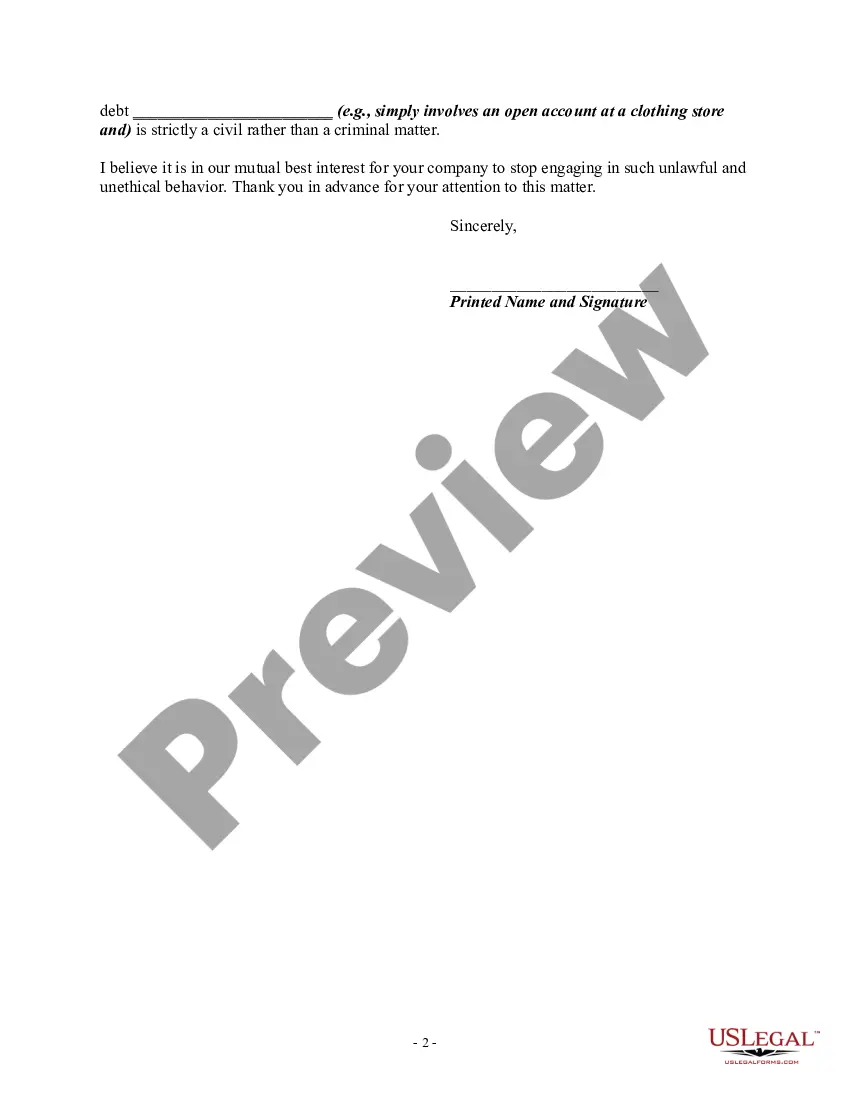
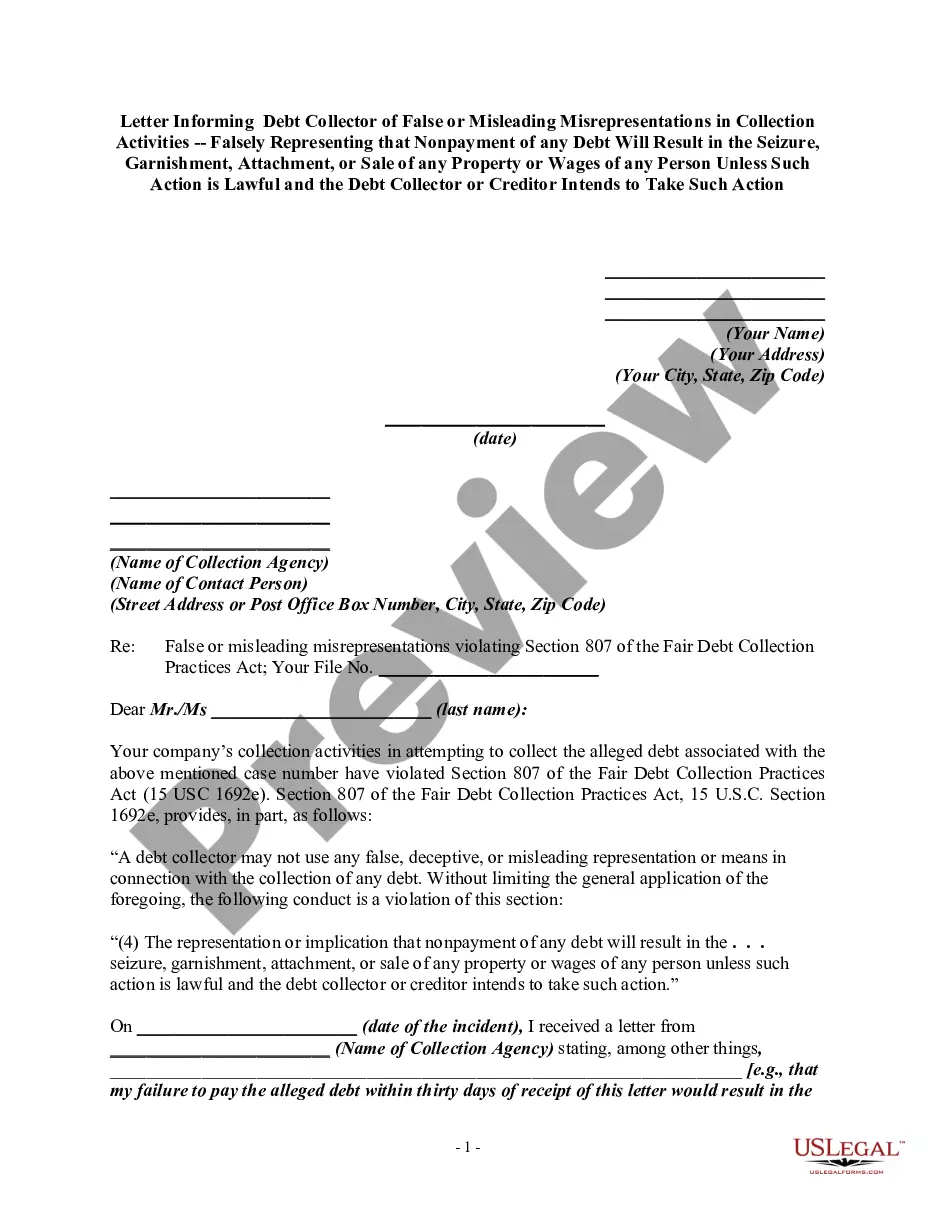
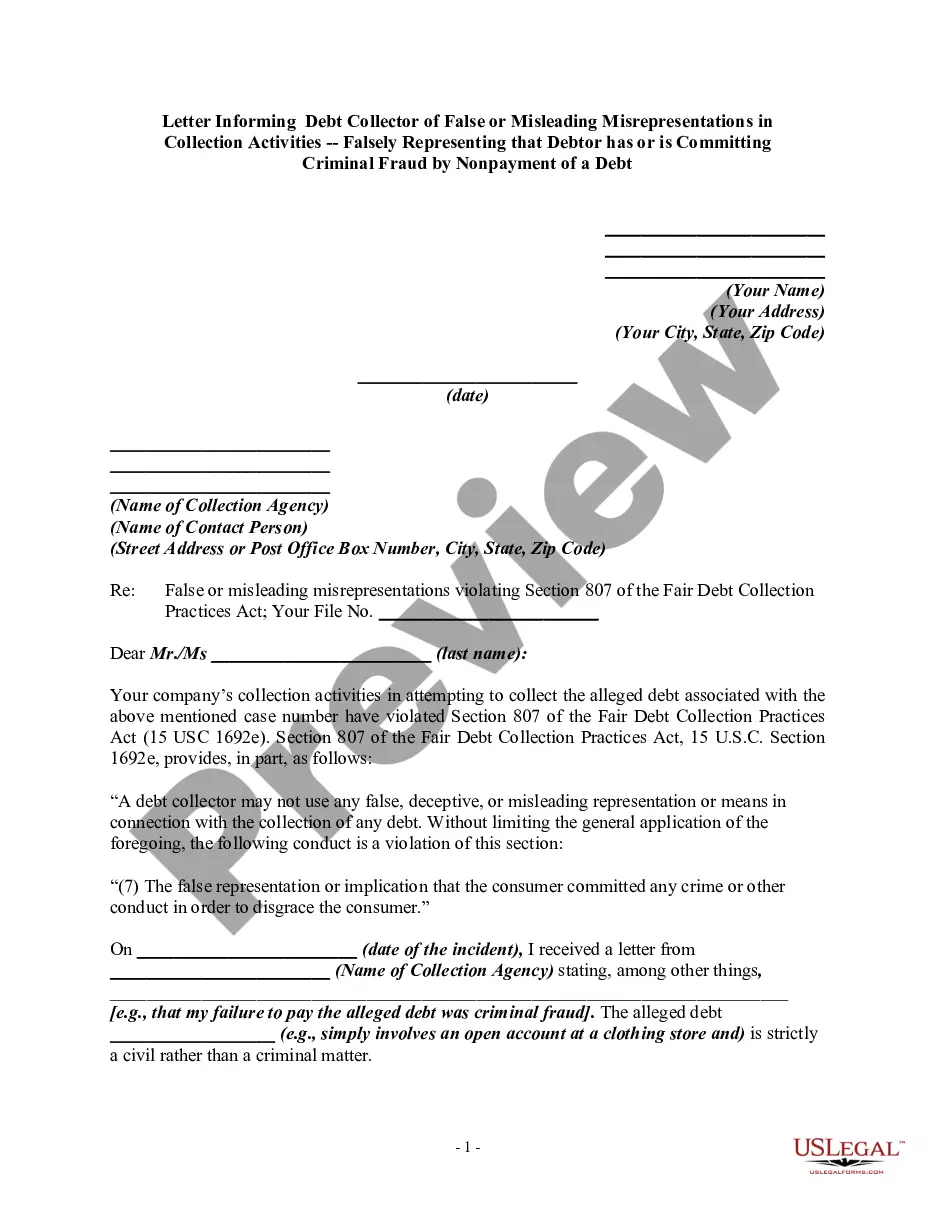
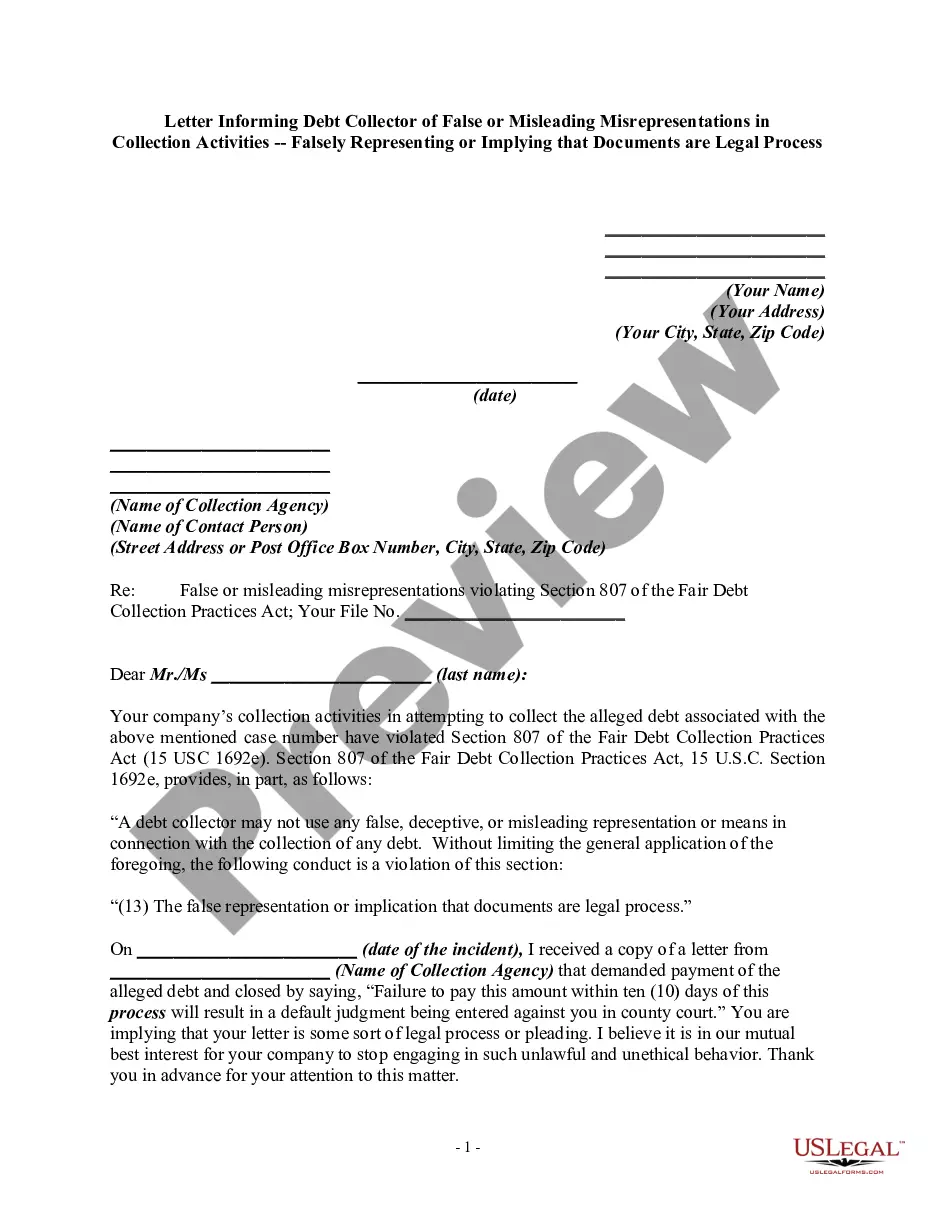
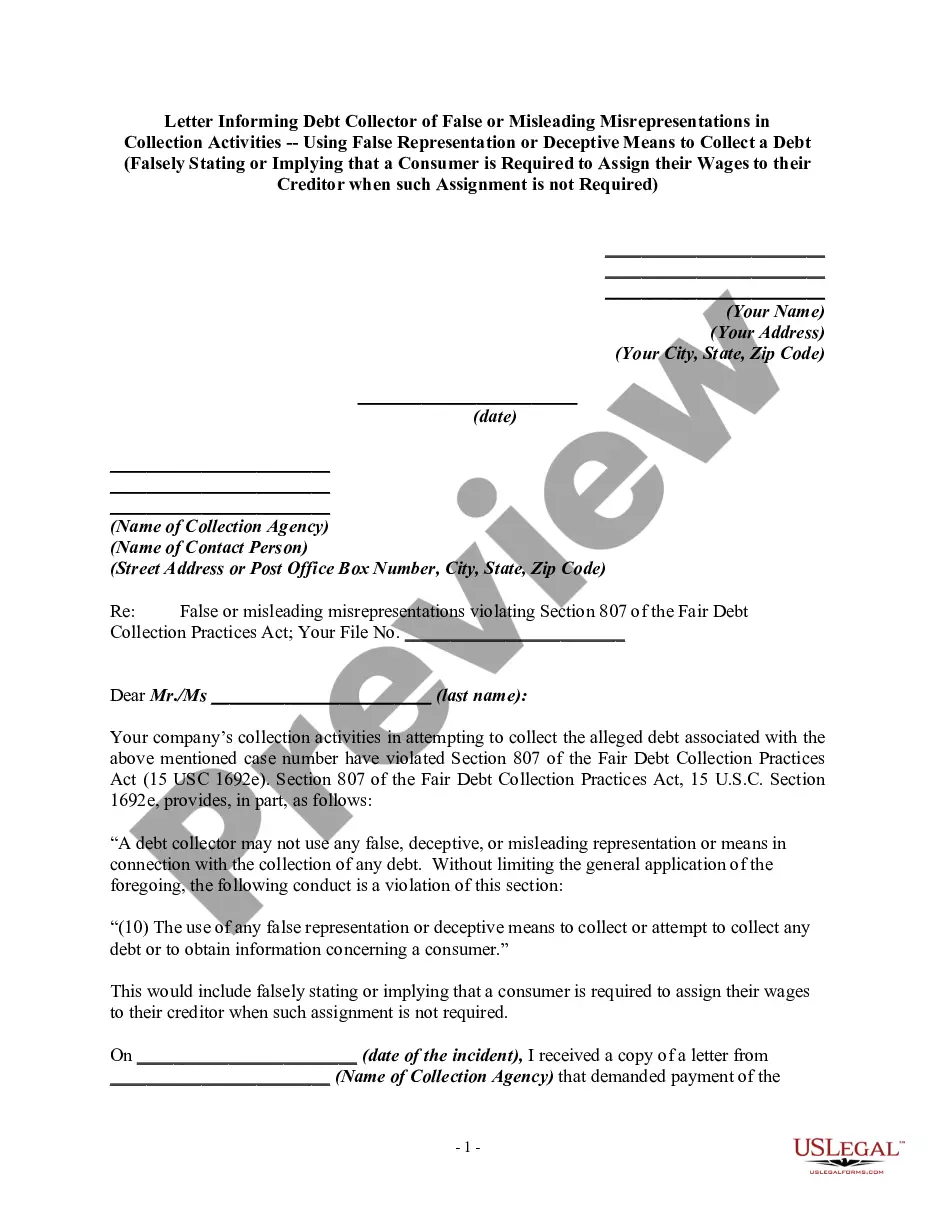
How to fill out Letter Informing Debt Collector Of False Or Misleading Misrepresentations In Collection Activities - Falsely Representing That Nonpayment Of Any Debt Will Result In The Arrest Or Imprisonment Of Any Person?
Managing legal documents and processes can be a lengthy addition to your entire day. False Imprisonment For Private Security and similar forms often necessitate you to locate them and comprehend how to complete them accurately.
Therefore, whether you are handling financial, legal, or personal issues, utilizing a comprehensive and accessible online directory of forms at your disposal will greatly assist.
US Legal Forms is the leading online platform for legal templates, providing over 85,000 state-specific documents and a range of resources to help you complete your paperwork with ease.
Browse the directory of relevant documents available to you with a single click.
Then, follow the steps outlined below to complete your form: Ensure you have the correct form using the Preview option and reviewing the form details. Click Buy Now when ready, and select the monthly subscription plan that suits you. Choose Download then fill out, sign, and print the form. US Legal Forms has 25 years of experience assisting users with their legal documents. Find the form you need today and streamline any process effortlessly.
- US Legal Forms offers you state- and county-specific forms available for download at any time.
- Protect your document management procedures by utilizing a high-quality service that allows you to prepare any form in minutes with no extra or concealed charges.
- Simply Log In to your account, locate False Imprisonment For Private Security and download it immediately in the My documents section.
- You can also access forms you have previously saved.
- Is it your first experience with US Legal Forms? Register and create a free account in a few moments and you'll gain access to the form directory and False Imprisonment For Private Security.
Form popularity
FAQ
To prove false imprisonment for private security, you must demonstrate that you were confined without consent and without lawful justification. Gather evidence, such as witness statements, video footage, or security reports, to support your claim. Additionally, showing that you experienced harm or distress due to the confinement will strengthen your case. If you need assistance navigating this process, consider using the resources available on uslegalforms to help you build a strong case.
A common defense to false imprisonment for private security is the claim of consent. If the person being detained voluntarily agreed to the confinement, either explicitly or implicitly, it may negate the false imprisonment claim. Additionally, security personnel may argue that they were acting within their legal authority or following company policies that justified the detention.
False imprisonment for private security requires three key elements. First, there must be an intentional act by the security personnel that restricts an individual's freedom of movement. Second, the individual must be aware of the confinement or harmed by it. Finally, the confinement must be unlawful, meaning there was no legal justification for the security personnel's actions.
Winning a false imprisonment lawsuit requires presenting a strong case that clearly demonstrates unlawful confinement. Collecting evidence, including witness statements and any relevant documentation, is crucial. Additionally, using a platform like US Legal Forms can help you navigate the legal process effectively and prepare your case.
Proving false imprisonment involves showing that you were confined without consent and that the confinement lacked legal justification. Gathering evidence such as witness accounts and any documentation from the incident can support your claim. If you find yourself in such a situation involving private security, seeking legal assistance is advisable.
The 4th Amendment protects individuals from unreasonable searches and seizures, but its application to private security can be complex. Generally, private security operates under different rules than public law enforcement. However, if a security guard unlawfully detains someone, it may still constitute a violation of rights related to false imprisonment for private security.
Compensation for false imprisonment varies widely based on the circumstances of the case. Factors like the duration of confinement, emotional distress, and any financial losses play a significant role. If you pursue a claim for false imprisonment for private security, consulting with a legal expert can help you understand potential compensation.
The essential element for proving false imprisonment is demonstrating that there was an intentional act by the defendant to confine you. This means the private security personnel must have acted with the intent to restrict your freedom. If you can show this intent, you strengthen your case significantly.
To establish a case of false imprisonment, you must show that you were confined without your consent and that the confinement was unlawful. Evidence such as witness statements or video footage can be crucial. Remember, in cases involving private security, demonstrating a lack of legal authority to detain is often key.
False imprisonment occurs when an individual is confined against their will without legal justification. This can happen in various settings, including those involving private security. If a security guard detains someone without proper cause or exceeds their authority, it may qualify as false imprisonment for private security.