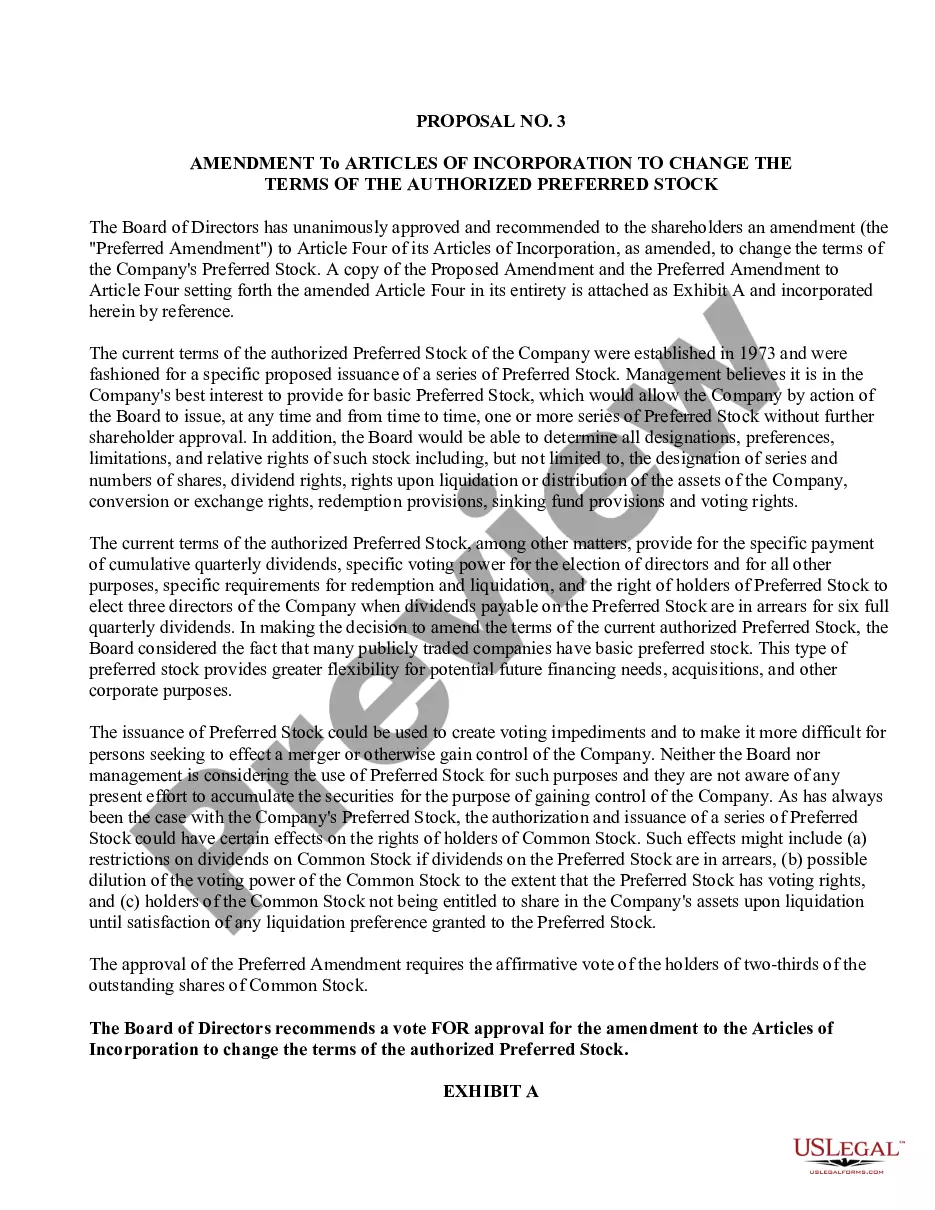
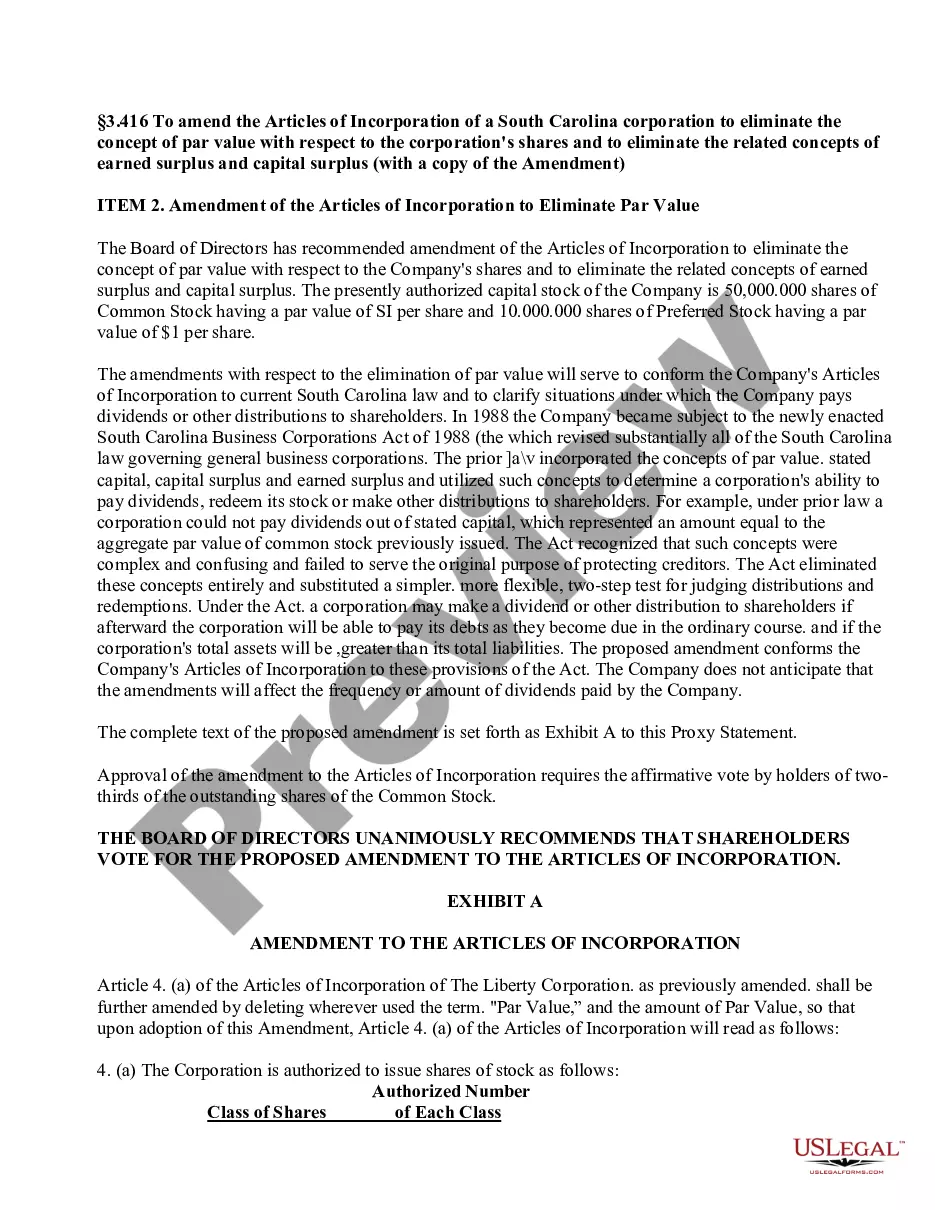
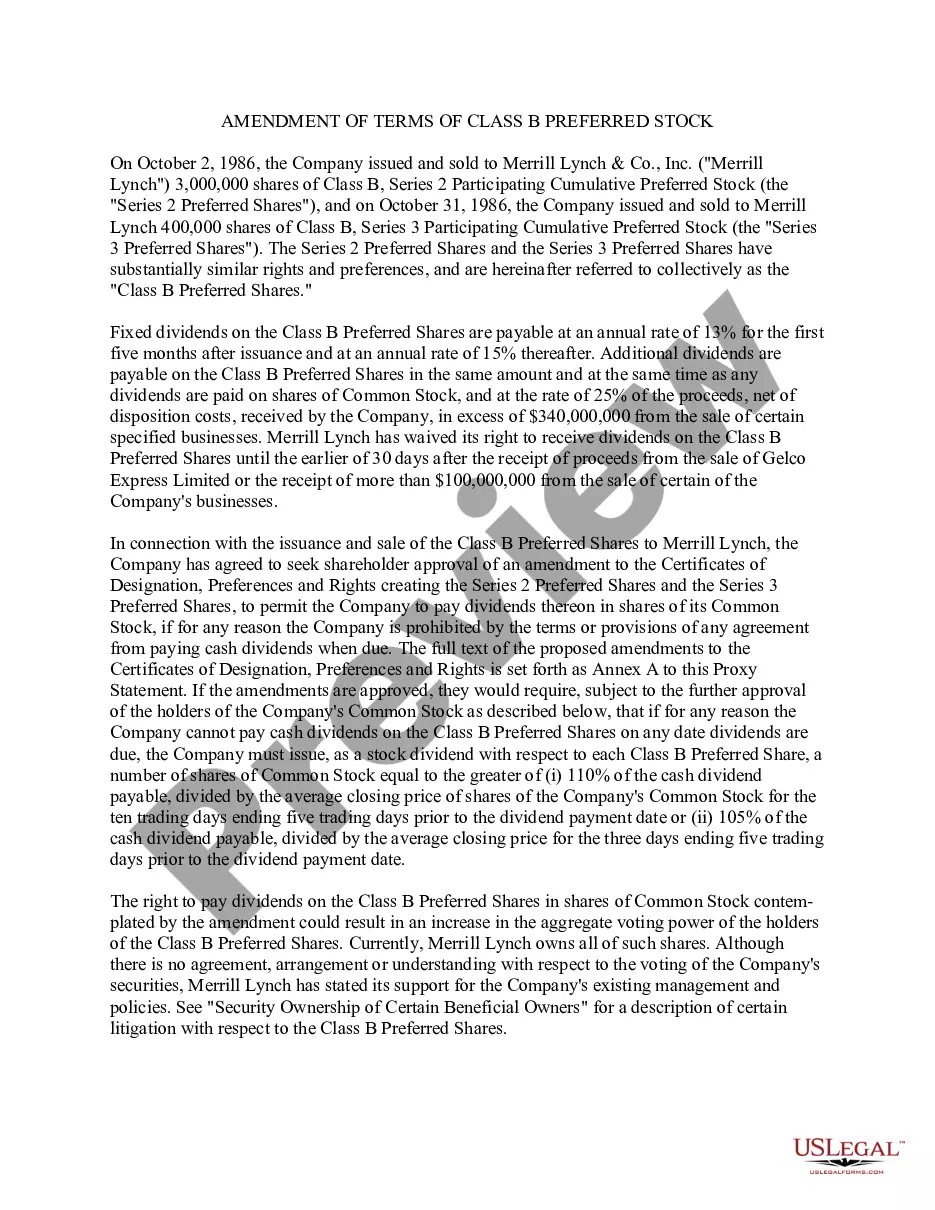
Common Stock Can Be Issued Without Par Value
Description
Get your form ready online
Our built-in tools help you complete, sign, share, and store your documents in one place.
Make edits, fill in missing information, and update formatting in US Legal Forms—just like you would in MS Word.
Download a copy, print it, send it by email, or mail it via USPS—whatever works best for your next step.
Sign and collect signatures with our SignNow integration. Send to multiple recipients, set reminders, and more. Go Premium to unlock E-Sign.
If this form requires notarization, complete it online through a secure video call—no need to meet a notary in person or wait for an appointment.
We protect your documents and personal data by following strict security and privacy standards.

Make edits, fill in missing information, and update formatting in US Legal Forms—just like you would in MS Word.

Download a copy, print it, send it by email, or mail it via USPS—whatever works best for your next step.

Sign and collect signatures with our SignNow integration. Send to multiple recipients, set reminders, and more. Go Premium to unlock E-Sign.

If this form requires notarization, complete it online through a secure video call—no need to meet a notary in person or wait for an appointment.

We protect your documents and personal data by following strict security and privacy standards.
Looking for another form?



How to fill out Amendment Of Common Stock Par Value?
Utilizing legal documents that adhere to federal and state laws is essential, and the web provides numerous alternatives to select from.
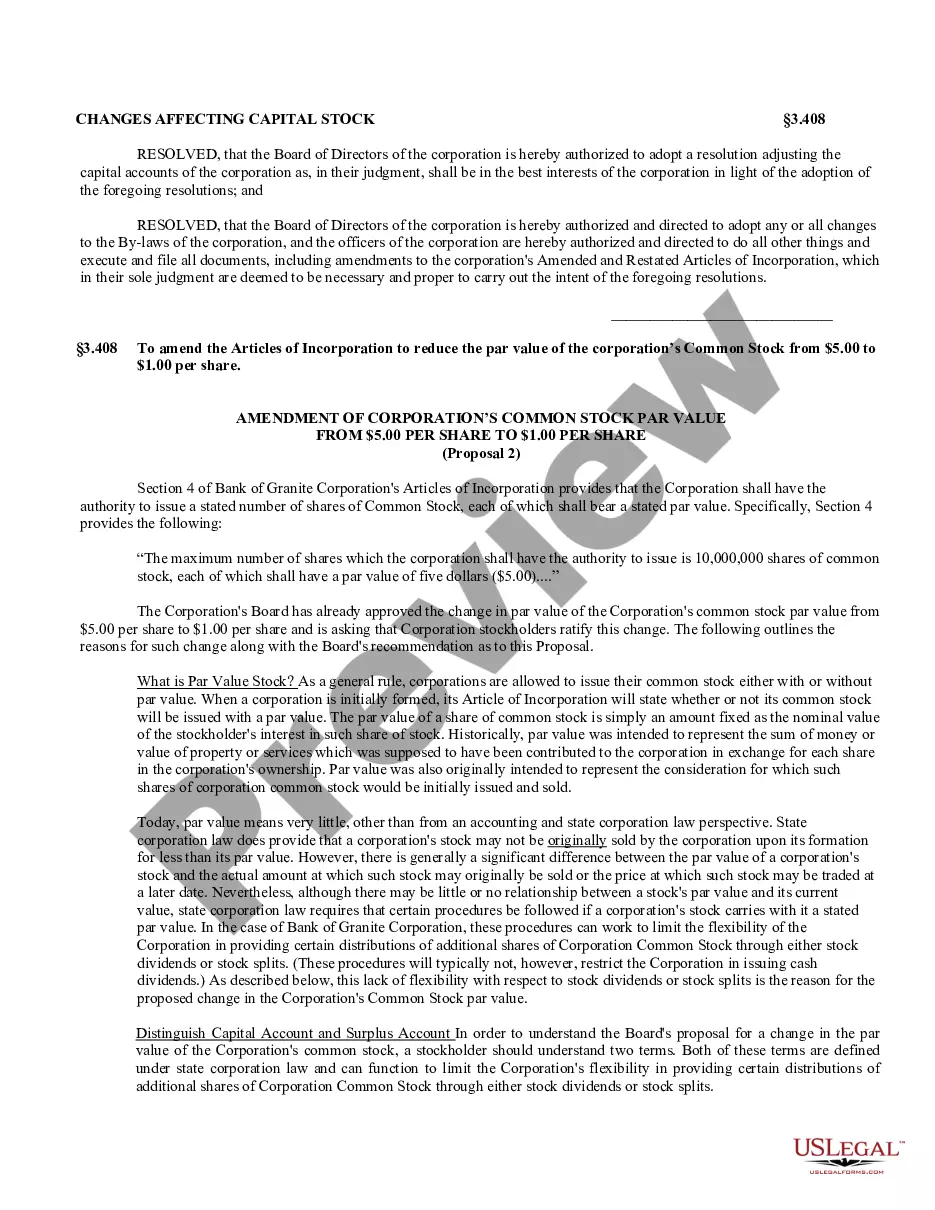
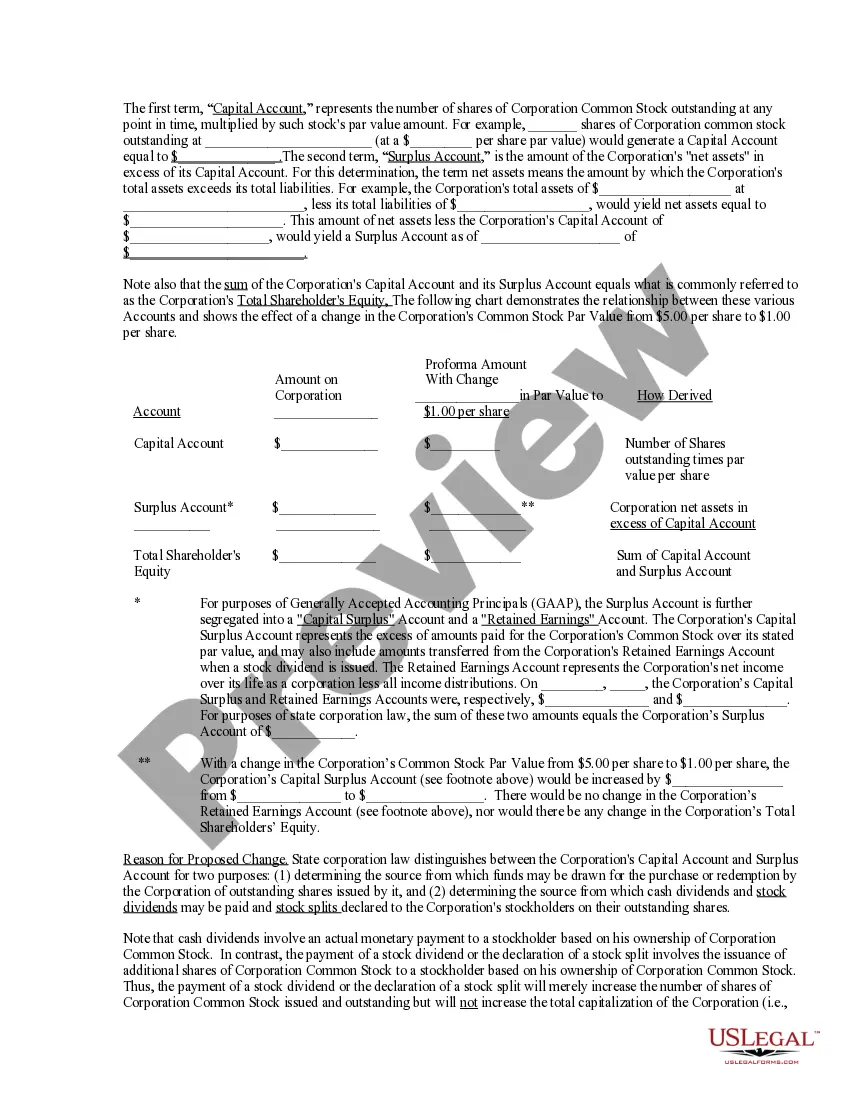
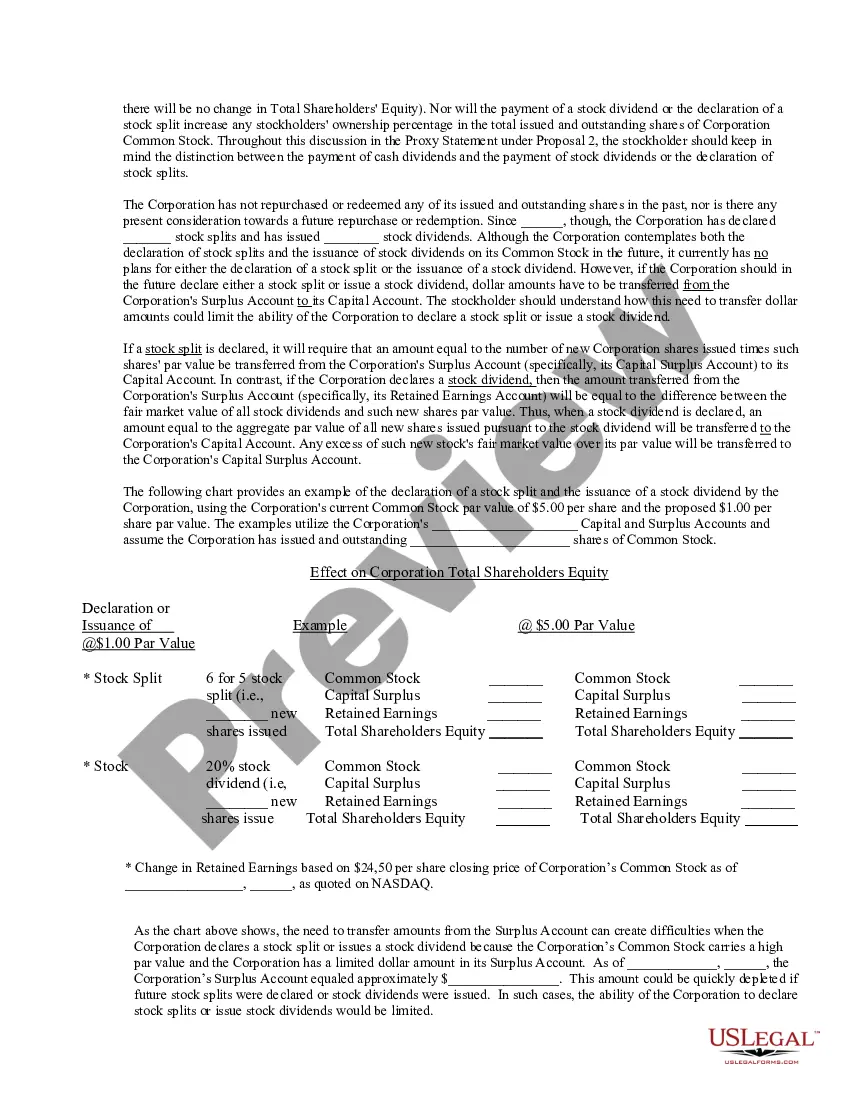
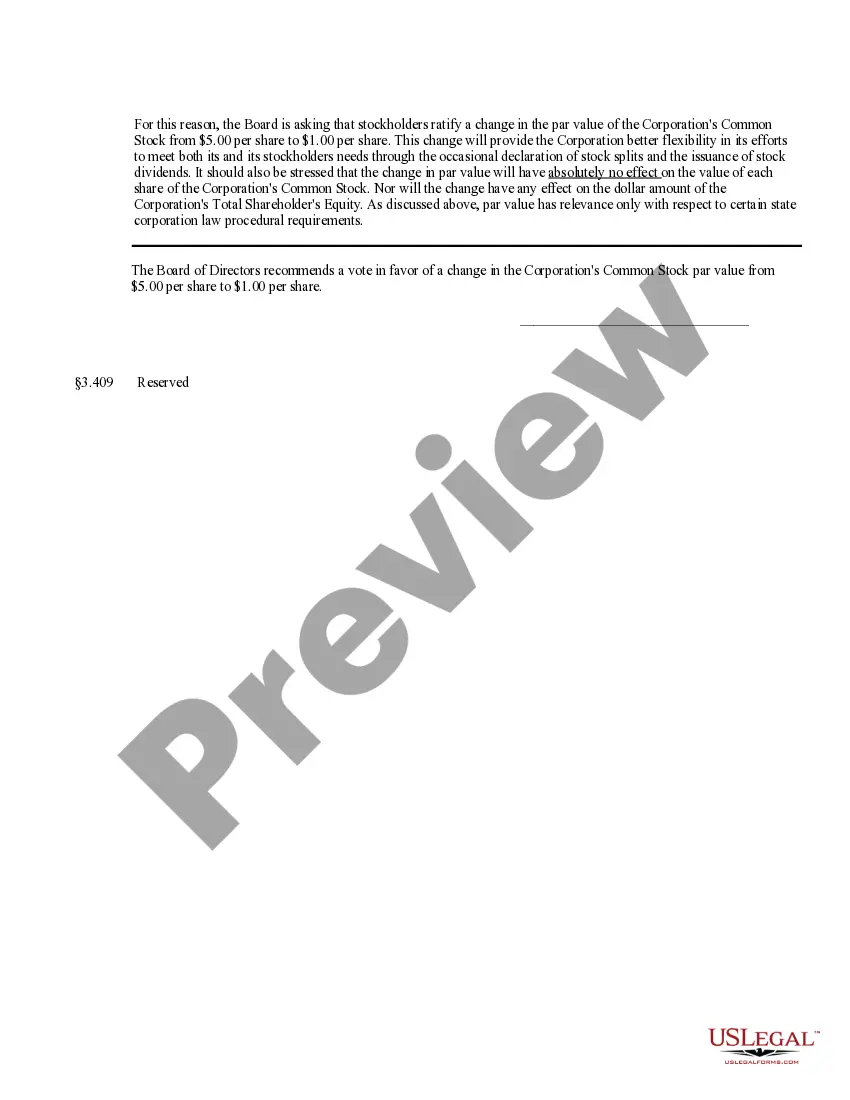
However, why squander time searching for the suitable Common Stock Can Be Issued Without Par Value sample online when the US Legal Forms online repository has compiled such documents in one location.
US Legal Forms is the most extensive online legal library featuring over 85,000 editable templates created by attorneys for various business and personal needs. They are straightforward to navigate with all files categorized by state and purpose.
Use the search option at the top of the page to find another sample if necessary. When you've identified the correct form, click Buy Now and select a subscription plan. Create an account or sign in and make a payment using PayPal or a credit card. Select the appropriate format for your Common Stock Can Be Issued Without Par Value and download it. All documents obtained from US Legal Forms are reusable. To re-download and fill out previously acquired forms, navigate to the My documents tab in your profile. Enjoy the most comprehensive and user-friendly legal documentation service!
- Stay informed with the latest legislative changes, ensuring your form is current and compliant when acquiring a Common Stock Can Be Issued Without Par Value from our site.
- Obtaining a Common Stock Can Be Issued Without Par Value is quick and simple for both existing and new users.
- If you have an account with an active subscription, Log In to download the document sample you require in your desired format.
- If you are visiting our website for the first time, follow the instructions below.
- Review the template using the Preview feature or by reading the text description to ensure it meets your needs.
Form popularity
FAQ
To calculate common stock without par value, start by determining the total number of shares issued. Since common stock can be issued without par value, you can assign a value to the stock based on the amount received from investors. Simply multiply the total shares by the value assigned per share. This approach allows for flexibility in valuation, making it easier for companies to manage their equity.
To record common stock with no par value, you should first determine the total amount received from the sale of the shares. This amount will be credited to the common stock account in your financial records. Since common stock can be issued without par value, there is no need to assign a specific value to each share. You can also consult US Legal Forms for templates and guidance on proper accounting practices.
Common stock is not always at par value, as many companies issue shares without any assigned par value. This option allows more flexibility in capital raising, especially for companies looking to expand. Choosing to issue stock without par value eliminates potential obstacles linked to par value constraints. Therefore, understanding that common stock can be issued without par value is crucial for effective financial planning.
A common stock without par value is essentially a type of equity that lacks a nominal value assigned to each share. This structure can be advantageous since it removes the complexities associated with par value accounting. Companies often choose this route to simplify their equity issuance process. Hence, it clearly illustrates that common stock can be issued without par value.
Common stock without par value refers to shares that do not have a specified face value set by the issuing company. This type of stock provides flexibility for the company in its capital structure. Moreover, it allows companies to issue shares based on their market valuation rather than a fixed value. Therefore, common stock can be issued without par value, making it a practical option for many organizations.
Any stock certificate issued for shares purchased shows the par value. When authorizing shares, a company can choose to assign a par value or not.
No-par stocks are those where the value of the stocks relies completely on the market, not at all based upon any guaranteed value (the par value) set at the issuance of the stocks.
The transaction no par value stock journal entry is recorded by debiting the cash received account by 20,000 and crediting the common stock account by 20,000.
It used to be that the par value of the common stock was equal to the amount invested (as with fixed-income securities). However, today, most stocks are issued with either a very low par value such as $0.01 per share or no par value at all.
No-par value stock is issued without a par value. The value of no-par value stocks is determined by the price investors are willing to pay on the open market. The advantage of no-par value stock is that companies can then issue stock at higher prices in future offerings.