Par Value For Preferred Stock
Description
Get your form ready online
Our built-in tools help you complete, sign, share, and store your documents in one place.
Make edits, fill in missing information, and update formatting in US Legal Forms—just like you would in MS Word.
Download a copy, print it, send it by email, or mail it via USPS—whatever works best for your next step.
Sign and collect signatures with our SignNow integration. Send to multiple recipients, set reminders, and more. Go Premium to unlock E-Sign.
If this form requires notarization, complete it online through a secure video call—no need to meet a notary in person or wait for an appointment.
We protect your documents and personal data by following strict security and privacy standards.

Make edits, fill in missing information, and update formatting in US Legal Forms—just like you would in MS Word.

Download a copy, print it, send it by email, or mail it via USPS—whatever works best for your next step.

Sign and collect signatures with our SignNow integration. Send to multiple recipients, set reminders, and more. Go Premium to unlock E-Sign.

If this form requires notarization, complete it online through a secure video call—no need to meet a notary in person or wait for an appointment.

We protect your documents and personal data by following strict security and privacy standards.
Looking for another form?





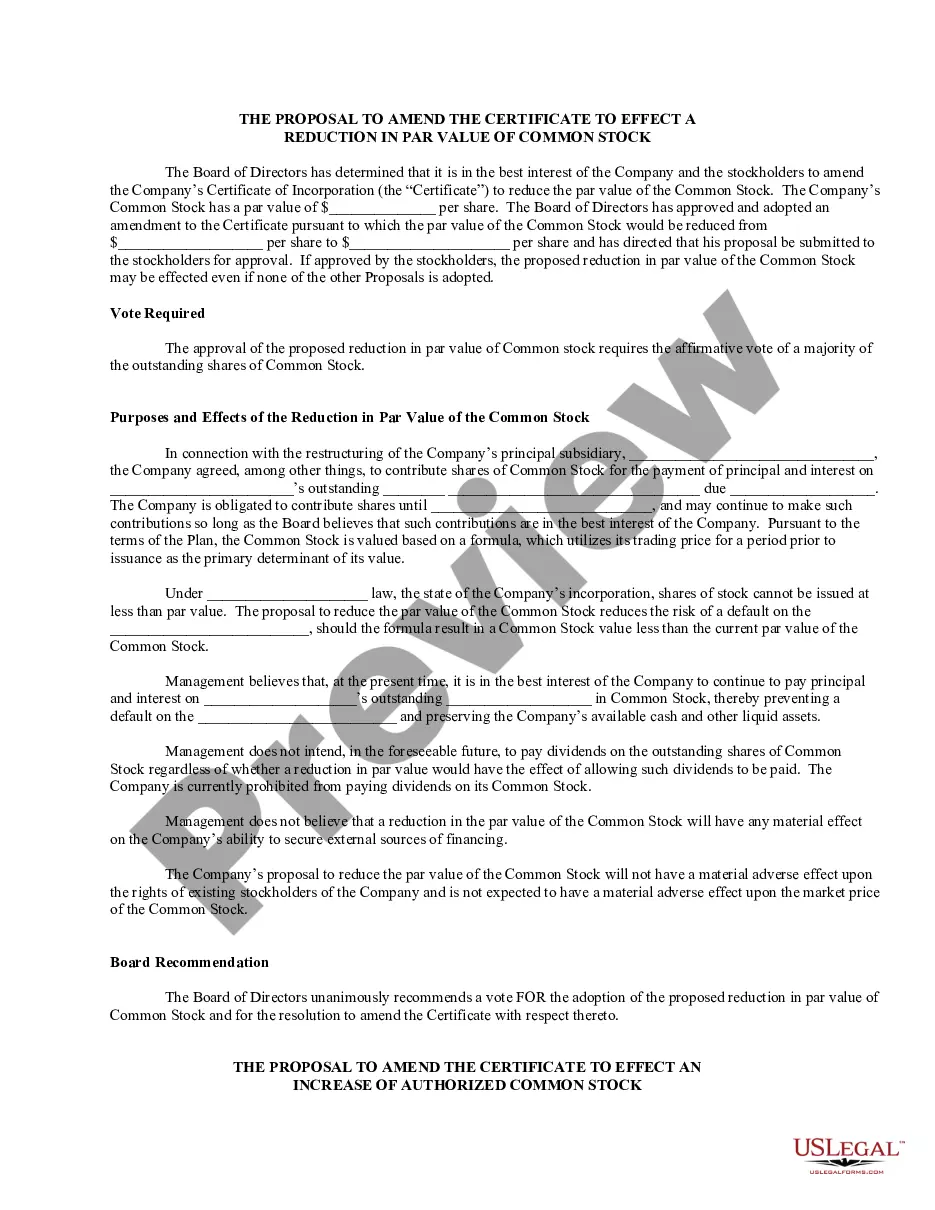
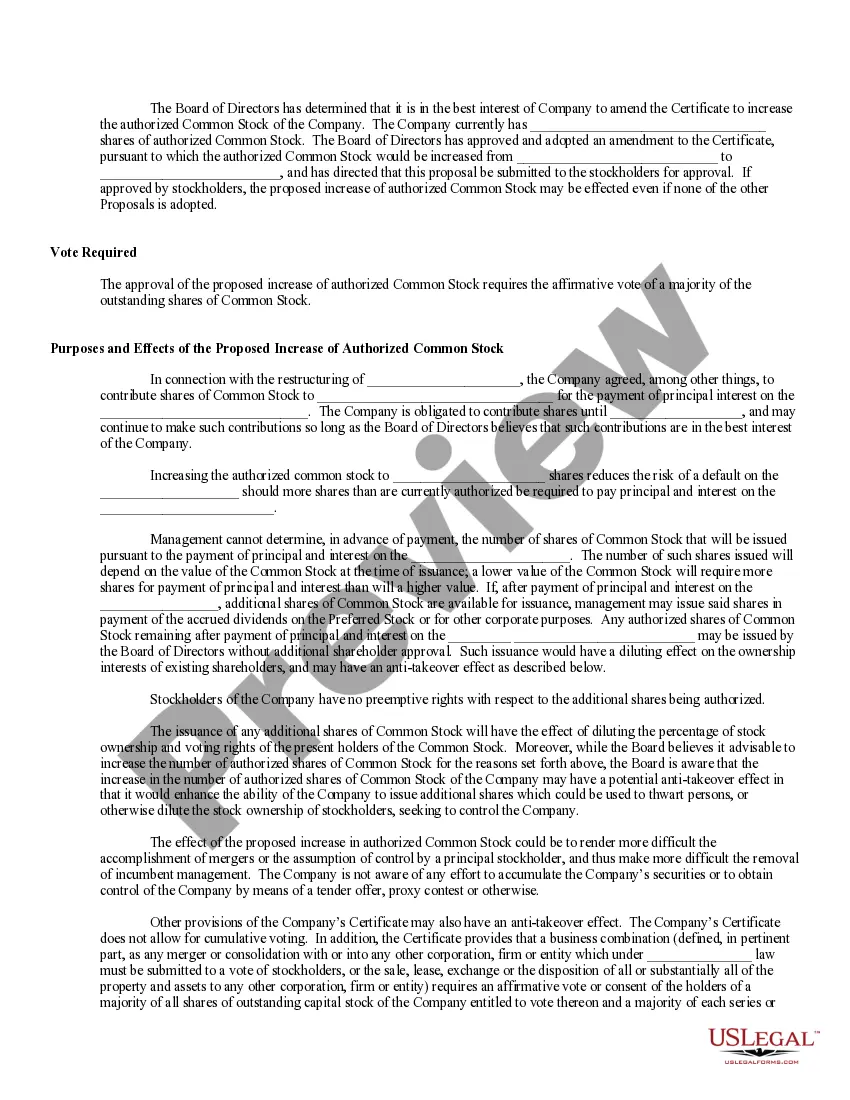
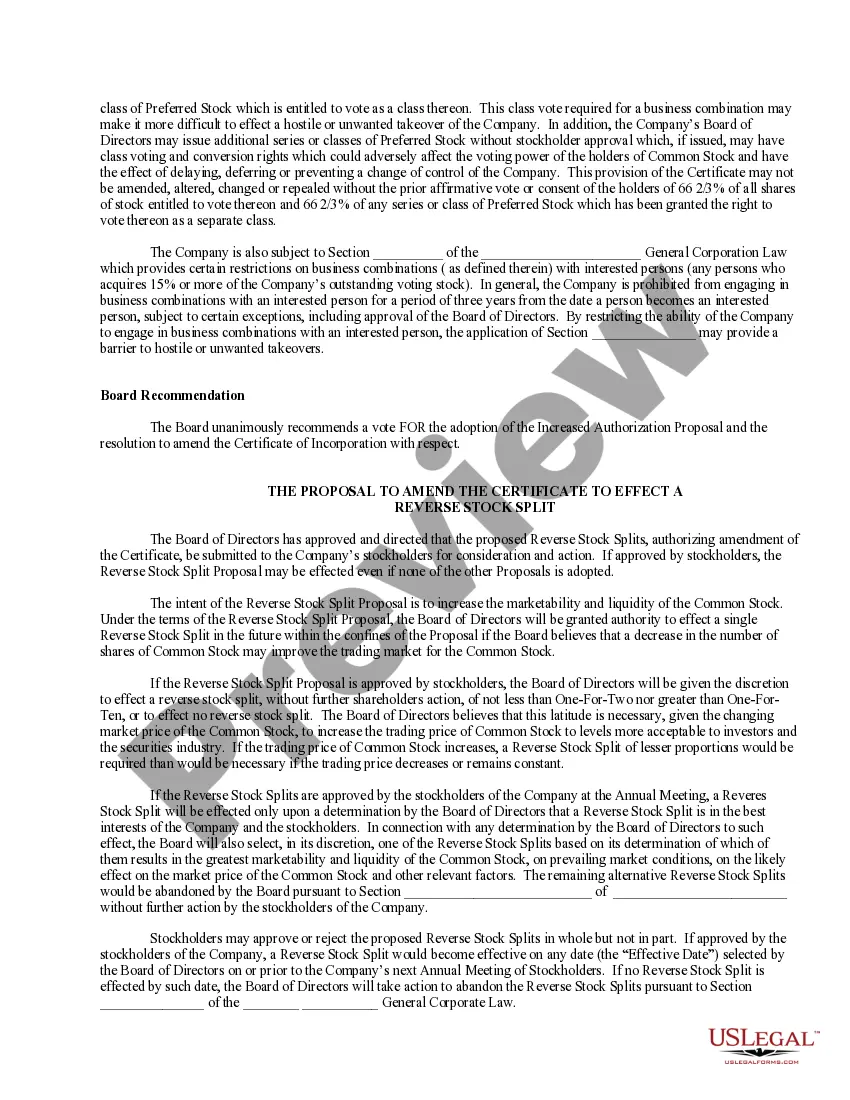
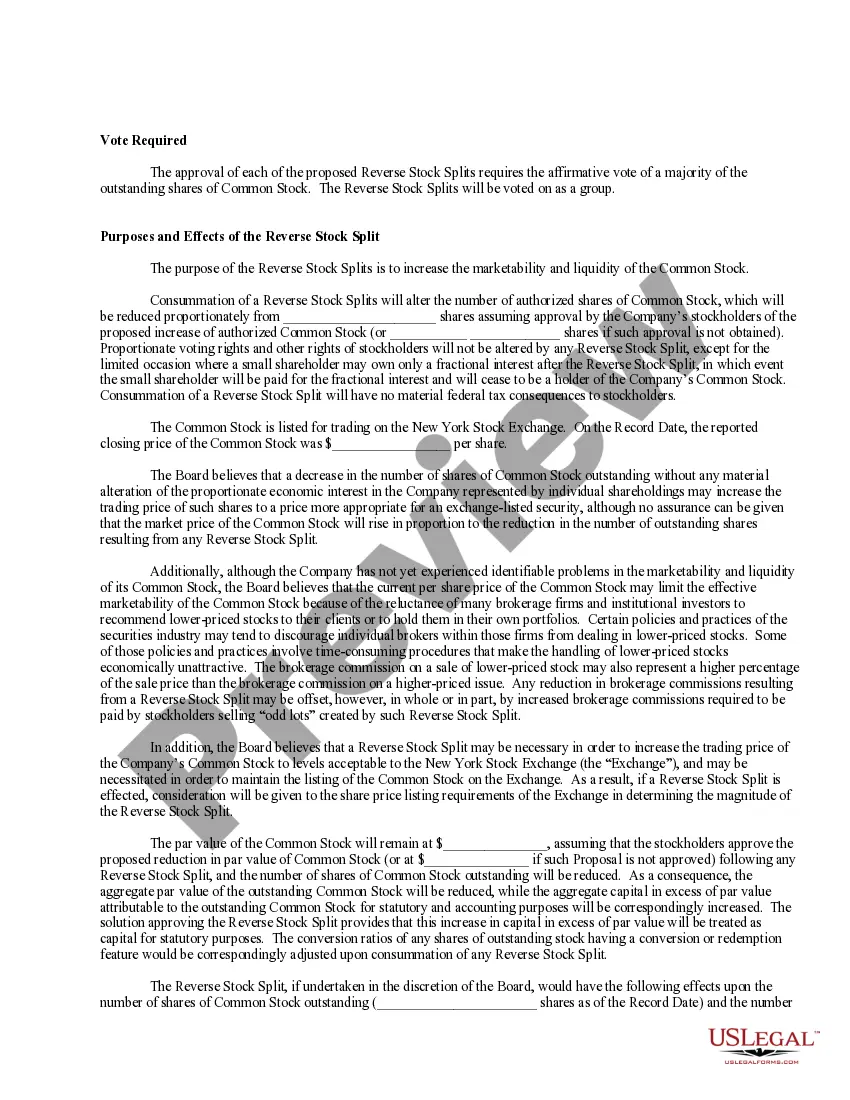
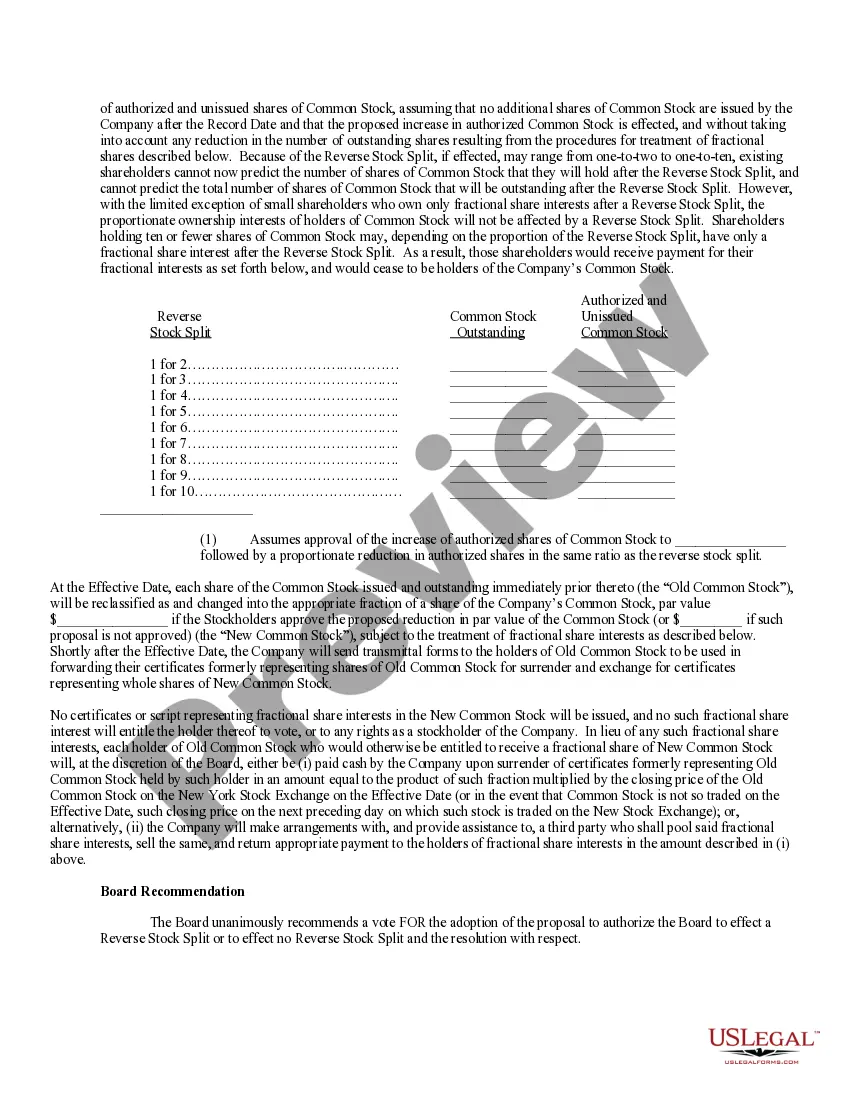
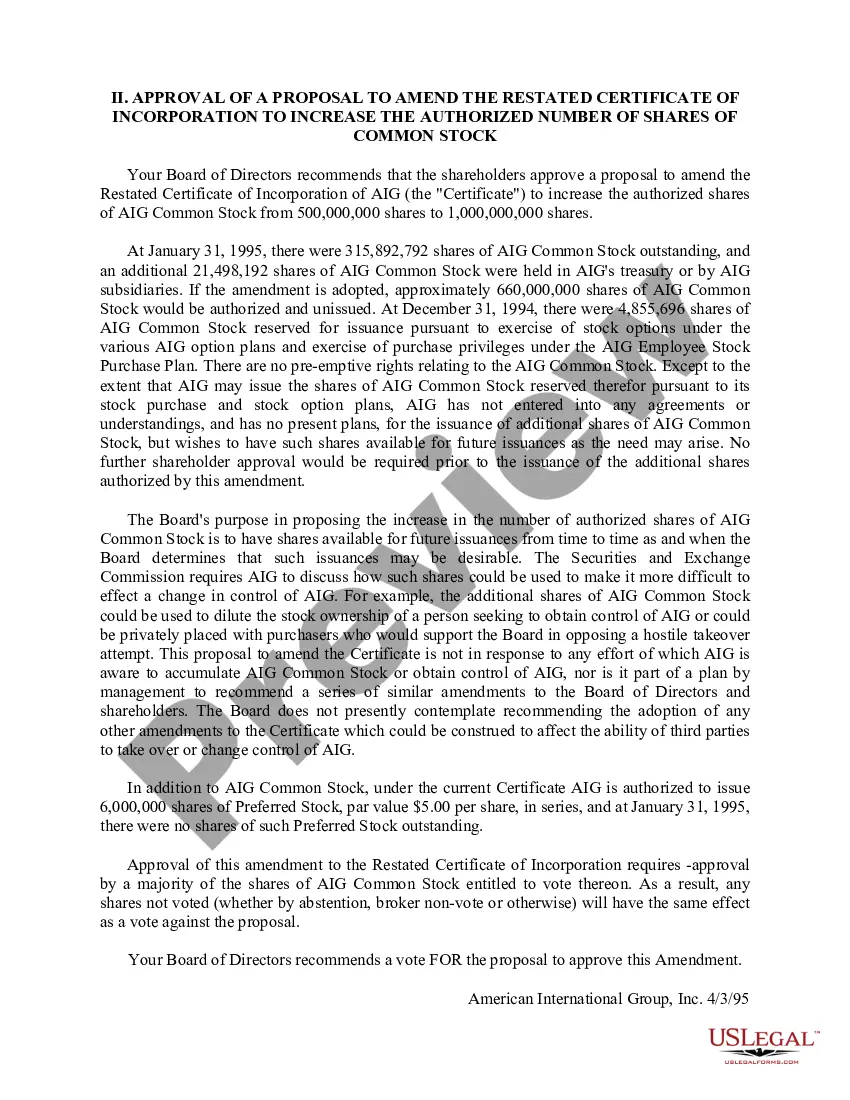
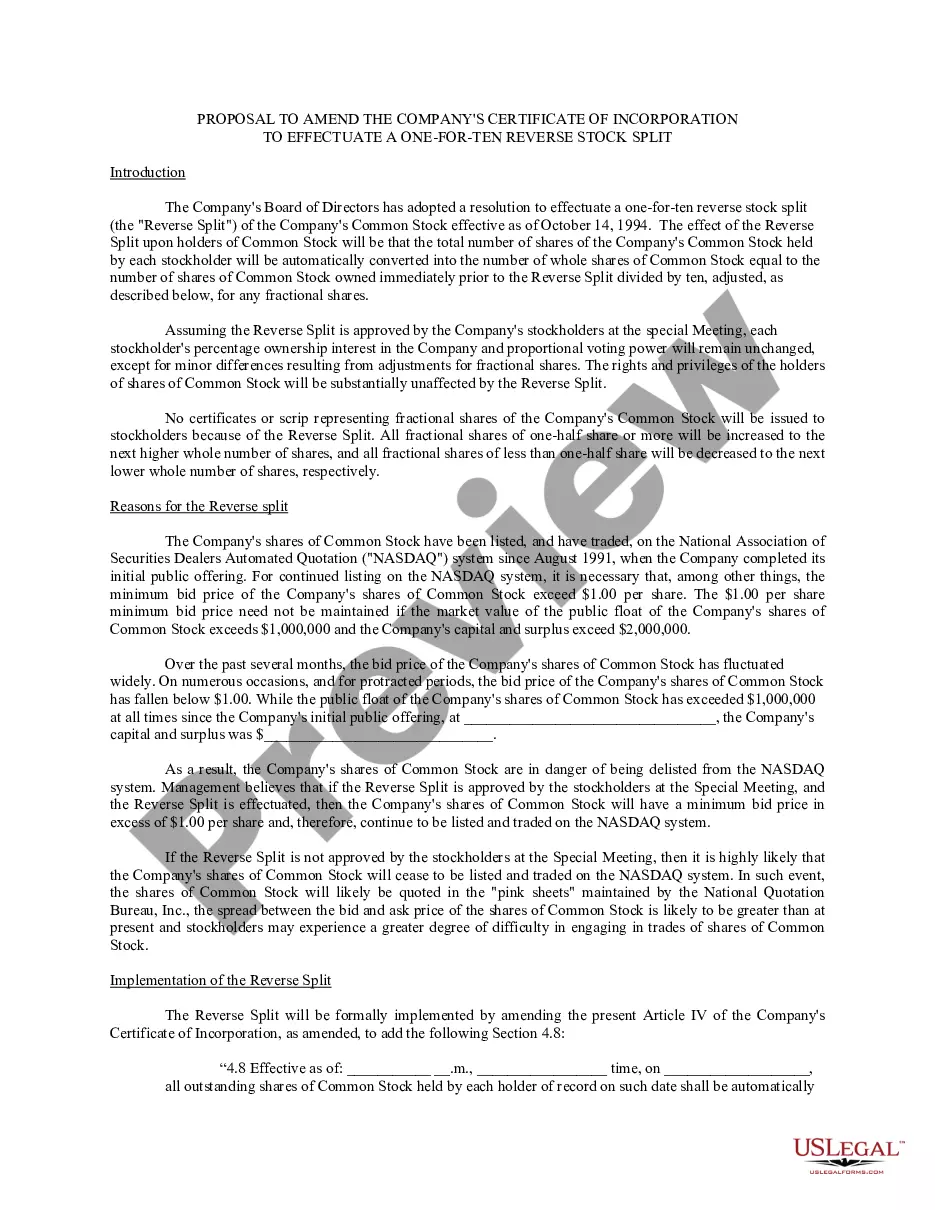
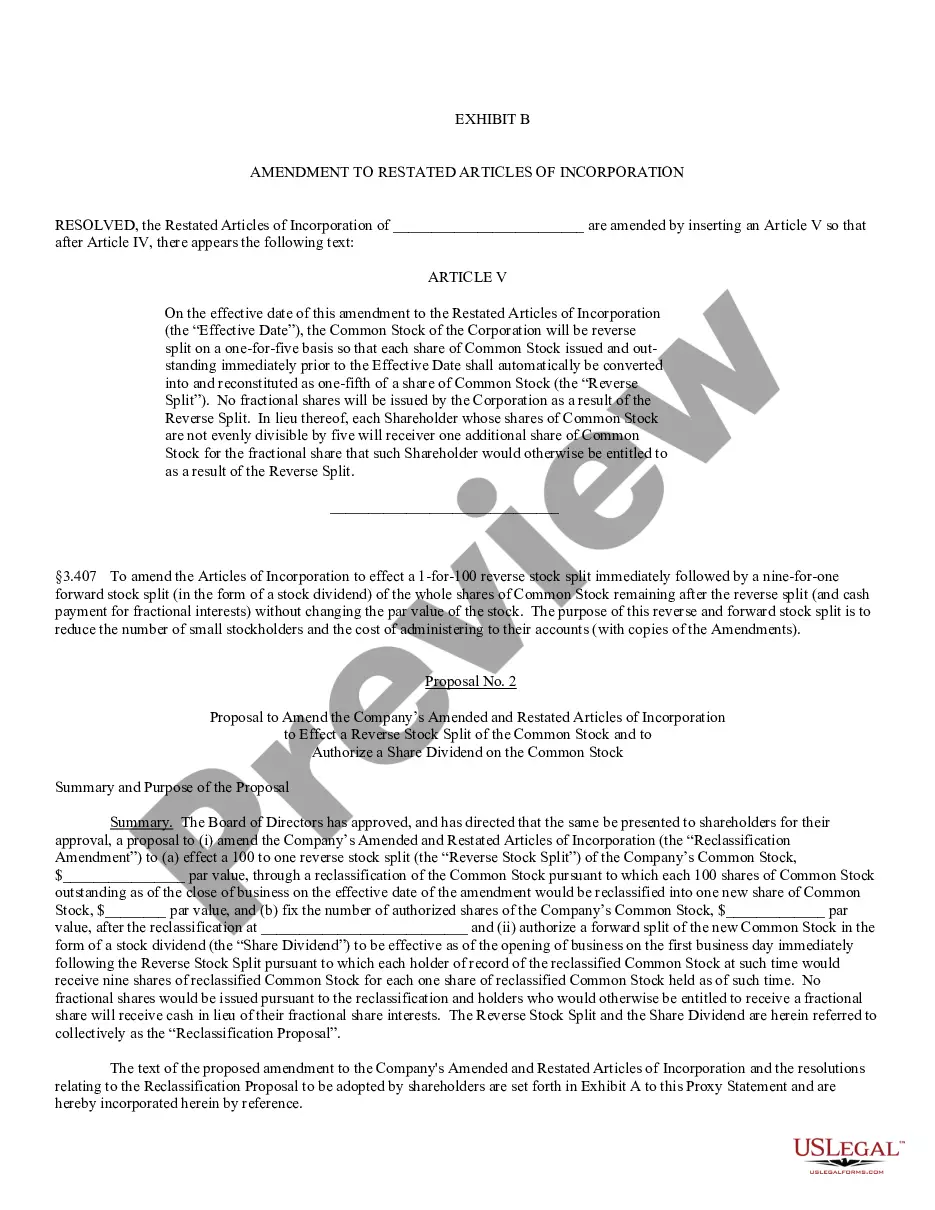
How to fill out Proposal To Amend Certificate To Reduce Par Value, Increase Authorized Common Stock And Reverse Stock Split With Exhibit?
Legal administration can be daunting, even for experienced professionals.
When seeking a Par Value For Preferred Stock and unable to dedicate time to find the suitable and current version, the processes can be taxing.
Gain entry to a collection of articles, guides, and manuals relevant to your situation and needs.
Save time and effort in finding the documents you require, and use US Legal Forms' advanced search and Review feature to search for Par Value For Preferred Stock and obtain it.
Ensure that the sample is valid in your state or region.
- If you hold a monthly subscription, Log In to your US Legal Forms account, search for the form, and obtain it.
- Check the My documents tab to view the documents you have saved and manage your folders accordingly.
- If this is your initial experience with US Legal Forms, create a free account to access unlimited benefits of the platform.
- Here are the steps to follow after downloading the form you need.
- Verify this is the correct form by previewing it and reviewing its description.
- Access state- or region-specific legal and business documents.
- US Legal Forms caters to any requirements you may have, from personal to corporate paperwork, all in one spot.
- Utilize sophisticated tools to complete and oversee your Par Value For Preferred Stock.
Form popularity
FAQ
An 8% preferred stock signifies that the shareholder receives an annual dividend that equals 8% of its par value. This percentage provides a predictable return on investment, which is particularly attractive to investors focused on income. For instance, if the par value is $100, the investor will receive $8 each year. Understanding such terms can significantly influence your investment strategy, and US Legal Forms can provide valuable insights during your research.
While many preferred equities are denominated in $25 par value, this is not a strict rule. Companies can issue preferred shares with varied par values based on their financial strategies and market conditions. The par value for preferred stock can range from as low as $1 to several hundred dollars. Therefore, it’s important to check the specifics for each investment opportunity you come across.
Buying preferred stock can be a good investment, especially for those seeking consistent income through dividends. Preferred stock typically comes with a fixed dividend rate, making it a more stable choice compared to common stock. However, it’s essential to consider the company's overall health and market conditions before investing. If you want to explore your options further, US Legal Forms offers a wide range of resources to help you make informed decisions.
Par preferred stock refers to shares with a defined par value that dictates how dividends are calculated. This par value is crucial for shareholders since it establishes the baseline for dividend distribution. Generally, preferred stockholders receive fixed dividends based on this value, giving them a more predictable income stream. Understanding this concept clarifies the financial security associated with owning par preferred stock.
Calculating the par value of a stock involves determining its nominal or face value assigned by the company. To find this value, review the company's articles of incorporation or other official stock documentation for listed amounts. Keep in mind that the par value for preferred stock is not necessarily reflective of its market value, which can fluctuate based on demand and company performance. If you're unsure about this process, platforms like US Legal Forms can help you access necessary resources.
When a company issues 7 preferred stock with a $100 par value, it indicates that each share has a stated value of $100. This par value is important for the company’s balance sheet and helps in determining shareholder dividends. Investors can expect fixed dividend payments, usually expressed as a percentage of the par value for preferred stock. In this case, if the stock yields 7%, investors know they will receive $7 annually per share.
To calculate the value of preferred stock, you start with the dividend that the stock pays and divide it by the required rate of return. For example, if the stock pays an annual dividend of $5 and your required rate of return is 5%, you would calculate the value as $5 / 0.05, resulting in a value of $100 per share. This approach gives you insight into the potential return on your investment. Using tools from US Legal Forms can streamline your calculations and enhance your understanding of preferred stock valuation.
Calculating the par value of preferred stock typically involves knowing the total value of the stock and the number of shares issued. For example, if a company issues a total of $1,000,000 worth of preferred stock and has 10,000 shares, the par value for preferred stock would be $100 per share. This figure helps both the company and investors understand the baseline value of their investment. Consider using platforms like US Legal Forms for templates to keep your calculations clear and organized.
A common example of par value stock is preferred stock issued by a corporation. For instance, if a company has preferred stock with a par value of $100, this indicates the minimum value assigned to each share. This par value for preferred stock is important during liquidation, as it represents the amount shareholders receive before common stockholders. Understanding this concept can help you make informed investment decisions.
Preferred stock is recorded at its par value, which serves as a foundational aspect in accounting. This practice ensures that the financial statements reflect the correct issuance value of the shares. By focusing on the par value for preferred stock, businesses can maintain clear records that meet various legal and financial standards.