Phantom Stock Plan For Employees
Description
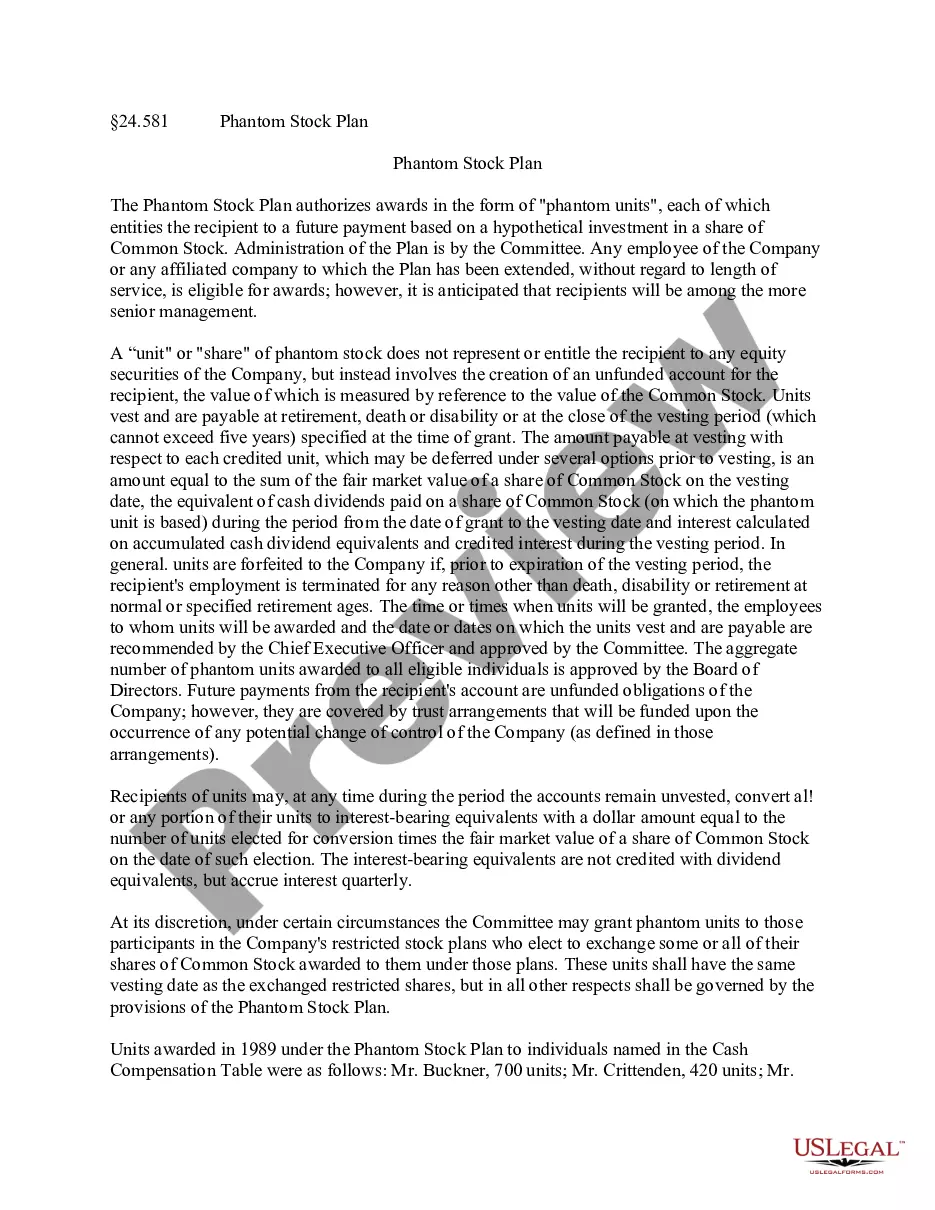

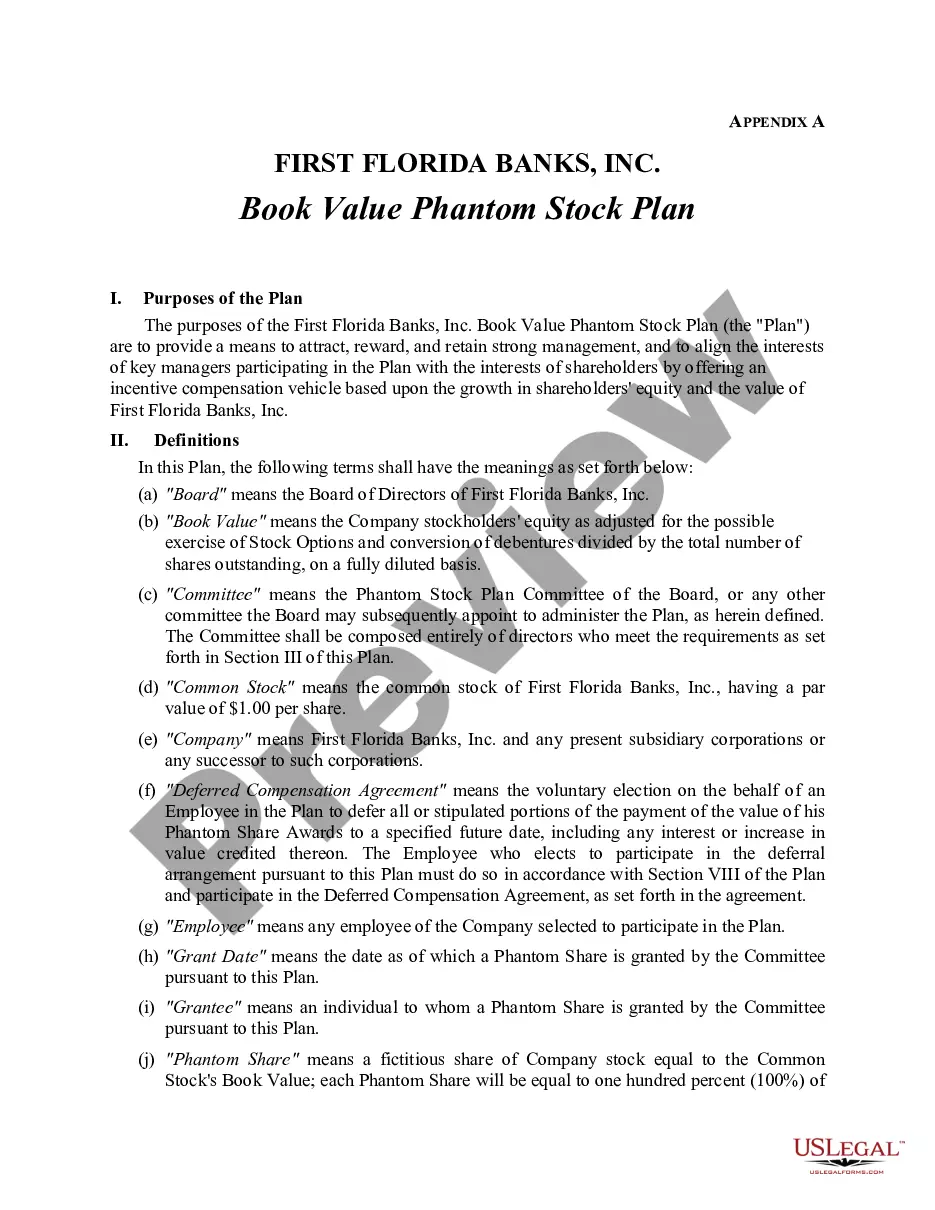
How to fill out Phantom Stock Plan Of Hercules, Inc.?
- If you're a returning user, simply log in to your account. Check your subscription status and renew if necessary to download forms seamlessly.
- For first-time users, start by selecting the relevant form. Use the Preview mode to ensure the document meets your requirements and aligns with local jurisdiction.
- If the selected form doesn’t fit, utilize the Search tab at the top to find an alternative that works better for you.
- Once you find the correct document, click the Buy Now button. Choose a subscription plan that suits your needs and create an account for full access.
- Complete your purchase by entering your payment information or opting for PayPal. Verify the transaction to ensure access.
- Finally, download your form. Save it on your device and find it again easily in the My Forms section of your profile.
Using US Legal Forms simplifies the process of obtaining legal documents. With an extensive library of over 85,000 customizable legal forms, you can find what you need quickly and efficiently.
Empower your legal processes today! Explore US Legal Forms to access the documents necessary for your phantom stock plan for employees and ensure compliance with ease.
Form popularity
FAQ
Phantom stock typically targets employees to incentivize their performance, but it can also be offered to non-employees, such as key consultants or advisors, to align their interests with the company. While non-employees can participate in a phantom stock plan for employees, it is crucial to structure the terms carefully to ensure clarity about obligations and payouts. This flexibility allows companies to extend rewards beyond traditional employees, potentially enhancing strategic partnerships.
The phantom stock plan for employees is designed to mimic the benefits of equity compensation without issuing actual shares. It provides employees with a stake in the company’s success based on the stock's performance. An ESOP, however, grants employees real shares, promoting a direct ownership structure. Both have unique advantages, but the phantom stock plan often reduces administrative complexities related to maintaining stock ownership.
While a phantom stock plan for employees offers many benefits, there are downsides to consider. Participants do not receive actual shares, which means they miss out on real equity ownership and the rights that come with it. Furthermore, the payout may be taxable as ordinary income, creating potential financial implications. Understanding these aspects can help you make an informed decision about whether a phantom stock plan is right for you.
The benefits of a phantom stock plan for employees include enhanced employee motivation, retention, and performance. Since these plans tie compensation to company performance, employees feel a sense of ownership without relinquishing actual equity. Additionally, businesses can utilize these plans to reward employees without incurring significant upfront costs, ultimately fostering a stronger company culture.
A phantom stock plan for employees is recorded on the company's financial statements as a liability, reflecting the value of the promises made to employees. When determining the value, businesses need to closely track the performance metrics tied to the plan. Proper accounting ensures transparency and allows both the company and its employees to understand the financial implications.
While a phantom stock plan for employees has many benefits, there are drawbacks to consider as well. For instance, if the company does not perform well, employees may receive little to no payout. Additionally, employees might face unpredictable tax liabilities, which can complicate their financial planning.
Implementing a phantom stock plan for employees can be a strategic move for companies seeking to attract or retain talent. This plan serves as an enticing financial incentive, linking employees' efforts with organizational success. Moreover, it can also allow businesses to reward employees without granting actual shares, cashing in on the benefits of equity compensation without diluting ownership.
Many employees find a phantom stock plan for employees to be a good option because it offers a financial reward tied to the company’s success. This arrangement can motivate employees to work harder and remain loyal to the business. Ultimately, employees benefit from potential financial gains while enjoying the stability of their current positions.
Typically, a phantom stock plan for employees is not subject to the Employee Retirement Income Security Act (ERISA). However, depending on how the plan is structured, certain features might attract ERISA's regulations. It is advisable to consult with a legal professional to determine whether your specific plan falls under ERISA requirements.
A phantom stock plan for employees can be quite beneficial as it aligns their interests with the company's performance. Employees can feel more invested in the business, which can lead to increased productivity and morale. Additionally, these plans provide employees with a sense of ownership without giving away actual equity, making it a popular choice.