Phantom Stock Options
Description
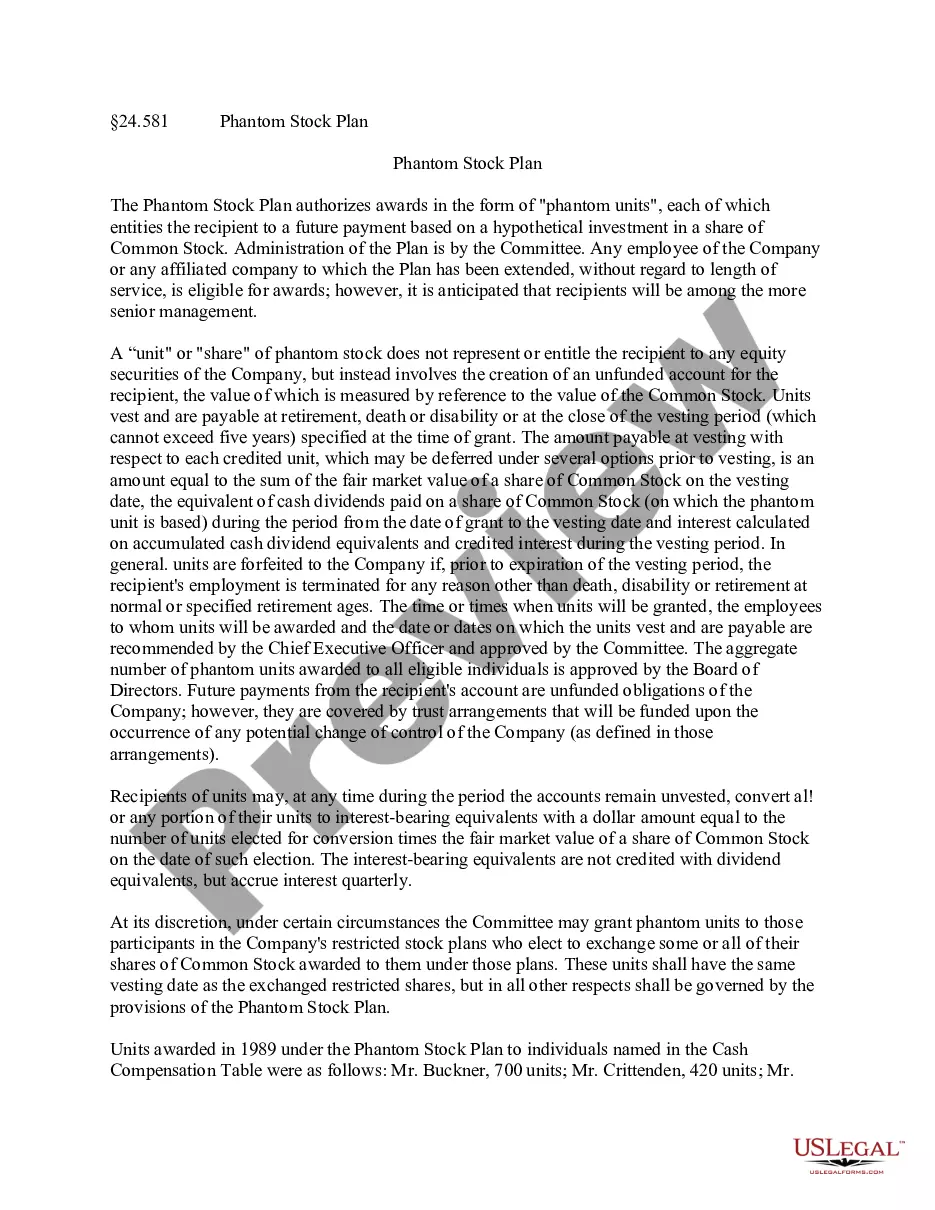

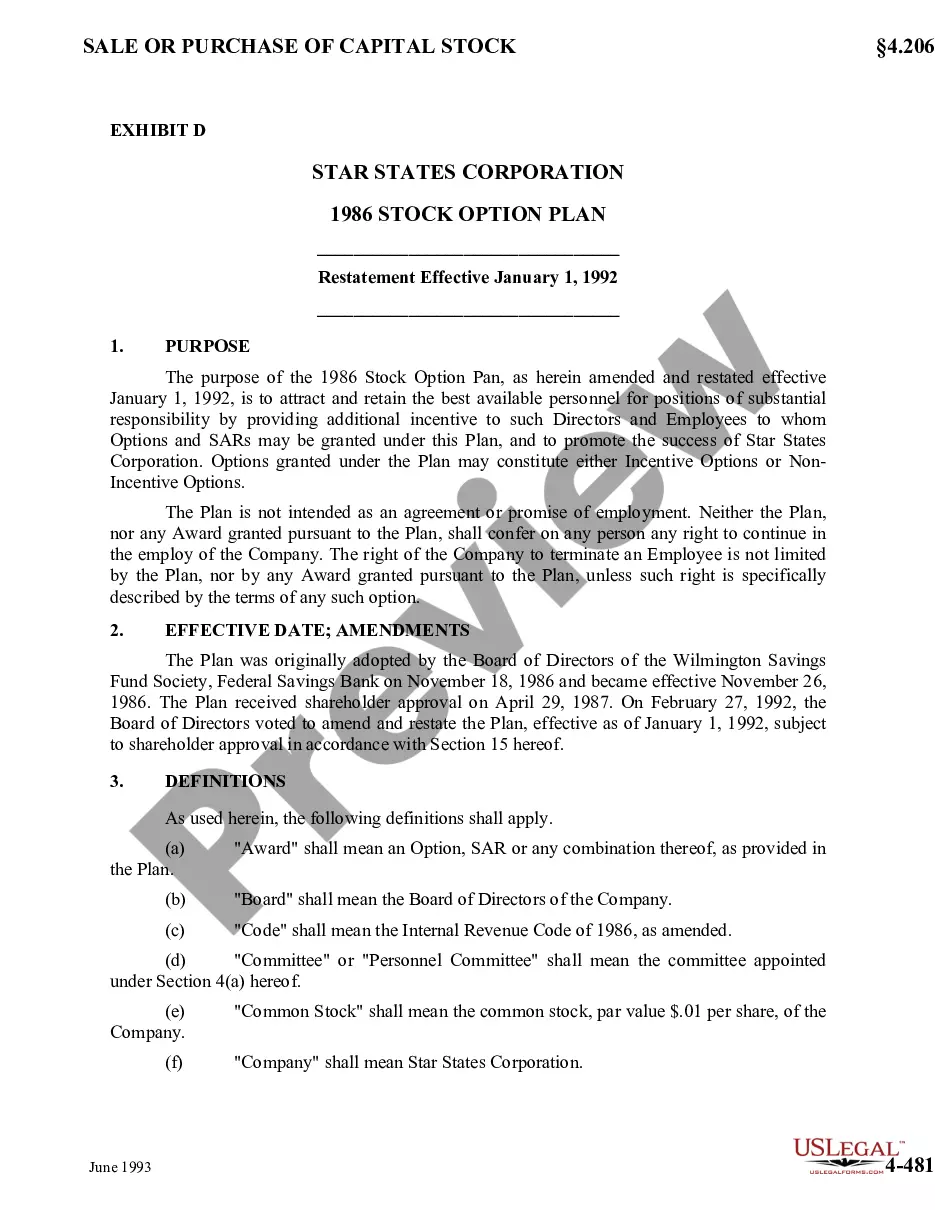



How to fill out Phantom Stock Plan Of Hercules, Inc.?
- If you are a returning user, log in to your account and locate the required form template by clicking on the Download button. Ensure that your subscription is current; renew it if necessary.
- If you are new to US Legal Forms, visit their website and review the Preview mode and description of the forms available. Ensure that you select one that meets your specific needs and adheres to your local jurisdiction.
- Should you need a different template, utilize the Search bar to explore alternatives. Once you find a form that fits, proceed to the next step.
- Select and purchase your document. Click 'Buy Now' and choose a subscription plan that suits you. Registration is mandatory for accessing the library's forms.
- Complete your purchase by providing payment details using either a credit card or your PayPal account.
- Download your selected form and save it to your device. Access the document anytime through the My Forms section of your profile.
Following these steps will enable you to acquire essential documentation swiftly, ensuring compliance with legal standards.
US Legal Forms not only simplifies the process but also offers extensive resources to empower individuals and lawyers. Get started today and optimize your legal documentation!
Form popularity
FAQ
Yes, companies can grant phantom stock options to non-employees, provided they follow the plan's guidelines. Key stakeholders, such as advisors and consultants, may also benefit from these options. Offering phantom stock to non-employees can align their interests with the company's success, fostering a collaborative environment. It's wise to consult legal experts to ensure compliance with regulations.
The vesting period for phantom stock options typically spans several years. This timeframe encourages employees to stay with the company and contribute to its success. It is essential to check your company's specific phantom stock plan, as terms may vary significantly. By understanding the vesting period, you can better plan your financial future.
Phantom stock options may not be permanent, as they are often contingent on employment status or specific company policies. If you leave the company or if certain conditions aren't met, you may lose the phantom stock benefits. Therefore, it is crucial to carefully read the terms of your phantom stock agreement so that you fully understand what happens under different circumstances.
One downside of phantom stock options is that employees do not receive any voting rights or dividends, which typical shareholders enjoy. Additionally, the payout depends on the company's performance and may not guarantee a tangible benefit. If the company's stock value does not increase, employees may feel disappointed, so it's essential to weigh the risks carefully.
Phantom stock options are often referred to as 'shadow stock' or 'synthetic equity.' These terms describe a compensation method that gives employees a stake in the company without providing actual shares. Essentially, phantom stock mimics the value of real stock but lacks ownership rights, making it an attractive option for companies that want to incentivize employees without diluting equity.
Setting up a phantom stock plan involves several key steps including defining the plan’s goals, eligibility, and payout structure. It’s important to create a clear document outlining the terms of the phantom stock options to ensure understanding among participants. For legal and administrative support, the US Legal Forms platform offers customizable templates that can help simplify this process.
Phantom stock options are usually taxed as ordinary income when the payout occurs, similar to bonuses or salary. The value of the phantom stock received is subject to federal and state taxes. Understanding these tax implications is crucial for employees to avoid surprises, and this is where US Legal Forms can provide guidance on structuring these plans effectively.
A common example of a phantom stock plan is a program where employees earn 'units' that represent the value of a specified number of shares. When the company performs well, these units increase in value, allowing employees to benefit without receiving actual shares. This plan can be particularly effective in startups or privately held firms where actual equity may not be easily provided.
Phantom stock options can be a solid choice for many companies looking to motivate and reward employees without giving away actual equity. These options provide financial benefits linked to the company’s success, thereby aligning employee interests with business growth. Additionally, they often come with fewer administrative burdens compared to traditional stock options, making them an attractive option for both employers and employees.