Bonus Year Per Withhold
Description



Get your form ready online
Our built-in tools help you complete, sign, share, and store your documents in one place.
Make edits, fill in missing information, and update formatting in US Legal Forms—just like you would in MS Word.
Download a copy, print it, send it by email, or mail it via USPS—whatever works best for your next step.
Sign and collect signatures with our SignNow integration. Send to multiple recipients, set reminders, and more. Go Premium to unlock E-Sign.
If this form requires notarization, complete it online through a secure video call—no need to meet a notary in person or wait for an appointment.
We protect your documents and personal data by following strict security and privacy standards.

Make edits, fill in missing information, and update formatting in US Legal Forms—just like you would in MS Word.

Download a copy, print it, send it by email, or mail it via USPS—whatever works best for your next step.

Sign and collect signatures with our SignNow integration. Send to multiple recipients, set reminders, and more. Go Premium to unlock E-Sign.

If this form requires notarization, complete it online through a secure video call—no need to meet a notary in person or wait for an appointment.

We protect your documents and personal data by following strict security and privacy standards.
Looking for another form?







How to fill out Restated Employee Annual Incentive Bonus Plan With Attachments?
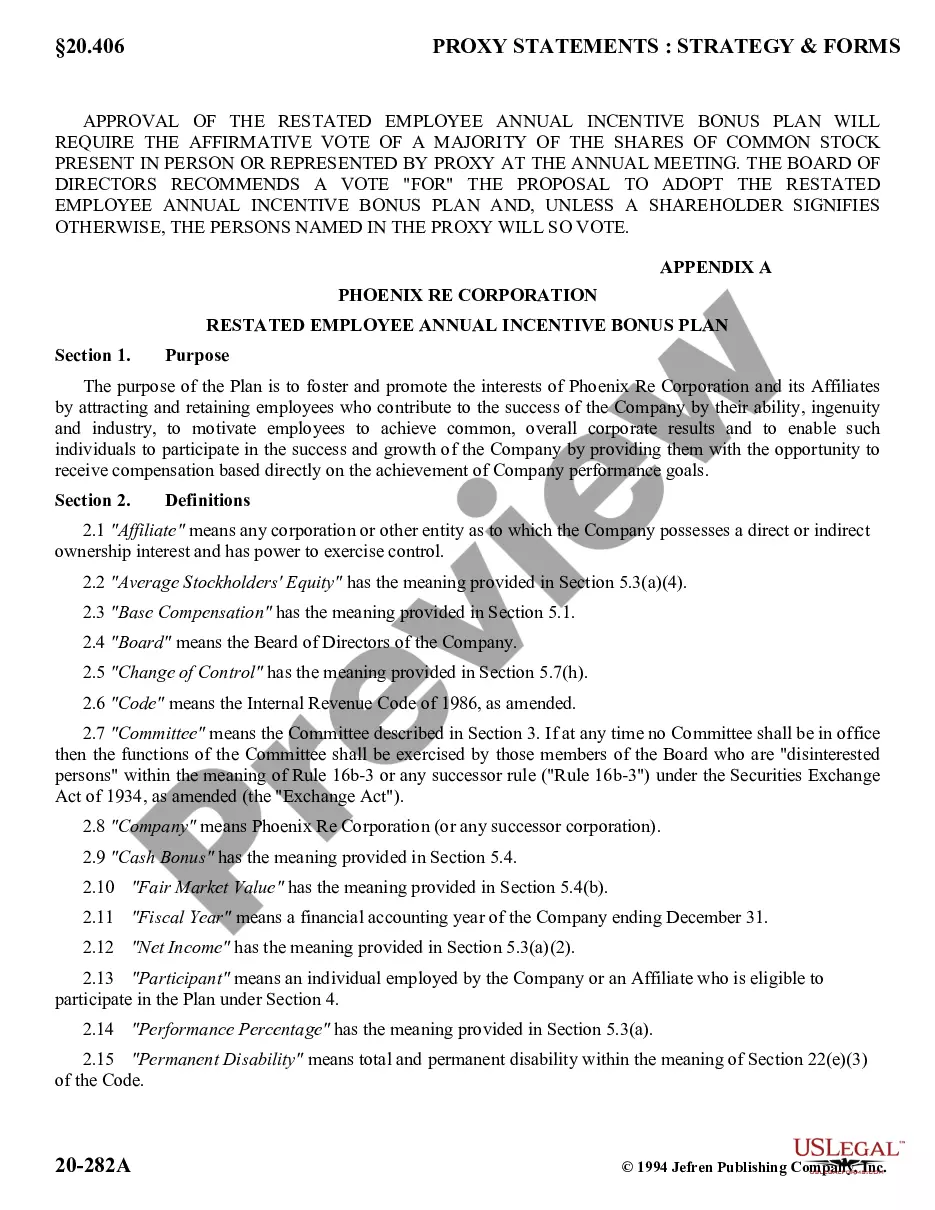
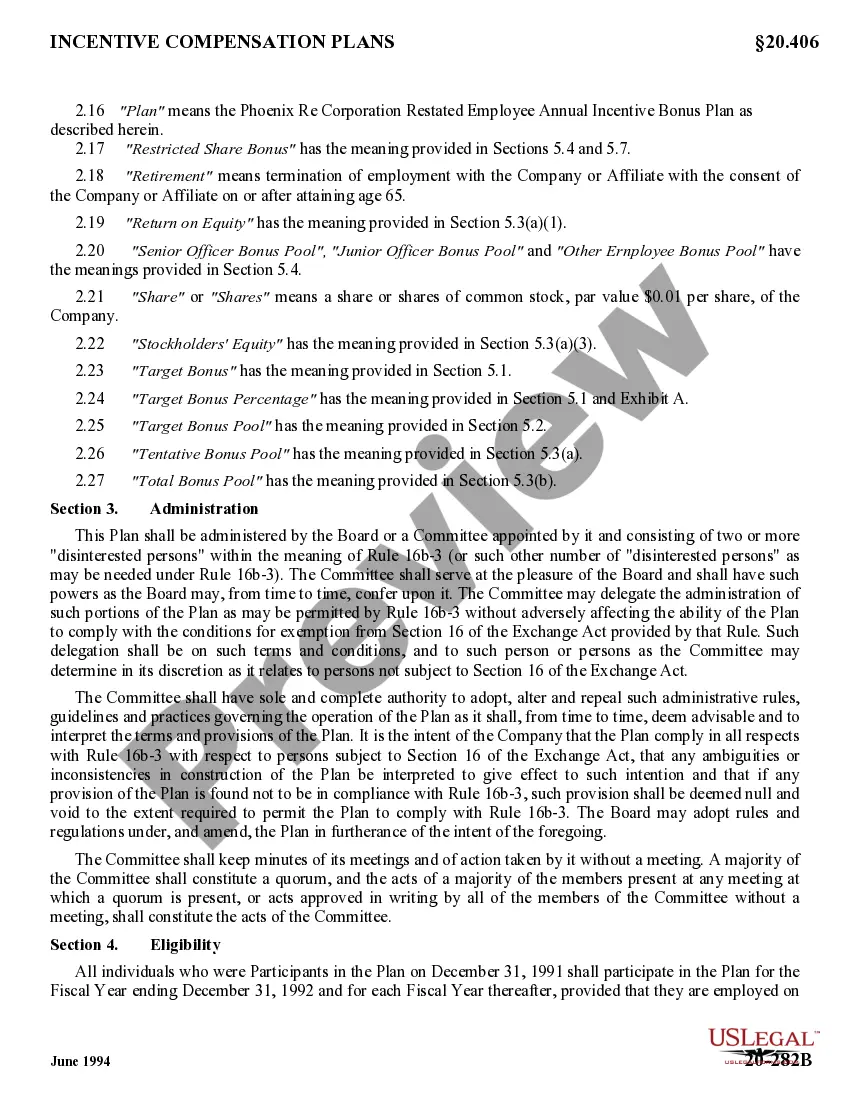
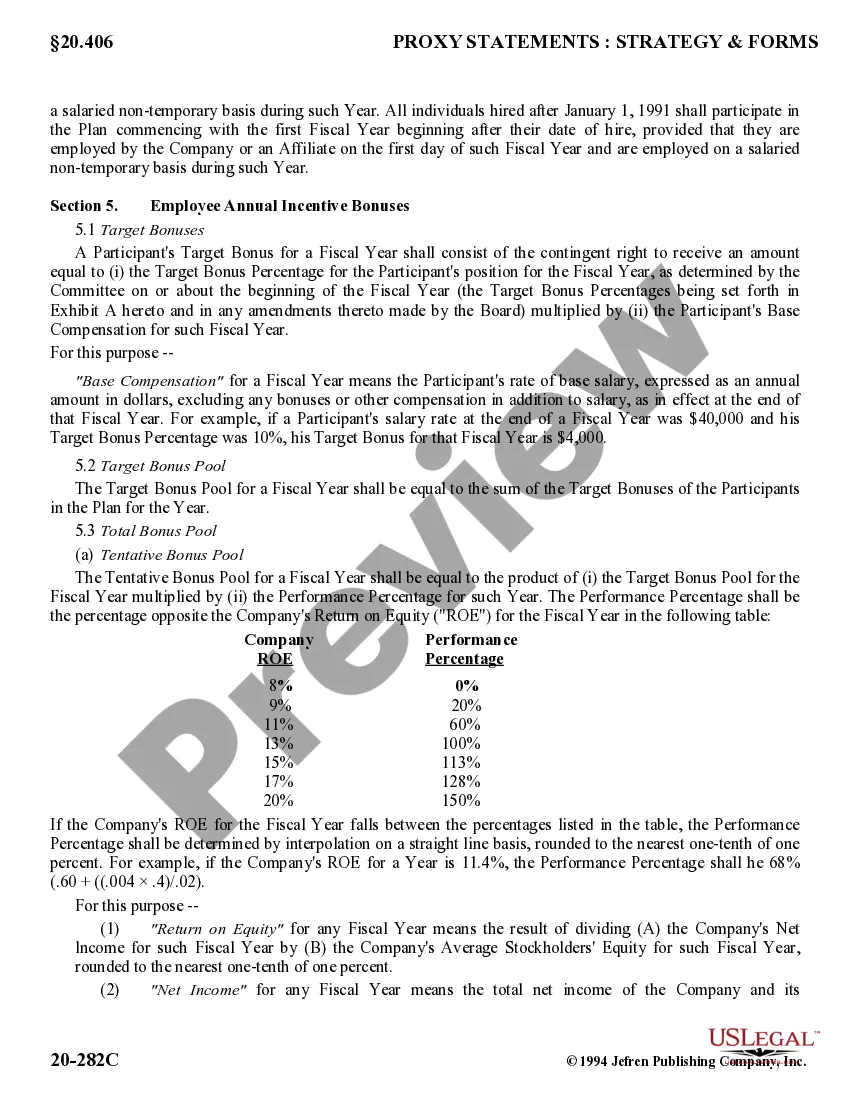
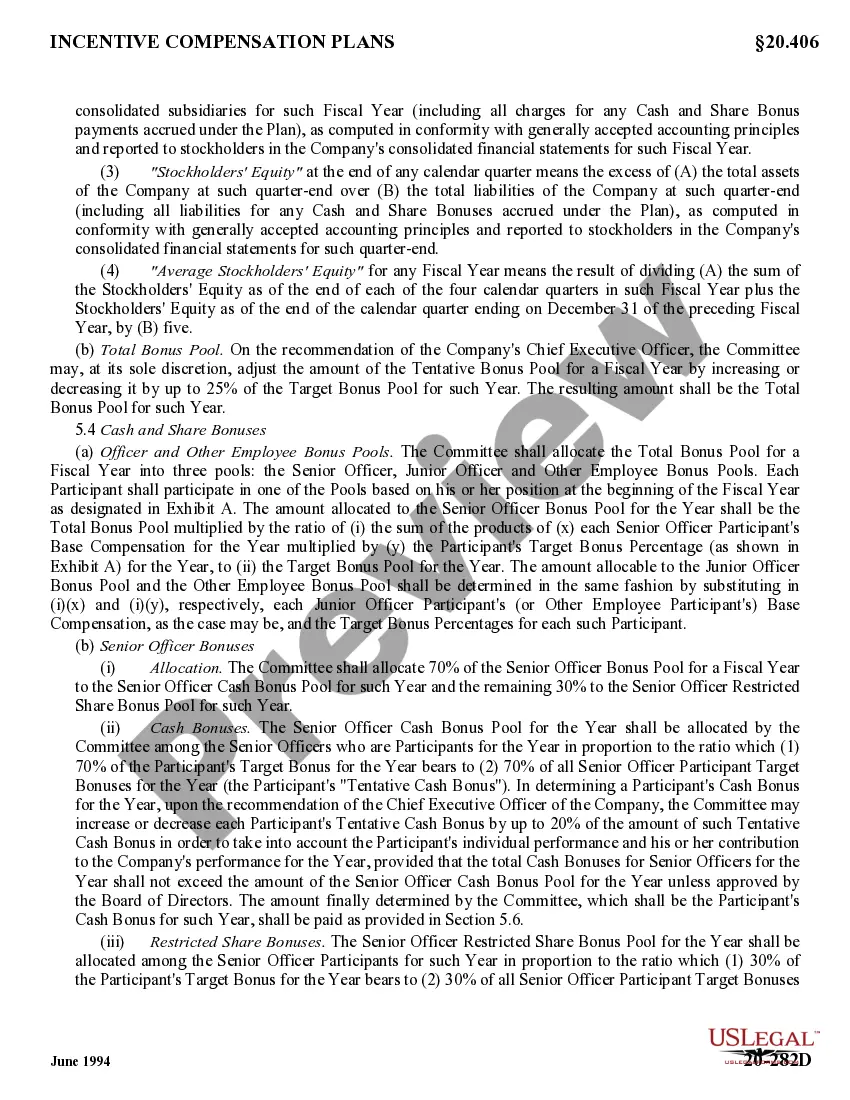
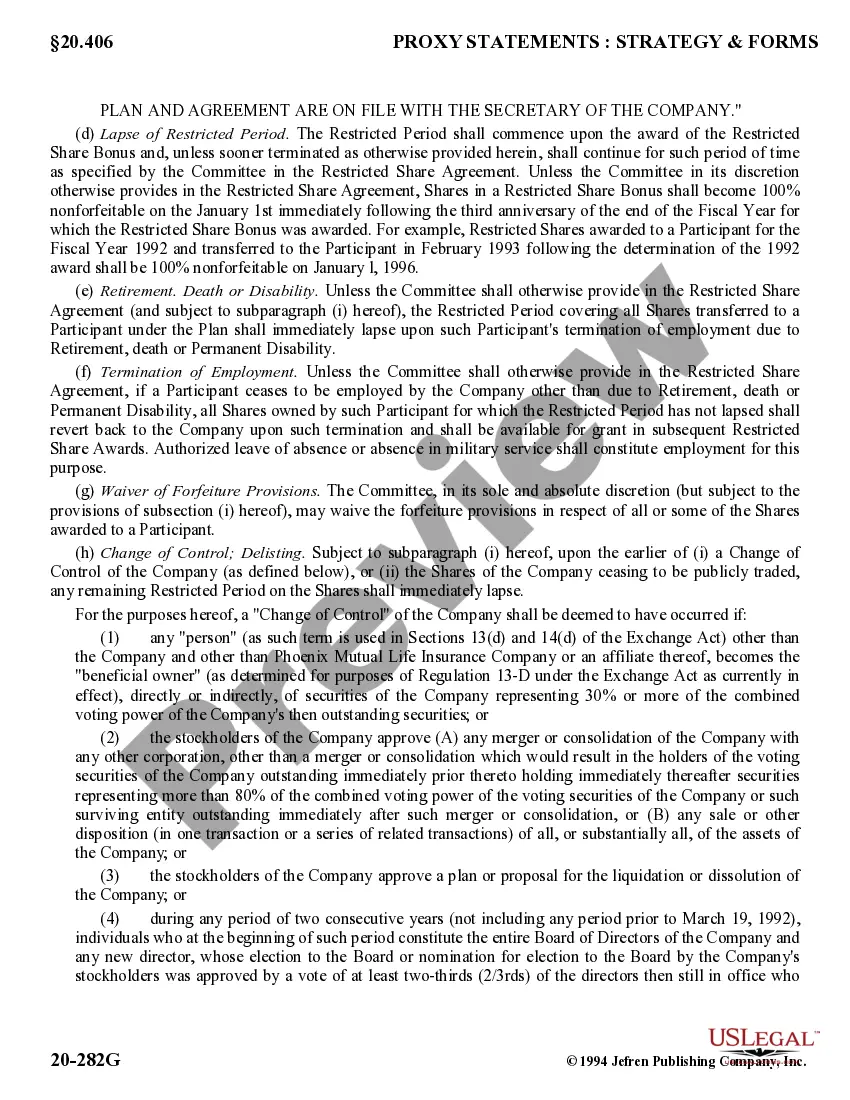
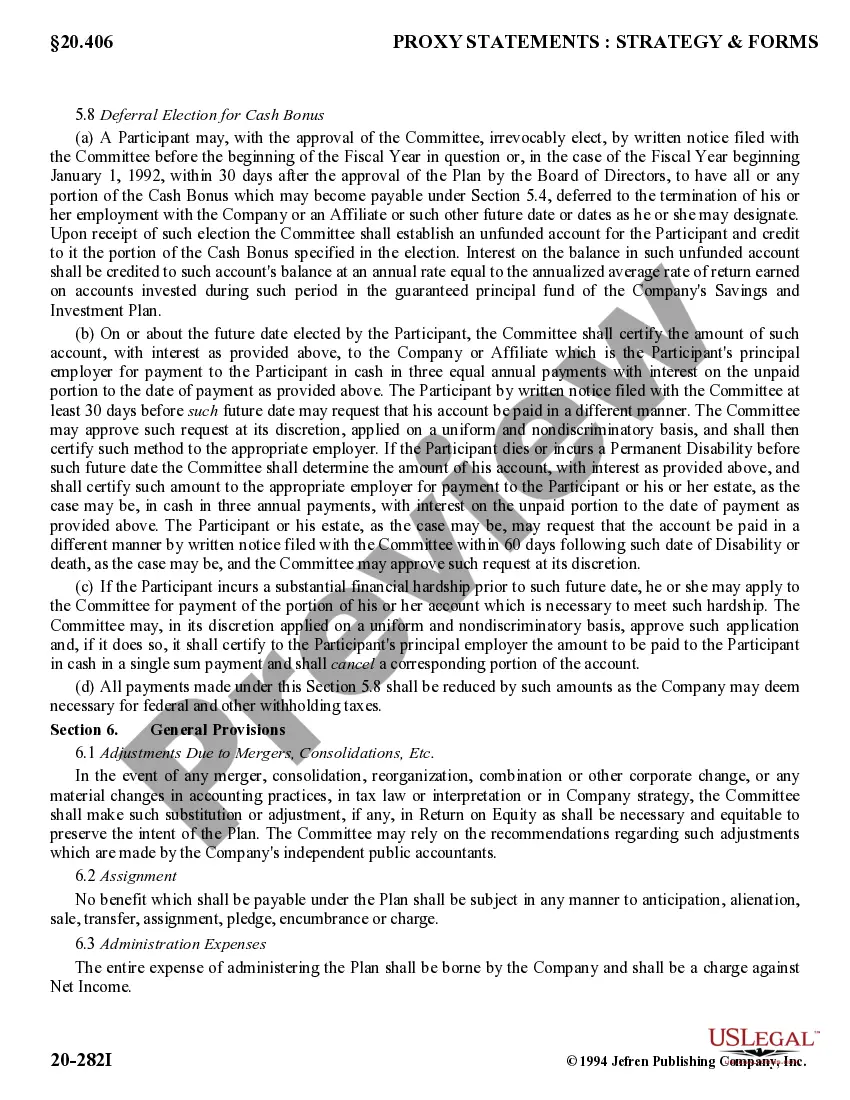
The Bonus Year Per Withhold you see on this page is a versatile official template created by expert attorneys in accordance with federal and state laws.
For over 25 years, US Legal Forms has delivered individuals, businesses, and legal practitioners with more than 85,000 validated, state-specific documents for any business and personal event. It’s the fastest, most direct, and most reliable way to acquire the paperwork you require, as the service ensures the utmost level of data protection and anti-malware security.
Subscribe to US Legal Forms to have authenticated legal templates for all of life’s situations at your fingertips.
- Search for the document you need and examine it.
- Sign up and Log In.
- Obtain the fillable template.
- Complete and sign the document.
- Download your papers one more time.
Form popularity
FAQ
To calculate the tax on your bonus, first determine if you will use the flat rate or aggregate method for withholding. For a flat rate, simply multiply your bonus by 22%. If you opt for the aggregate method, combine your bonus with your regular income and apply the appropriate withholding rate. The bonus year per withhold is a significant factor to consider in your overall tax planning.
If you receive a $10,000 bonus, the federal tax withholding at the flat rate of 22% would amount to $2,200. However, if you are in a higher tax bracket due to your overall income, your effective tax could increase. Understanding the implications of the bonus year per withhold can help you prepare for potential tax liabilities. Use resources from US Legal Forms to get a clearer picture of your tax situation.
It's wise to review your tax withholding when you receive a bonus. If your bonus significantly increases your income, it may be beneficial to adjust your withholding to avoid a tax bill at year-end. Consider how the bonus year per withhold affects your tax strategy. Tools available on US Legal Forms can assist you in making informed decisions.
Calculating withholding on your bonus involves applying the IRS flat rate or the aggregate method. For the flat rate, simply multiply your bonus by 22%. If you choose the aggregate method, add your bonus to your last paycheck, then calculate withholding based on your total income. The bonus year per withhold may influence your decision on which method to use.
To calculate your yearly bonus, first determine your company's bonus structure. This often involves a percentage of your salary or based on performance metrics. Once you have this information, multiply your base salary by the bonus percentage. Remember, the bonus year per withhold can affect your final take-home amount.
Bonuses are typically taxed at a flat rate of 22% for federal income tax purposes. However, if your total income pushes you into a higher tax bracket, your effective tax rate could be closer to 40%. Understanding how the bonus year per withhold impacts your overall tax obligation is essential. You can use tools like US Legal Forms to help you navigate these calculations.
When you receive a bonus, you may want to adjust your withholding to avoid a large tax bill at the end of the year. Typically, you can opt for a flat percentage rate for bonuses, which is often 22% for federal taxes. However, the bonus year per withhold can vary based on your overall income and tax situation. To ensure you're making the best choice, consider using US Legal Forms to access tools and expert guidance tailored to your unique financial circumstances.
To calculate tax withholding on your bonus, you first need to determine the bonus amount. Then, you can use the IRS withholding tables or your payroll software to find the appropriate tax rate for bonuses. It is important to remember that the bonus year per withhold may differ from your regular income withholding. Using a platform like US Legal Forms can simplify this process by providing resources and calculators tailored to help you understand your tax obligations.
Withholding for bonuses typically involves a flat tax rate, which can differ from regular income withholding. This method ensures that the necessary taxes are collected upfront, reducing the risk of underpayment. Understanding how this works allows you to anticipate your take-home amount better. Keep the bonus year per withhold in mind as it directly impacts your earnings.
To avoid a high tax rate on your bonus, consider adjusting your withholding rate before receiving the bonus. You might also explore ways to offset the additional income with deductions. Consulting with a tax professional or using tools from uslegalforms can help you strategize effectively. This approach can help you manage your bonus year per withhold more efficiently.