Phantom Stock Plan Document
Description
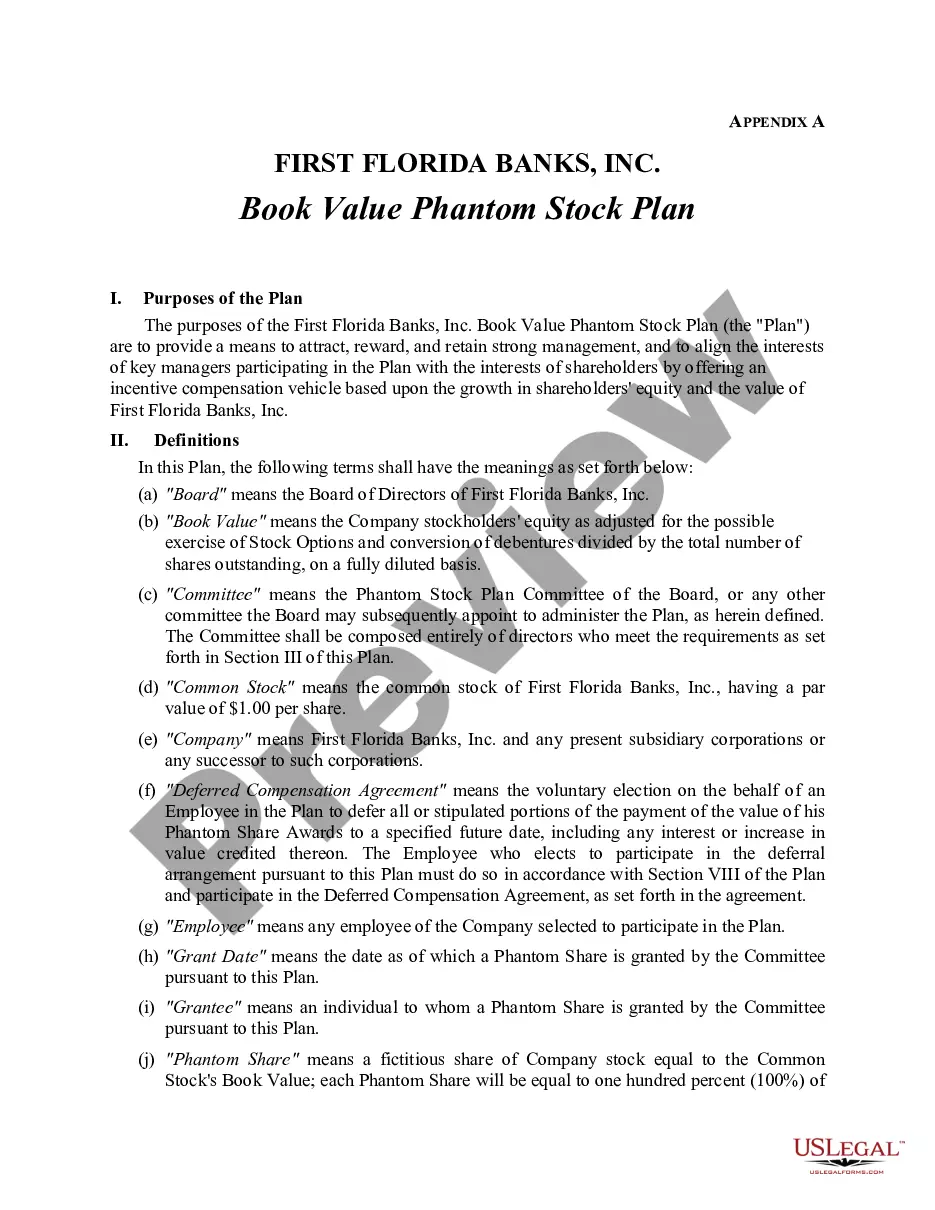
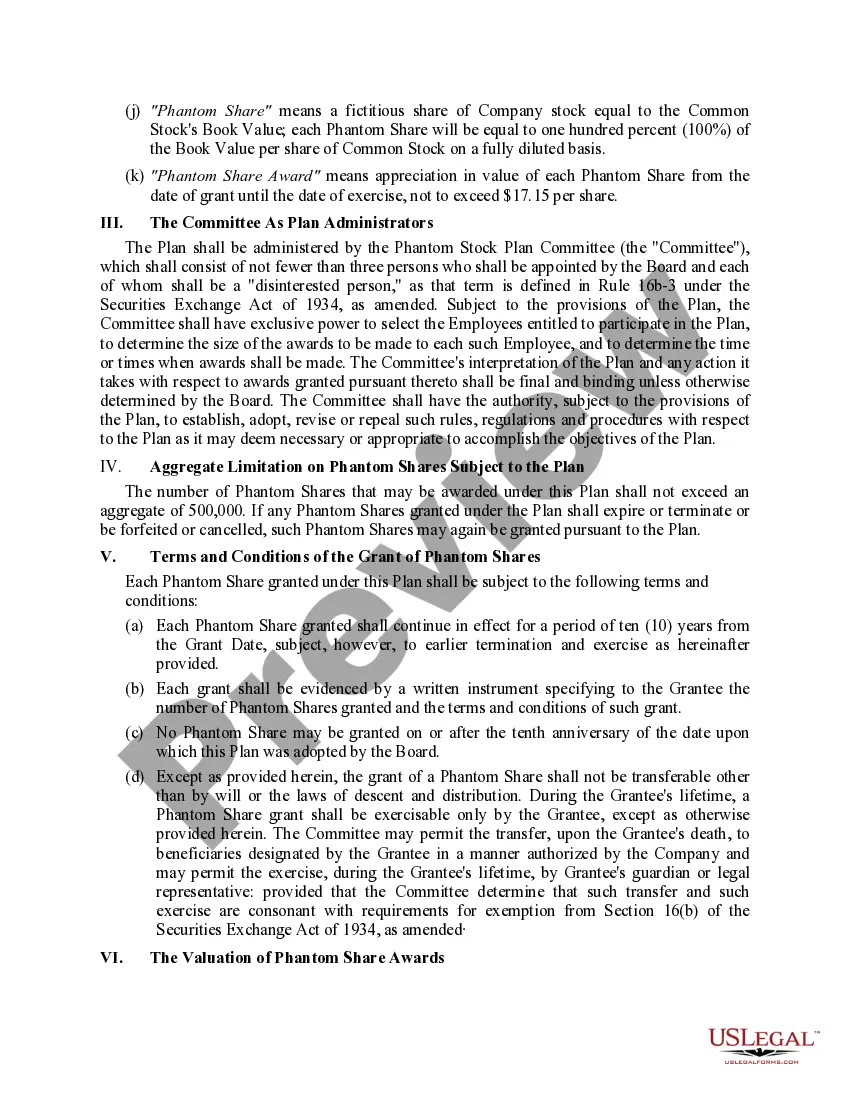
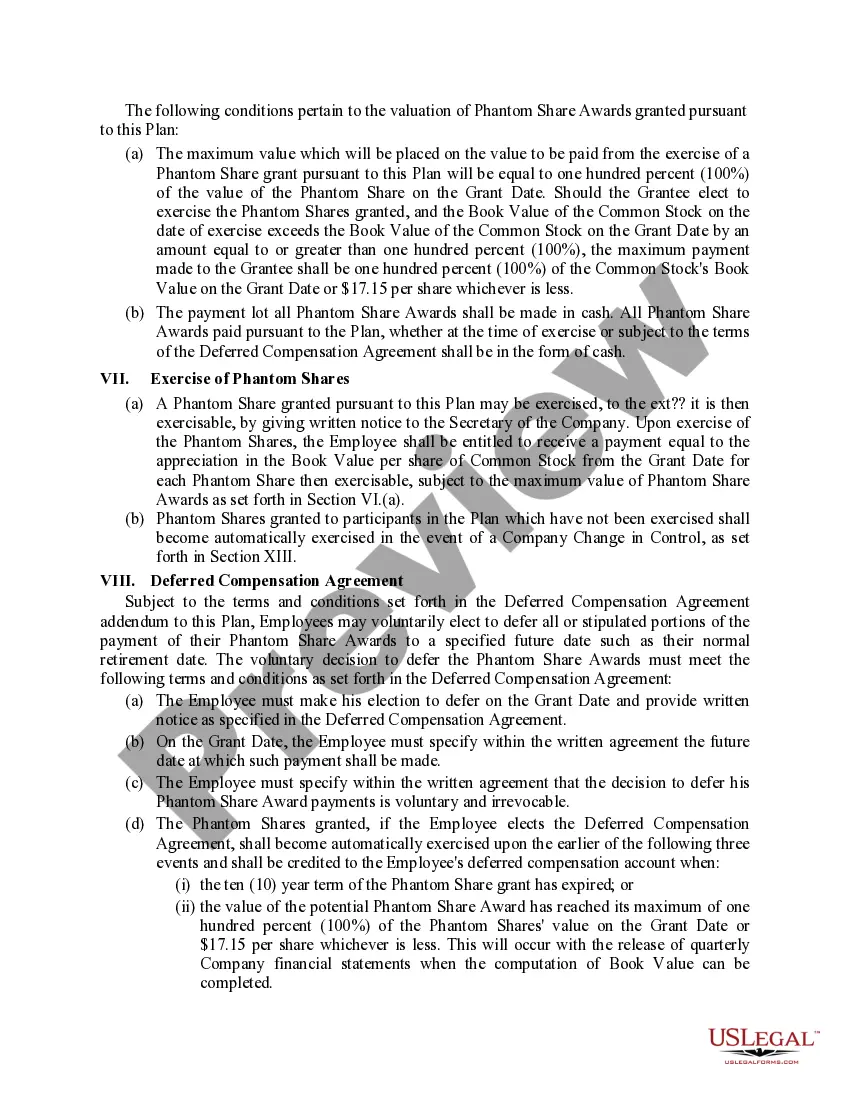
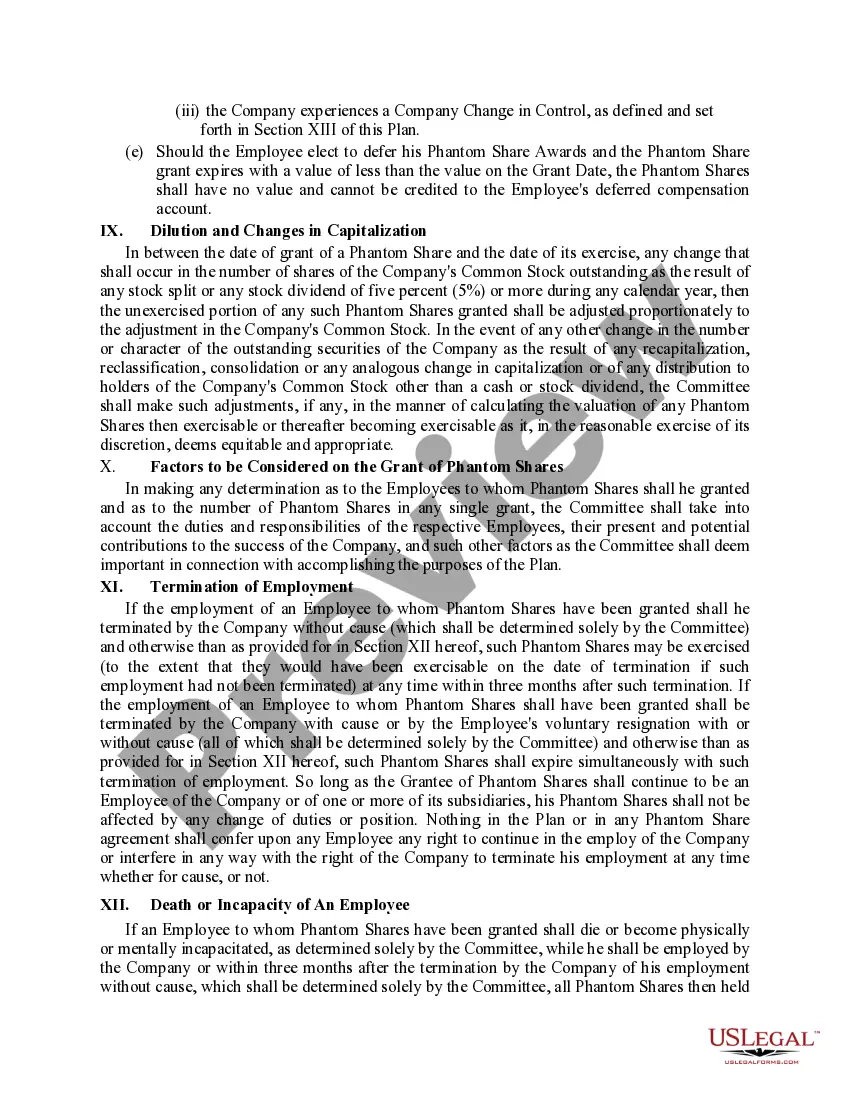
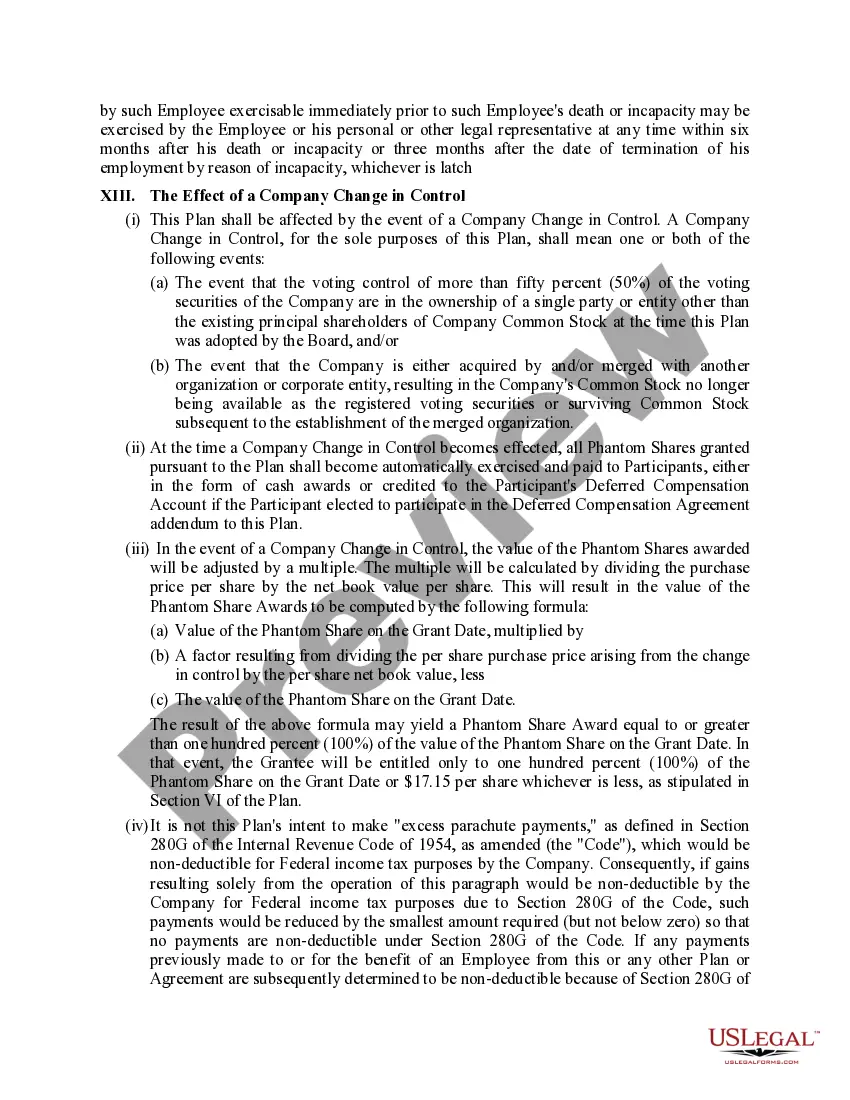
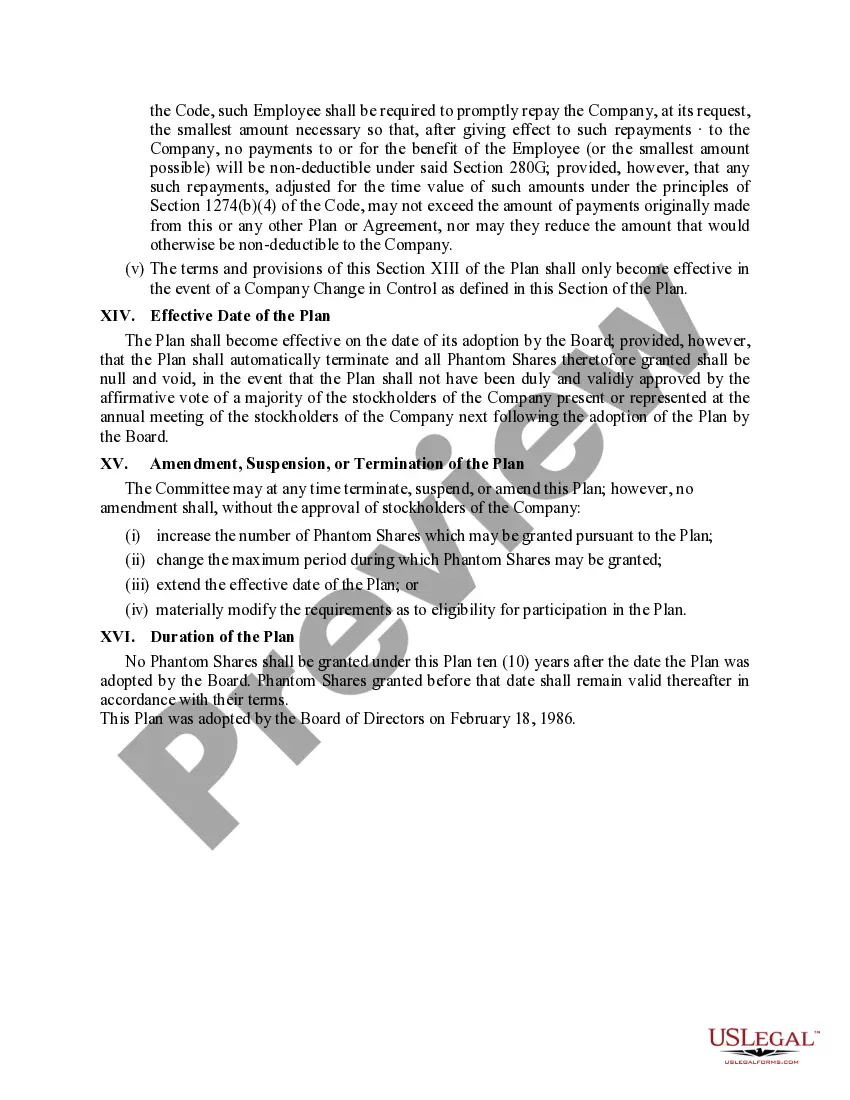
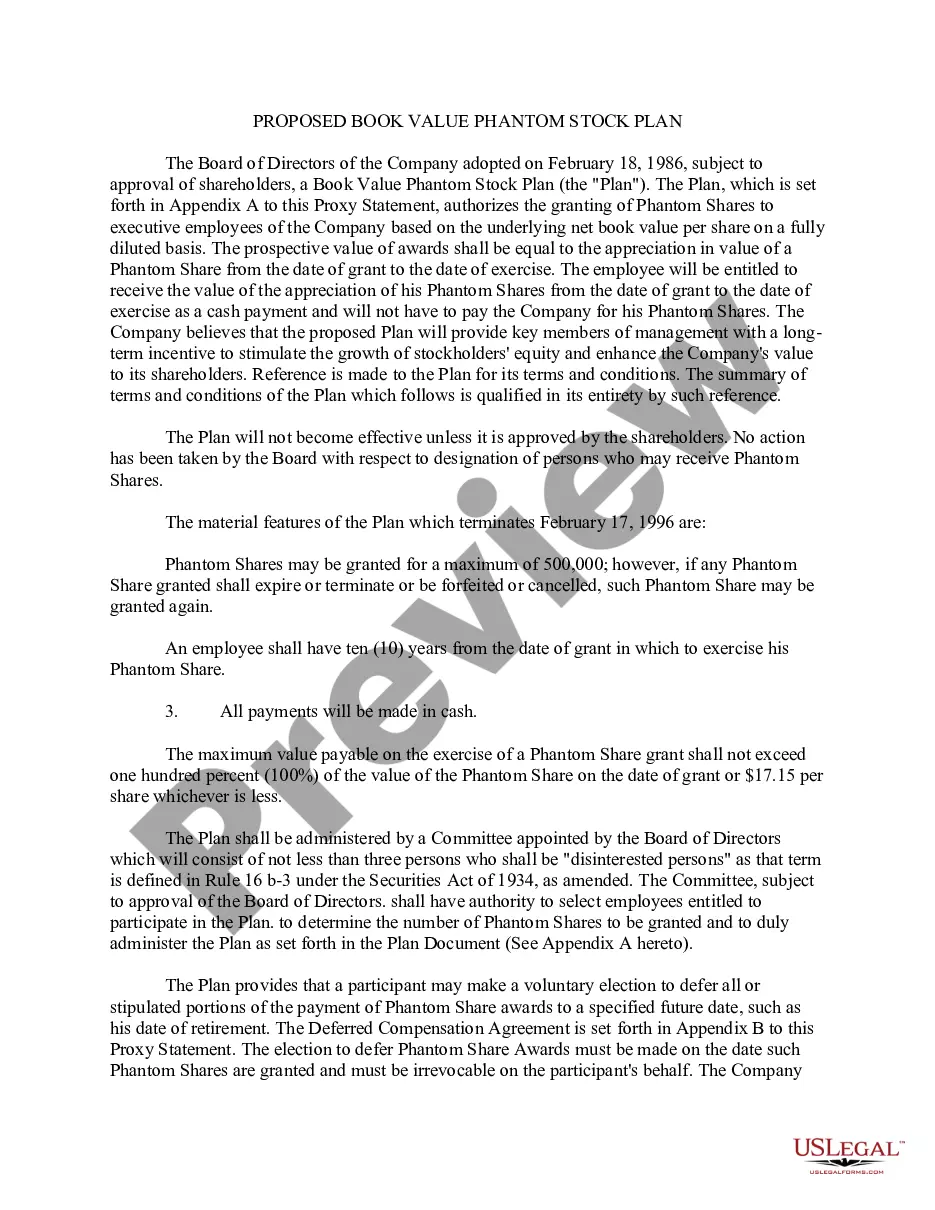
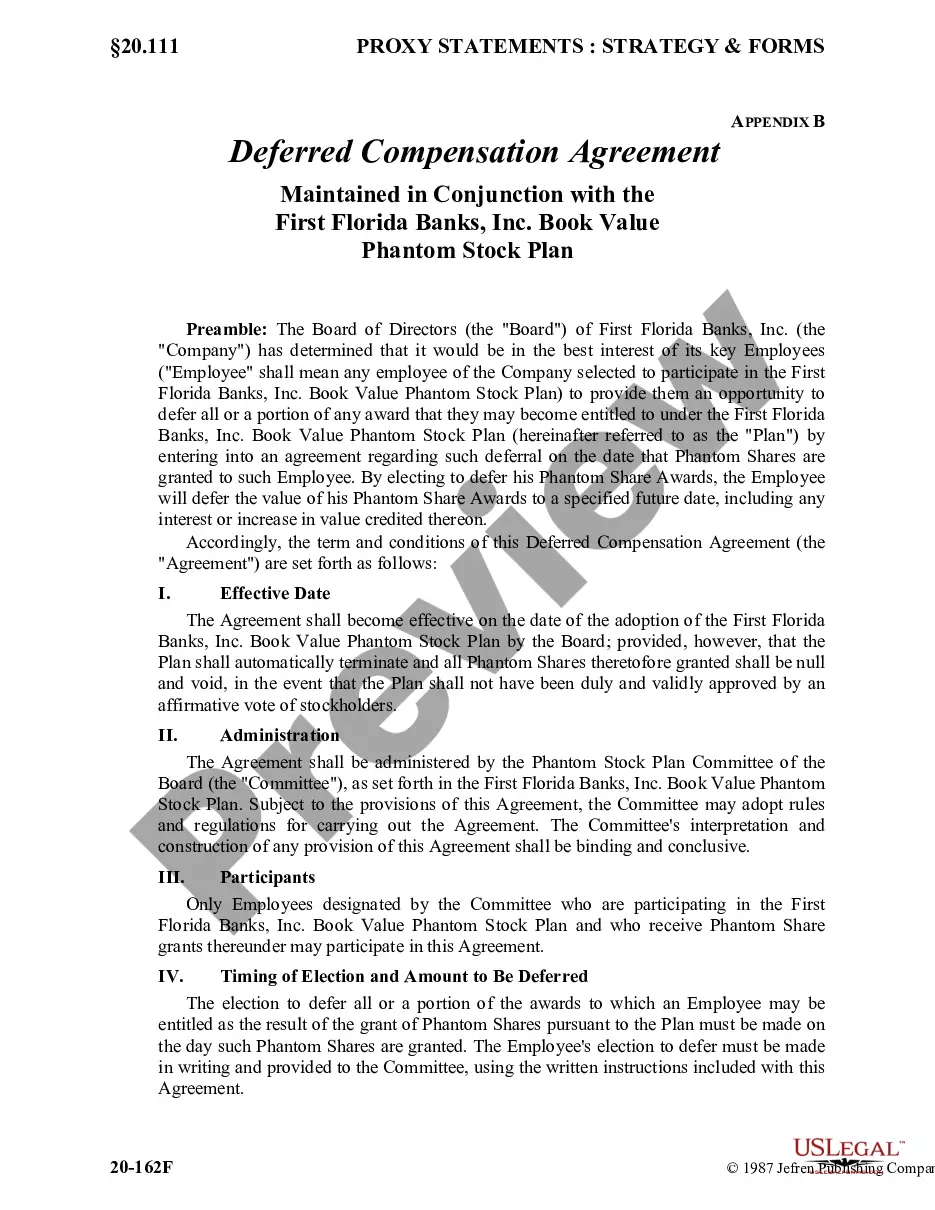





How to fill out Book Value Phantom Stock Plan Of First Florida Banks, Inc.?
- If you're a returning user, log in to your account and click the Download button to retrieve your form template. Ensure your subscription is active; if it's expired, renew it as per your payment plan.
- For first-time users, start by reviewing the form's Preview mode and description to confirm it aligns with your requirements and complies with local jurisdiction rules.
- If the chosen template doesn't suit you, use the Search tab to find another suitable document.
- Once you locate the correct document, click the Buy Now button and select your preferred subscription plan. You will need to create an account to access the library's complete resources.
- Complete your purchase by entering your credit card details or opting for PayPal to secure your subscription.
- Finally, download your form to your device, allowing you to fill it out and access it anytime from the My Forms section of your profile.
With US Legal Forms, obtaining a phantom stock plan document is hassle-free. Their robust library offers over 85,000 customizable legal forms, ensuring you find exactly what you need.
Empower your legal needs today! Visit US Legal Forms to start creating your phantom stock plan document with expert assistance readily available.
Form popularity
FAQ
The primary difference between a phantom stock plan and an Employee Stock Ownership Plan (ESOP) lies in ownership. An ESOP provides actual shares of stock to employees, granting them real ownership and voting rights. Conversely, a phantom stock plan offers benefits based on stock value without transferring actual shares. When creating a phantom stock plan document, it’s essential to understand these distinctions to choose the best option for your business.
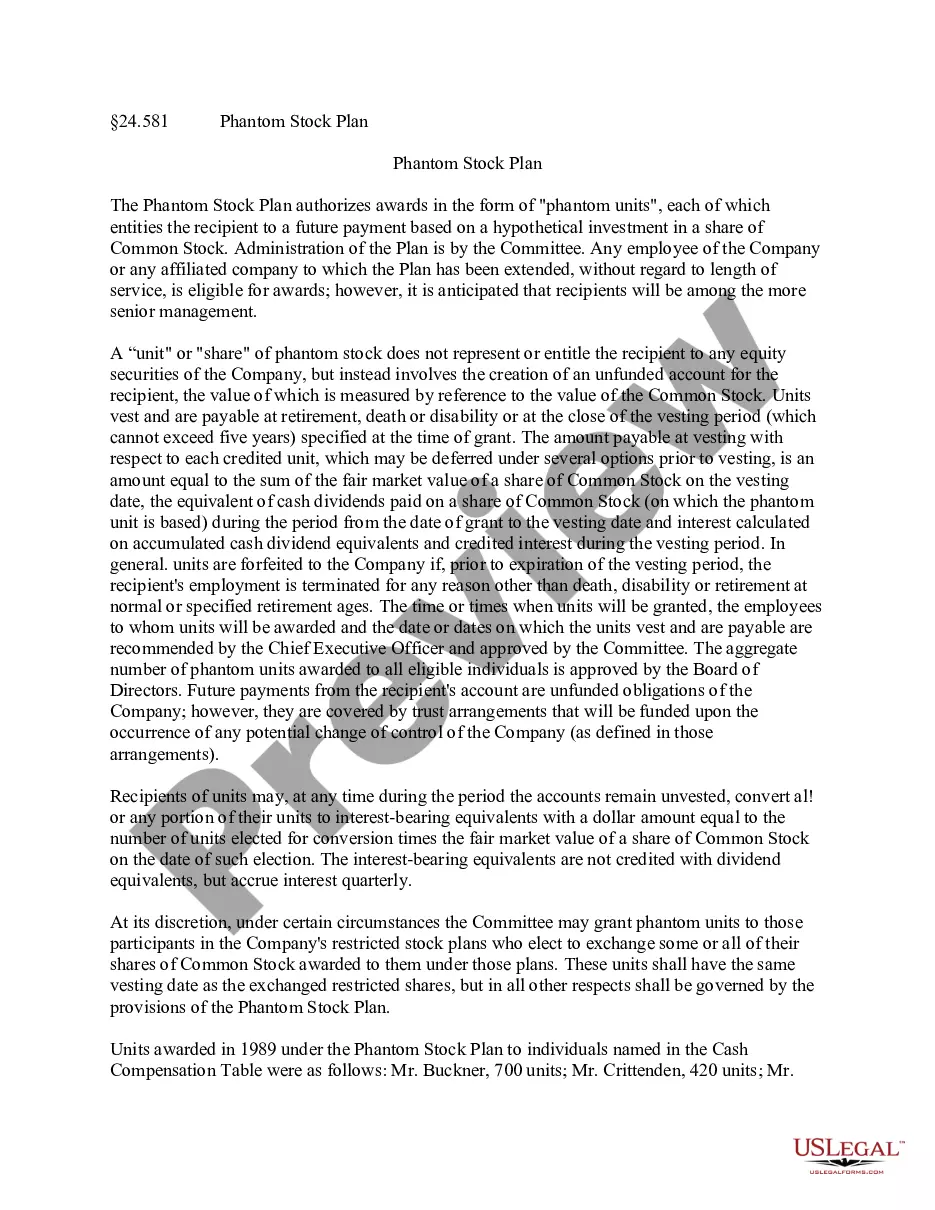
A phantom stock plan is a type of employee benefit that provides compensation based on the value of a company's stock without actually transferring any ownership. Employees receive 'phantom' shares that represent their stake in the company's future success. This arrangement aligns employee interests with company performance, creating an incentive for employees to contribute to the company's growth. For detailed implementation, consider a phantom stock plan document from uslegalforms that can guide you through the process.
Indeed, an LLC can establish a phantom stock plan to reward employees without relinquishing ownership stakes. This type of plan can enhance employee loyalty and drive performance by linking rewards to company valuation. A comprehensive phantom stock plan document will help outline the terms and conditions clearly.
Creating a phantom stock plan involves several key steps, including defining the goals and terms of the plan, the valuation of stock, and establishing the payout structure. It is important to involve legal and financial experts to ensure the plan's compliance with regulations. Ultimately, a well-crafted phantom stock plan document will guide the process effectively.
An LLC can issue phantom stock as a way to provide employees with an ownership-like stake without transferring actual equity. This approach allows the company to reward employees based on the company's growth and performance, similar to traditional equity. To formalize this arrangement, creating a detailed phantom stock plan document is essential for both parties.
Yes, an LLC can absolutely implement an equity incentive plan to motivate and retain key personnel. This structure typically includes various compensation forms such as profits interests or phantom stock plans. However, drafting a precise phantom stock plan document is crucial to ensure compliance and clarity, aligning the plan with the LLC's goals.
One downside of phantom stock is that it does not provide actual ownership, leaving employees without voting rights or dividends. Employees may perceive phantom stock as less valuable compared to actual equity since they won't enjoy ownership benefits. Additionally, payouts are often contingent on the company's performance, which can lead to uncertainty if the market fluctuates. These points should be clearly outlined in your phantom stock plan document to avoid misunderstandings.
When you receive a payout from a phantom stock plan, it is typically taxed as ordinary income. This means the funds you receive will be subject to federal income tax and possibly state taxes as well. The tax implications are detailed in the phantom stock plan document and can vary based on your personal income level and the structure of your employer's plan. It's wise to consult with a tax professional to navigate these details effectively.
Yes, phantom stock can potentially be forfeited under certain conditions, such as if an employee leaves the company before their vesting period is complete. However, well-drafted phantom stock plan documents provide clarity on these terms, ensuring employees understand their rights. By addressing these issues upfront, businesses can foster trust and motivation among their workforce.
Phantom stock is typically recorded as a liability on a company's balance sheet since it represents a future payment obligation. This requires accounting teams to estimate and adjust the value based on the company's stock performance regularly. Having a well-prepared phantom stock plan document can help facilitate accurate tracking and reporting of these obligations.