Phantom Stock Agreement With The Future
Description
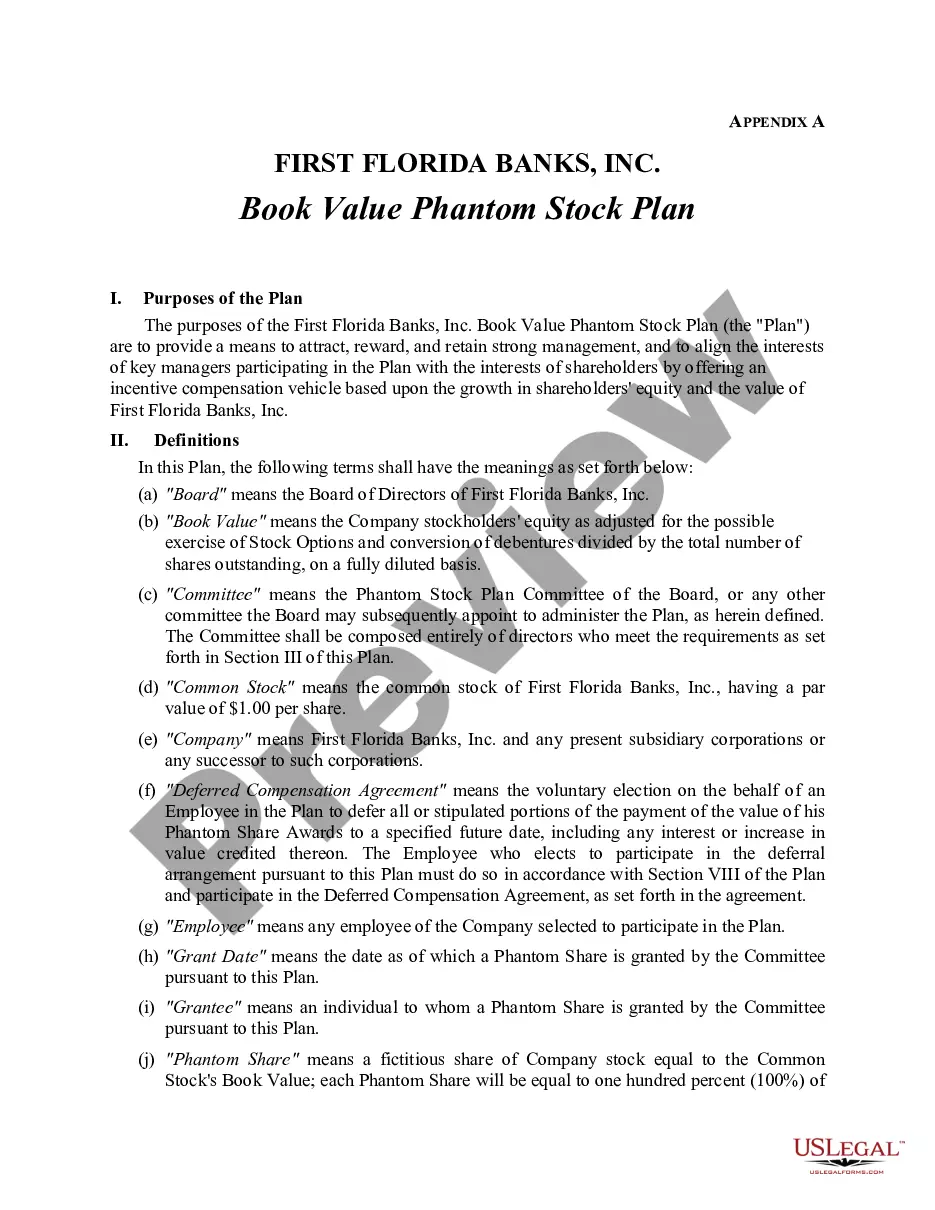
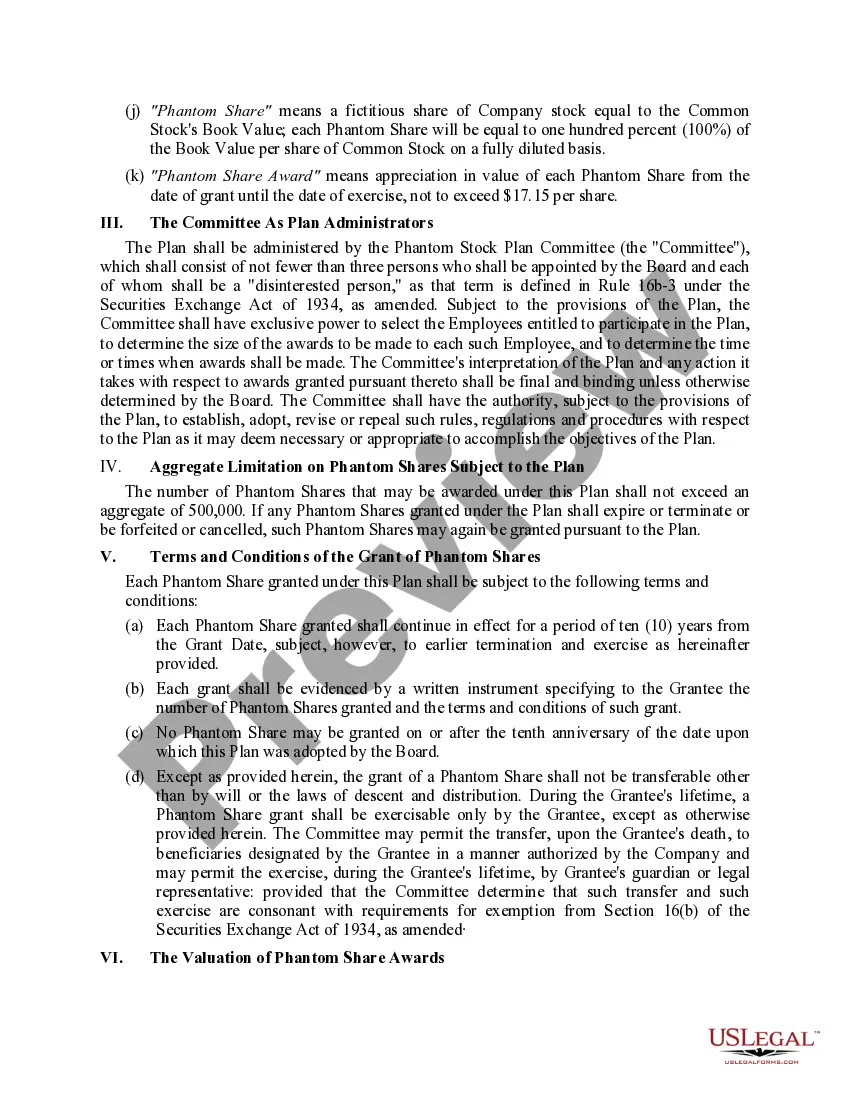
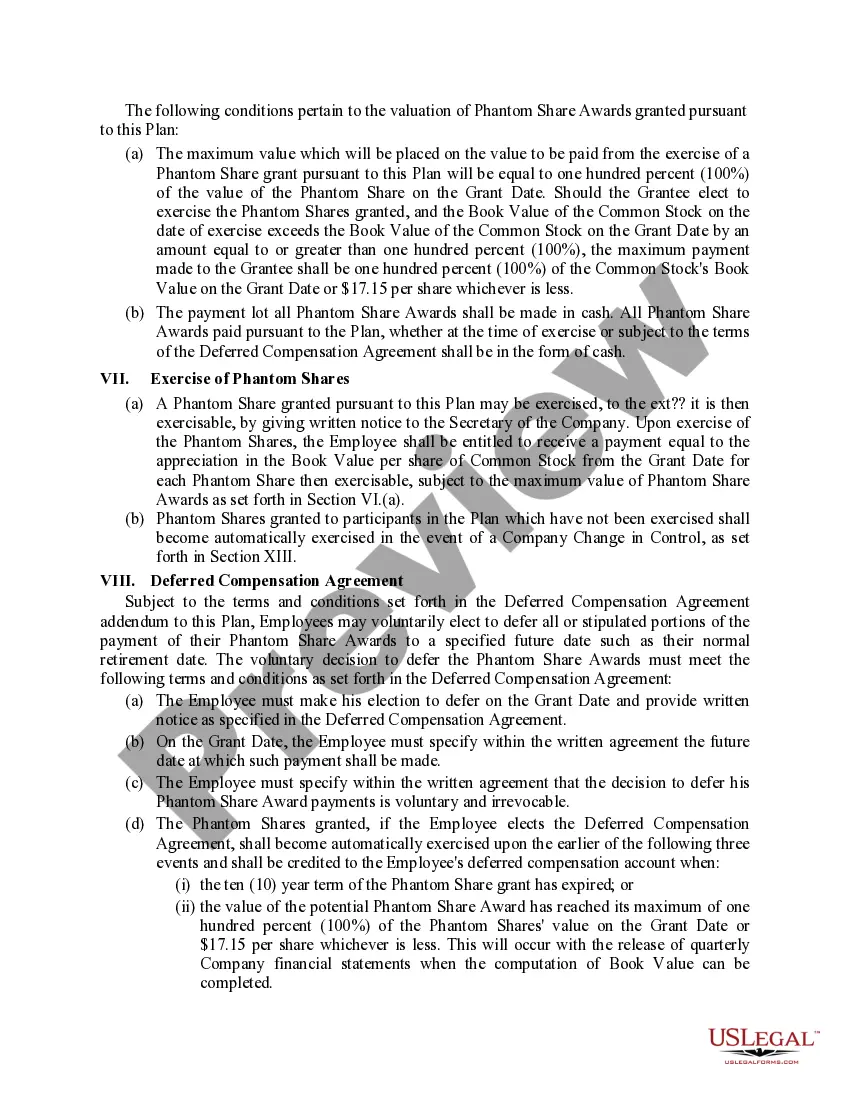
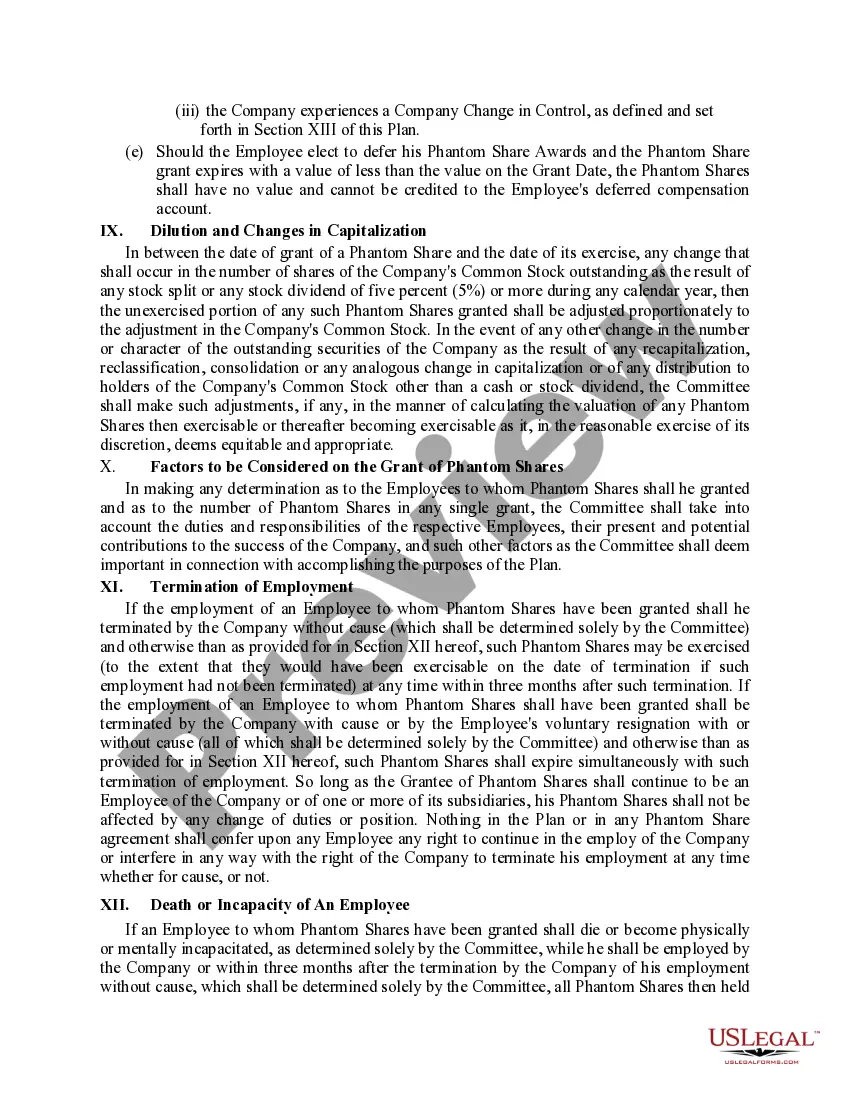
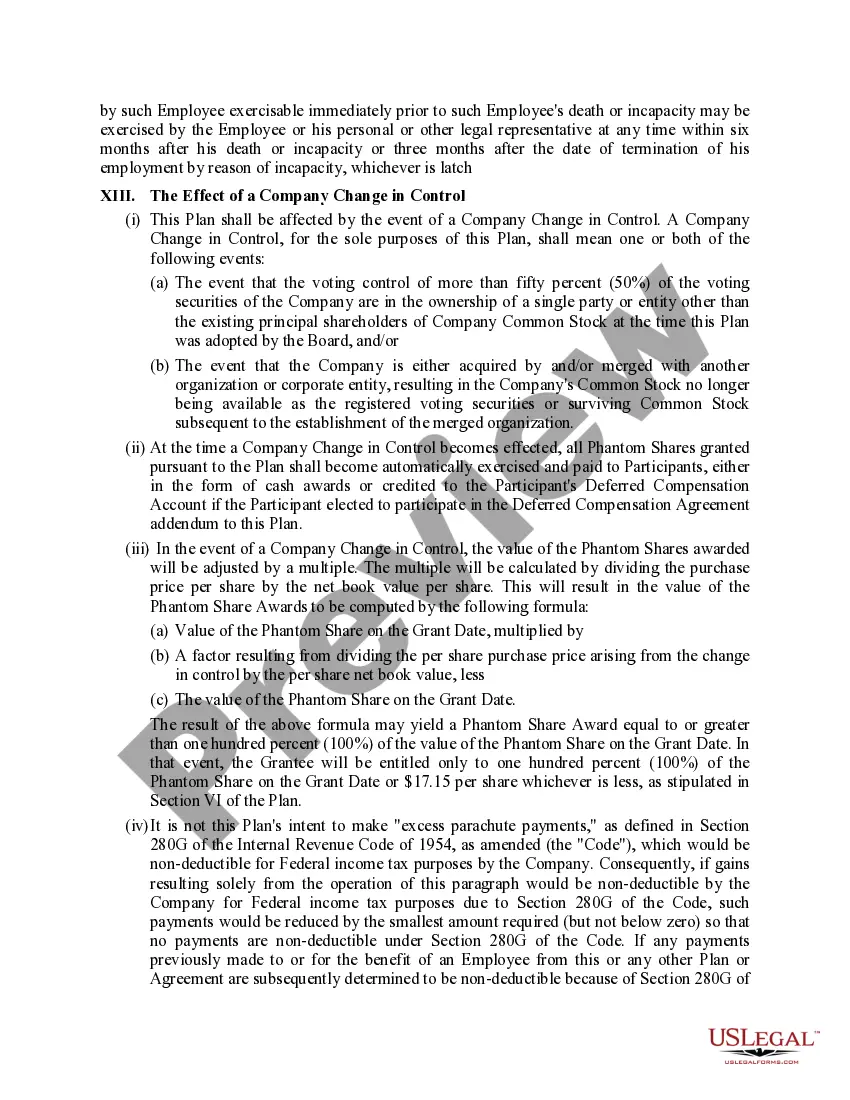
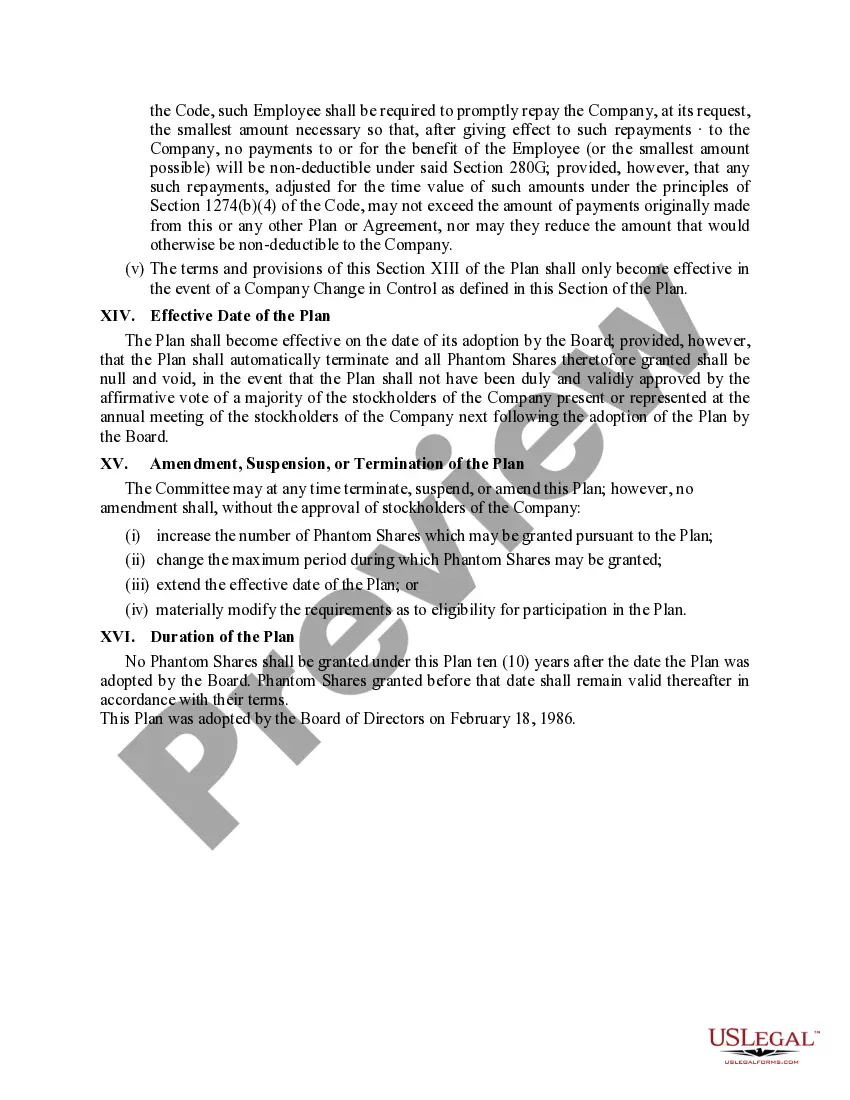
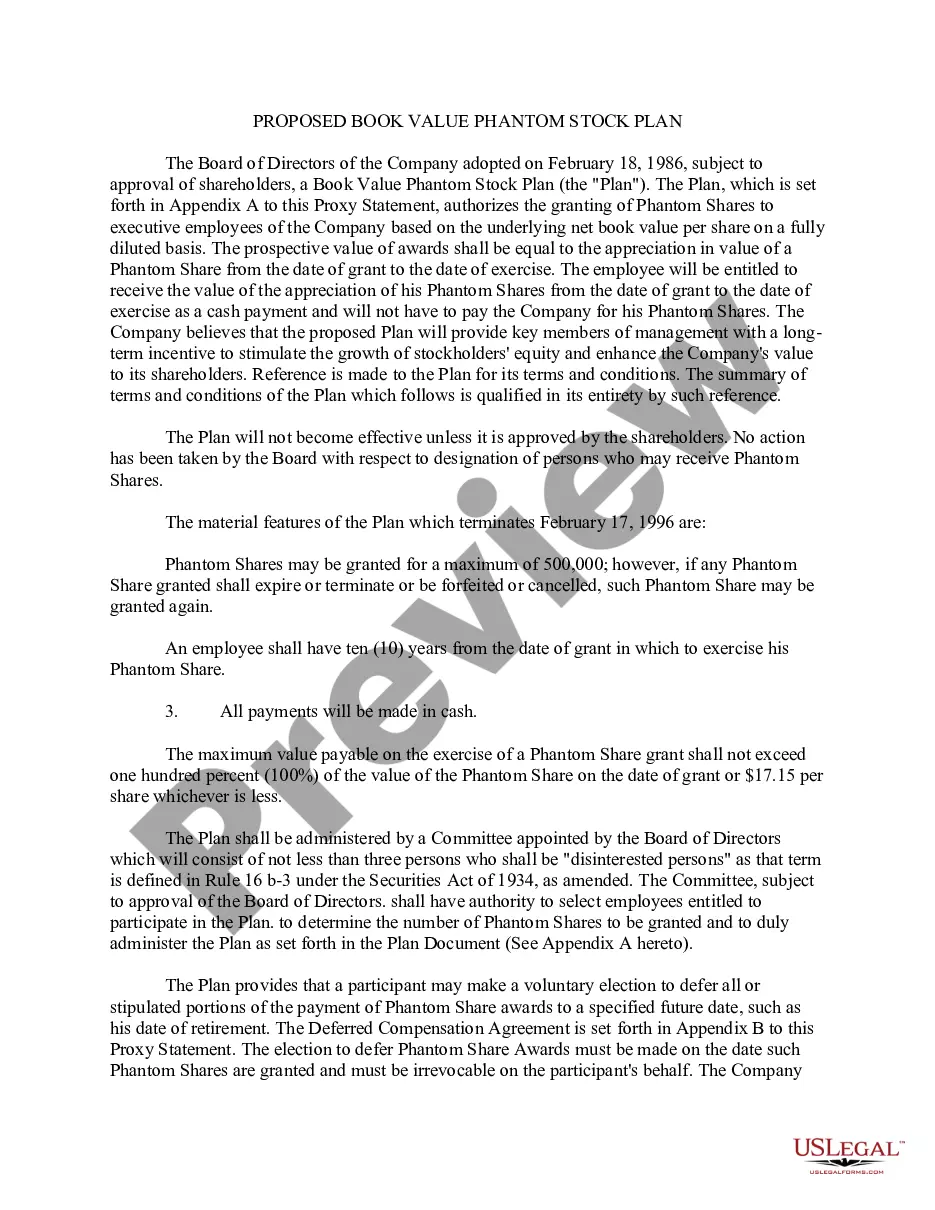
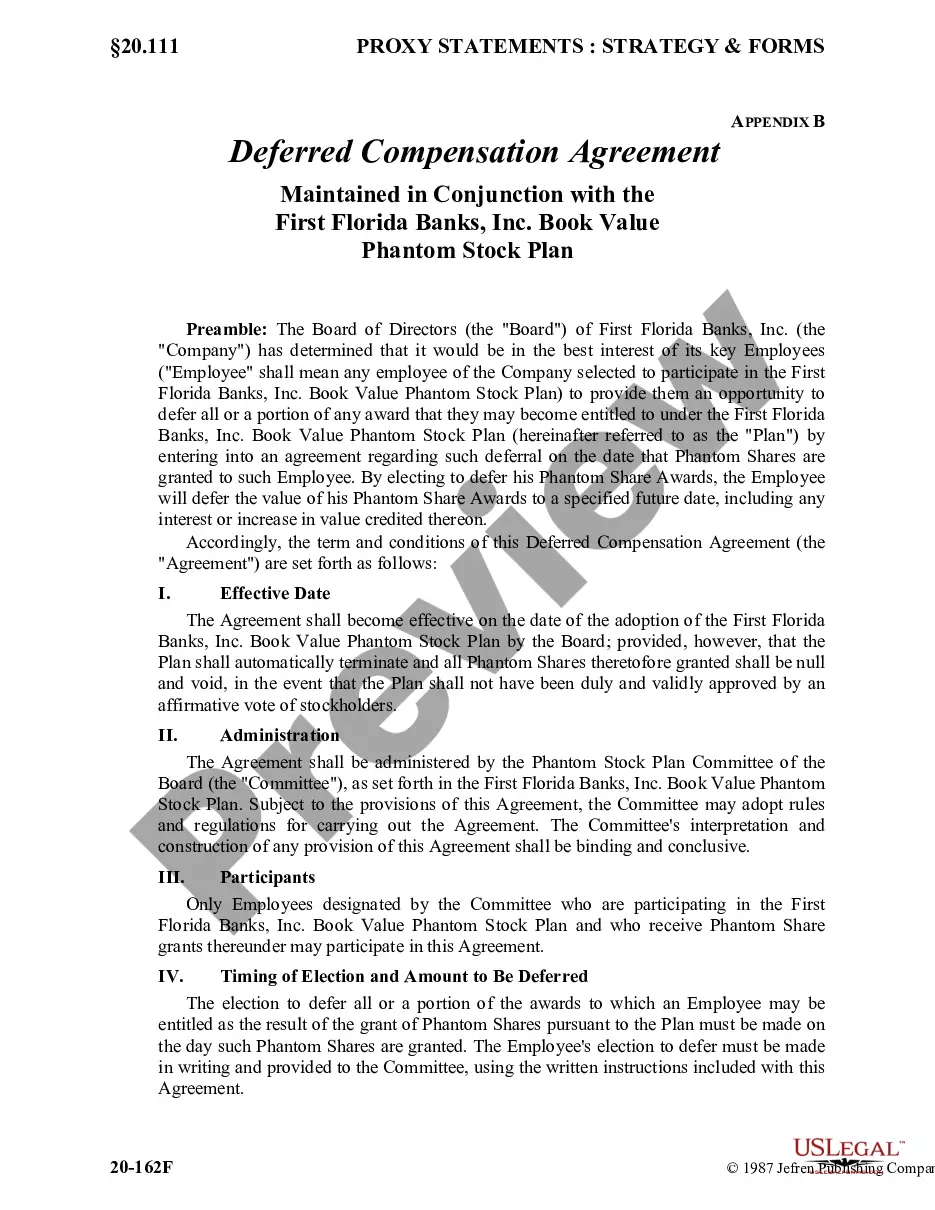

How to fill out Book Value Phantom Stock Plan Of First Florida Banks, Inc.?
- If you already have an account, simply log in to your profile and download the necessary template by clicking the Download button. Ensure your subscription is active; renew it if necessary.
- For first-time users, start by exploring the Preview mode to understand the form’s details. Confirm that the selected template meets your needs and adheres to local regulations.
- If adjustments are needed, utilize the Search feature to find alternative templates that fit your specific requirements.
- Once you’ve found the correct document, click the Buy Now button. Choose your preferred subscription plan and create an account to gain access to the extensive resources available.
- Complete your purchase using your credit card information or your PayPal account. After payment, you can access the downloaded document.
- Save the form to your device, making it ready for completion. You can also revisit it anytime in the My Forms section of your account.
In conclusion, US Legal Forms simplifies the process of obtaining legal documents like a phantom stock agreement with the future. By following these straightforward steps, you ensure a seamless experience from start to finish.
Don't wait any longer—visit US Legal Forms today and empower yourself with comprehensive legal documentation!
Form popularity
FAQ
An LLC can adopt an equity incentive plan that may include phantom stock arrangements within a phantom stock agreement with the future. This approach allows the company to reward its members or employees, boosting motivation and investment in the company's future. Legal platforms like uslegalforms can assist in drafting and managing these plans effectively.
Certainly, an LLC can establish a phantom stock plan as outlined in a phantom stock agreement with the future. This plan helps retain and reward key personnel by linking their incentives to the company’s performance. Implementing such a plan can foster a culture of ownership and align the interests of members or employees with long-term company goals.
Several events can trigger a phantom stock agreement with the future. Common triggers include a company sale, an initial public offering, or a specific milestone achievement. These events lead to payouts, ensuring that recipients benefit from the company's success without needing to deal with actual shares.
Yes, an LLC can issue phantom stock as part of a phantom stock agreement with the future. This arrangement allows members to benefit from the company's future value without actually owning shares. By using phantom stock, an LLC can motivate its members or employees while preserving ownership rights.
The primary distinction lies in ownership; real shares provide actual equity in a company, while phantom shares offer no ownership. Phantom stocks are contractual agreements that compensate employees based on the company's stock performance. Therefore, understanding the phantom stock agreement with the future is crucial in leveraging these benefits effectively.
Establishing a phantom stock plan involves several key steps. First, determine the goals of your agreement, such as employee retention or motivation. Next, draft a clear phantom stock agreement with the future that outlines the terms, conditions, and valuation methods for the phantom shares. Consulting with legal professionals, like those at US Legal Forms, can simplify this process significantly.
Phantom shares typically cannot be directly transferred like traditional stock. These agreements are tied to specific employees or stakeholders, and transferring them would require adjustments to the original phantom stock agreement with the future. If you need a solution for transferring phantom shares, consider consulting legal experts to navigate the complexities.
Phantom shares are valued based on the company's performance and profitability. In a phantom stock agreement with the future, their worth is usually tied to the fair market value of actual shares in the company. Regular evaluations may occur to ensure employees receive accurate benefits corresponding to their contributions. Engaging with knowledgeable financial advisors can ensure you understand this valuation process thoroughly.
When a company goes public, the value of phantom stock typically increases, aligning it more closely with the stock's market value. A phantom stock agreement with the future allows employees to receive a payout based on the public offering, which can be a significant financial event. It's crucial to understand the terms of your agreement, as the specifics may outline how payouts are structured post-IPO. Consulting with legal experts can provide clarity on potential benefits.
Yes, phantom shares can be worth it for many companies and their employees. A phantom stock agreement with the future provides a way for employees to benefit from the company's success without giving away actual shares. This can motivate employees to perform at their best, as their compensation can grow in tandem with the company's performance. Ultimately, phantom shares can be a valuable addition to an employee’s benefits package.